KS2 Metric Measures Worksheets
Adding and Subtracting Litres and Millilitres
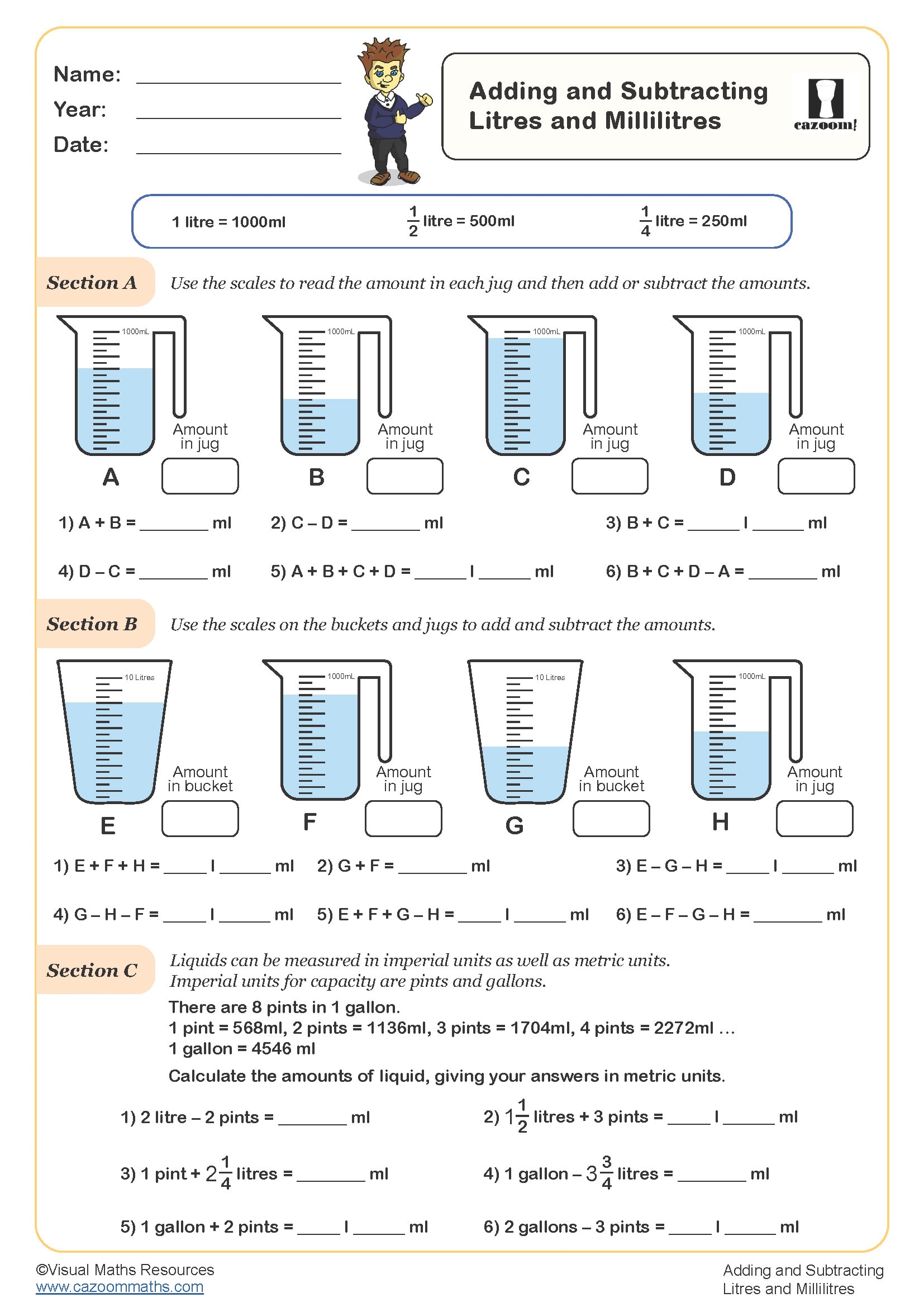
Adding and Subtracting Metres and Centimetres
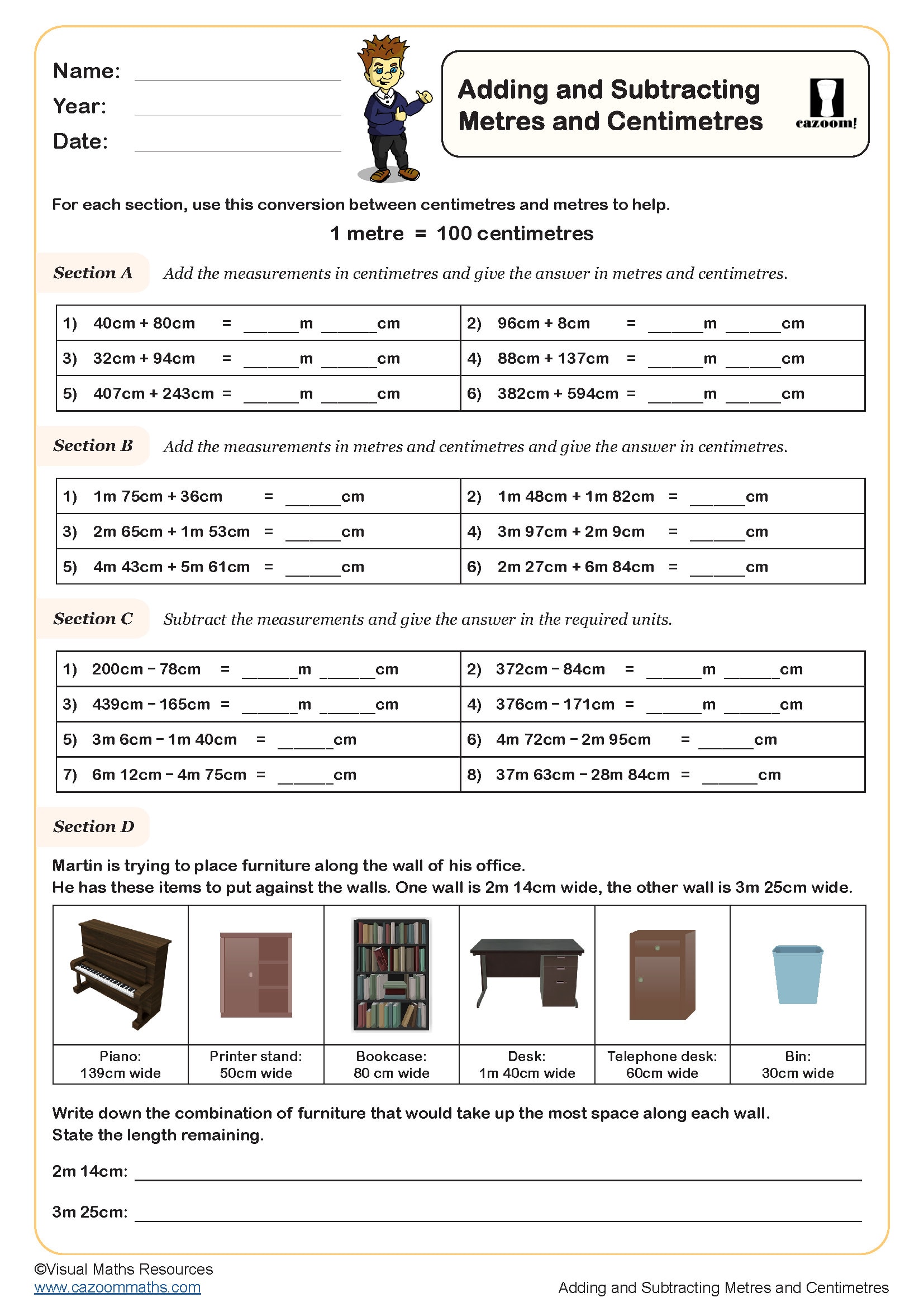
Converting Lengths - Centimetres and Millimetres
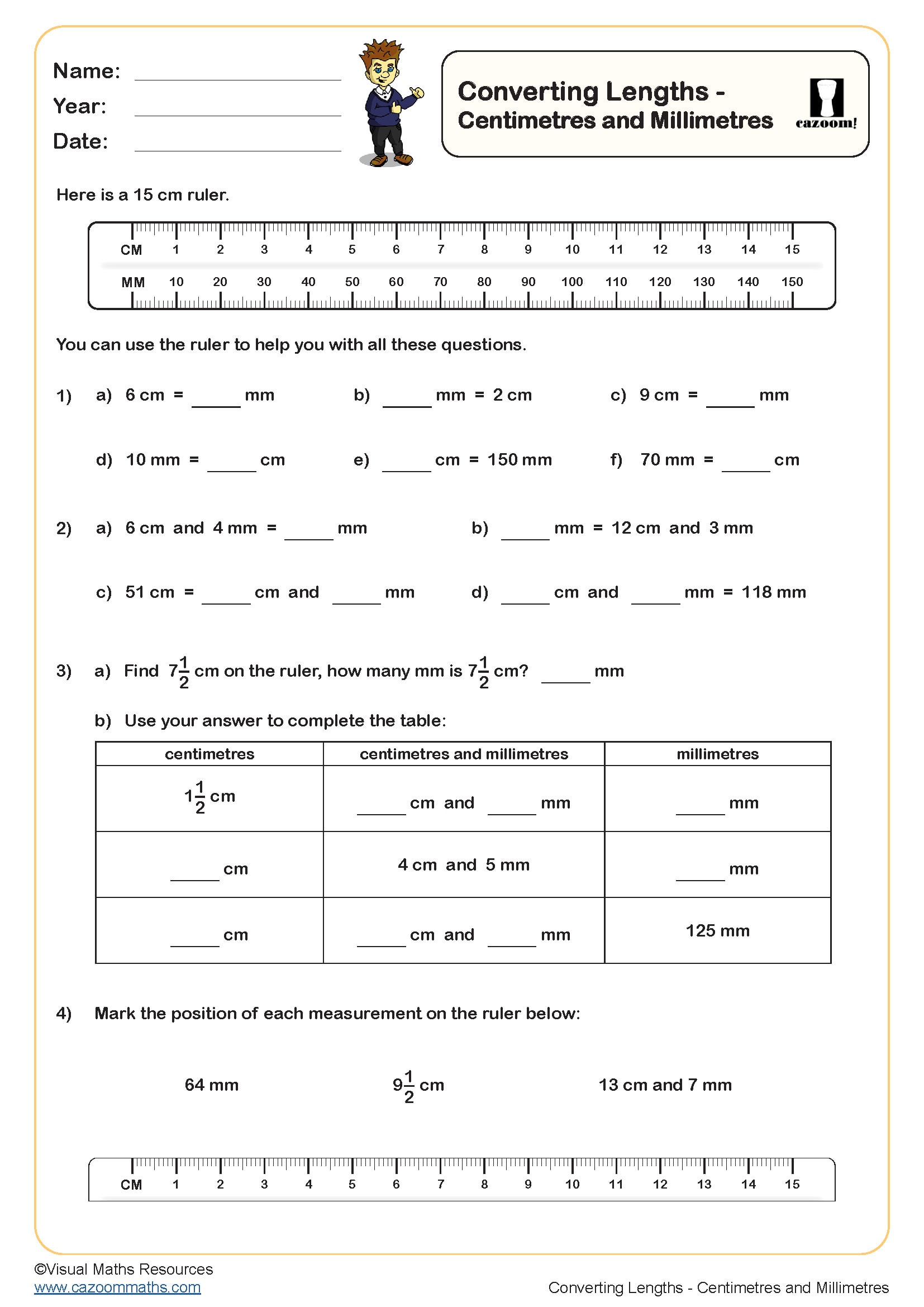
Converting Lengths - Metres and Centimetres
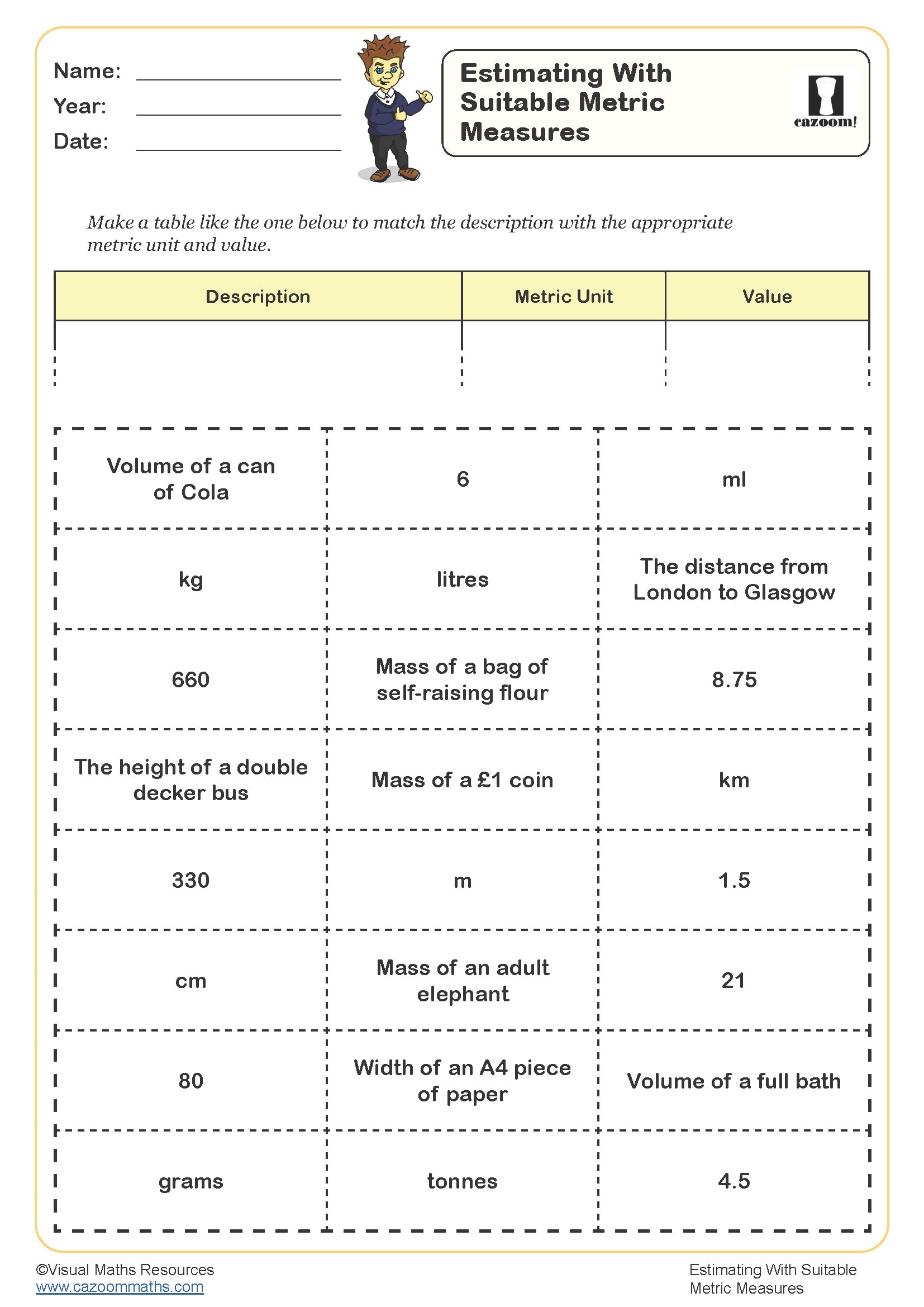
Estimating With Suitable Metric Measures
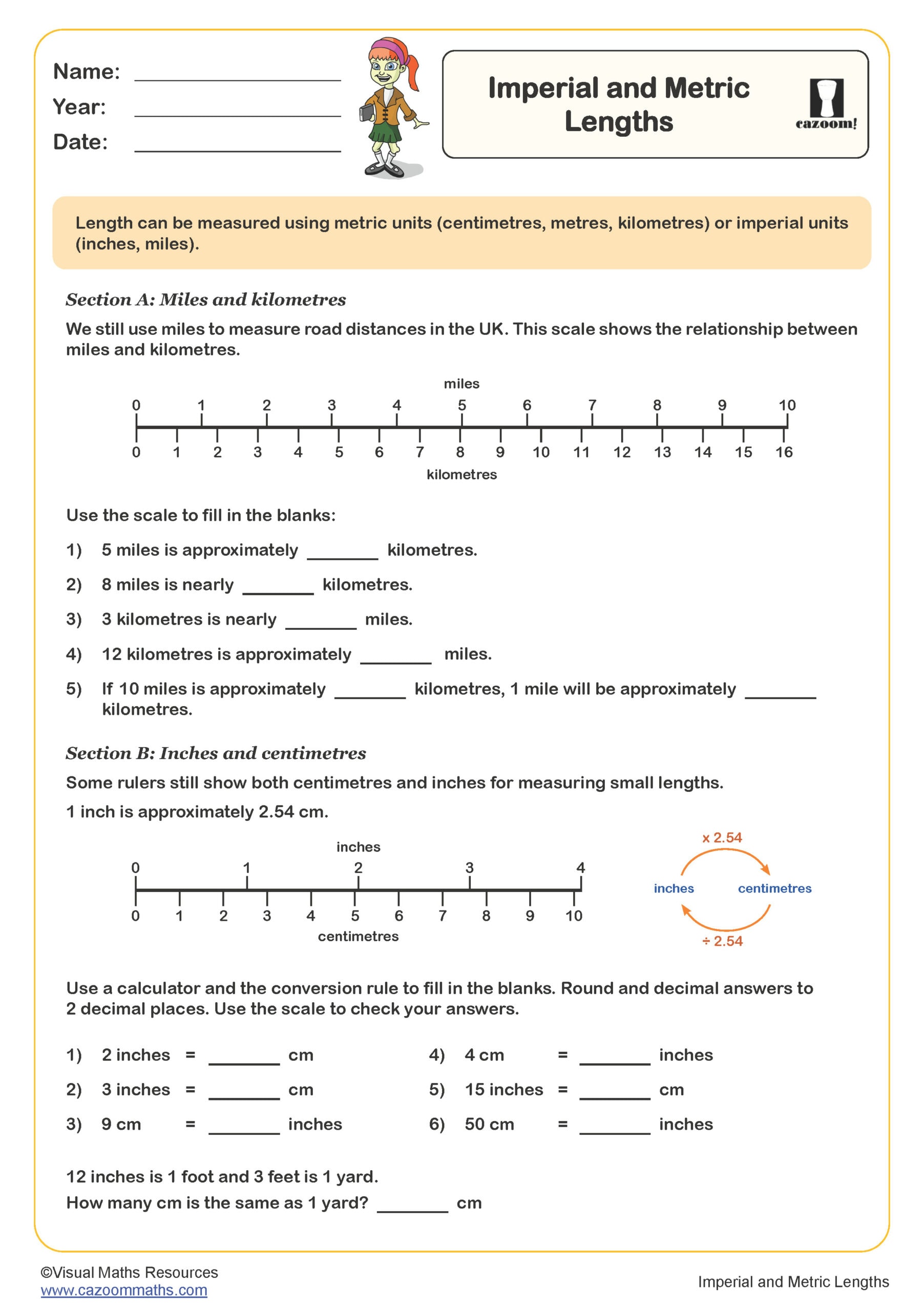
Imperial and Metric Lengths
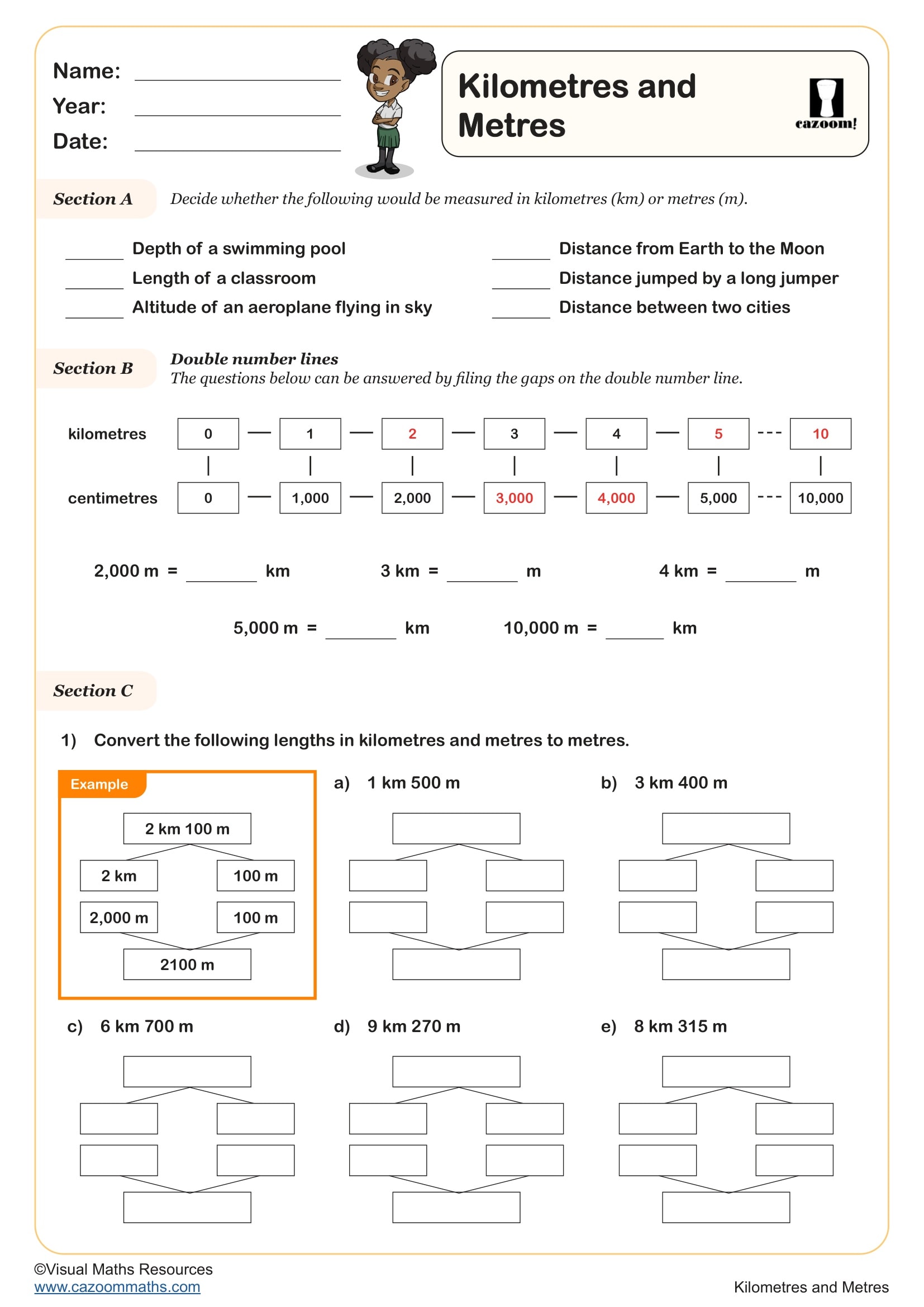
Kilometres and Metres
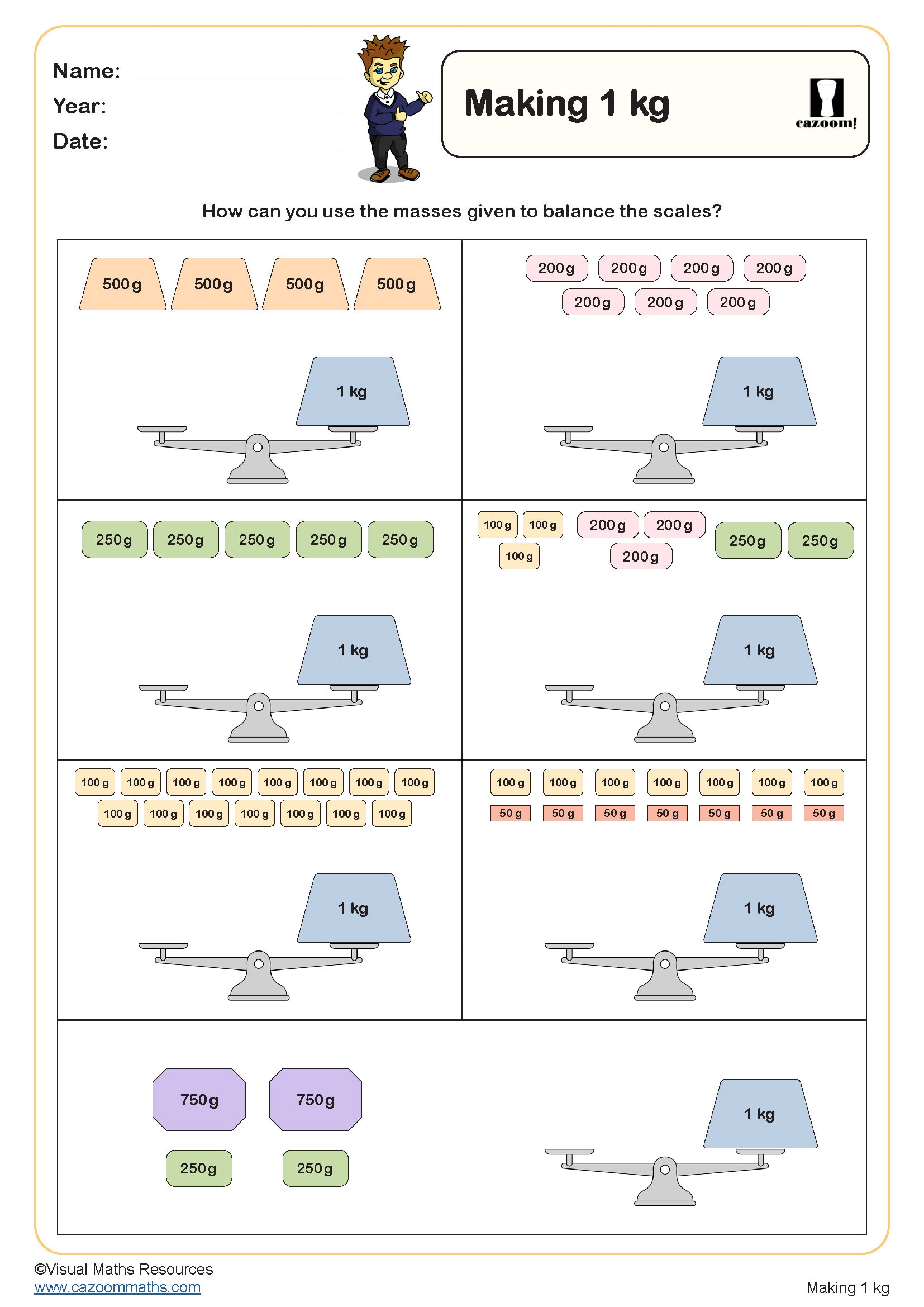
Making 1 kg
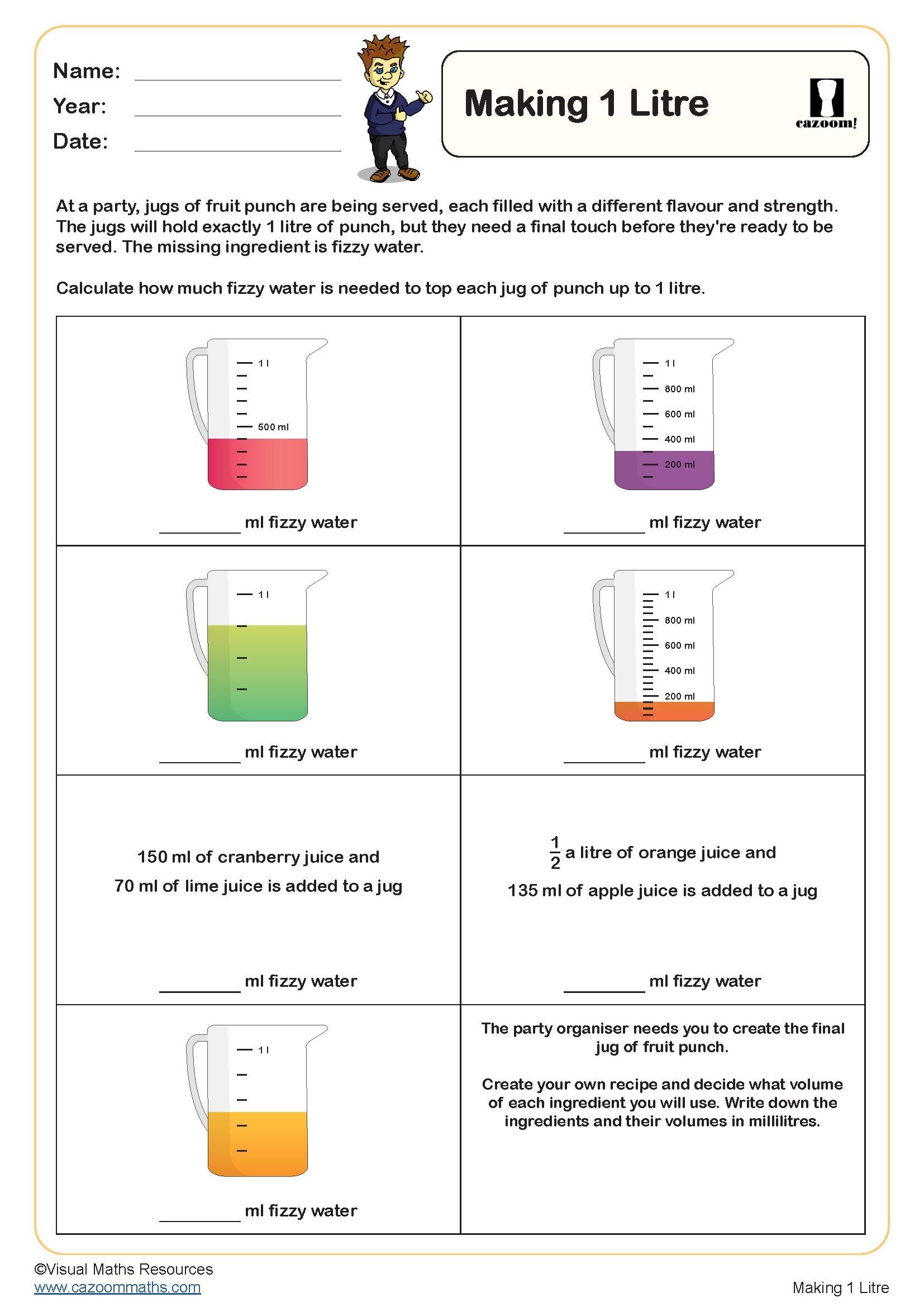
Making 1 L
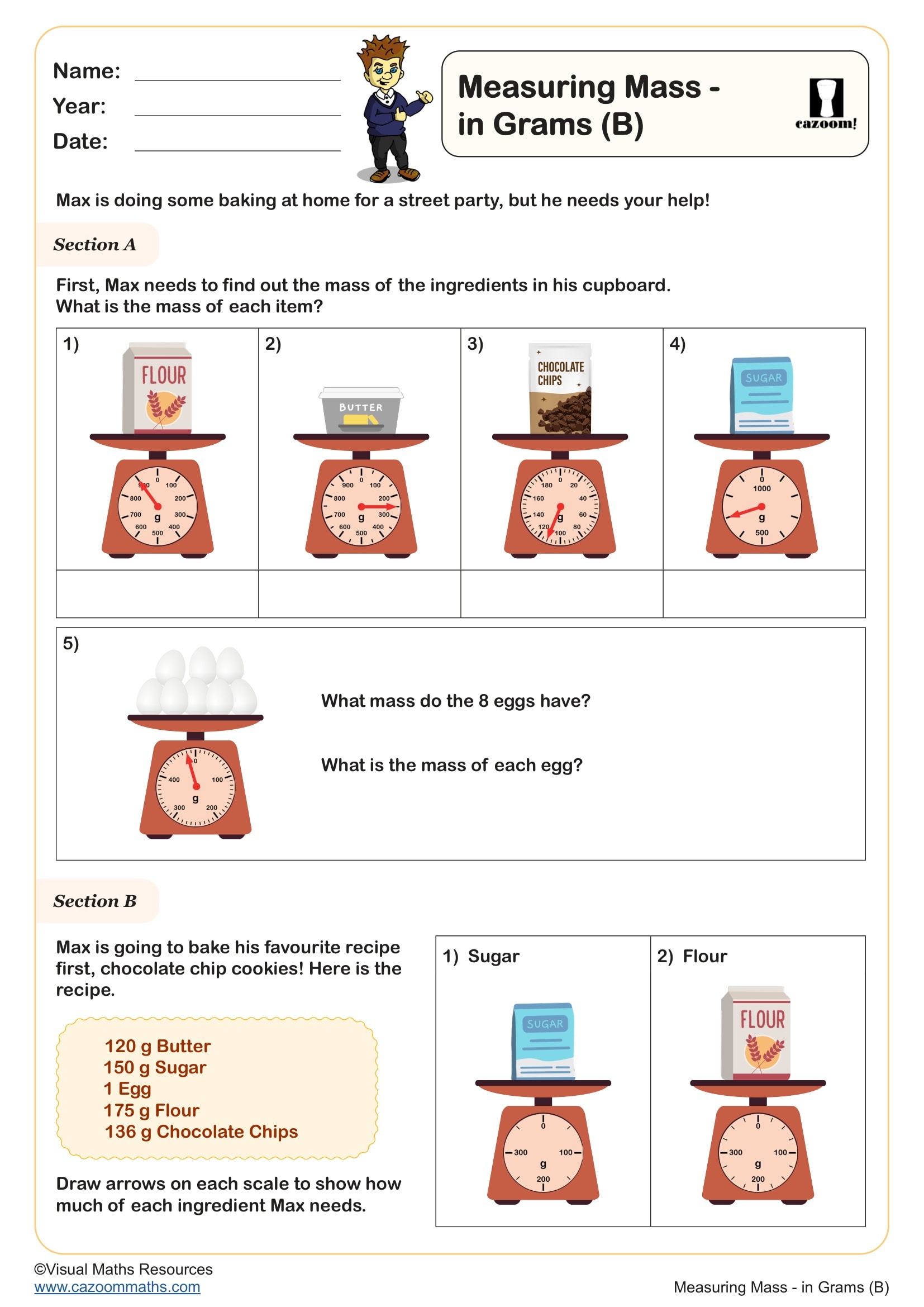
Measure Mass - in Grams (B)
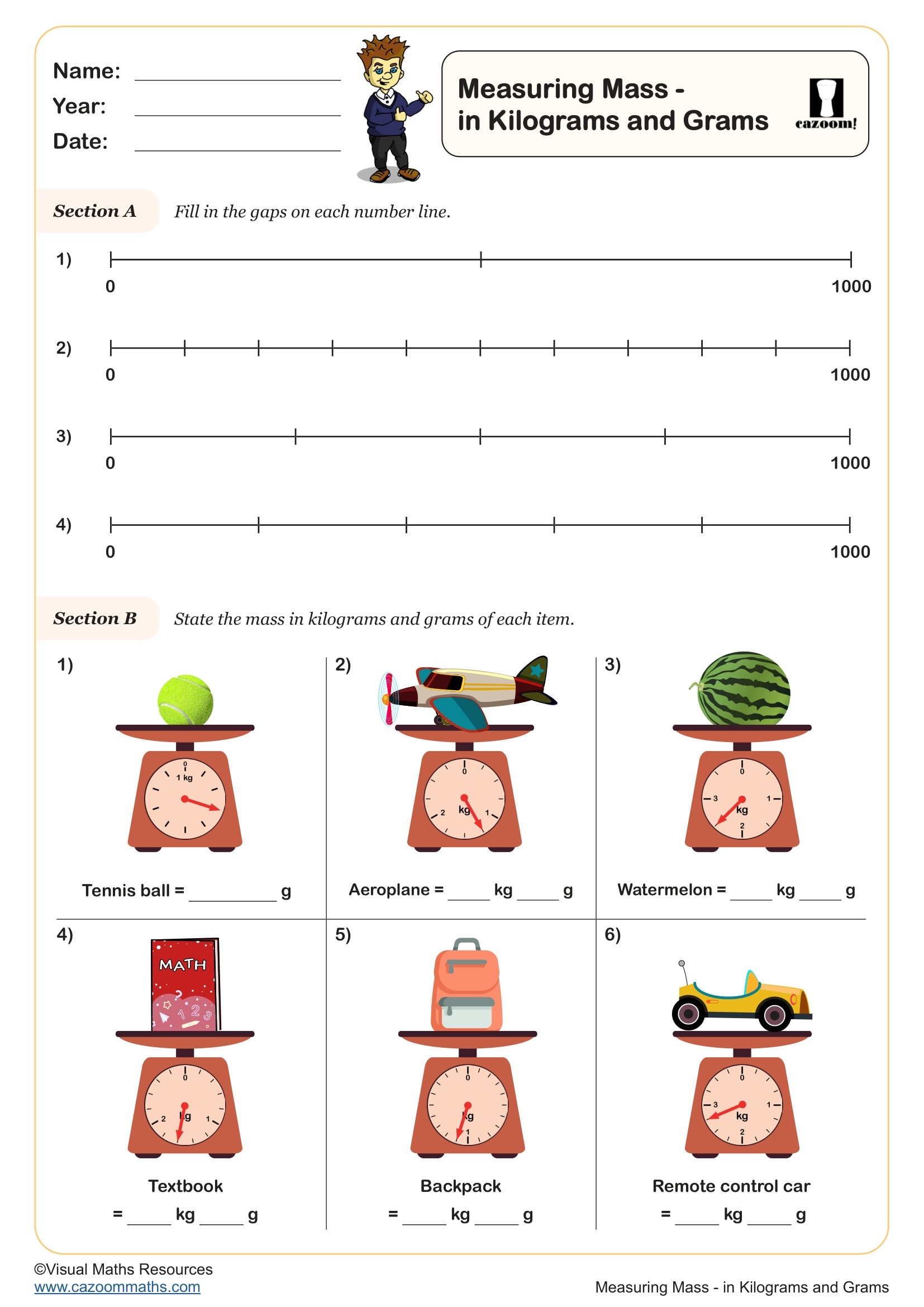
Measure Mass in Kilograms and Grams
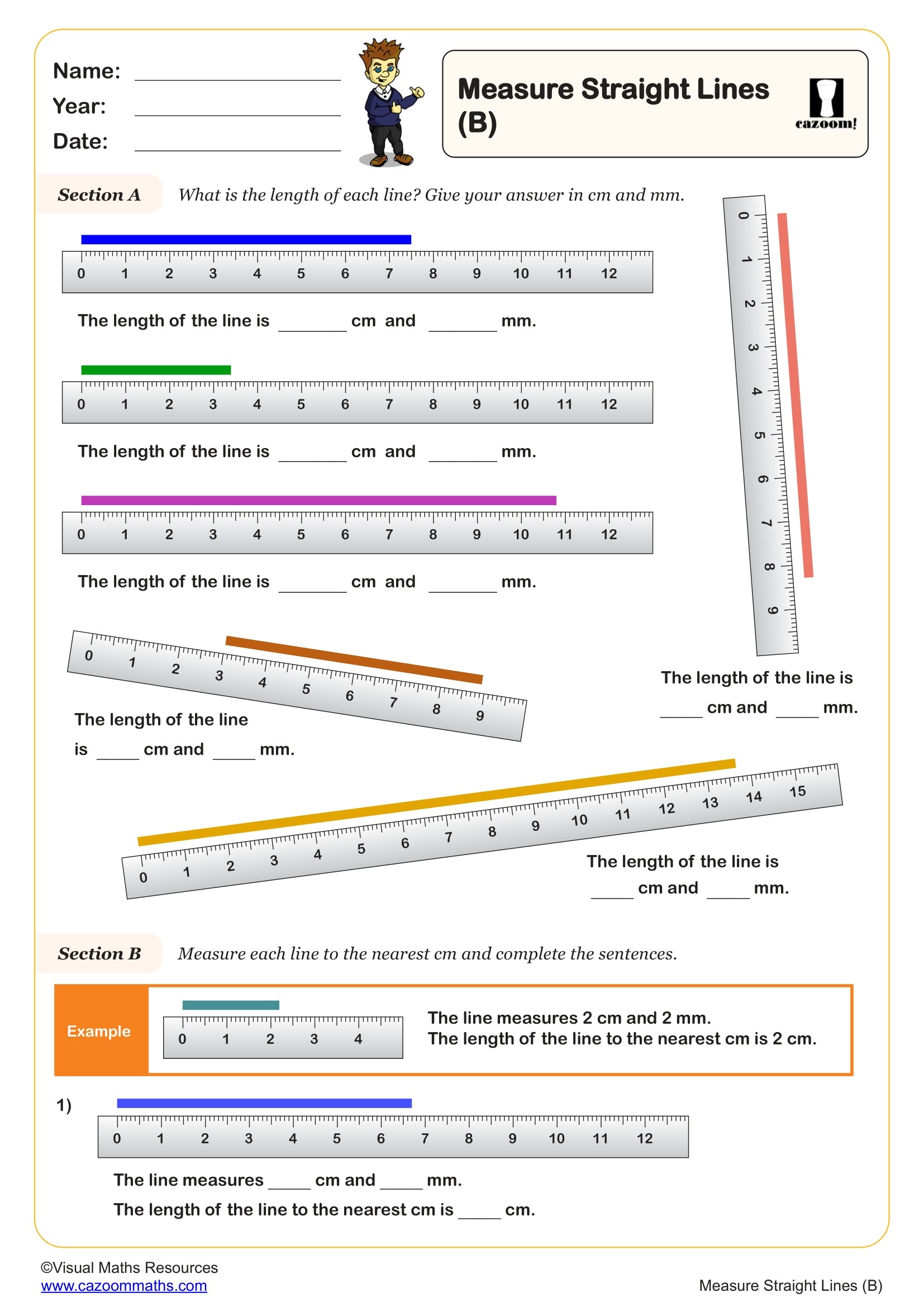
Measure Straight Lines (B)
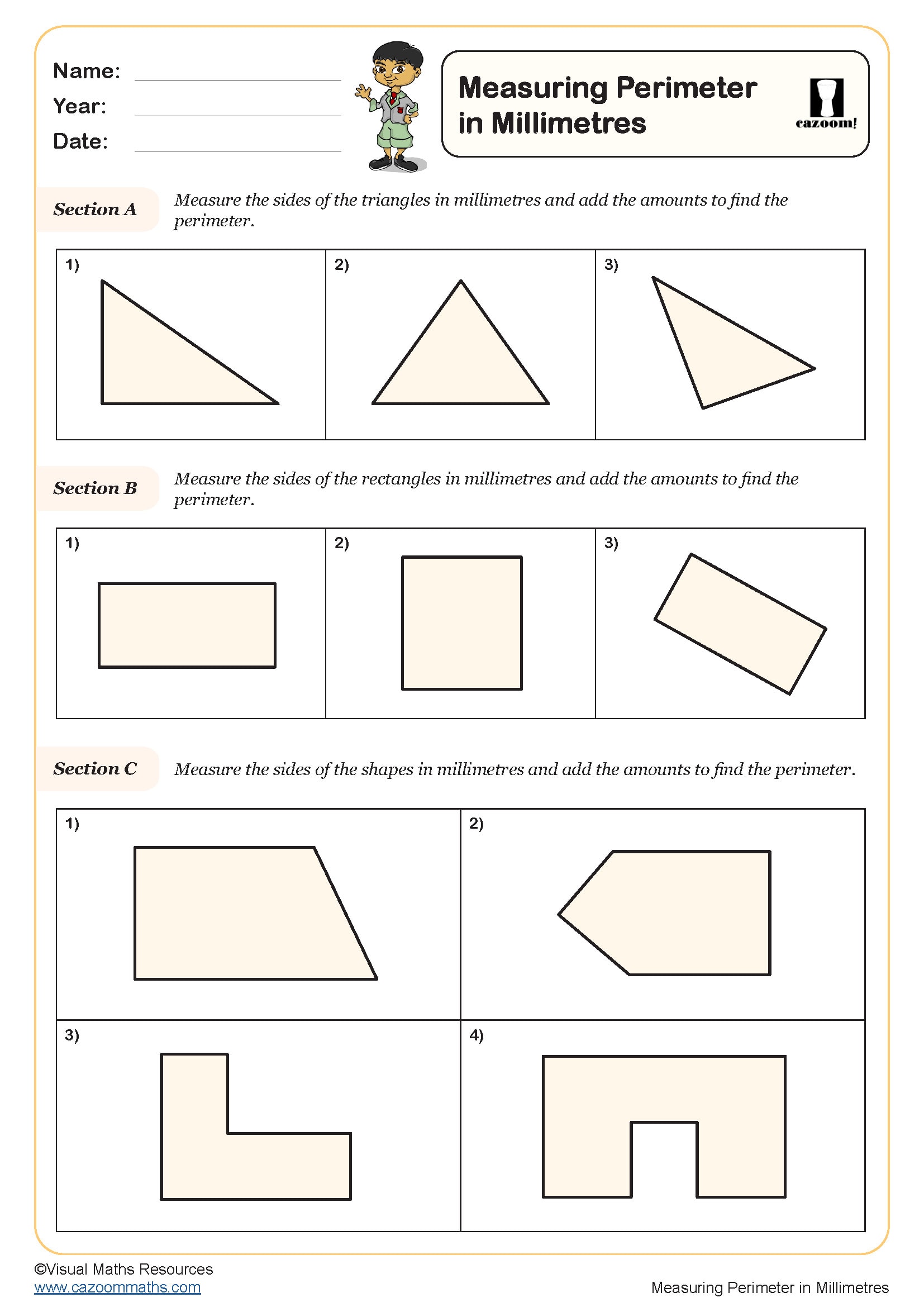
Measuring Perimeter in Millimetres
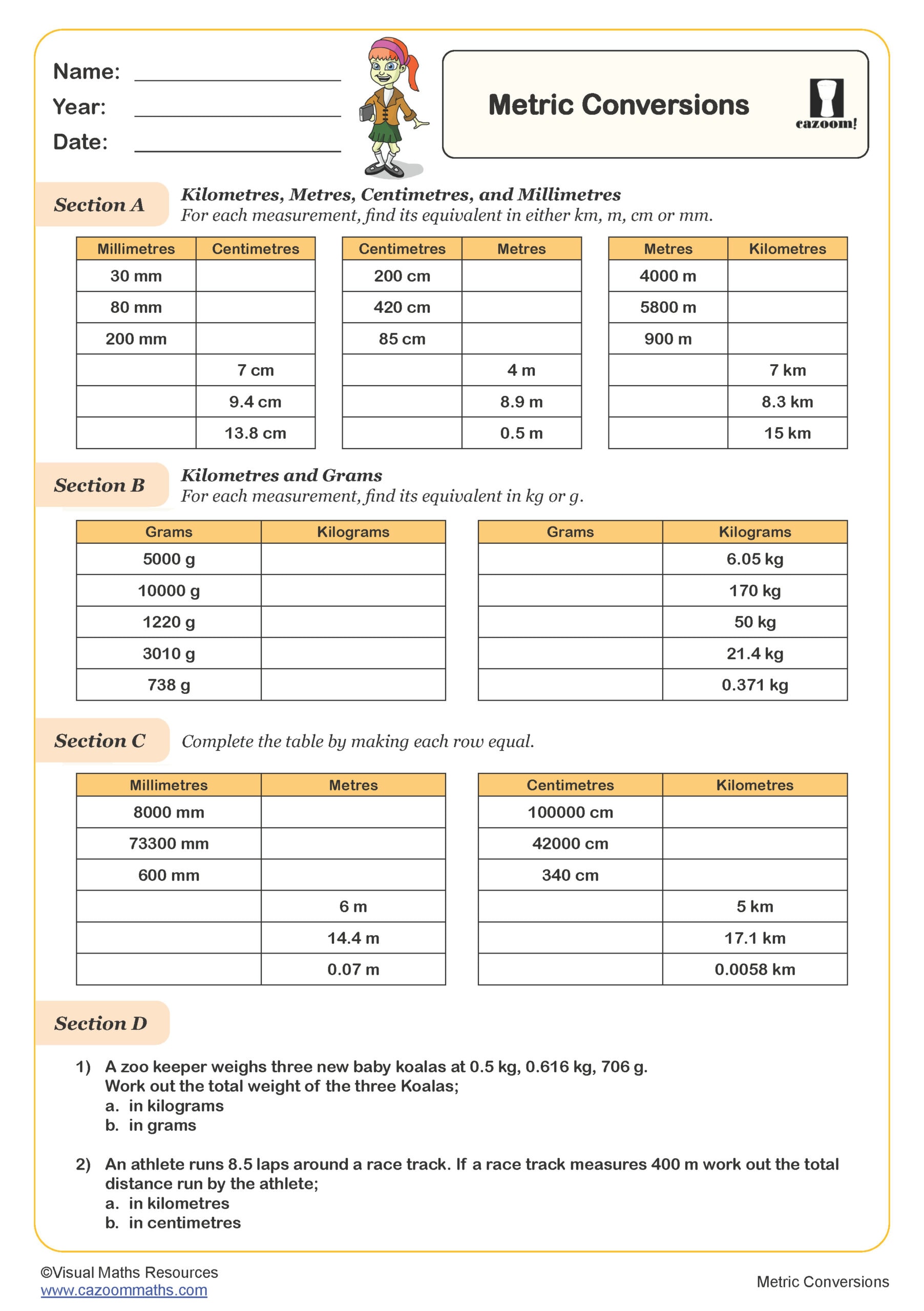
Metric Conversions
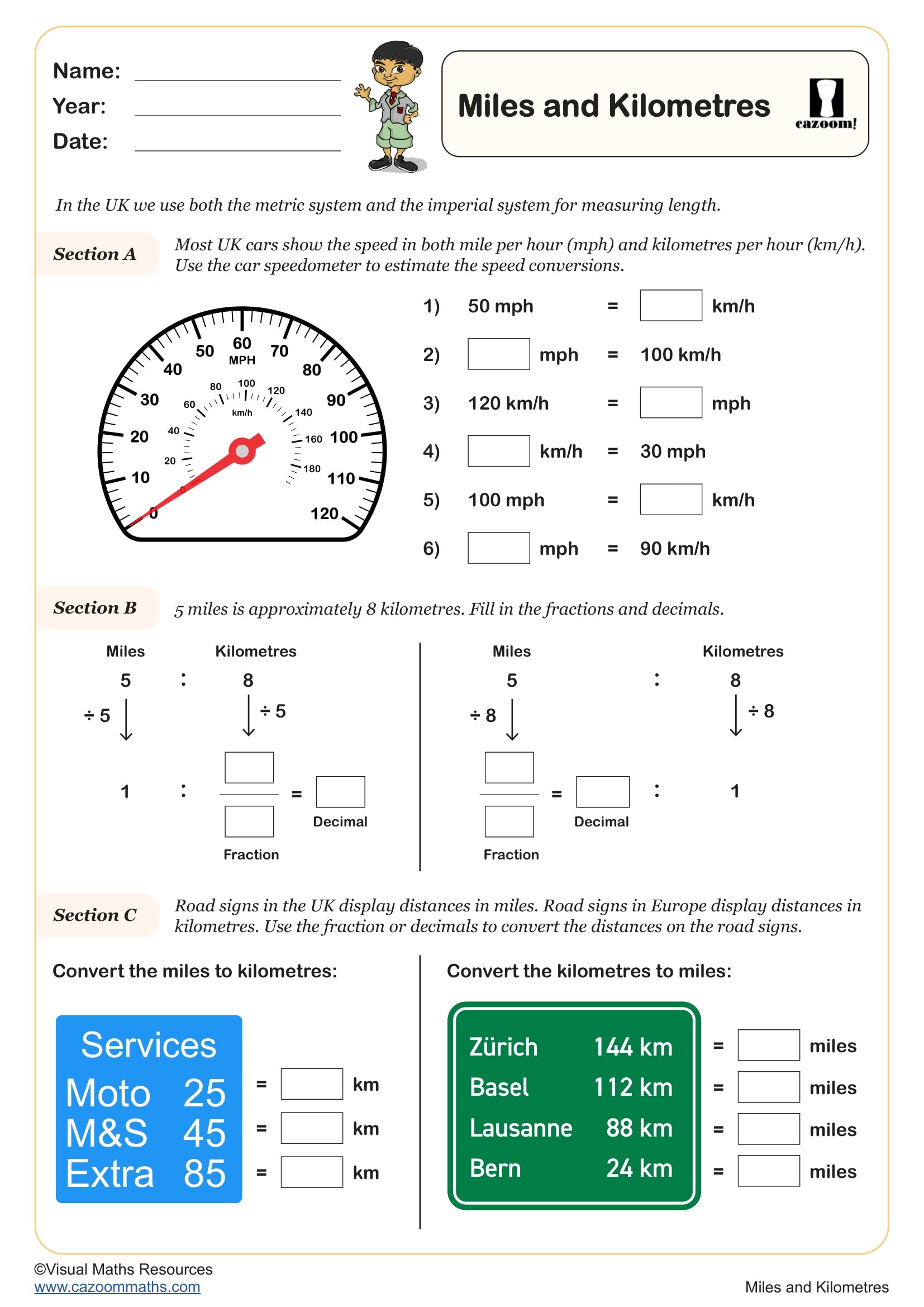
Miles and Kilometres
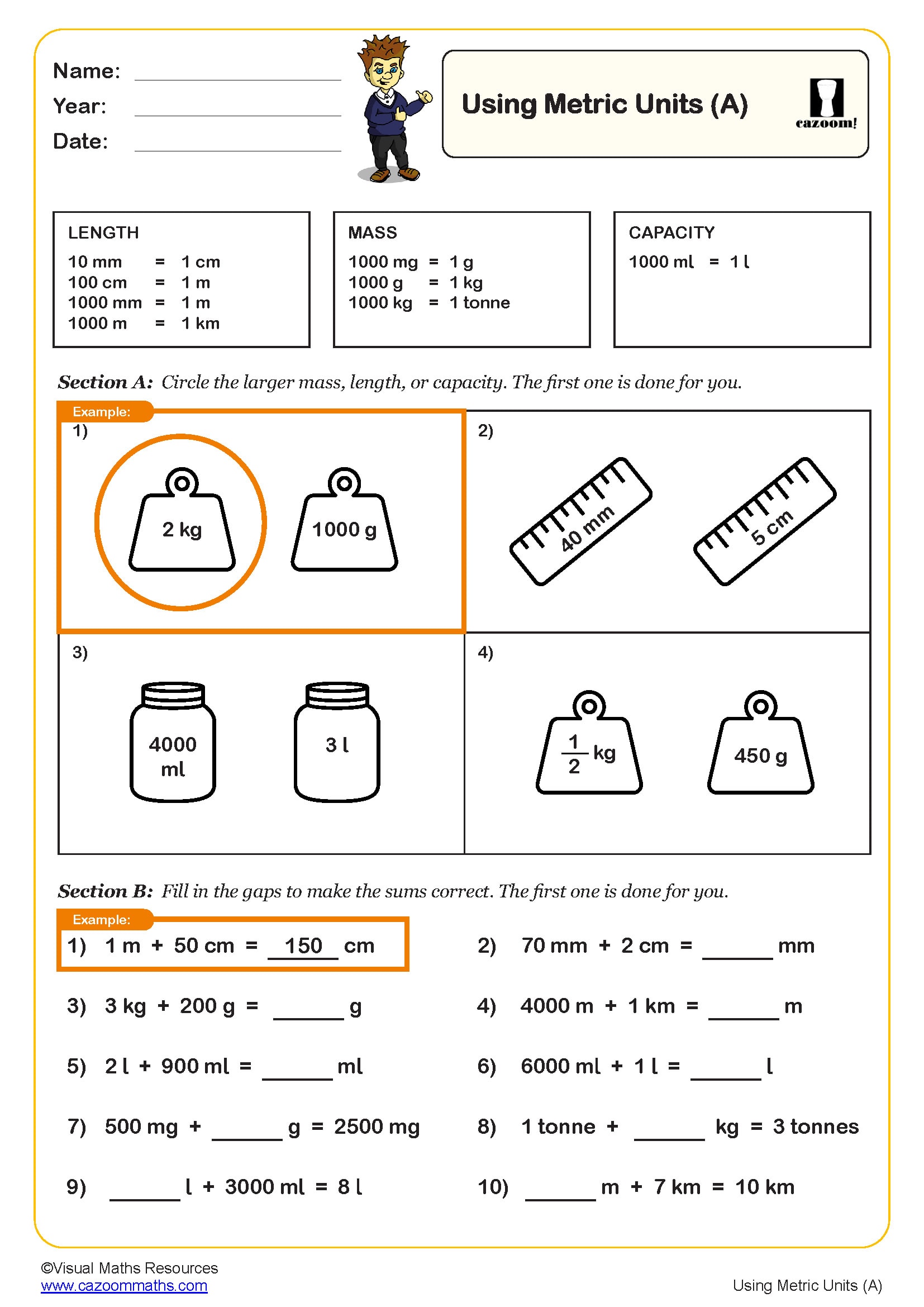
Using Metric Units (A)
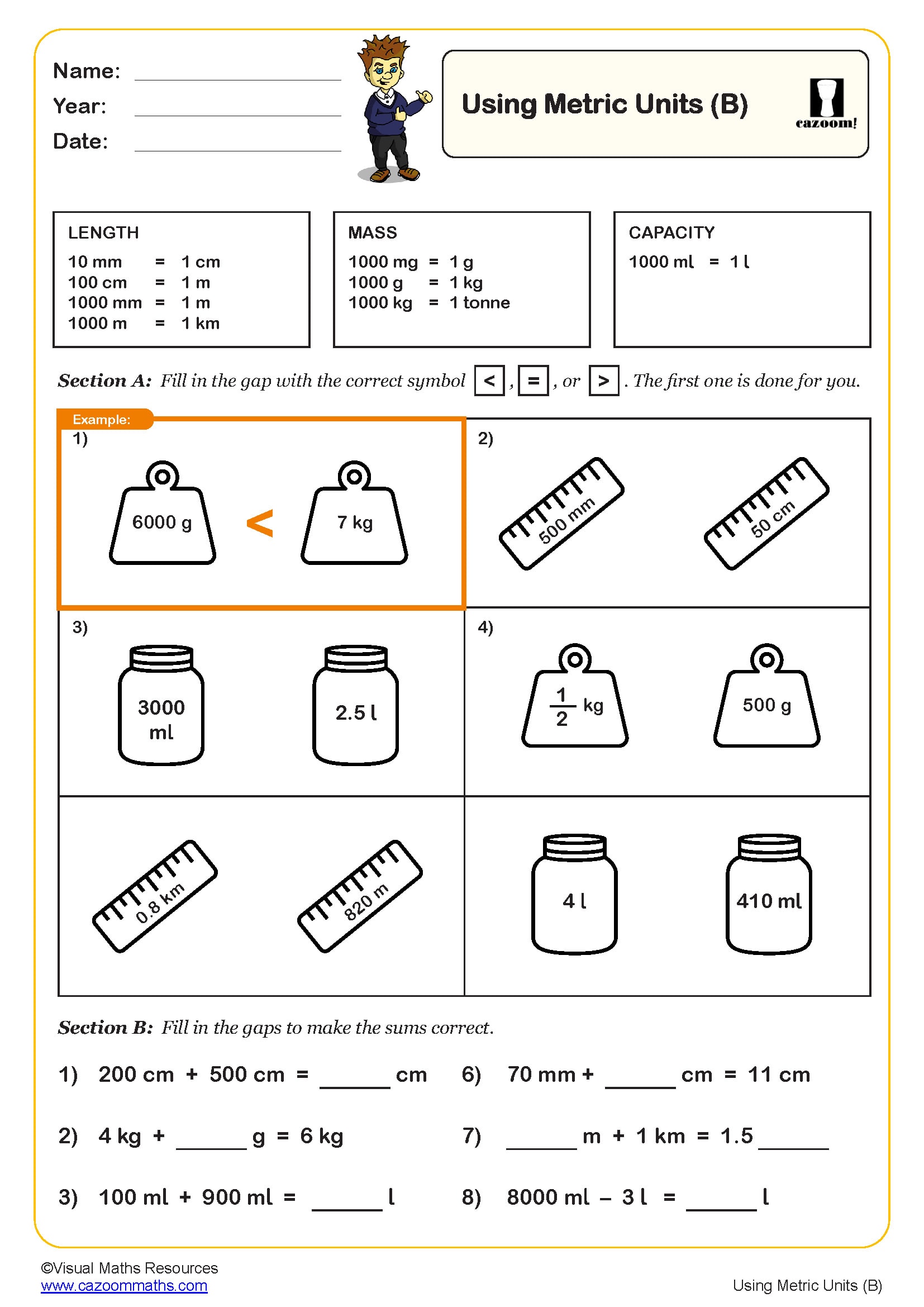
Using Metric Units (B)
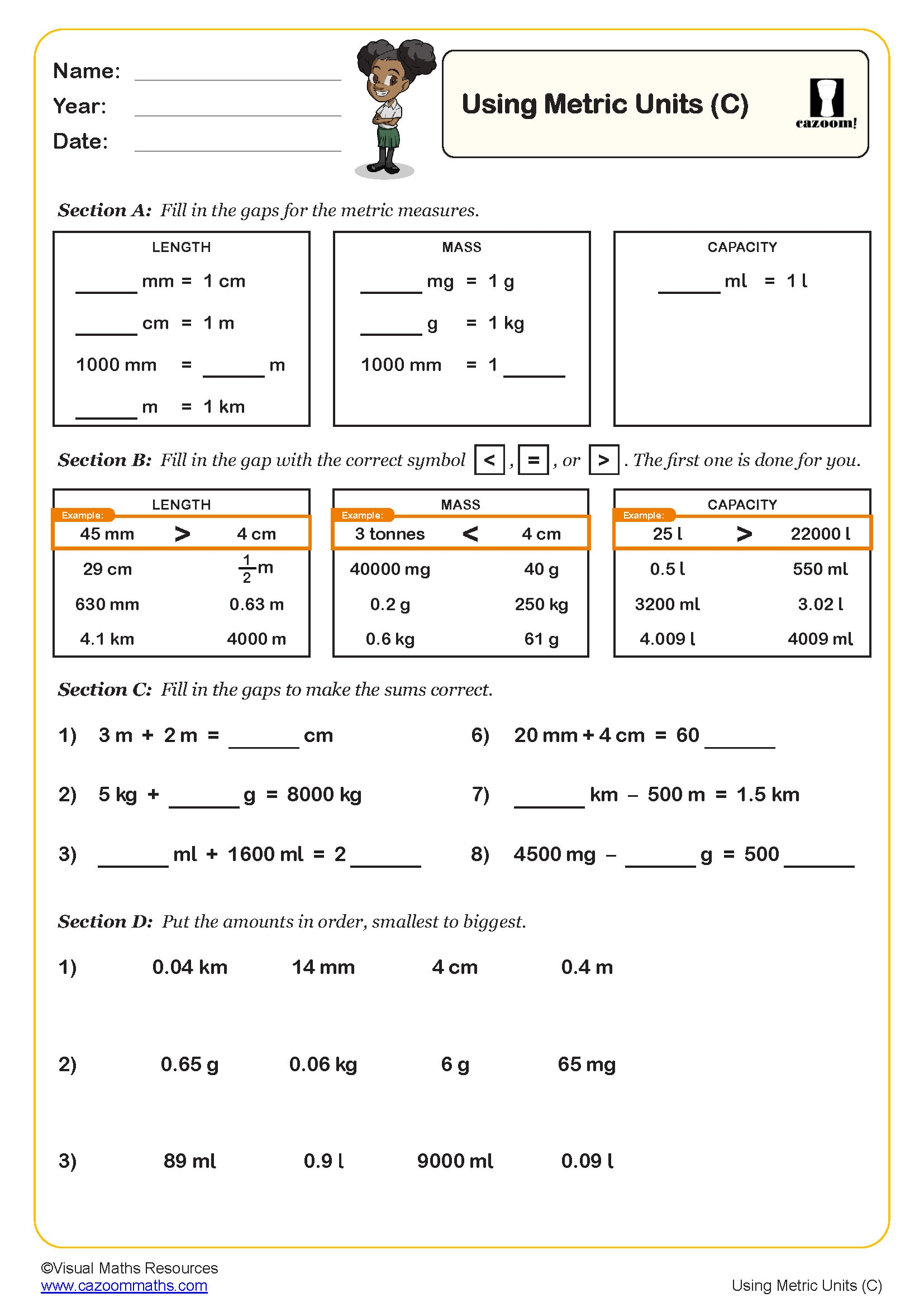
Using Metric Units (C)
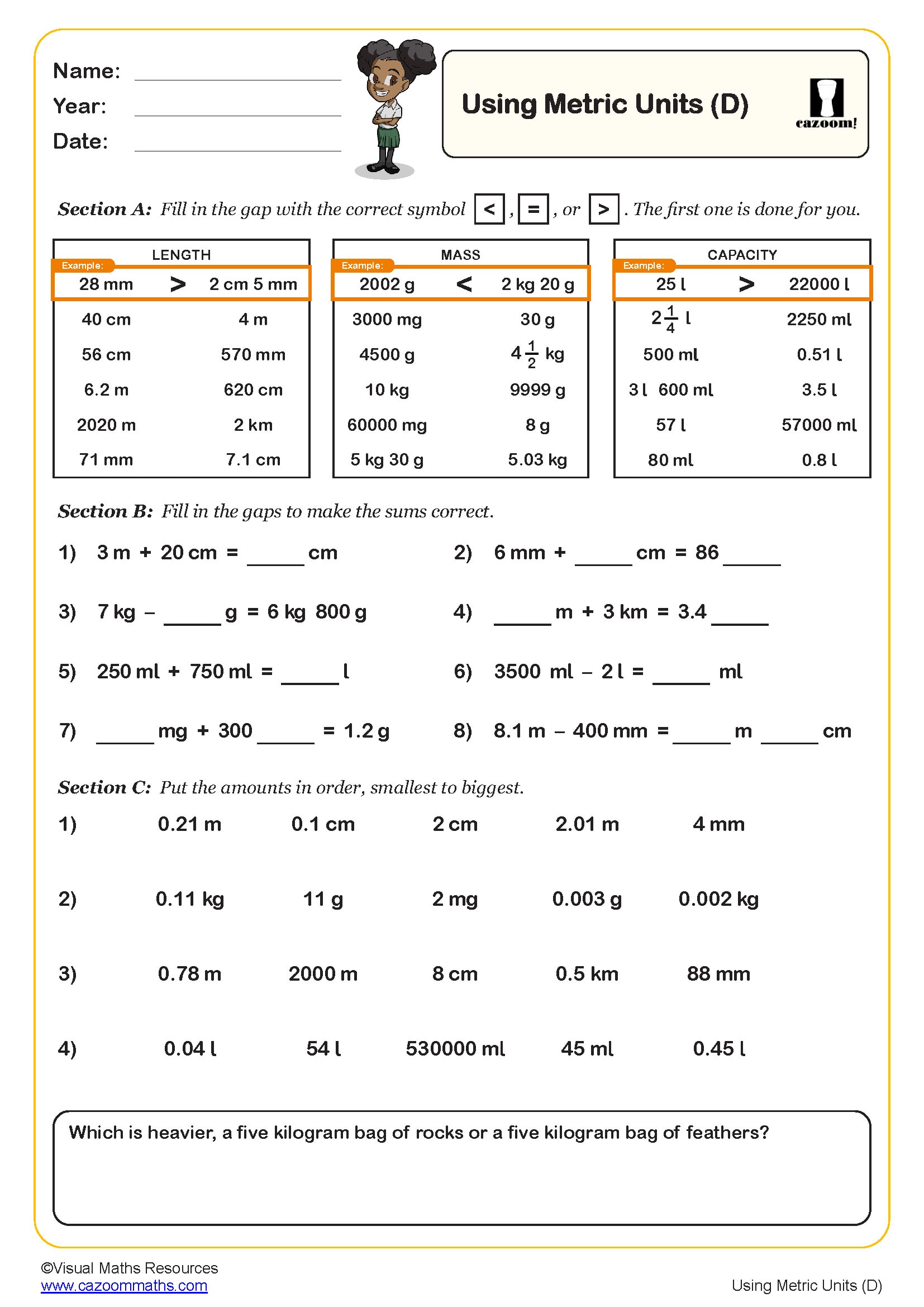
Using Metric Units (D)
All worksheets are created by the team of experienced teachers at Cazoom Maths.
What metric units do KS2 students need to learn?
The National Curriculum requires KS2 pupils to work confidently with metric units for length (millimetres, centimetres, metres, kilometres), mass (grams, kilograms) and capacity (millilitres, litres). Students begin by reading and comparing measurements, then progress to converting between units using multiplication and division.
By the end of Year 6, children should convert fluently between related metric units and solve multi-step problems involving different measures. Our worksheets cover capacity KS2 requirements alongside length and mass, ensuring students encounter all measurement types in varied contexts. This systematic approach builds the conceptual understanding needed for secondary school mathematics.
Which year groups are these metric measures worksheets suitable for?
This collection covers the complete KS2 metric measures curriculum across Years 3, 4, 5 and 6. Year 3 worksheets focus on measuring and comparing using standard units, whilst Year 4 introduces conversions between common metric units. Year 5 materials develop fluency with decimal notation and more complex conversions.
Year 6 worksheets challenge students with multi-step problems, compound measures and mixed-unit calculations that prepare them for secondary school. The progression ensures each year group builds systematically on prior knowledge, with sufficient practice to develop automaticity in conversions before tackling problem-solving applications.
How do students learn to convert between metric units?
Converting between metric units relies on understanding that each step in the metric system involves multiplying or dividing by 10, 100 or 1000. Students learn that there are 1000 millimetres in a metre, 100 centimetres in a metre, and 1000 metres in a kilometre. The same pattern applies to mass and capacity.
Our worksheets develop this understanding through structured practice, starting with straightforward conversions before progressing to problems requiring multiple conversions. Students encounter questions presented as measurements in different contexts—reading scales, comparing quantities and solving real-world problems. This varied practice helps pupils recognise when to multiply or divide and builds confidence with decimal place value.
What's included with each metric measures worksheet?
Every worksheet comes with a complete answer sheet showing all worked solutions. This allows teachers to mark work efficiently and enables students to self-check their understanding when working independently. The answer sheets support effective feedback, helping you identify specific misconceptions quickly.
Worksheets are provided as downloadable PDFs that print clearly on standard A4 paper. You can use them for whole-class teaching, homework assignments, intervention groups or independent practice. The consistent format helps students focus on the mathematics rather than deciphering instructions, whilst the progression across worksheets ensures systematic skill development throughout KS2.