KS2 Part Whole Models Worksheets
Add and subtract numbers mentally (A)
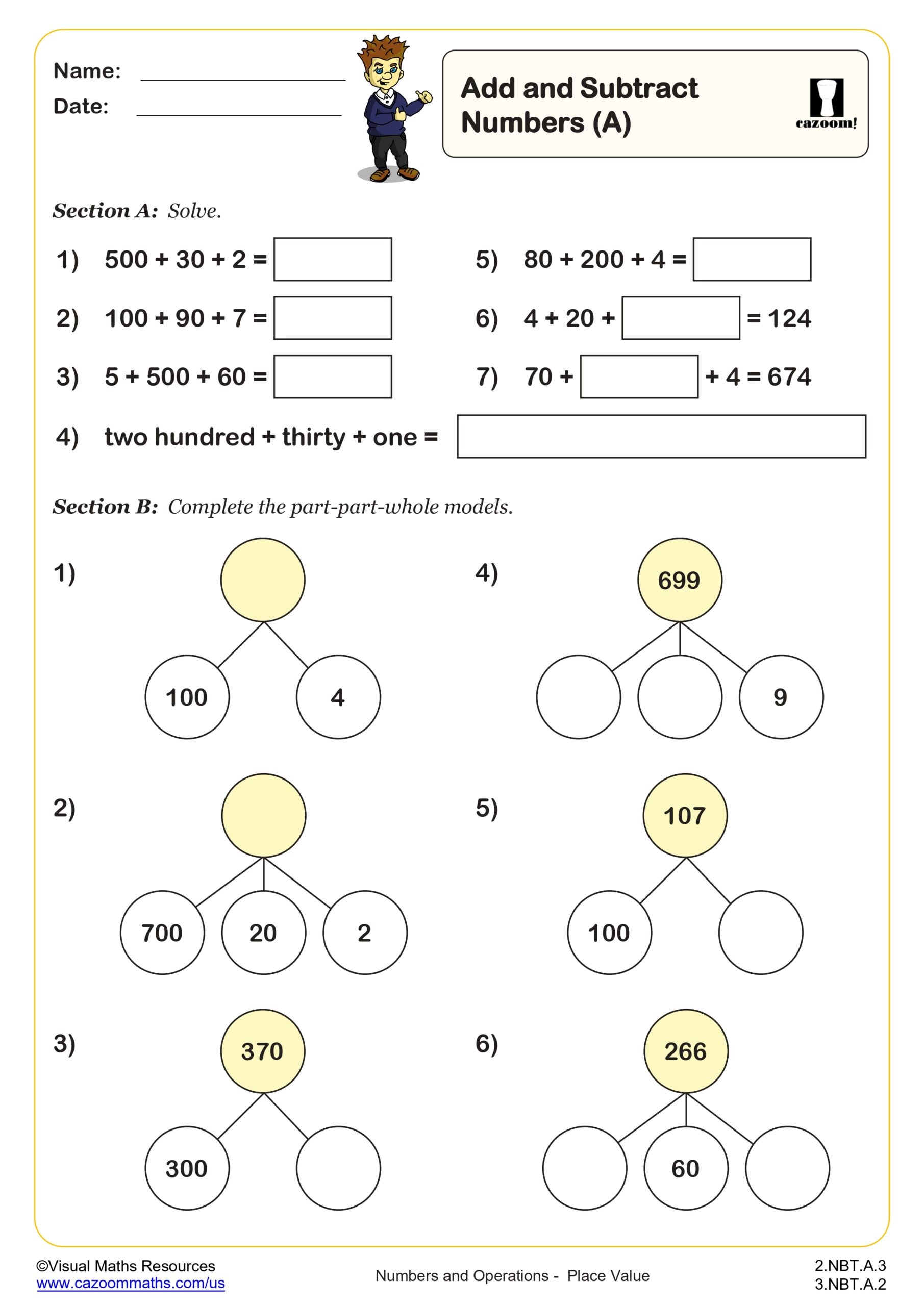
Add and subtract numbers mentally (B)
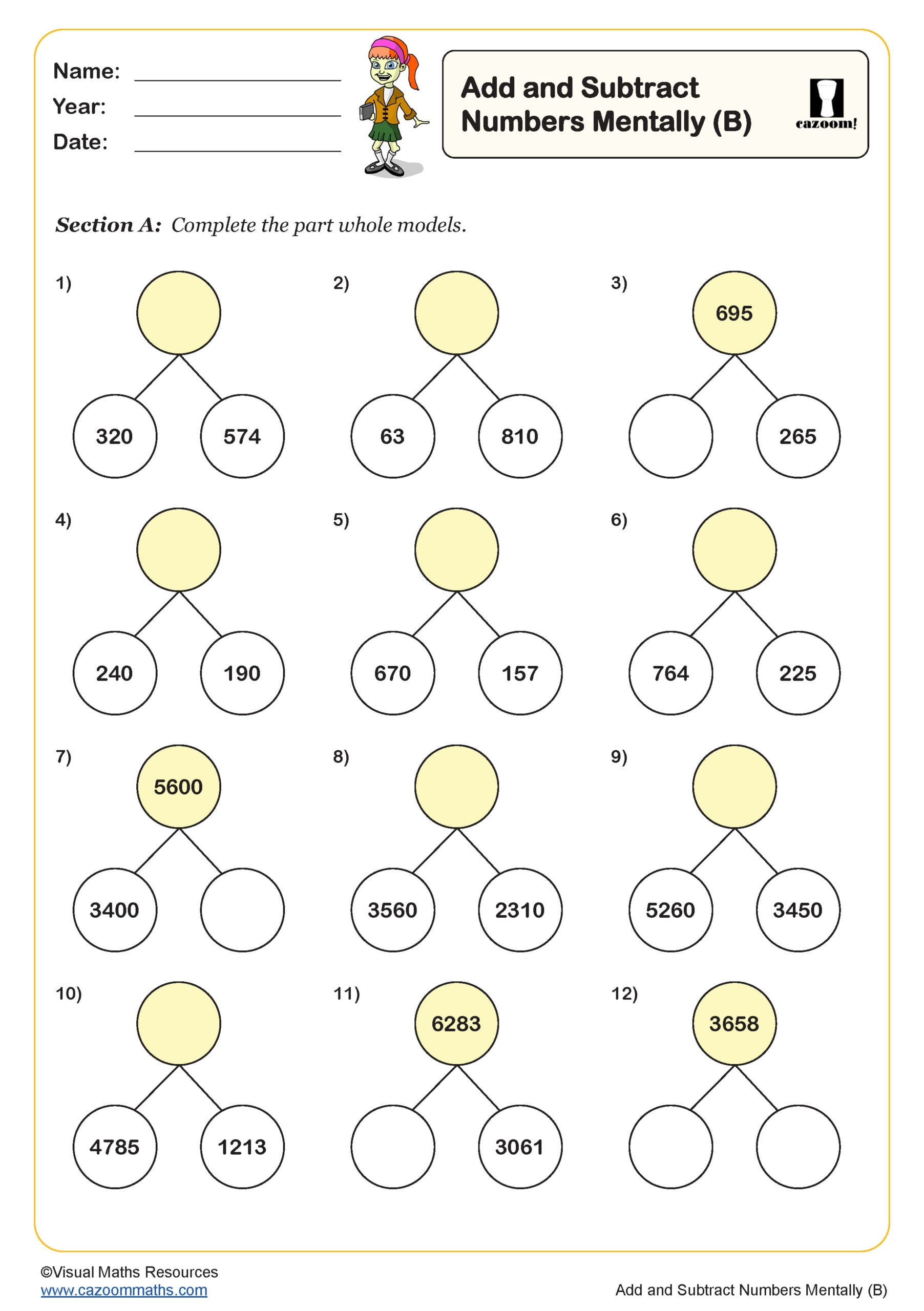
Compare Mixed numbers
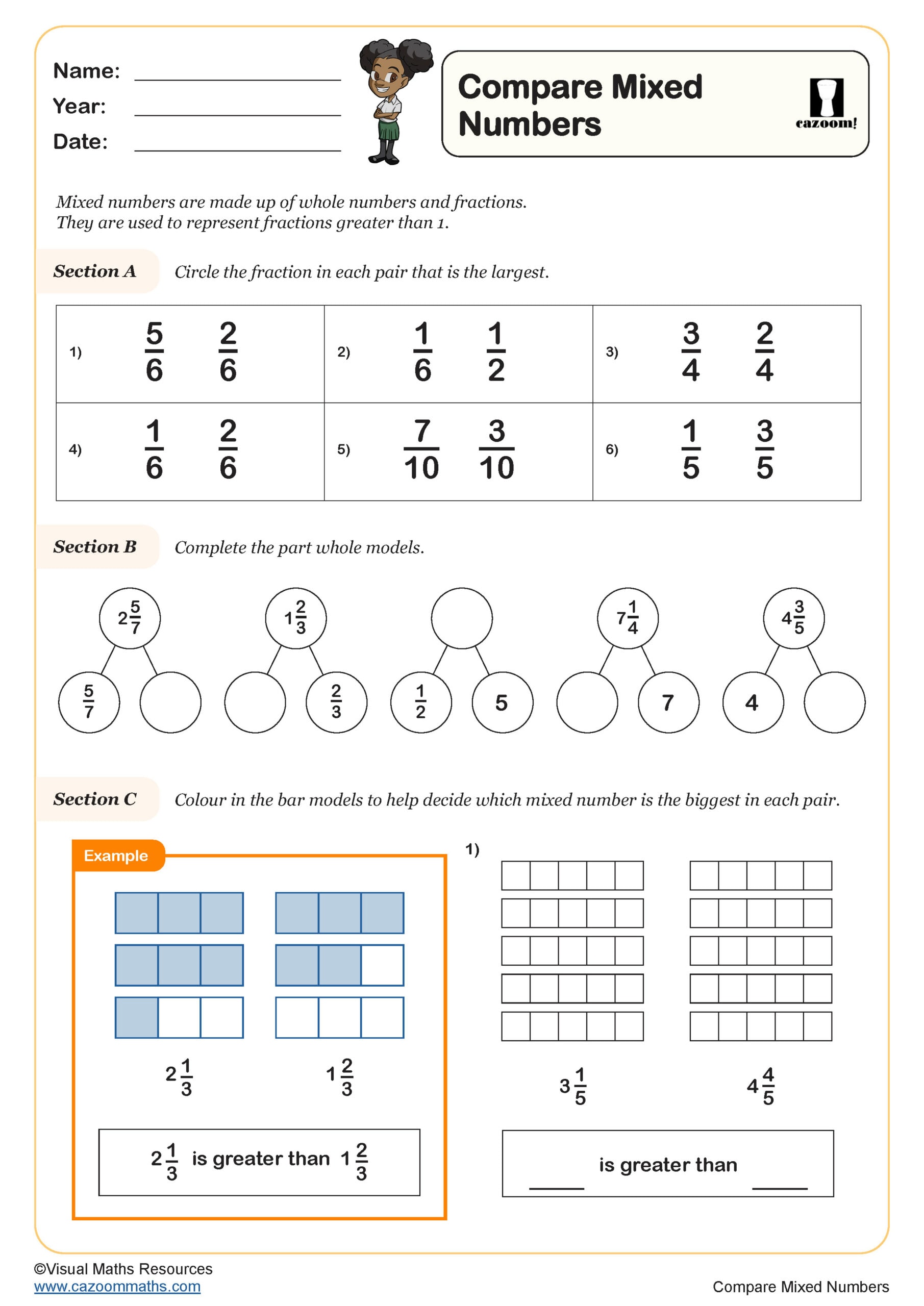
Doubling 2 Digit Numbers
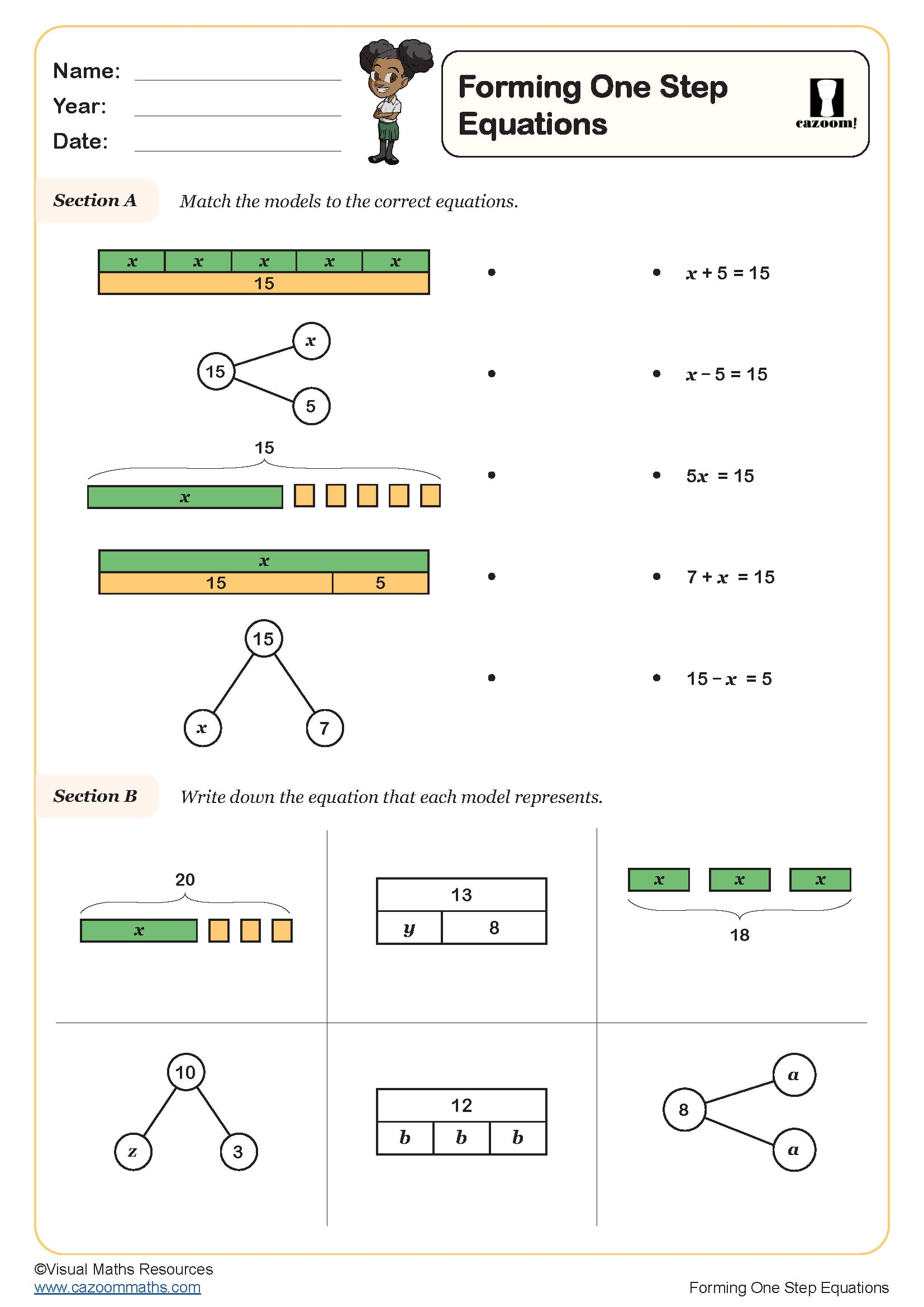
Forming One Step Equations
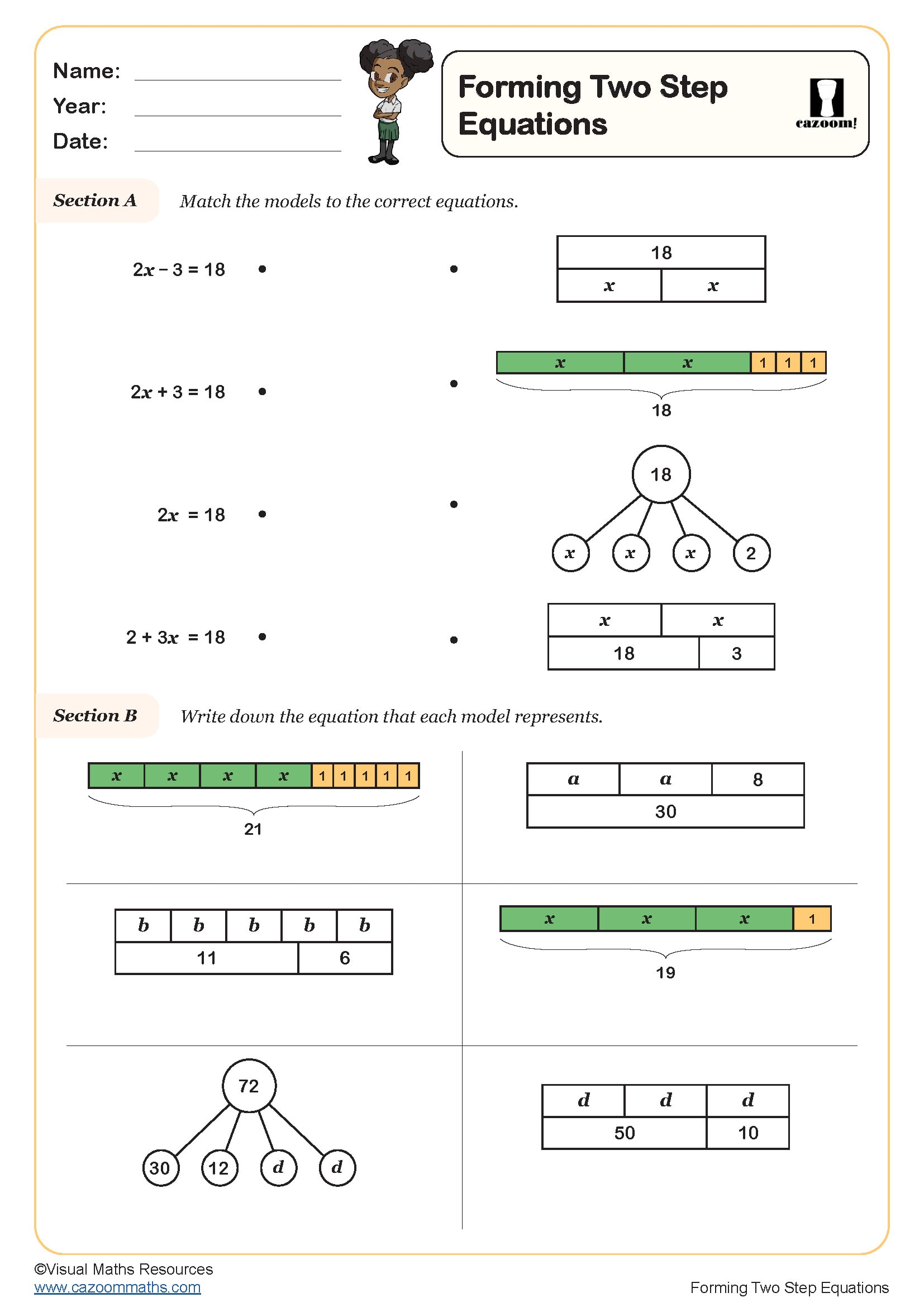
Forming Two Step Equations
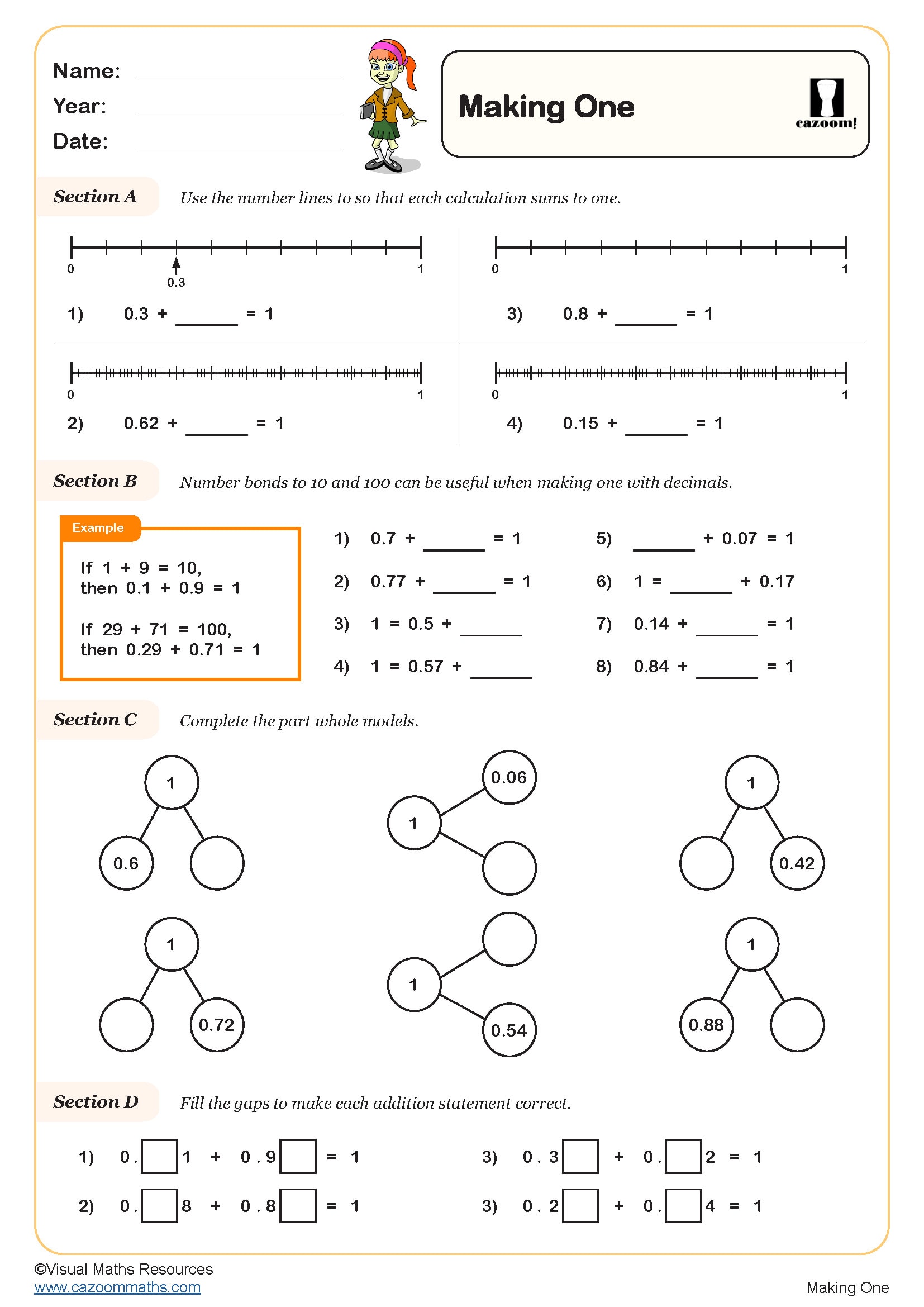
Making One
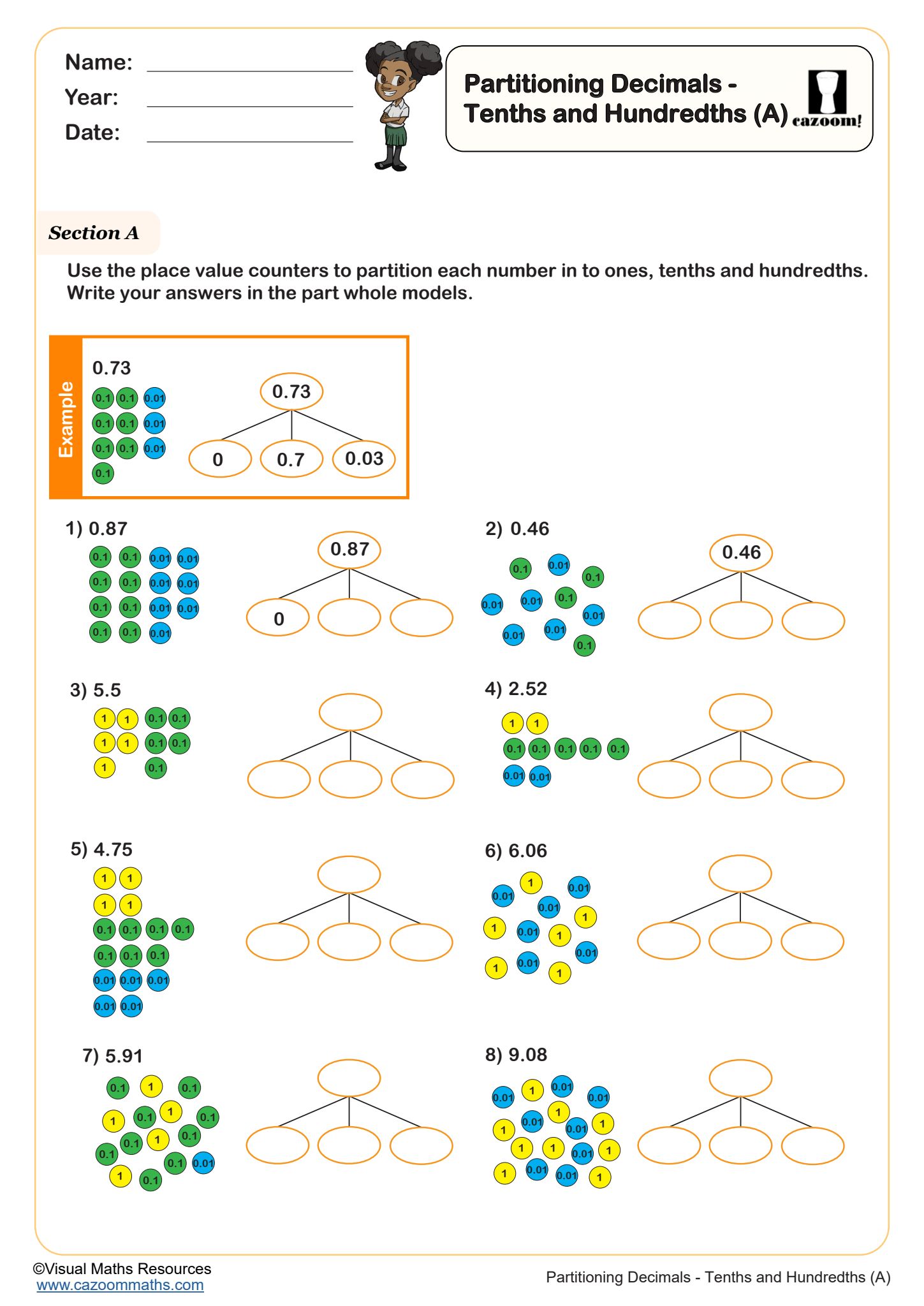
Partitioning Decimals - Tenths and Hundredths (A)
Partitioning Decimals - Tenths and Hundredths (B)
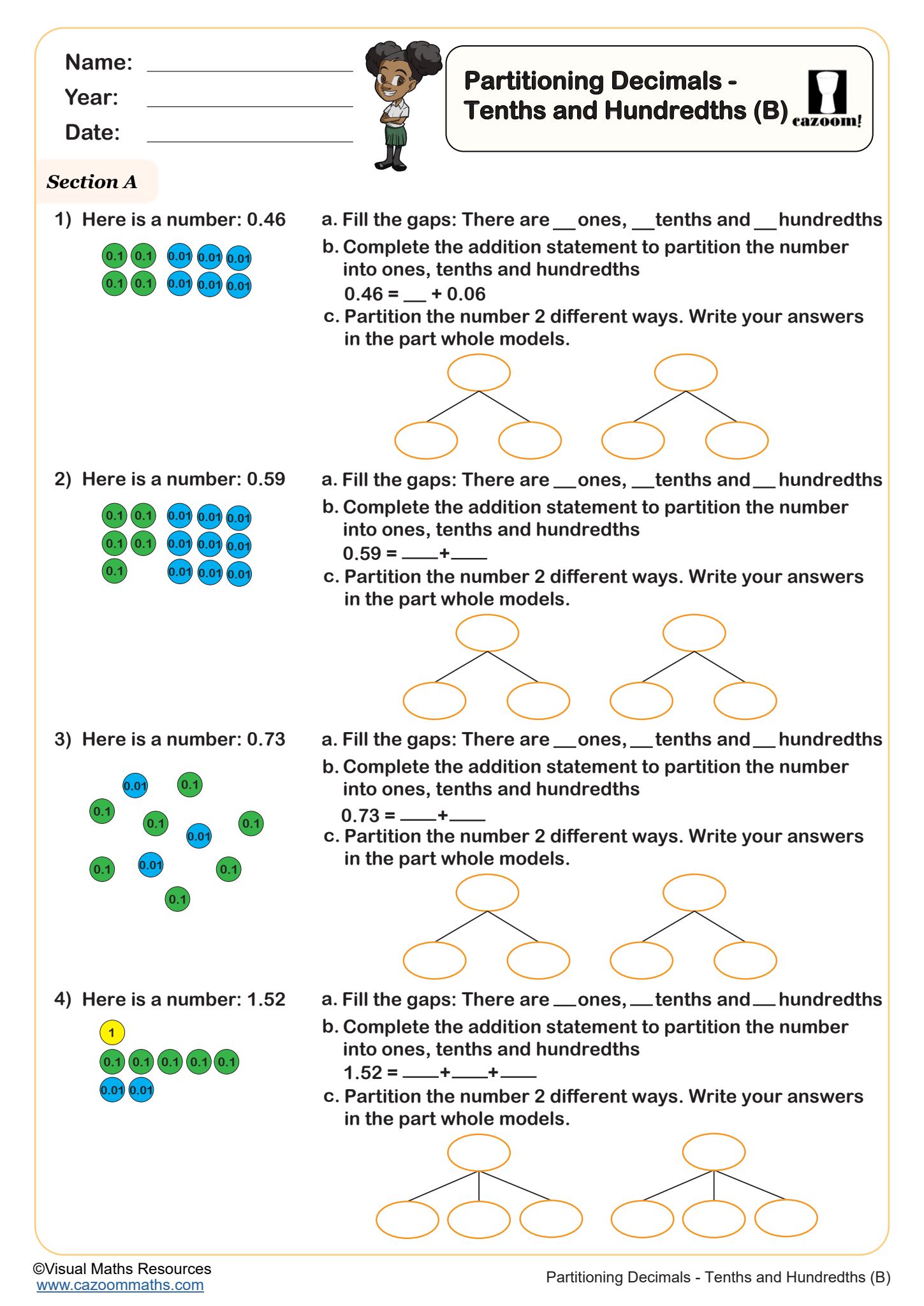
Partitioning Mixed Numbers
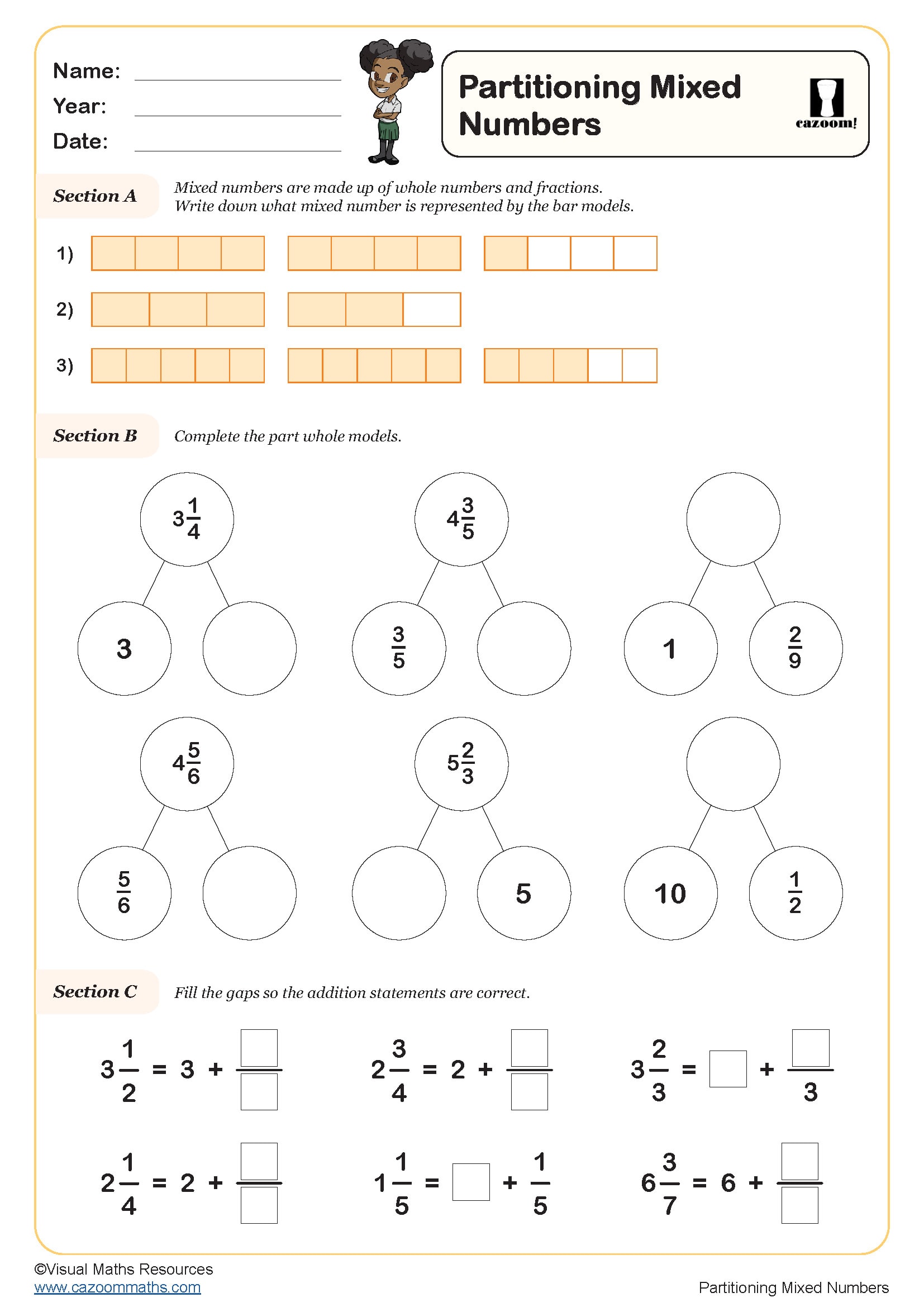
Partitioning Numbers to 1,000
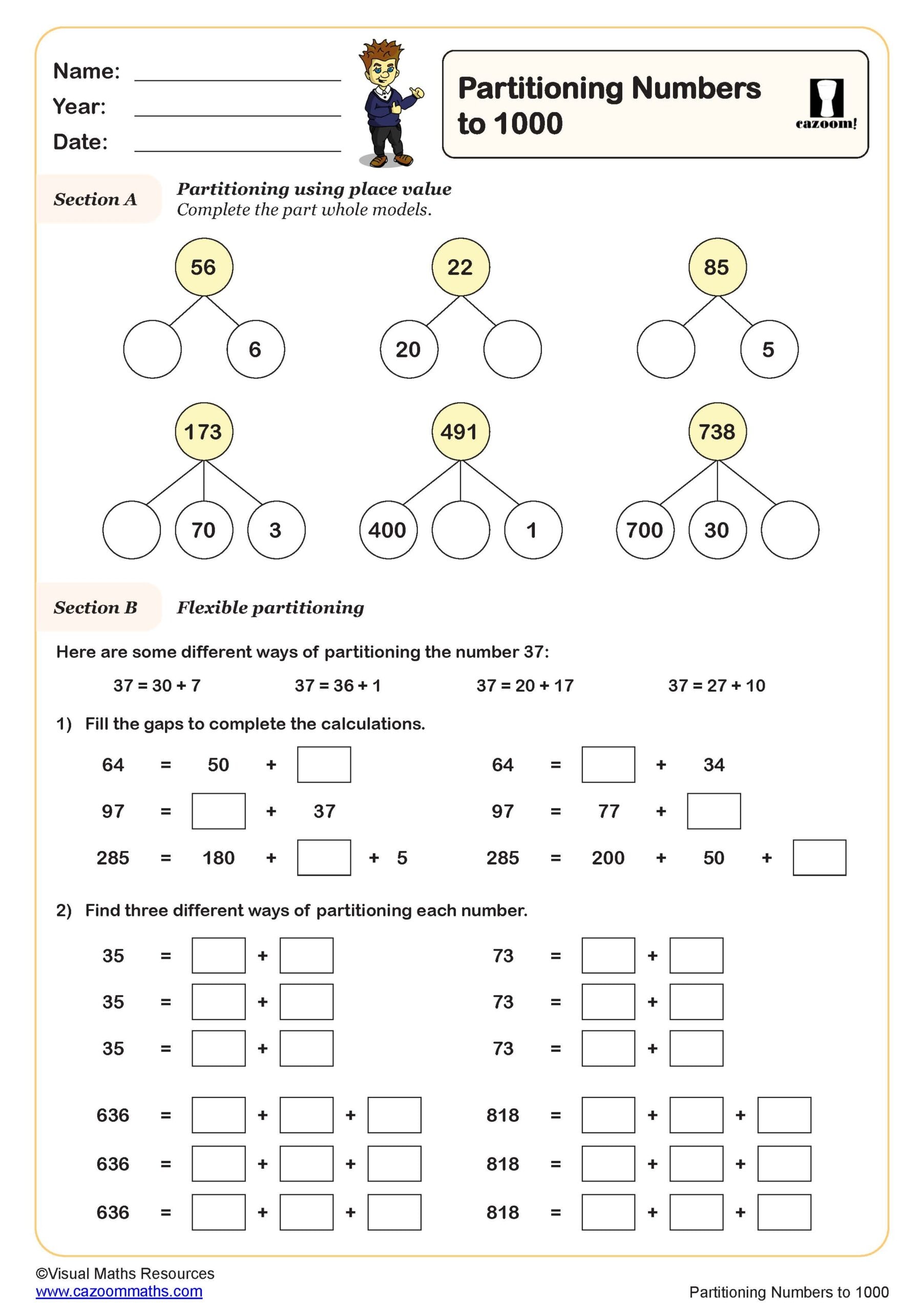
Partitioning Numbers to 1,000,000
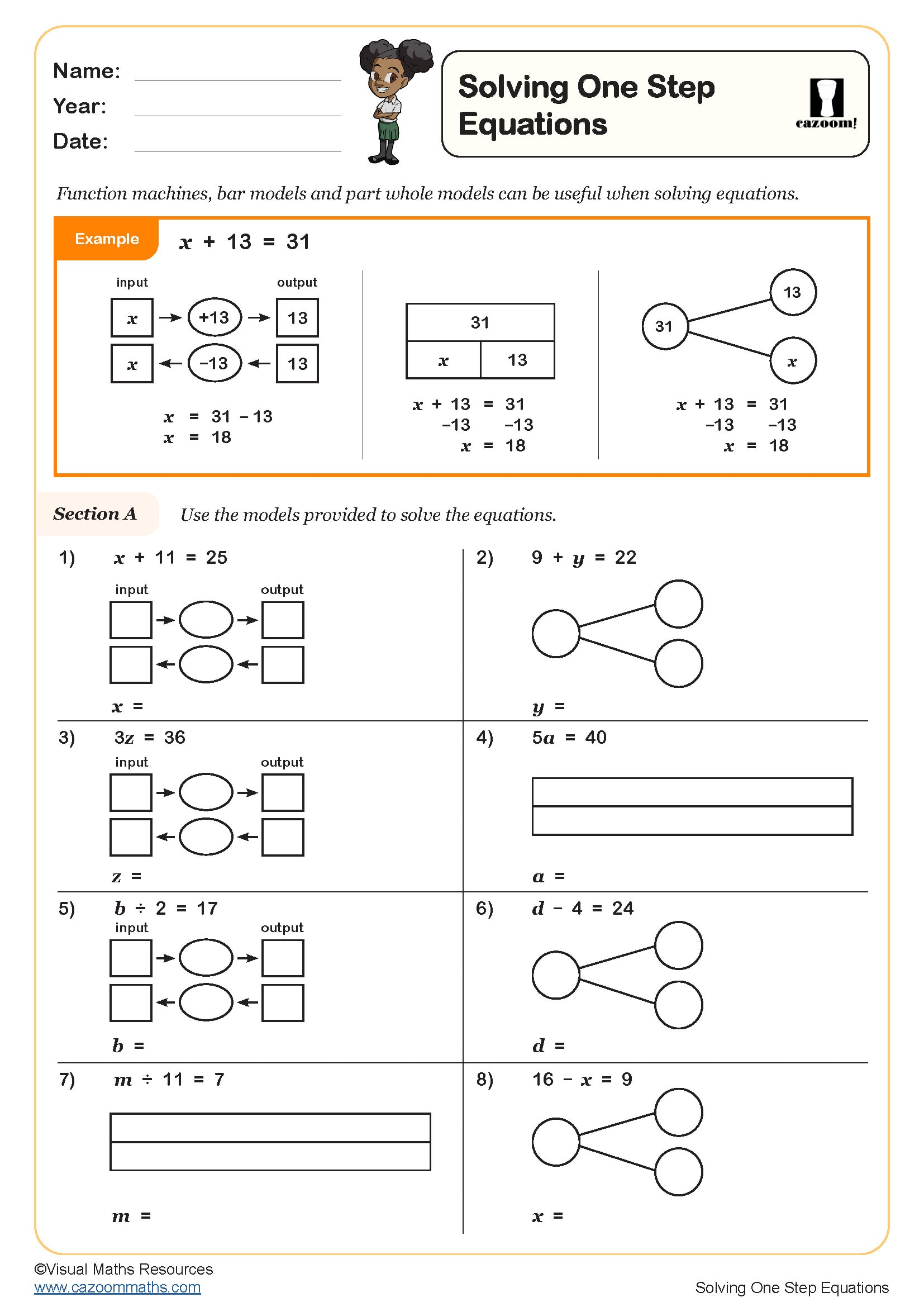
Solving One Step Equations
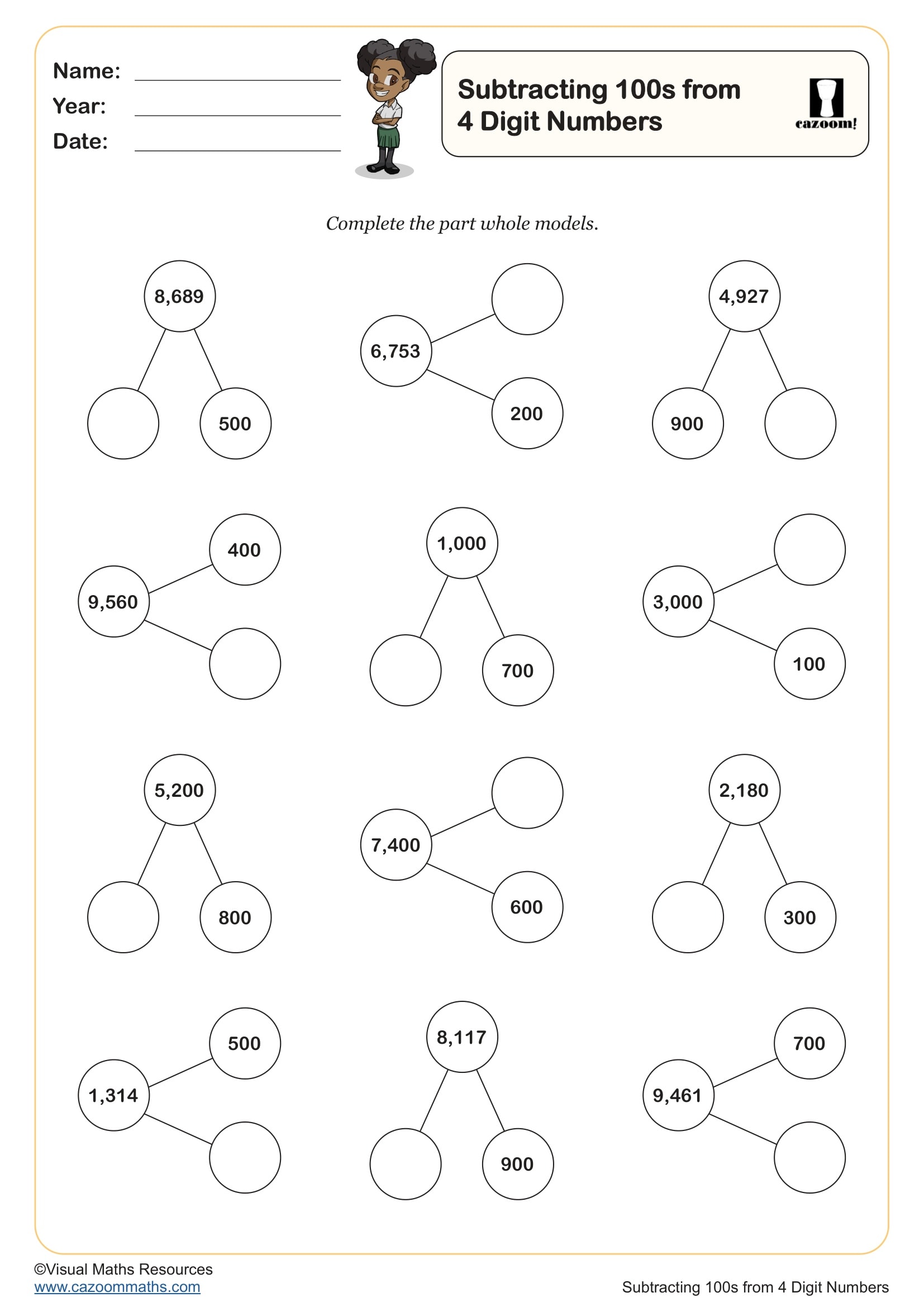
Subtracting 100s from 4 Digit Numbers
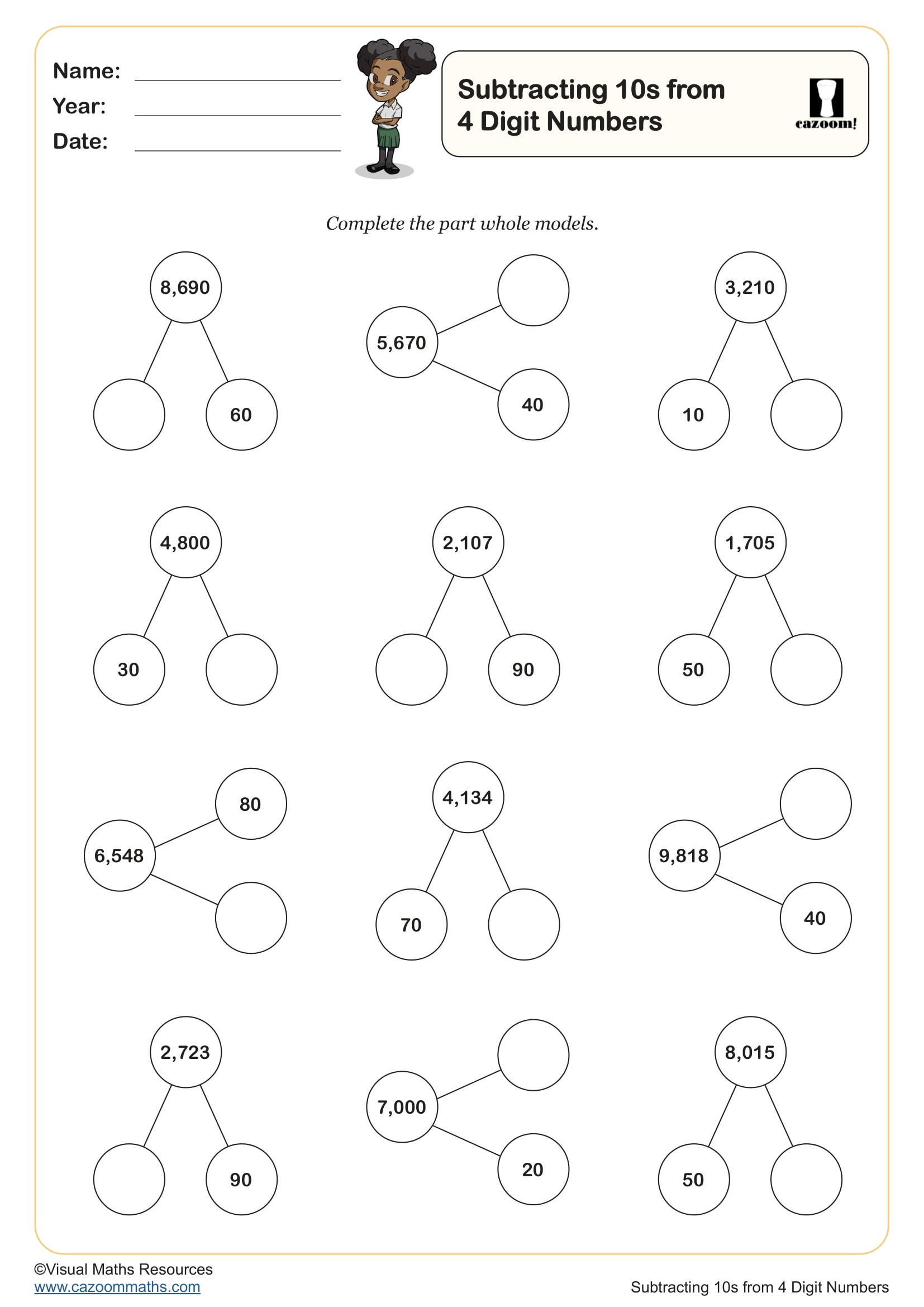
Subtracting 10s from 4 Digit Numbers
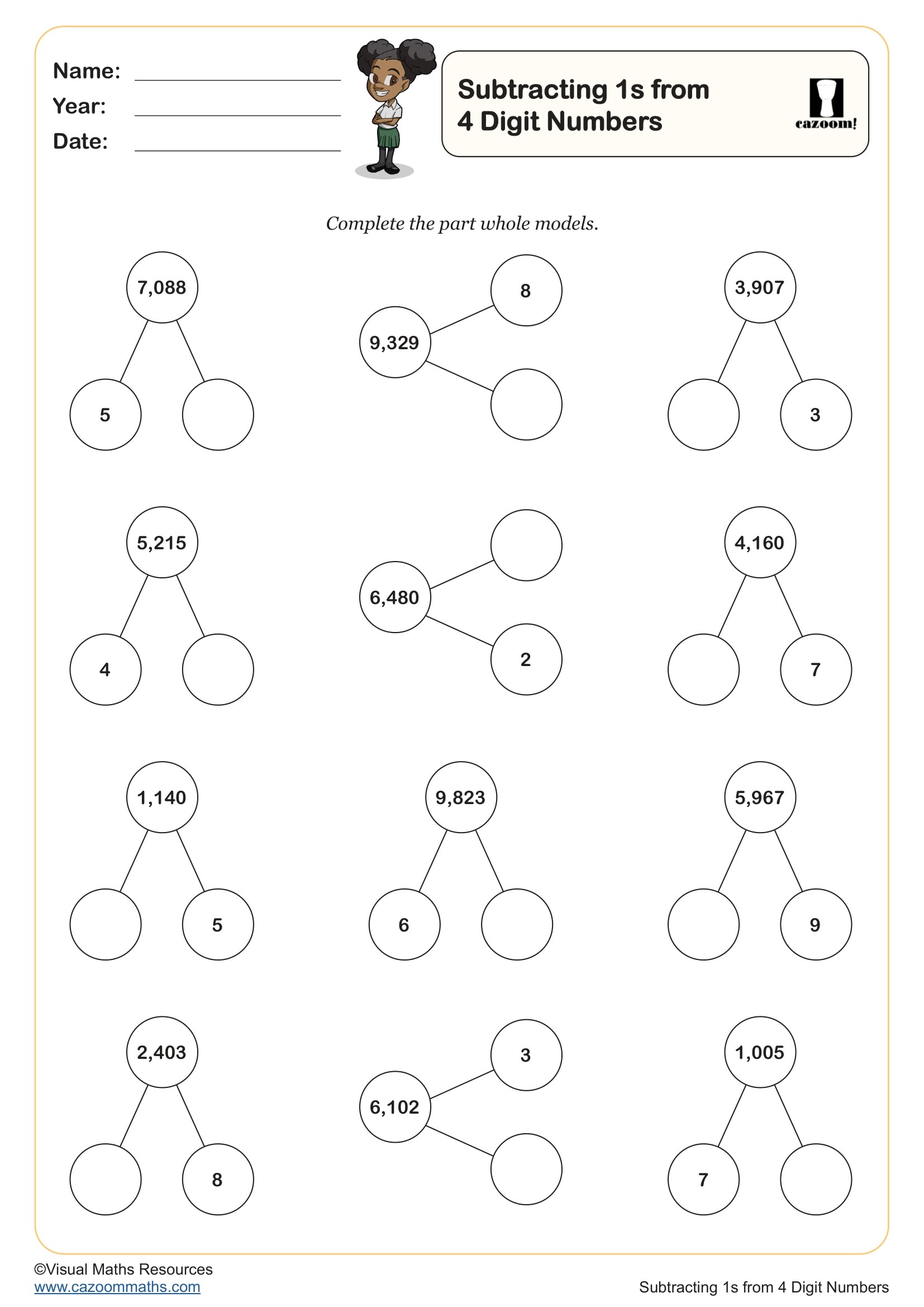
Subtracting 1s from 4 Digit Numbers
Subtracting Fractions from Whole Amounts
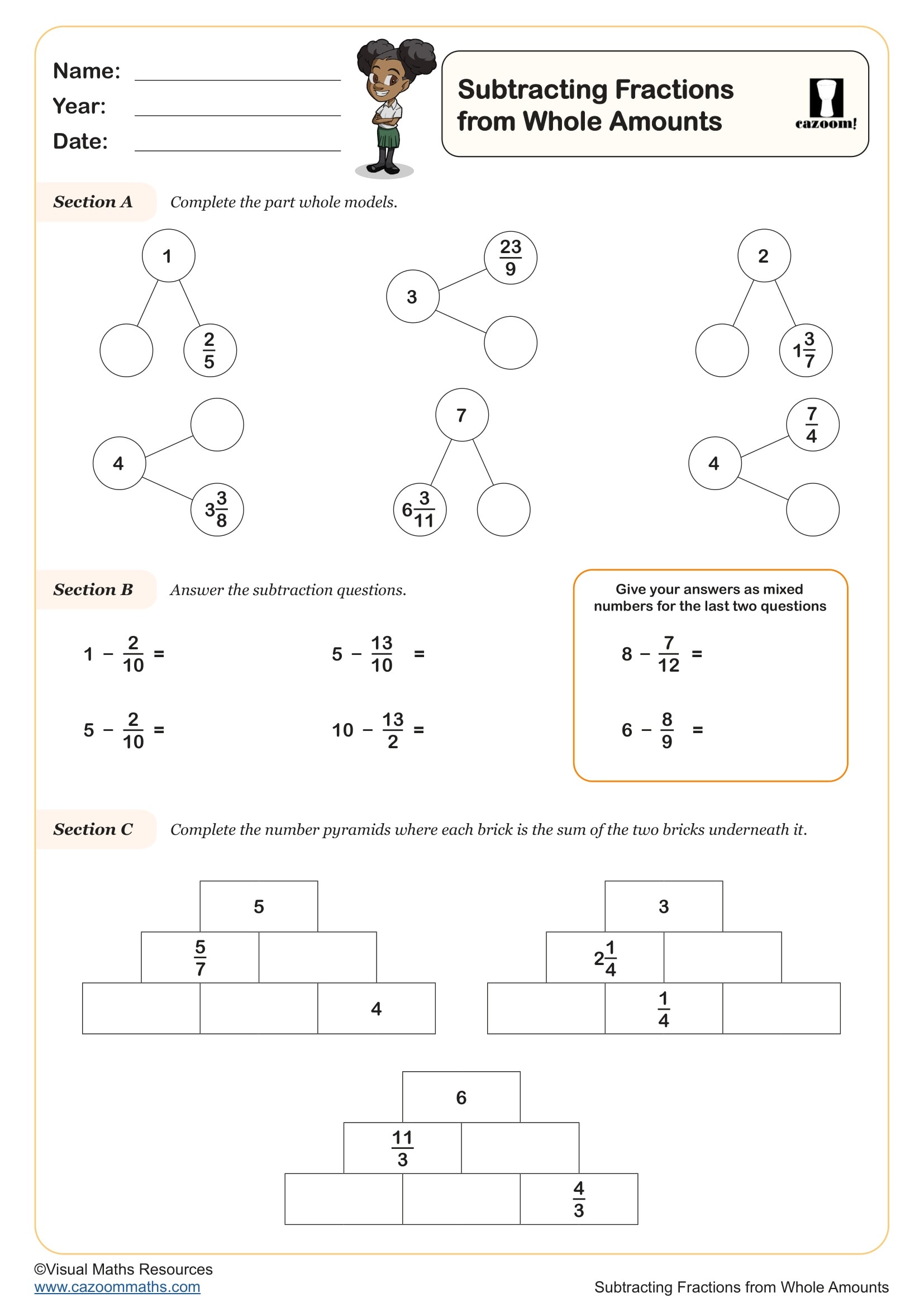
All worksheets are created by the team of experienced teachers at Cazoom Maths.
What Is a Part-Whole Model in Maths?
A part-whole model is a visual representation that shows how a number (the whole) can be divided into two or more parts, or how separate parts combine to create a whole. The diagram typically features a circle or box at the top representing the whole, with connected circles or boxes below showing the parts. This concrete structure helps children understand the relationship between numbers and grasp that addition and subtraction are inverse operations.
Part-whole models appear throughout the National Curriculum from Key Stage 1 onwards, providing a consistent visual method that supports mental calculation strategies, number bonds, and problem-solving. They're particularly effective for developing conceptual understanding before moving to abstract calculations, allowing students to see mathematical relationships rather than simply memorising procedures.
Which Year Groups Use Part-Whole Models?
Our part-whole model worksheets cover the full KS2 range, with resources specifically designed for Year 3, Year 4, Year 5, and Year 6. Whilst children first encounter these models in KS1 with basic number bonds to 10 and 20, the concept develops considerably throughout KS2 as they apply it to larger numbers, decimals, fractions, and algebraic thinking.
In Year 3 and 4, students use part-whole models to support addition and subtraction of increasingly large numbers and to understand equivalent fractions. By Years 5 and 6, they apply these diagrams to more complex contexts including multi-step problems, finding missing values, and representing relationships in word problems. The visual approach remains valuable even as calculations become more sophisticated.
How Do Part-Whole Models Help With Finding Missing Numbers?
Part-whole models are particularly effective for missing number problems because they clearly show the relationship between known and unknown values. When one part or the whole is missing, students can apply their understanding of inverse operations—if they know the whole and one part, they subtract to find the other part; if they know both parts, they add to find the whole.
This visual structure reduces cognitive load and helps children select the correct operation without relying on keywords that can be misleading. The model acts as a thinking tool, allowing students to represent problems systematically before calculating. This approach builds algebraic reasoning skills, as finding missing values in part-whole diagrams directly connects to solving equations later in their mathematical education.
What's Included With These Part-Whole Model Worksheets?
Every worksheet in this collection is provided as a downloadable PDF with a complete answer sheet included. The resources cover various question types, from filling in missing parts or wholes to drawing models for given number sentences and using models to solve word problems. Questions are differentiated to match the expectations for each year group, ensuring appropriate challenge.
The answer sheets show all solutions clearly, making marking efficient and enabling students to check their own work and identify misconceptions. This immediate feedback is valuable for both classroom use and home learning. The PDF format means worksheets can be printed as needed or completed digitally, providing flexibility for different teaching contexts and allowing targeted practise exactly when students need it.