KS3 Fractions Worksheets
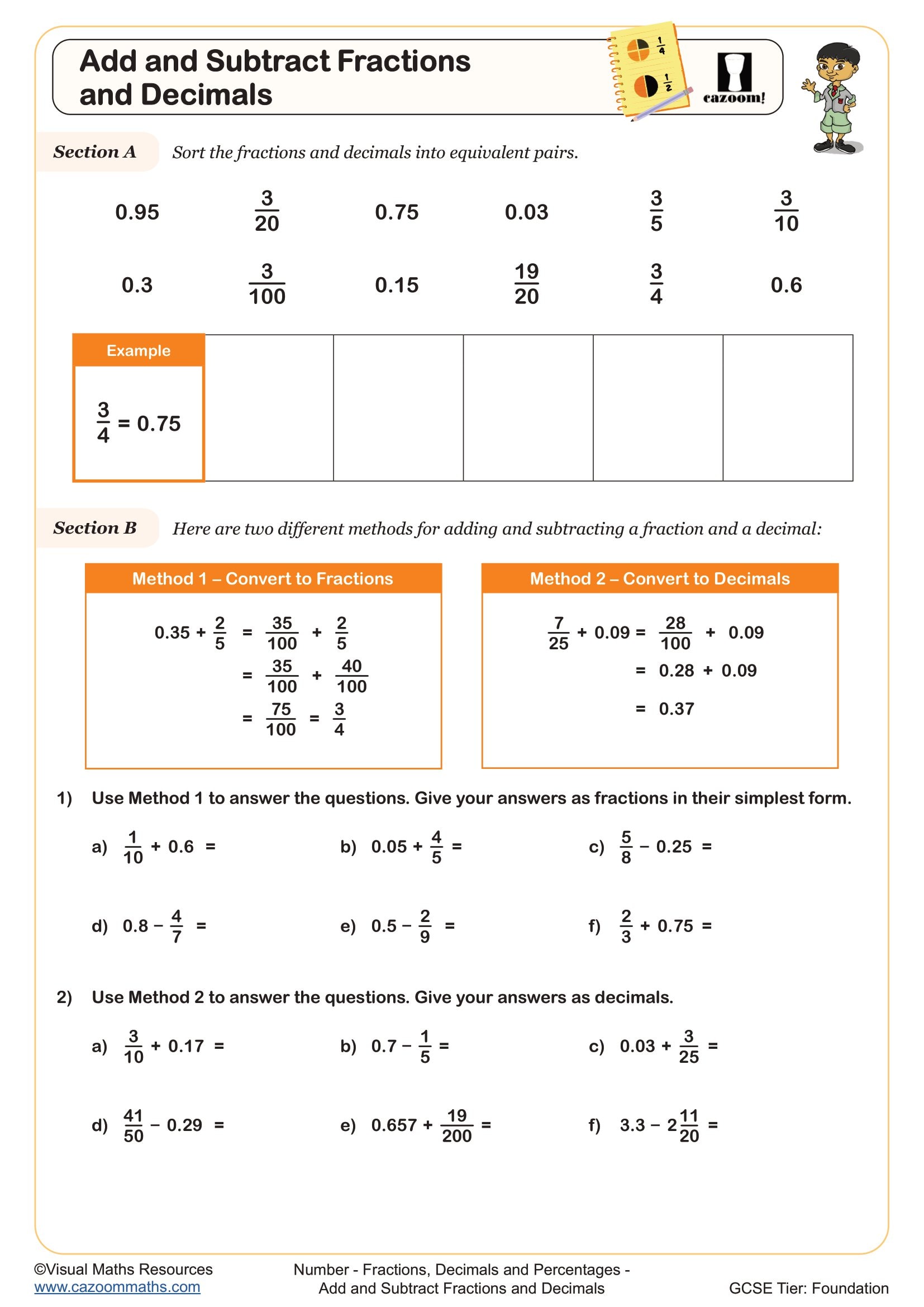
Add and Subtract Fractions and Decimals
Add and Subtract Mixed Numbers

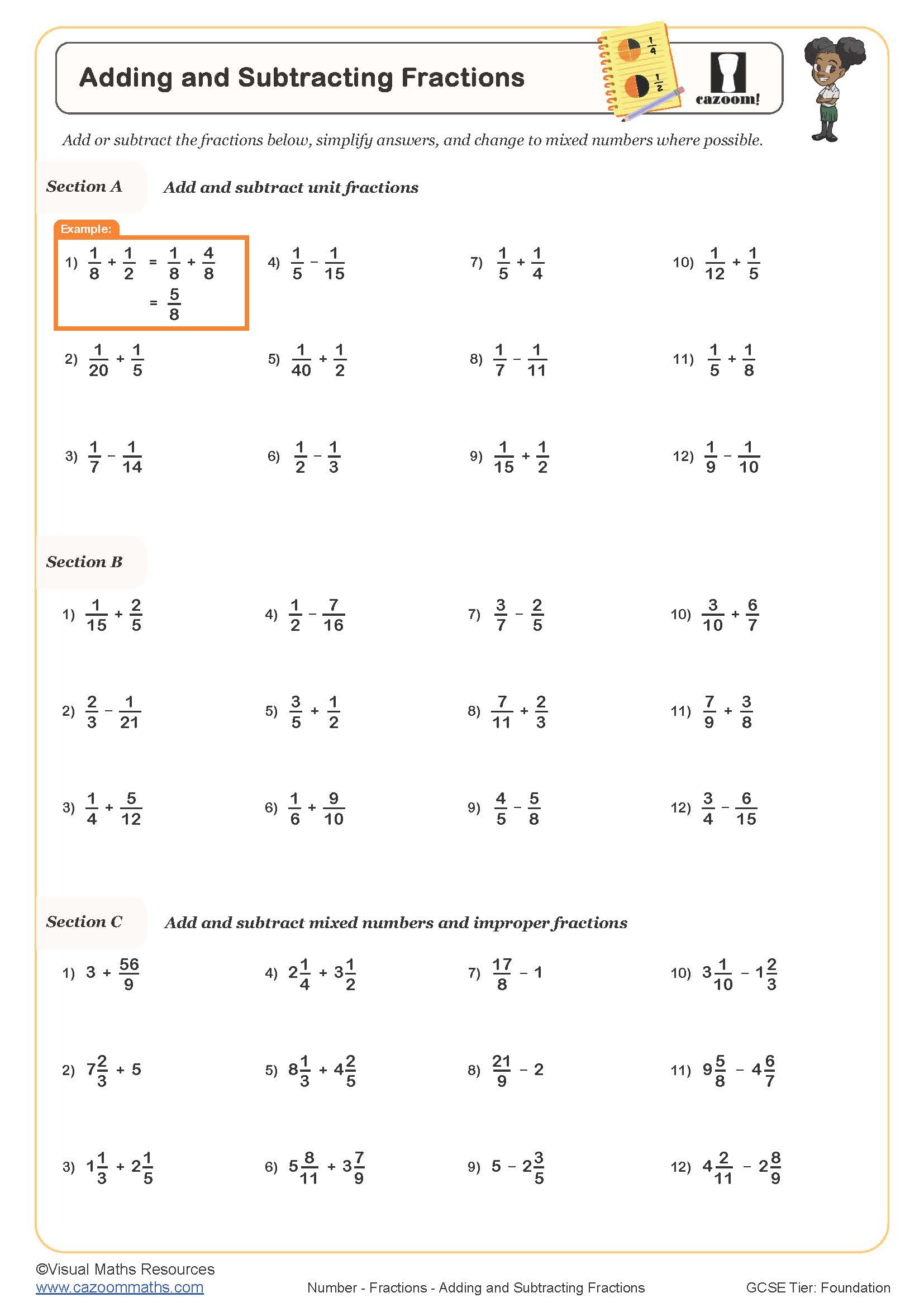
Adding and Subtracting Fractions
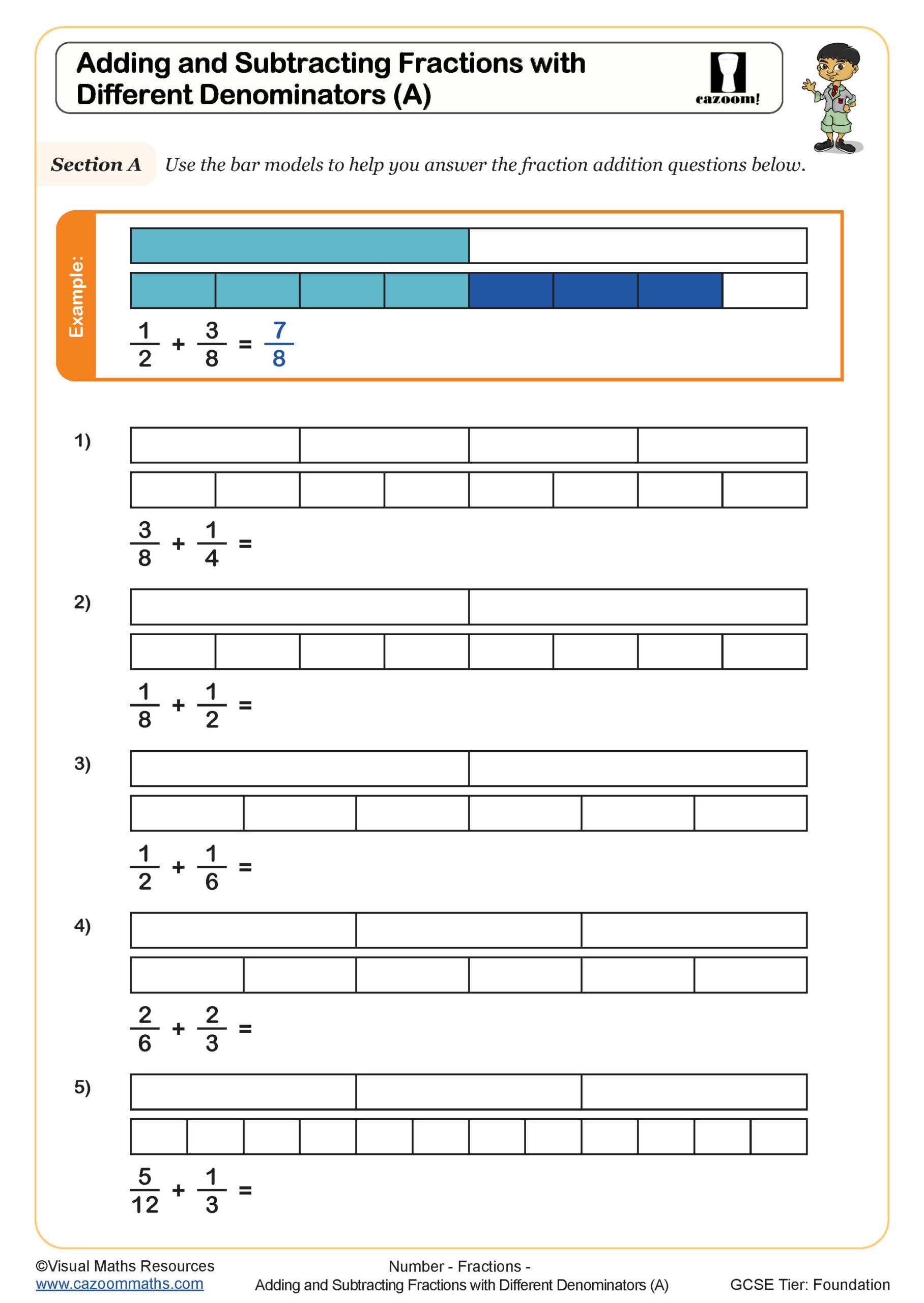
Adding and subtracting fractions with different denominators (A)
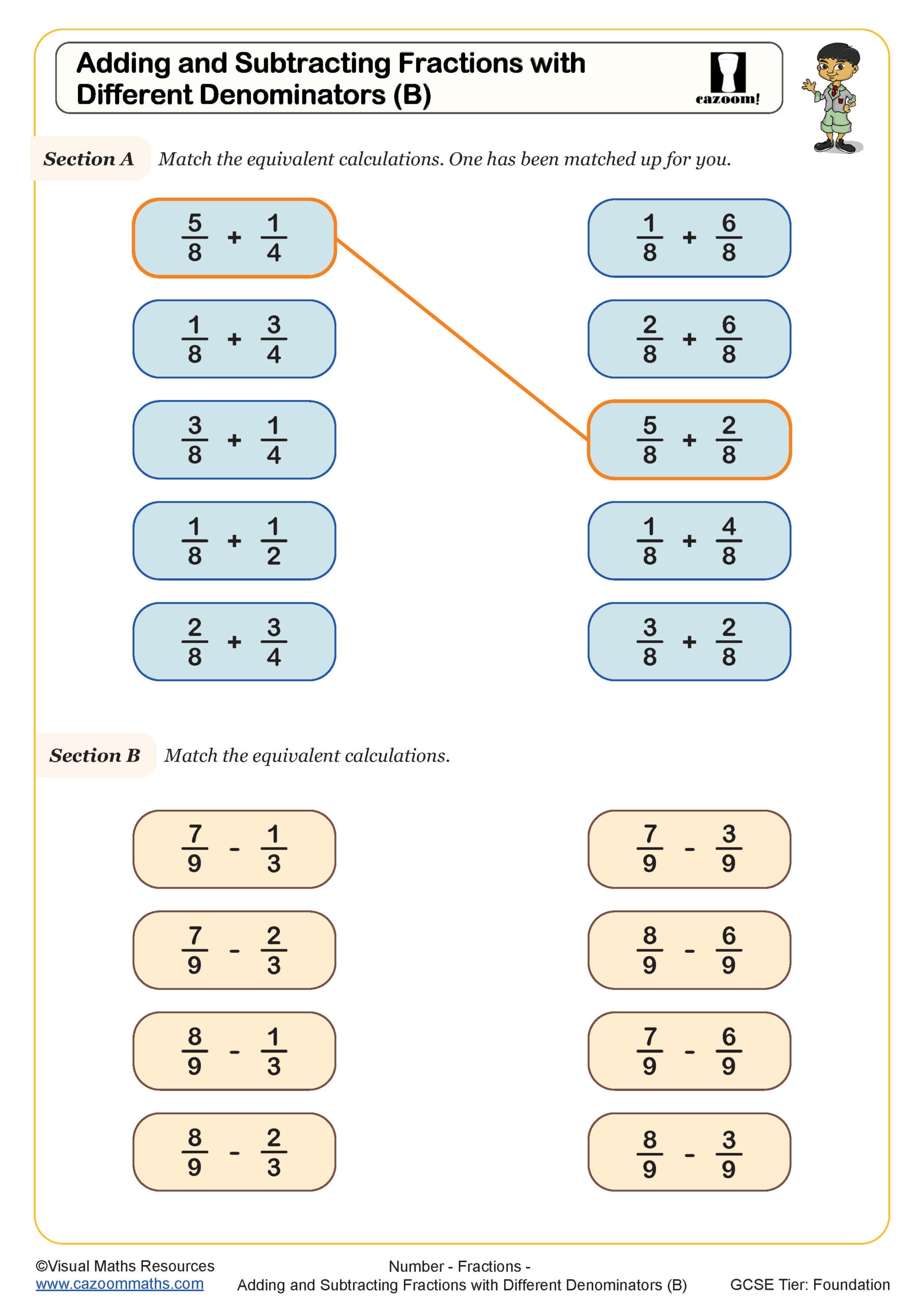
Adding and subtracting fractions with different denominators (B)
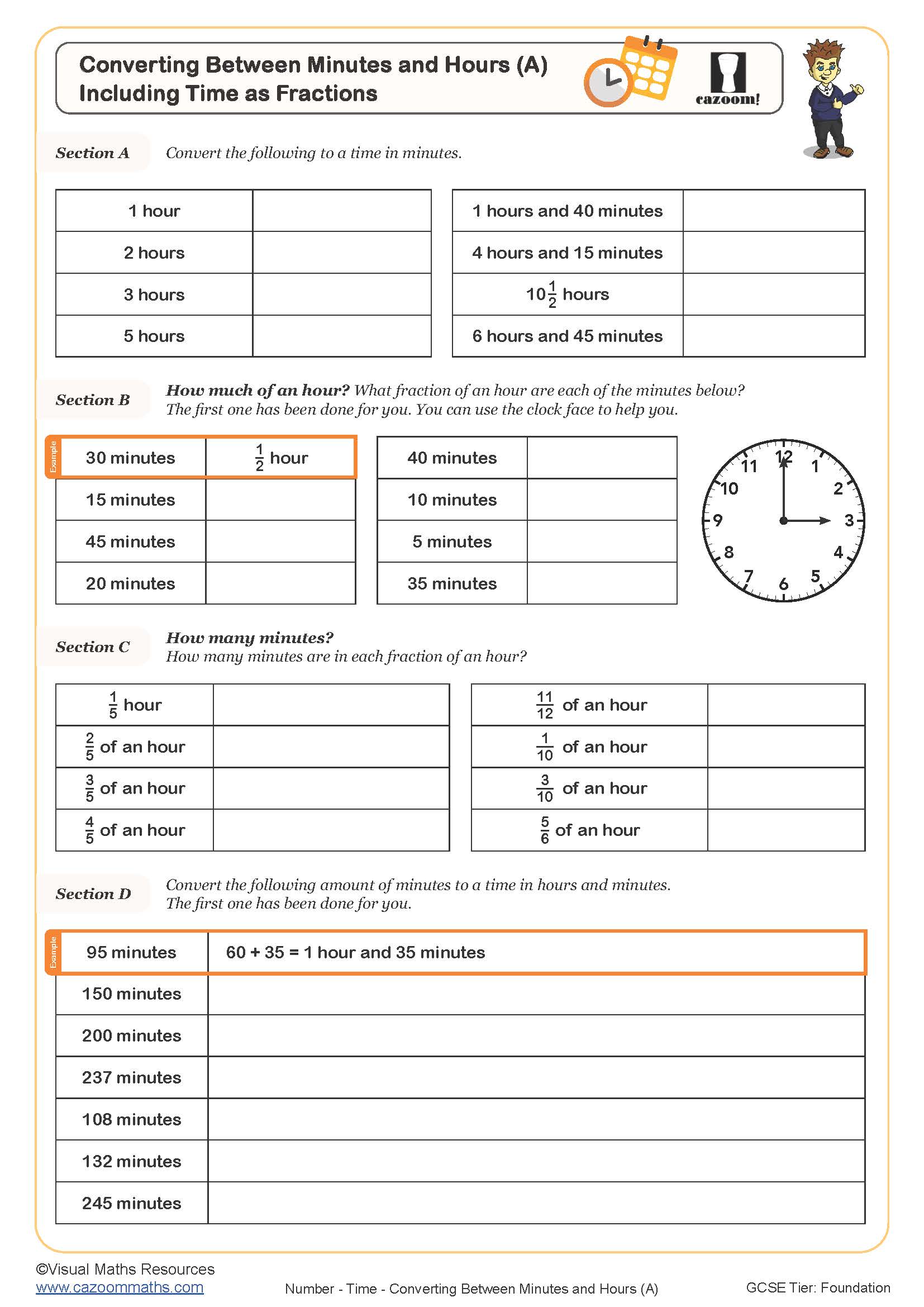
Converting Between Minutes and Hours (A)
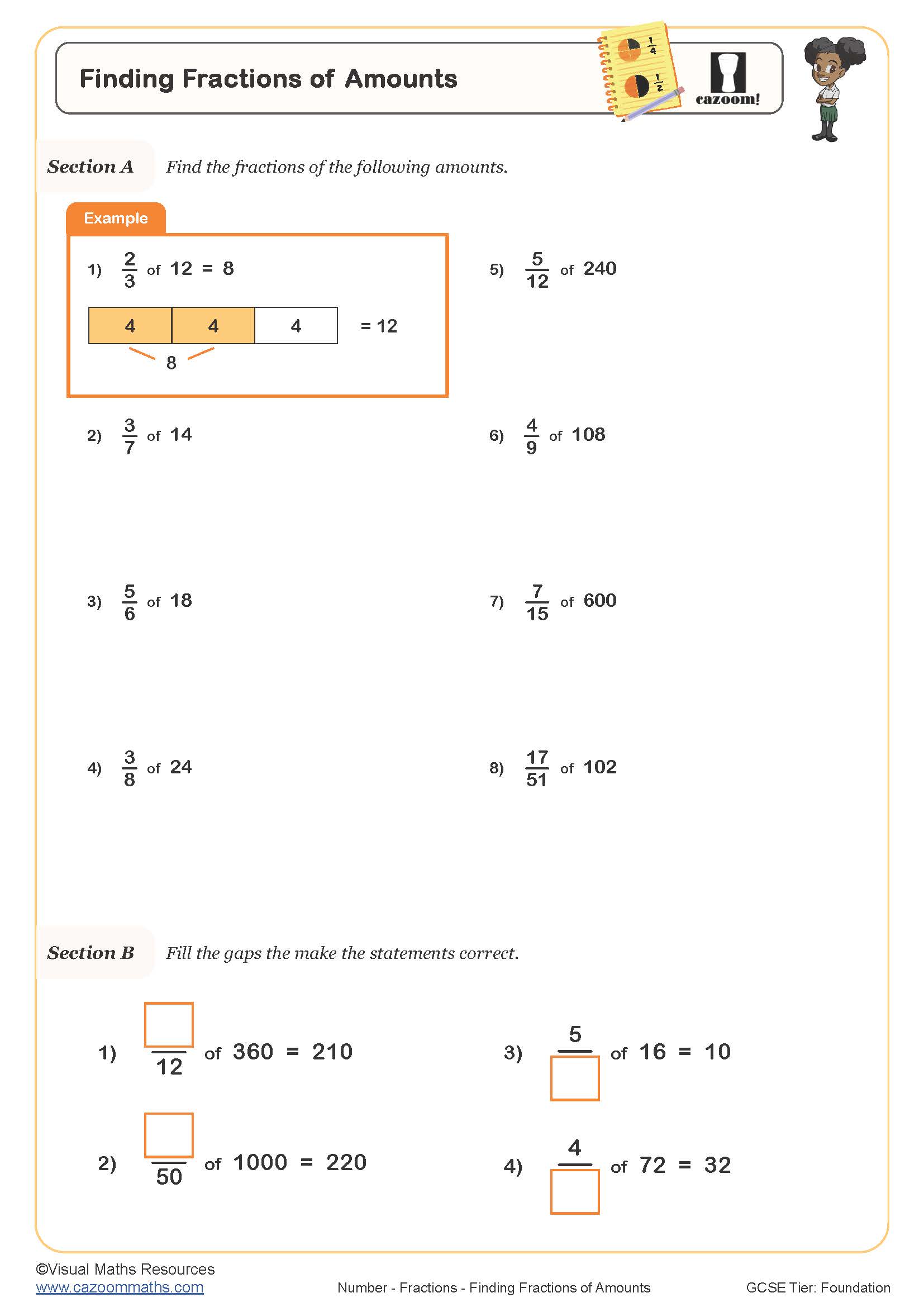
Finding Fractions of Amounts
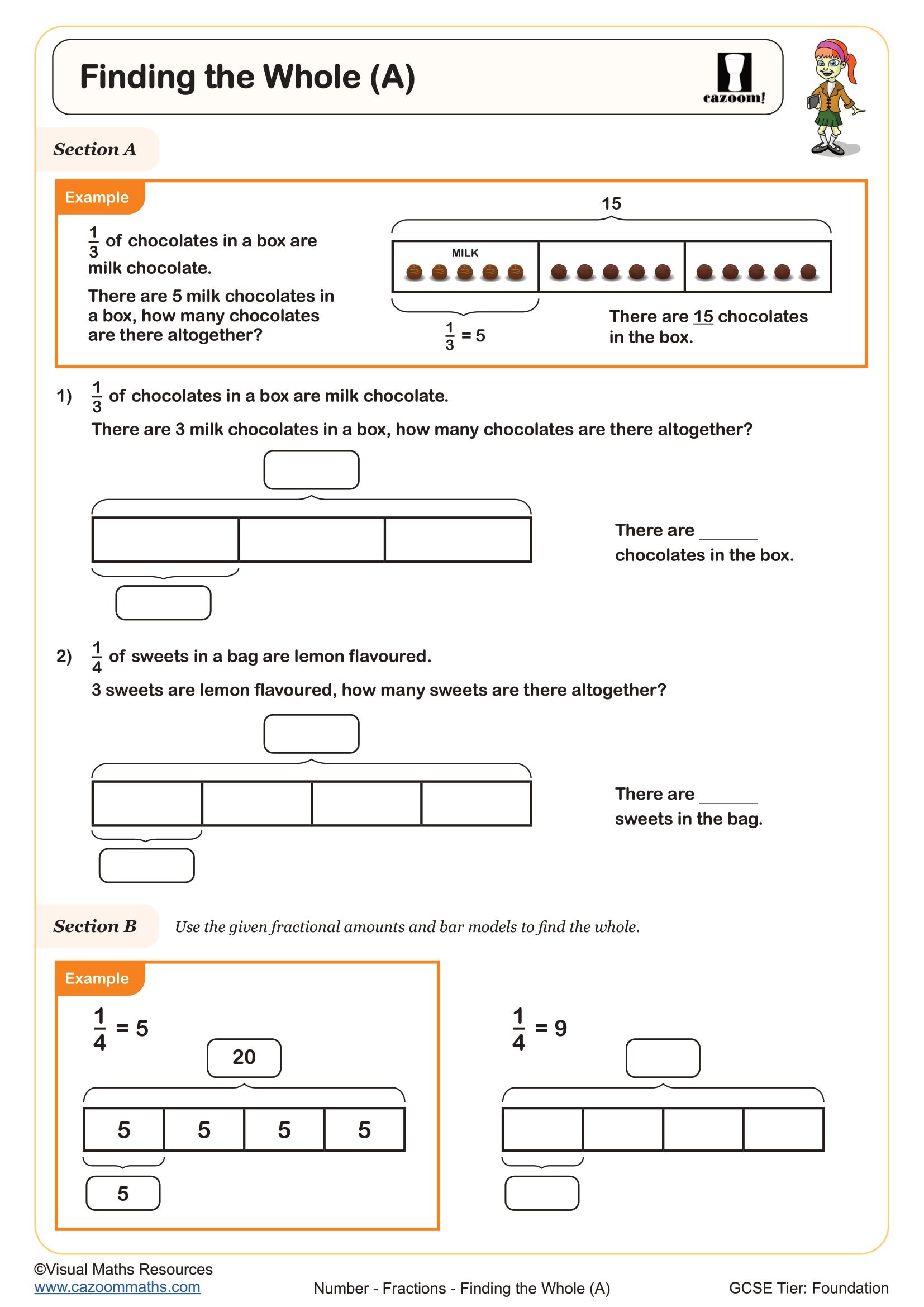
Finding the Whole (A)
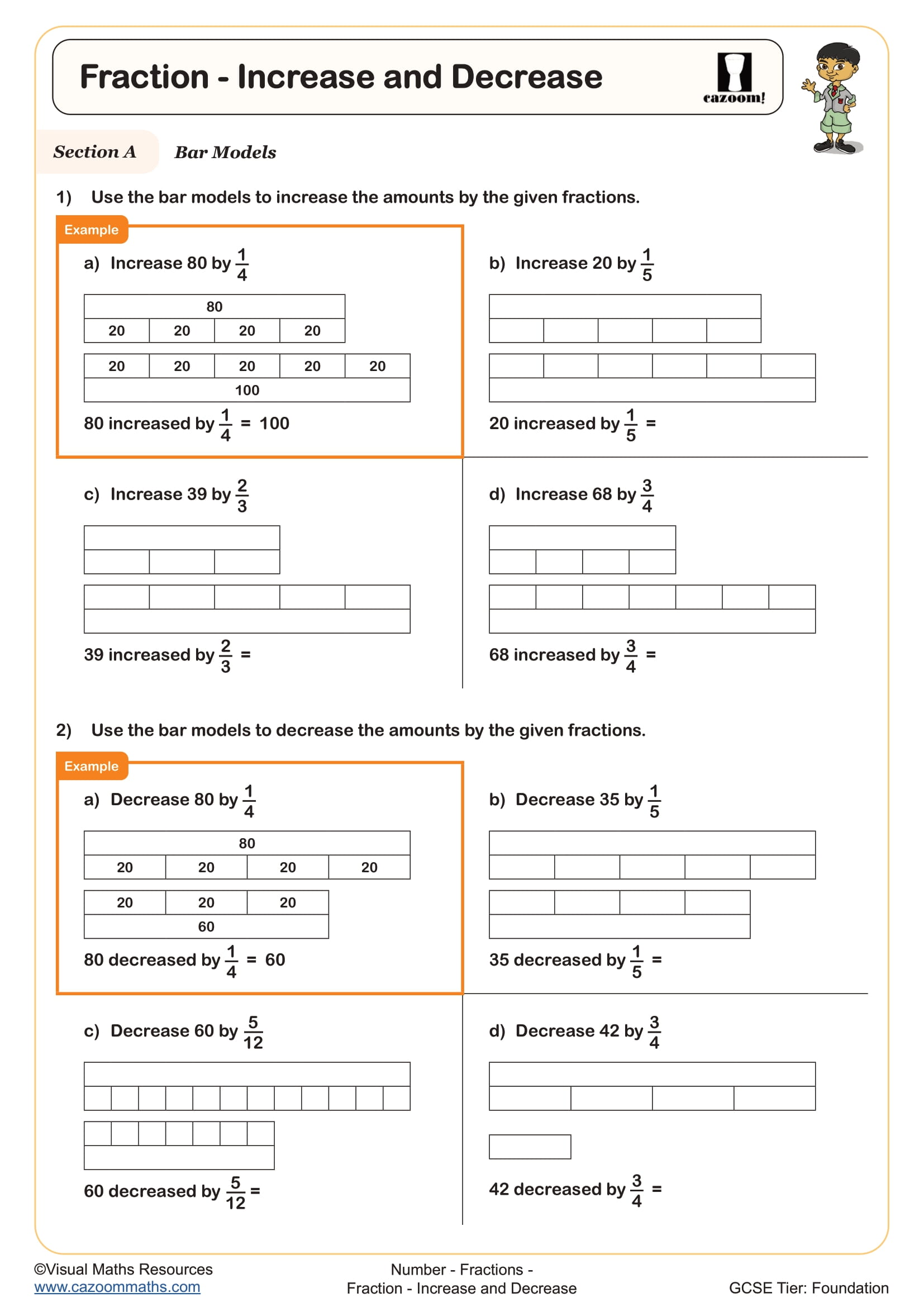
Fraction - Increase and Decrease
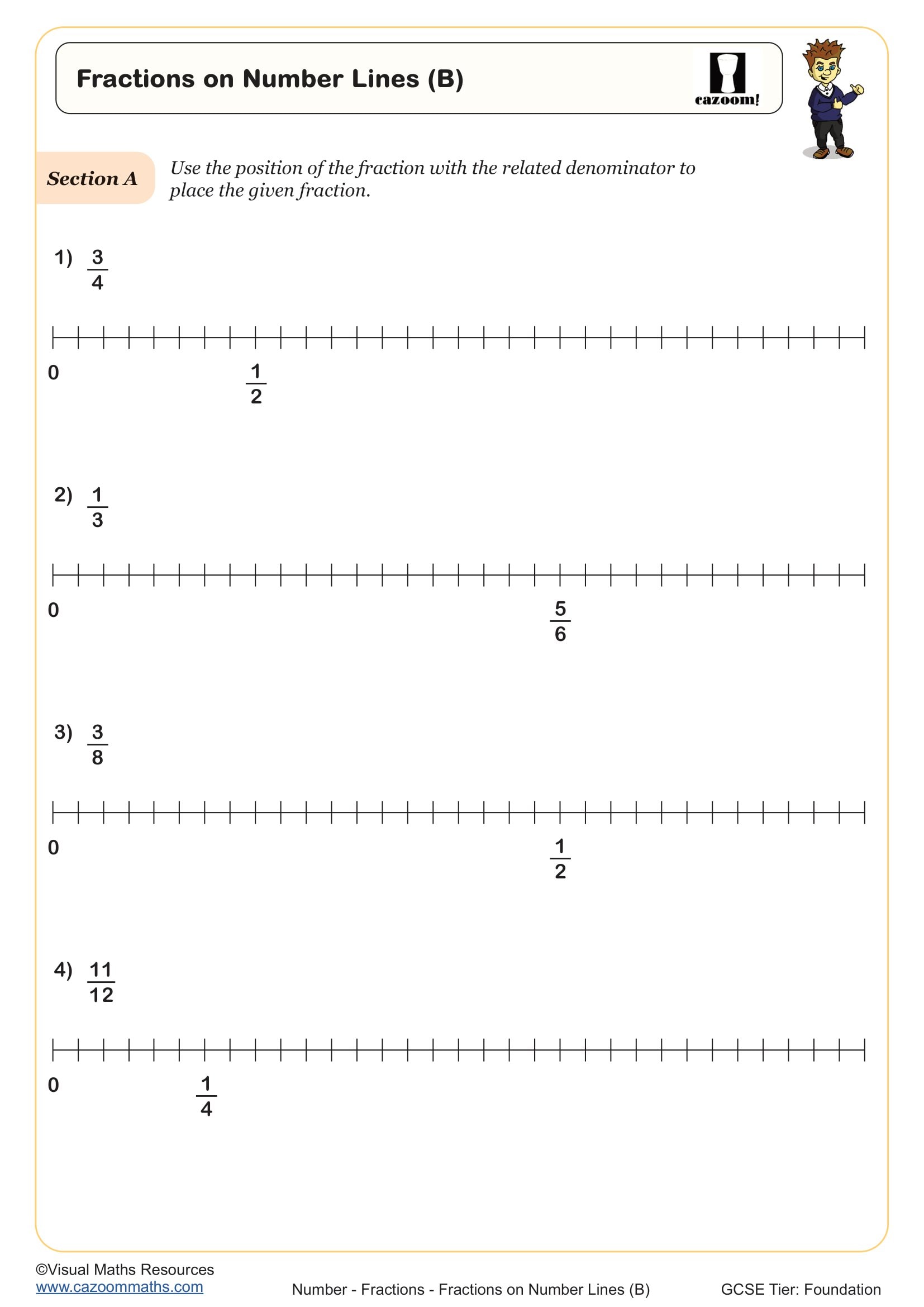
Fraction Problem Solving (B)
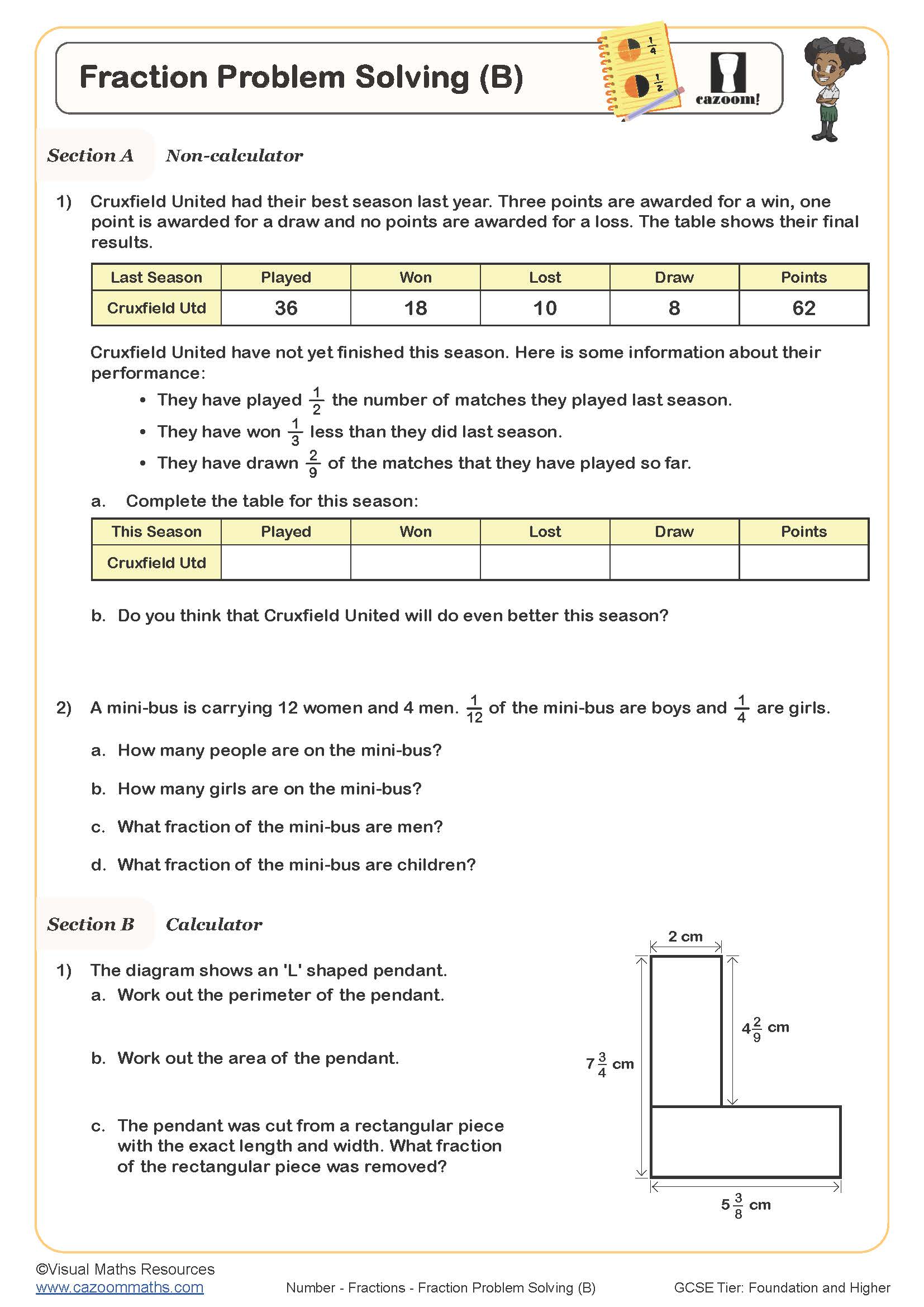
Fraction, Percentage and Ratio Problems
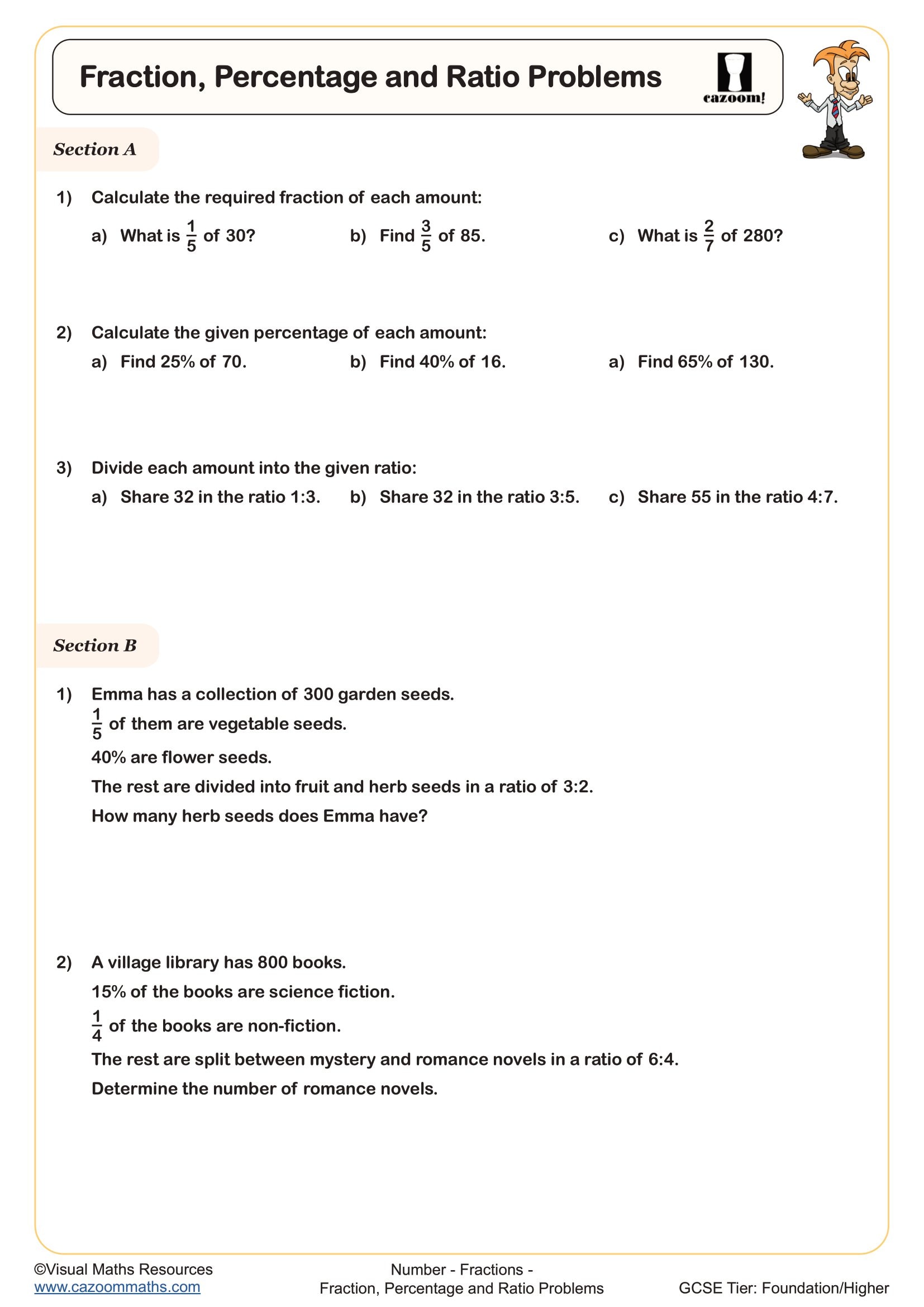
Fractions on Number Lines (A)
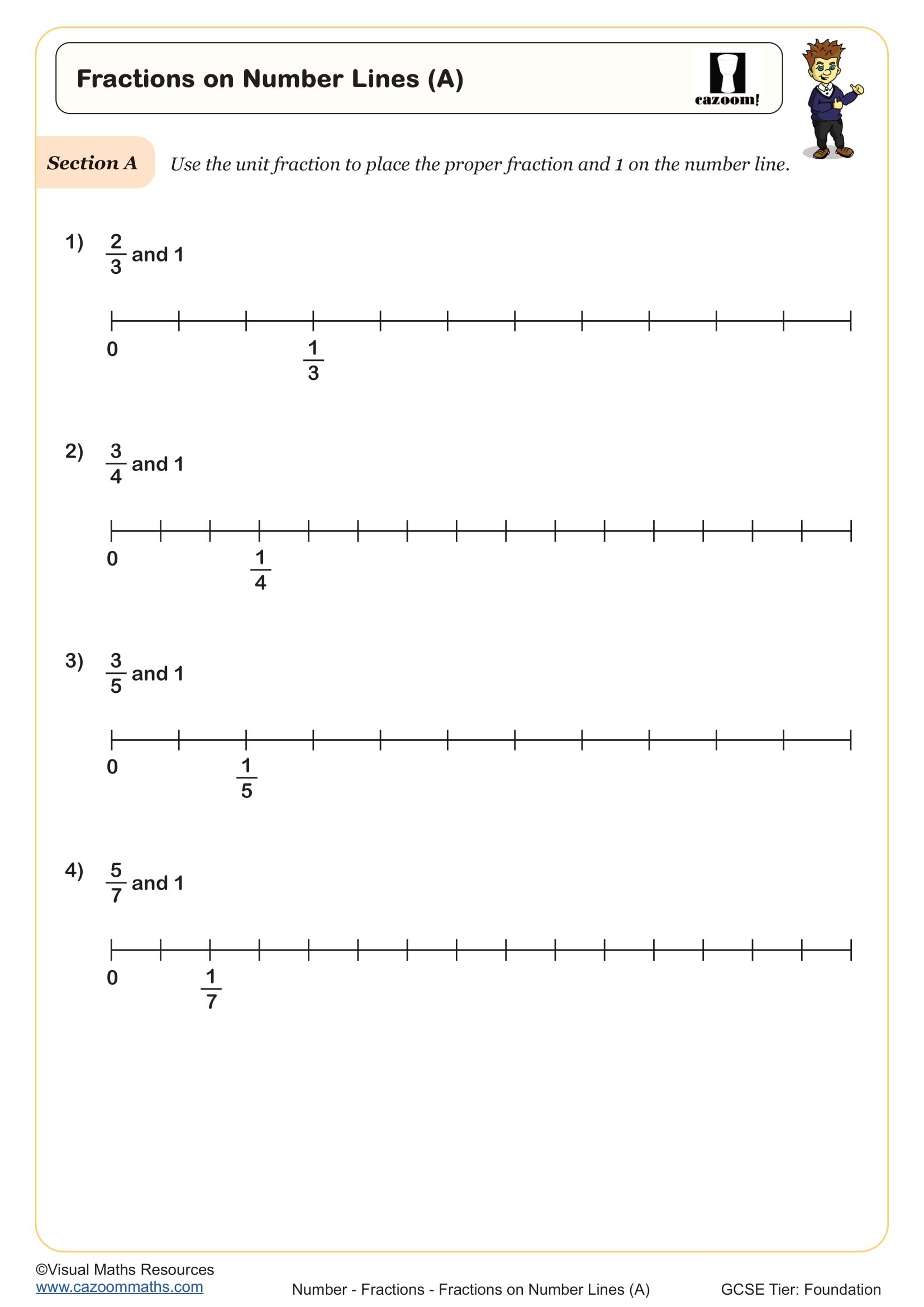
Fractions on Number Lines (B)
Labelling a Number Line with Mixed Numbers
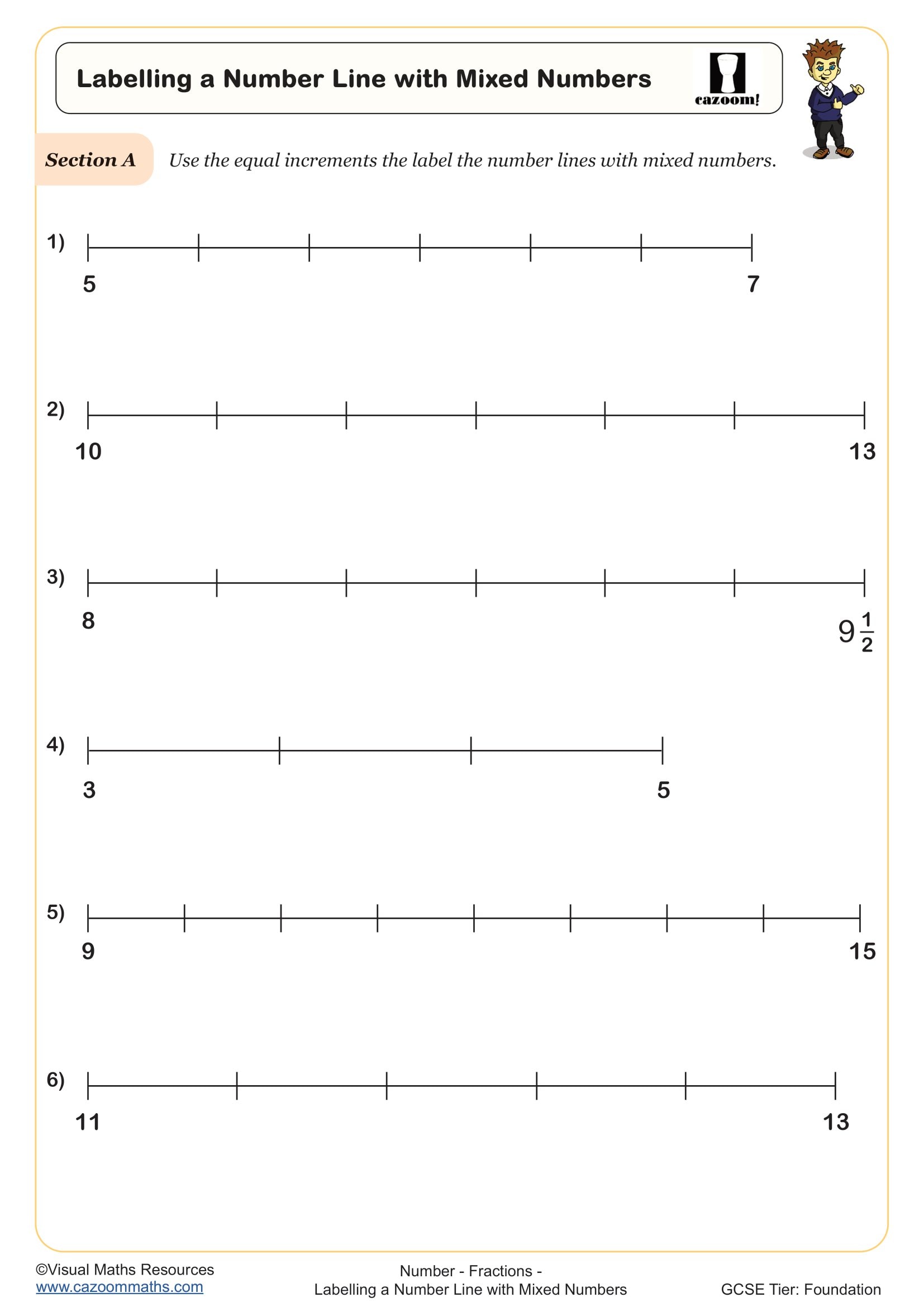
Mixed Numbers and Improper Fractions (A)
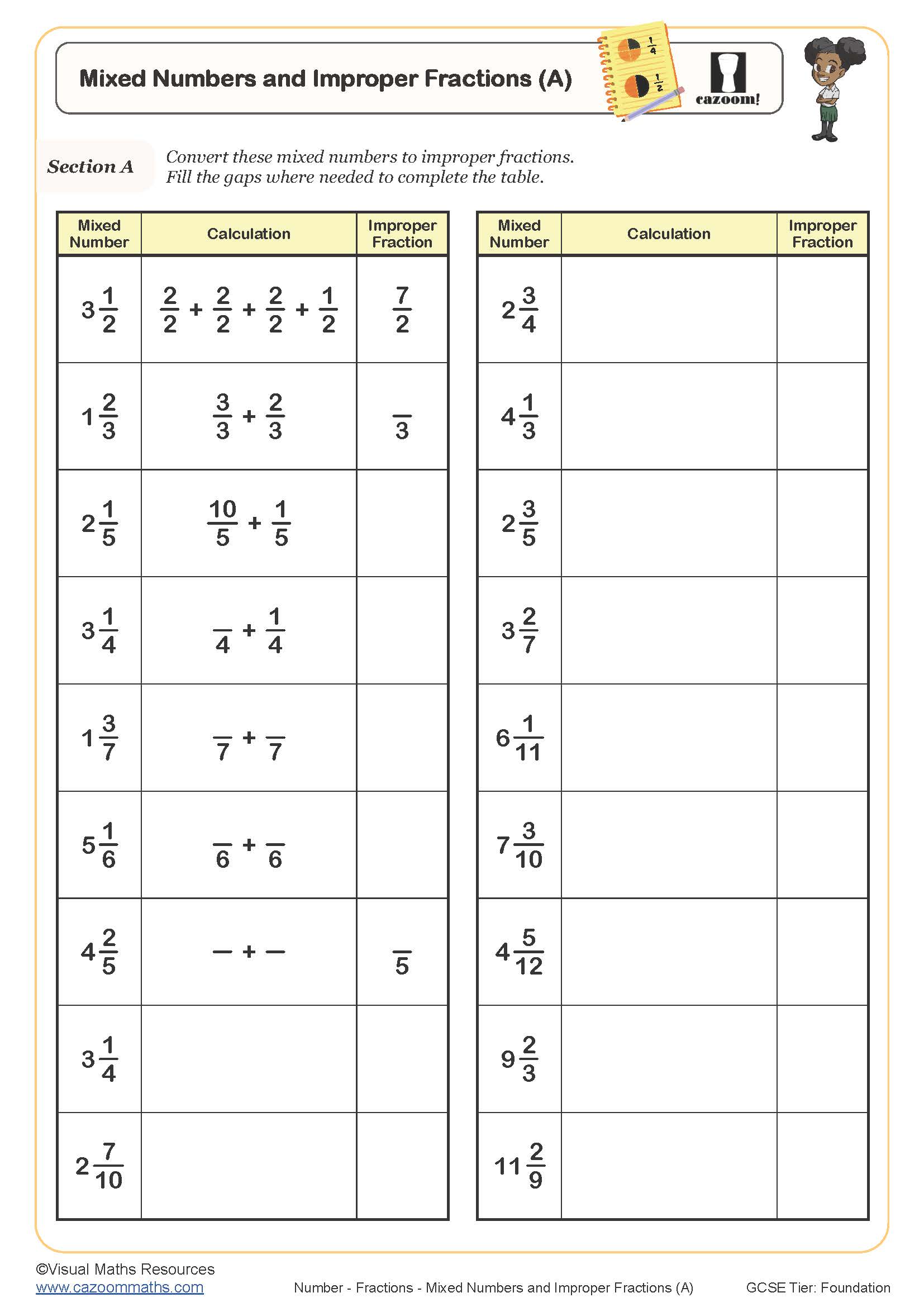
Multiply Mixed Numbers
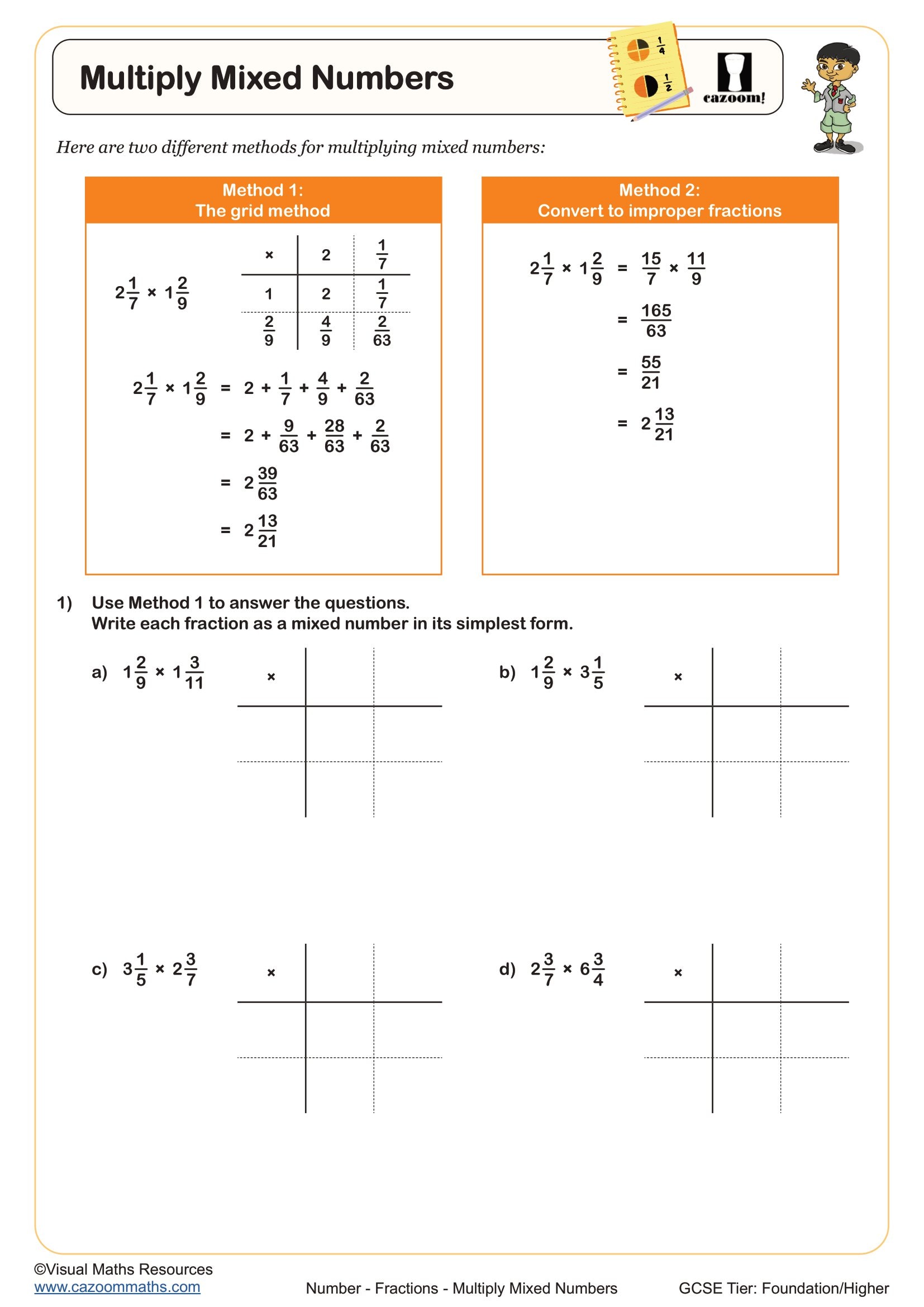
Multiplying and Dividing Fractions
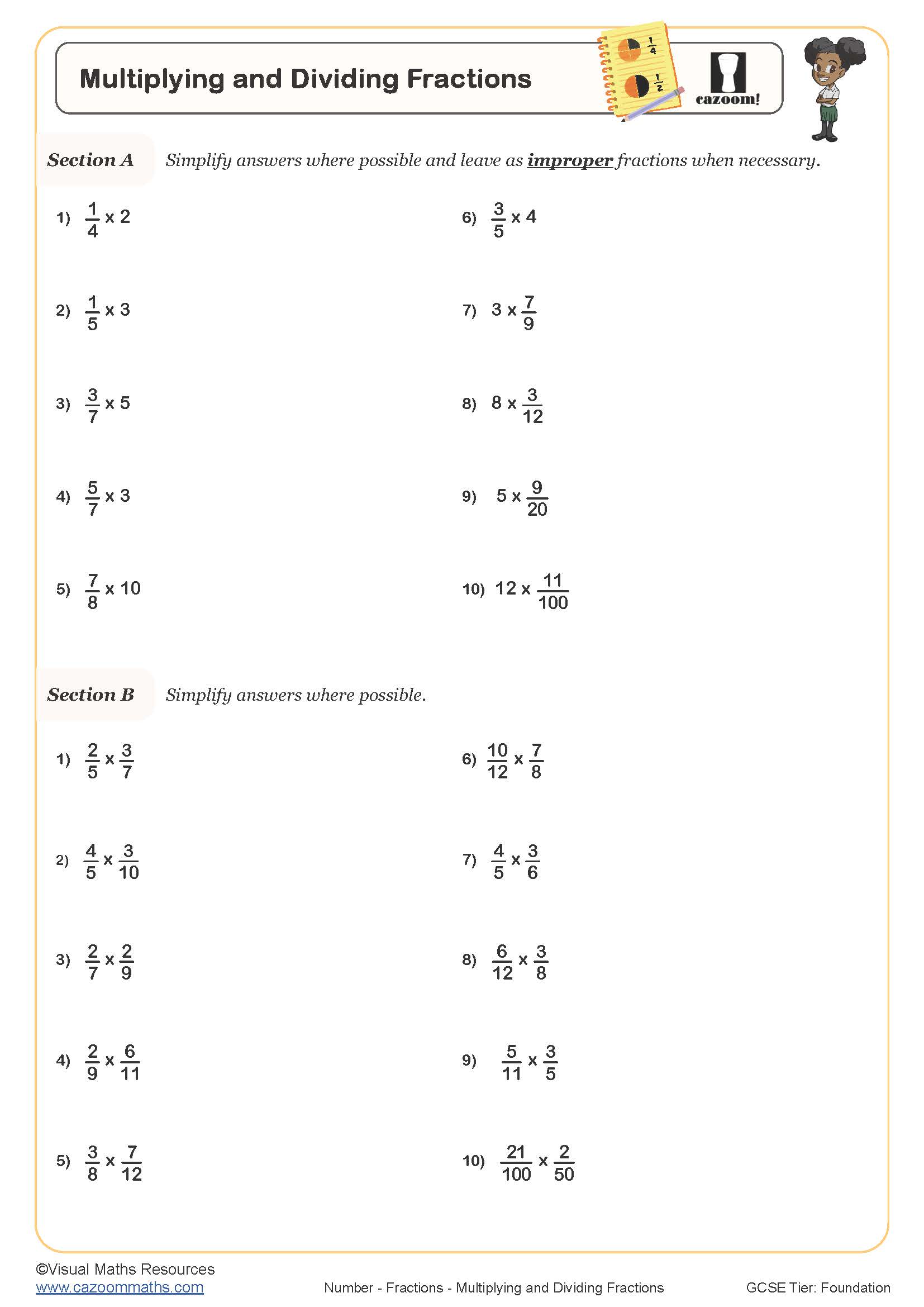
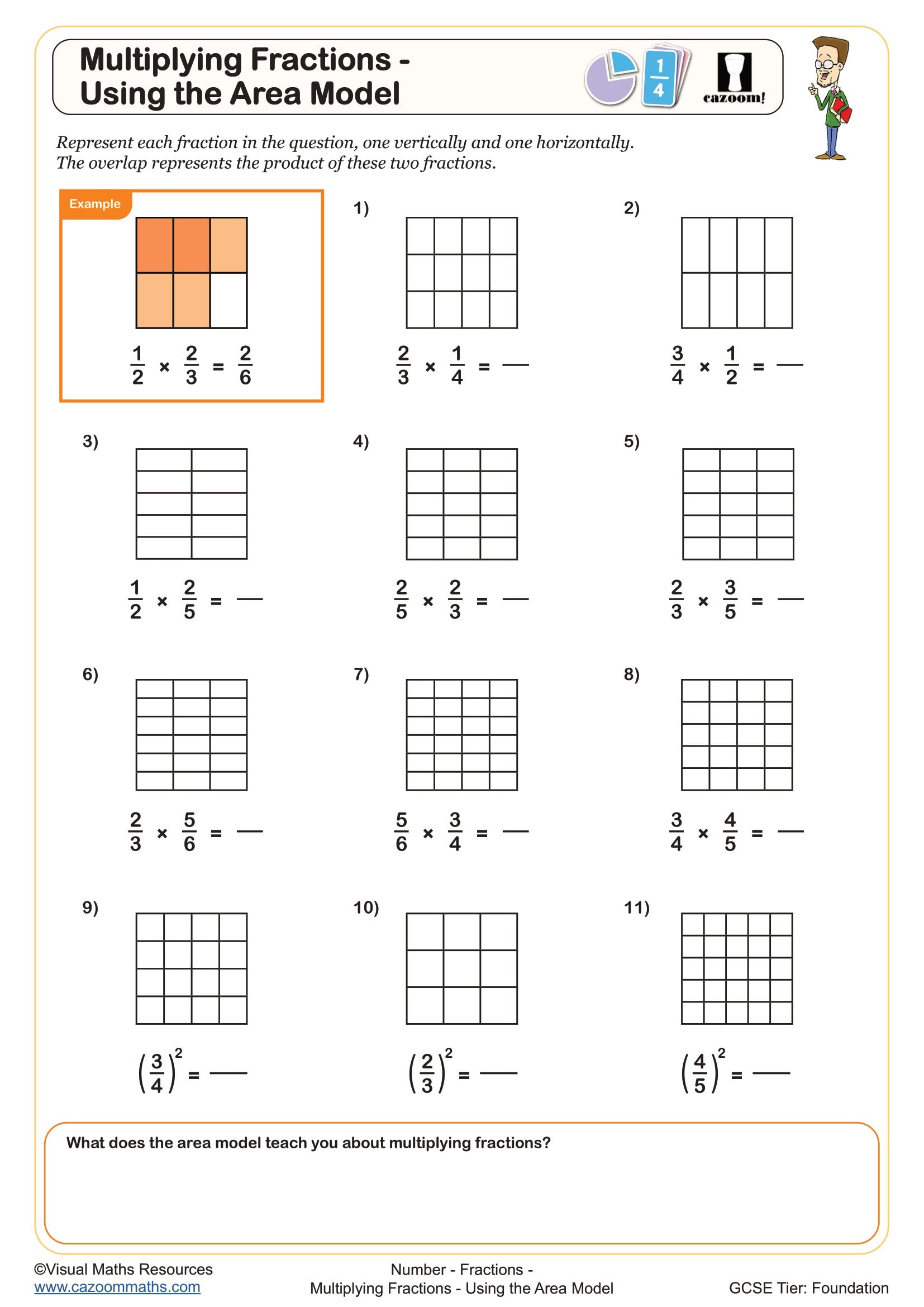
Multiplying Fractions - Using the Area Model
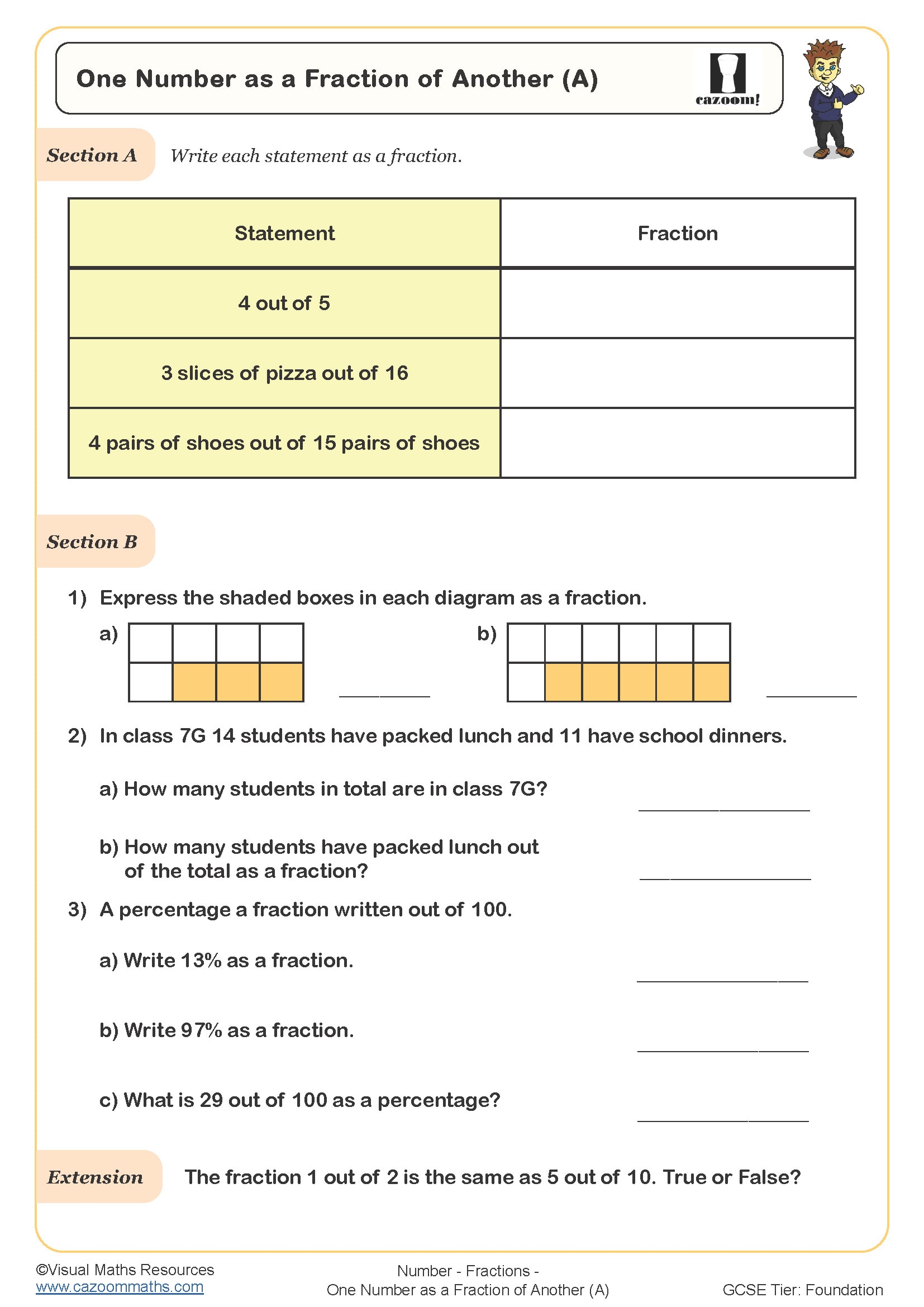
One Number as a Fraction of Another (A)
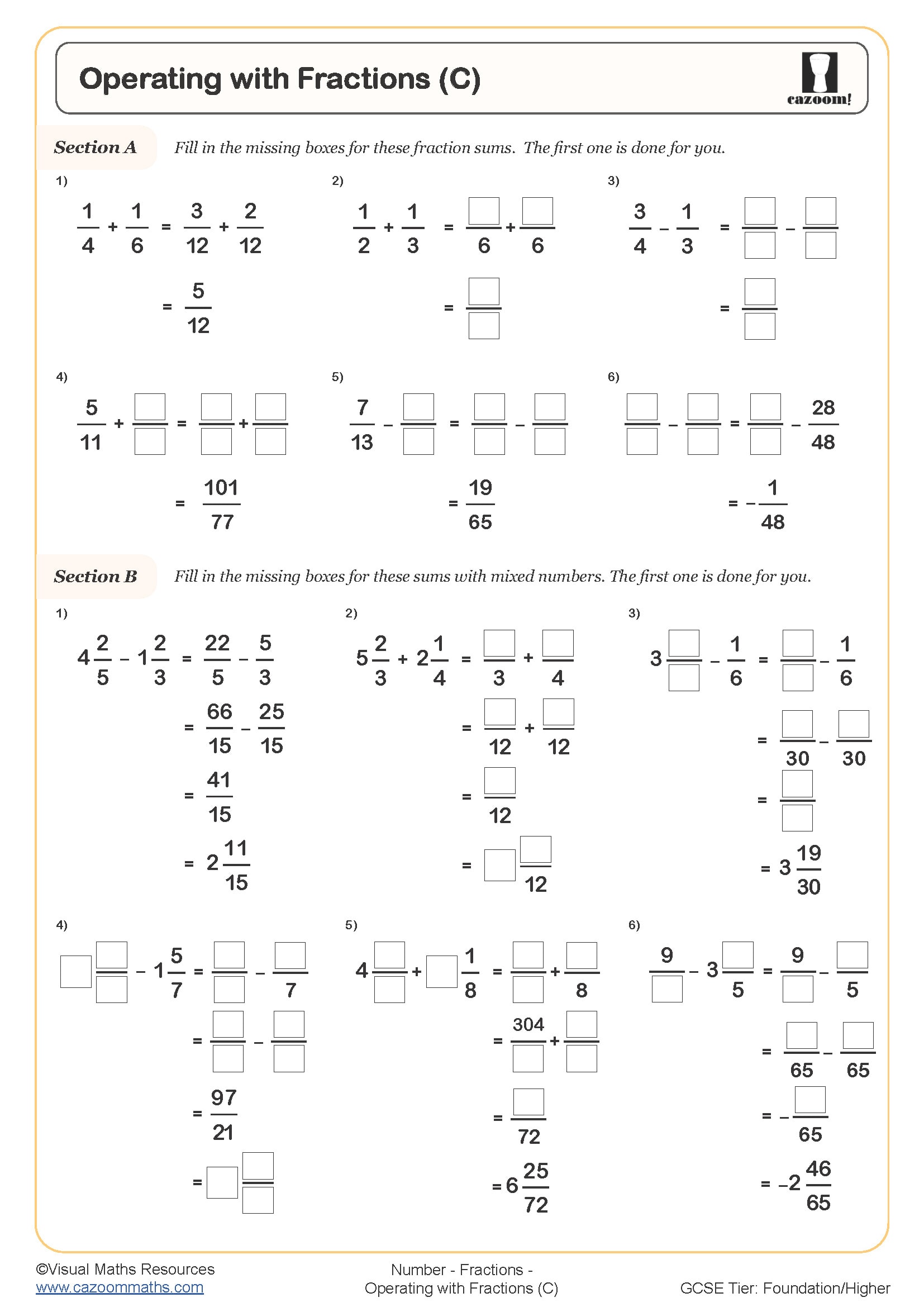
Operating with Fractions (C)
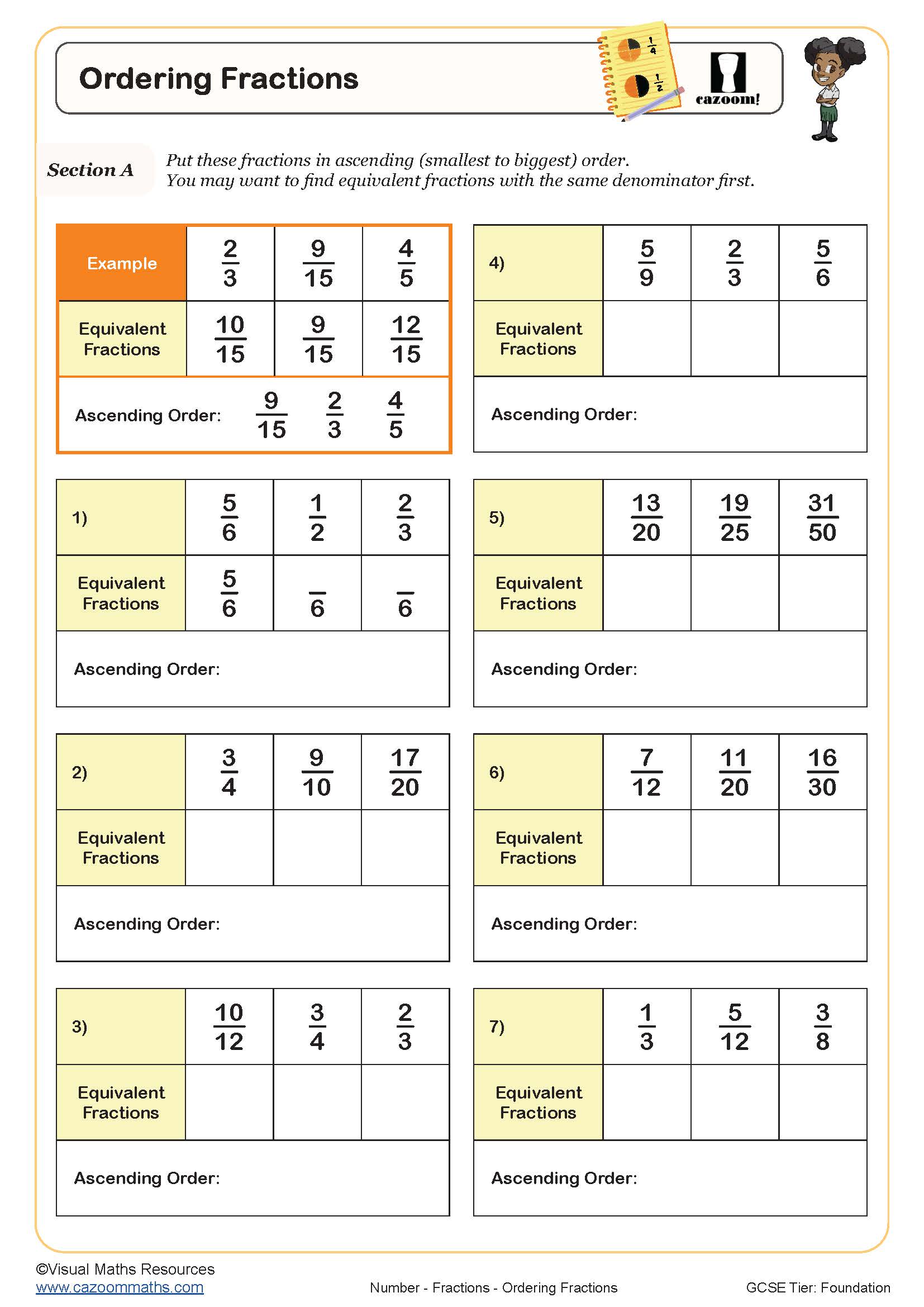
Ordering Fractions
Partitioning Mixed Numbers
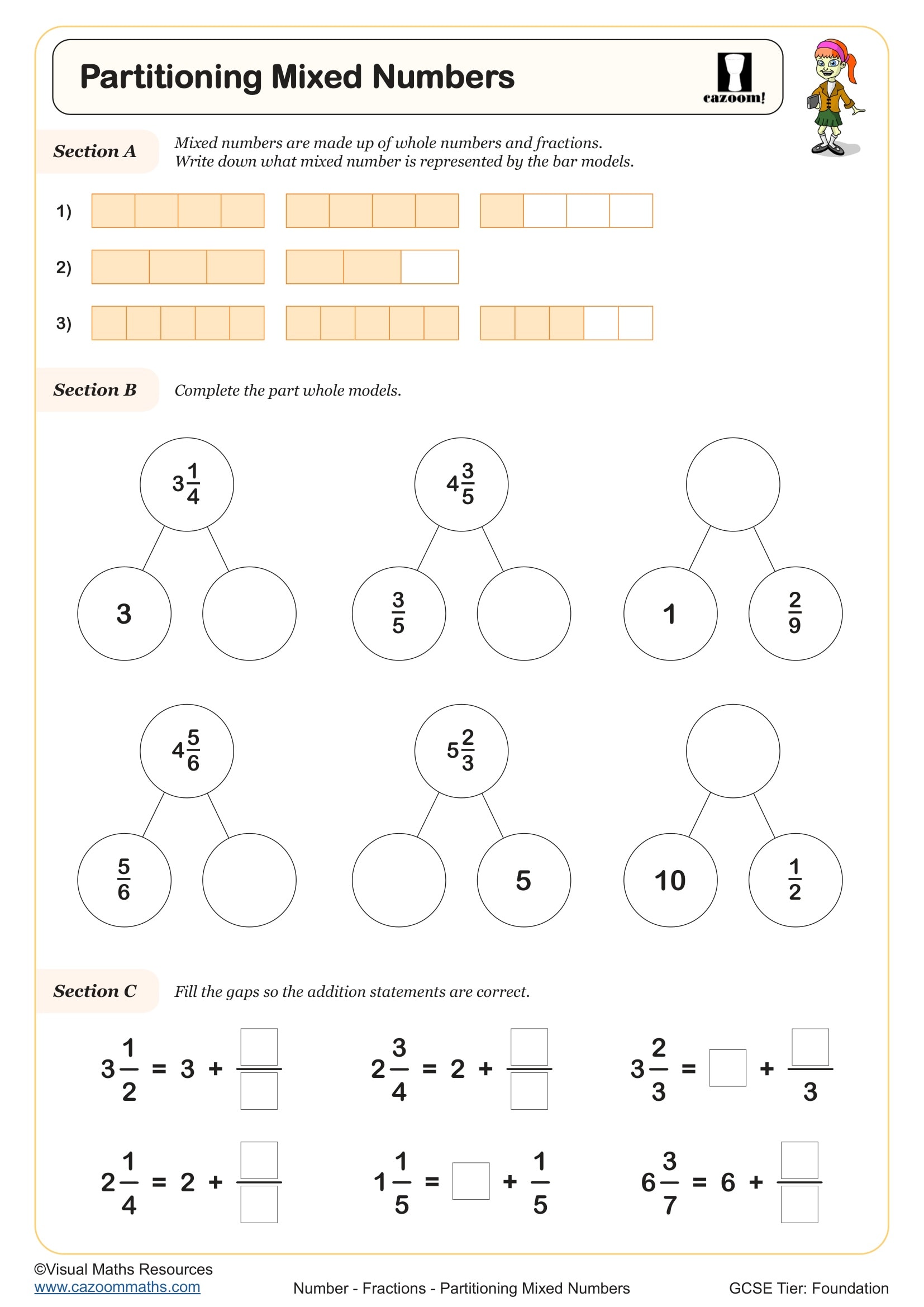
Recurring and Terminating Decimals
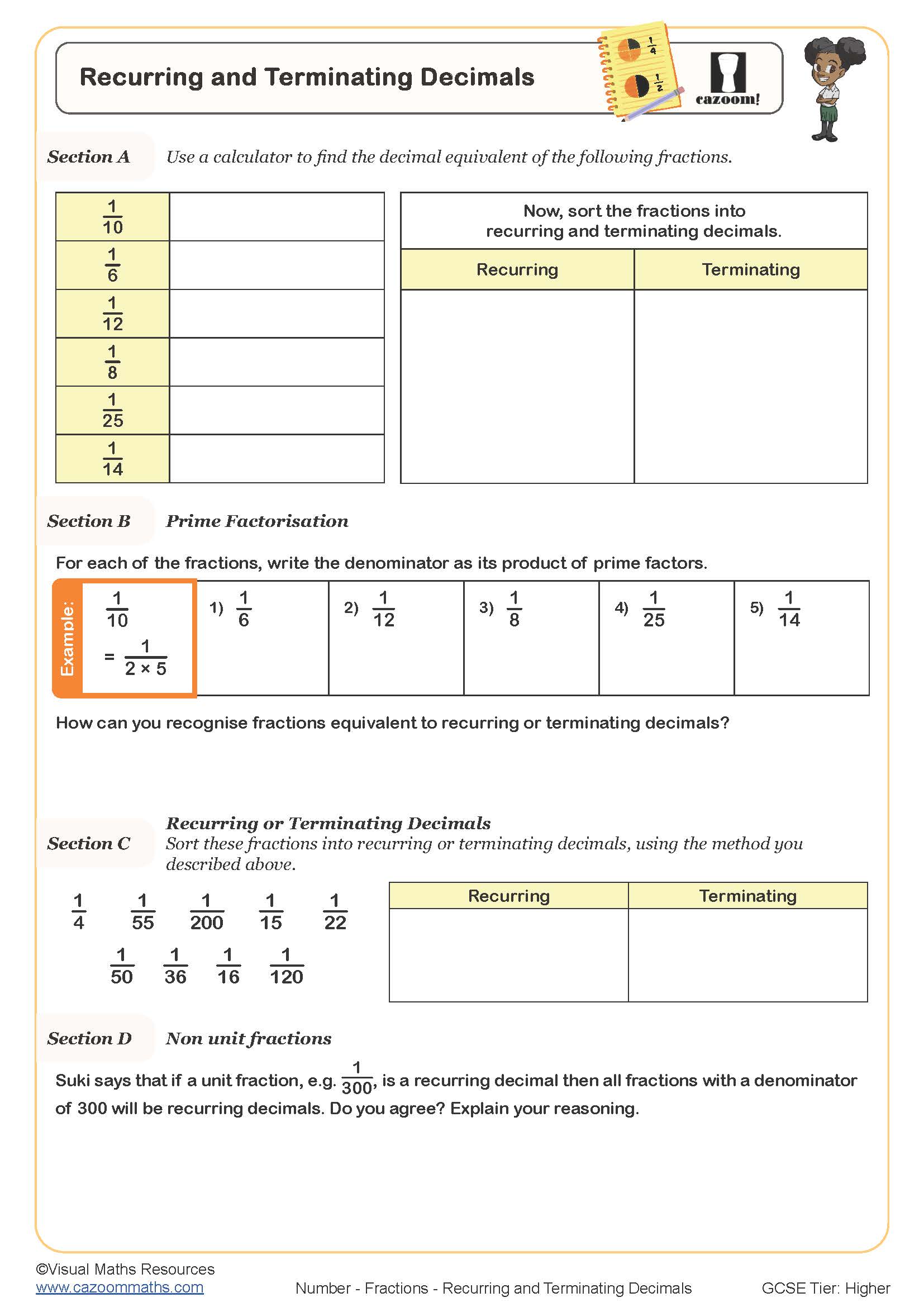
Simplifying Fractions (B)
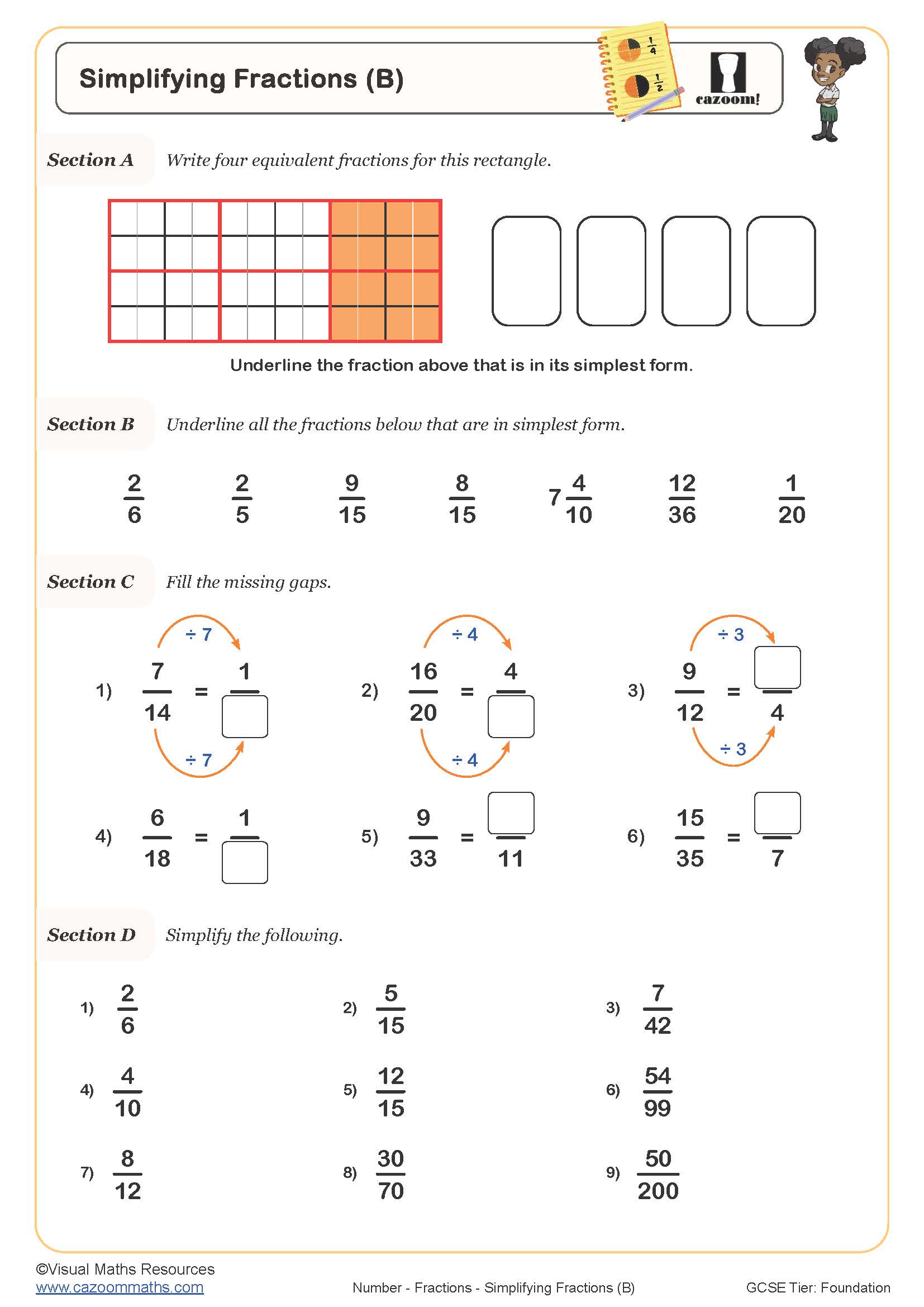
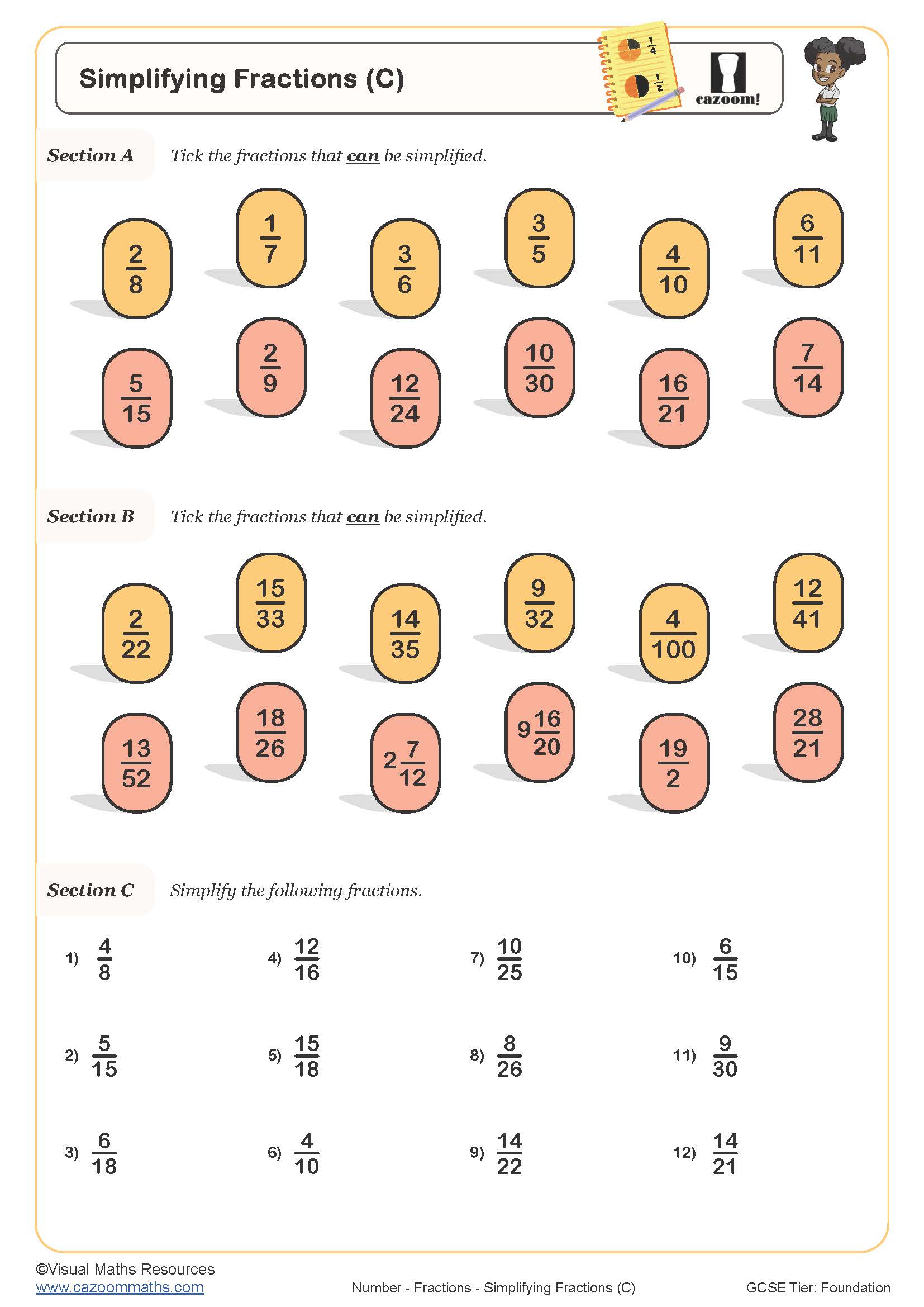
Simplifying Fractions (C)
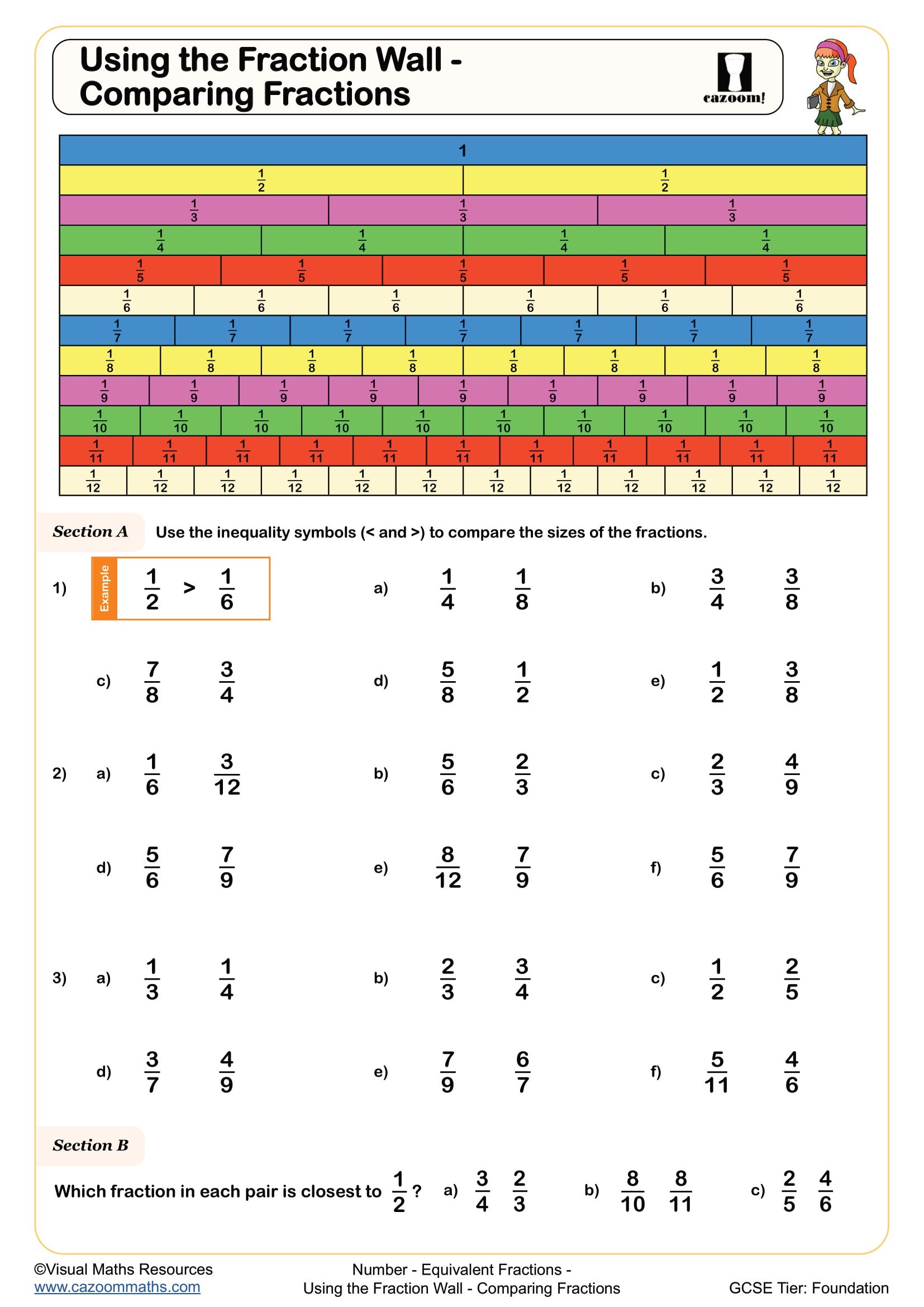
Using a Fraction Wall - Comparing Fractions
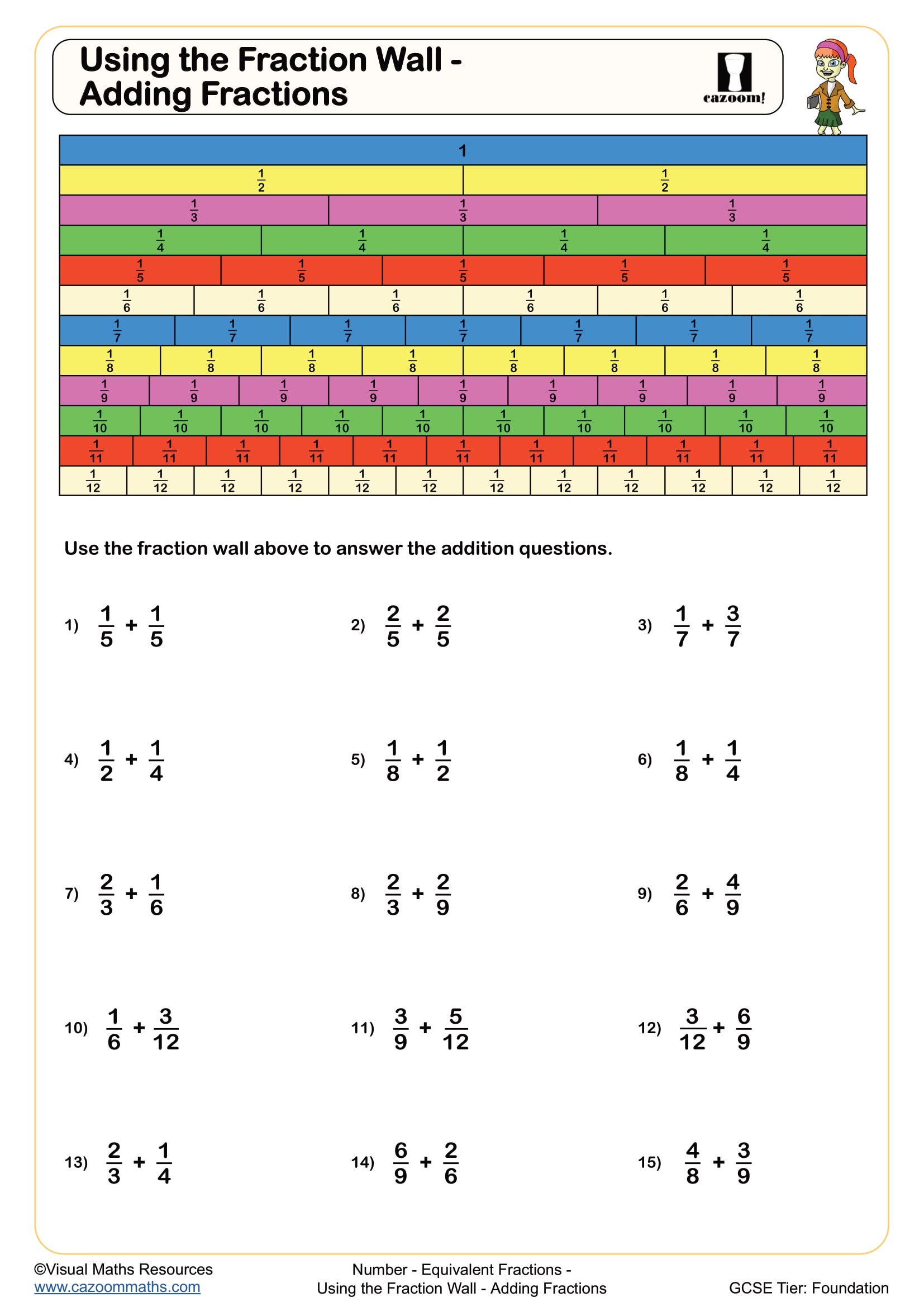
Using The Fraction Wall - Adding Fractions
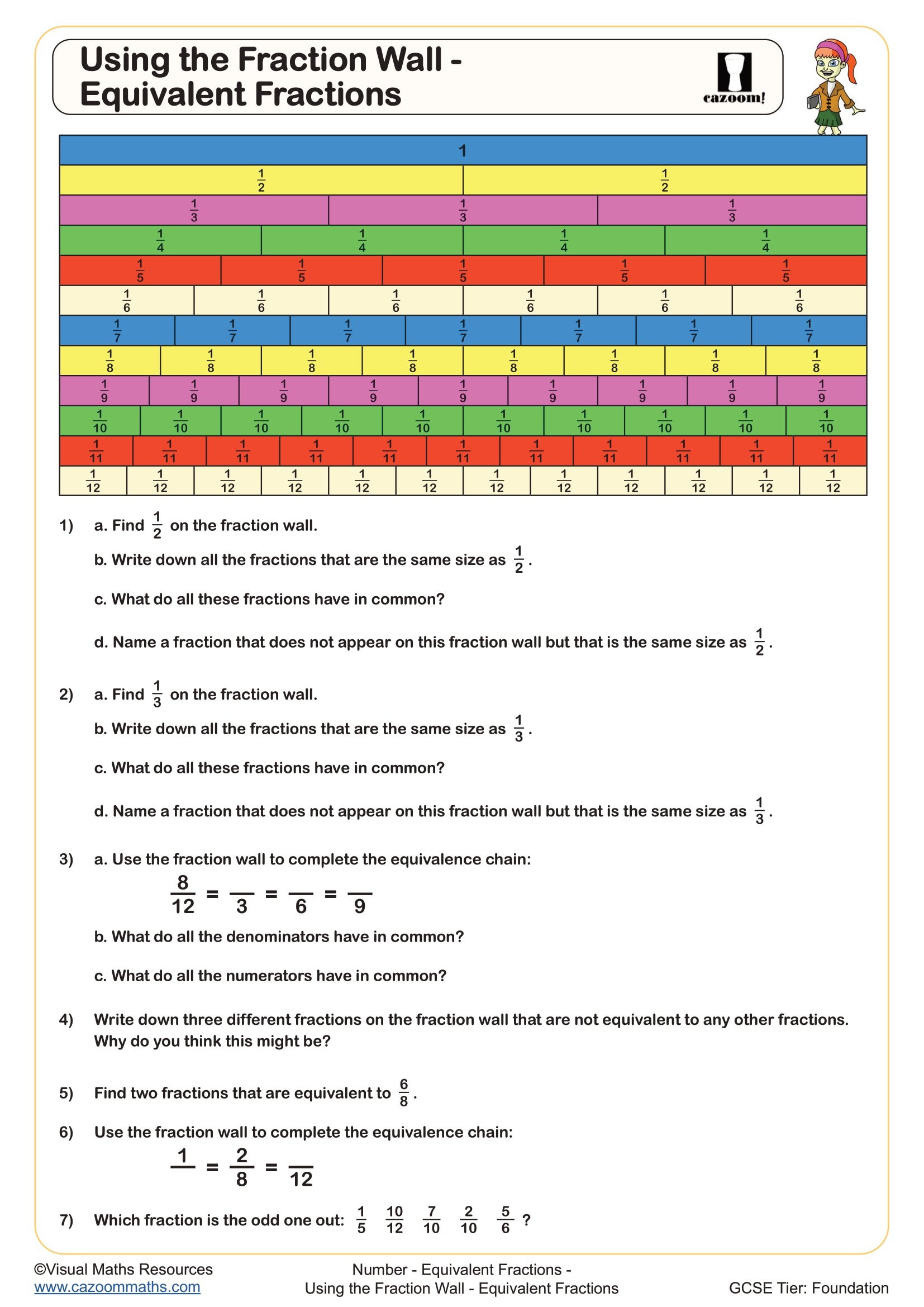
Using The Fraction Wall - Equivalent Fractions
All worksheets are created by the team of experienced teachers at Cazoom Maths.
What makes KS3 fractions worksheets different from primary fractions work?
KS3 fractions worksheets extend primary learning by introducing algebraic fractions, more complex equivalent fractions, and multi-step problems that combine operations. At this stage, the National Curriculum expects students to confidently convert between forms, perform all four operations with fractions, and apply fraction knowledge to ratio, proportion, and algebraic contexts. Students must also work with negative fractions and understand fractions as division.
Teachers often notice that Year 7 students arrive with inconsistent fraction foundations, particularly around finding common denominators when adding or subtracting fractions. A typical error appears when students face 3/4 + 2/5: many will add to get 5/9 rather than converting to twentieths first. The ks3 fractions worksheet materials address this by providing graduated practice that reinforces the underlying reasoning, not just procedural steps.
Which year groups use these KS3 fractions worksheets?
These worksheets are structured for Year 7, Year 8, and Year 9 students following the KS3 National Curriculum. Year 7 focuses on consolidating primary fraction knowledge and extending to more complex calculations, particularly adding and subtracting fractions with unrelated denominators. Year 8 introduces multiplying and dividing fractions, working with algebraic fractions, and applying fraction skills to solving equations.
By Year 9, students work with more abstract fraction problems, including those embedded in probability, ratio, and proportion contexts. The progression across KS3 means that Year 7 materials reinforce accurate methods with straightforward fractions, whilst Year 9 worksheets combine multiple concepts in single problems. Teachers preparing students for GCSE foundation tier find that regular fraction practice throughout KS3 prevents the misconceptions that typically cost marks in exam questions about proportion or reverse percentages.
How do improper fractions and mixed numbers connect to real applications?
Converting between improper fractions and mixed numbers develops students' number sense and their ability to interpret quantities flexibly. An improper fraction like 11/4 and its mixed number equivalent 2¾ represent the same value but suit different contexts. Understanding both forms allows students to choose the most efficient representation for calculations or real-world interpretation.
This skill proves valuable in practical STEM contexts where measurements don't fit whole units. Carpentry, engineering drawings, and recipe scaling all require converting between forms: a timber length of 7/2 metres makes more sense as 3½ metres when measuring and cutting. In chemistry, solution concentrations often appear as improper fractions in calculations but need converting to mixed numbers for practical preparation. Students who can move fluently between forms handle these applications confidently, whilst those who see them as separate topics struggle to apply fraction knowledge beyond maths lessons.
How can teachers use these fractions worksheets effectively in KS3 lessons?
The worksheets provide structured practice that allows teachers to target specific fraction skills where students need reinforcement. Each worksheet includes varied question styles, from basic calculations to problem-solving contexts, which helps students develop procedural fluency alongside conceptual understanding. The complete answer sheets show full working, making them particularly useful for students to self-check or for teachers to identify exactly where misconceptions occur in multi-step fraction problems.
Many teachers use these materials for targeted intervention with students who missed key fraction concepts in primary school, as the graduated difficulty allows catch-up without overwhelming learners. The ks3 fractions worksheets pdf format works well for homework, particularly when students need additional practice before assessments. In mixed-ability classes, teachers often set different worksheets simultaneously, allowing confident students to progress to algebraic fractions whilst others consolidate adding and subtracting fractions. Paired work with one worksheet between two students encourages mathematical discussion about methods and helps surface common errors before they become embedded.