KS2 Fractions Worksheets
Add and Subtract Decimals - Mental Methods
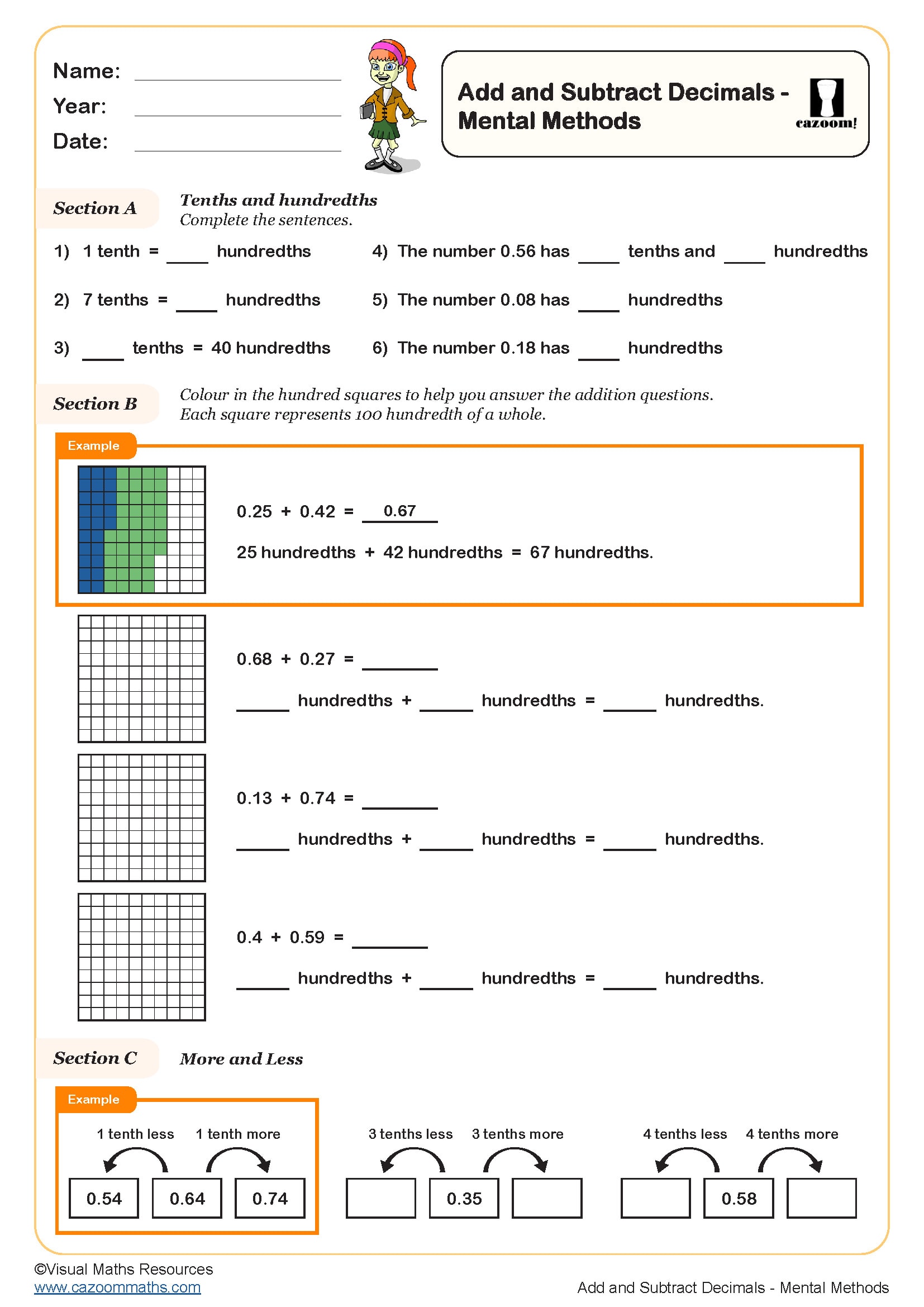
Add and Subtract Fractions (B)
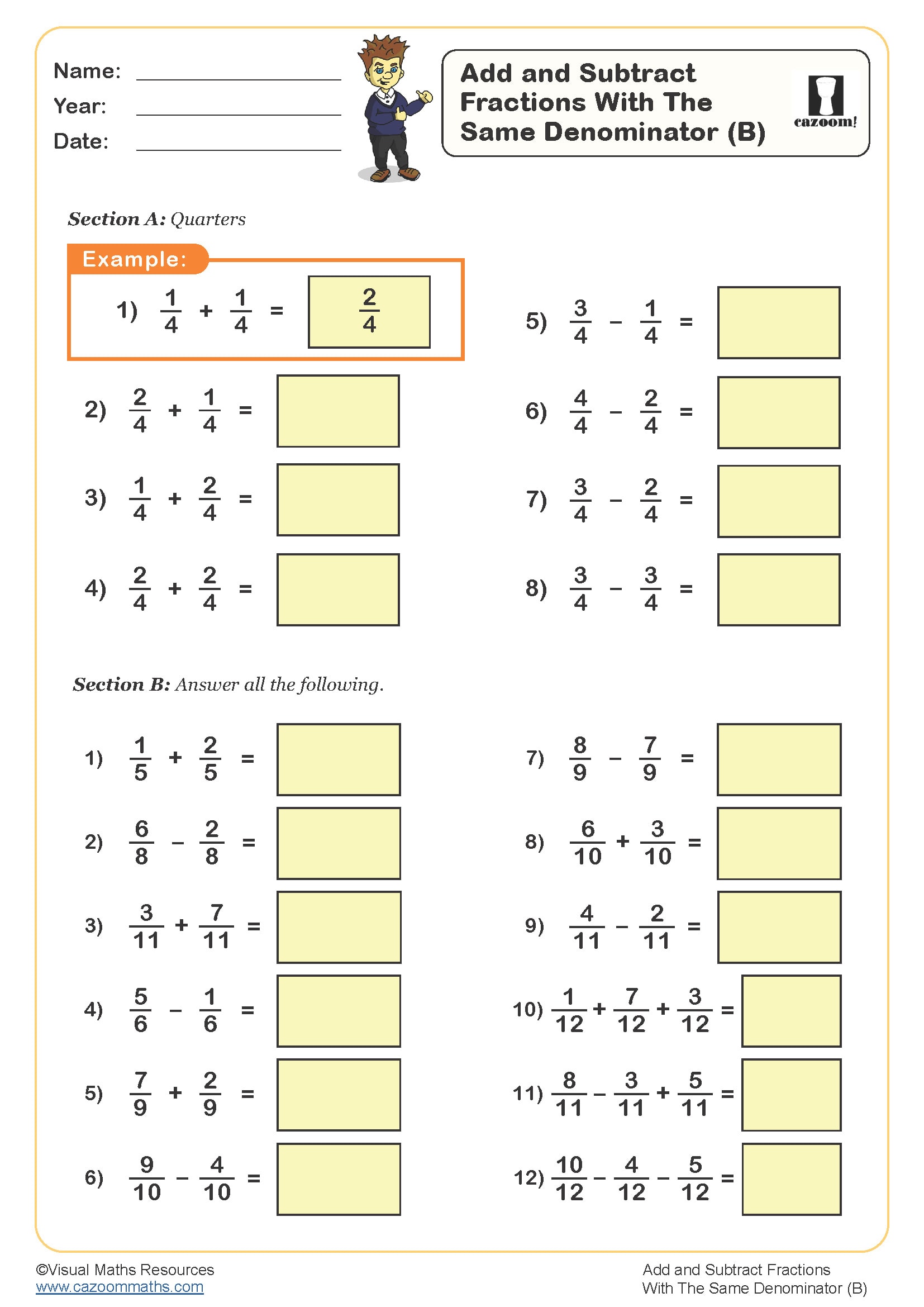
Add and Subtract Fractions with Different Denominators (A)
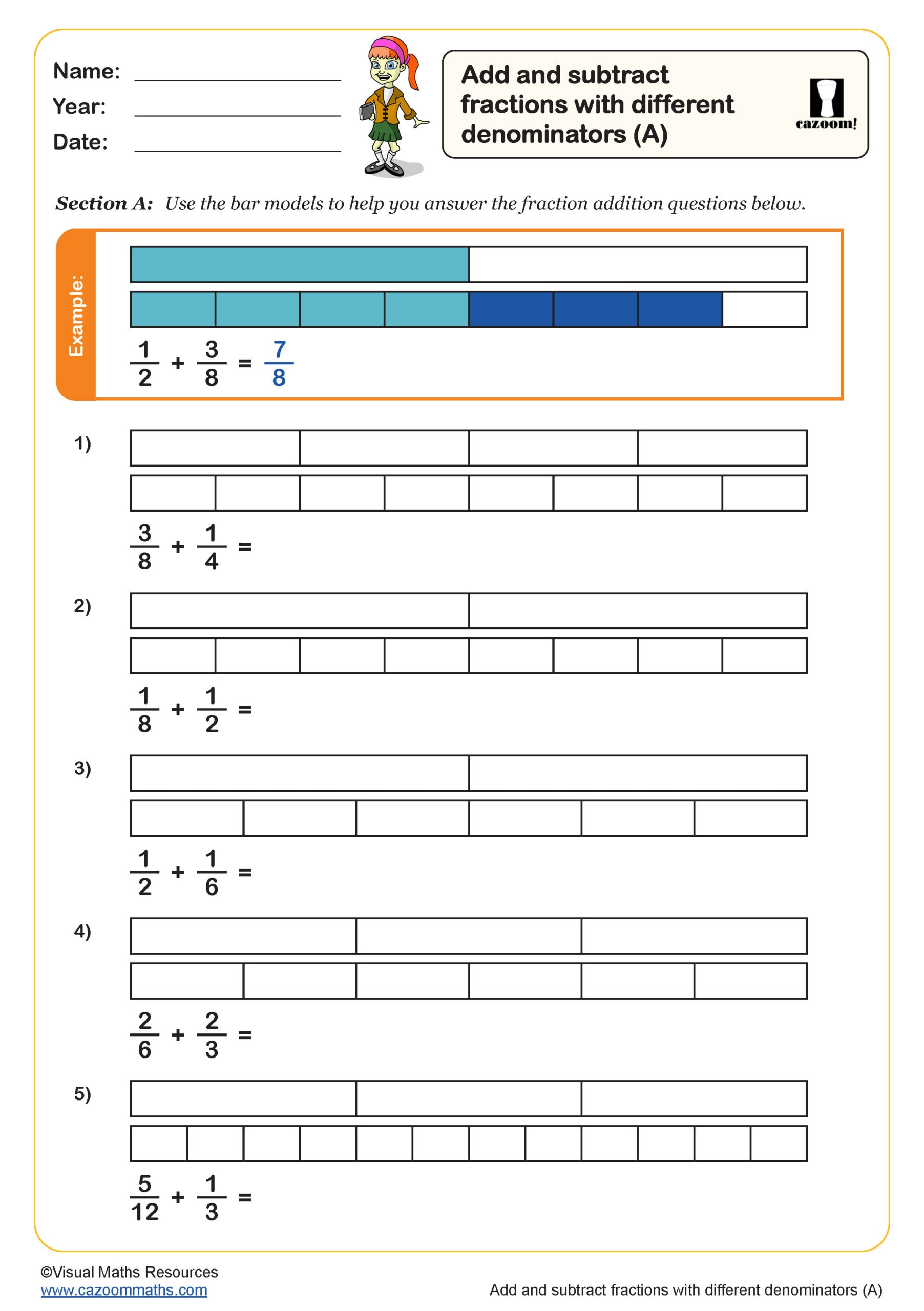
Add and Subtract Fractions with Different Denominators (B)
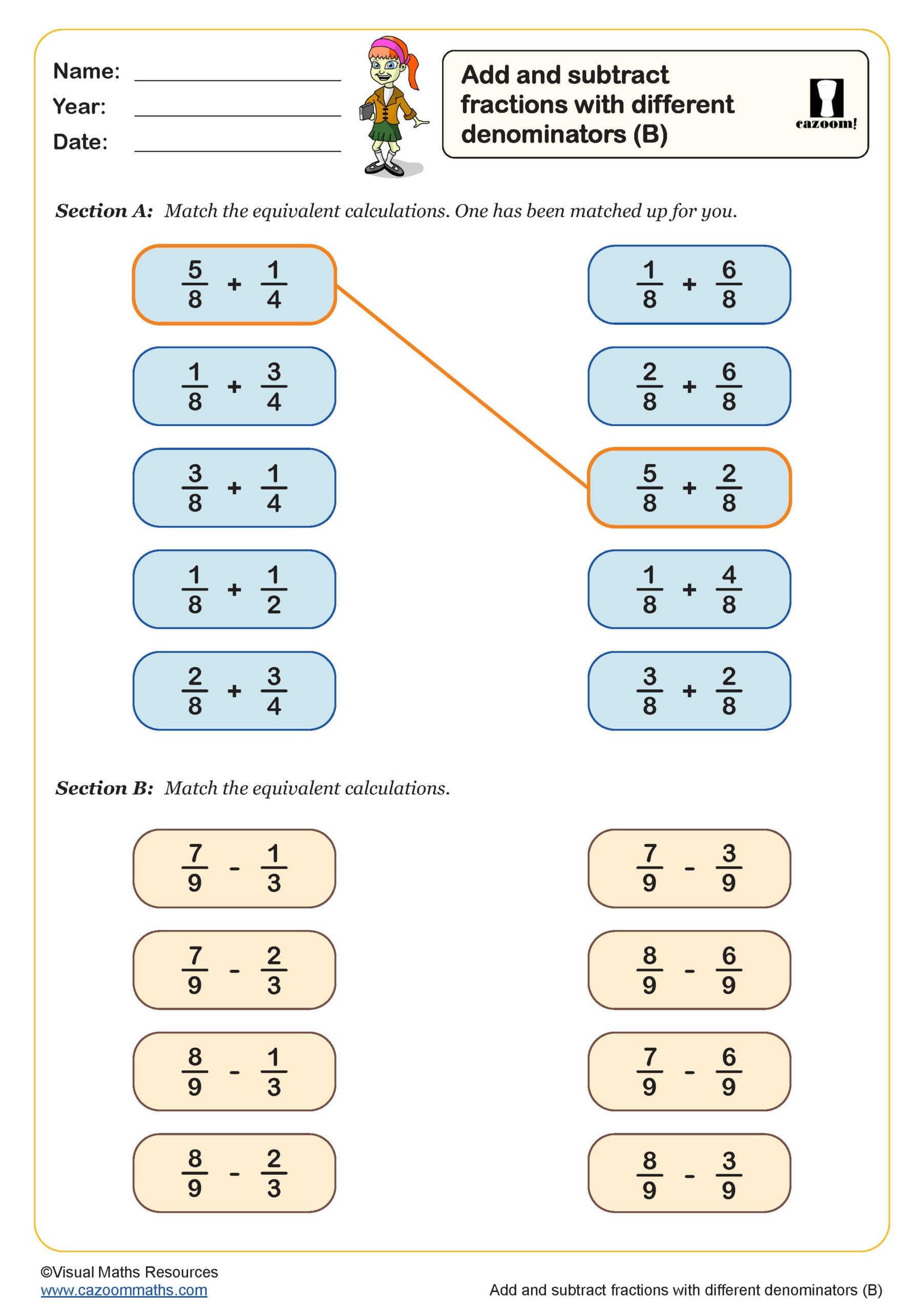
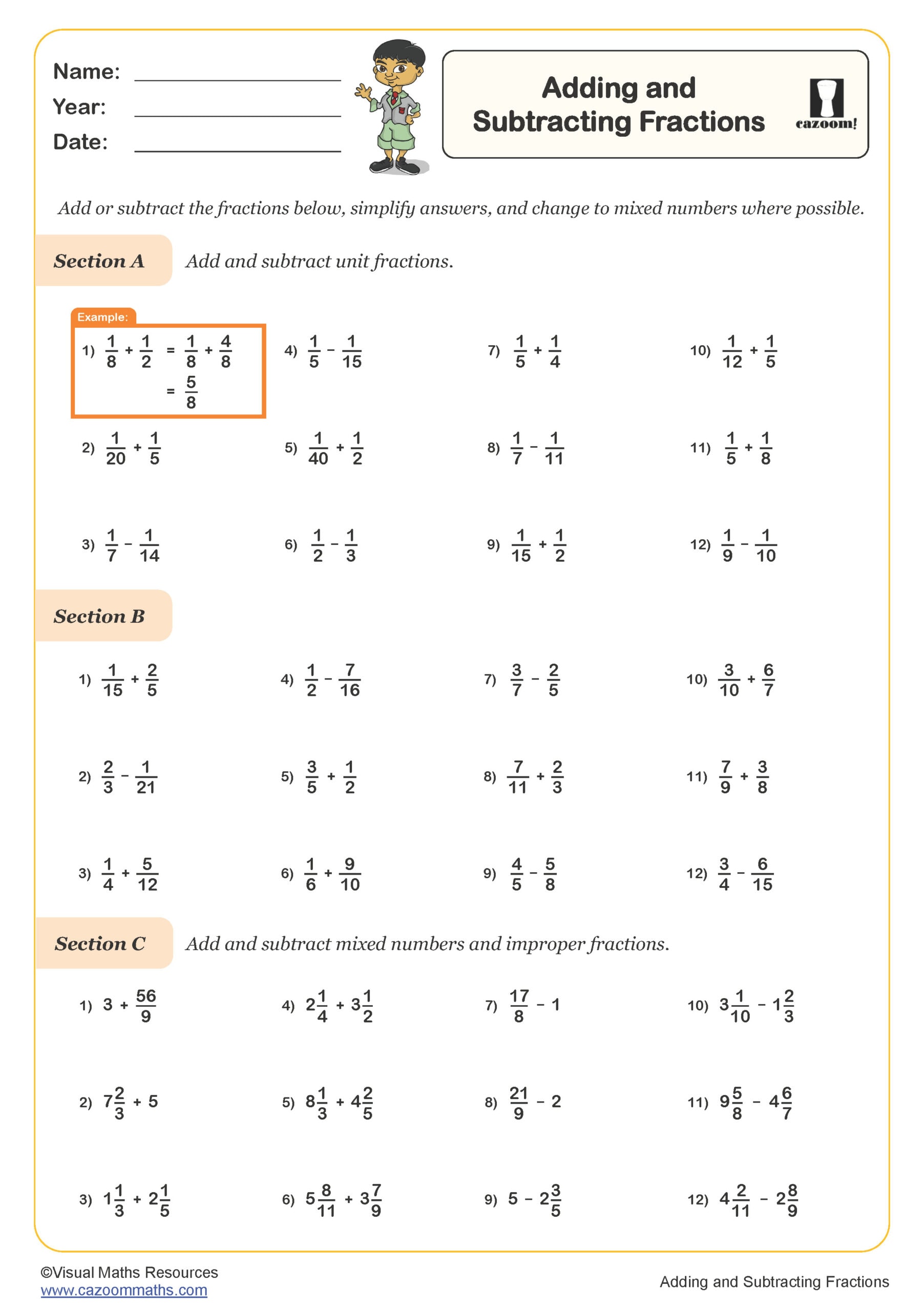
Adding and Subtracting Fractions
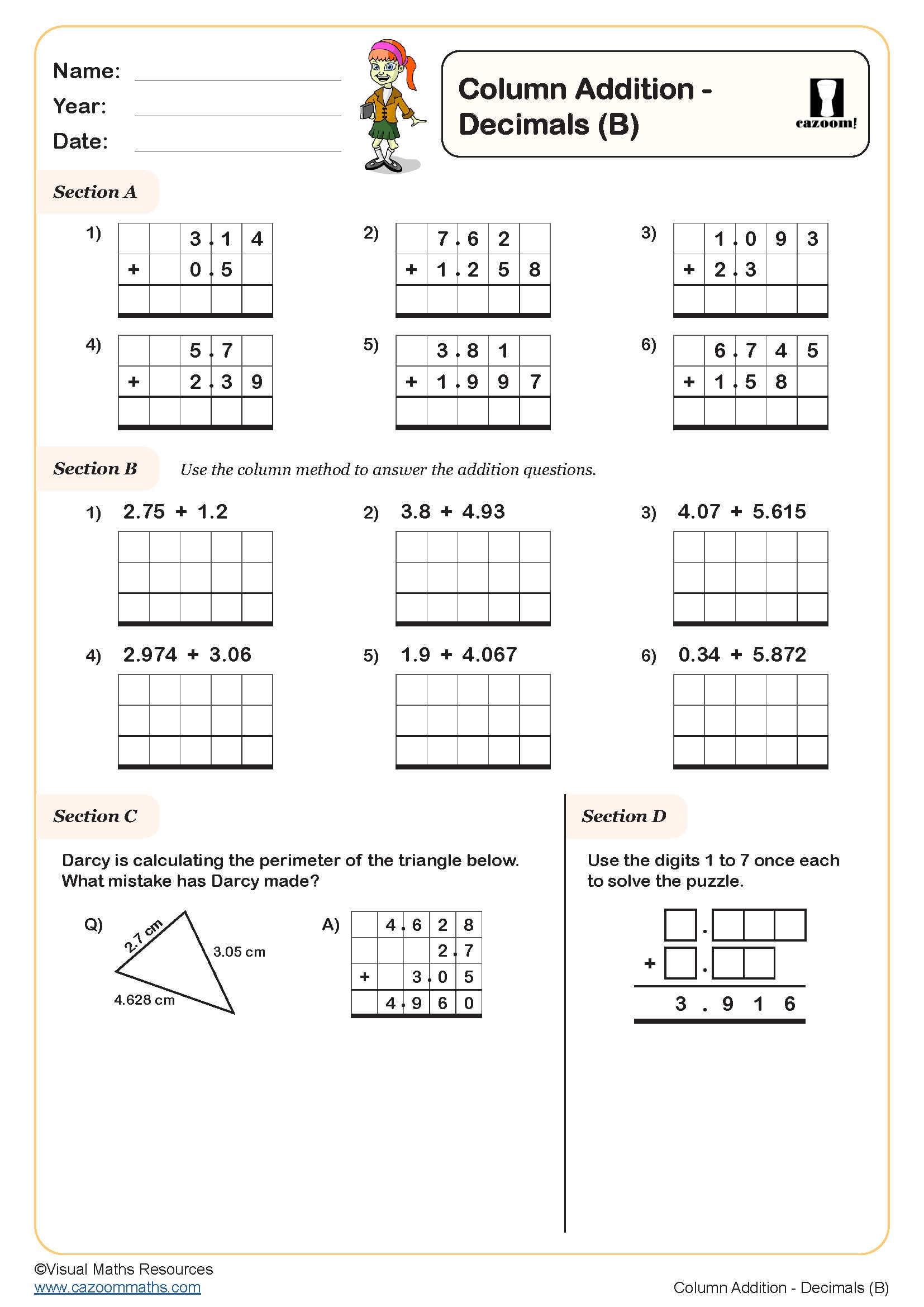
Column Addition - Decimals (B)
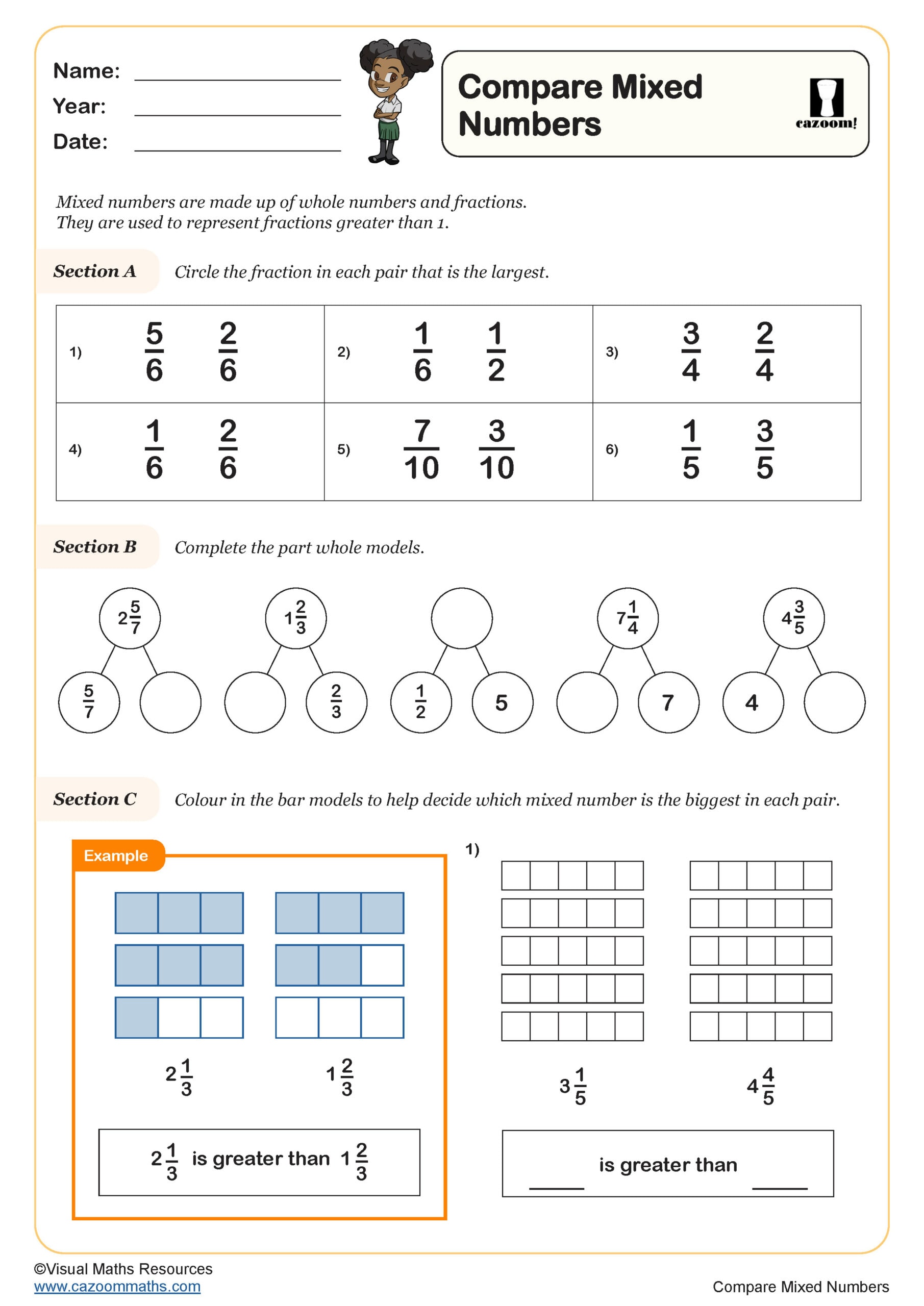
Compare Mixed numbers
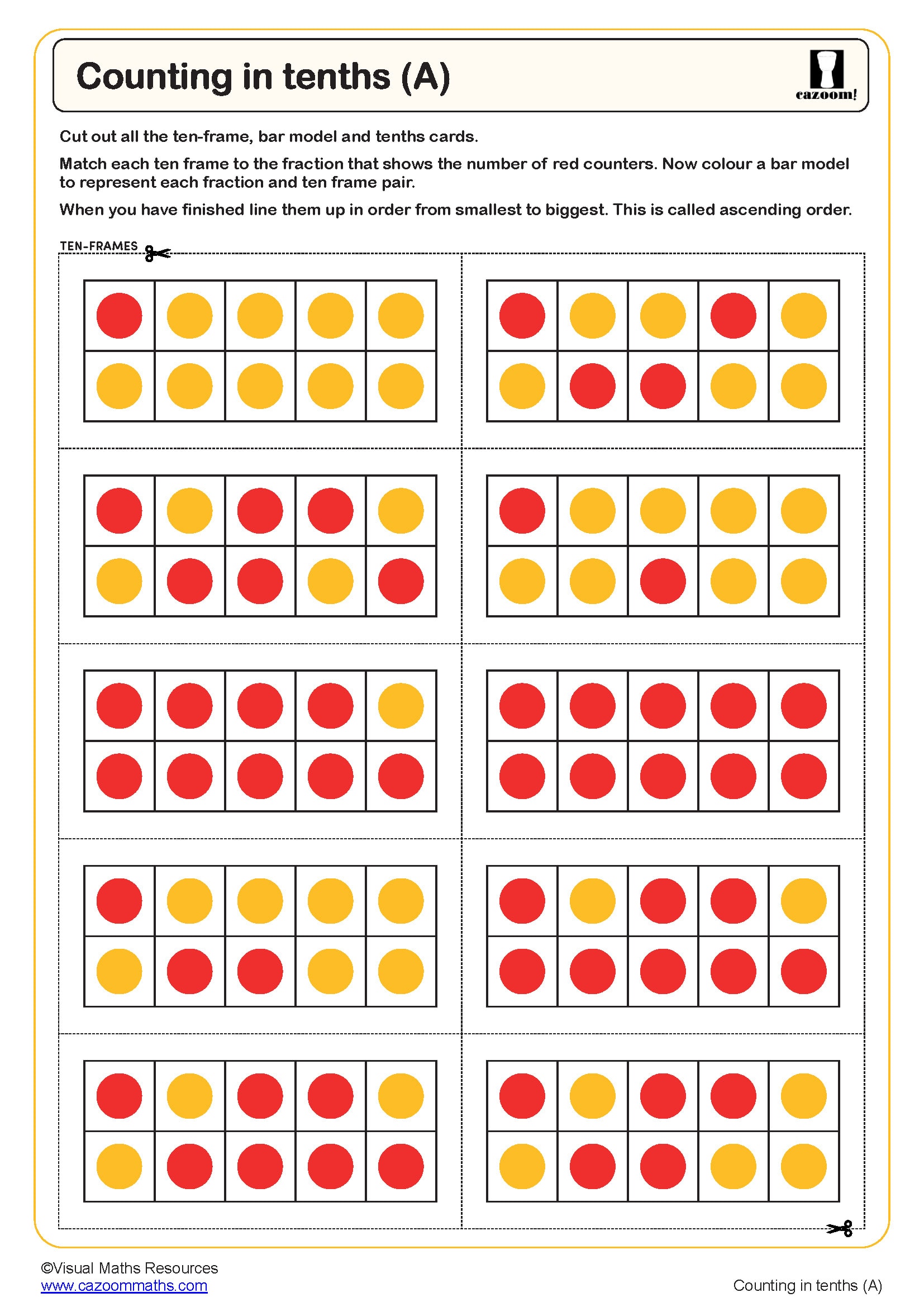
Counting in Tenths (A)
Decimals on a Number Line - Beyond 1
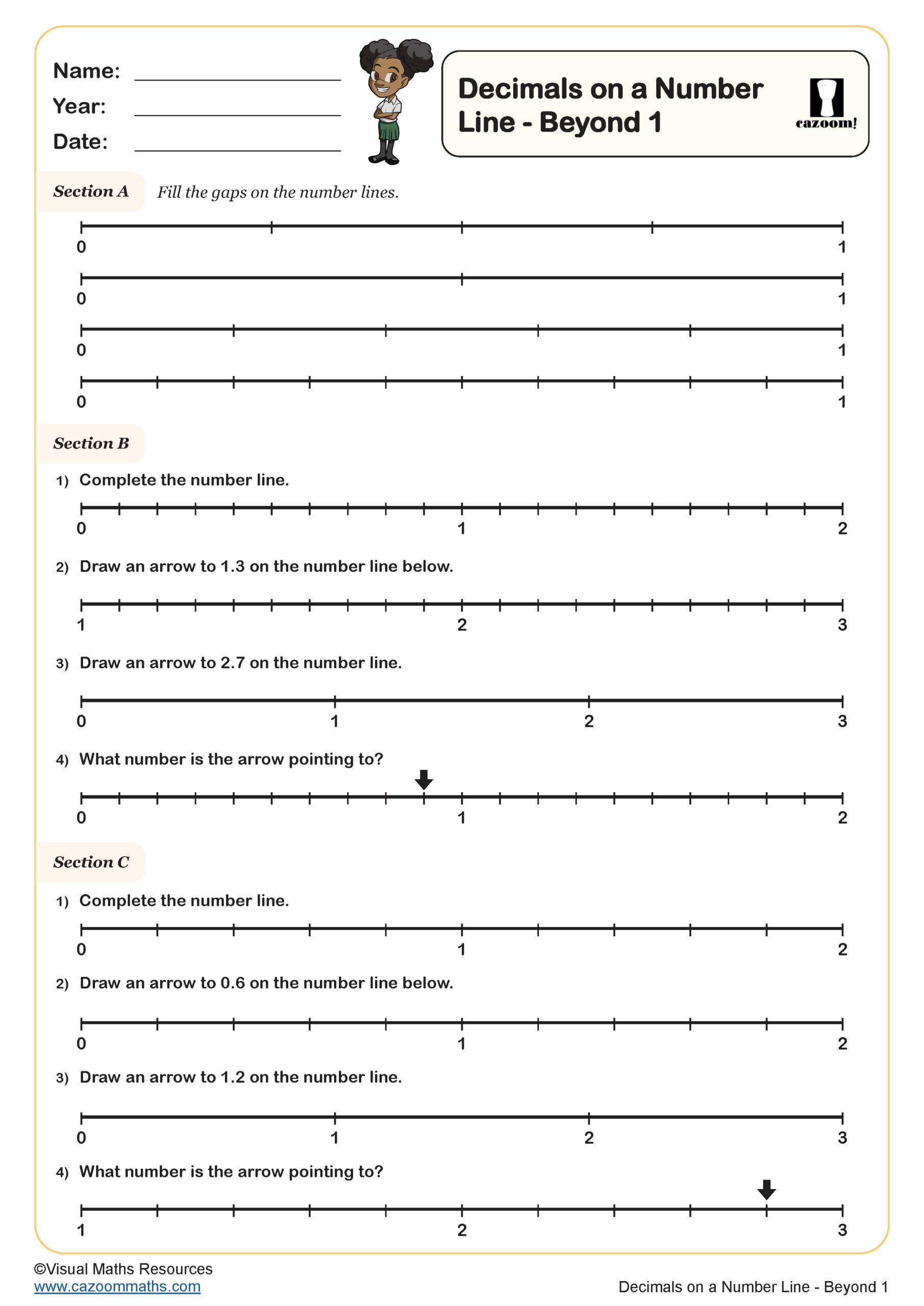
Divide 1 and 2 Digit Numbers by 10
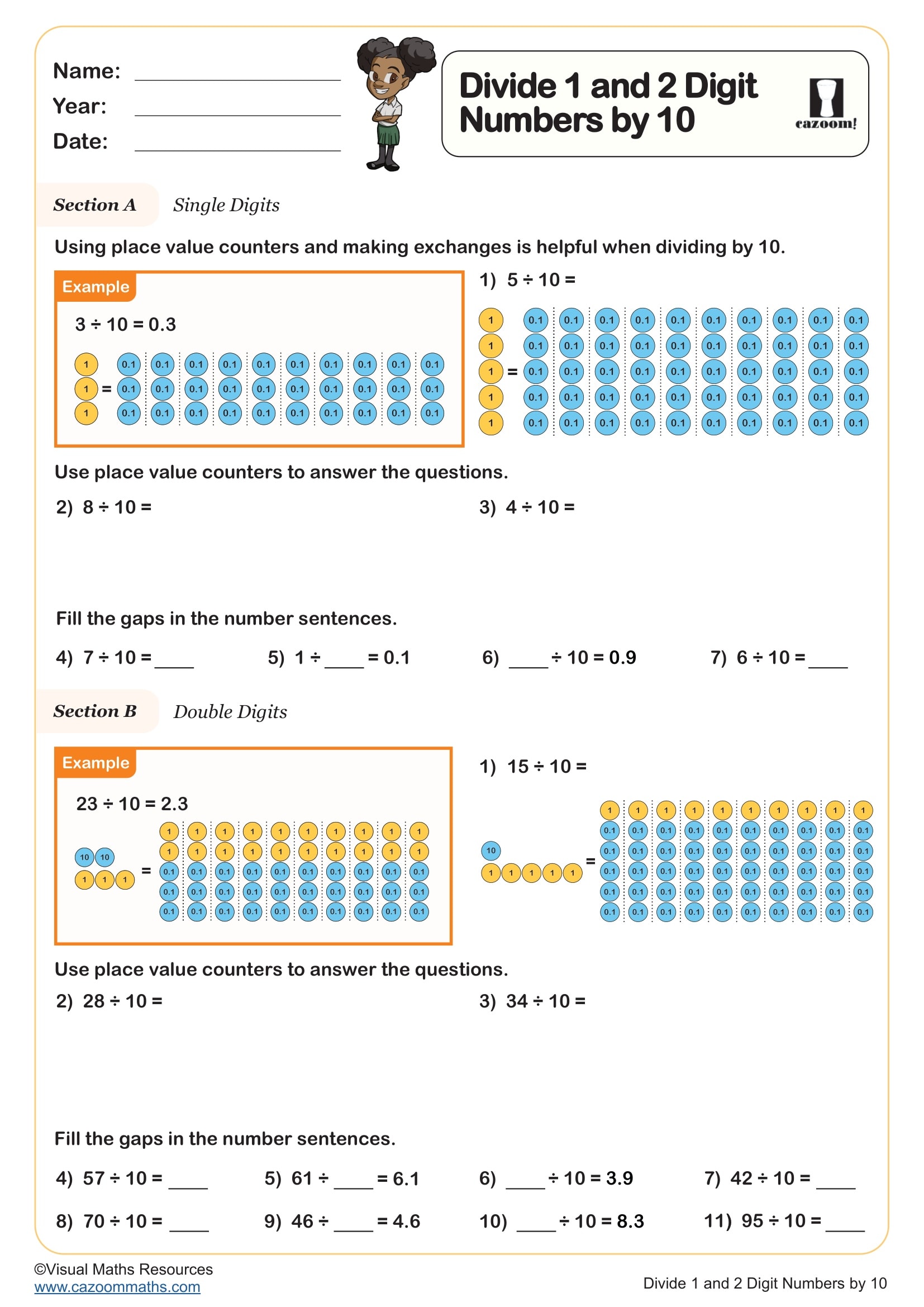
Equivalent Fractions (B)
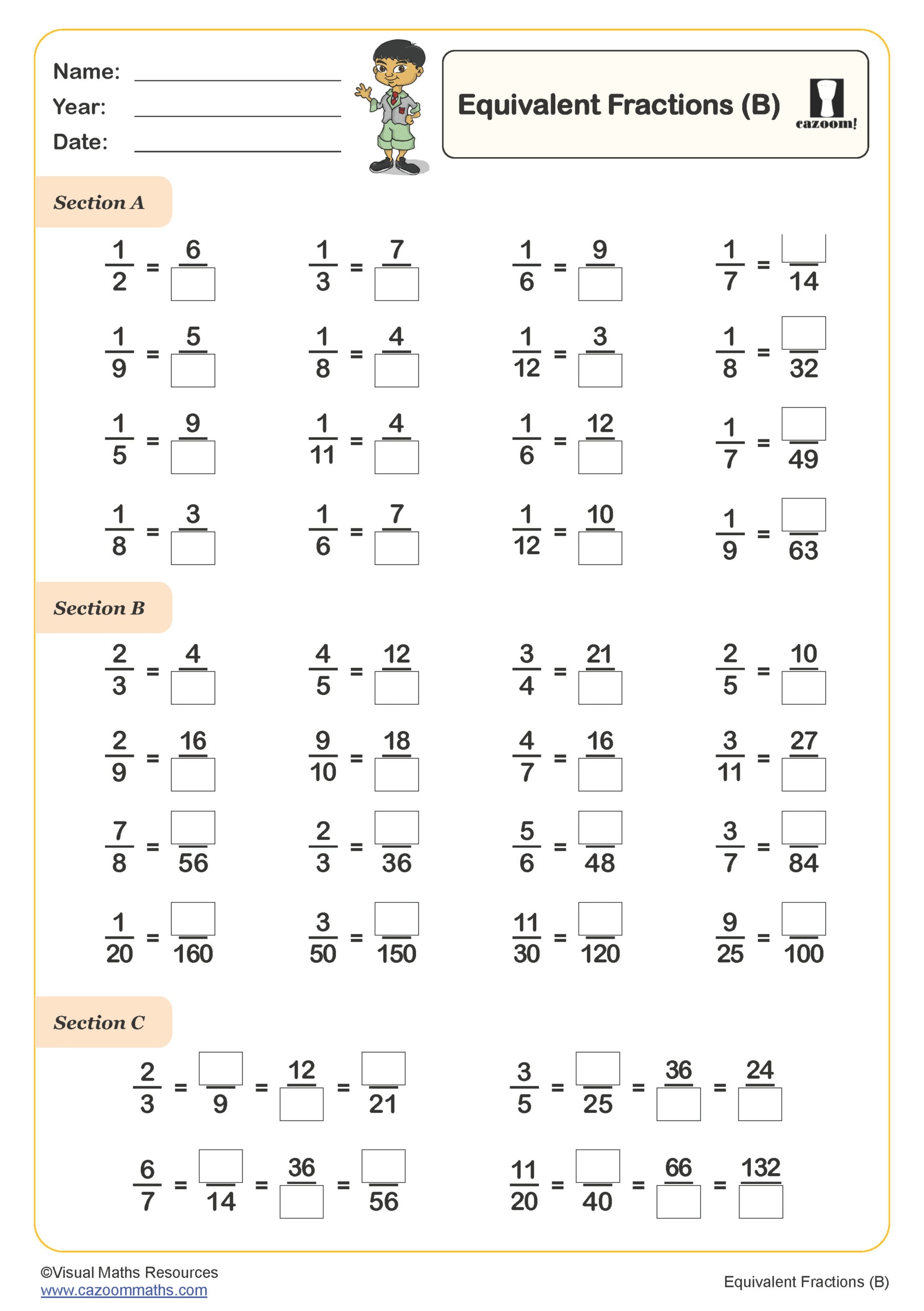
Equivalent Fractions Using a Fraction Wall (B)
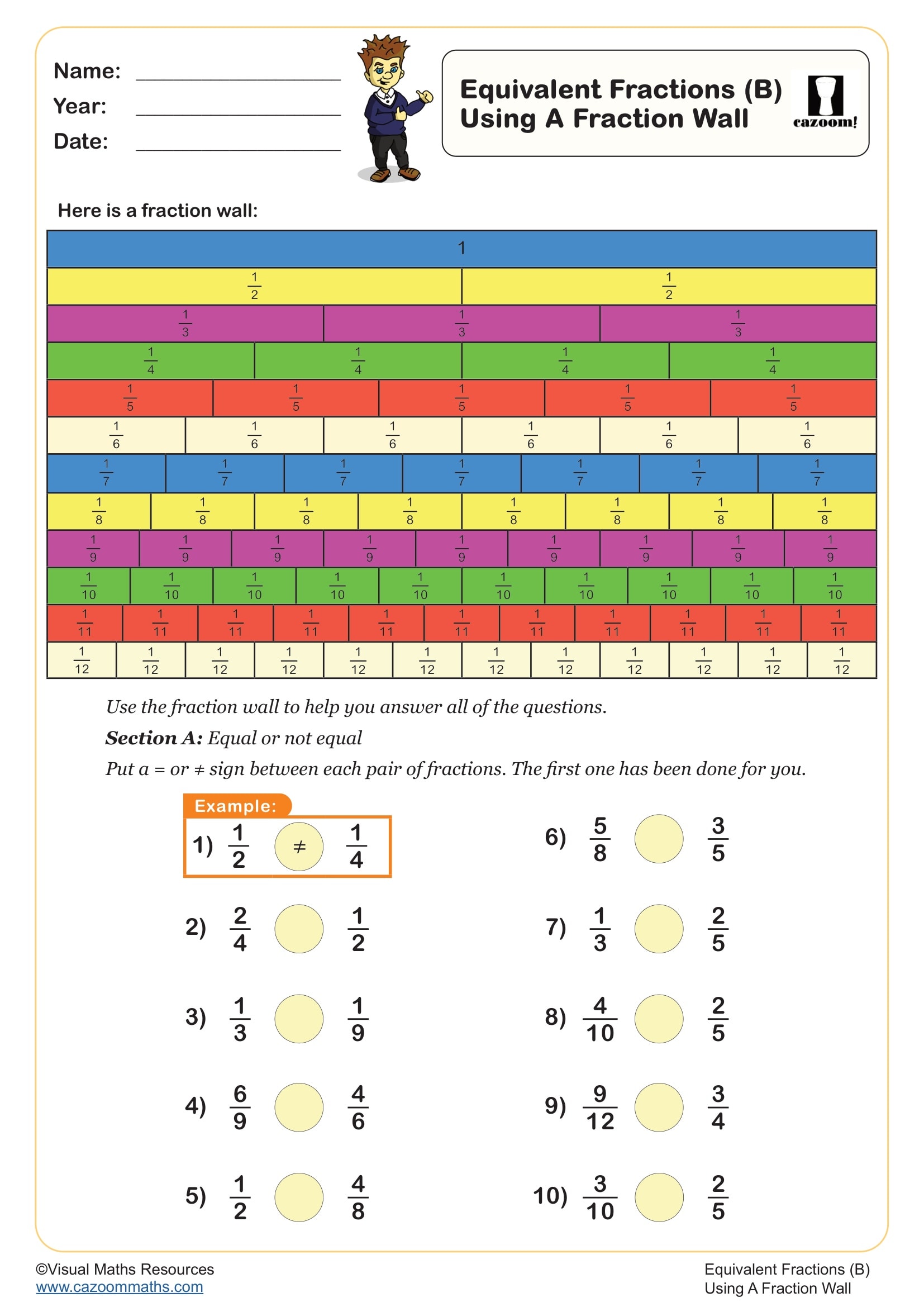
Finding fractions of a set of objects (A)
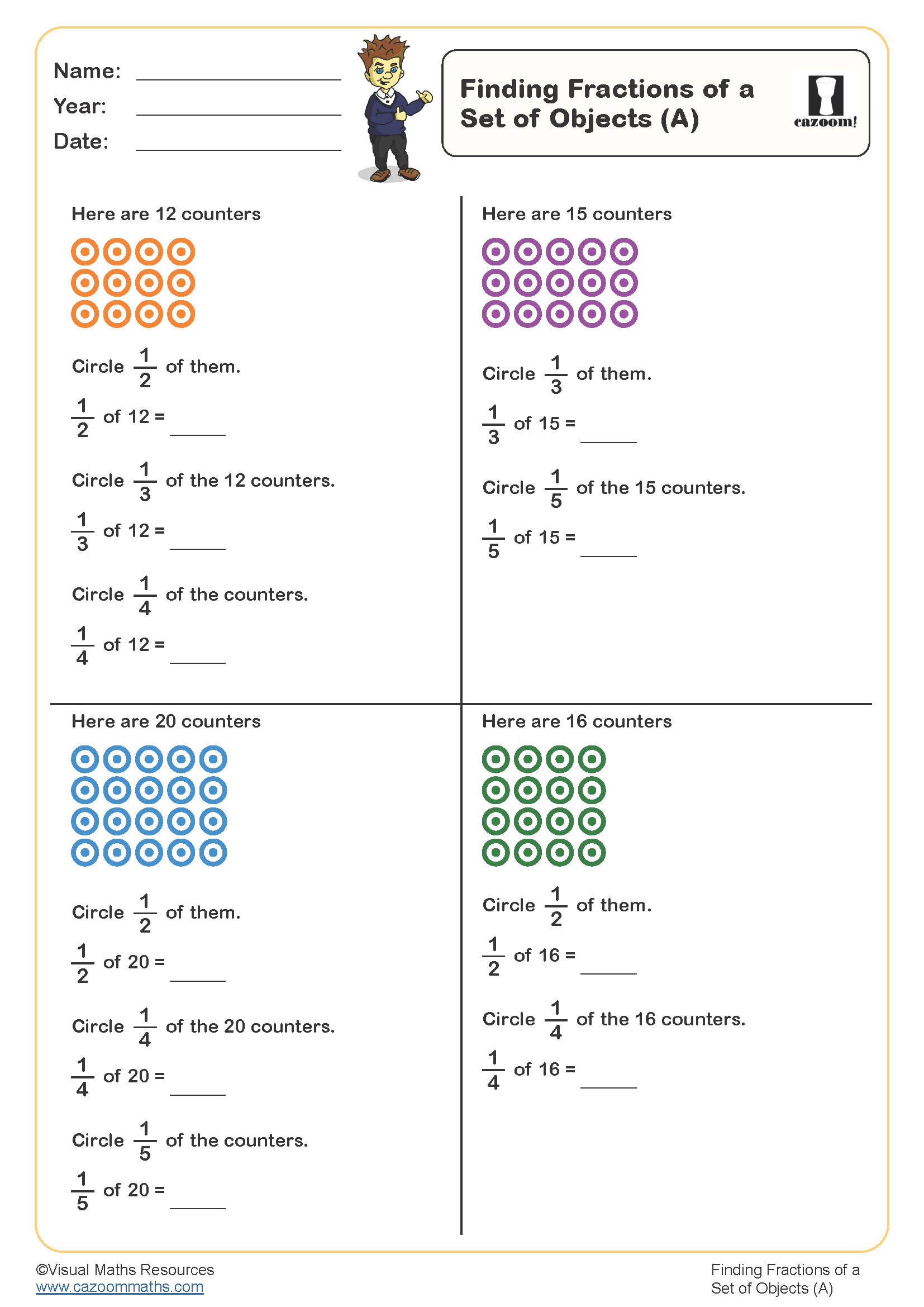
Finding fractions of a set of objects (B)
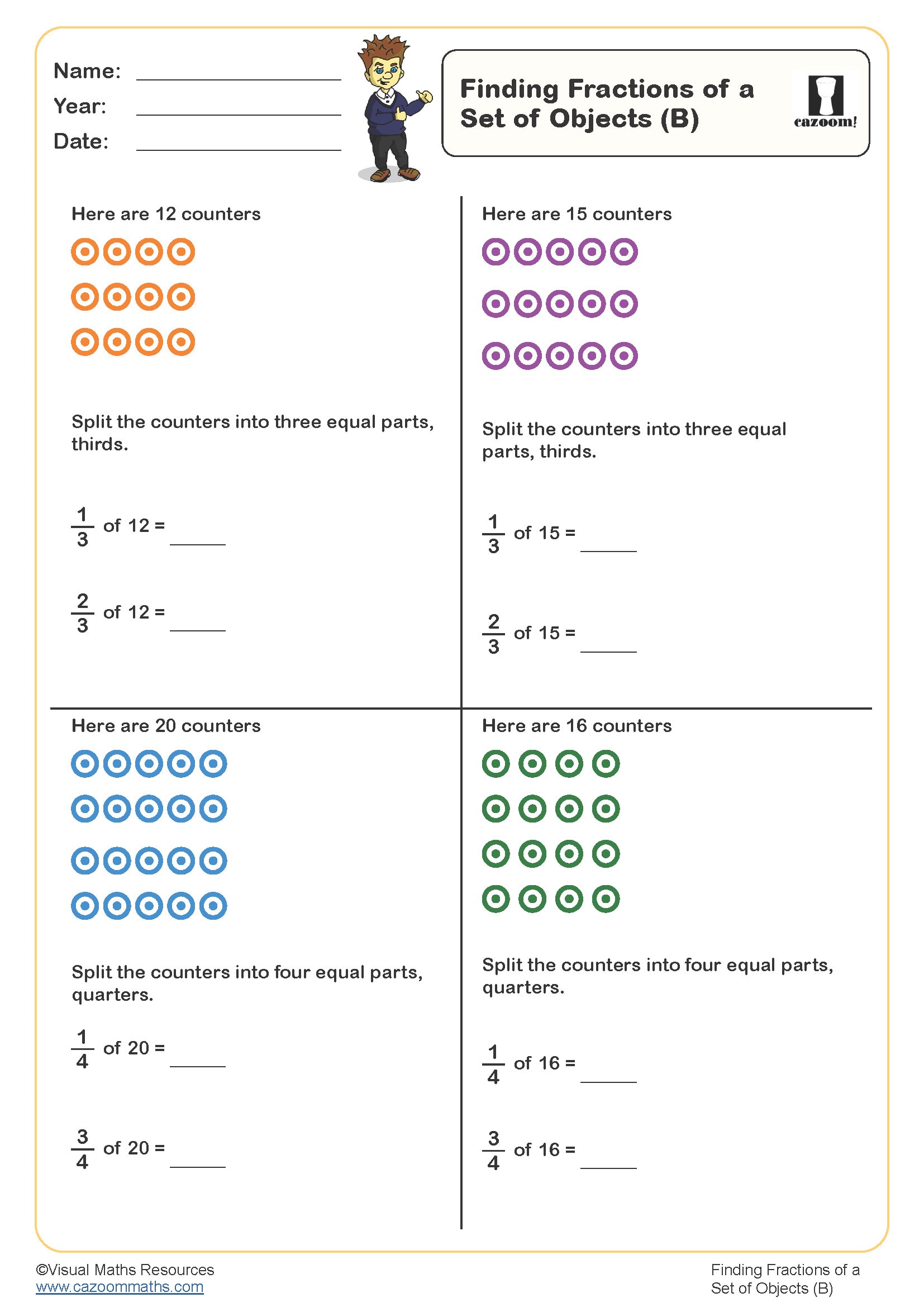
Finding Fractions of Amounts
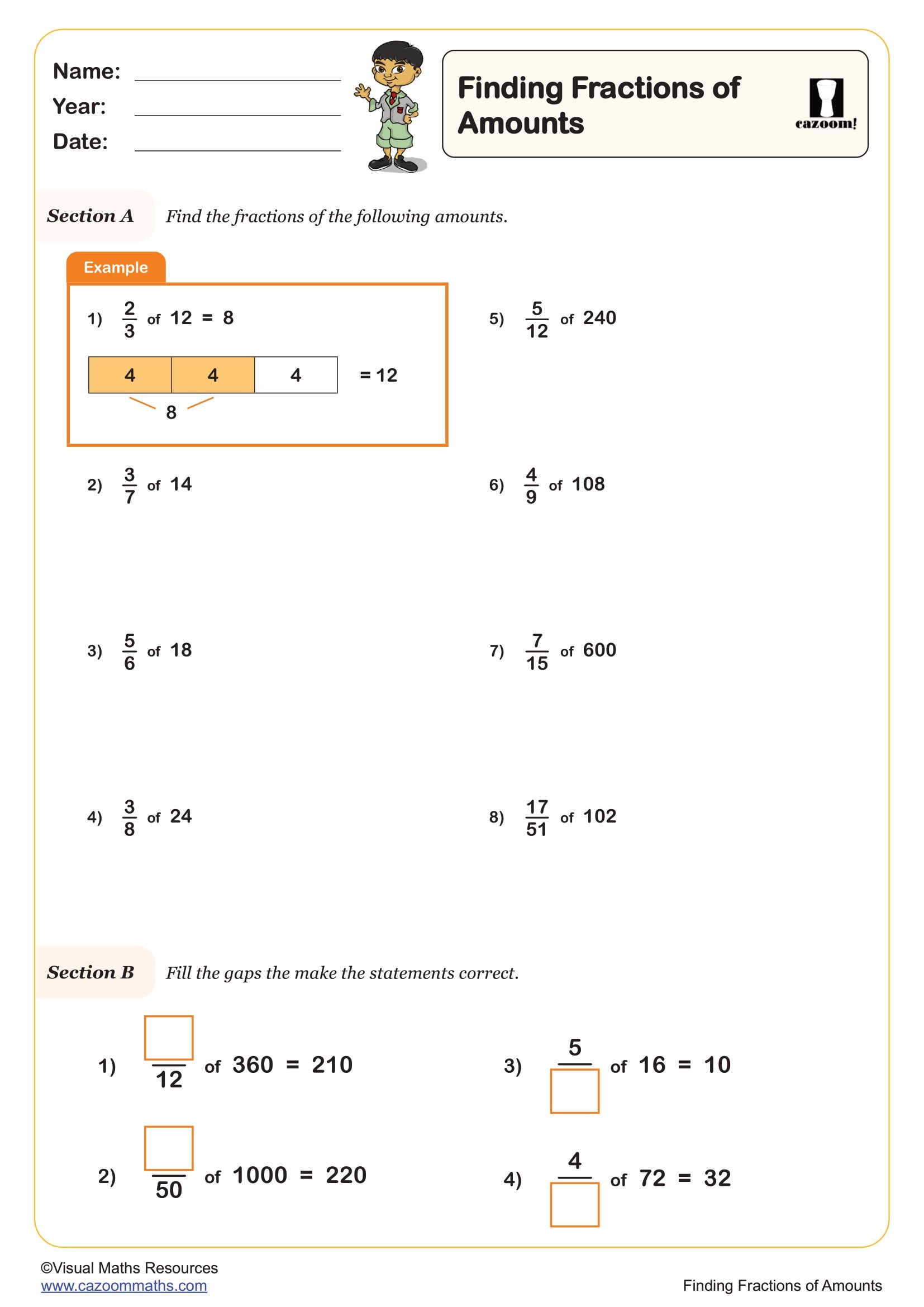
Fractions Equivalent to One Half
Fractions Equivalent to One Quarter
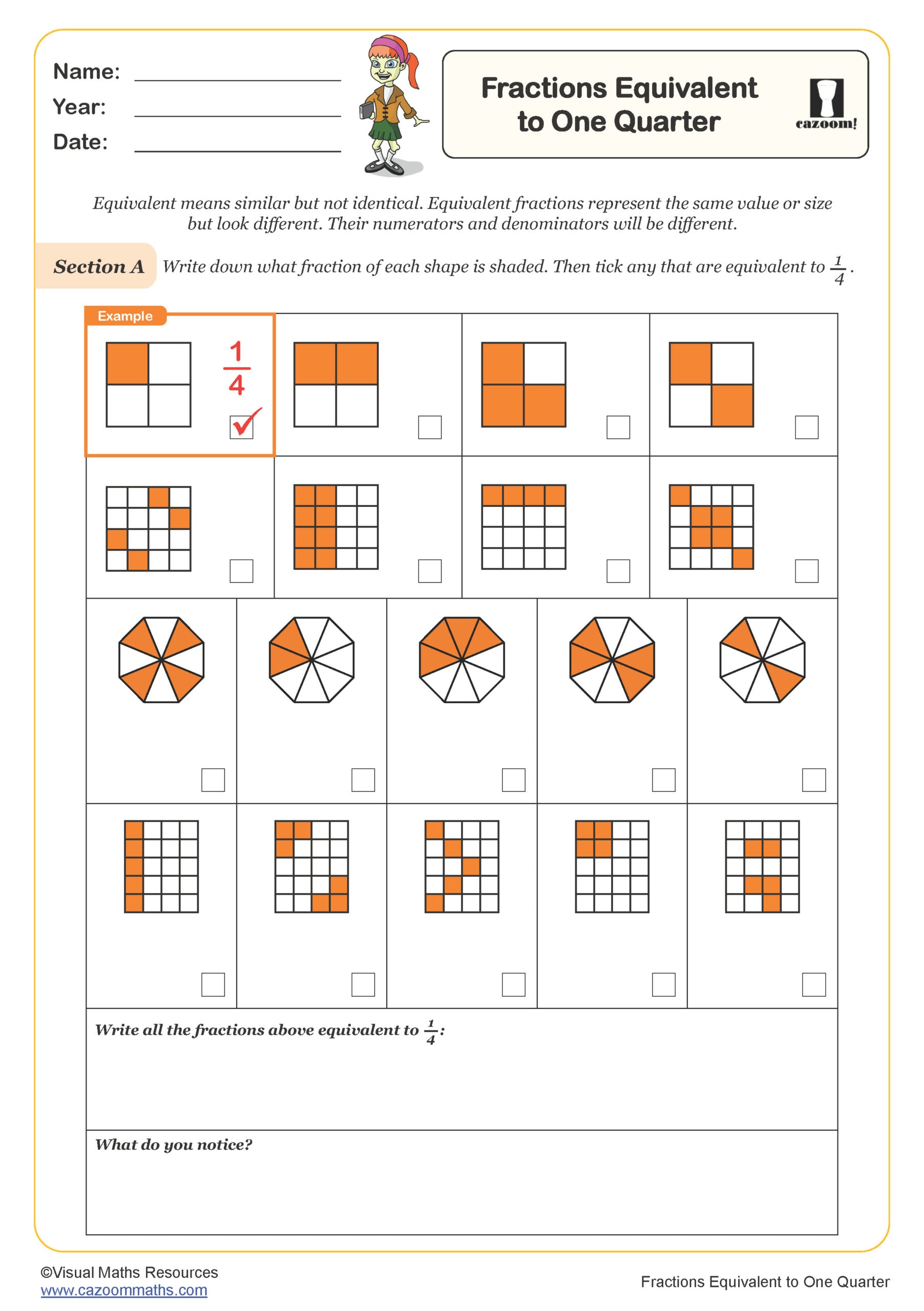
Fractions Equivalent to One Third
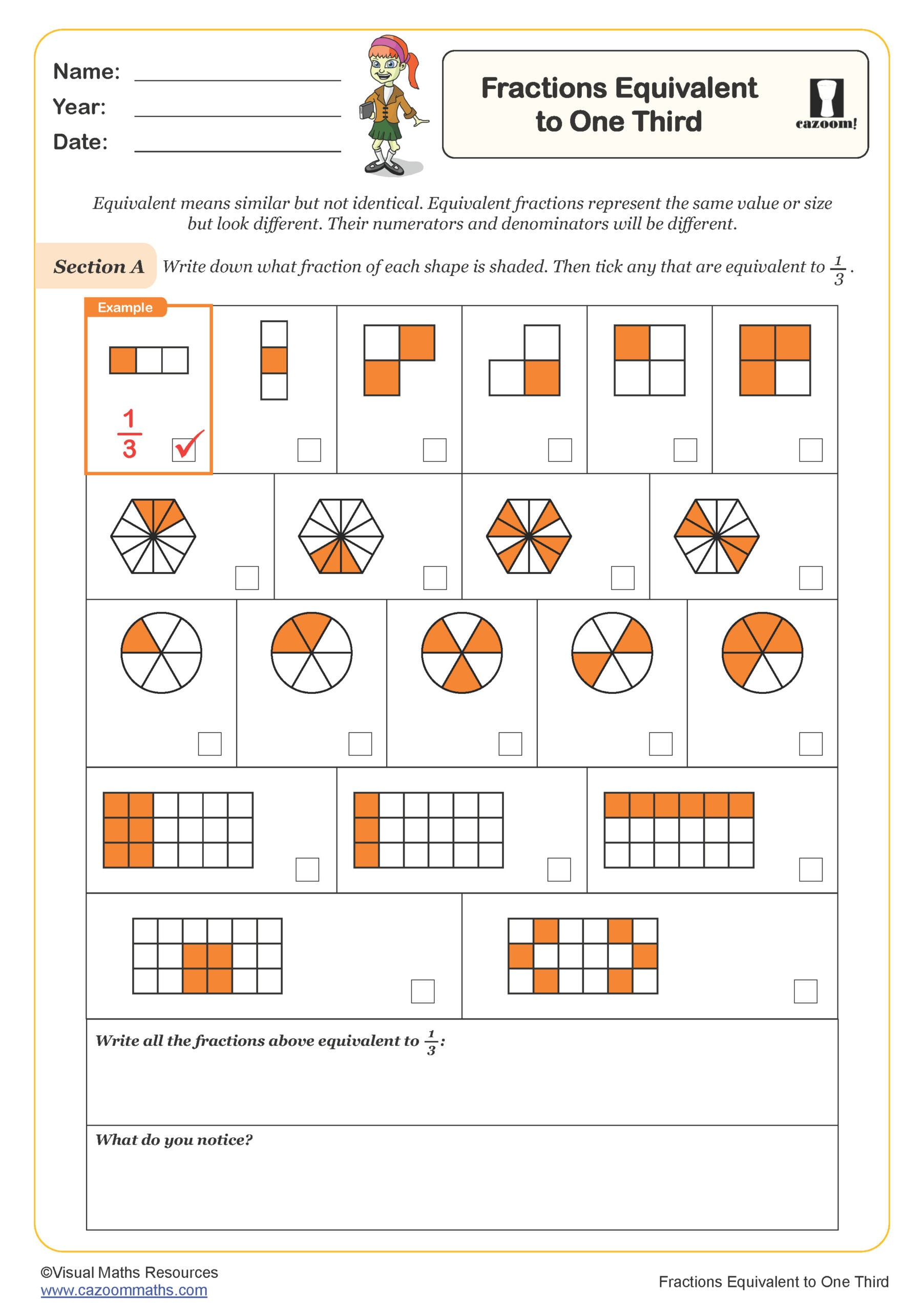
Fractions Greater Than One - Mixed Numbers
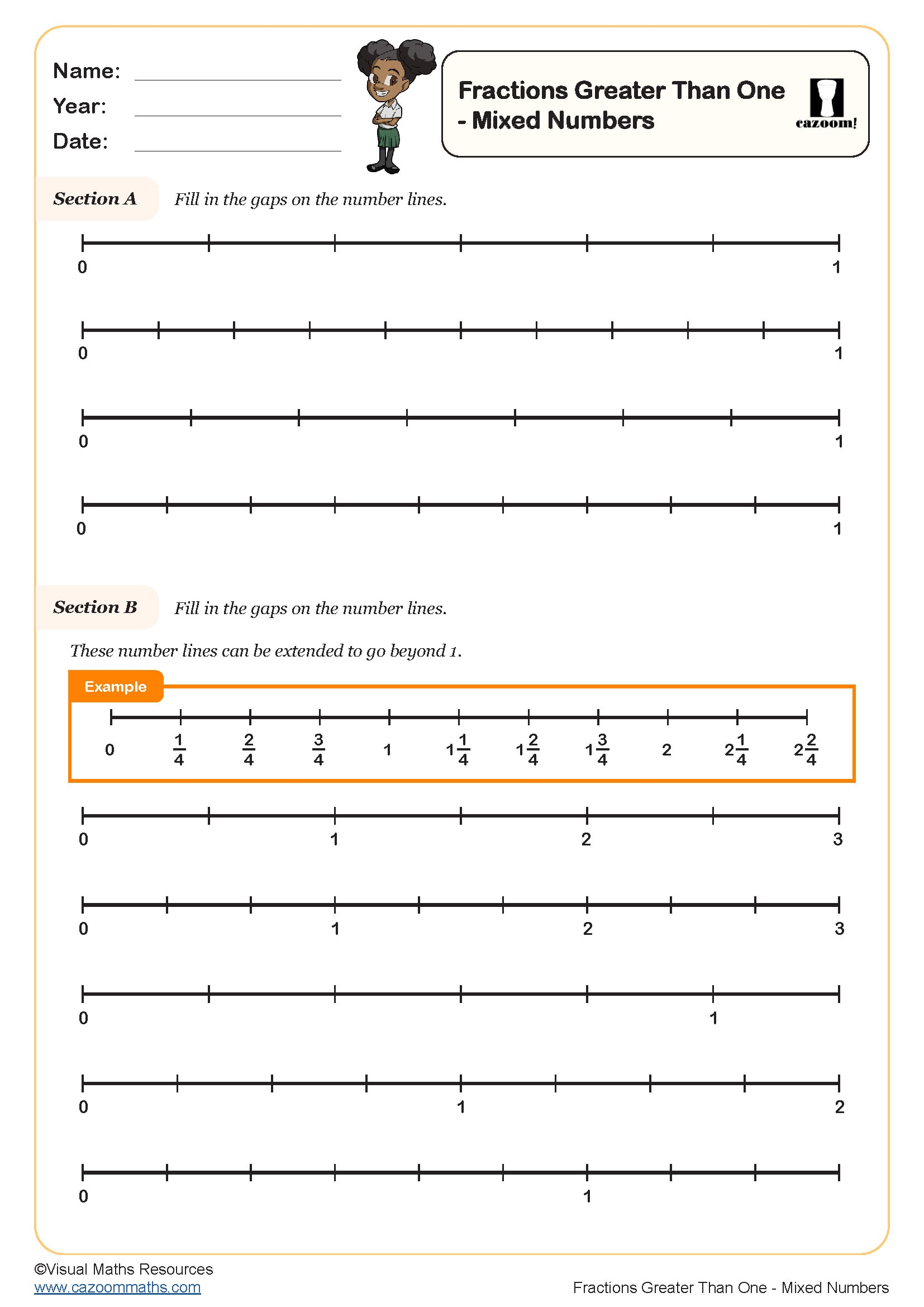
Fractions on Number Lines (A)
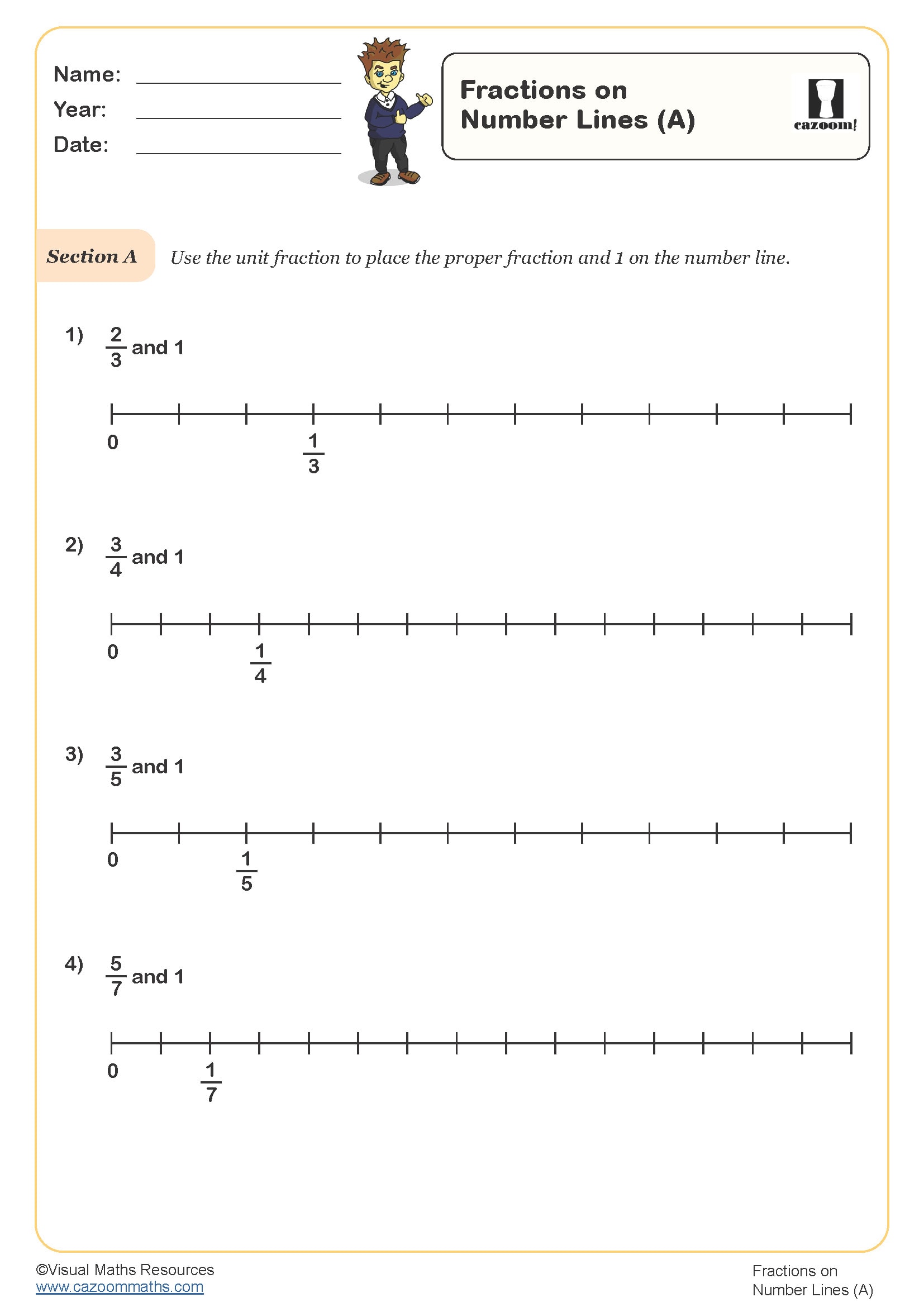
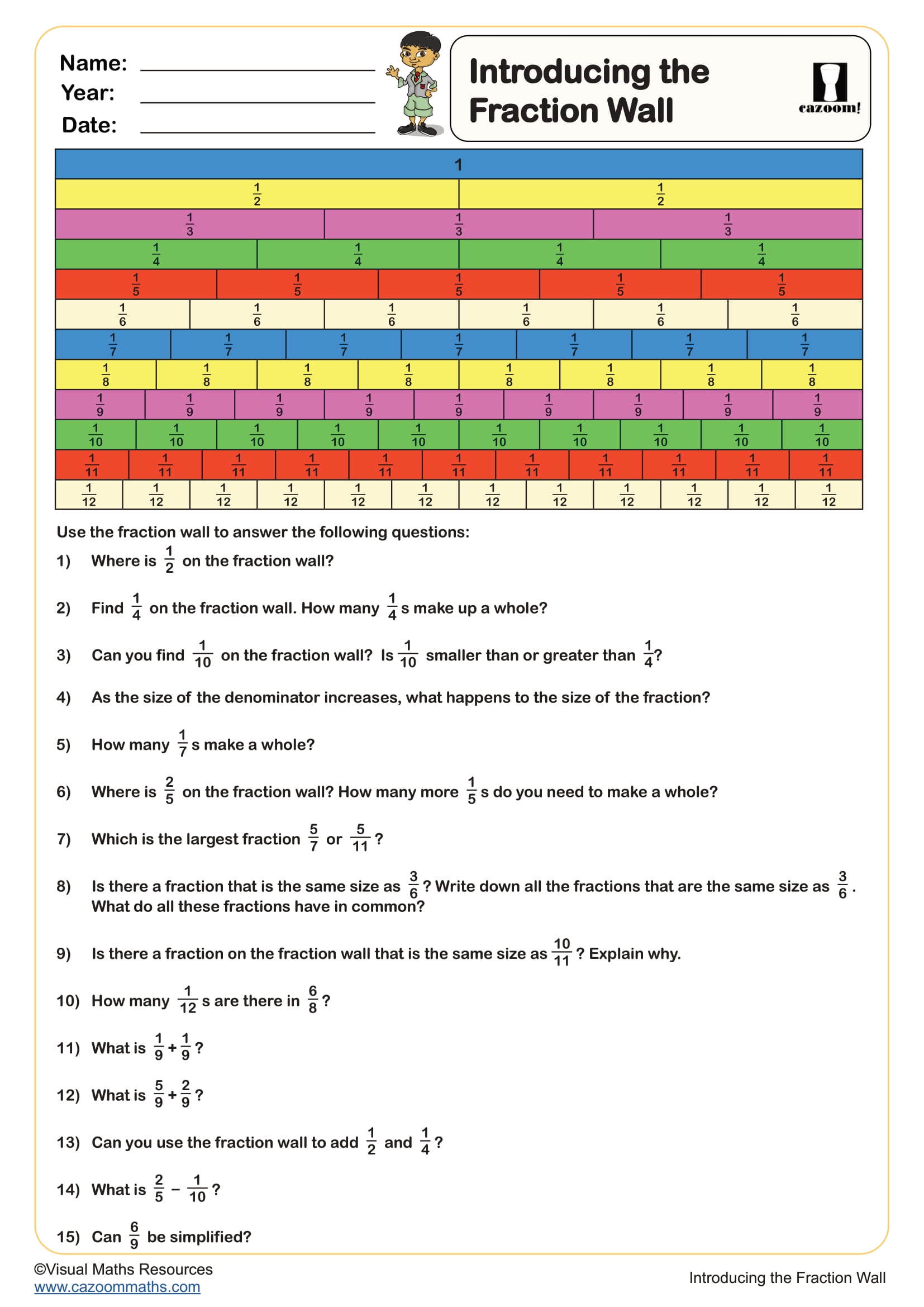
Fractions on Number Lines (B)
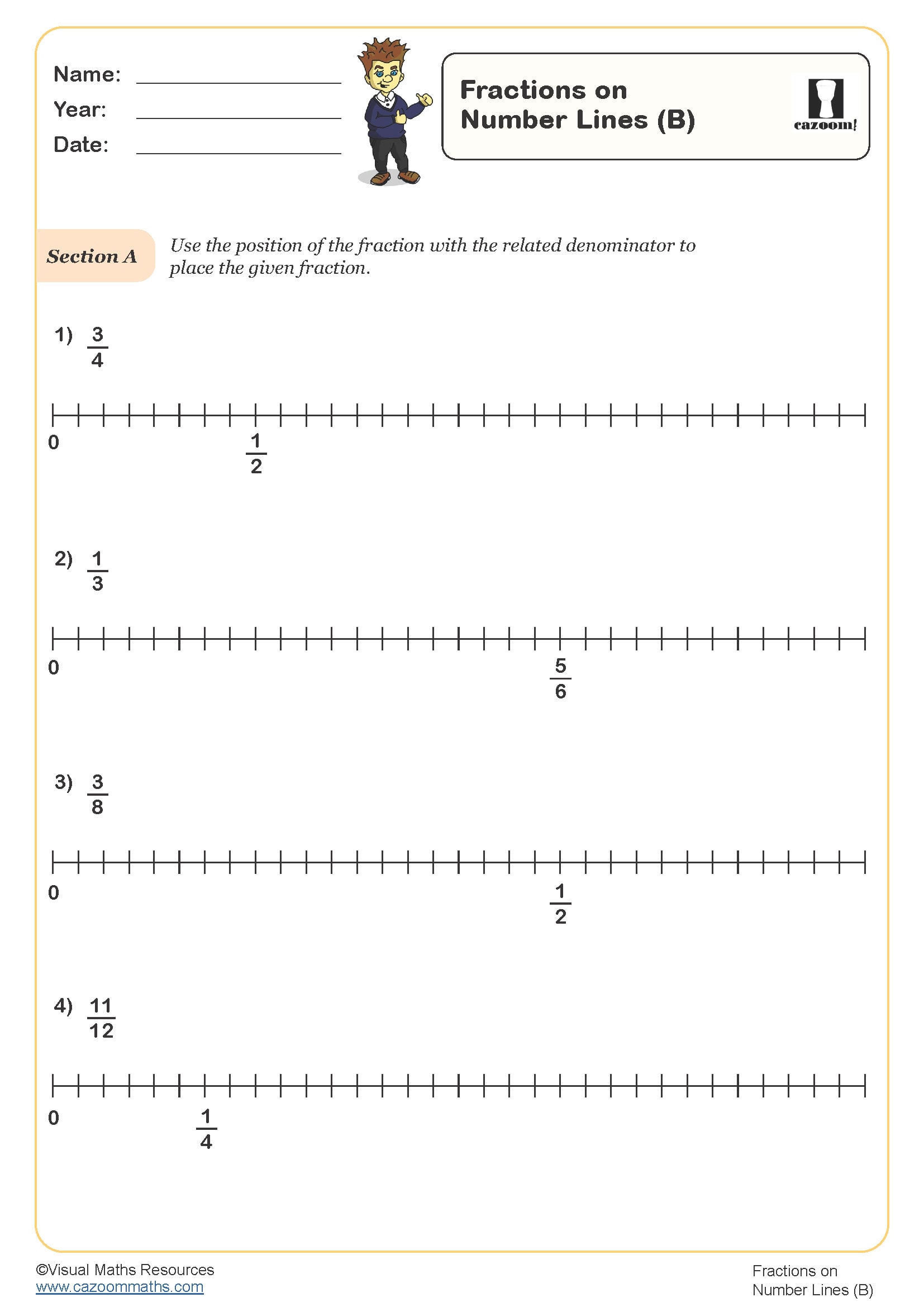
Fractions, Decimals and Percentages (A)
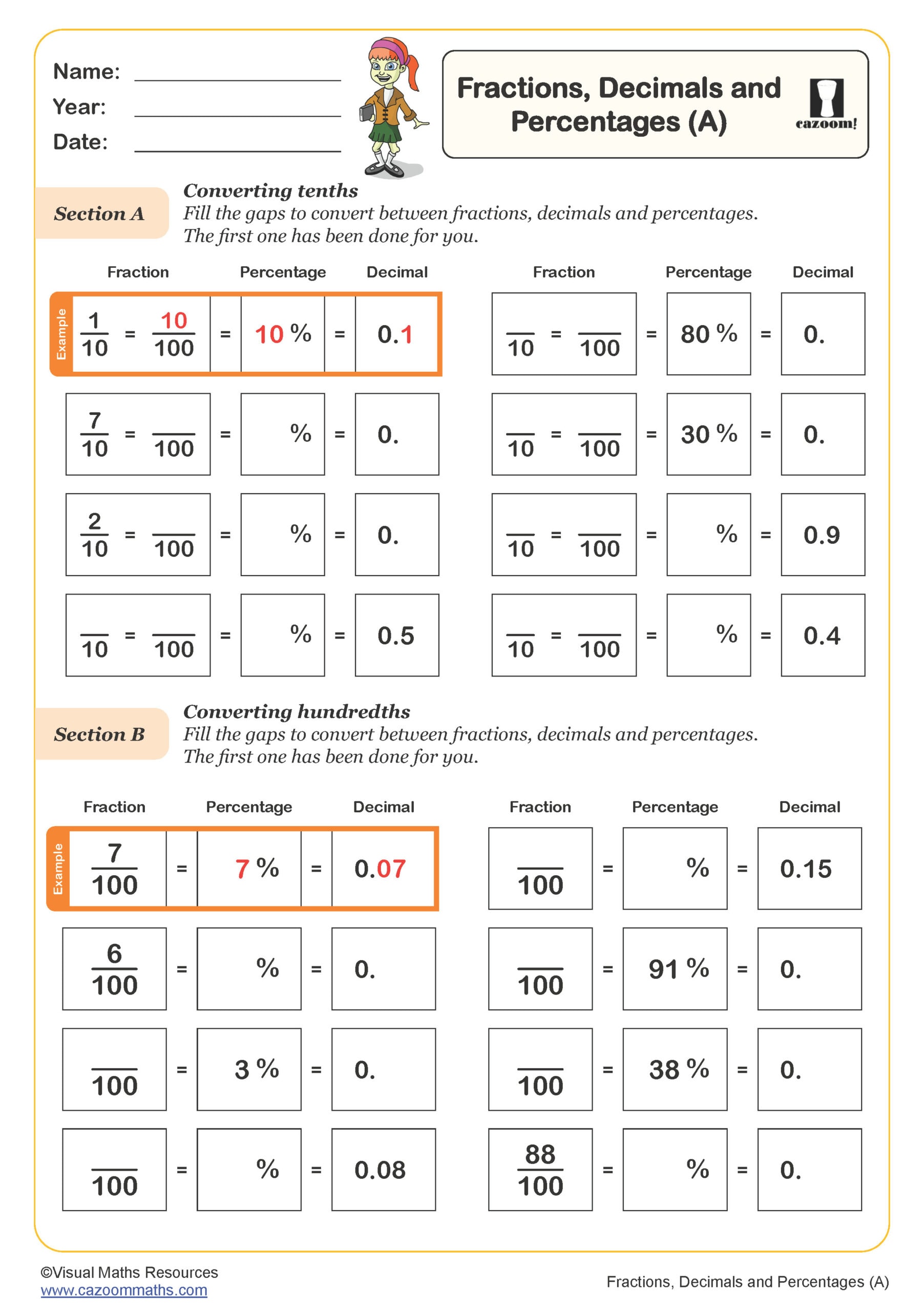
Halving 2 Digit Even Numbers
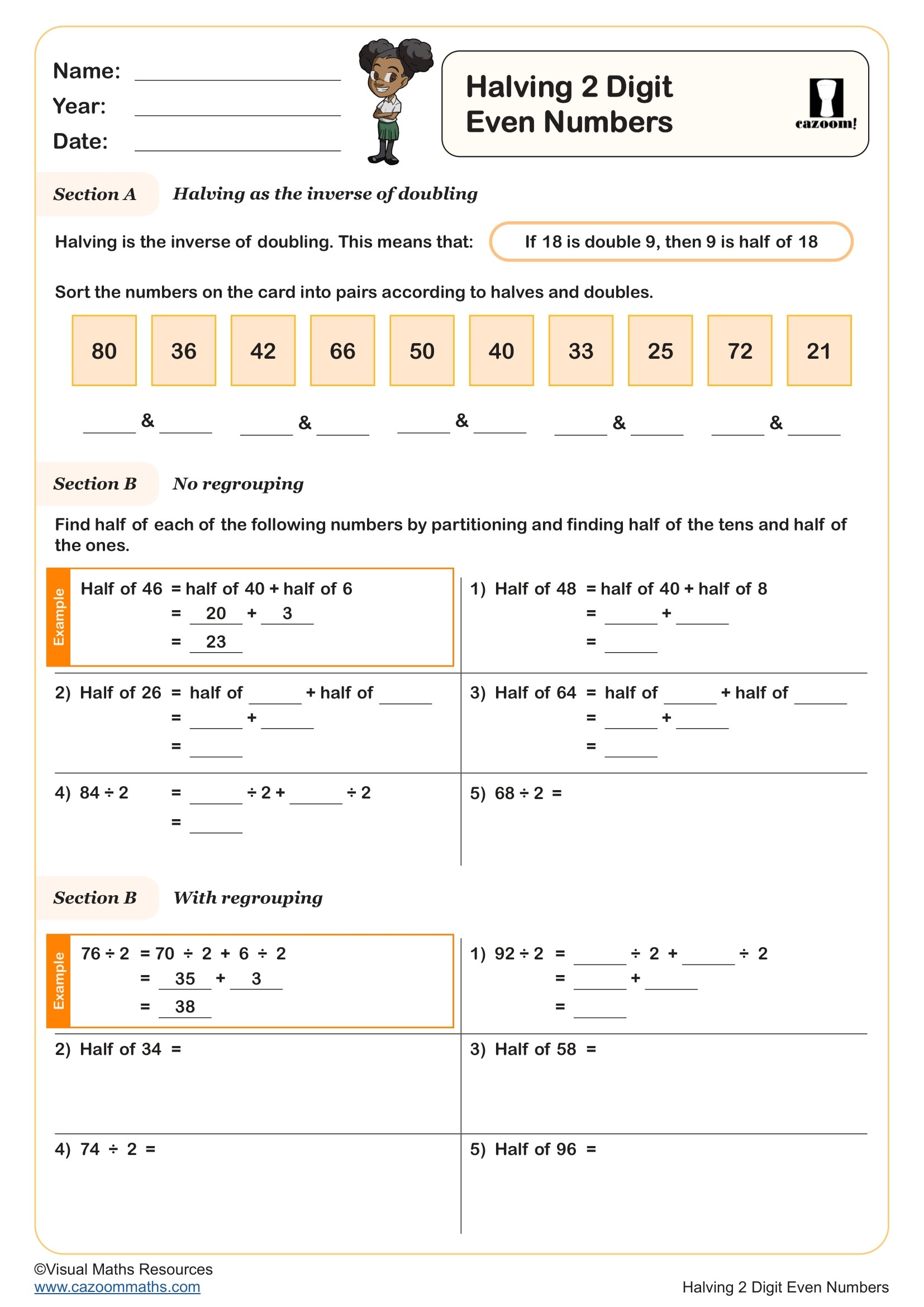
Introducing the Fraction Wall
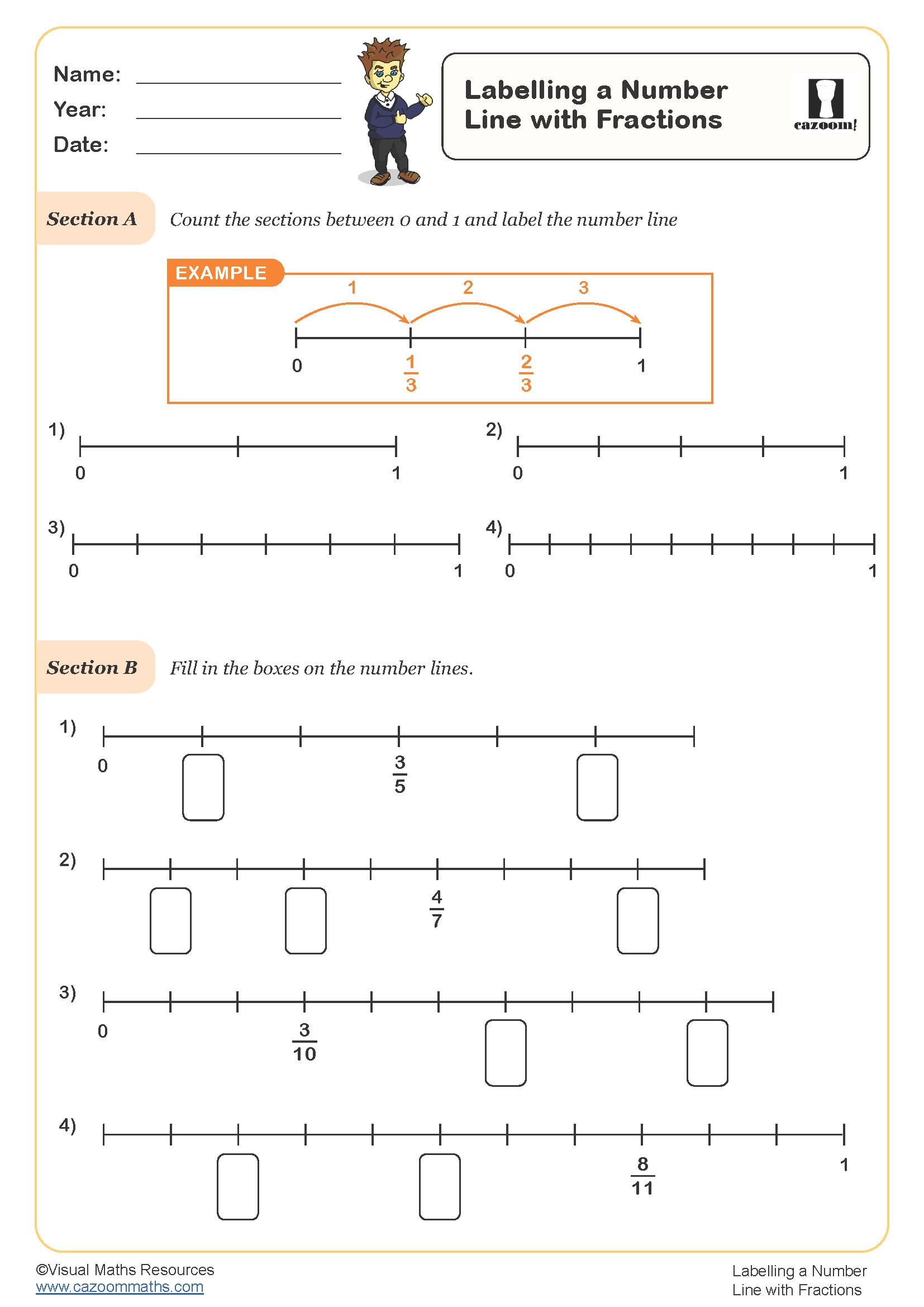
Labelling a Number Line with Fractions
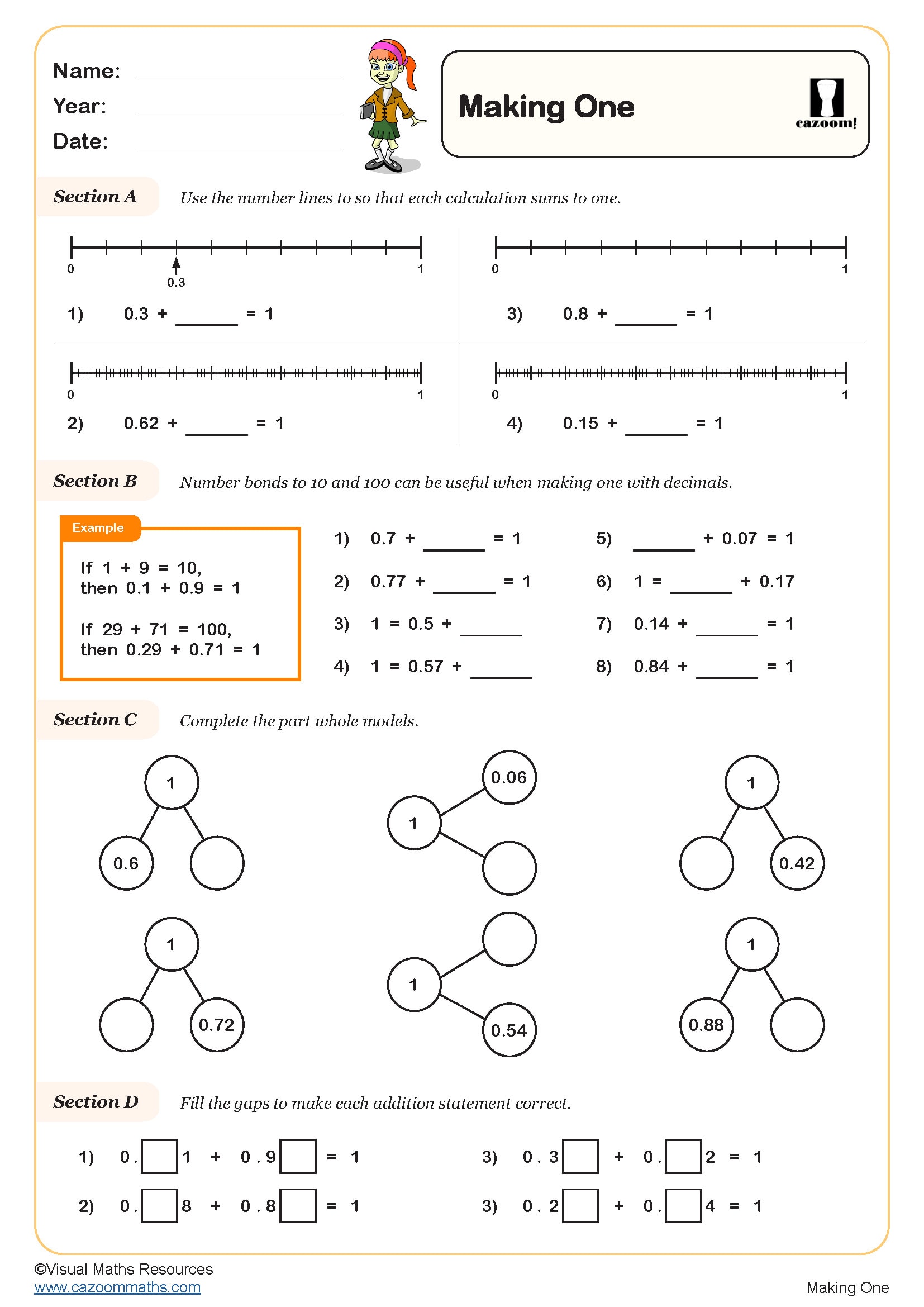
Making One
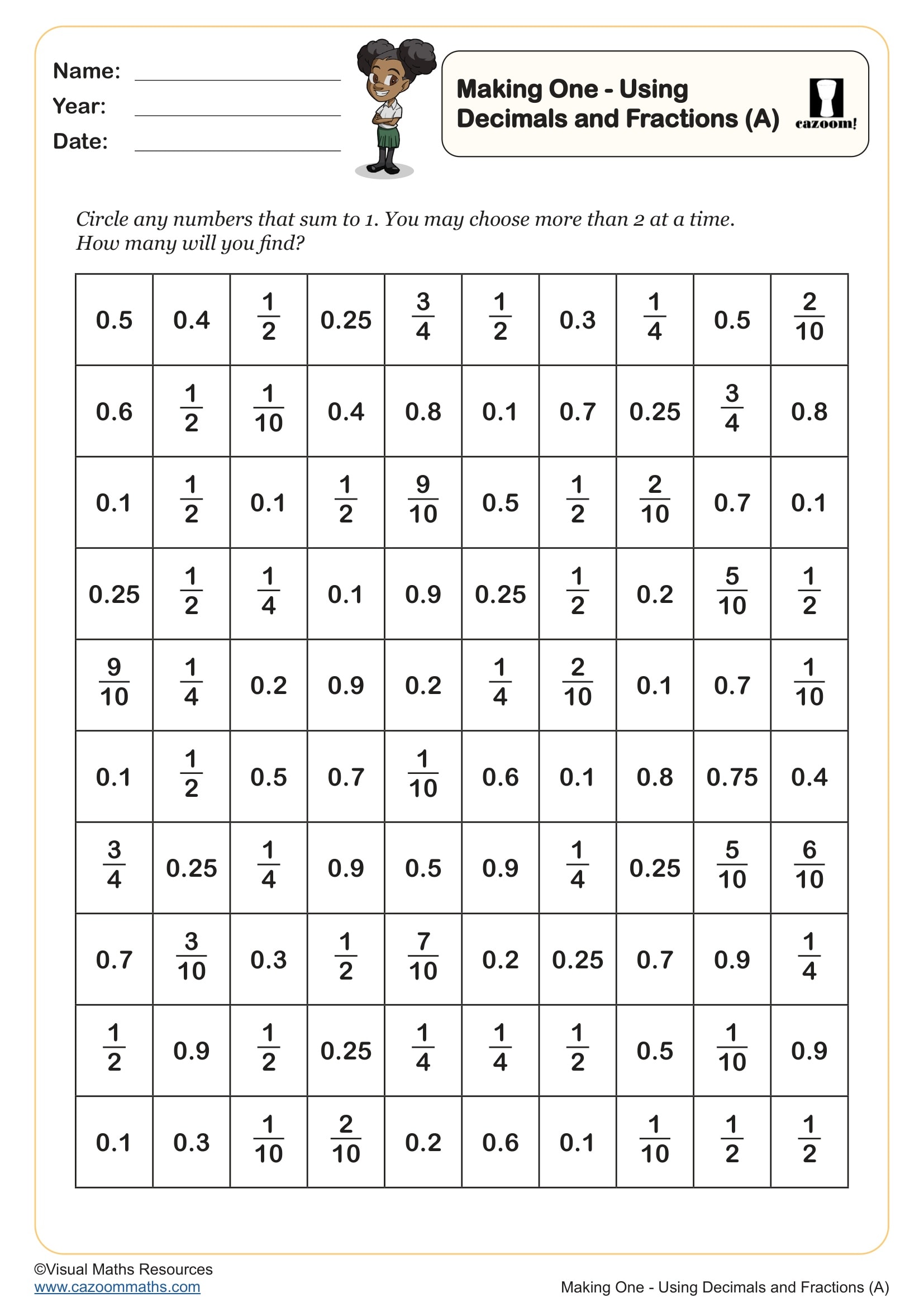
Making One Using Decimals and Fractions (A)
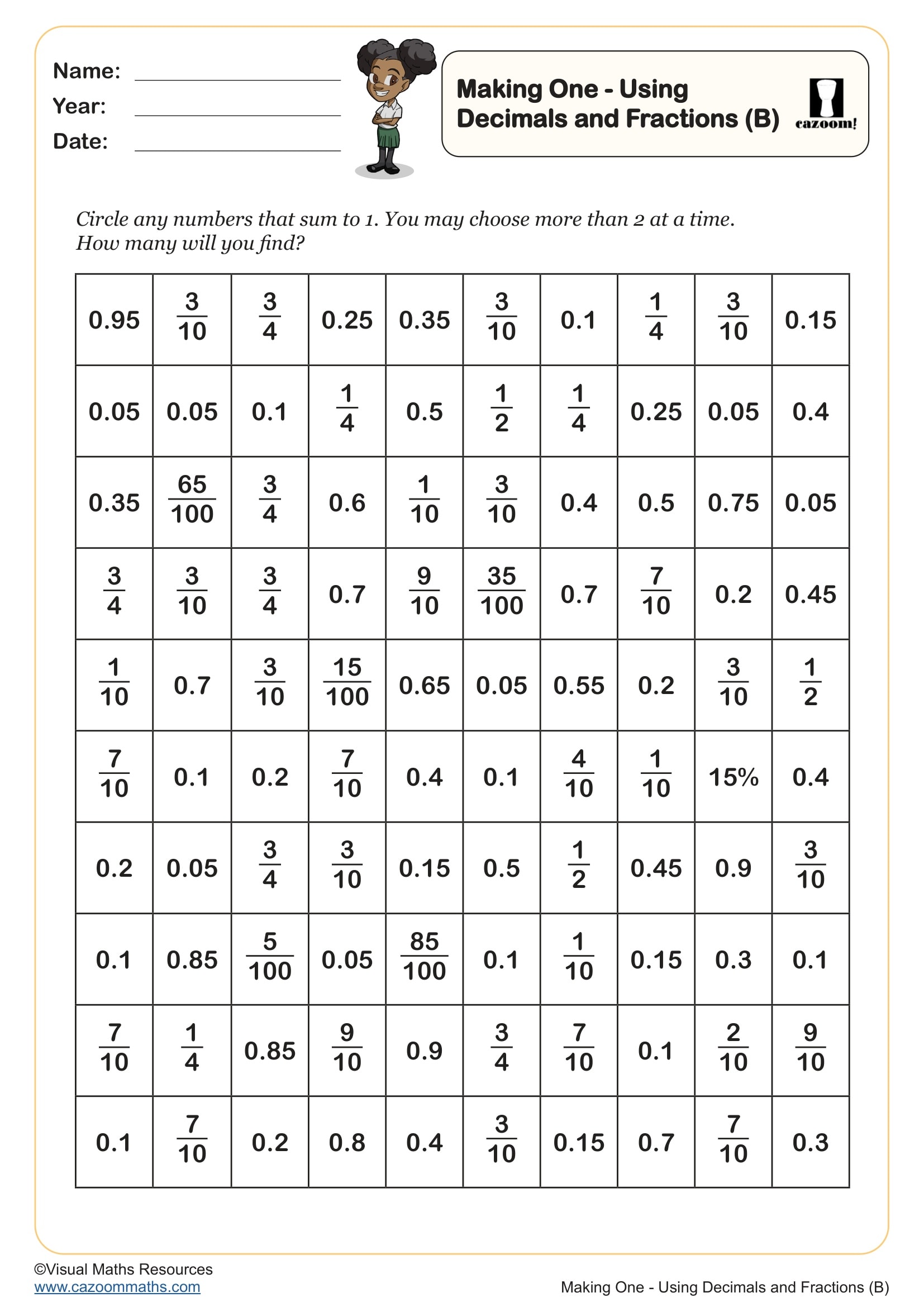
Making One Using Decimals and Fractions (B)
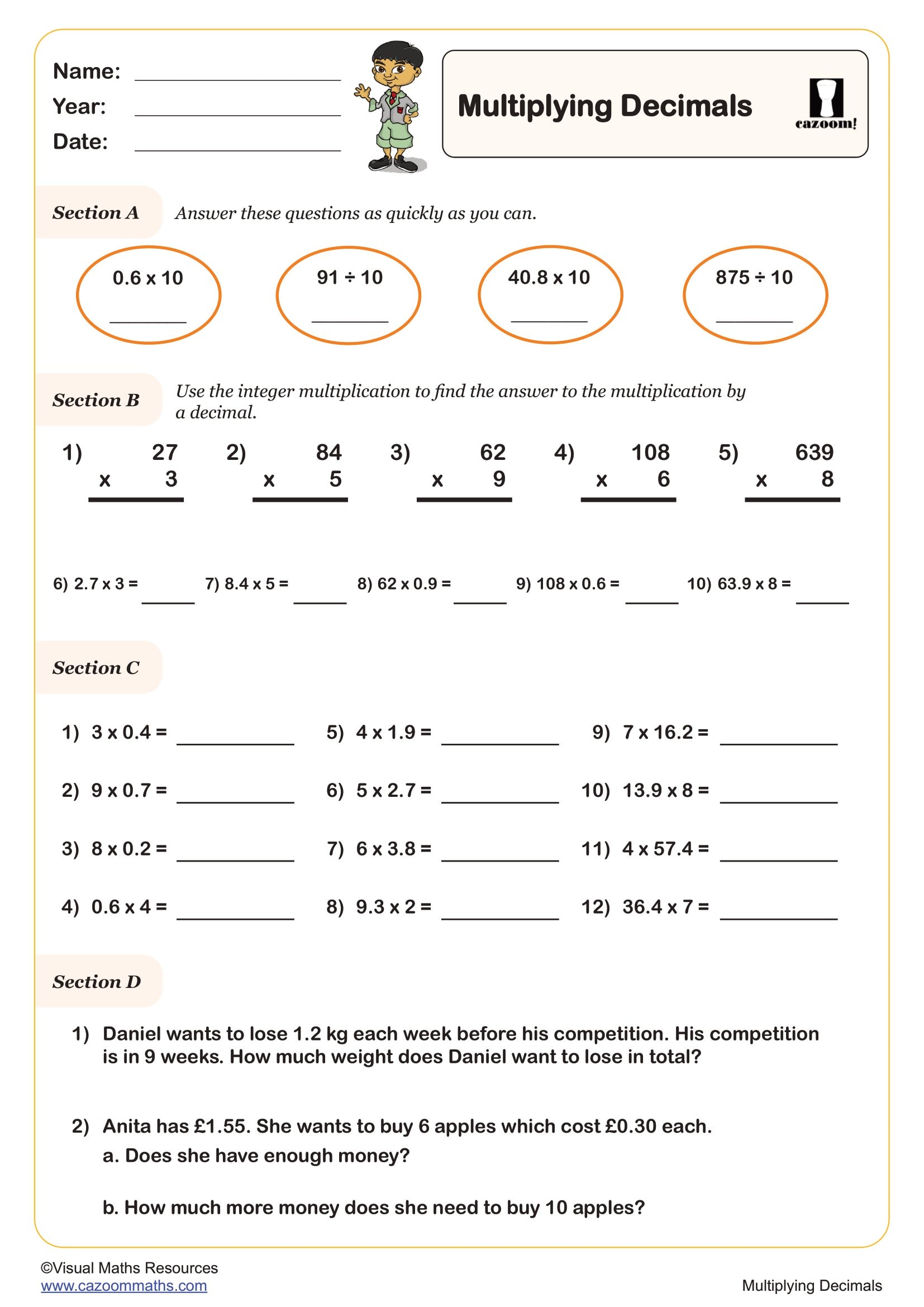
Mutiplying Decimals (A)
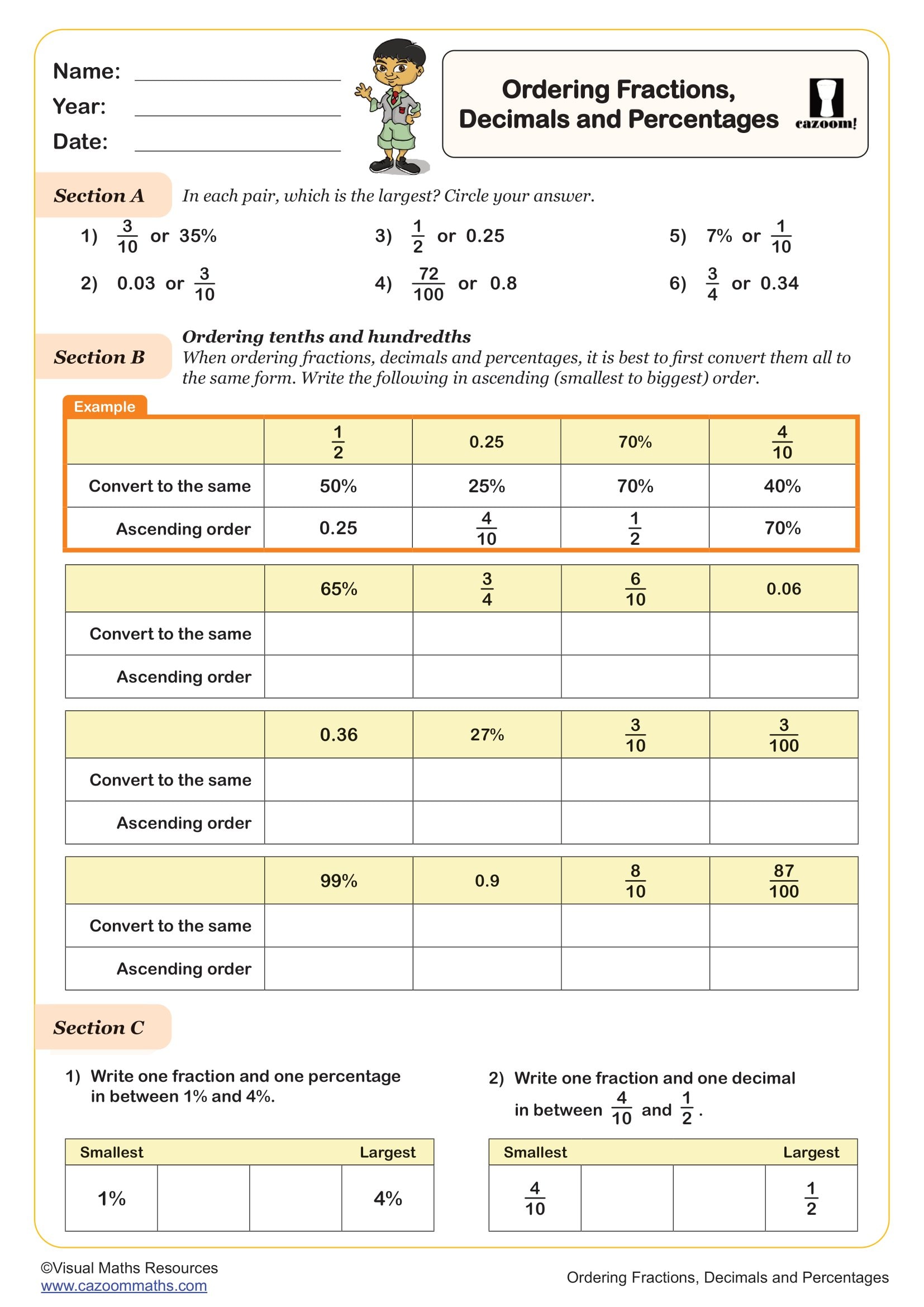
Ordering Fractions, Decimals and Percentages
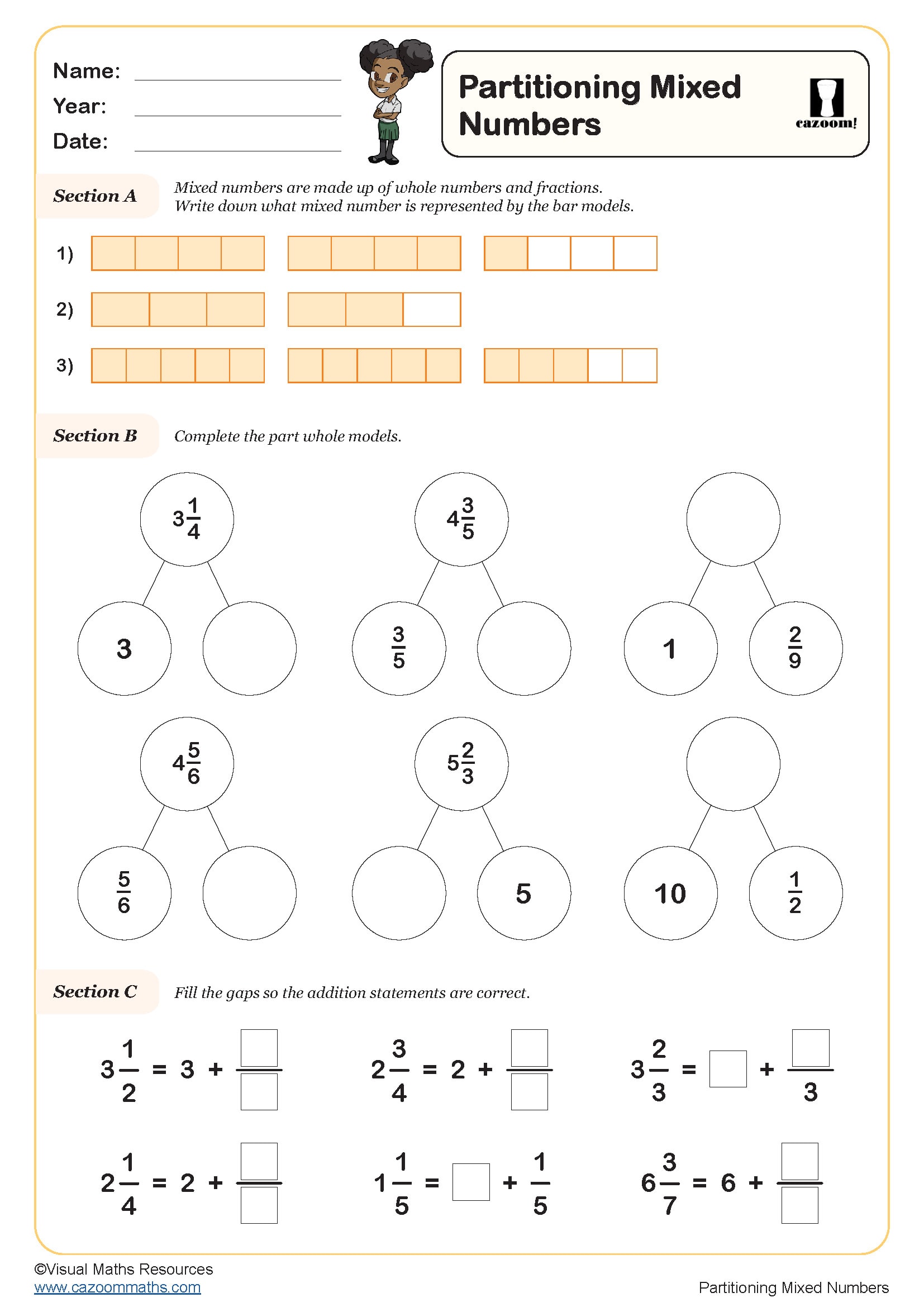
Partitioning Mixed Numbers
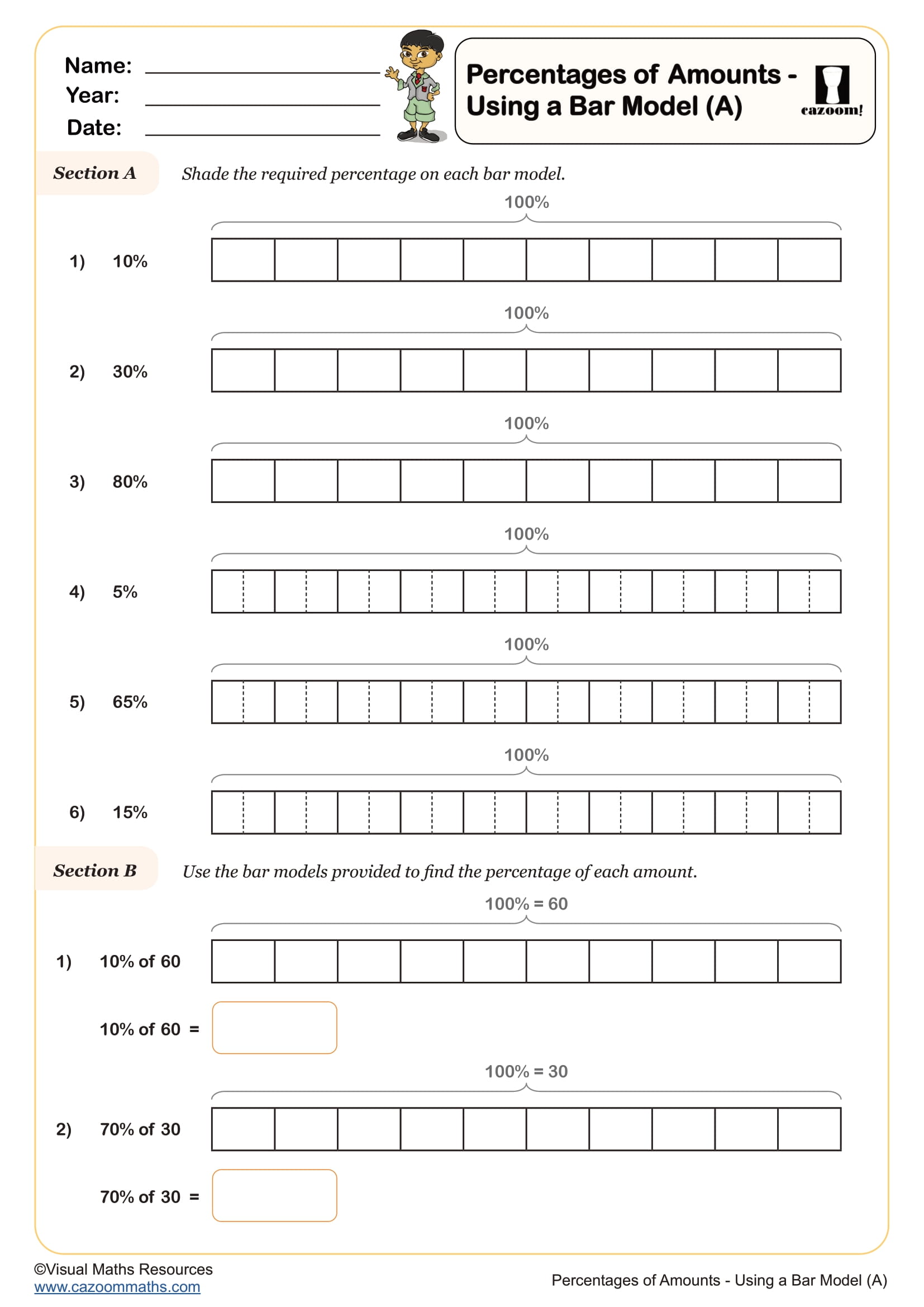
Percentages of Amounts - Using a Bar Model (A)
Percentages of Amounts - Using a Bar Model (B)
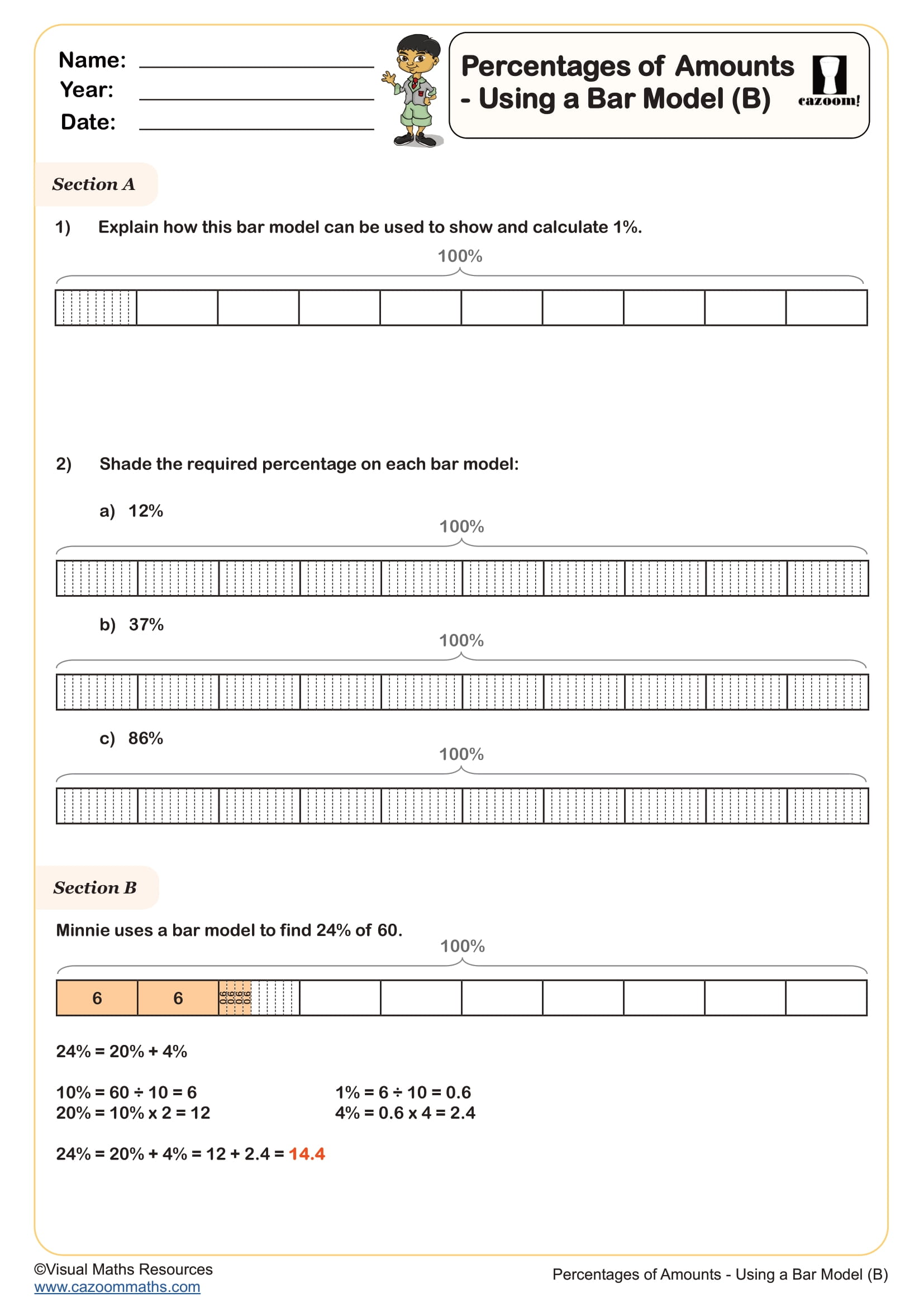
Percentages of Amounts (B)
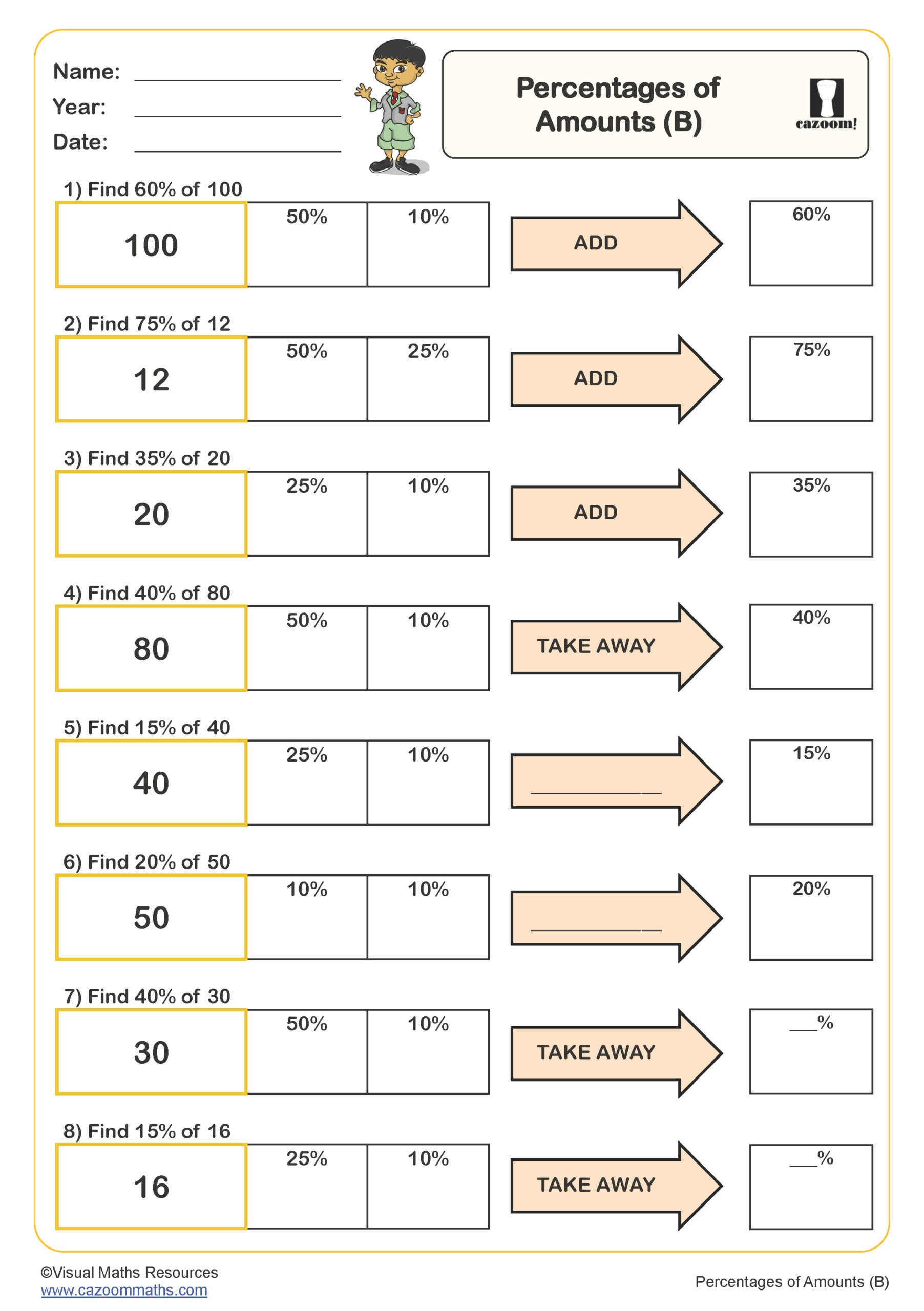
Simplifying Fractions
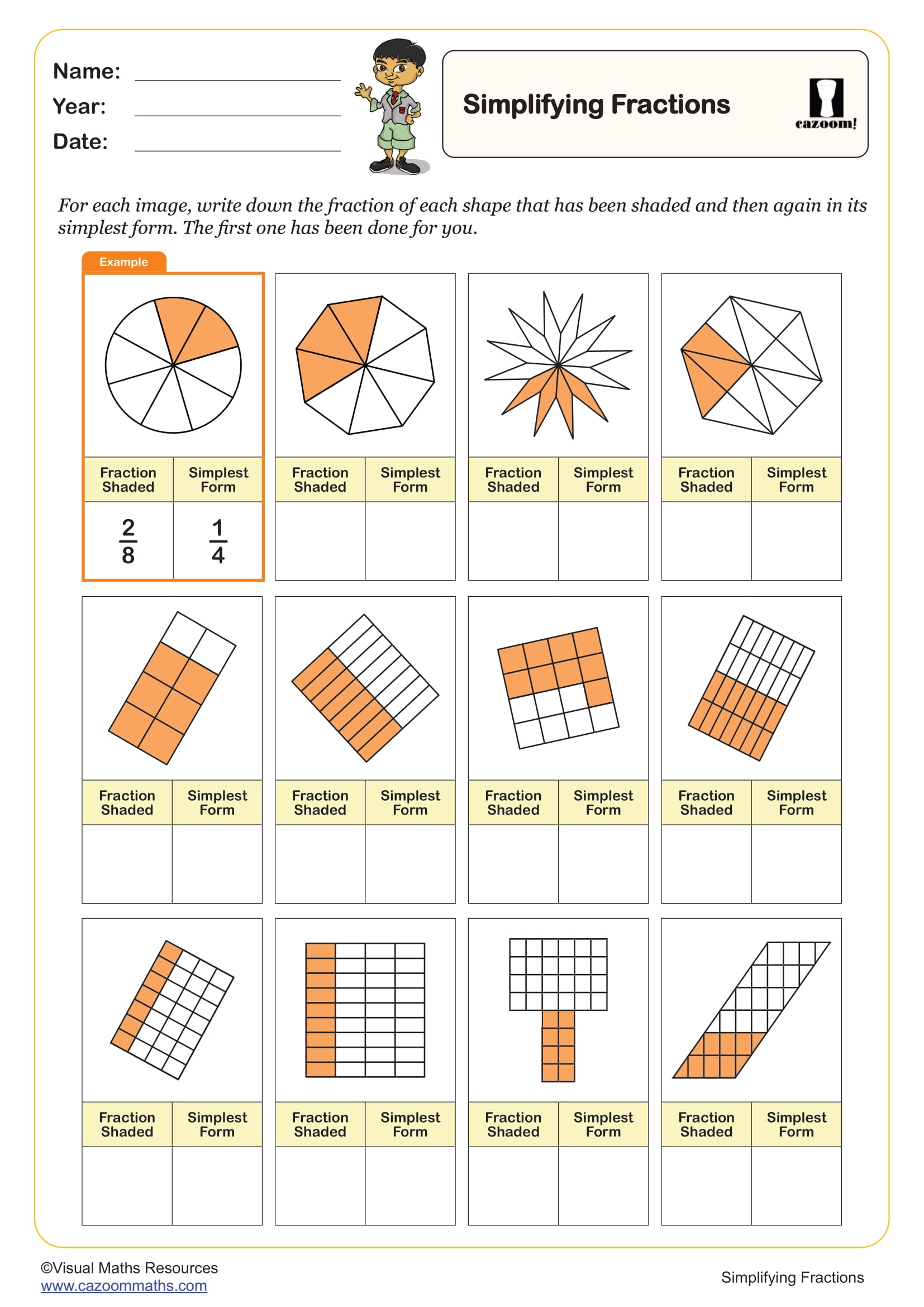
Subtracting Fractions from Whole Amounts
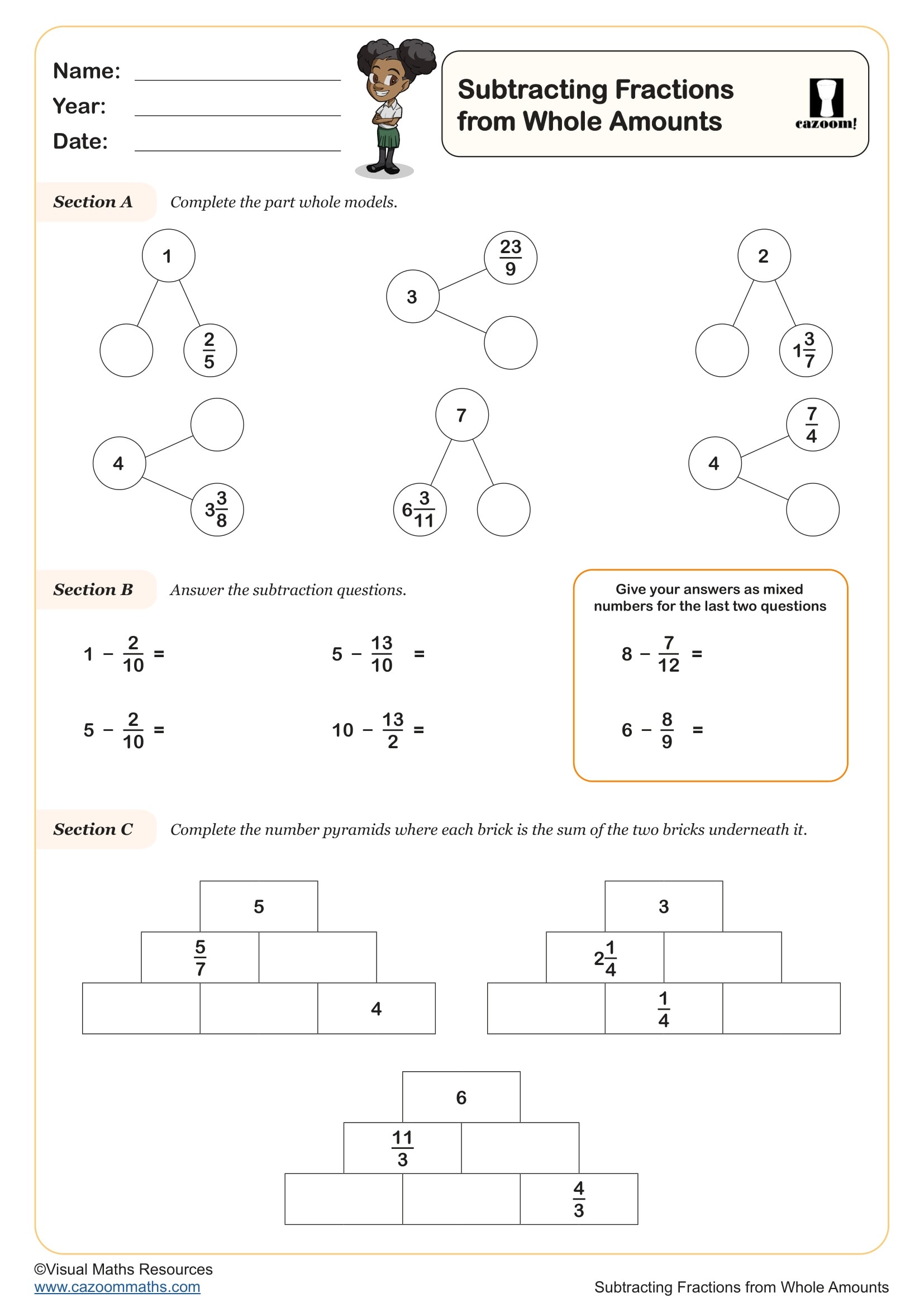
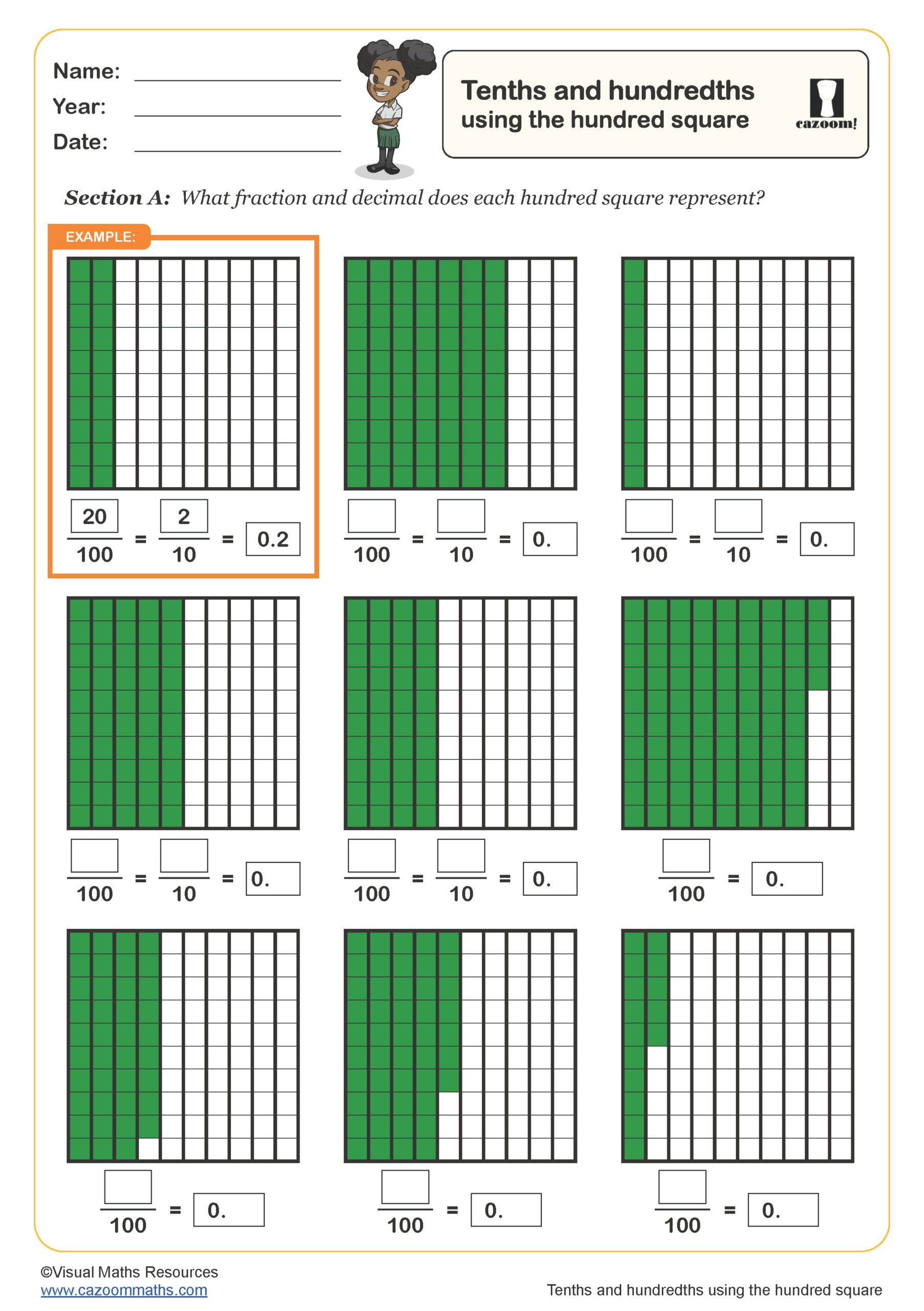
Tenths and Hundredths Using the Hundred Square
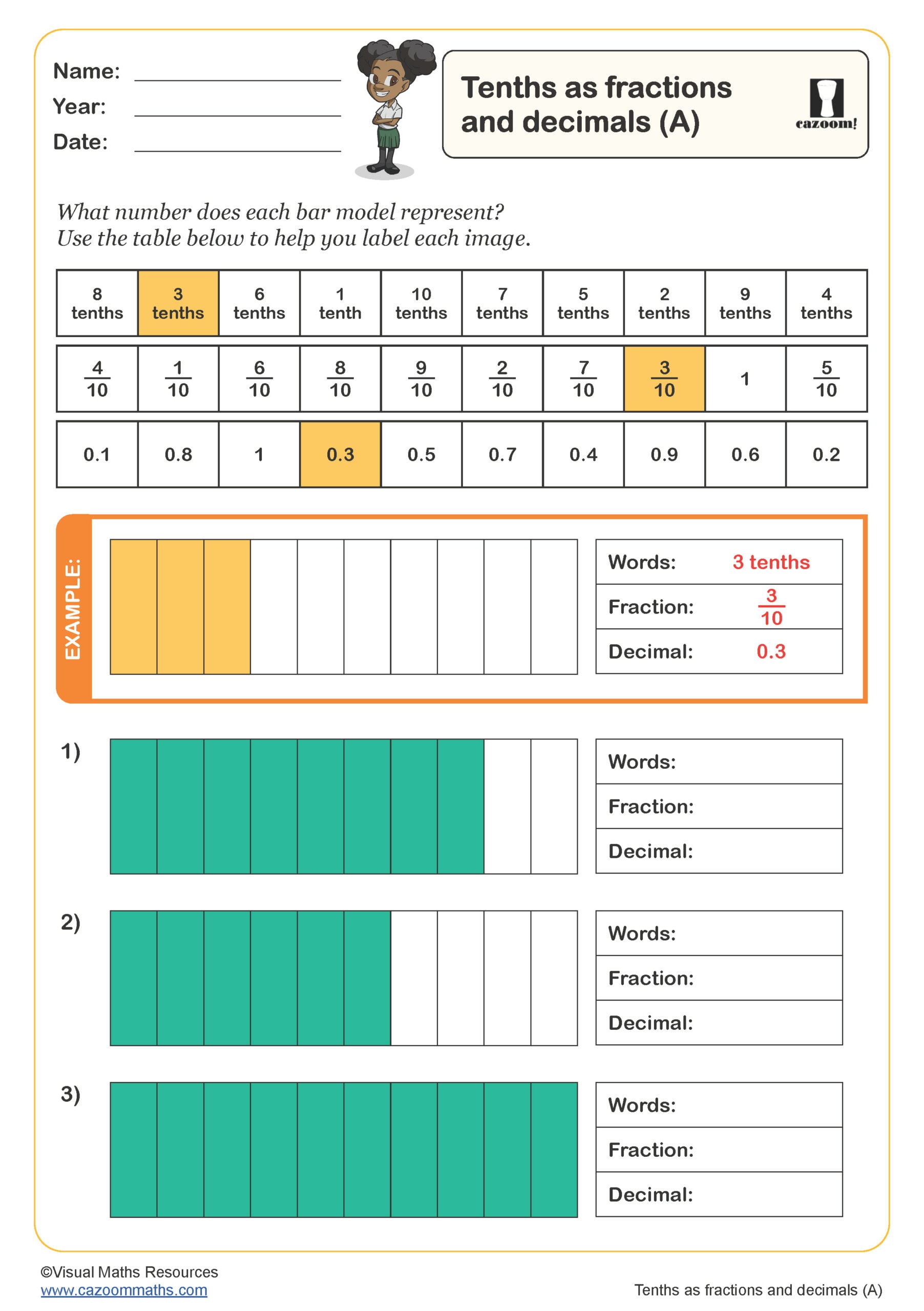
Tenths as Fractions and Decimals (A)
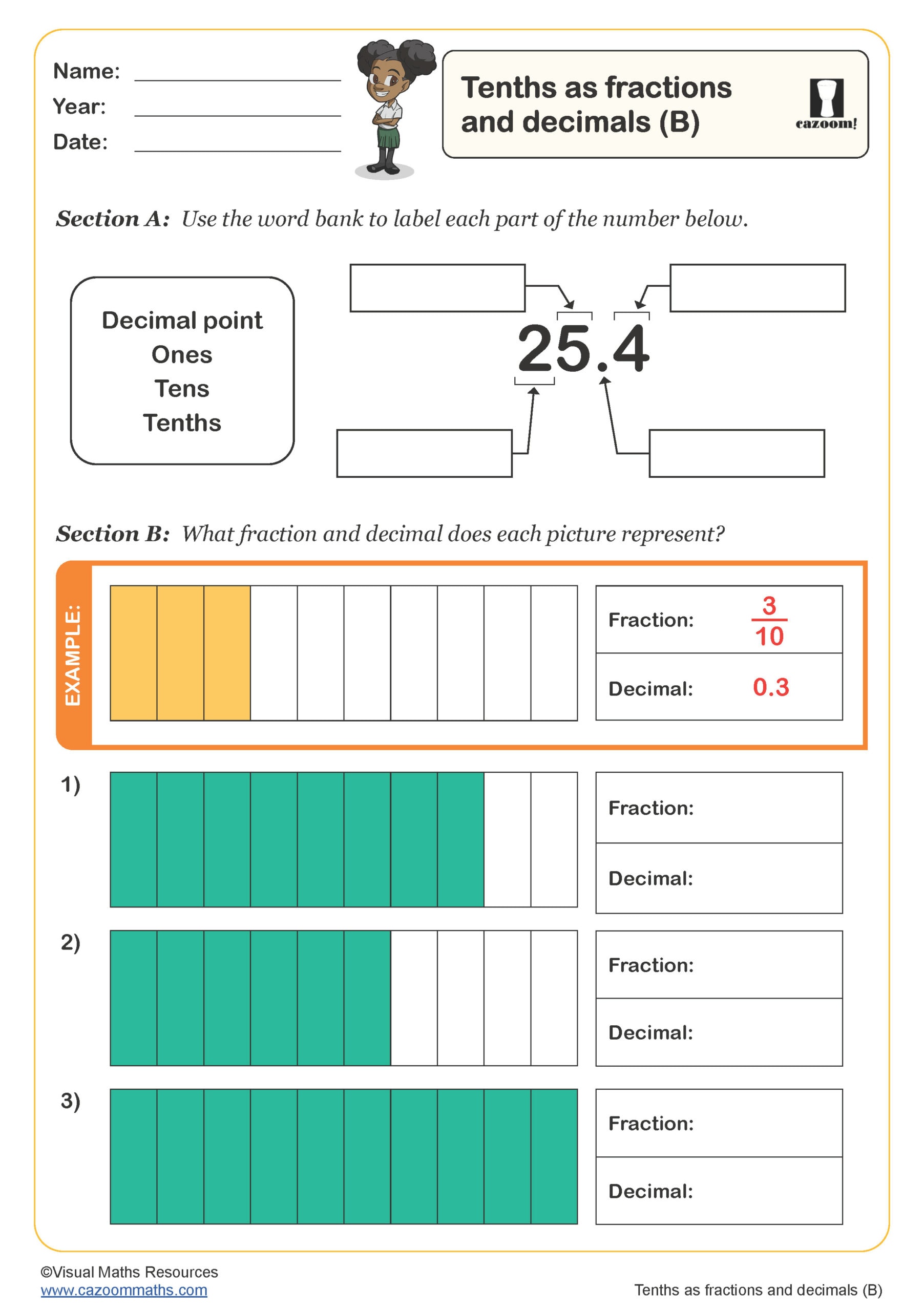
Tenths as Fractions and Decimals (B)
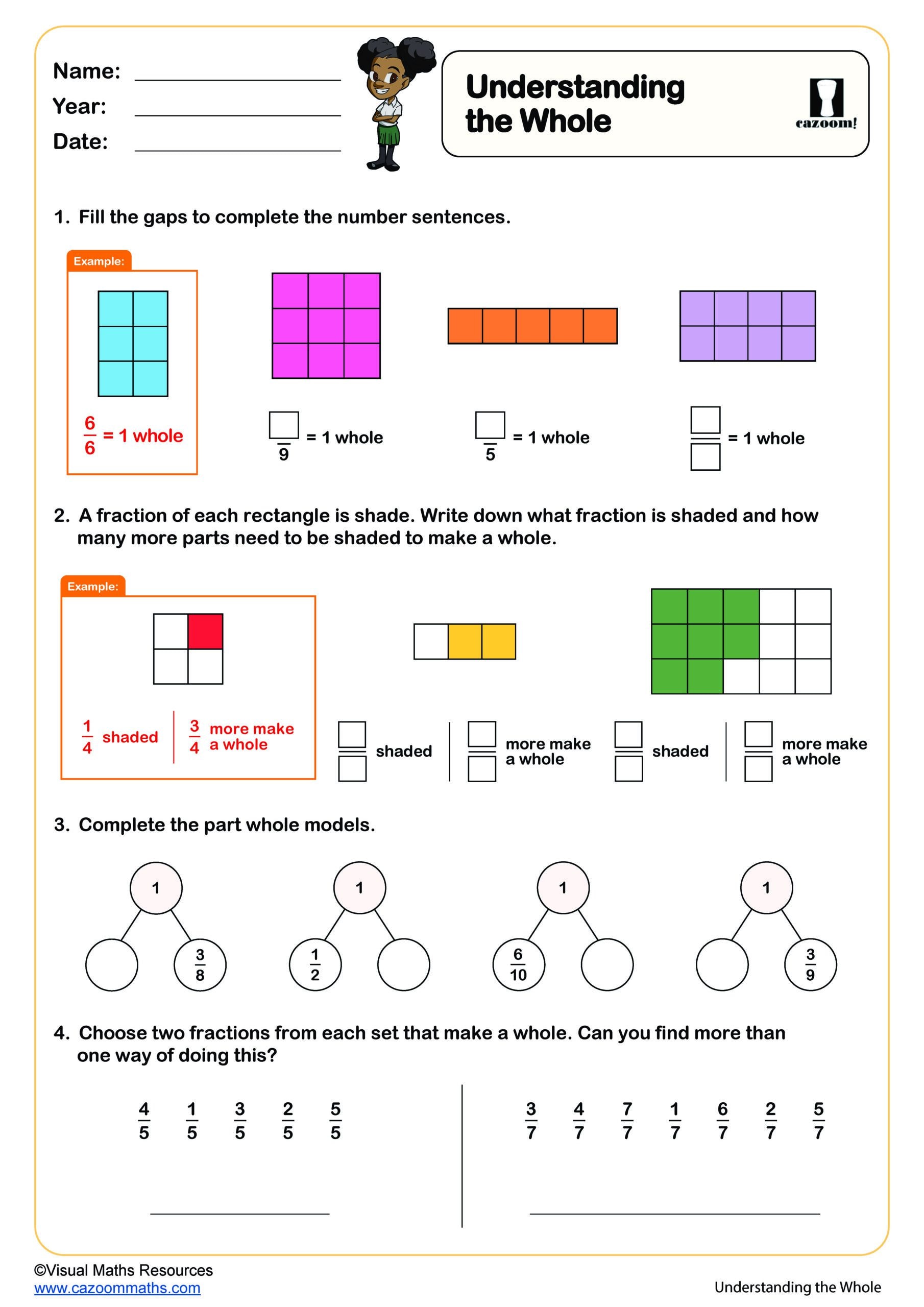
Understanding the Whole
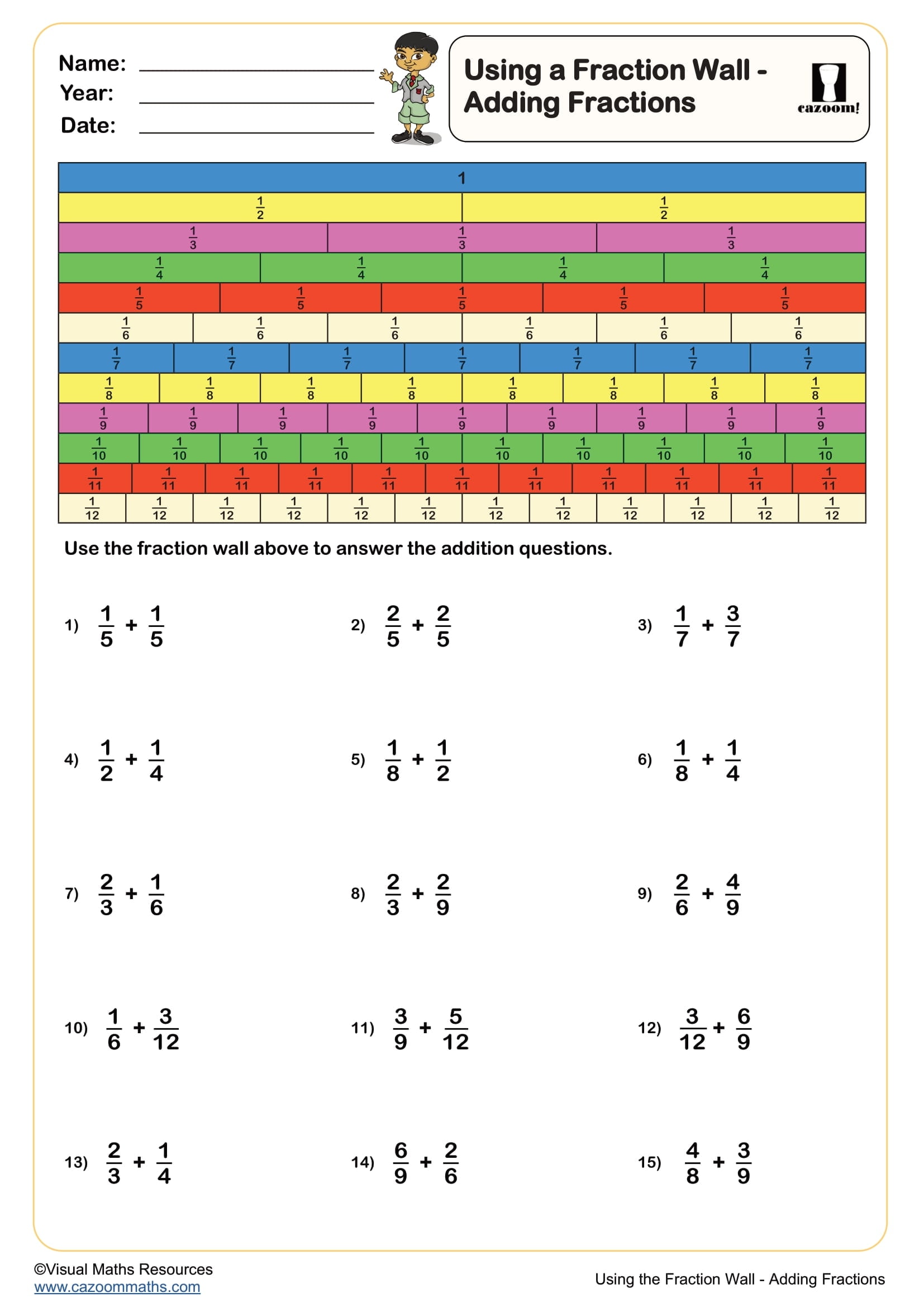
Using a Fraction Wall - Adding Fractions
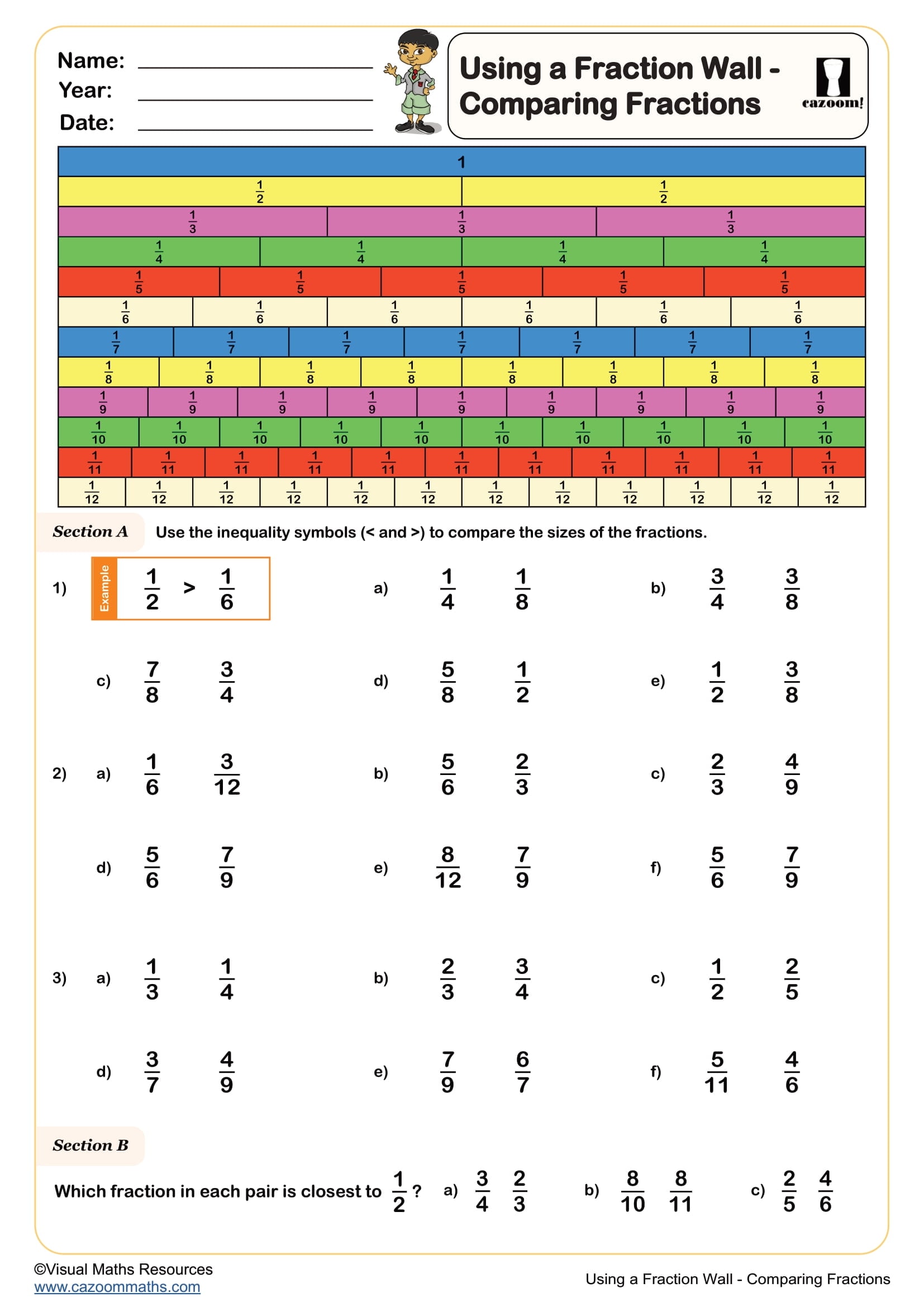
Using a Fraction Wall - Comparing Fractions
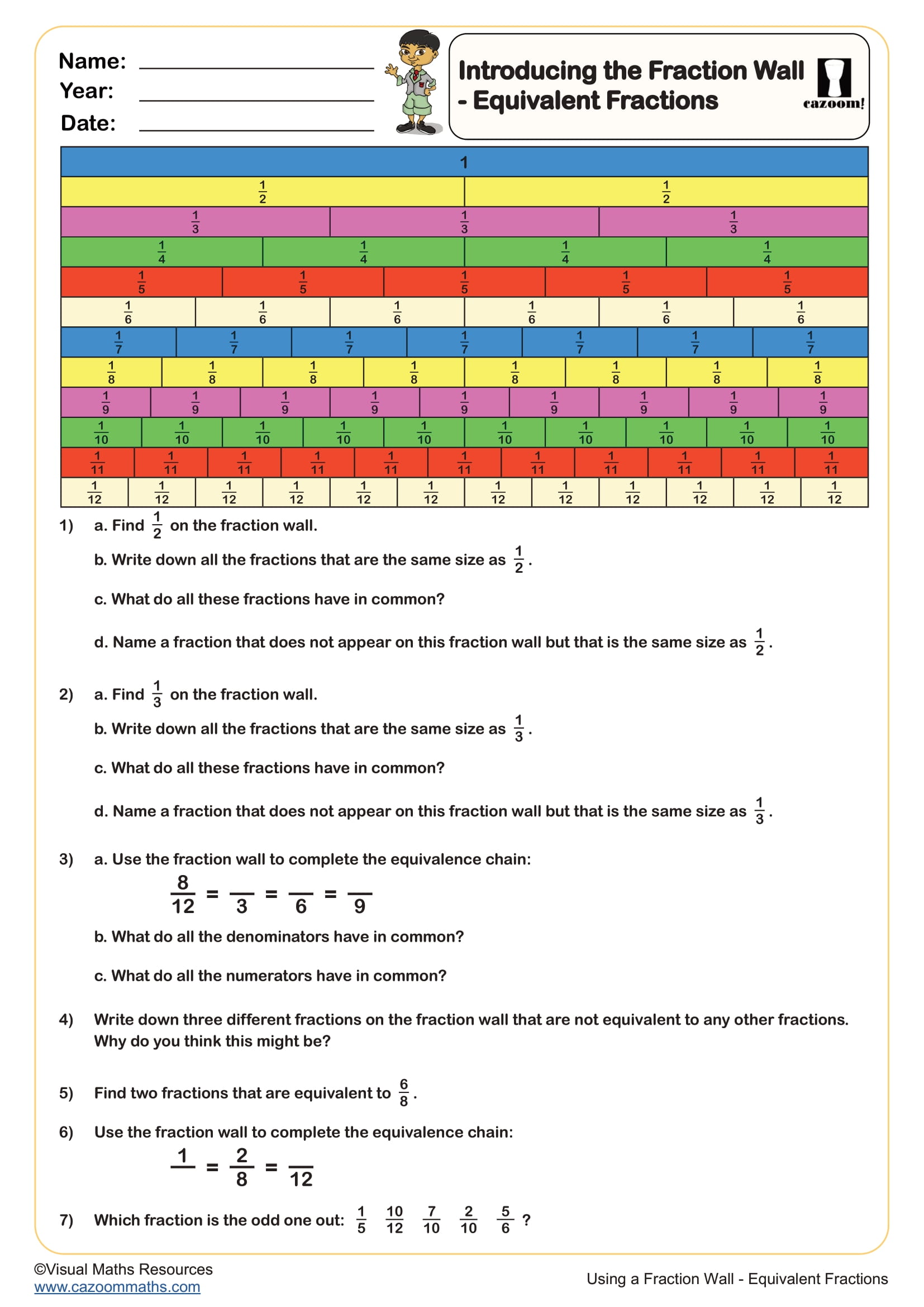
Using a Fraction Wall - Equivalent Fractions
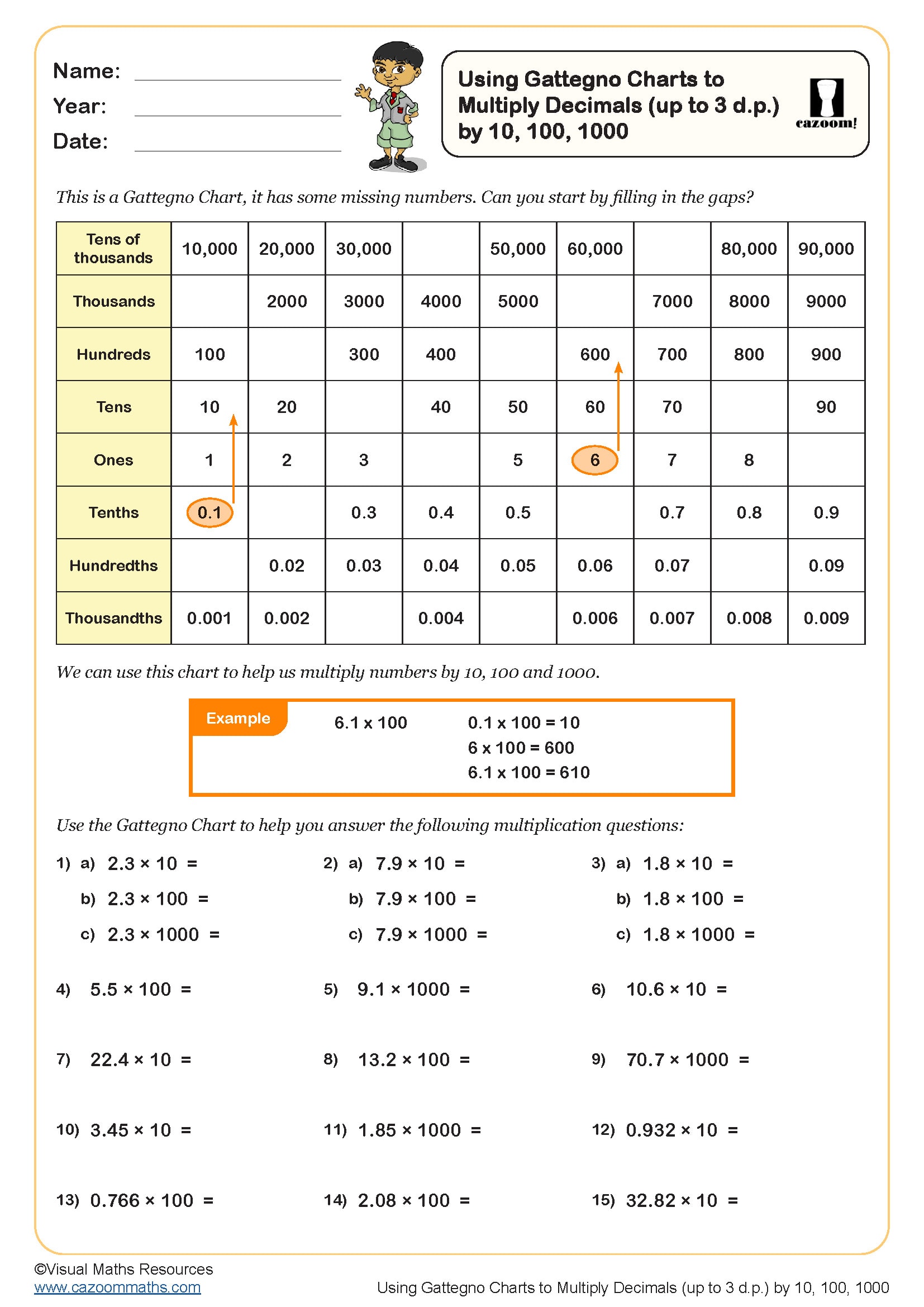
Using Gattegno Charts to Multiply Decimals ( up to 3 d.p.) by 10, 100, 1000
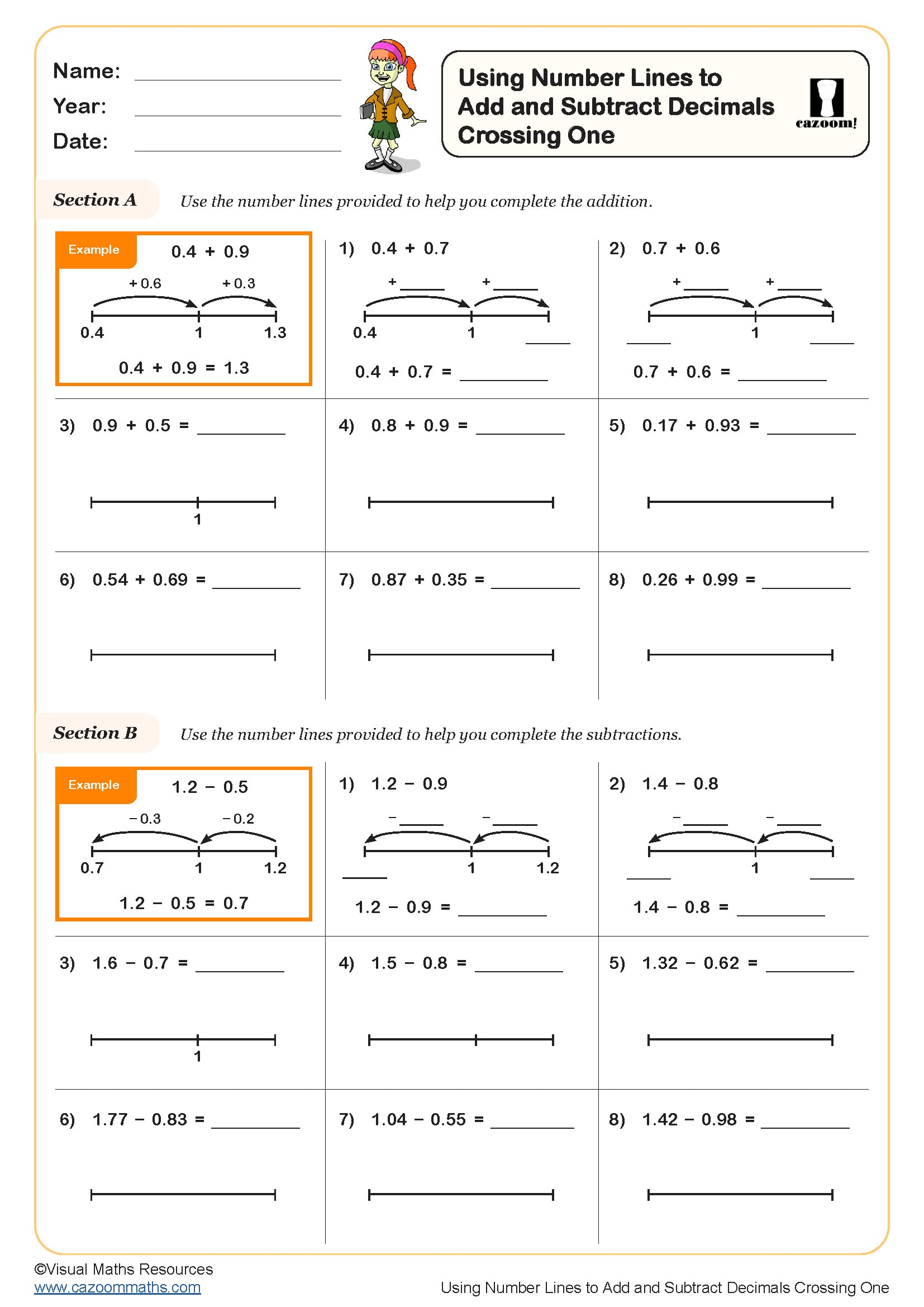
Using Number Lines to Add and Subtract Decimals Crossing One
All worksheets are created by the team of experienced teachers at Cazoom Maths.
What topics are covered in KS2 fractions worksheets?
Our KS2 fractions worksheets cover the full range of fraction concepts required by the National Curriculum. This includes recognising and writing equivalent fractions, comparing and ordering fractions with different denominators, and converting between mixed numbers and improper fractions. Students also practise adding and subtracting fractions with common and different denominators, an essential skill that develops throughout Key Stage 2.
The collection extends to connecting fractions with decimals and percentages, helping students understand these as different representations of the same values. More advanced worksheets introduce algebraic fractions and division problems involving fractions. Each subtopic includes multiple worksheets at varying difficulty levels, ensuring students can build confidence before progressing to more complex fraction manipulation.
Which year groups can use these fraction worksheets?
These fractions worksheets are designed specifically for Key Stage 2, covering Year 3, Year 4, Year 5, and Year 6. The progression matches National Curriculum expectations, with Year 3 worksheets focusing on unit fractions and simple equivalence, whilst Year 6 materials include complex fraction calculations and connections to algebra.
The range allows teachers to differentiate effectively within mixed-ability classes or select appropriate challenge levels for intervention work. Year 4 and Year 5 worksheets bridge the gap with increasingly sophisticated problems involving non-unit fractions, improper fractions, and multi-step calculations. This ensures every KS2 pupil has access to materials matched to their current understanding and ready to move them forward.
How do I teach mixed numbers and improper fractions?
Mixed numbers and improper fractions appear from Year 4 onwards in the National Curriculum, and our worksheets provide structured practise for both conversion directions. Students begin by understanding that improper fractions have numerators larger than denominators, whilst mixed numbers combine whole numbers with proper fractions. Visual representations help establish this conceptual foundation before moving to procedural fluency.
The worksheets progress from simple conversions with small denominators to more complex examples requiring confident division and multiplication skills. Students practise converting mixed numbers to improper fractions by multiplying the whole number by the denominator and adding the numerator, then reverse this process through division. Regular practise with these conversions is essential preparation for fraction arithmetic and problem-solving.
Do the fractions worksheets include answer sheets?
Yes, every fractions worksheet in this collection includes a complete answer sheet. This makes marking efficient for teachers managing multiple classes or setting independent work, and enables parents to support home learning with confidence. The answer sheets show final answers clearly, allowing quick identification of misconceptions that need addressing.
Having answers readily available also supports pupils working independently during intervention sessions or catch-up programmes. Students can self-check their work, developing metacognitive skills and identifying areas where they need further support. The worksheets are provided as downloadable PDFs, so you can print multiple copies or share digitally depending on your classroom setup and whether students are learning in school or remotely.