Number Worksheets
4 Operations 10 Minute Challenge
Year groups: 7
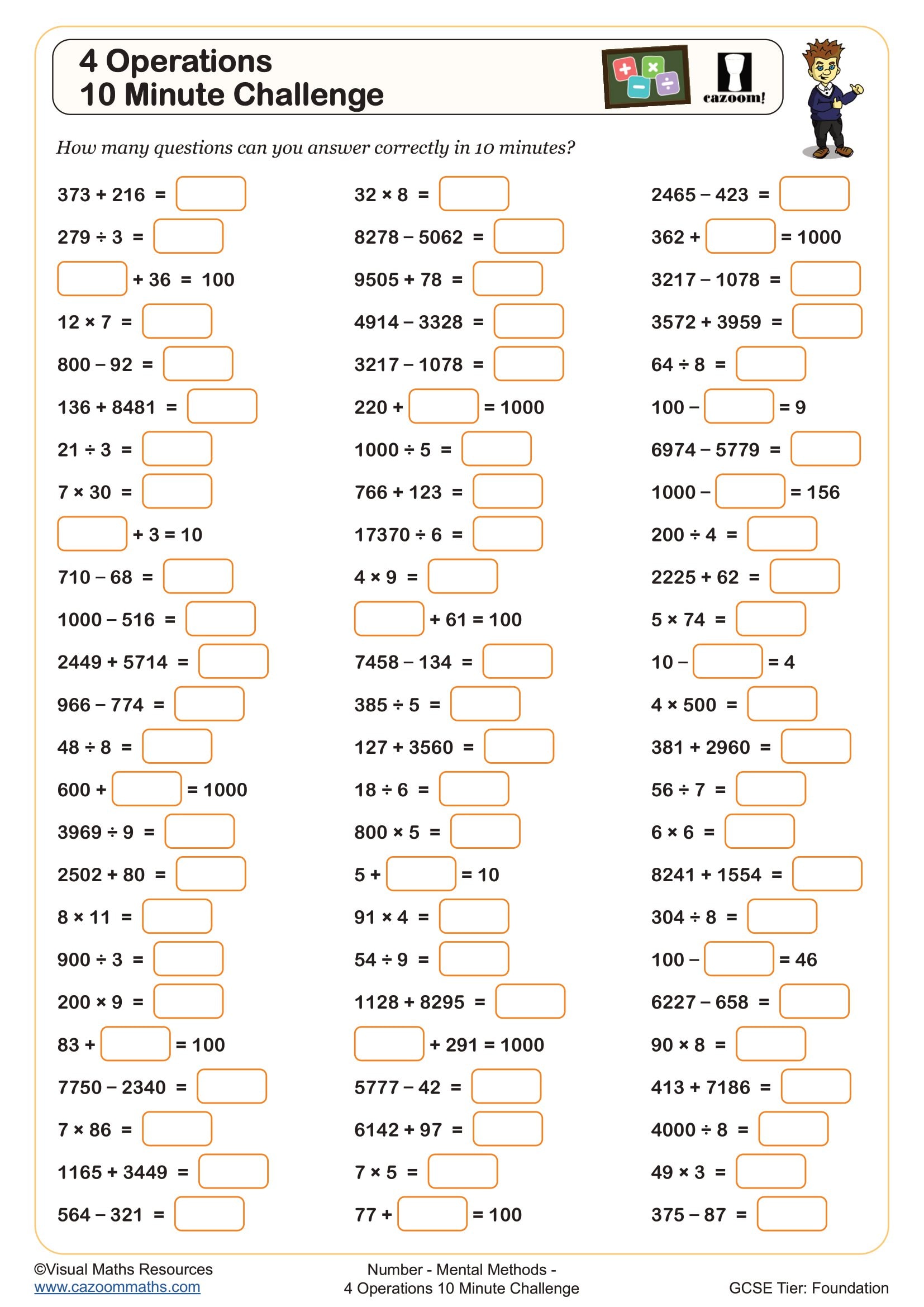
Add Mixed Numbers with the Same Denominator
Year groups: 7, 8
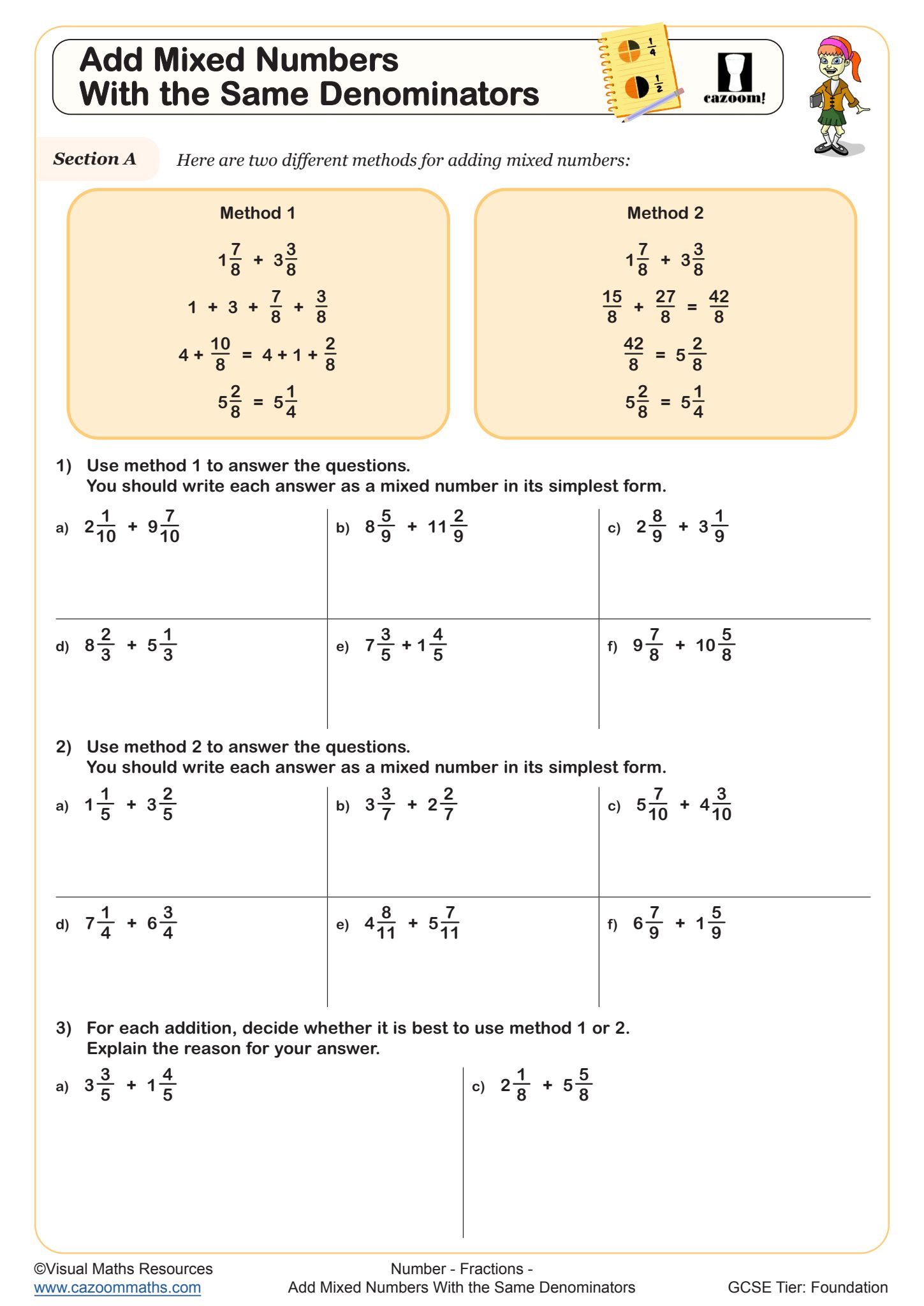
Adding and Subtracting Decimals
Year groups: 7, 8
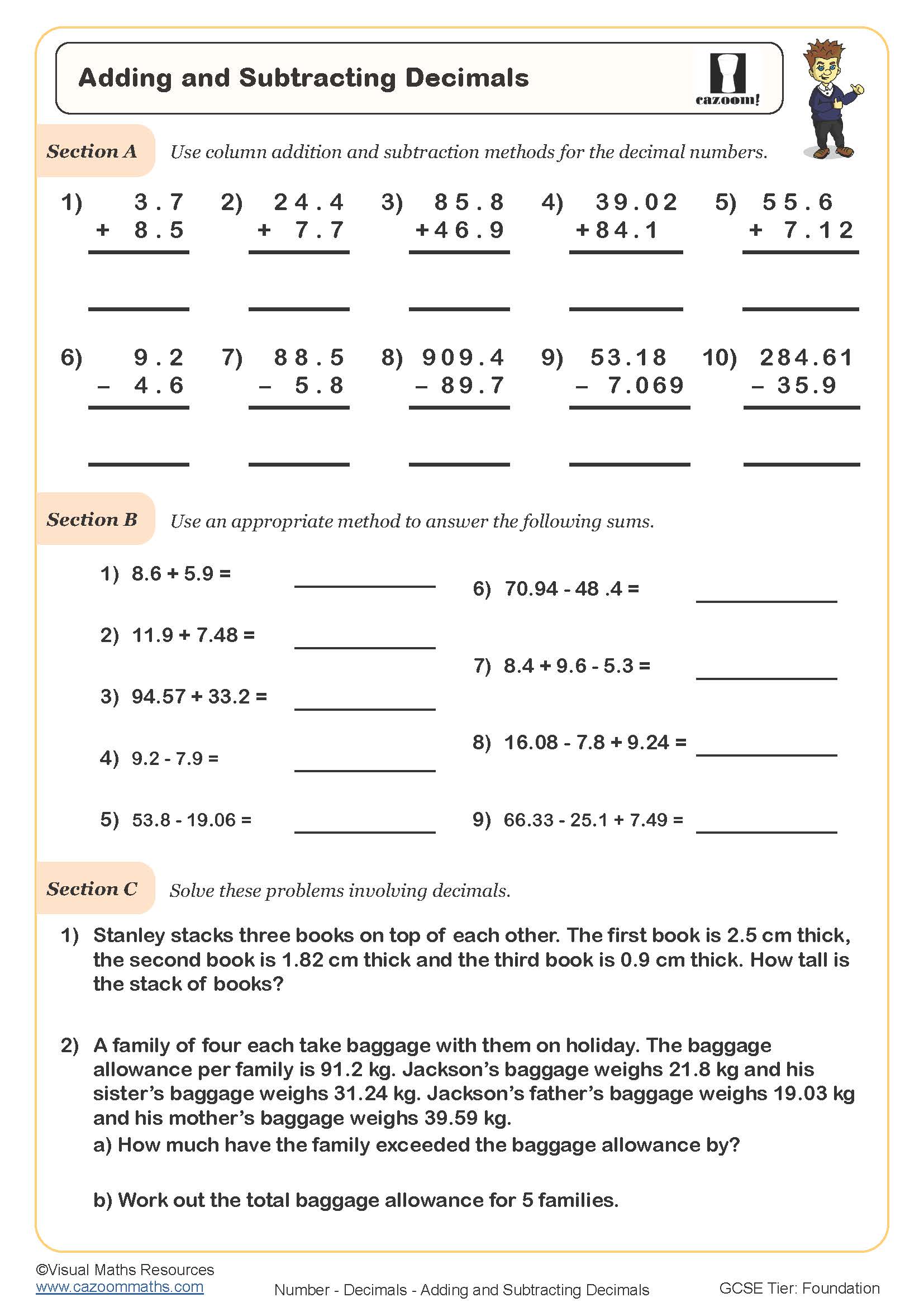
Adding and subtracting fractions with different denominators (A)
Year groups: 7, 8
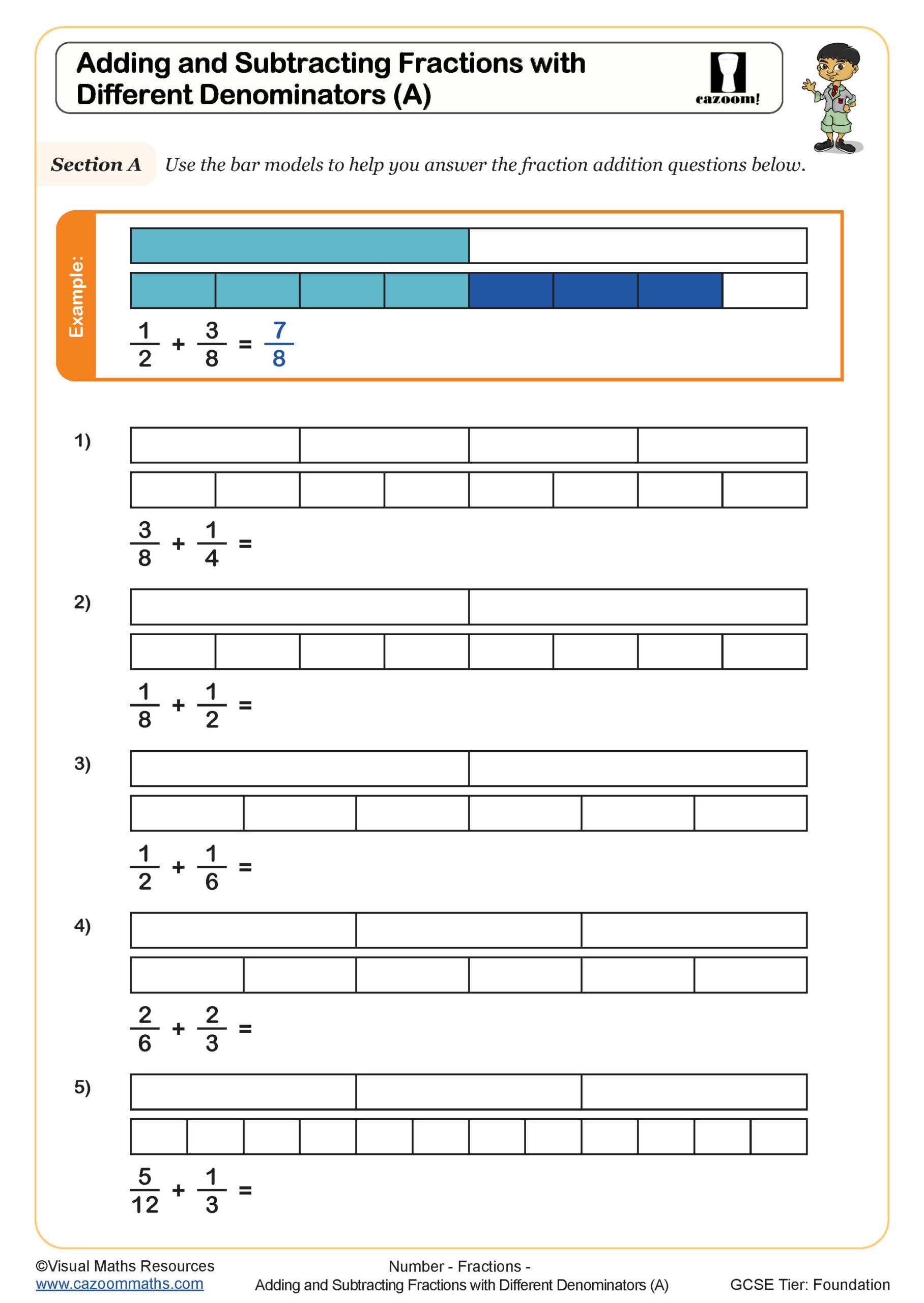
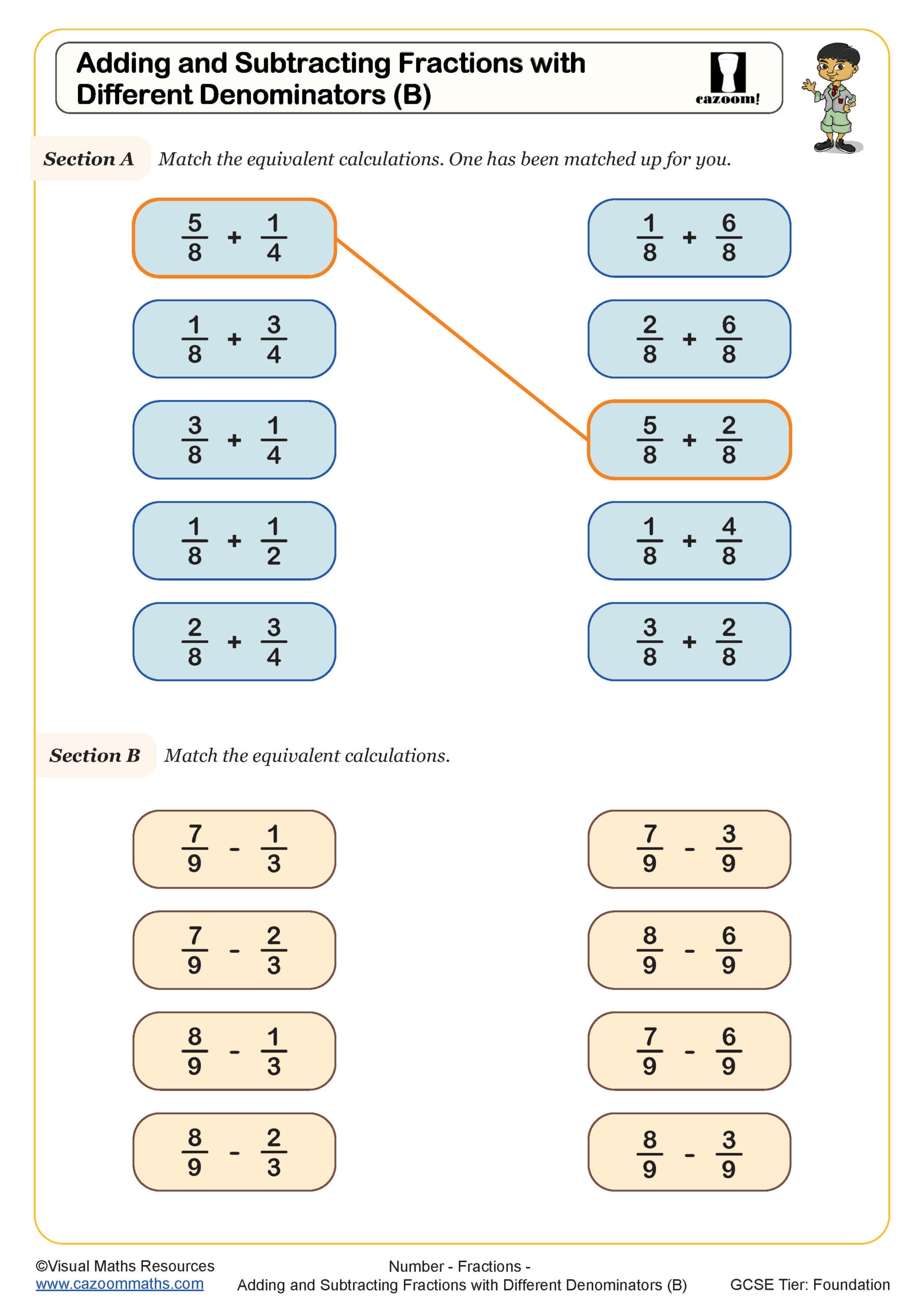
Adding and subtracting fractions with different denominators (B)
Year groups: 7, 8
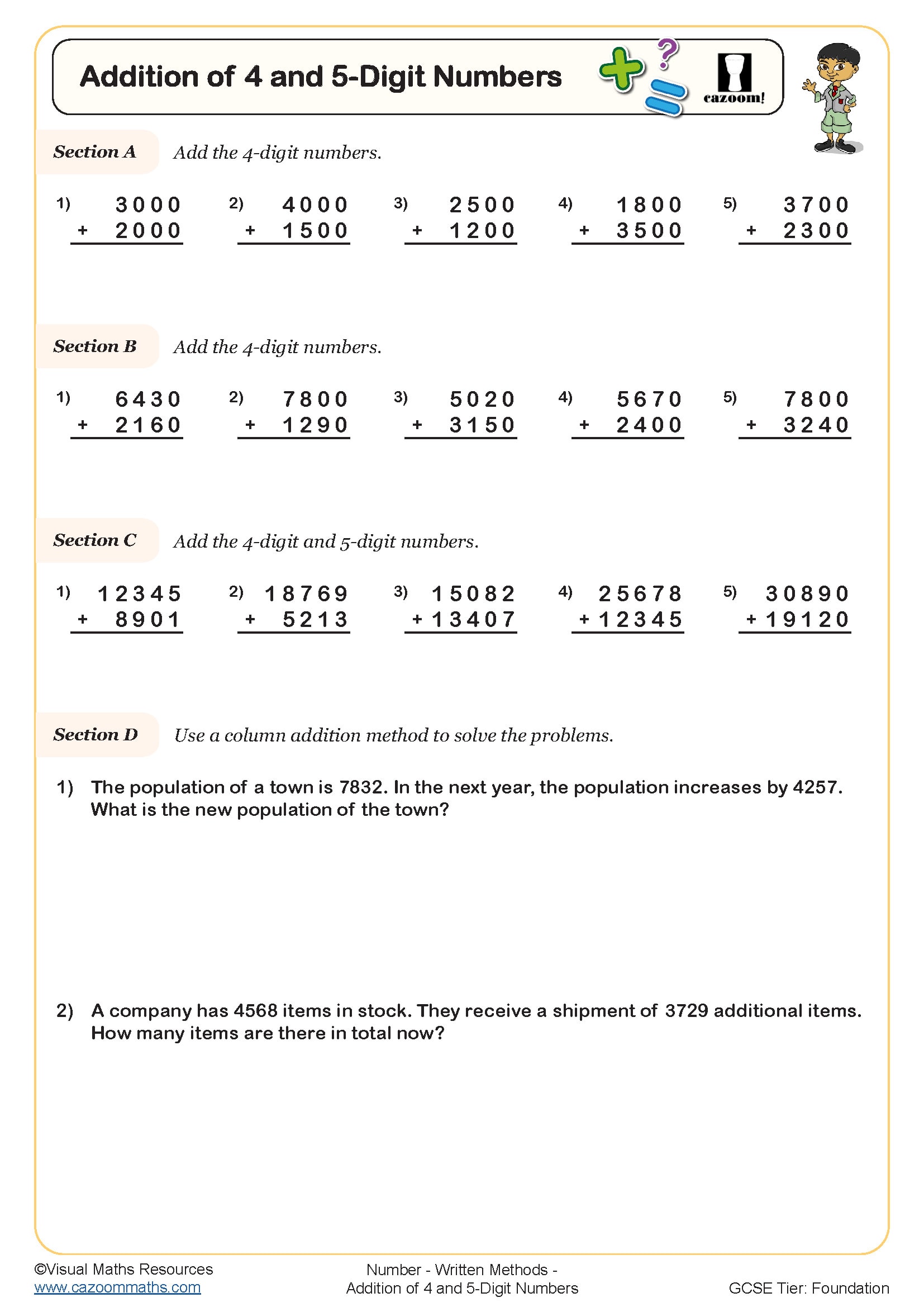
Addition of 4 and 5-digit Numbers
Year groups: 7, 8
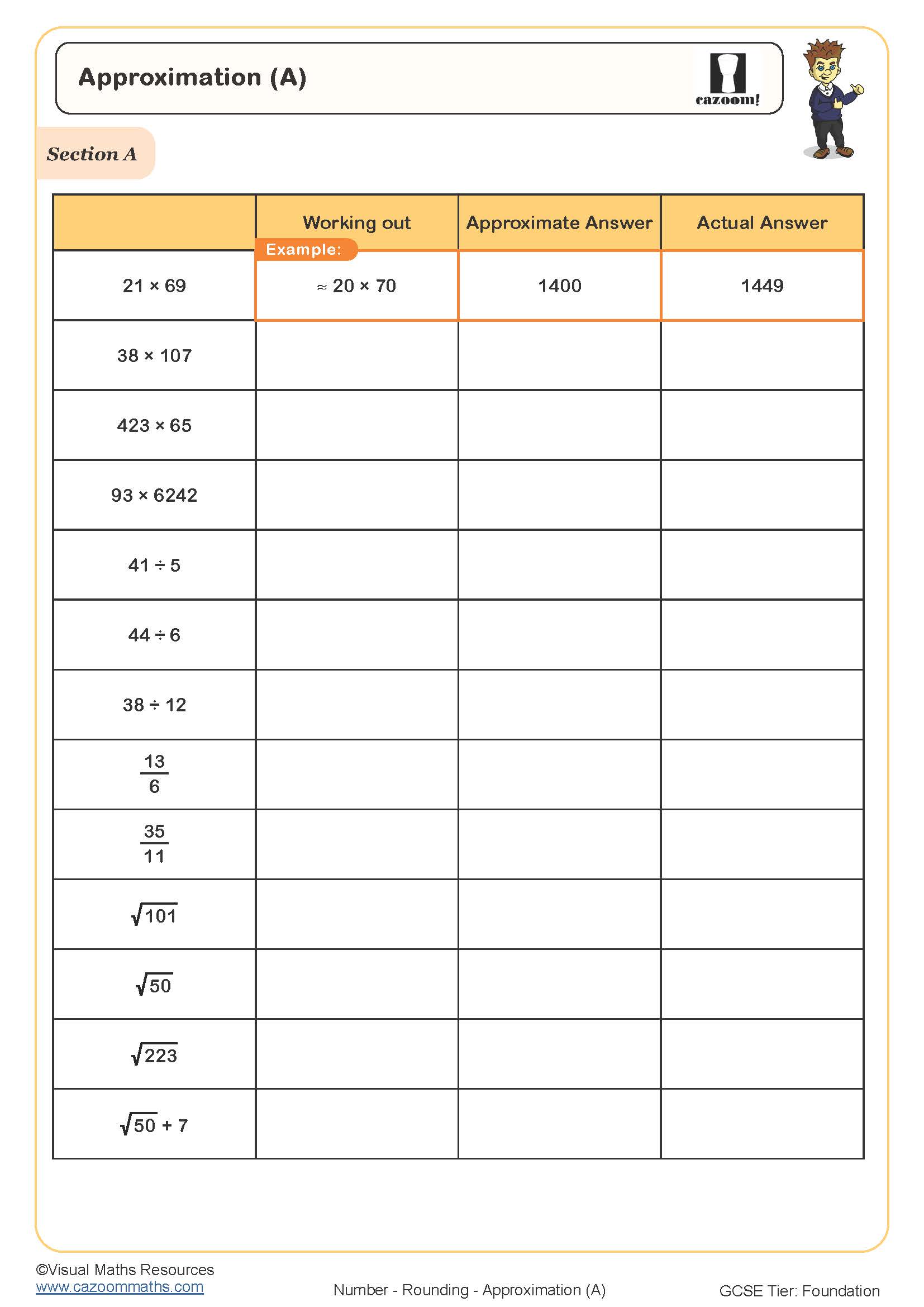
Approximation (A)
Year groups: 7, 8
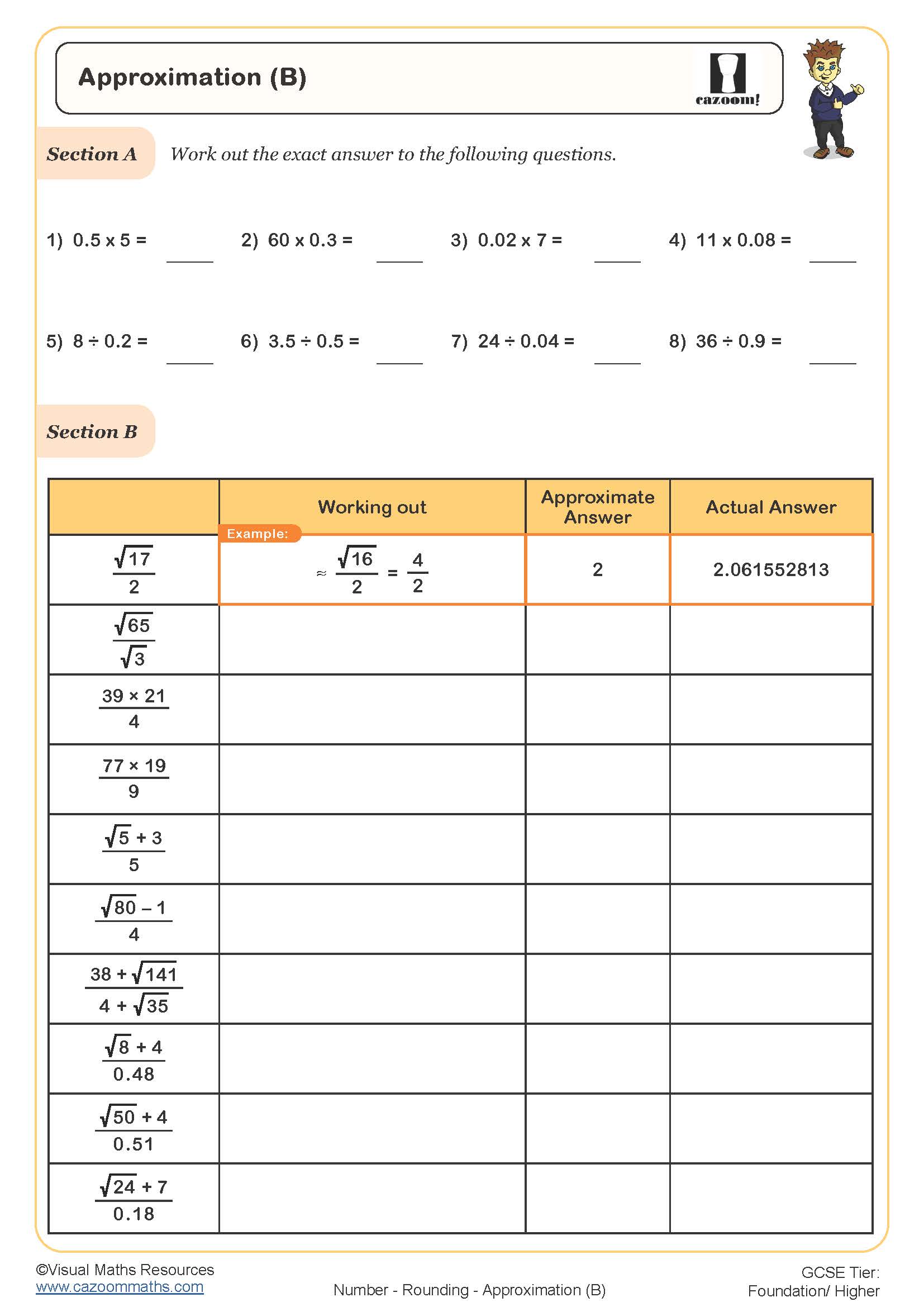
Approximation (B)
Year groups: 7, 8
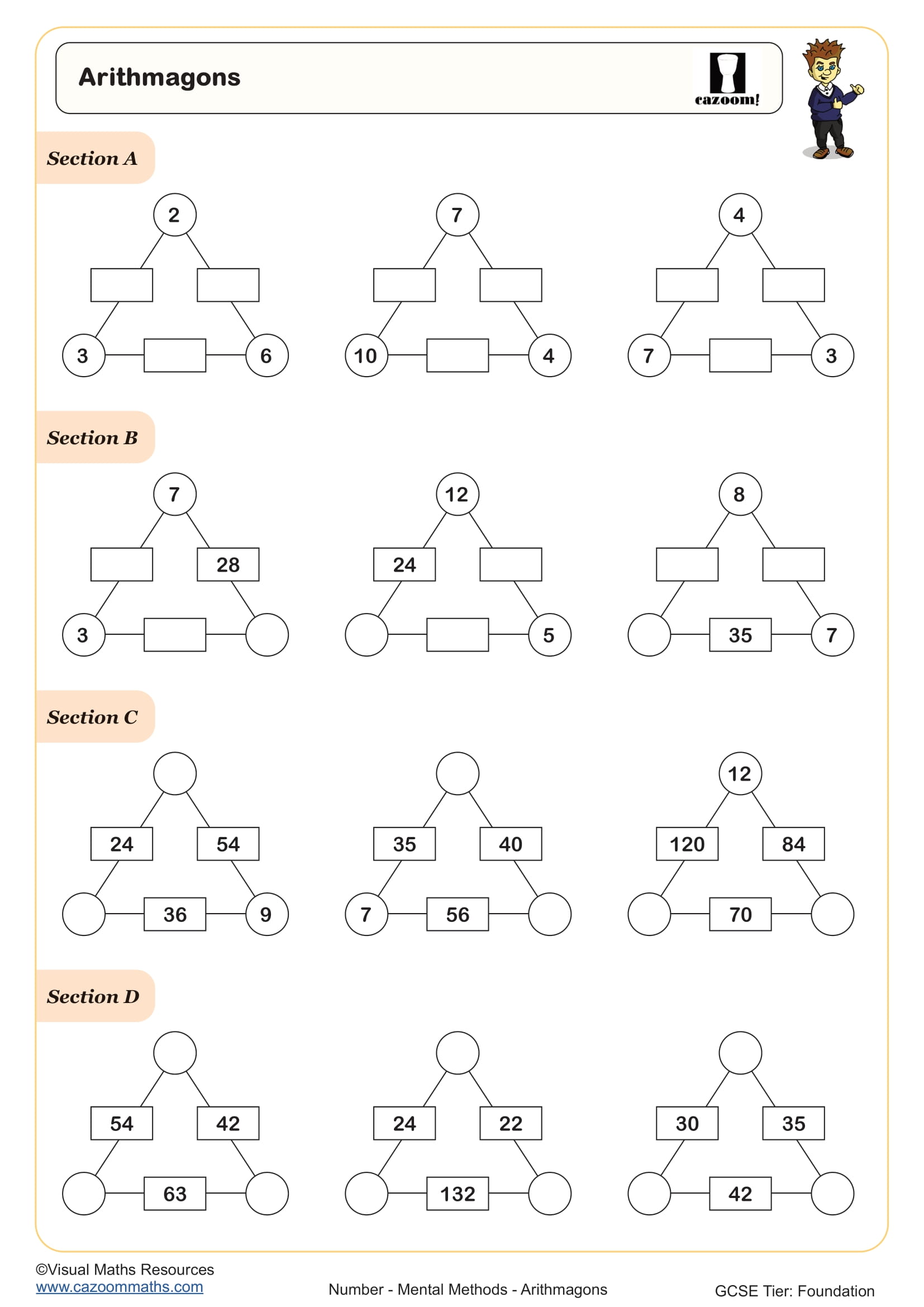
Arithmagons
Year groups: 7, 8
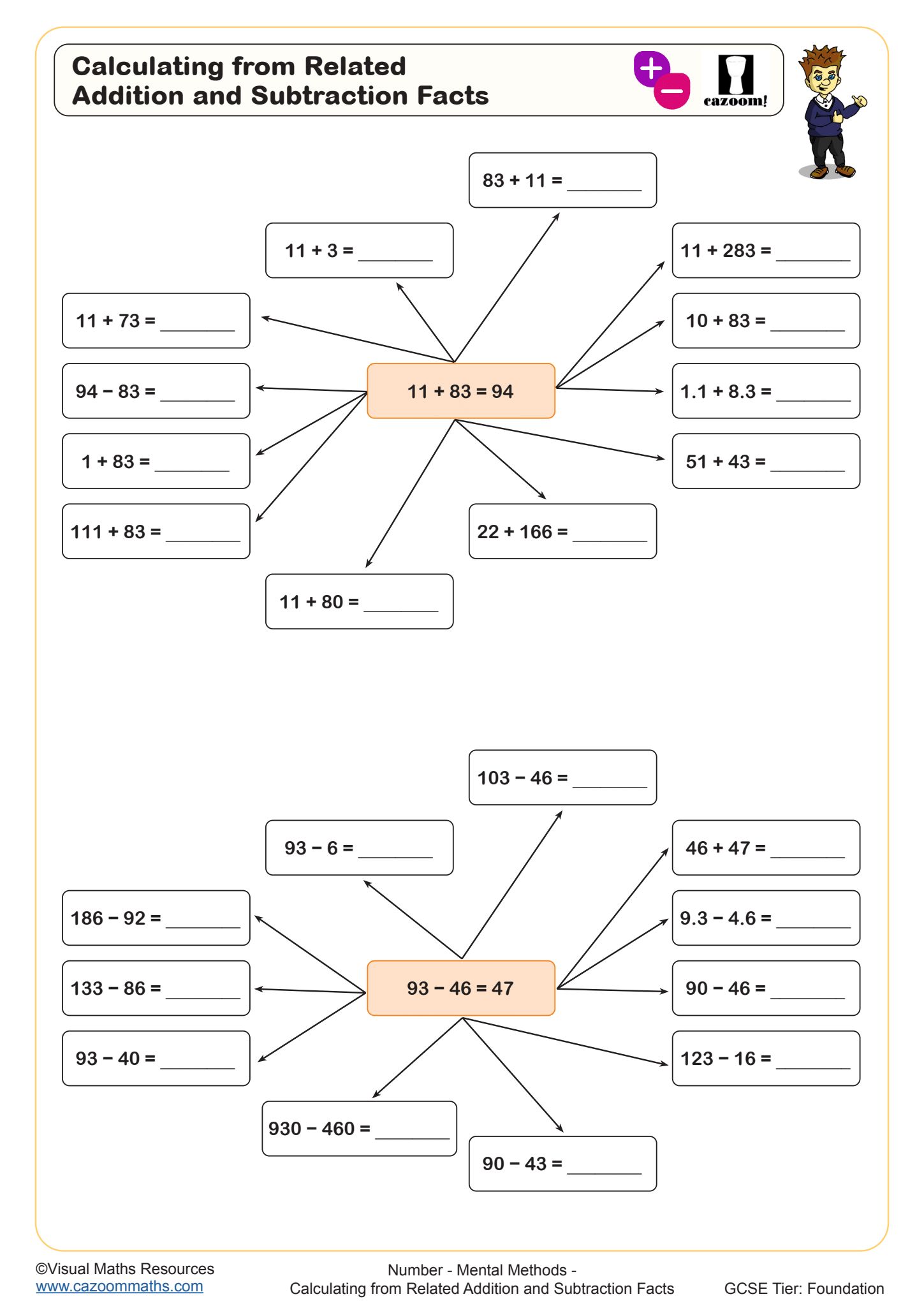
Calculating from Related Addition and Subtraction Facts
Year groups: 7, 8
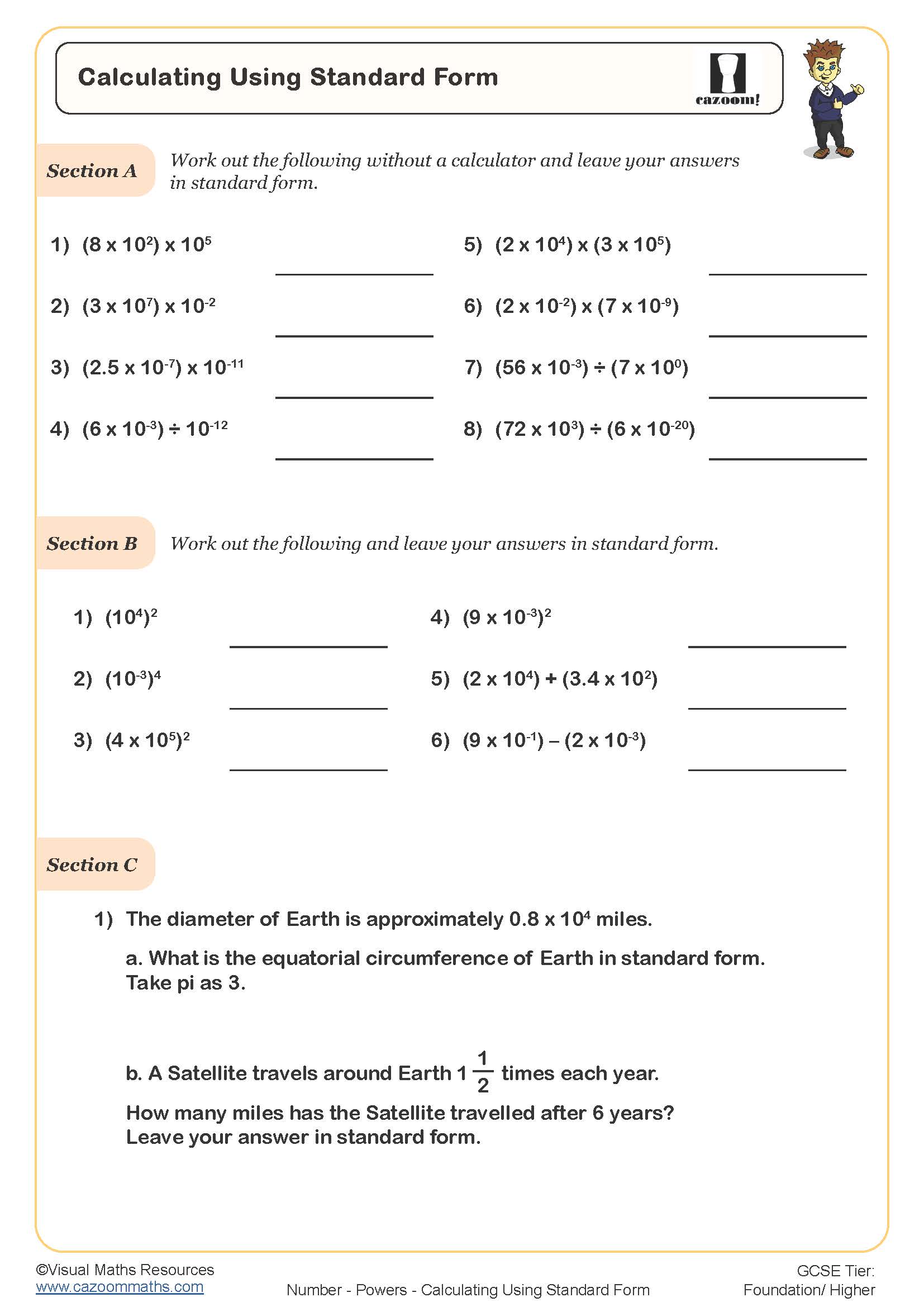
Calculating Using Standard Form
Year groups: 7, 8
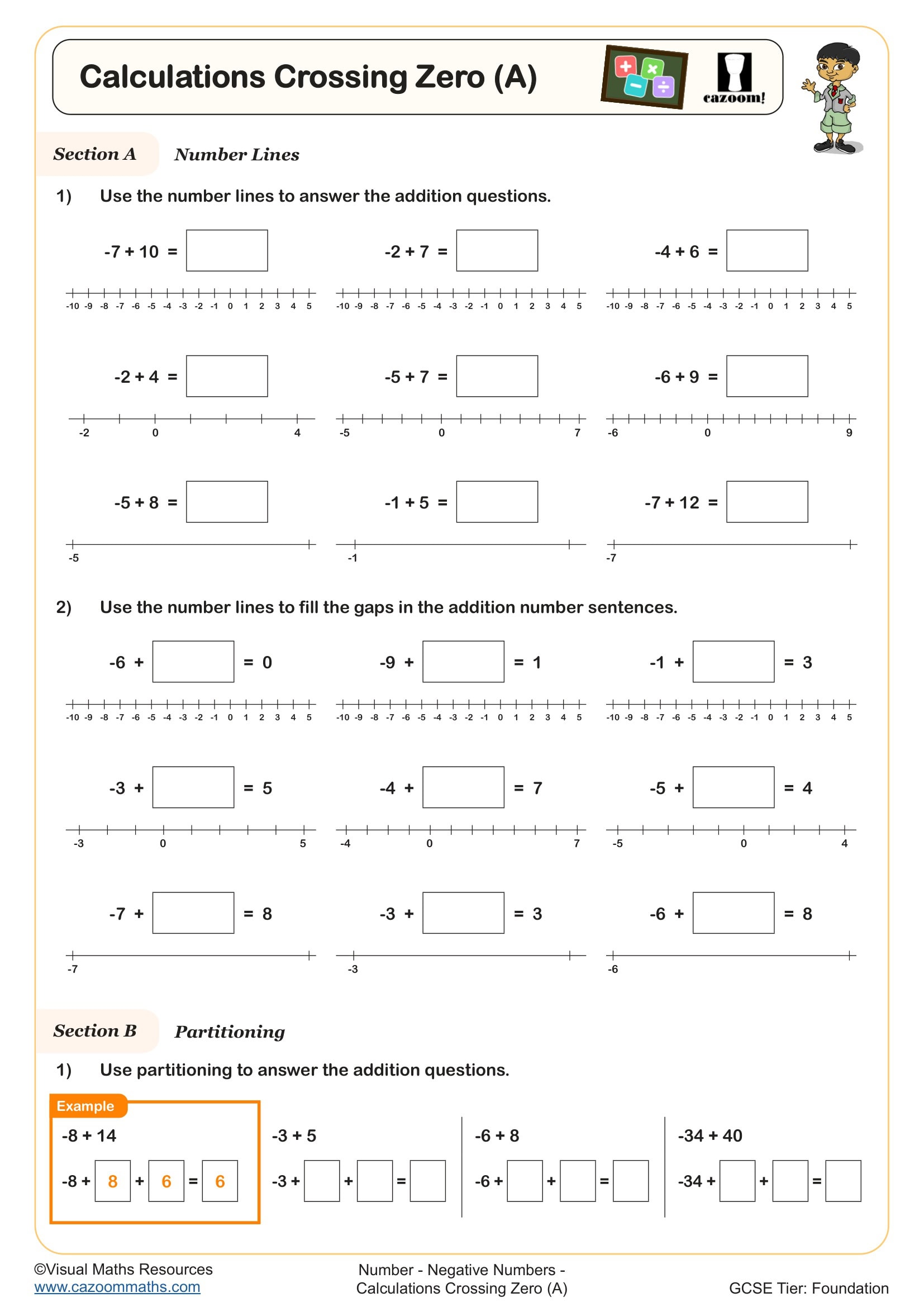
Calculations Crossing Zero (A)
Year groups: 7, 8
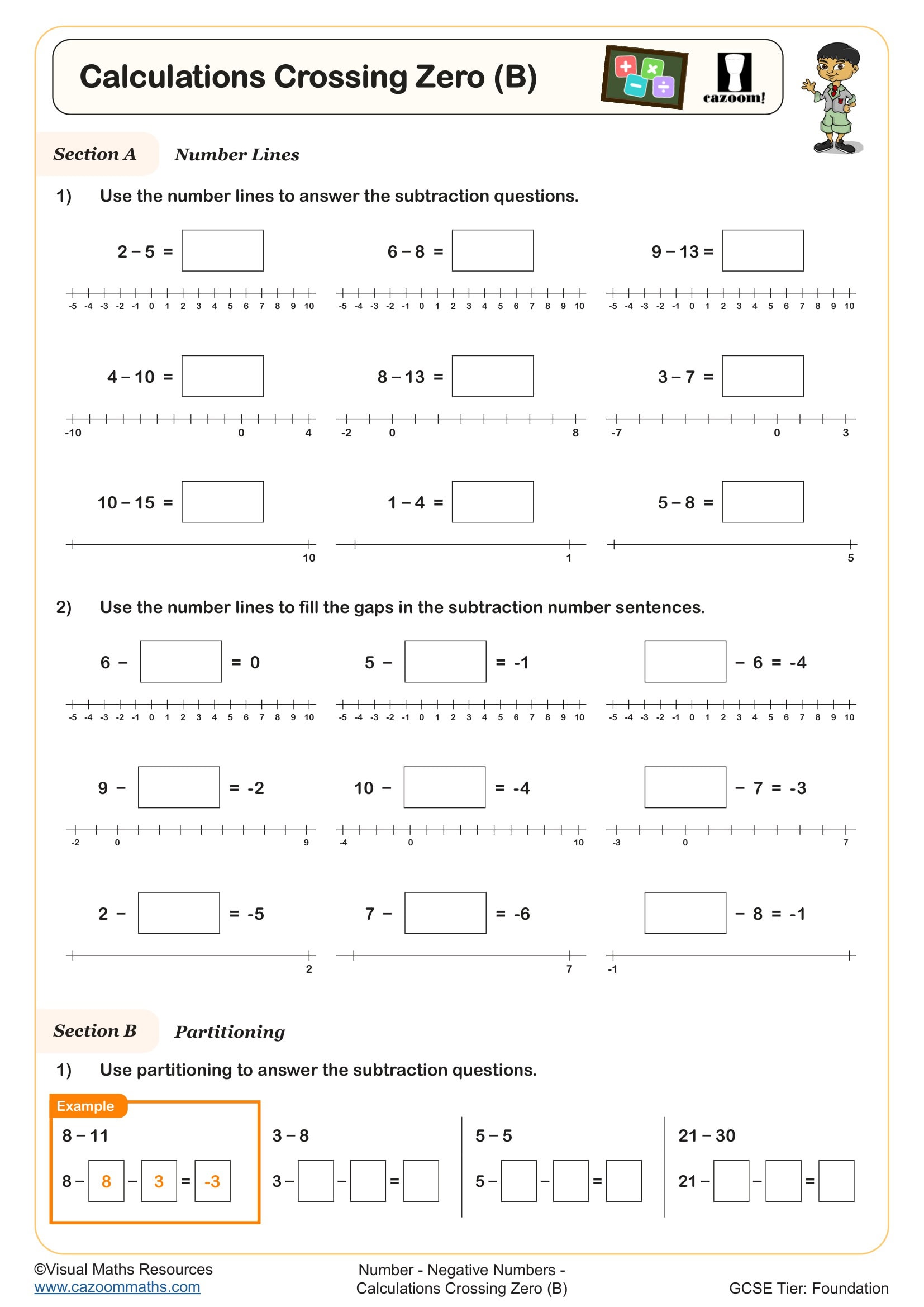
Calculations Crossing Zero (B)
Year groups: 7, 8
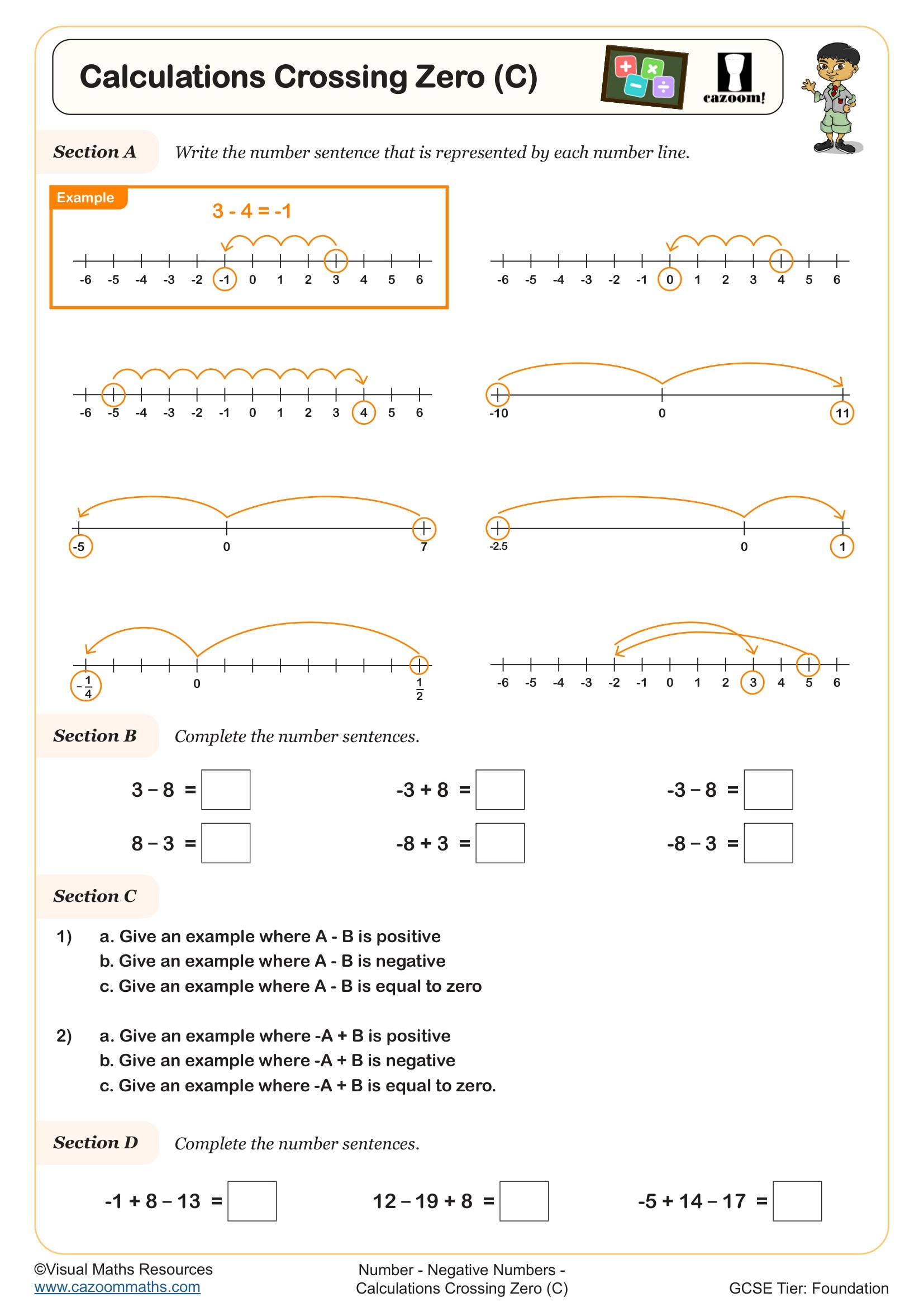
Calculations Crossing Zero (C)
Year groups: 7, 8
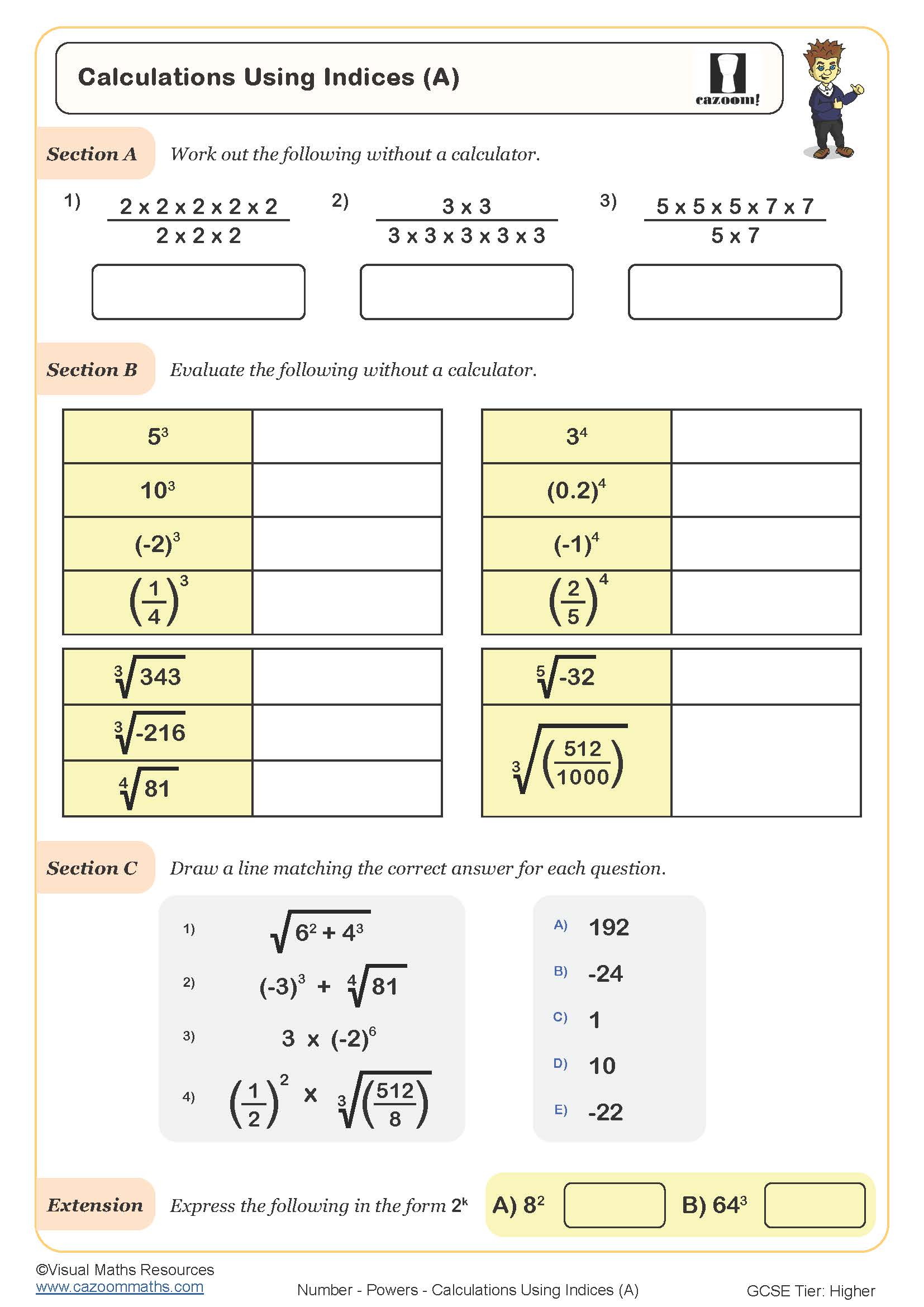
Calculations Using Indices (A)
Year groups: 7, 8
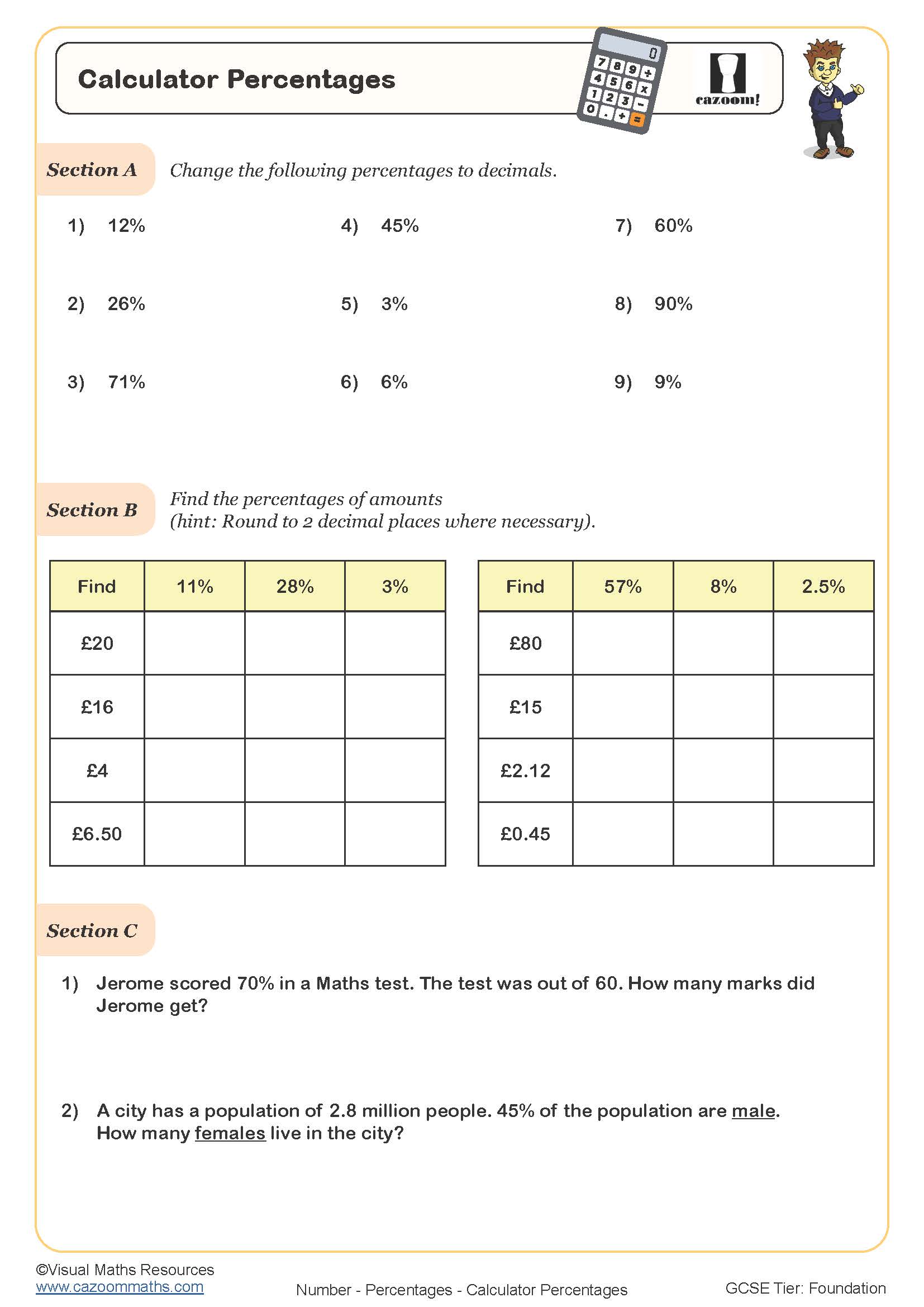
Calculator Percentages
Year groups: 7, 8
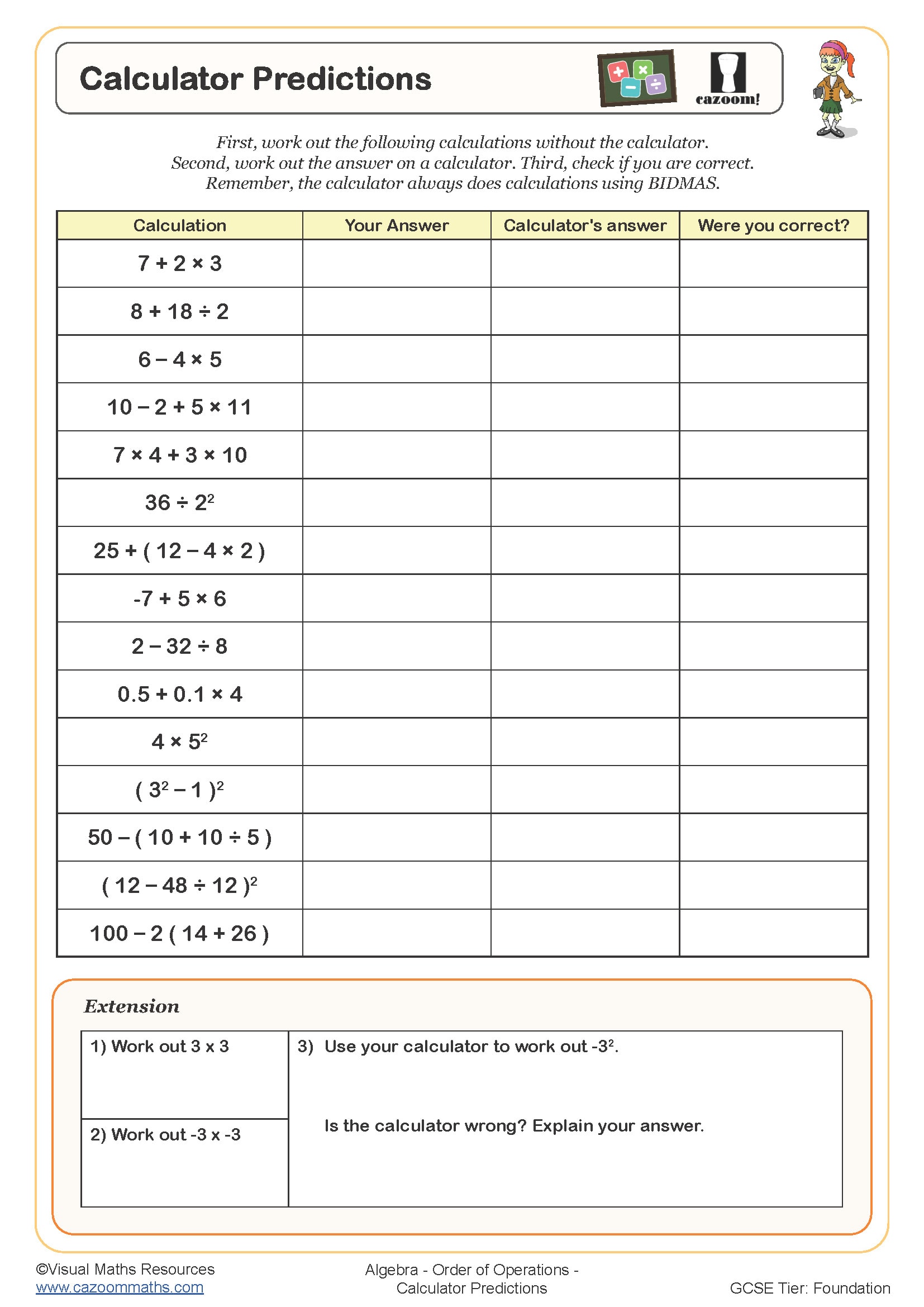
Calculator Predictions
Year groups: 7, 8
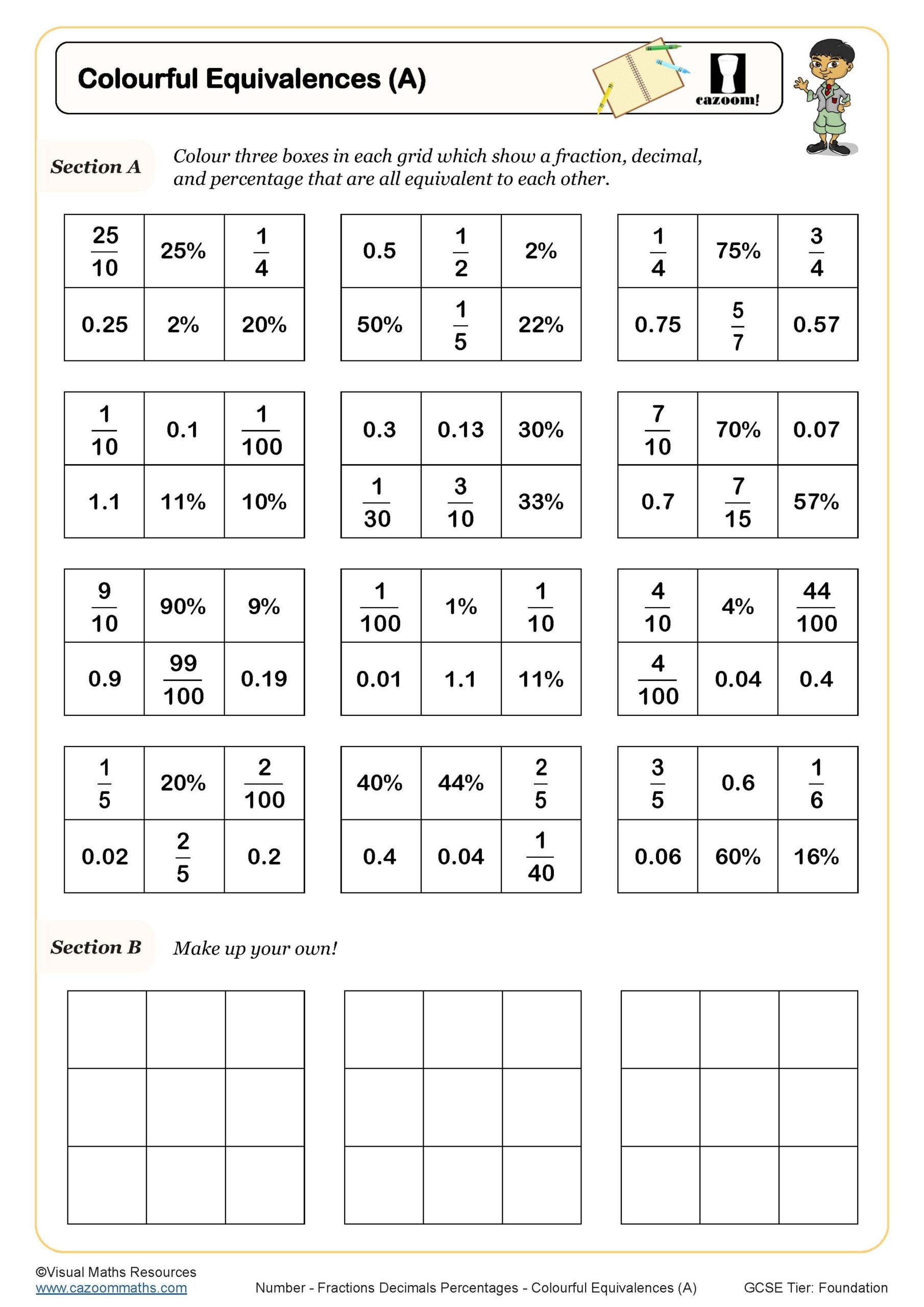
Colourful Equivalences (A)
Year groups: 7, 8
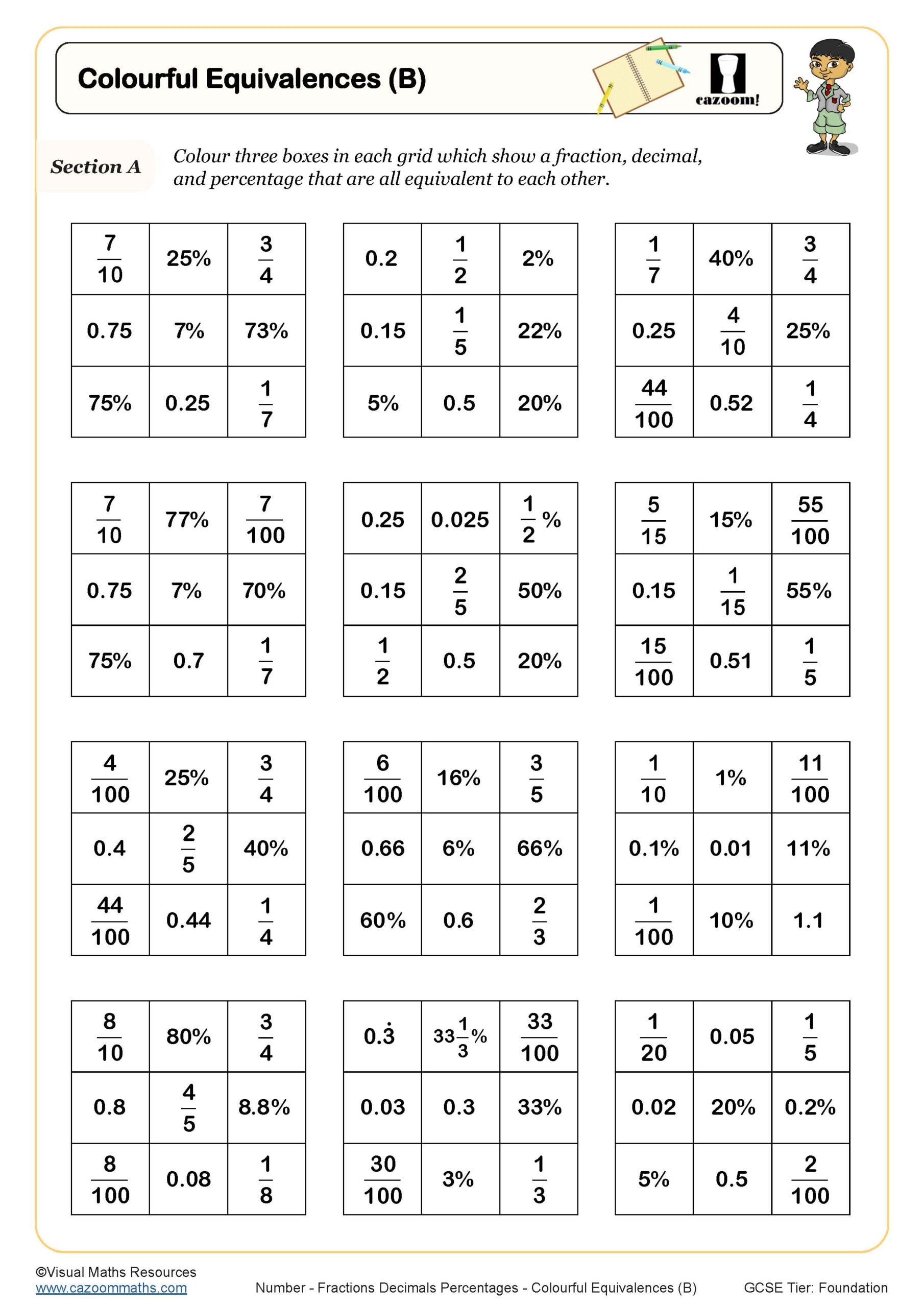
Colourful Equivalences (B)
Year groups: 7, 8, 9
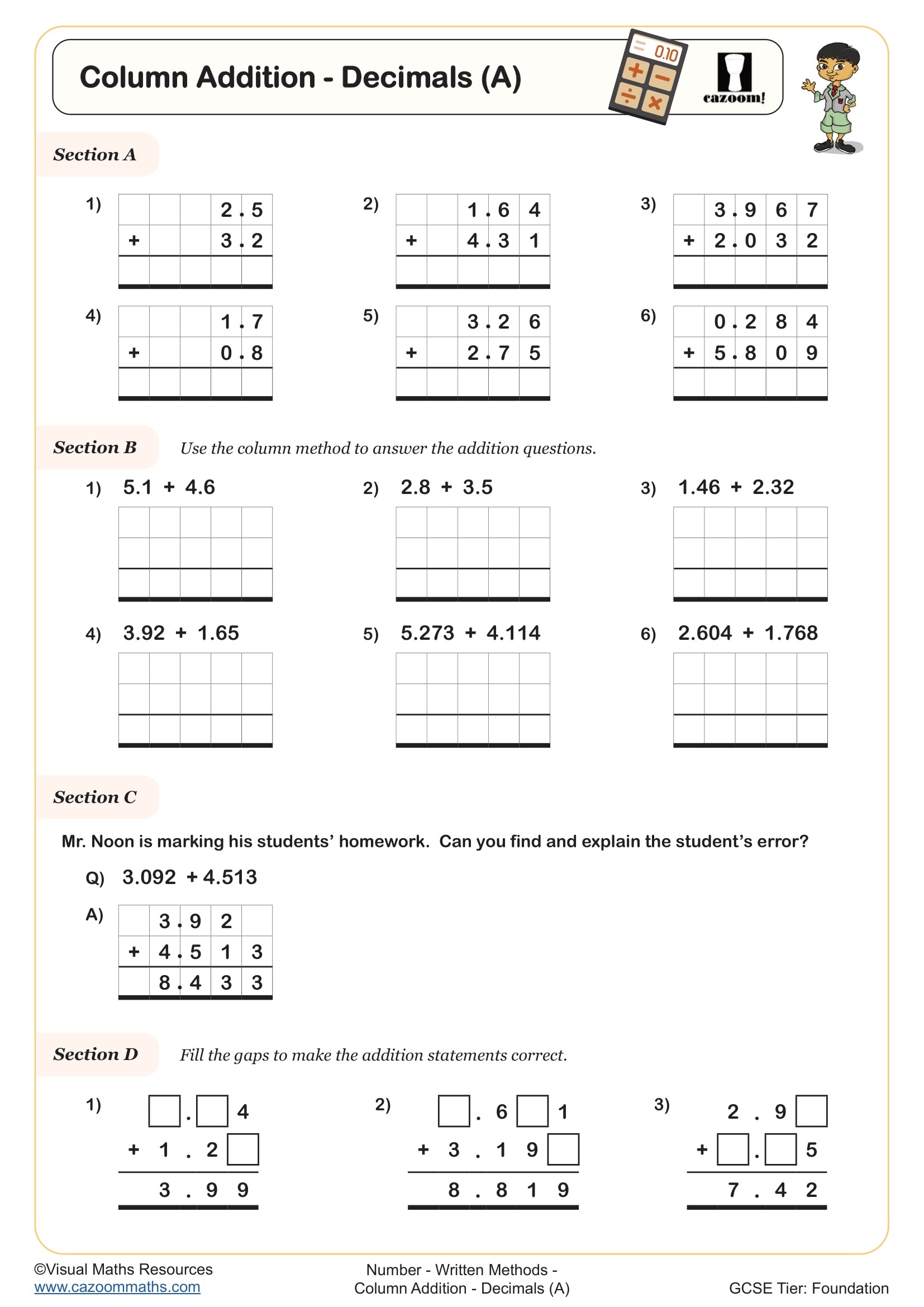
Column Addition - Decimals (A)
Year groups: 7, 8
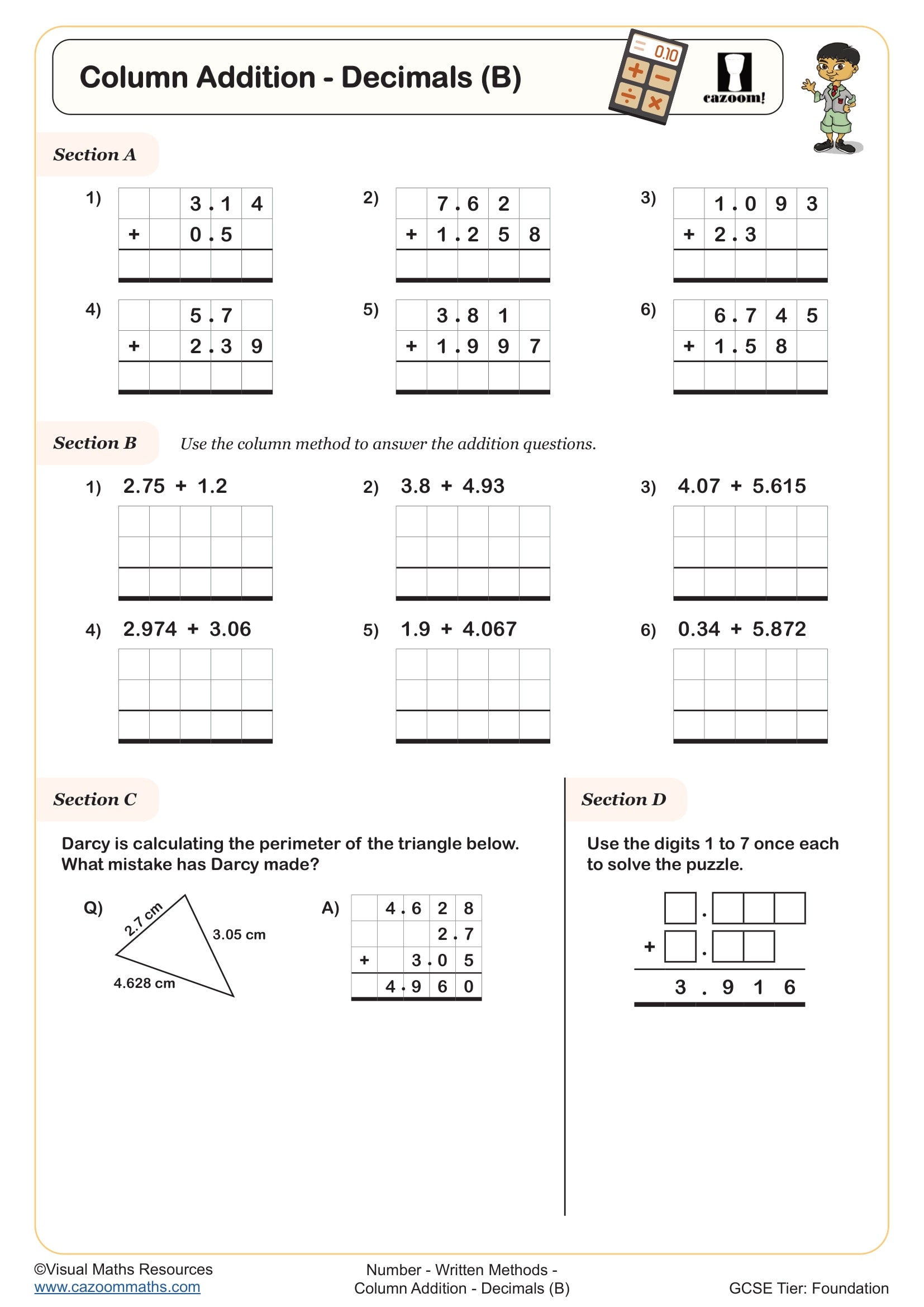
Column Addition - Decimals (B)
Year groups: 7, 8
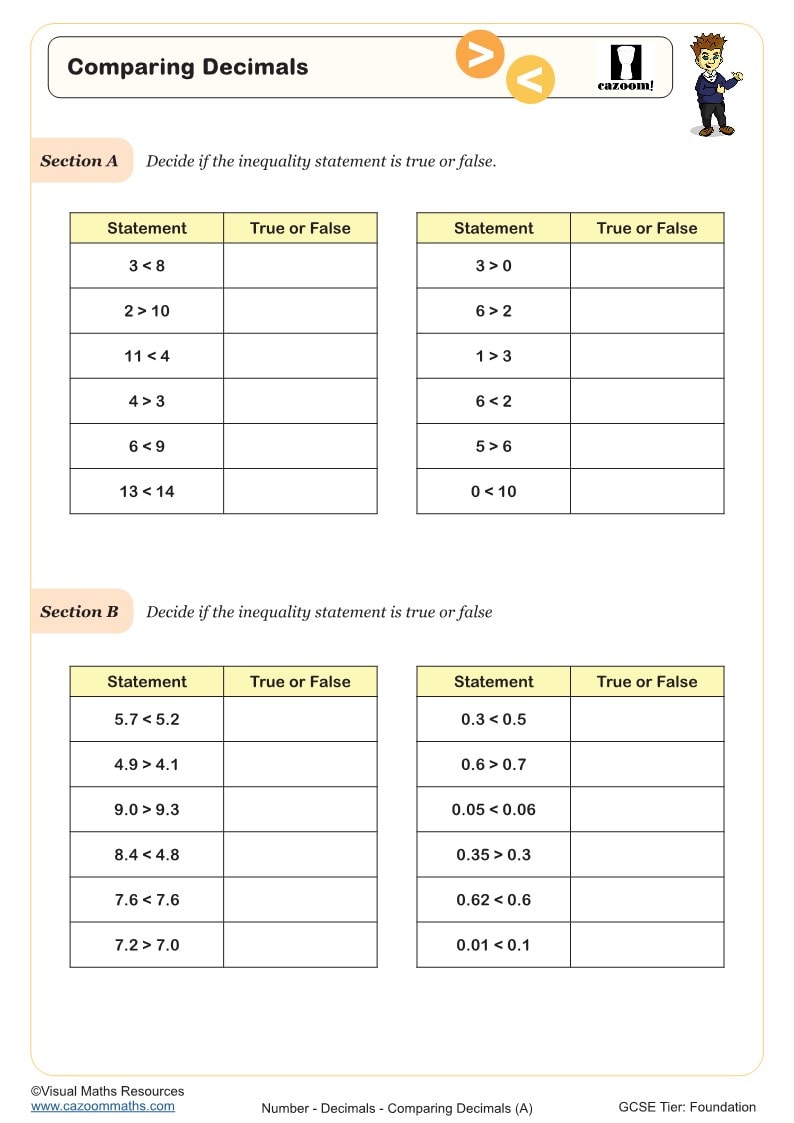
Comparing Decimals
Year groups: 7, 8
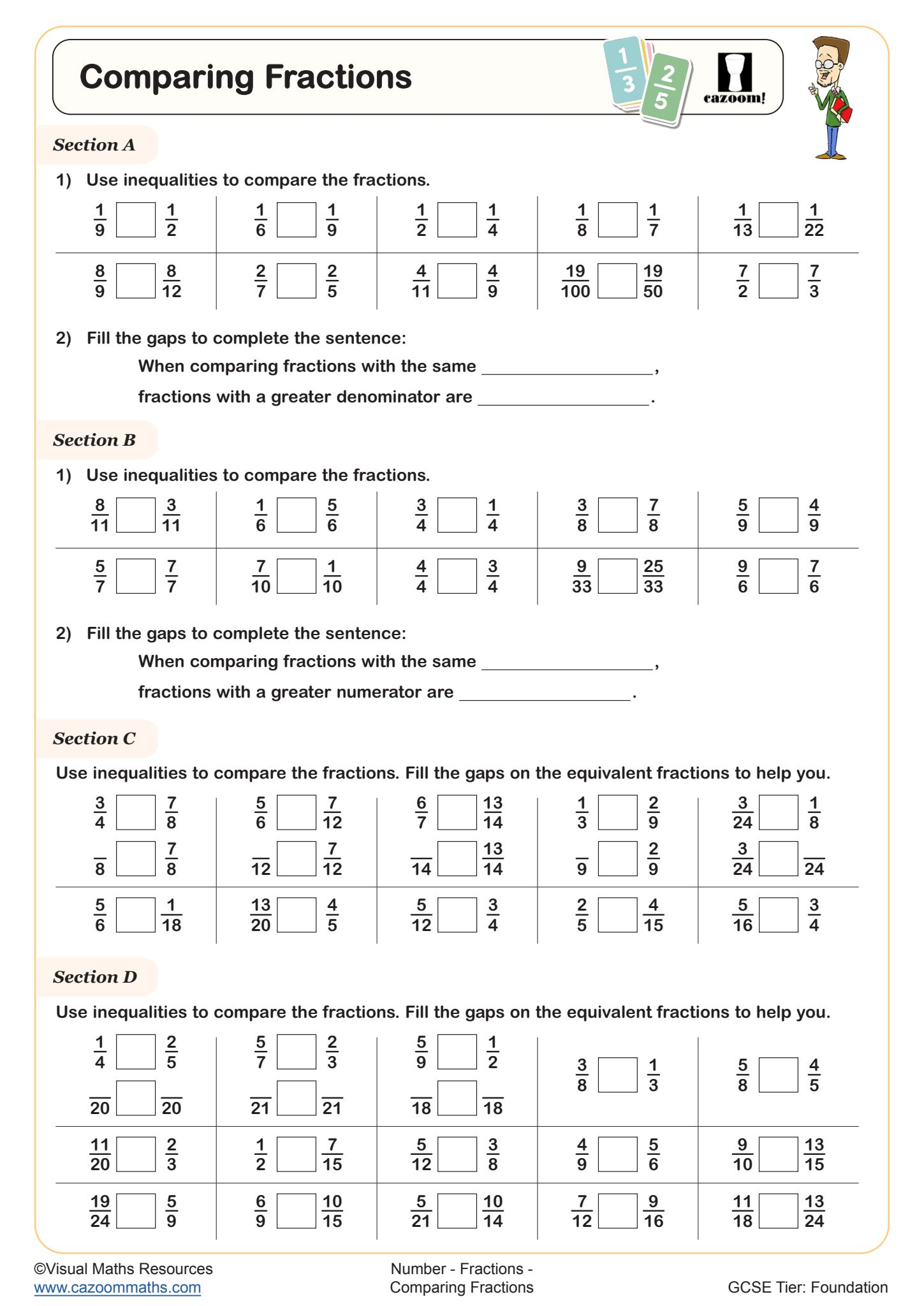
Comparing Fractions
Year groups: 7
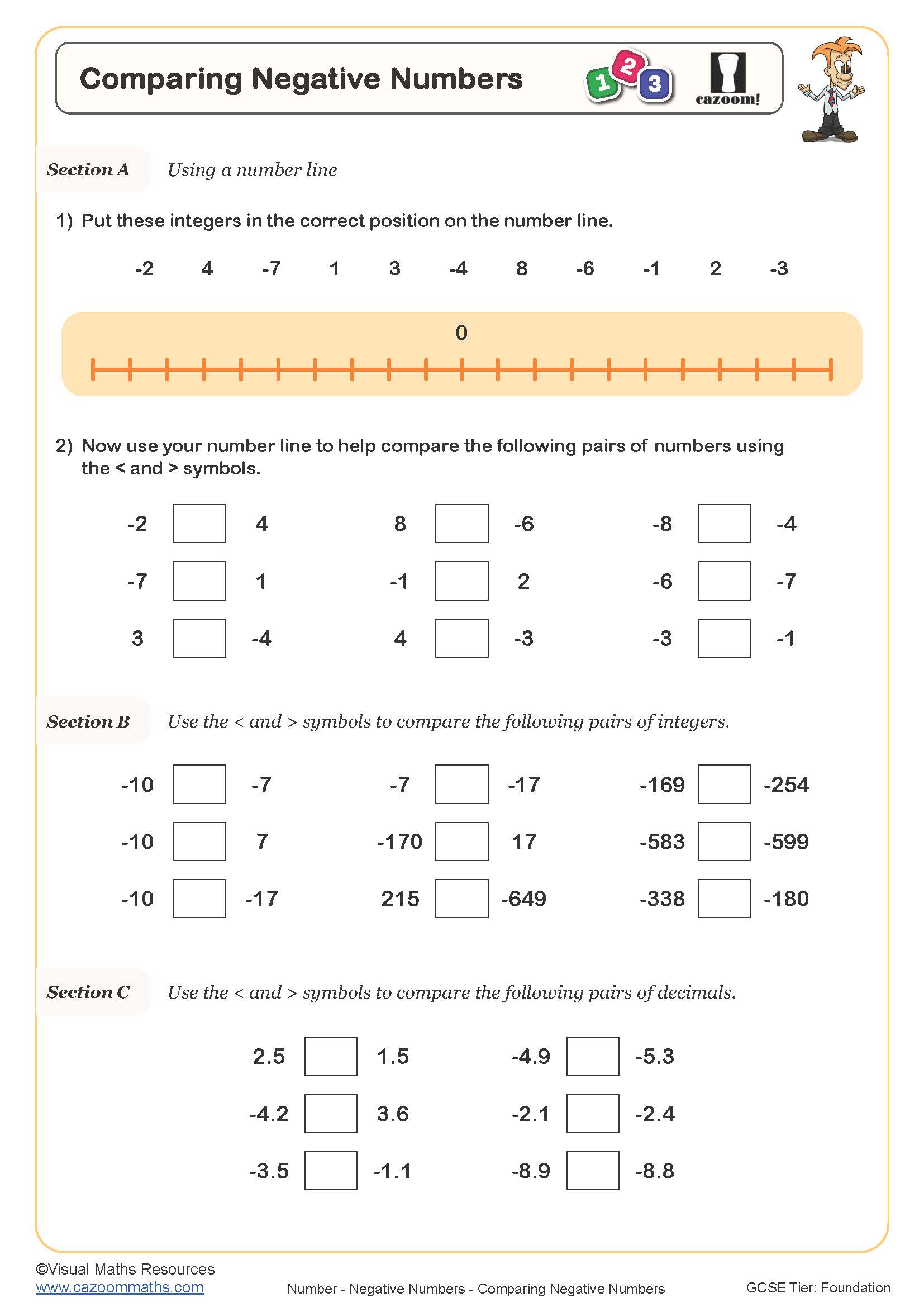
Comparing Negative Numbers
Year groups: 7
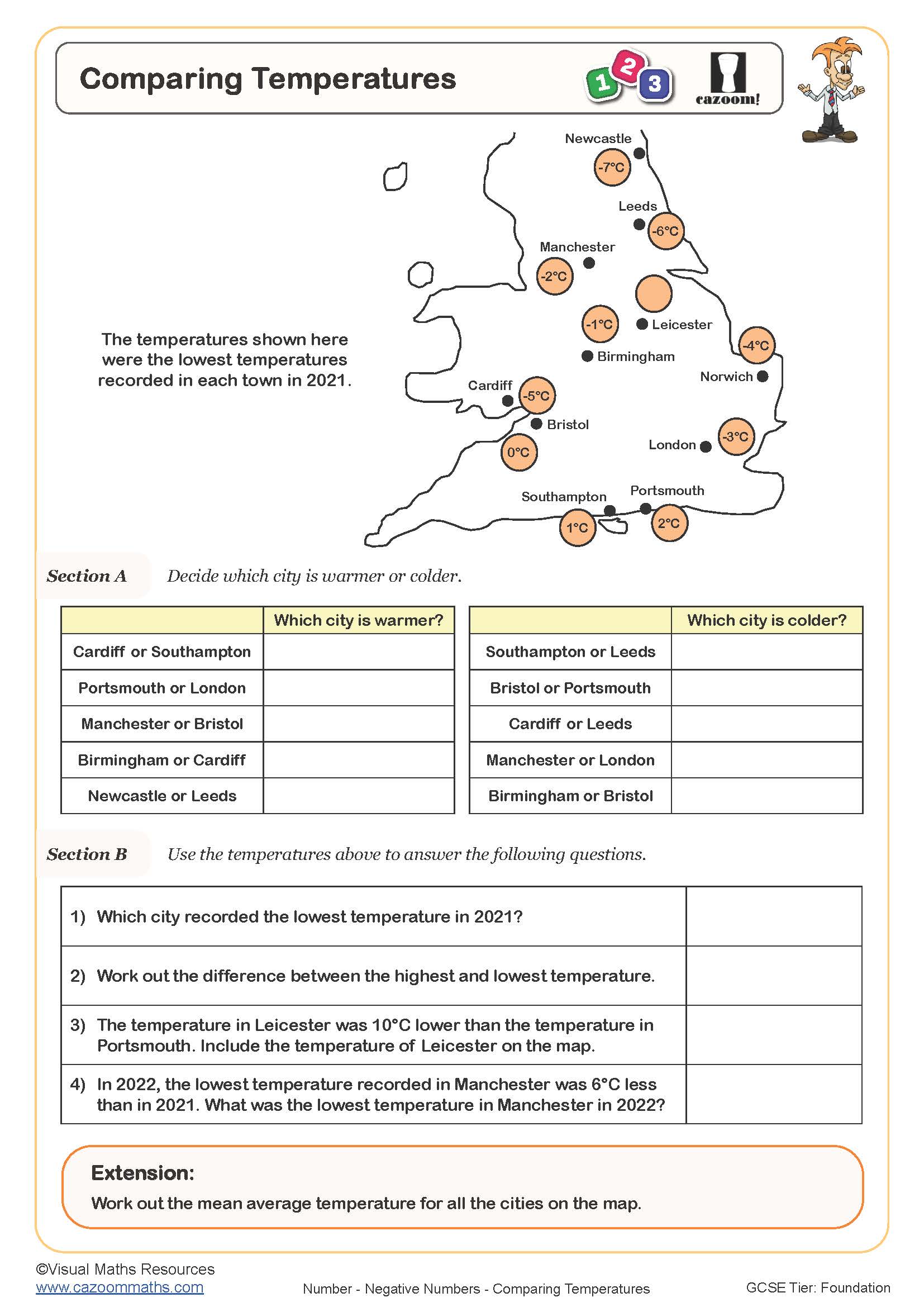
Comparing Temperatures
Year groups: 7
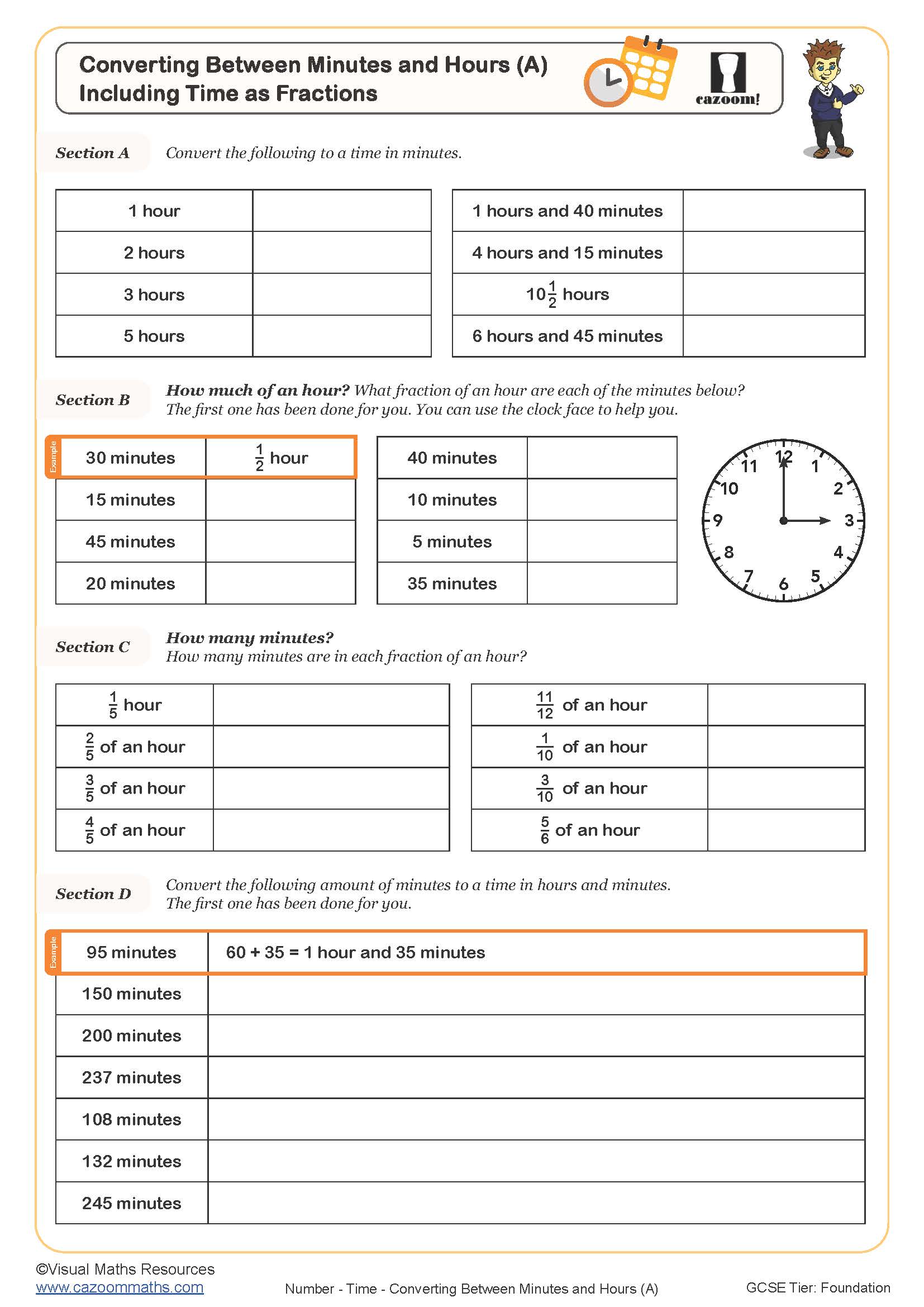
Converting Between Minutes and Hours (A)
Year groups: 7, 8
Converting Decimals to Fractions
Year groups: 7, 8

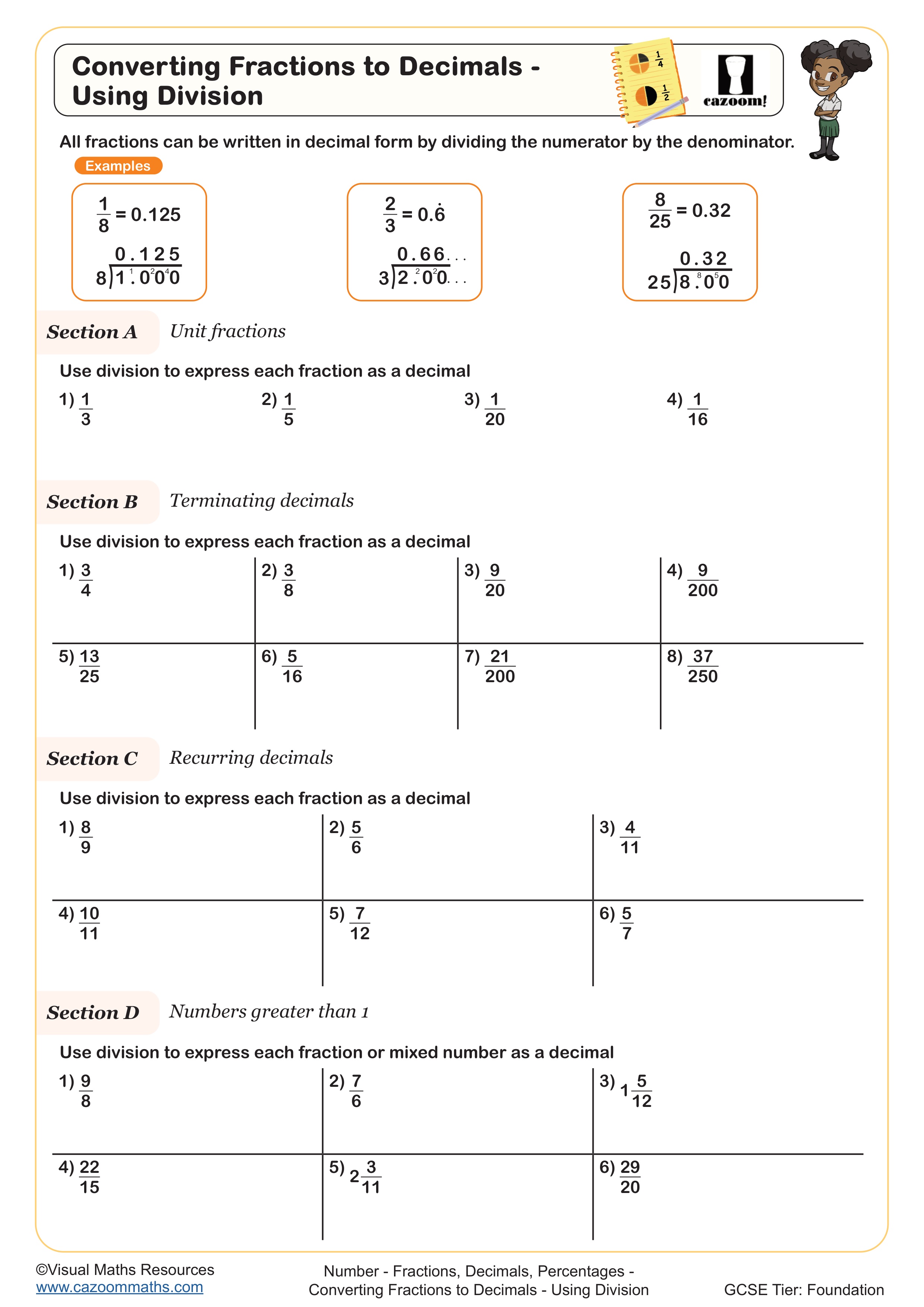
Converting Fractions to Decimals - Using Division
Year groups: 7, 8
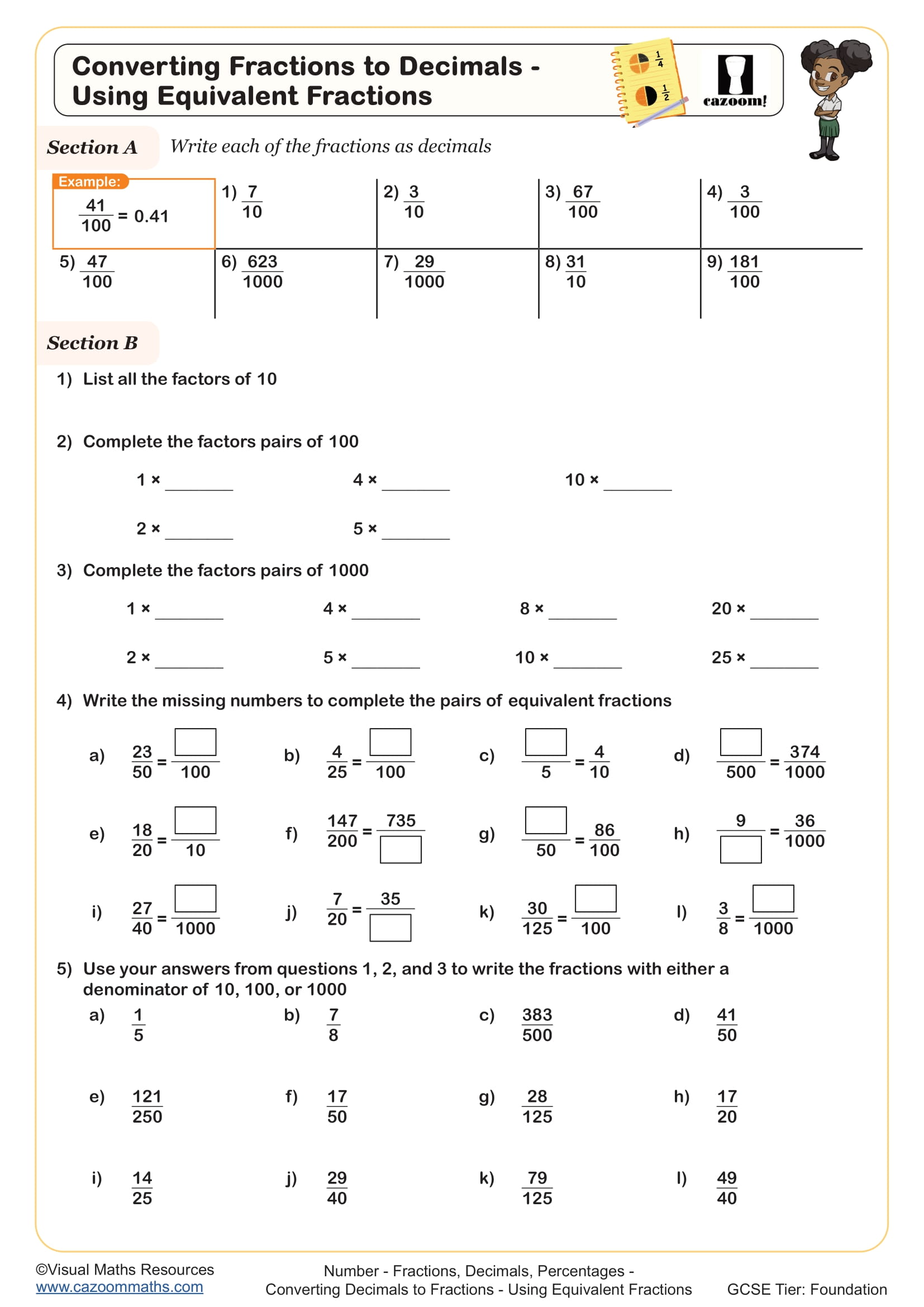
Converting Fractions to Decimals - Using Equivalent Fractions
Year groups: 7, 8
Converting from Standard Form
Year groups: 7, 8
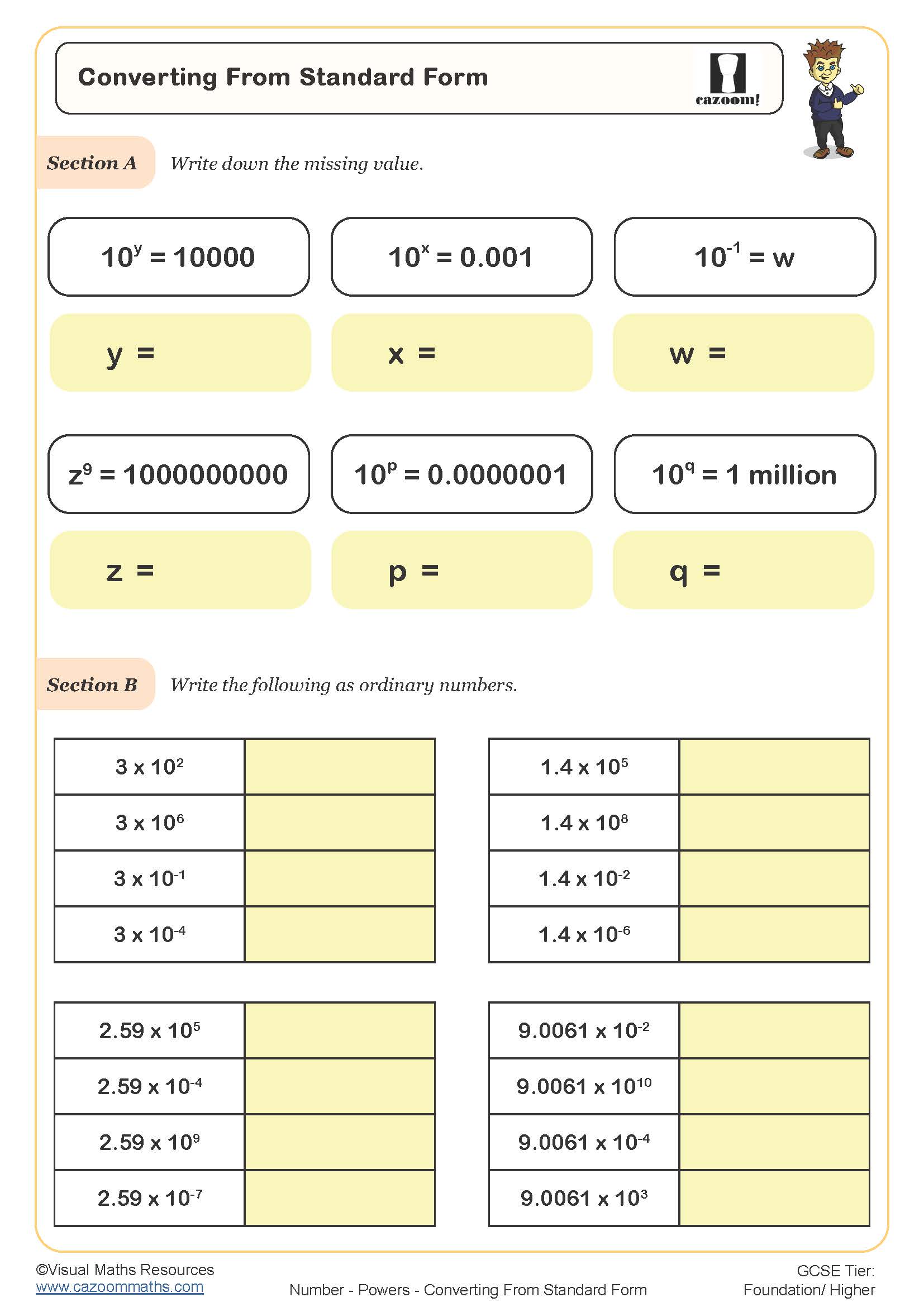
Cube Numbers
Year groups: 7, 8
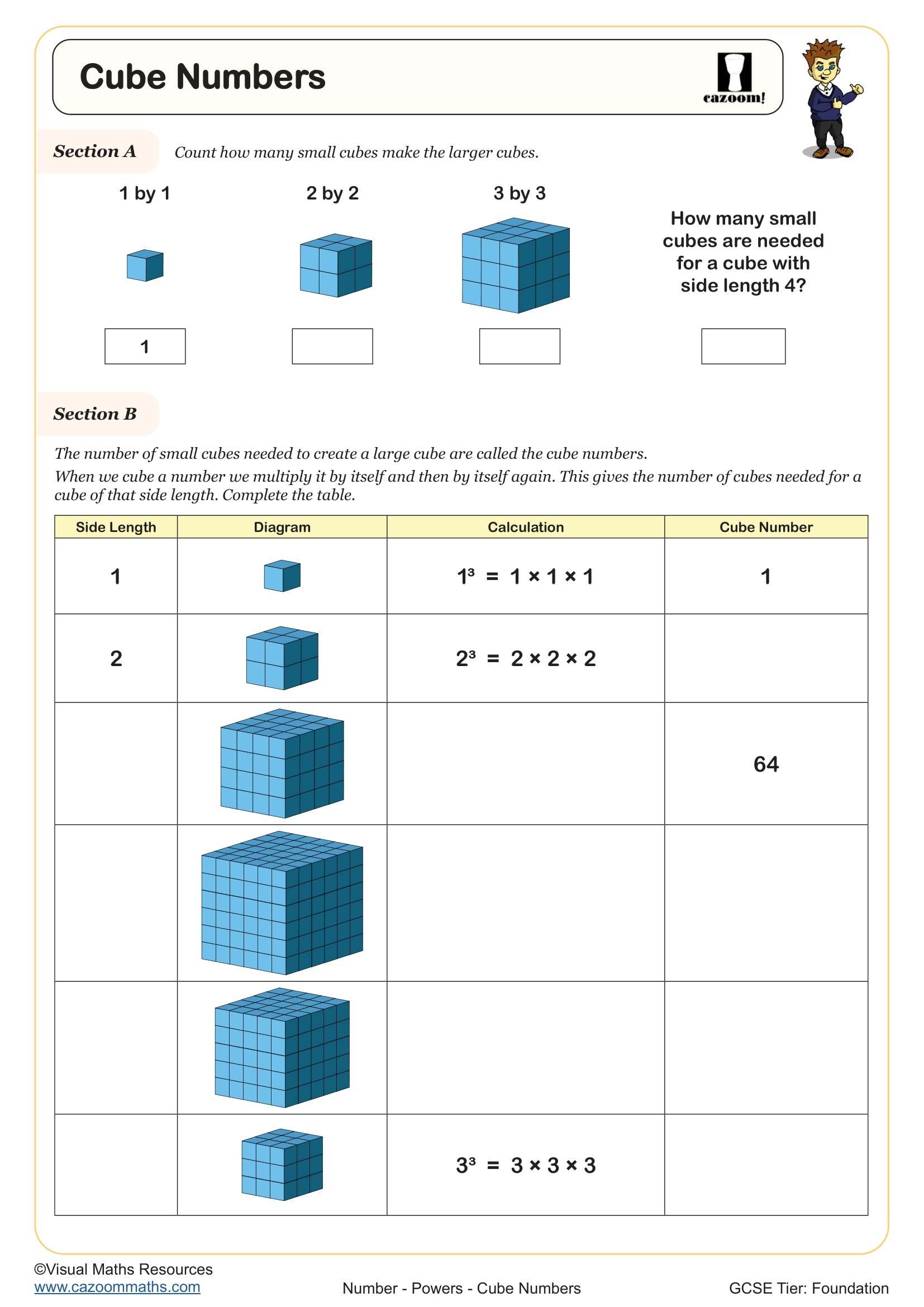
Decimal and Percentage Equivalence
Year groups: 7, 8
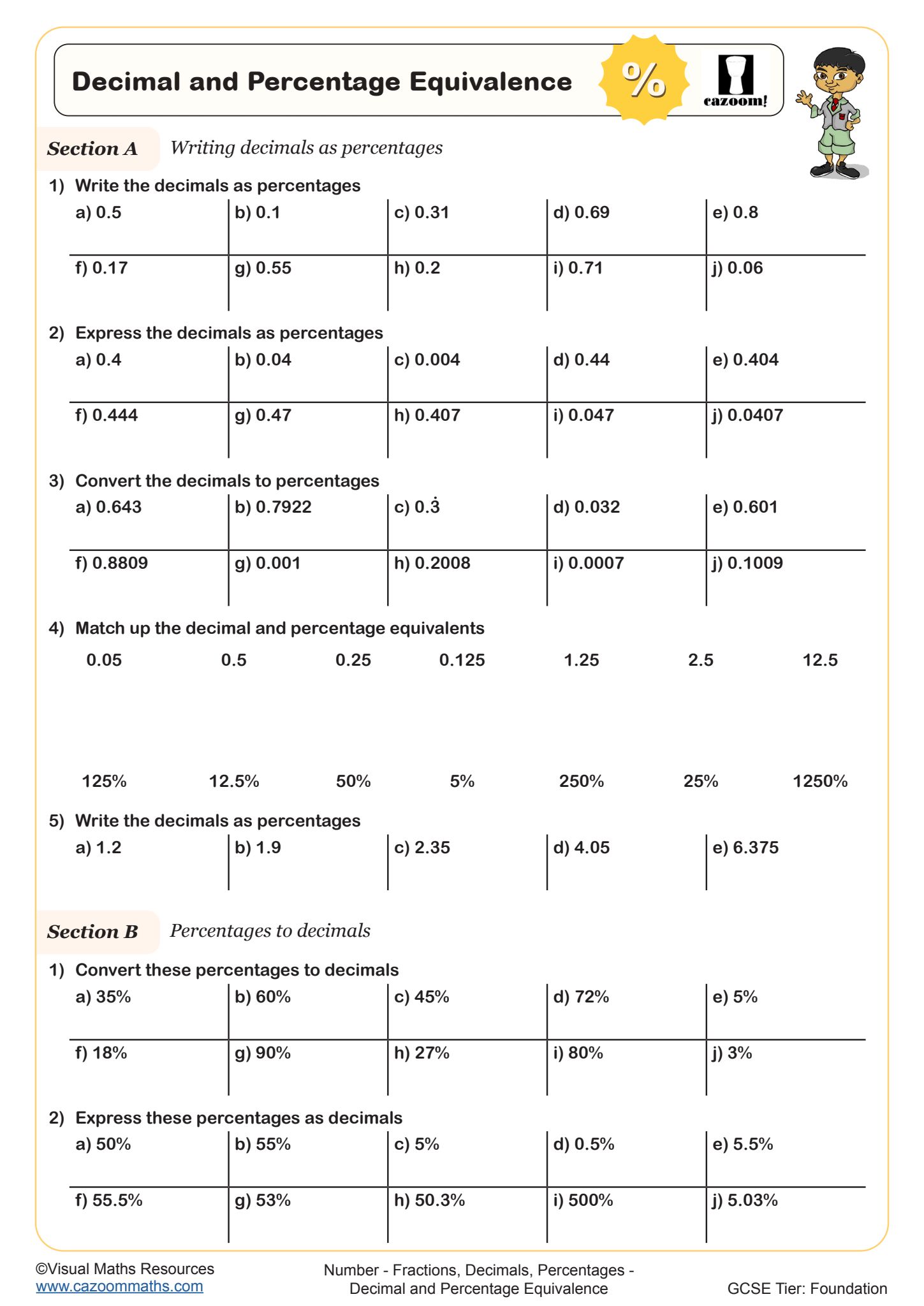
Decimal Operations Mixed Exercise
Year groups: 7, 8
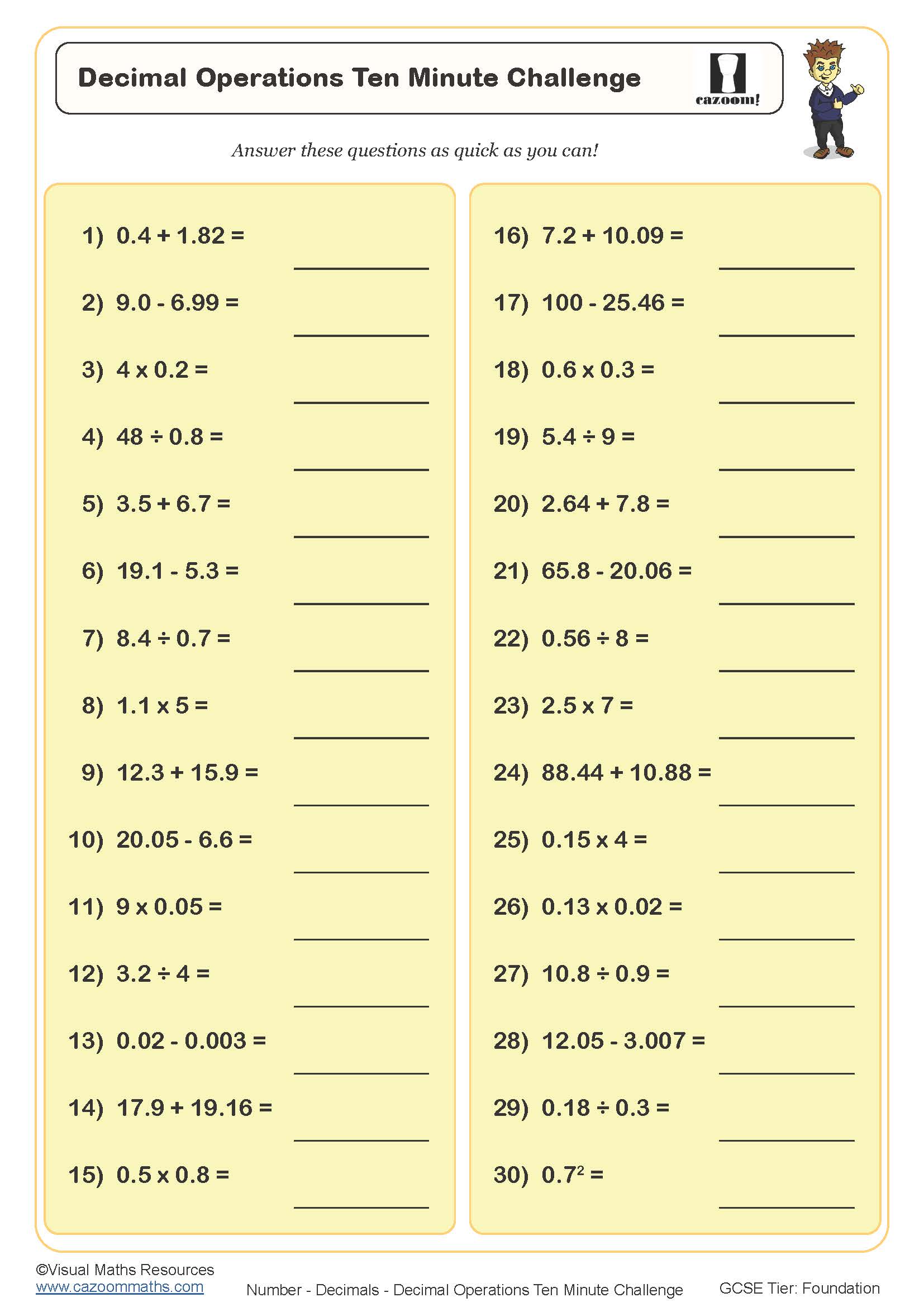
Decimal Operations Ten Minute Challenge
Year groups: 7, 8
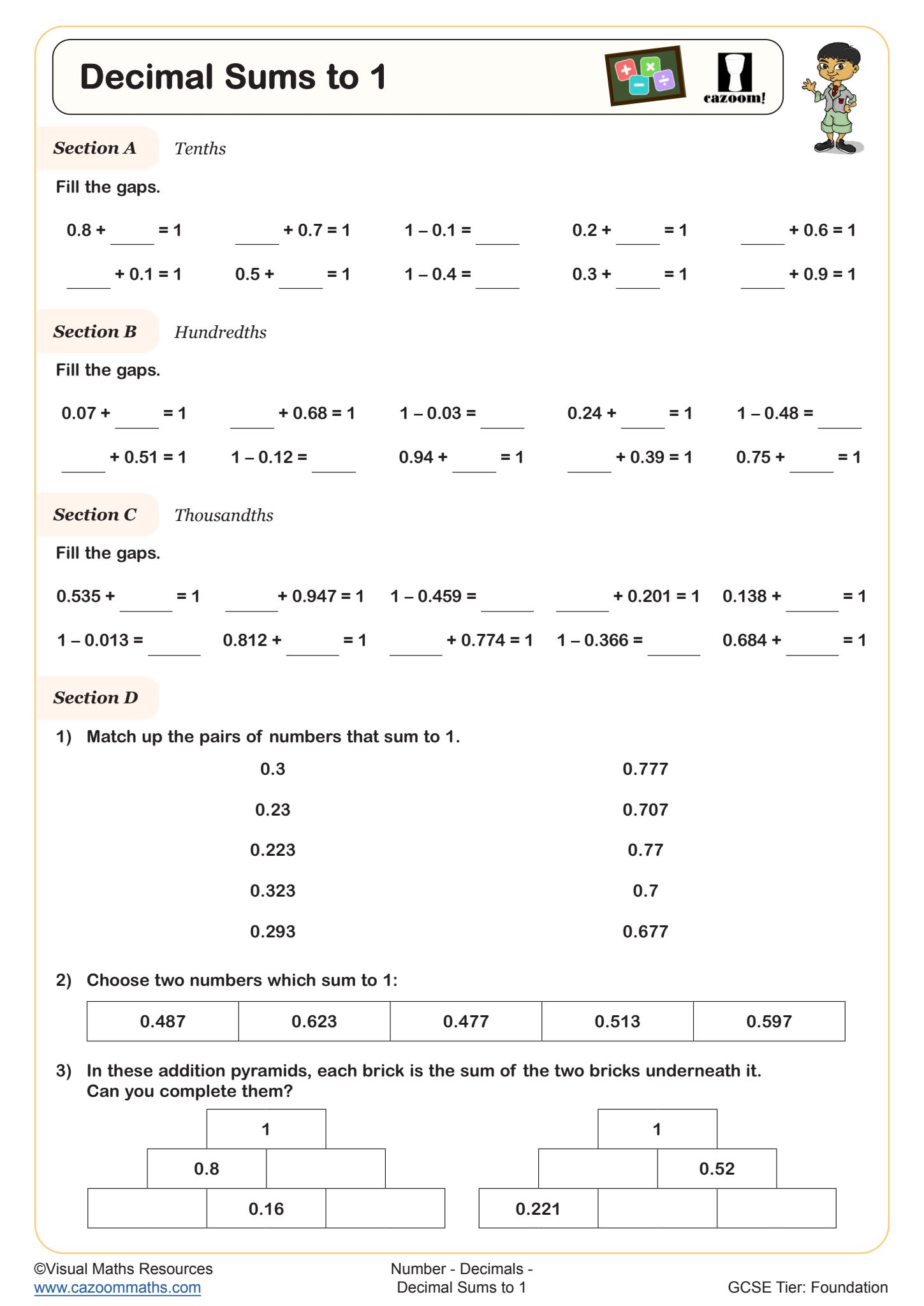
Decimal Sums to 1
Year groups: 7
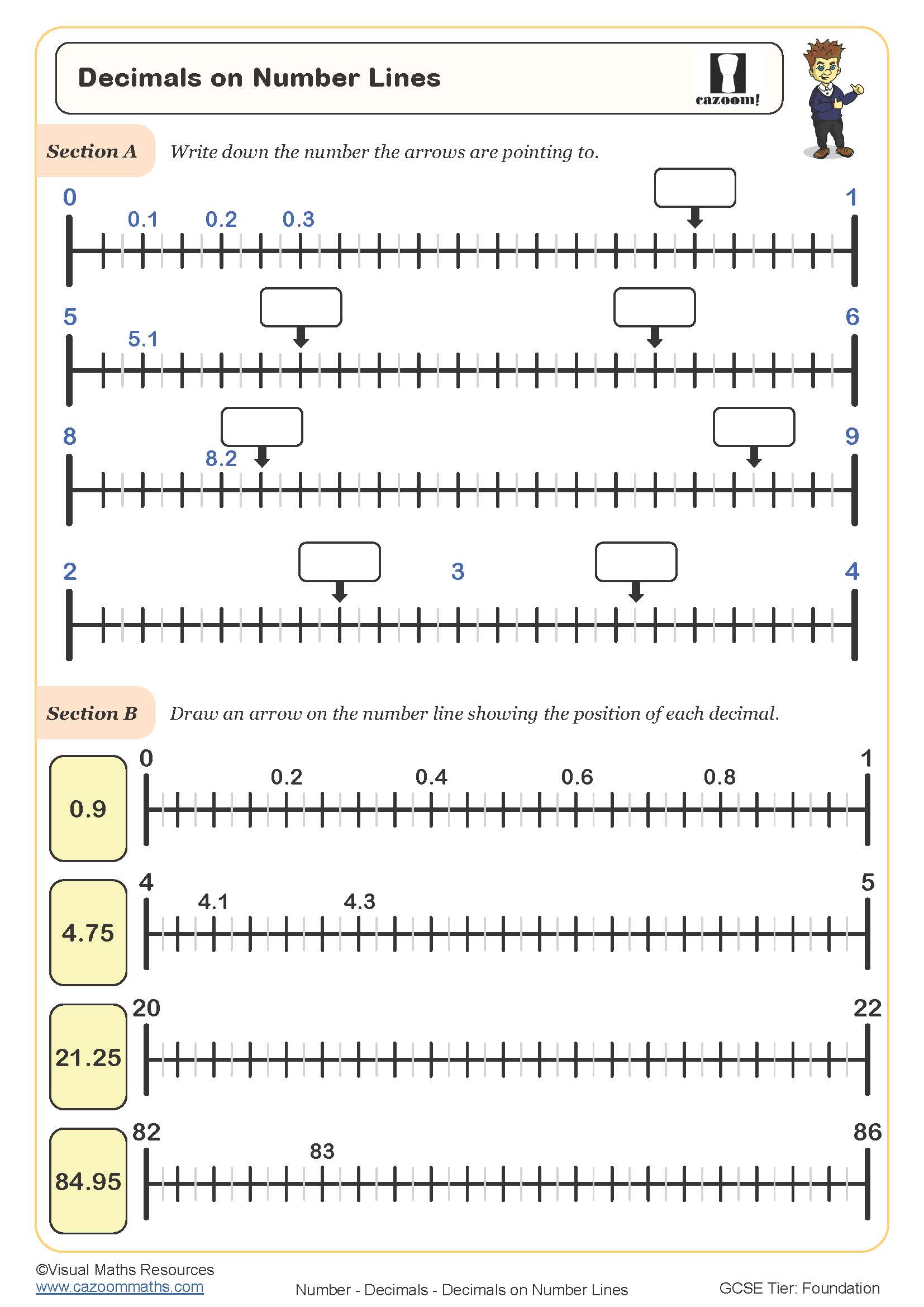
Decimals on Number Lines
Year groups: 7, 8
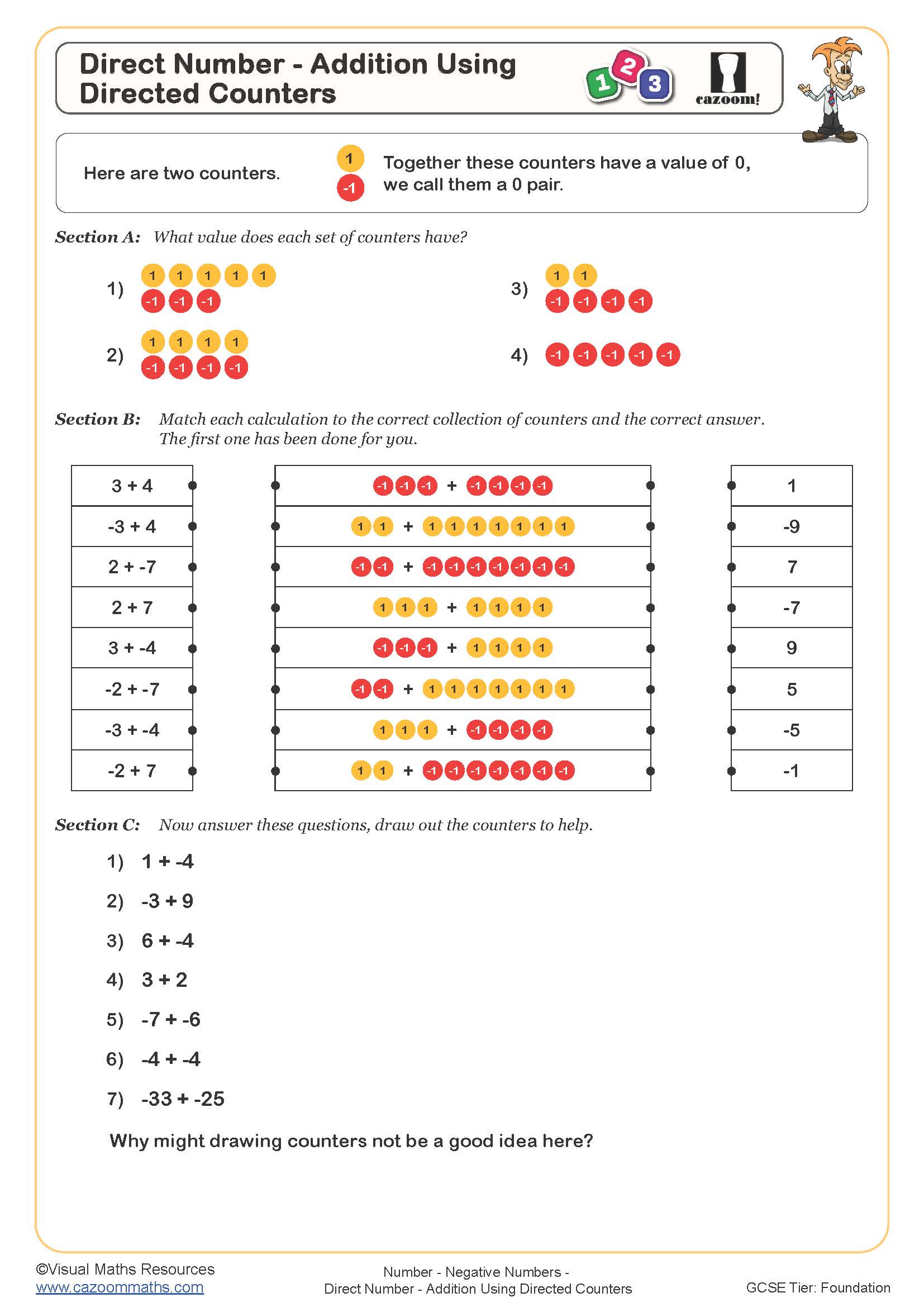
Directed Number - Addition Using Directed Counters
Year groups: 7, 8
Directed Number - Multiplication Using Directed Number Counters
Year groups: 7, 8
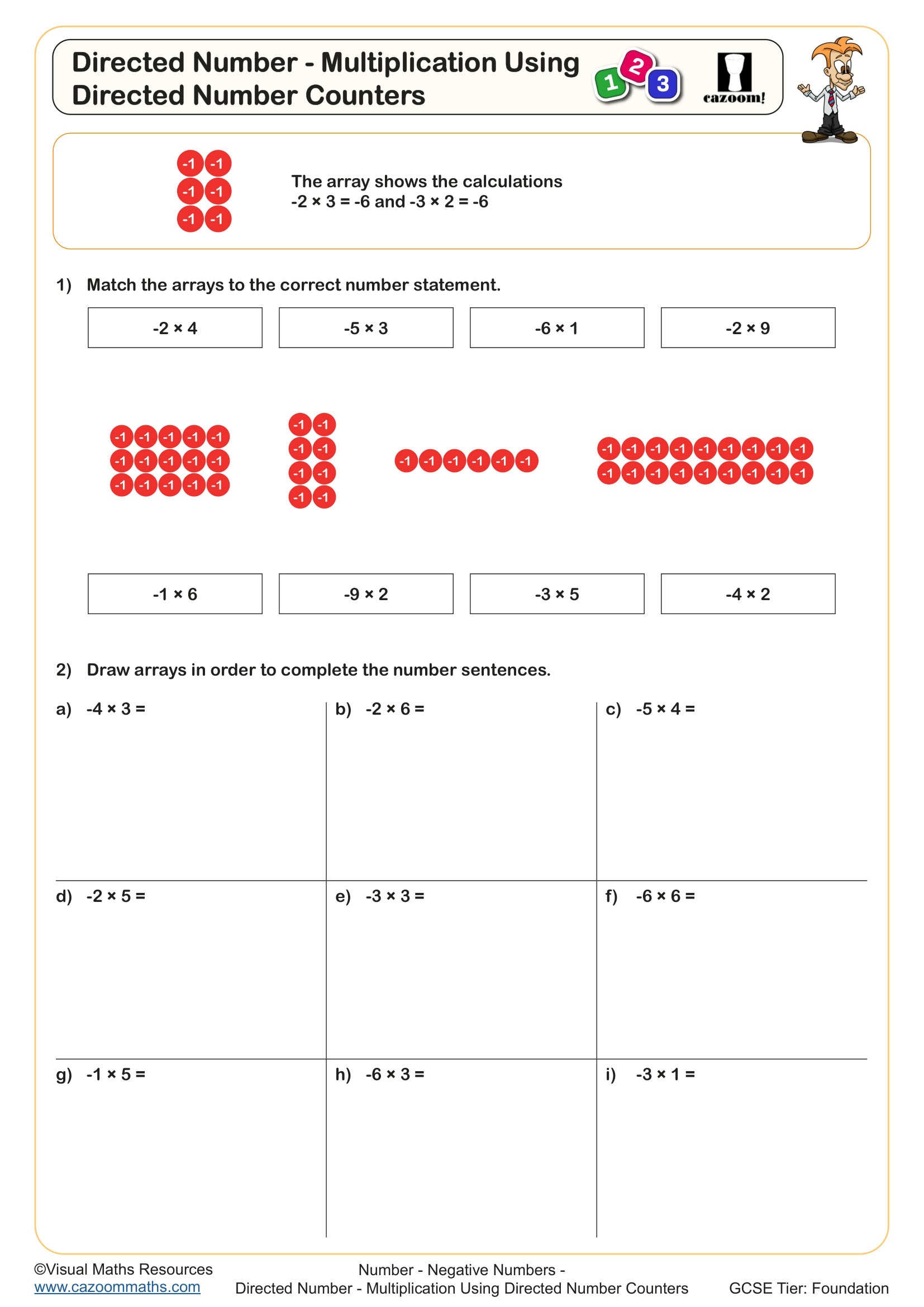
Directed Number - Subtraction Using Directed Counters
Year groups: 7, 8
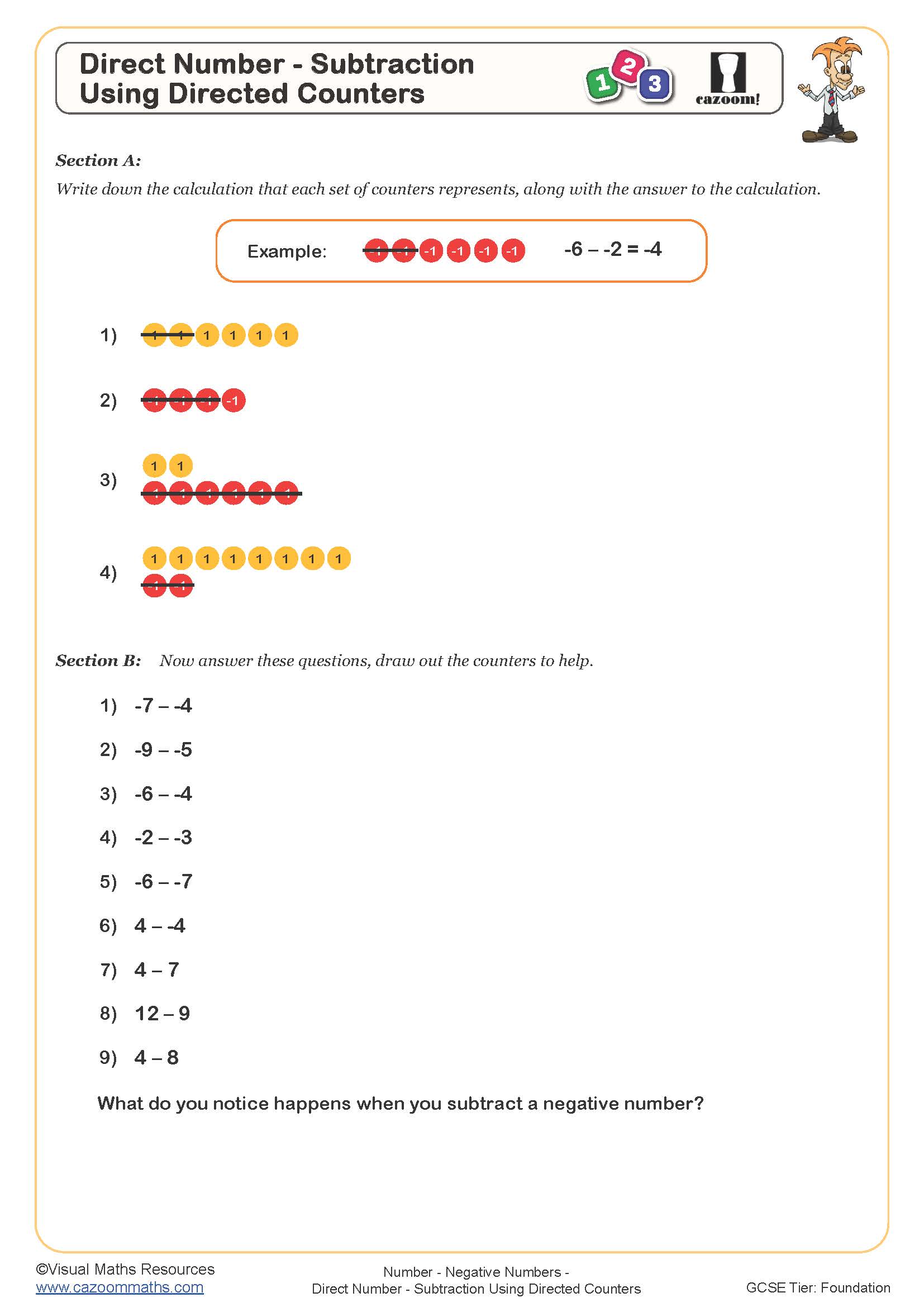
Directed Number – Addition by Pattern Spotting
Year groups: 7, 8
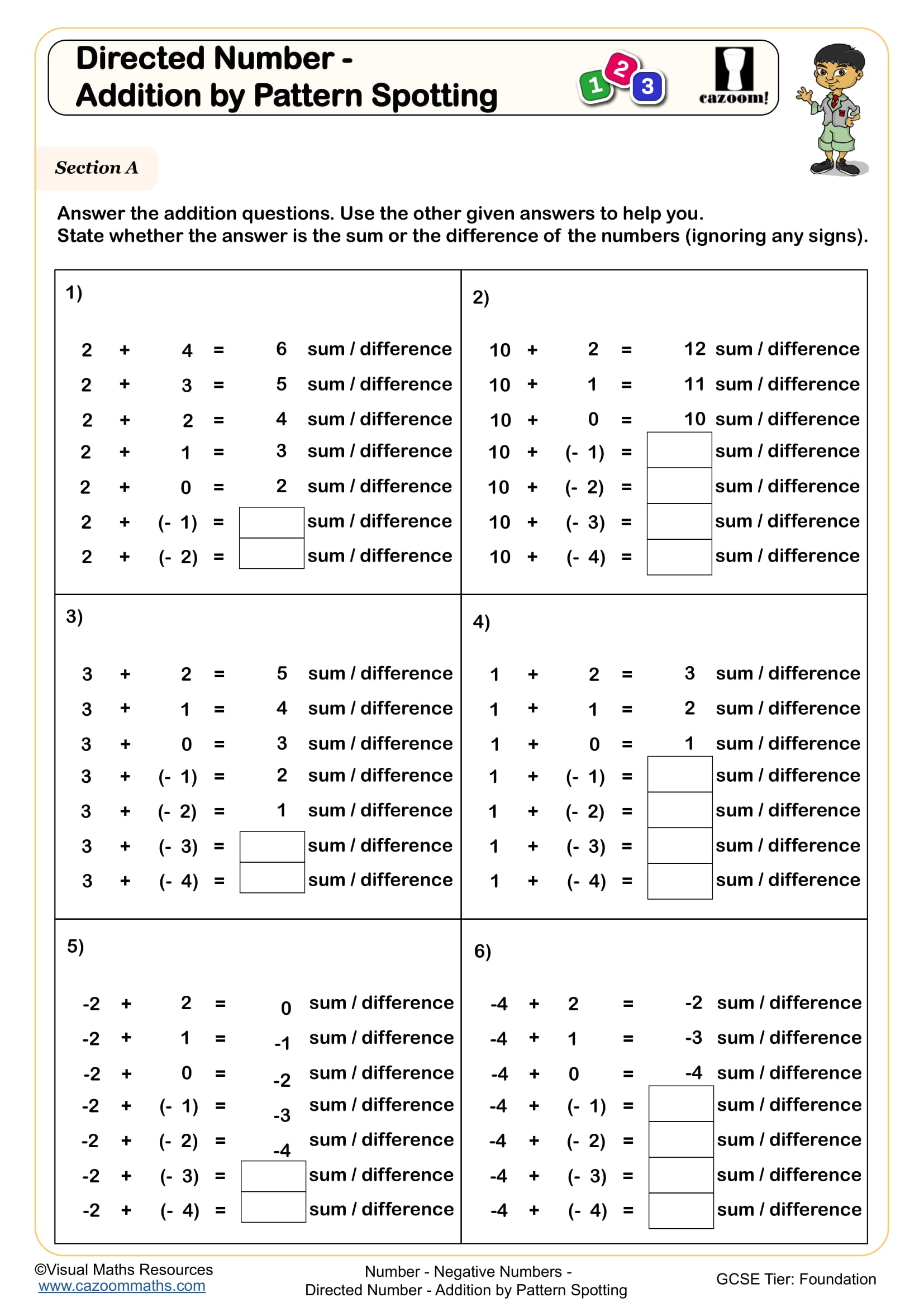
Directed Number – Subtraction by Pattern Spotting
Year groups: 7, 8
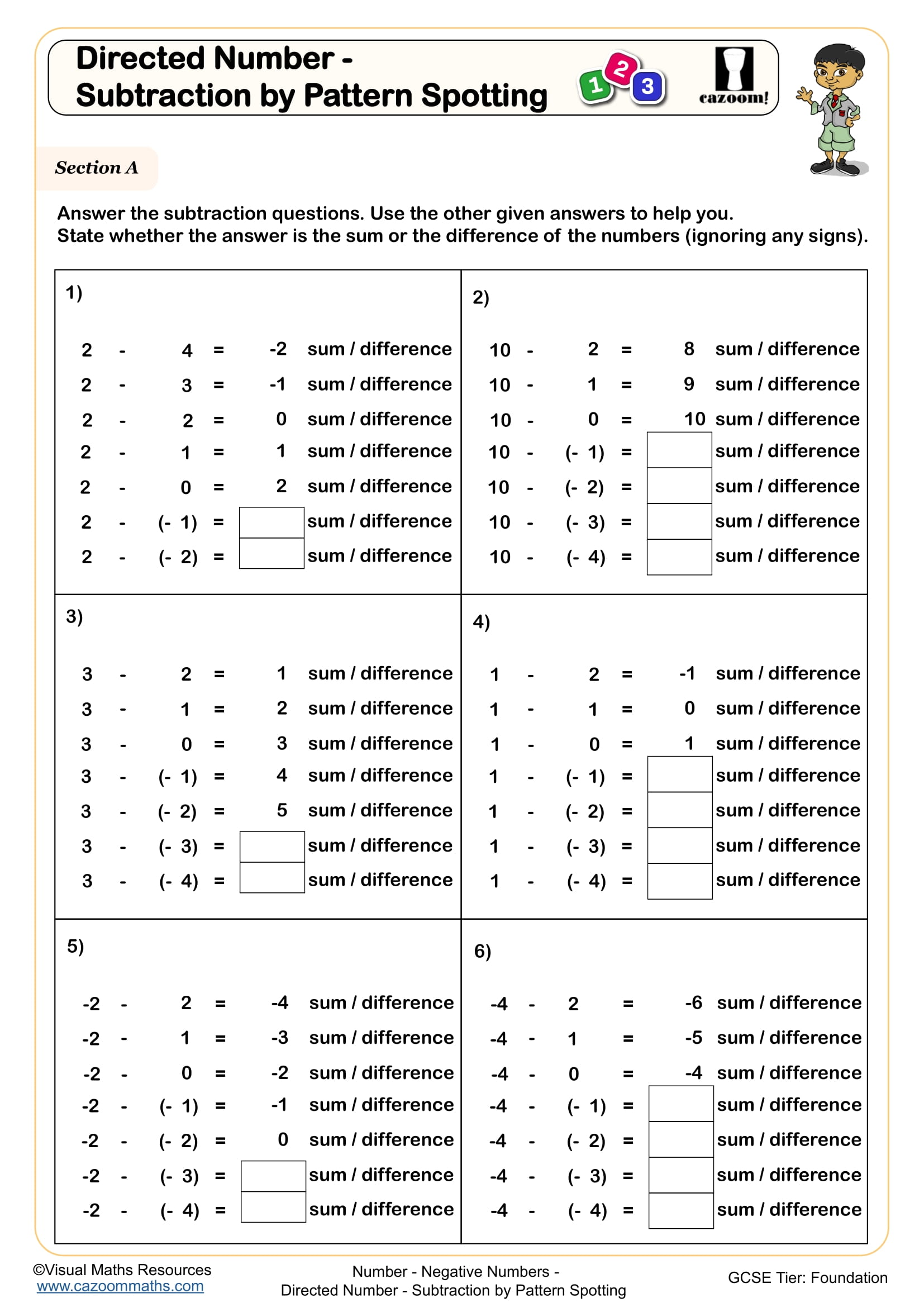
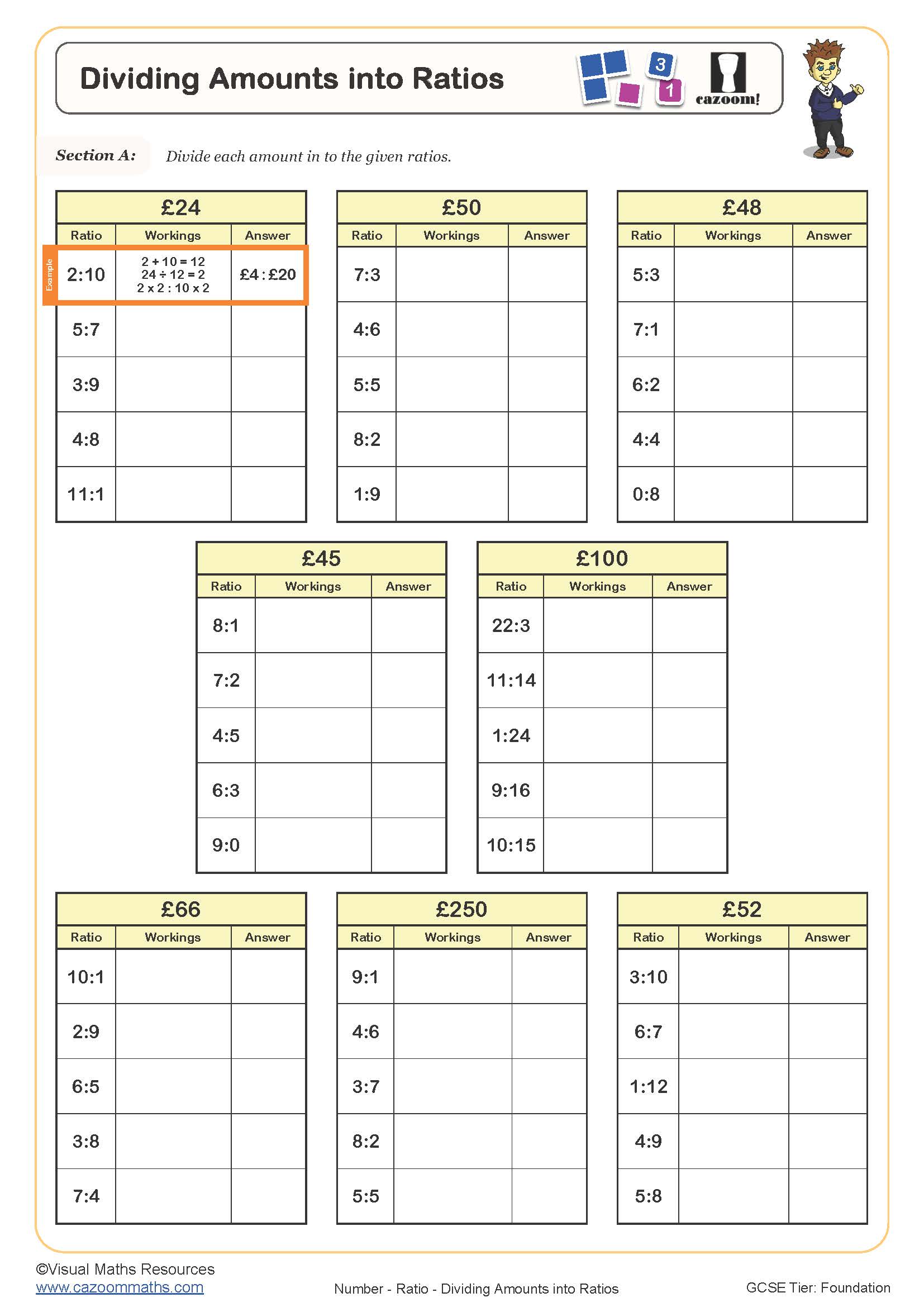
Dividing Amounts into Ratios
Year groups: 7, 8, 9
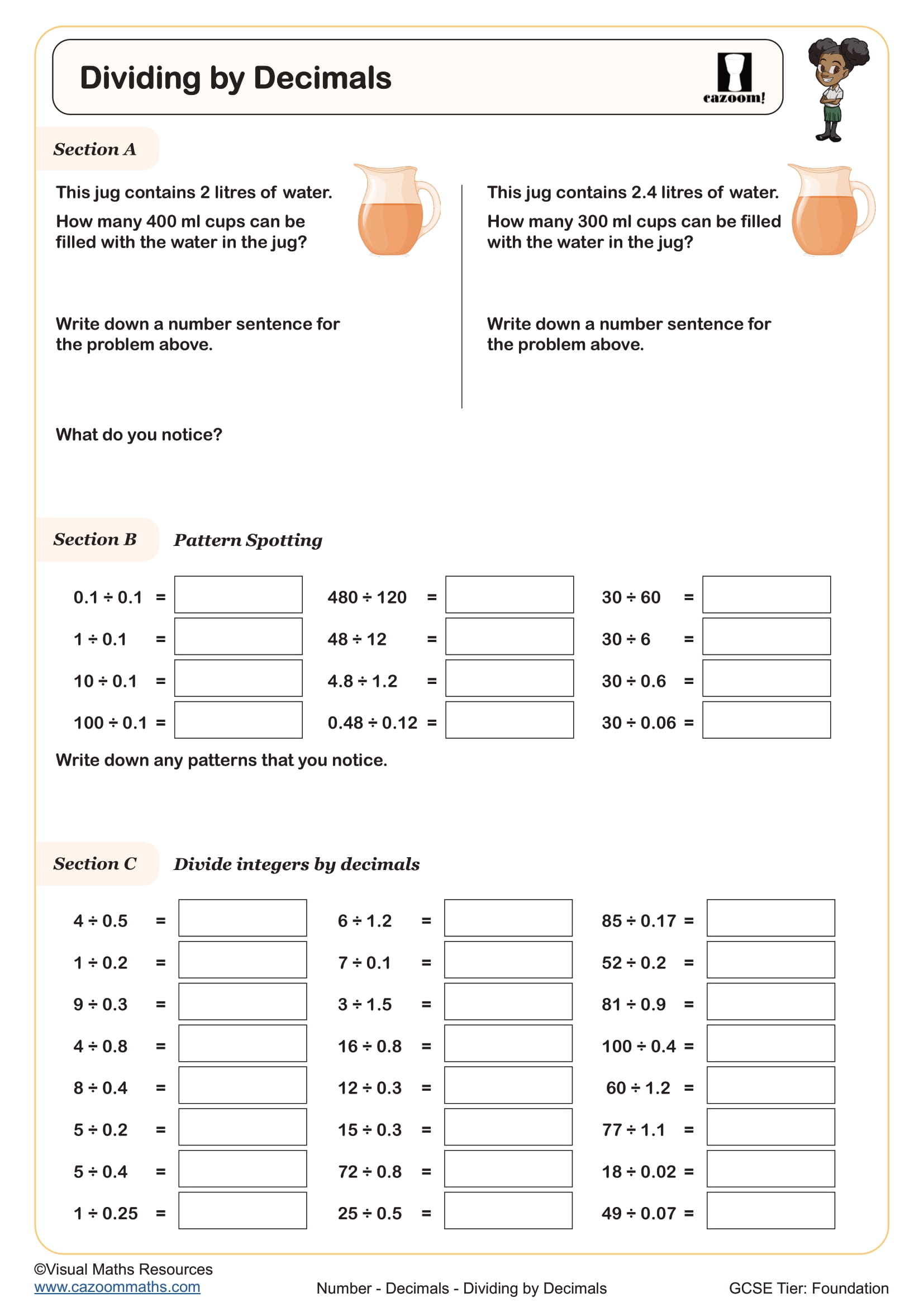
Dividing by Decimals
Year groups: 7, 8
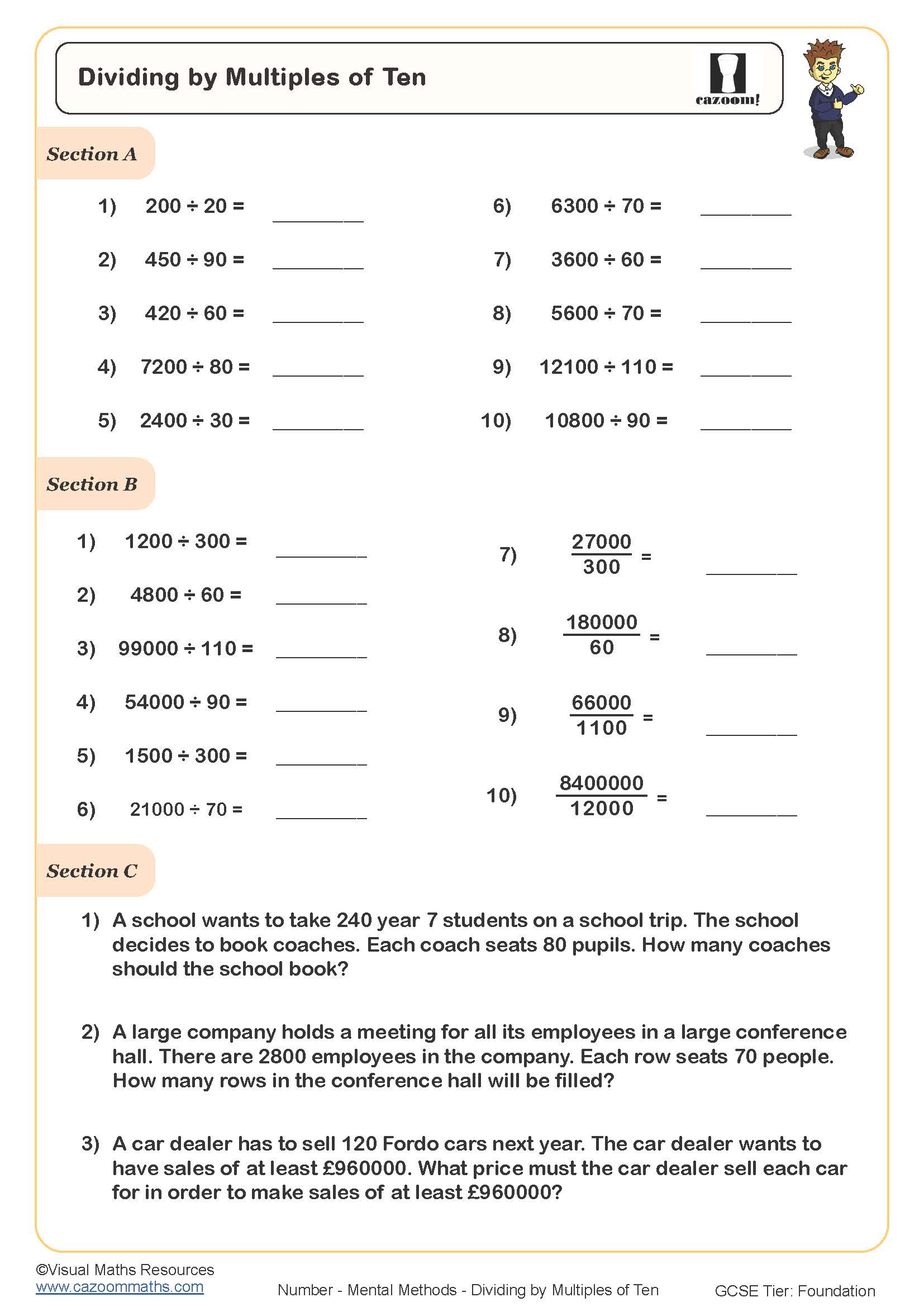
Dividing by Multiples of Ten
Year groups: 7, 8
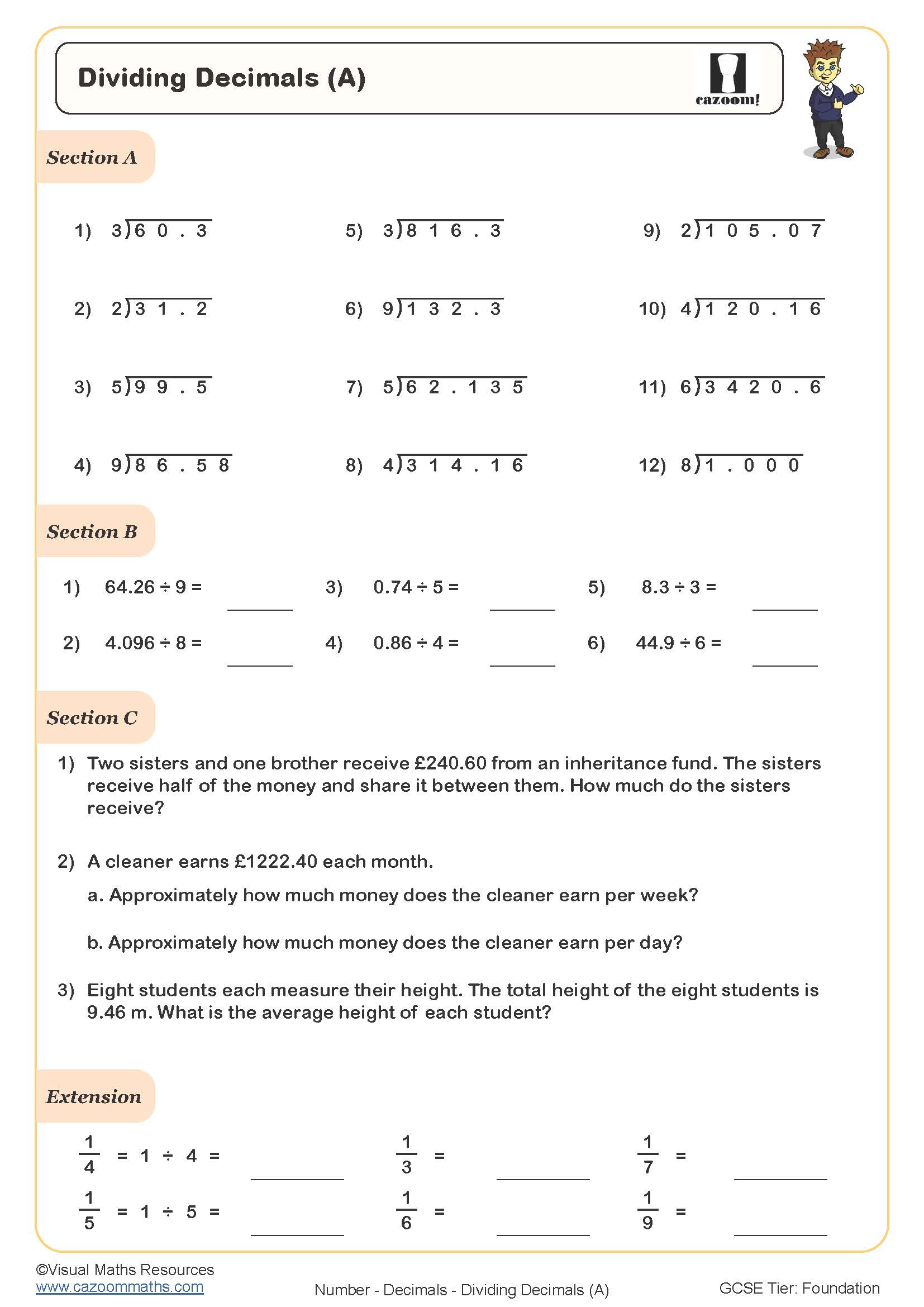
Dividing Decimals (A)
Year groups: 7, 8
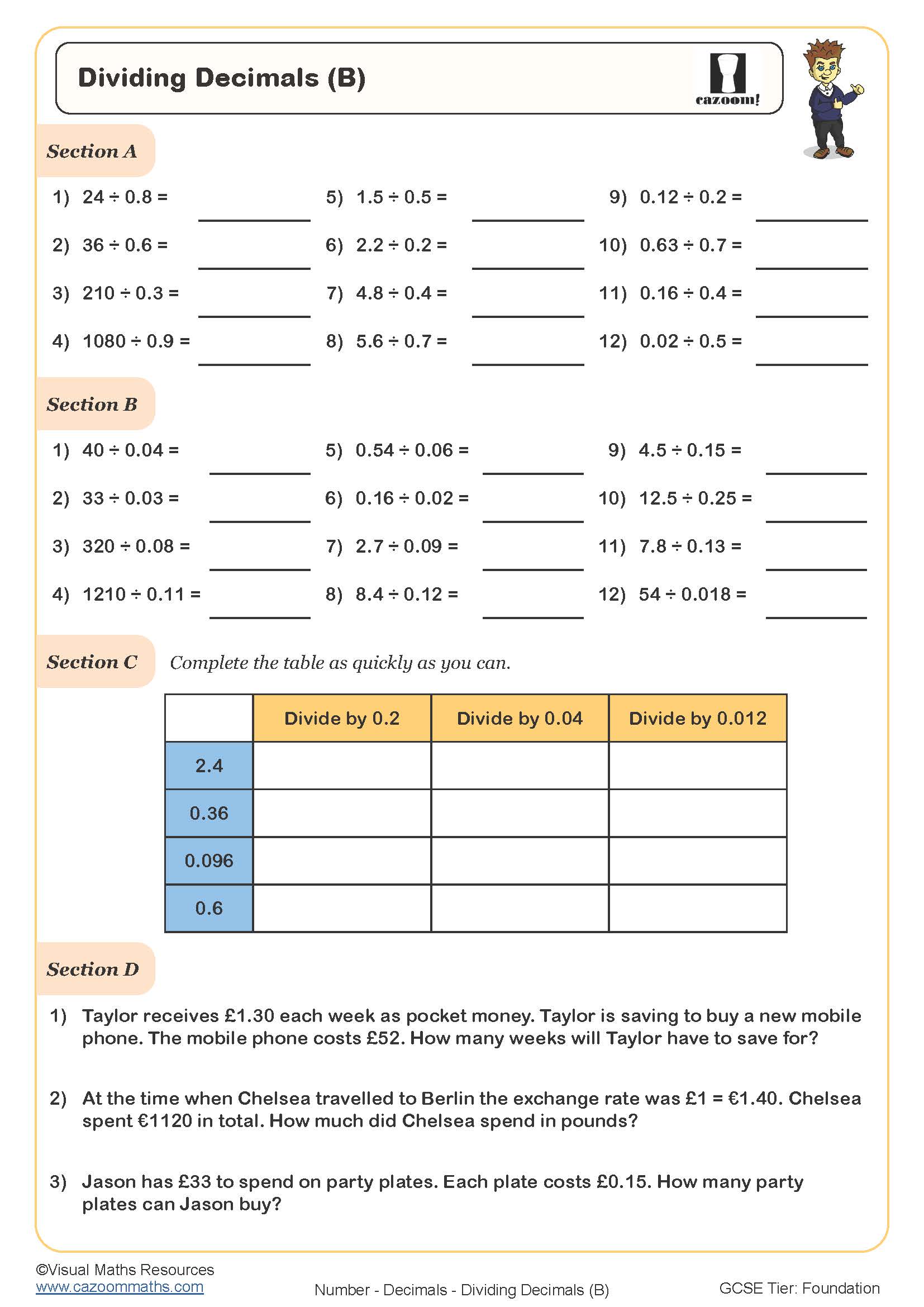
Dividing Decimals (B)
Year groups: 7, 8
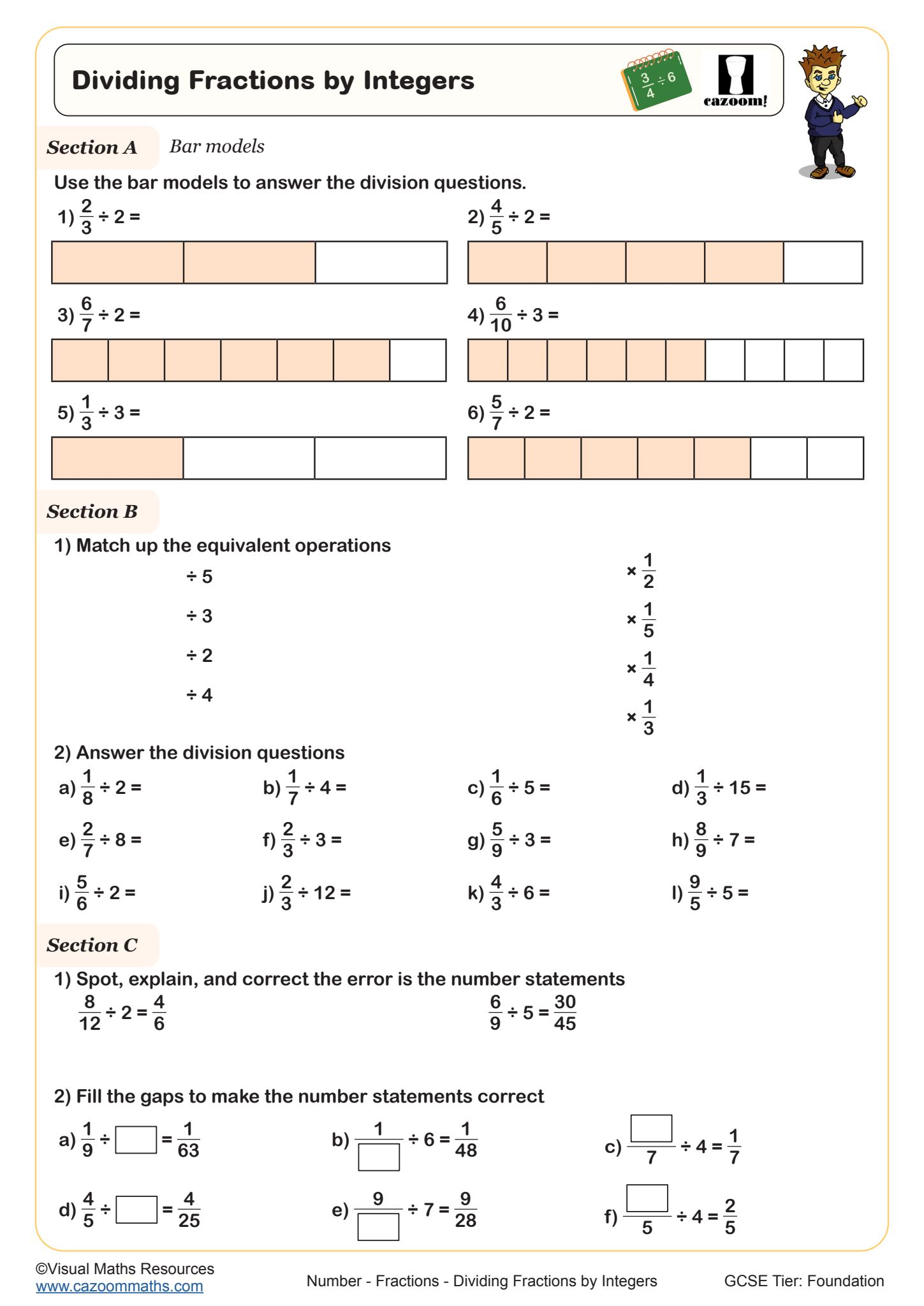
Dividing Fractions by Integers
Year groups: 7, 8
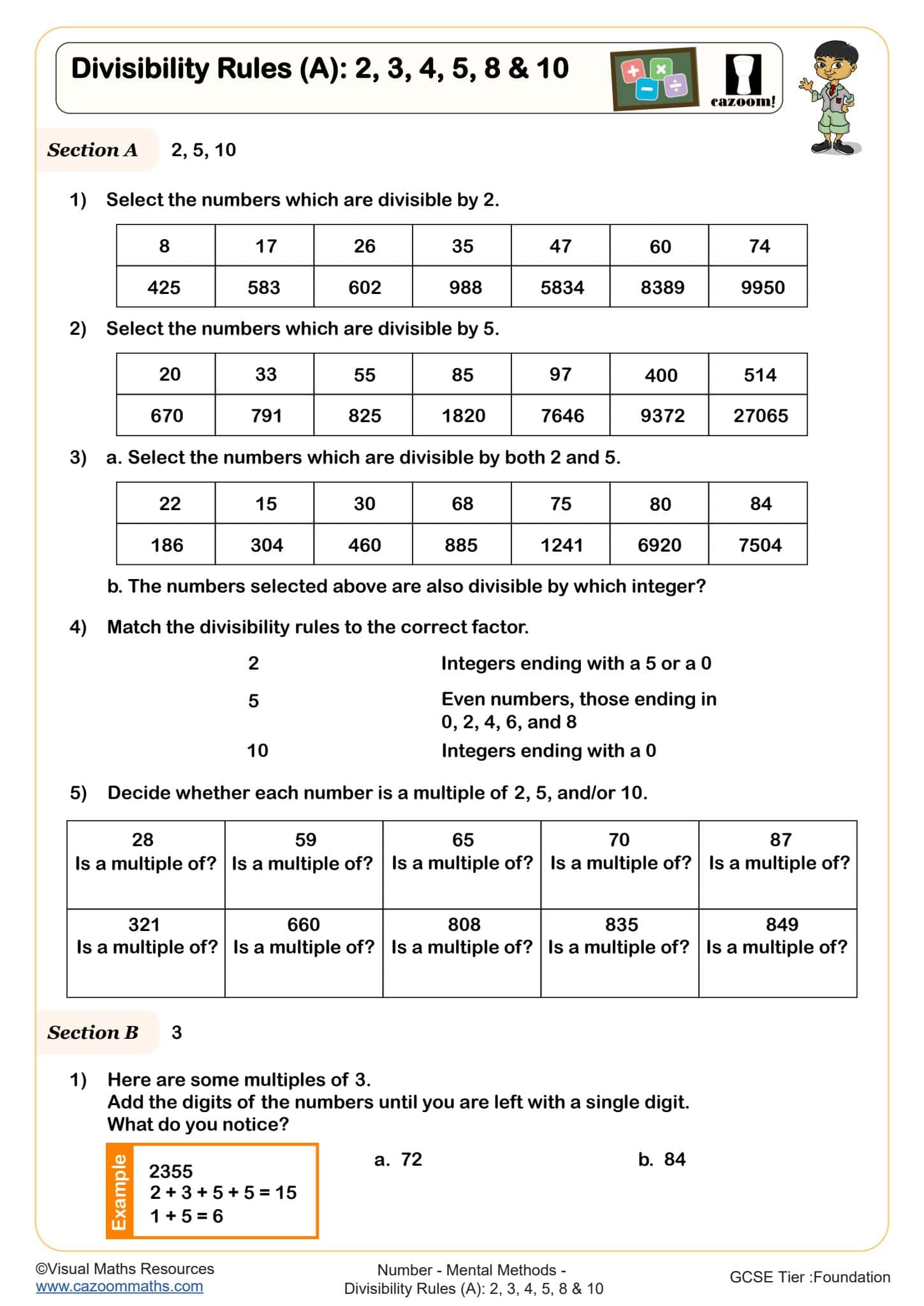
Divisibility Rules (A): 2, 3, 4, 5, 8 & 10
Year groups: 7, 8
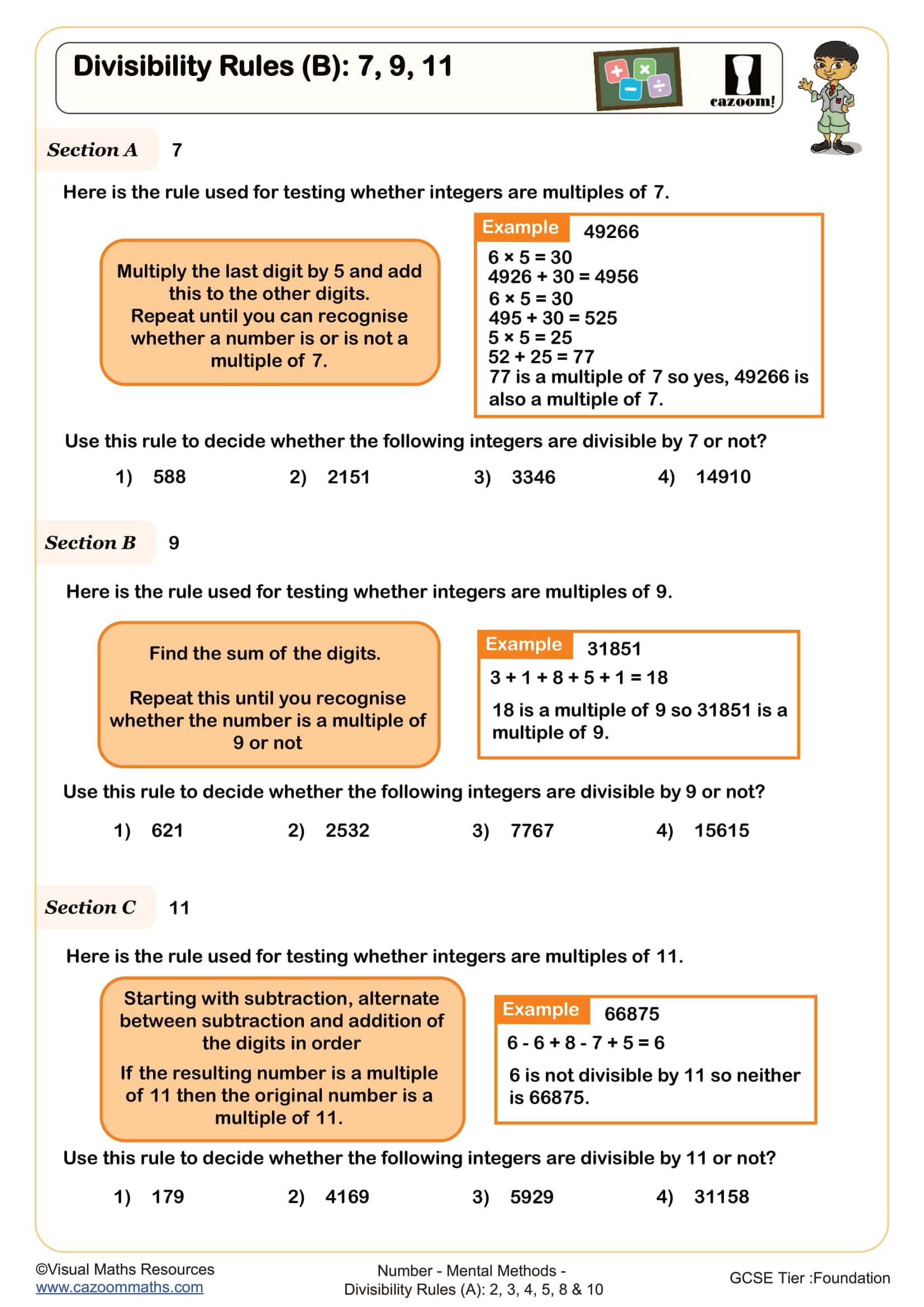
Divisibility Rules (B): 7, 9, 11
Year groups: 7, 8
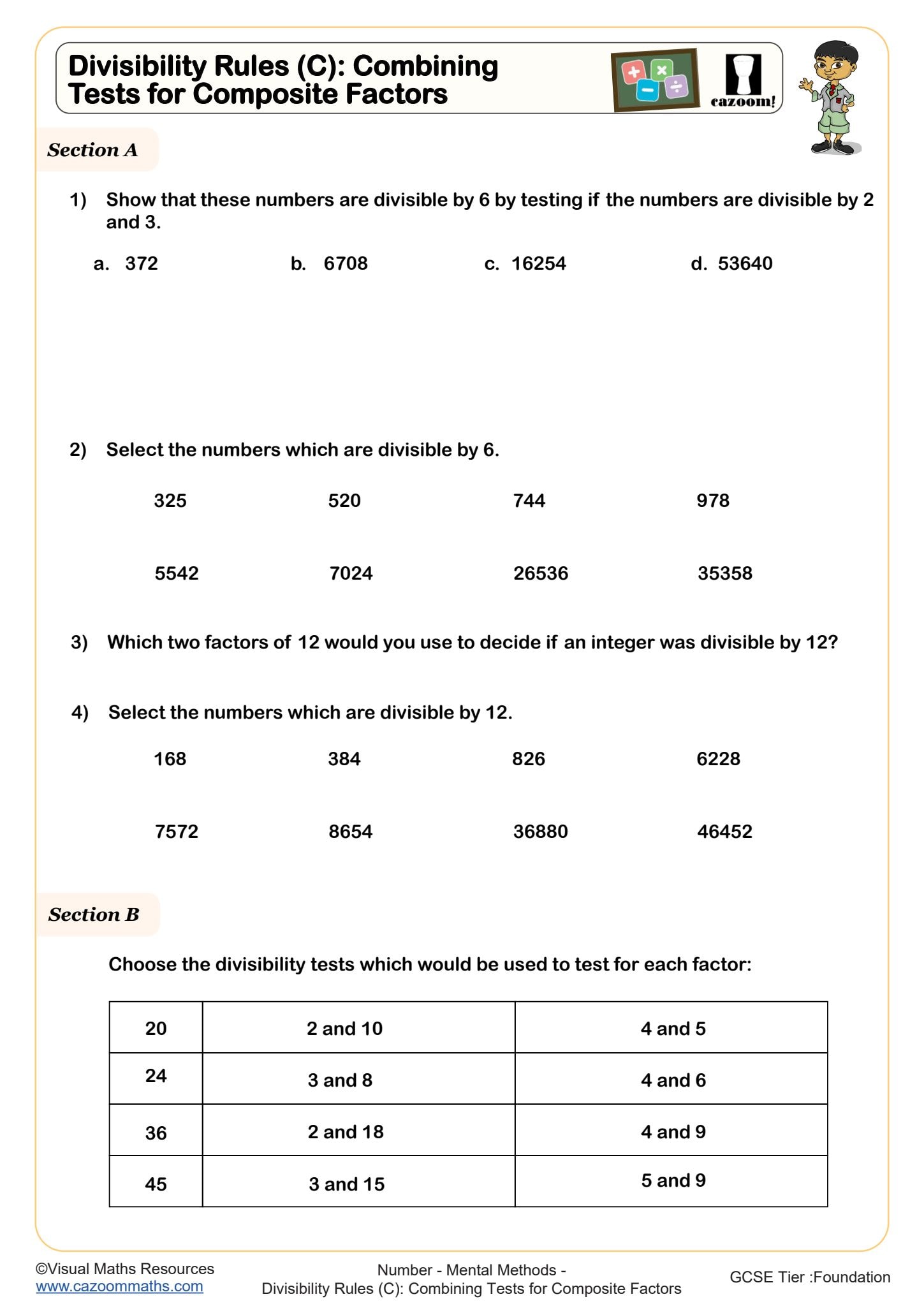
Divisibility Rules (C): Combining Tests for Composite Factors
Year groups: 7, 8
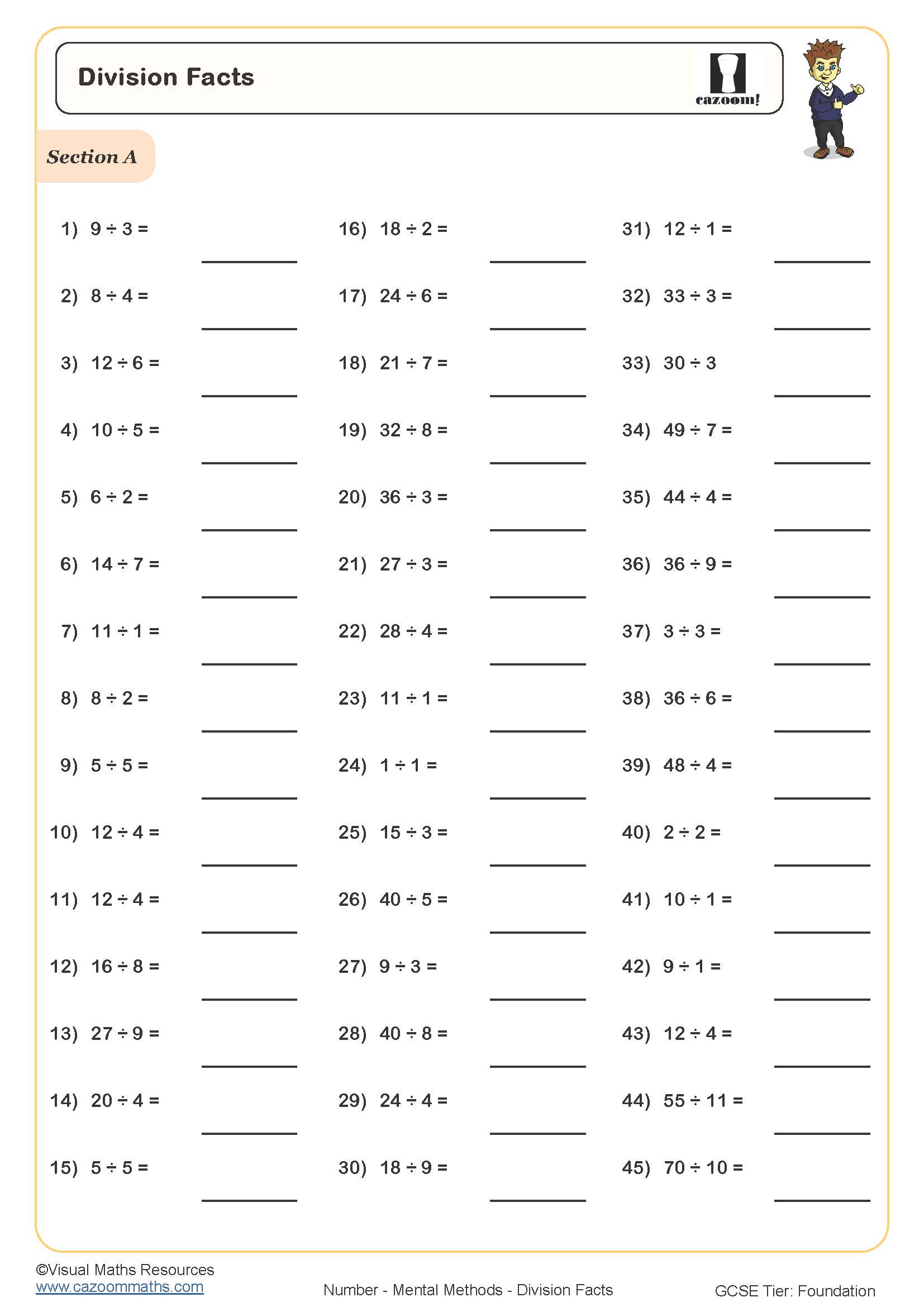
Division Facts
Year groups: 7, 8
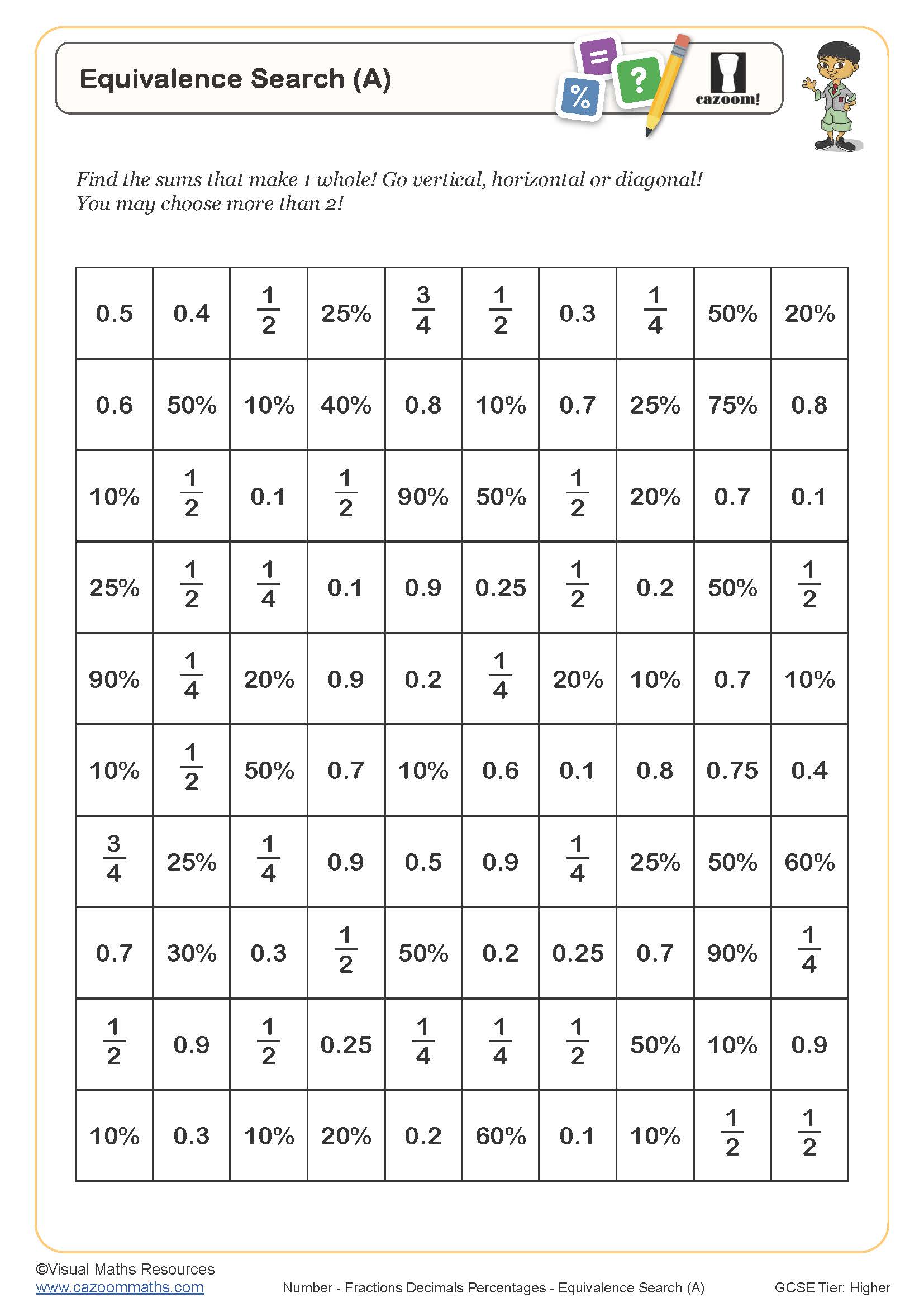
Equivalence Search (A)
Year groups: 7, 8
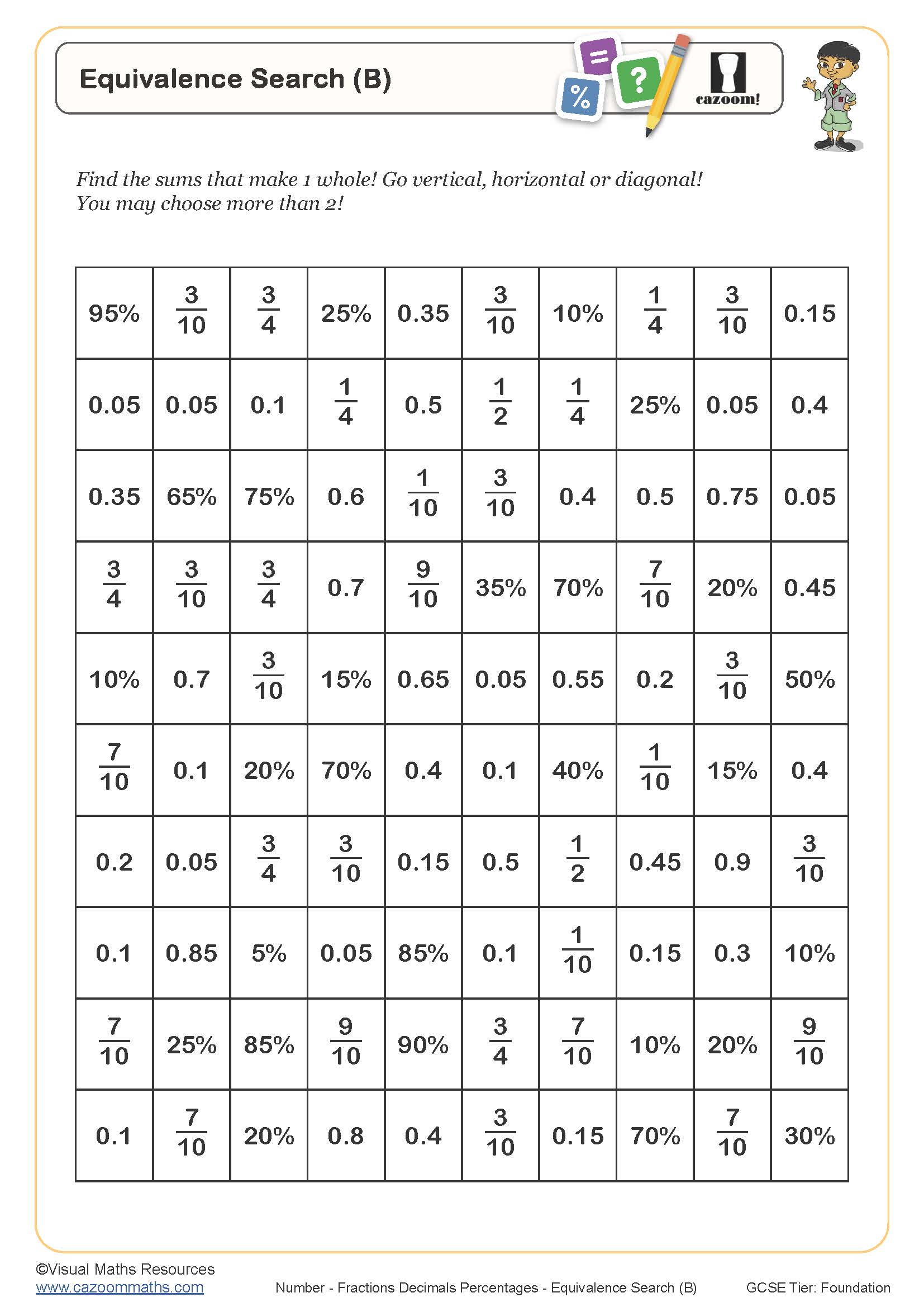
Equivalence Search (B)
Year groups: 7, 8, 9
Equivalence Search (C)
Year groups: 7, 8, 9
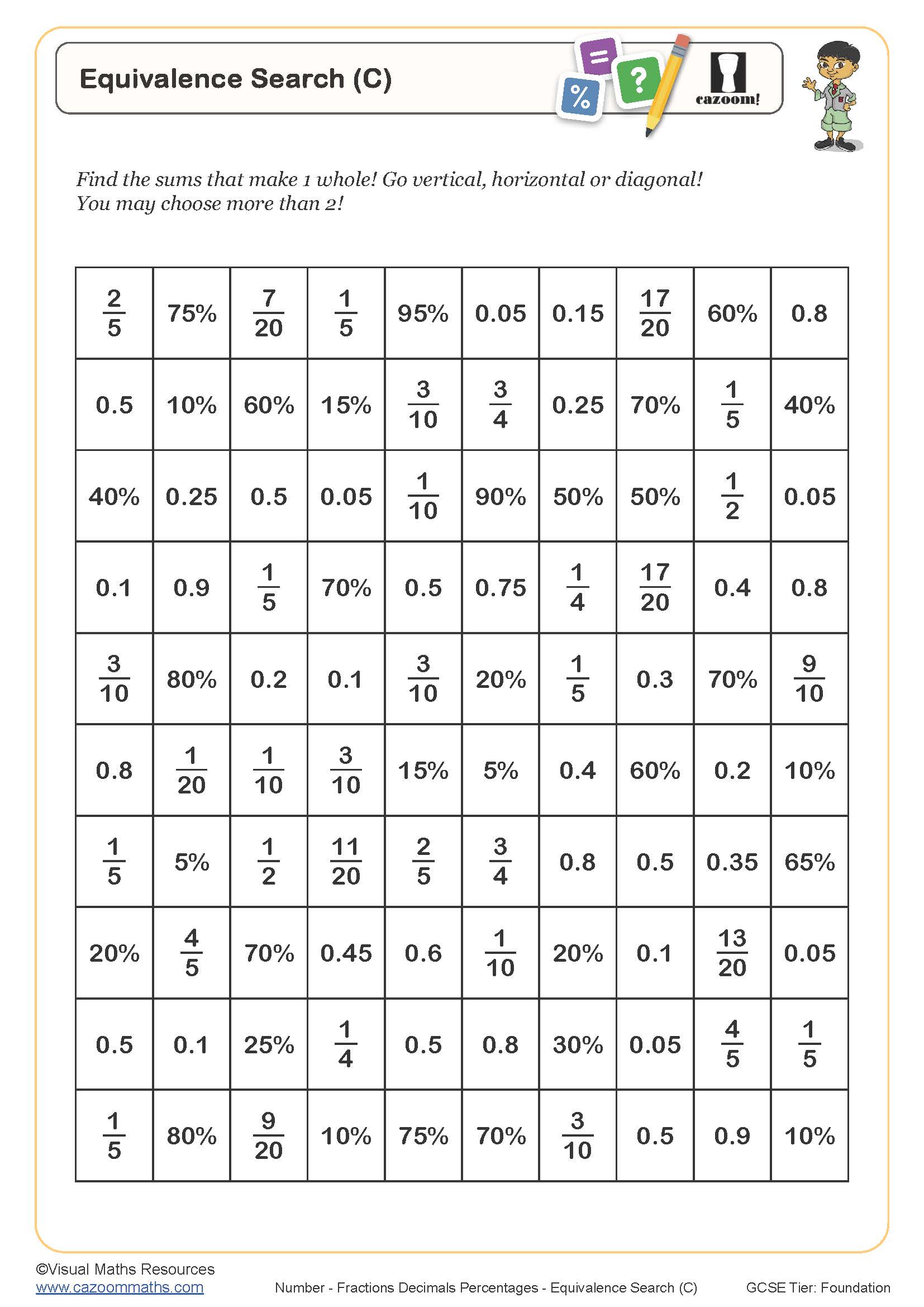
Equivalent Fractions (A)
Year groups: 7, 8
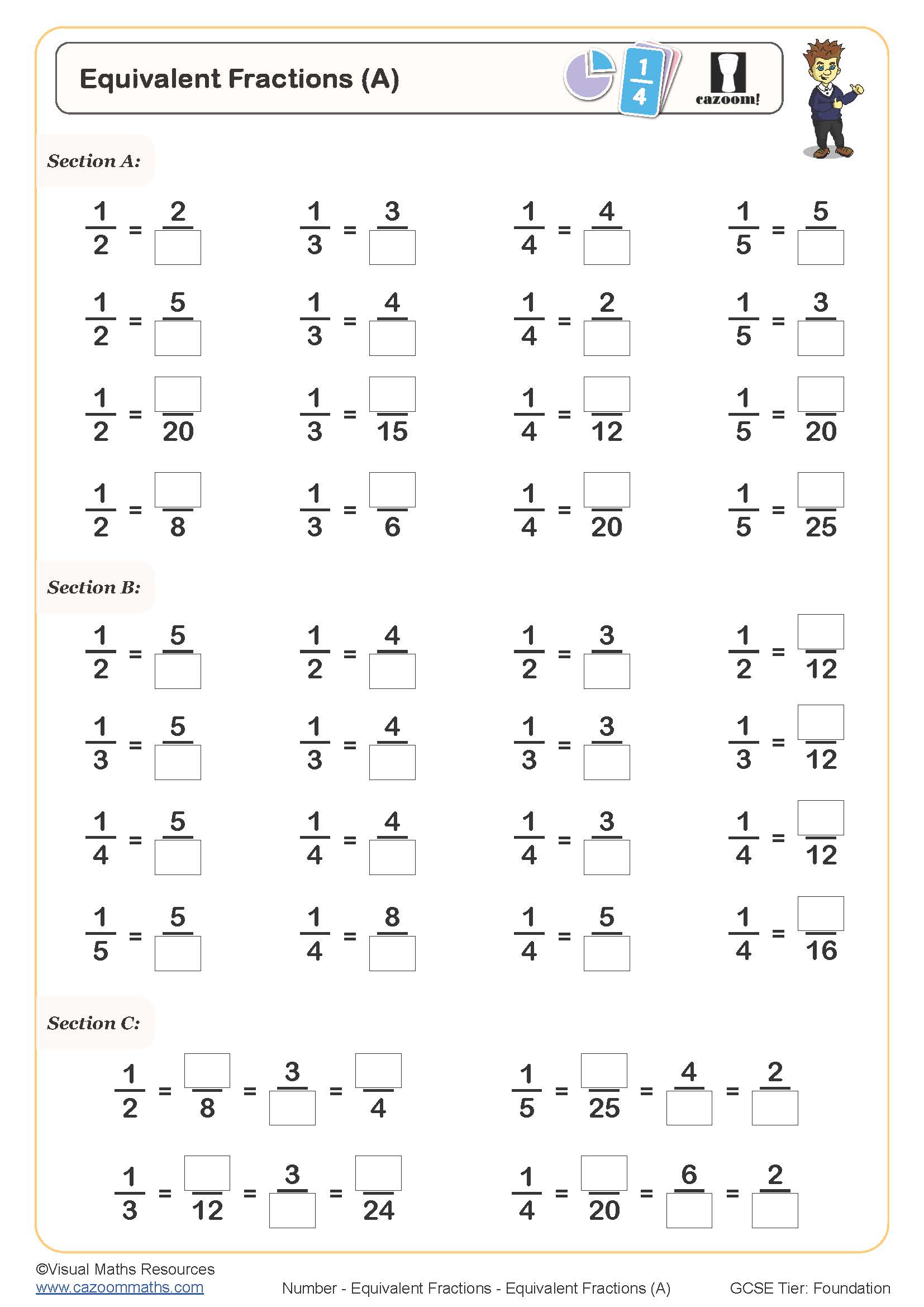
Equivalent Fractions (B)
Year groups: 7, 8
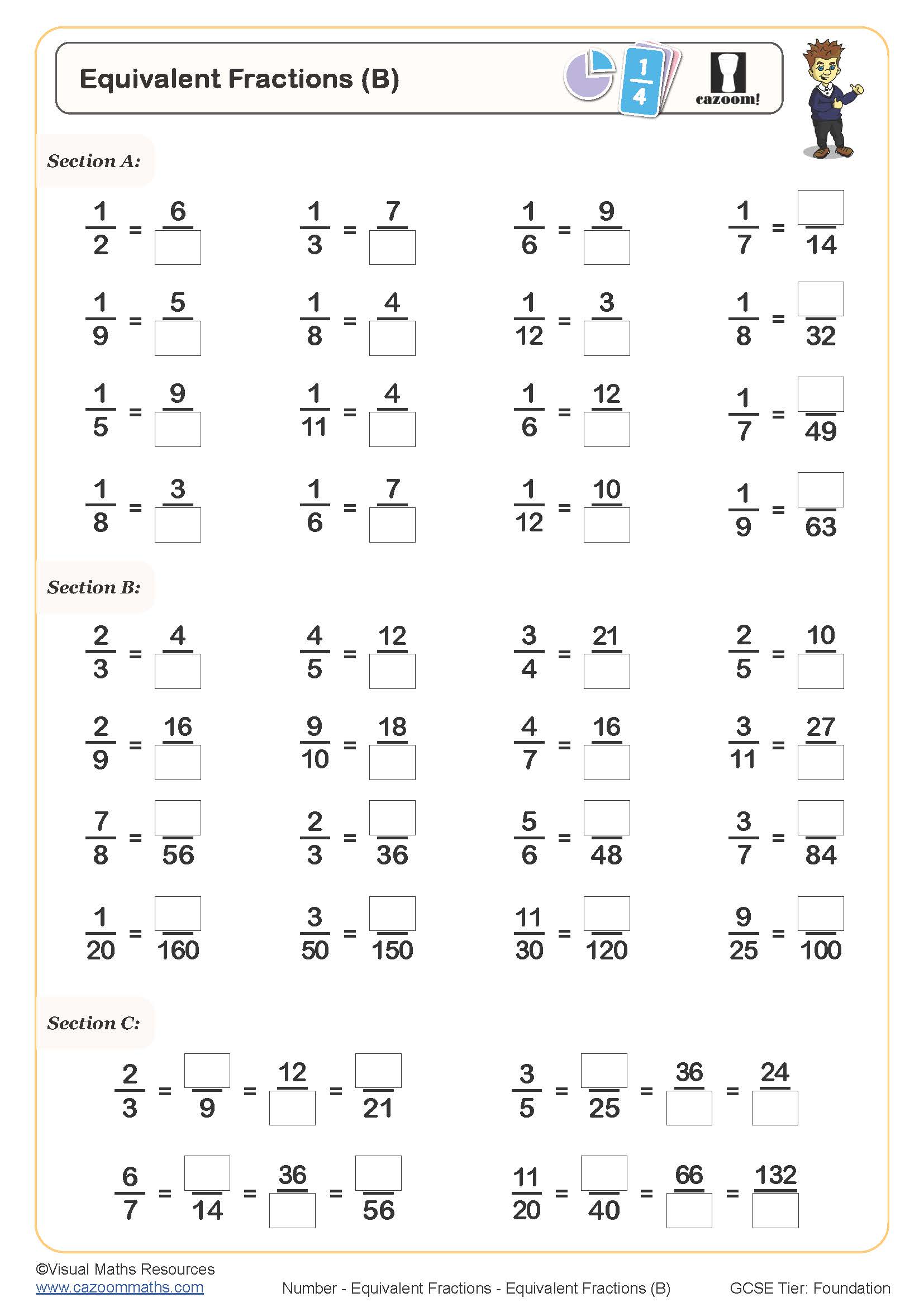
Equivalent Fractions (C)
Year groups: 7, 8, 9
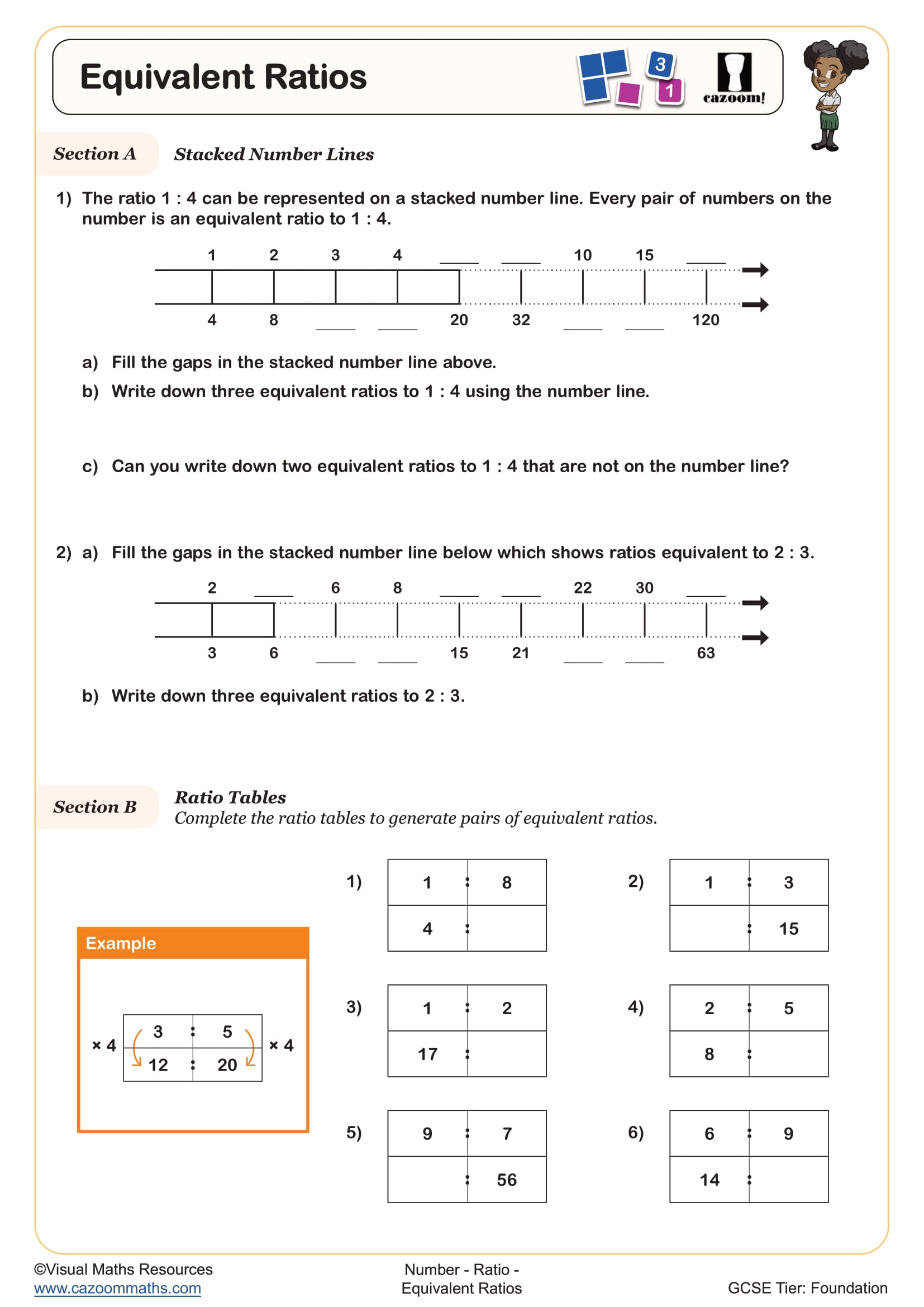
Equivalent Ratios
Year groups: 7, 8
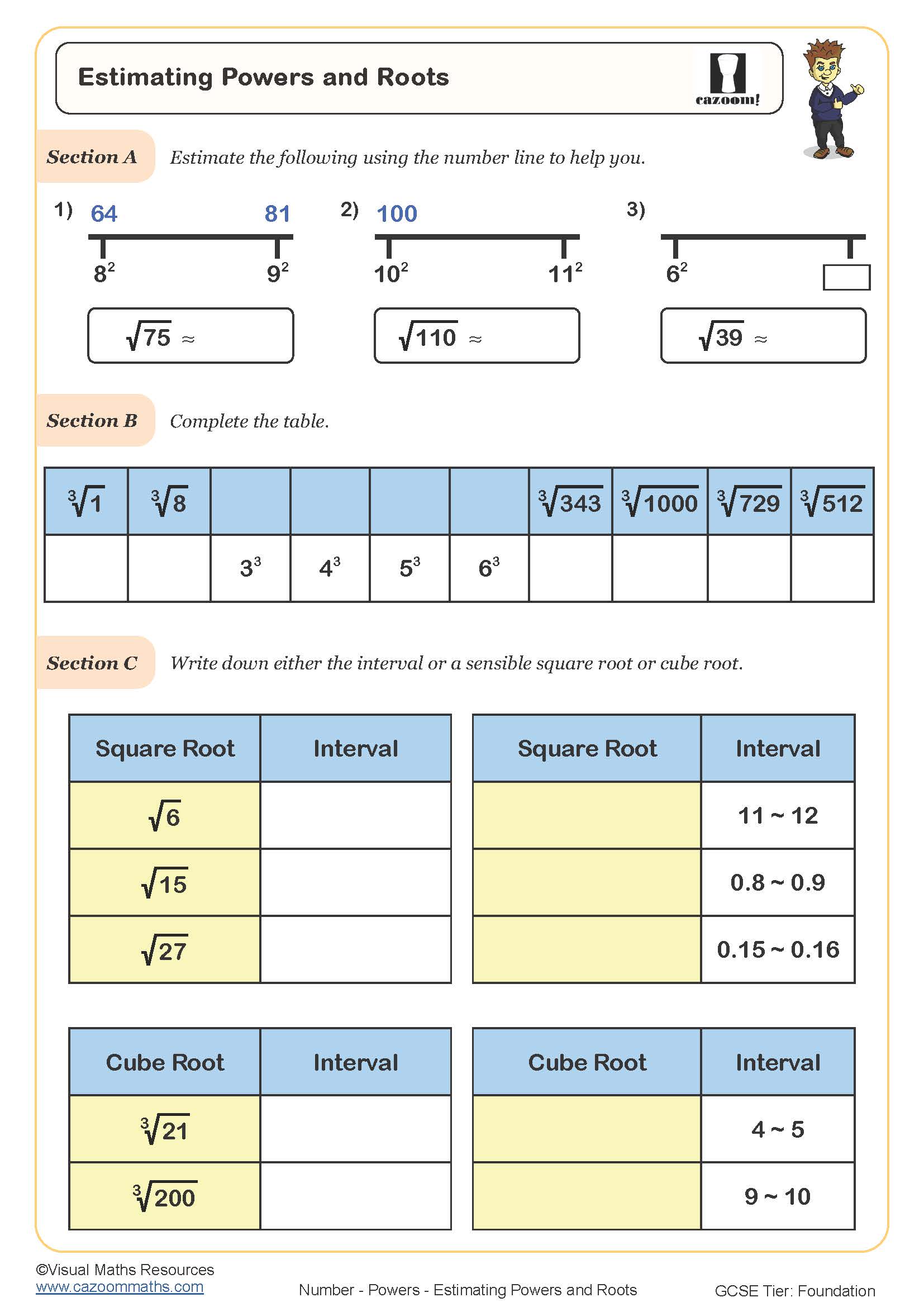
Estimating Powers and Roots
Year groups: 7, 8
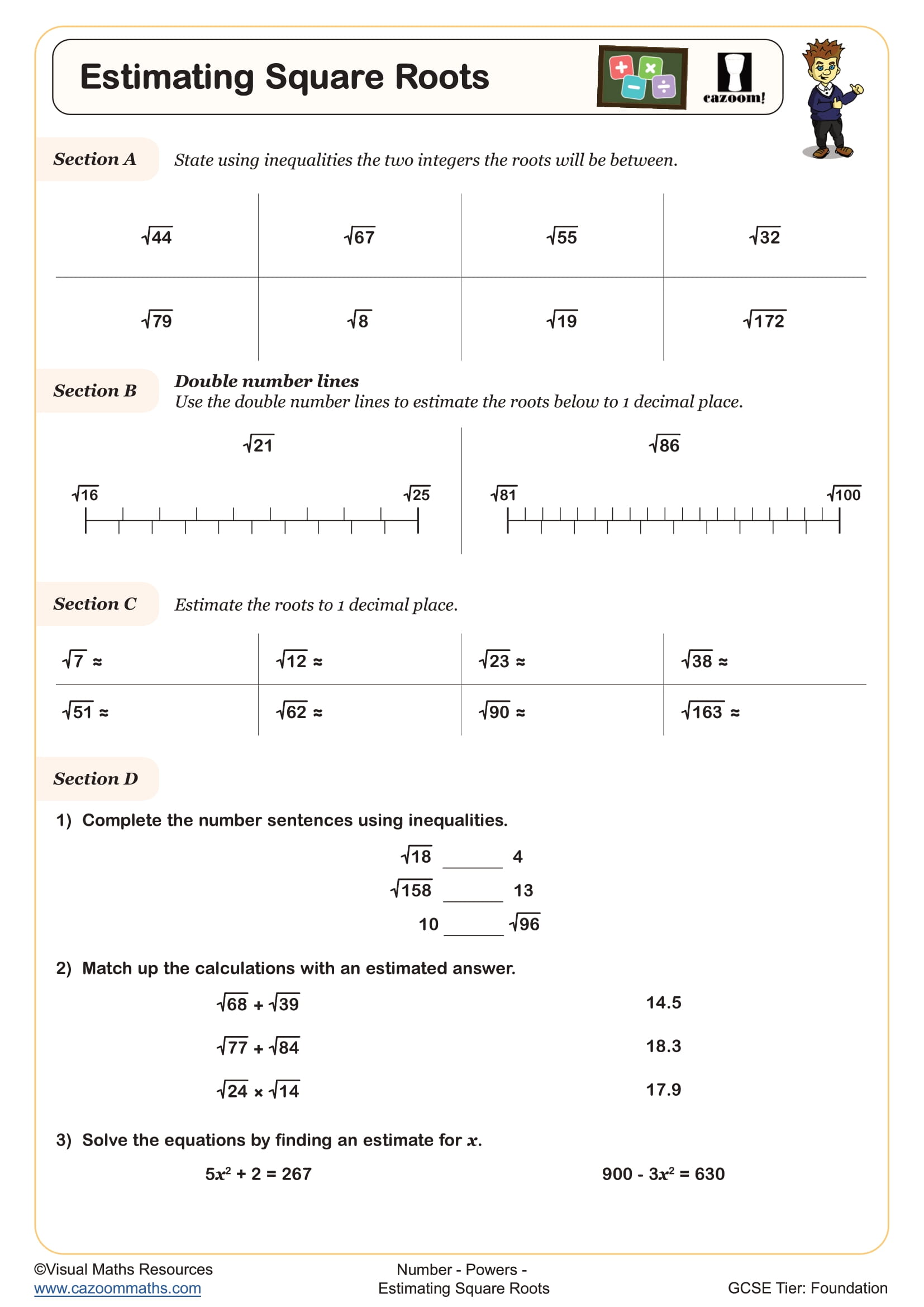
Estimating Square Roots
Year groups: 7, 8
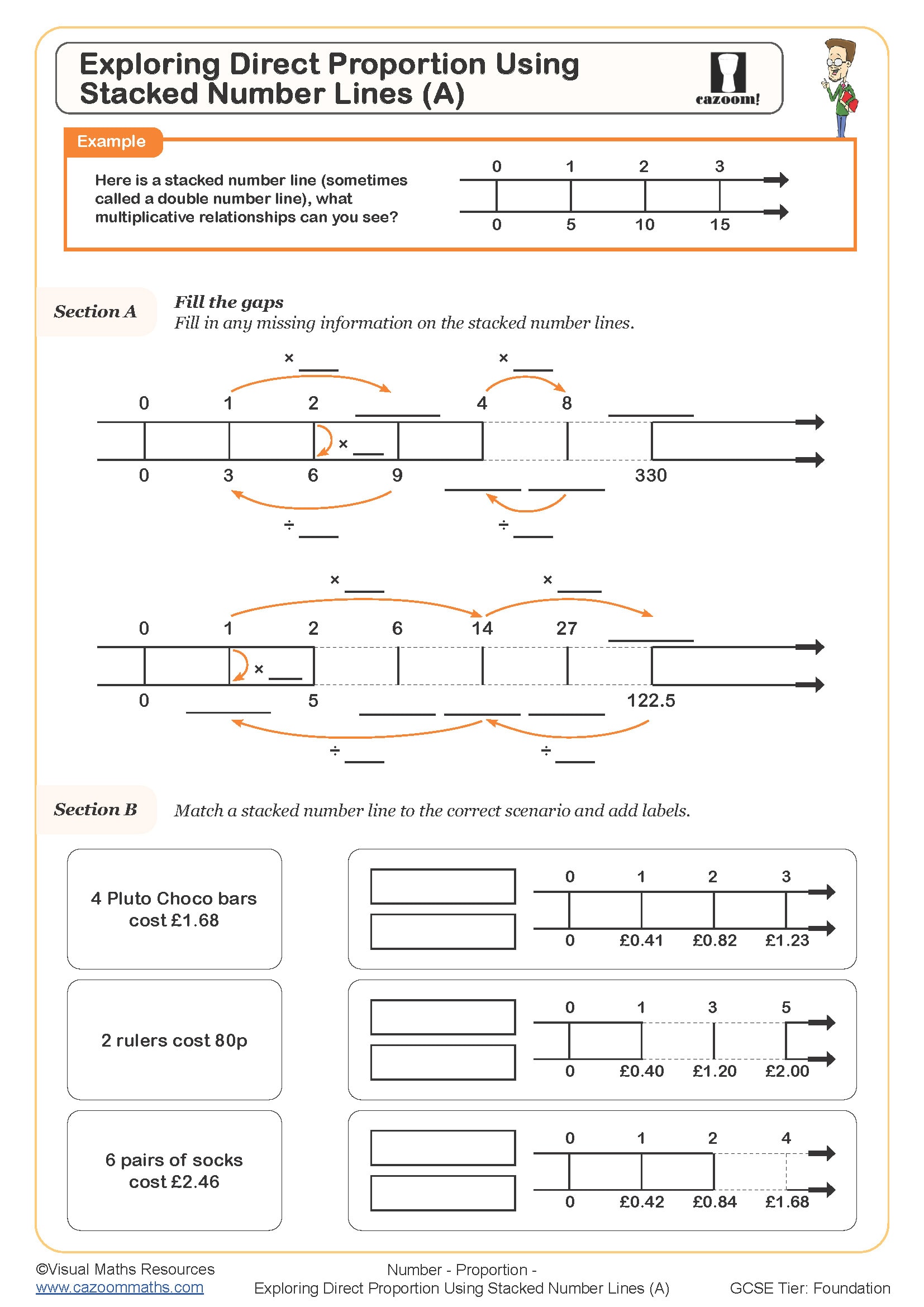
Exploring Direct Proportion Using Stacked Number Lines (A)
Year groups: 7, 8
Exploring Direct Proportion Using Stacked Number Lines (B)
Year groups: 7, 8
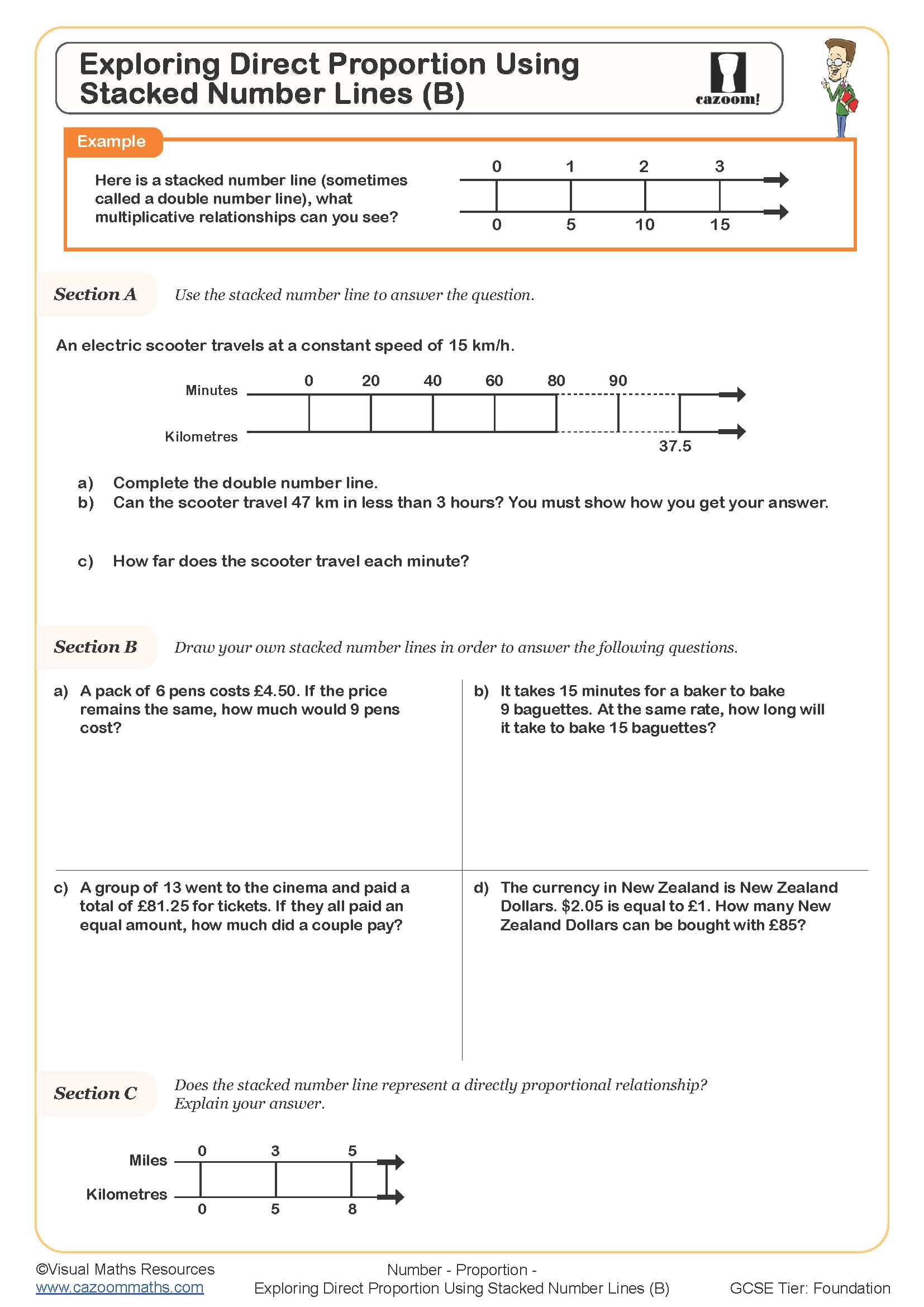
Factors
Year groups: 7, 8
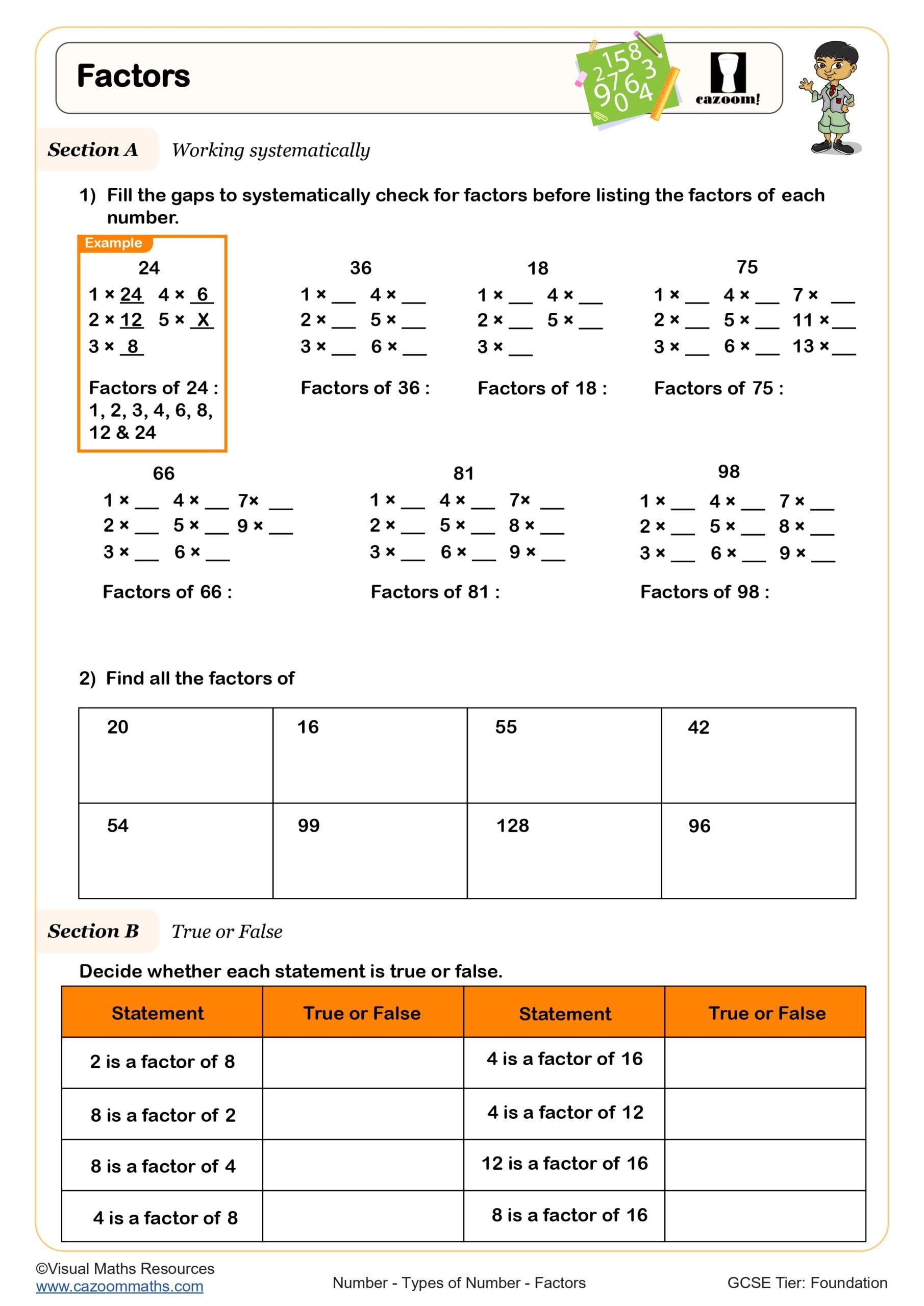
Factors and Primes
Year groups: 7, 8
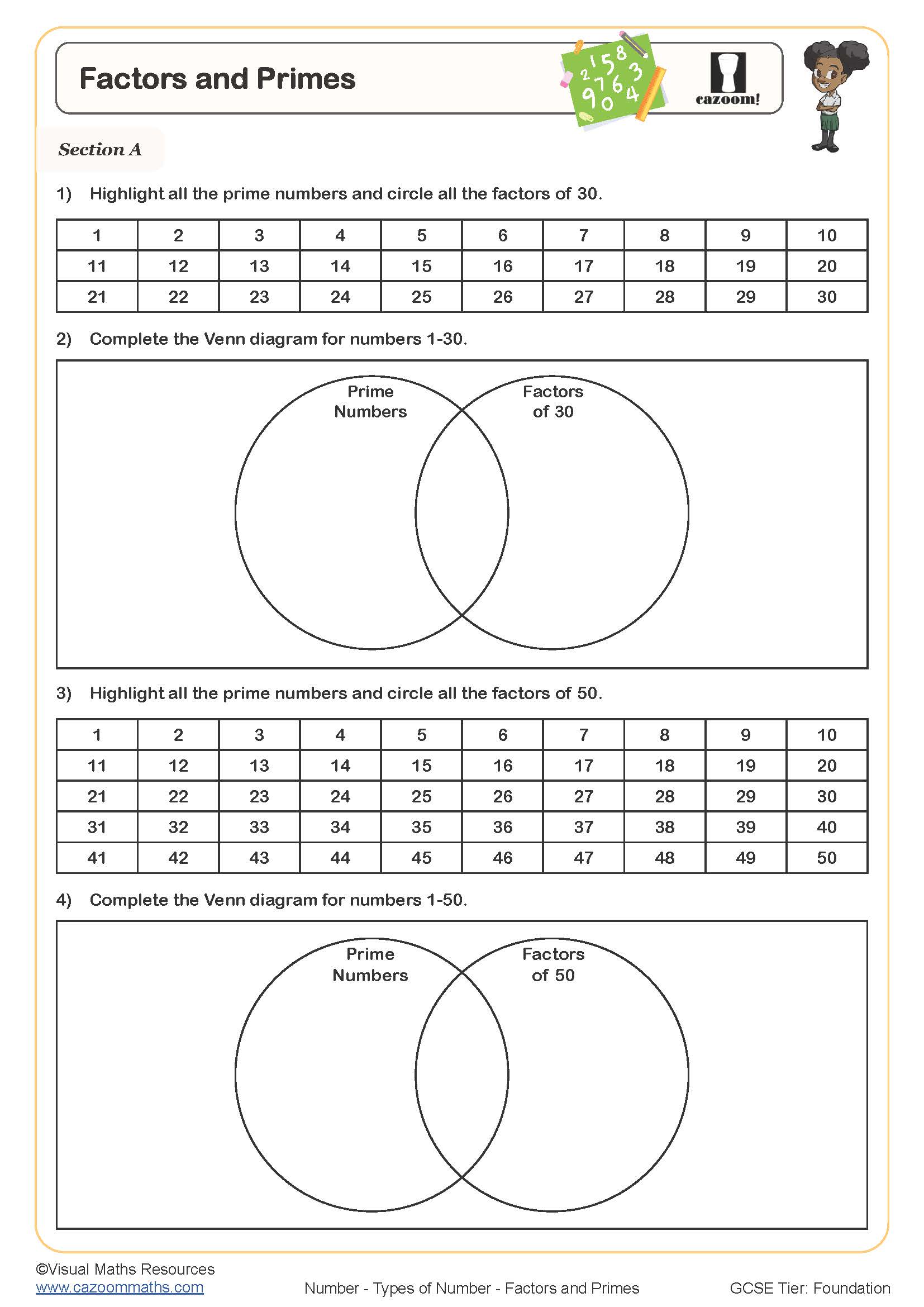
Finding Fractions of Amounts
Year groups: 7, 8
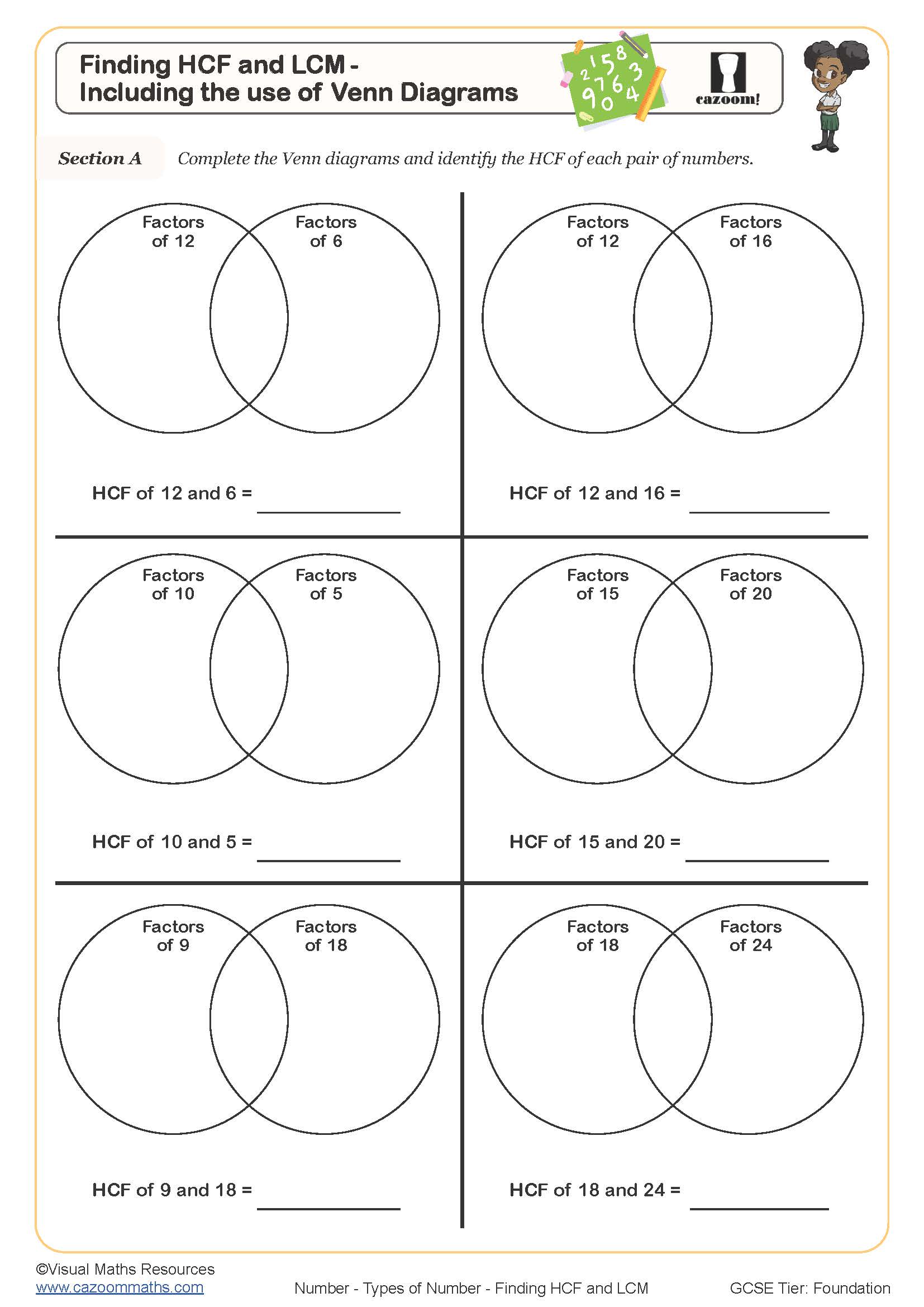
Finding HCF and LCM - Including the Use of Venn Diagrams
Year groups: 7, 8, 9
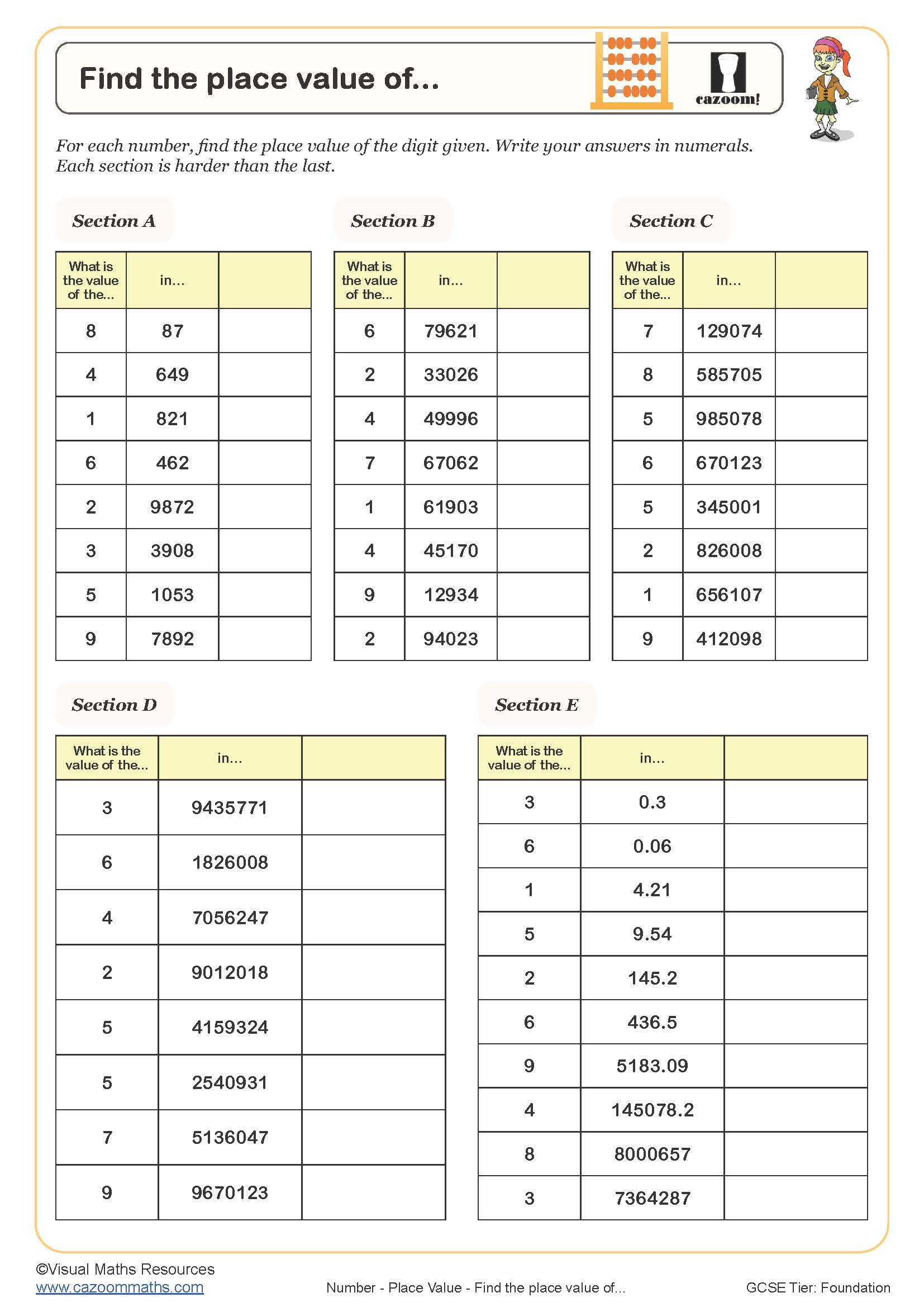
Finding Place Value
Year groups: 7, 8
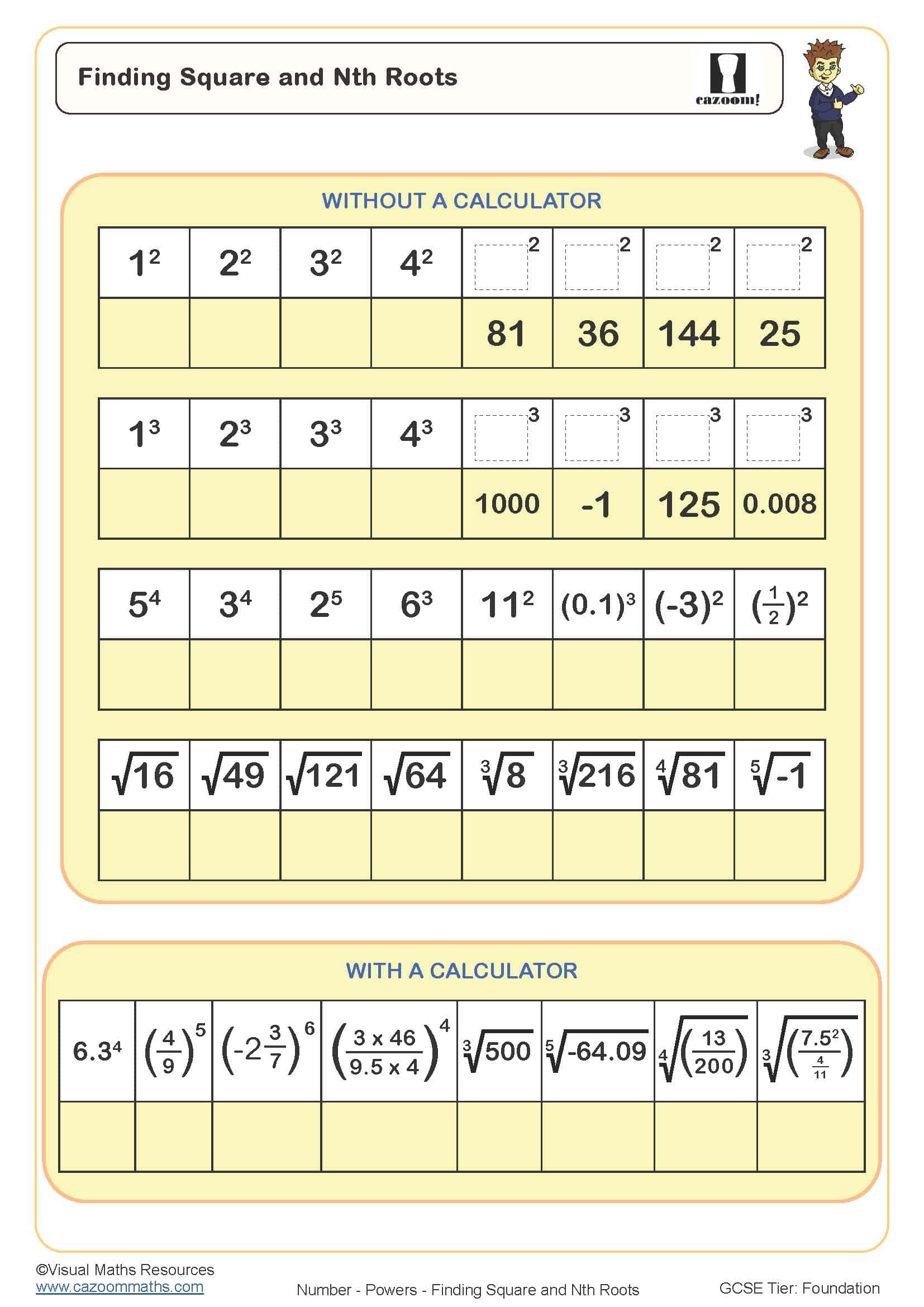
Finding Square and Nth Roots
Year groups: 7, 8
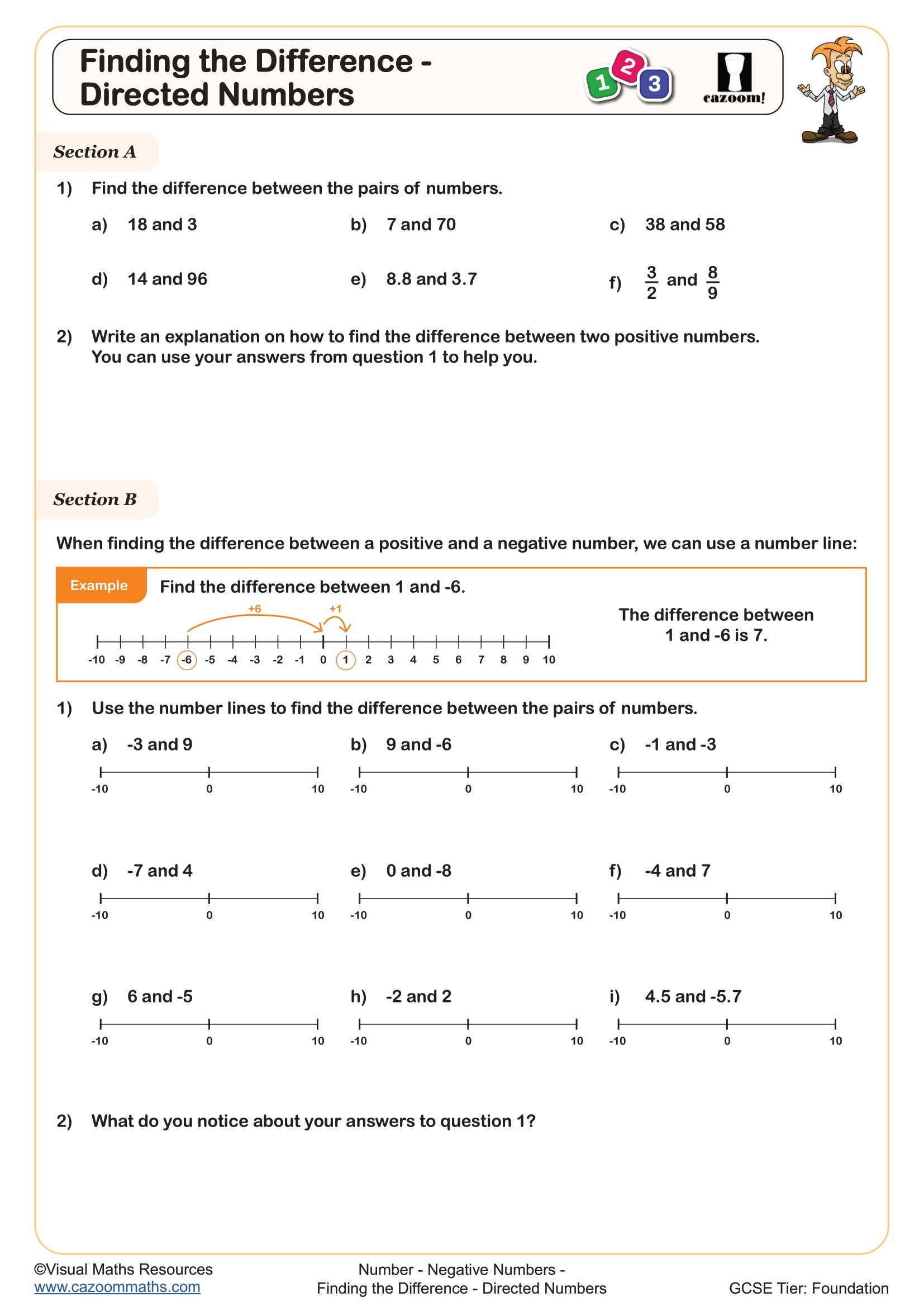
Finding the Difference - Directed Numbers
Year groups: 7, 8
Finding the Whole (A)
Year groups: 7, 8
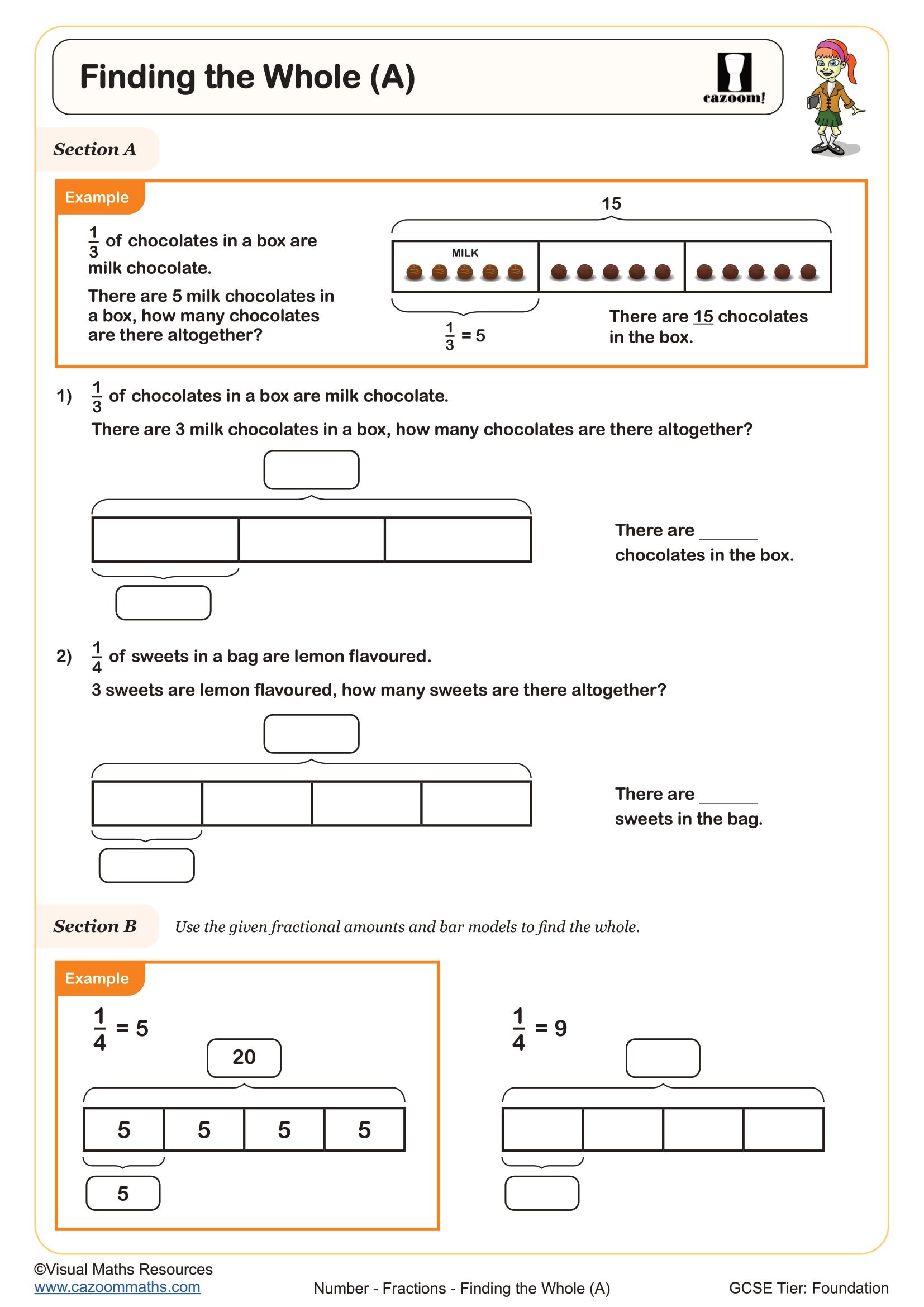
Finding the Whole (B)
Year groups: 7, 8
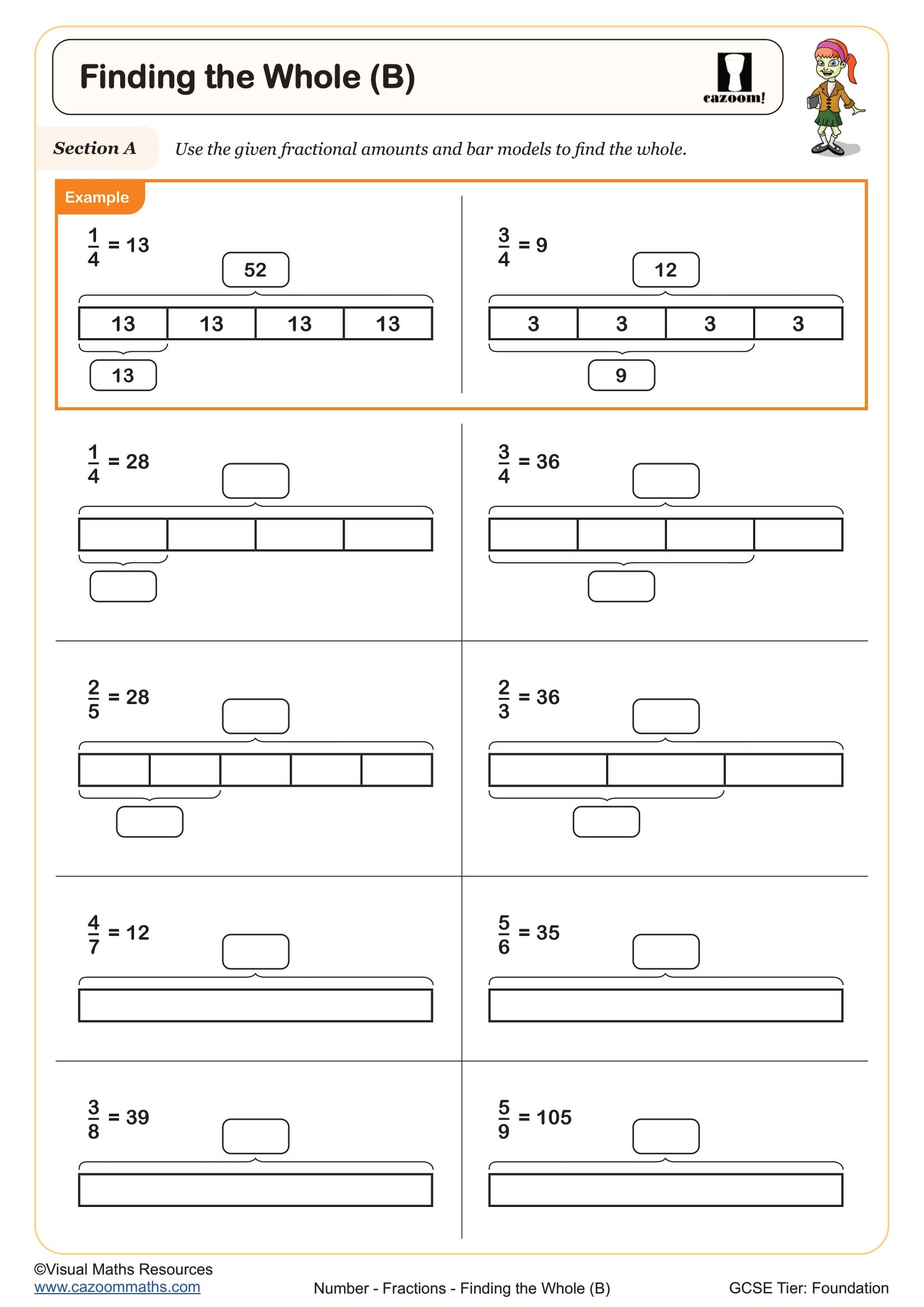
Finding Unit Fractions of Amounts
Year groups: 7, 8
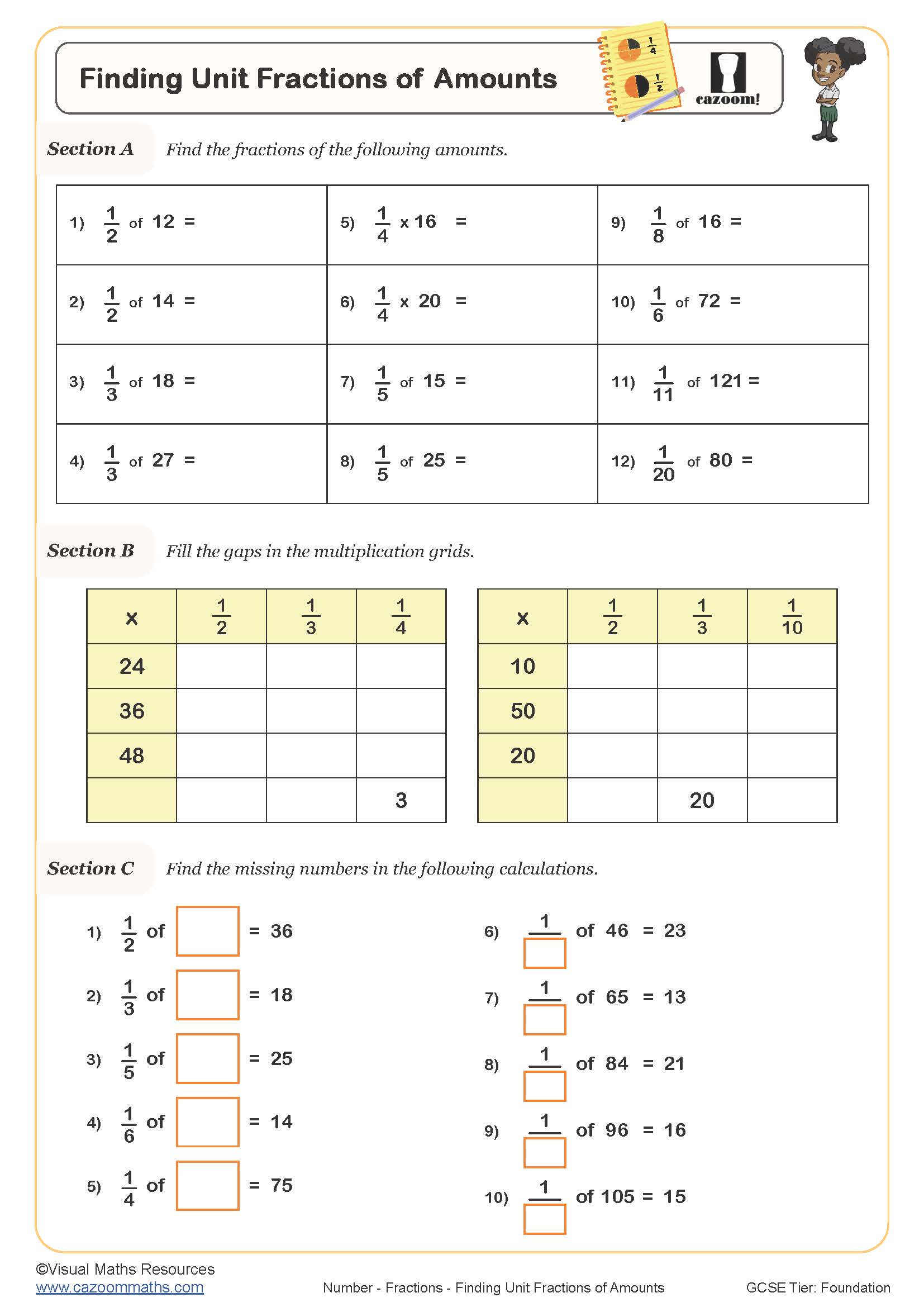
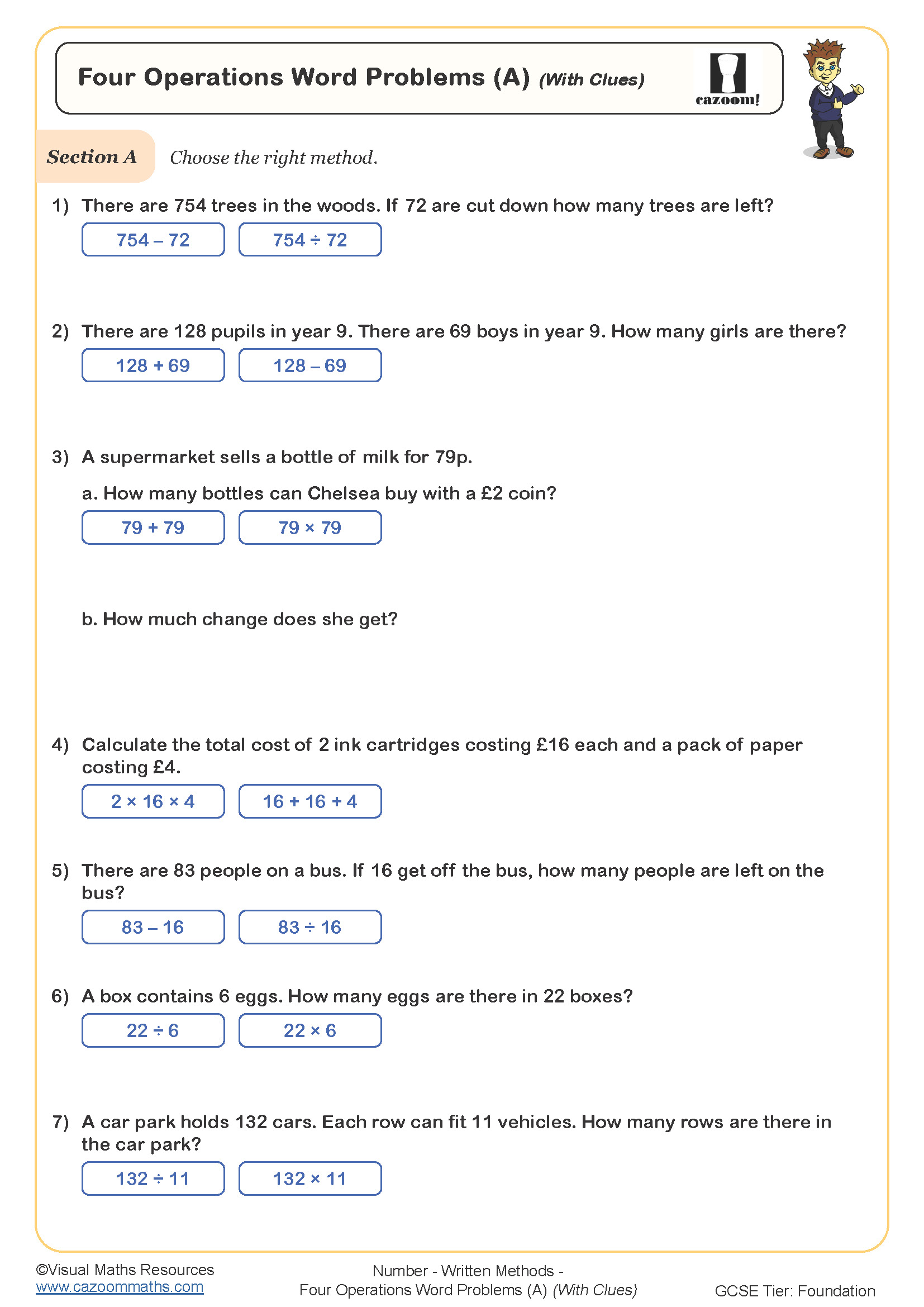
Four Operations Word Problems (A)
Year groups: 7, 8
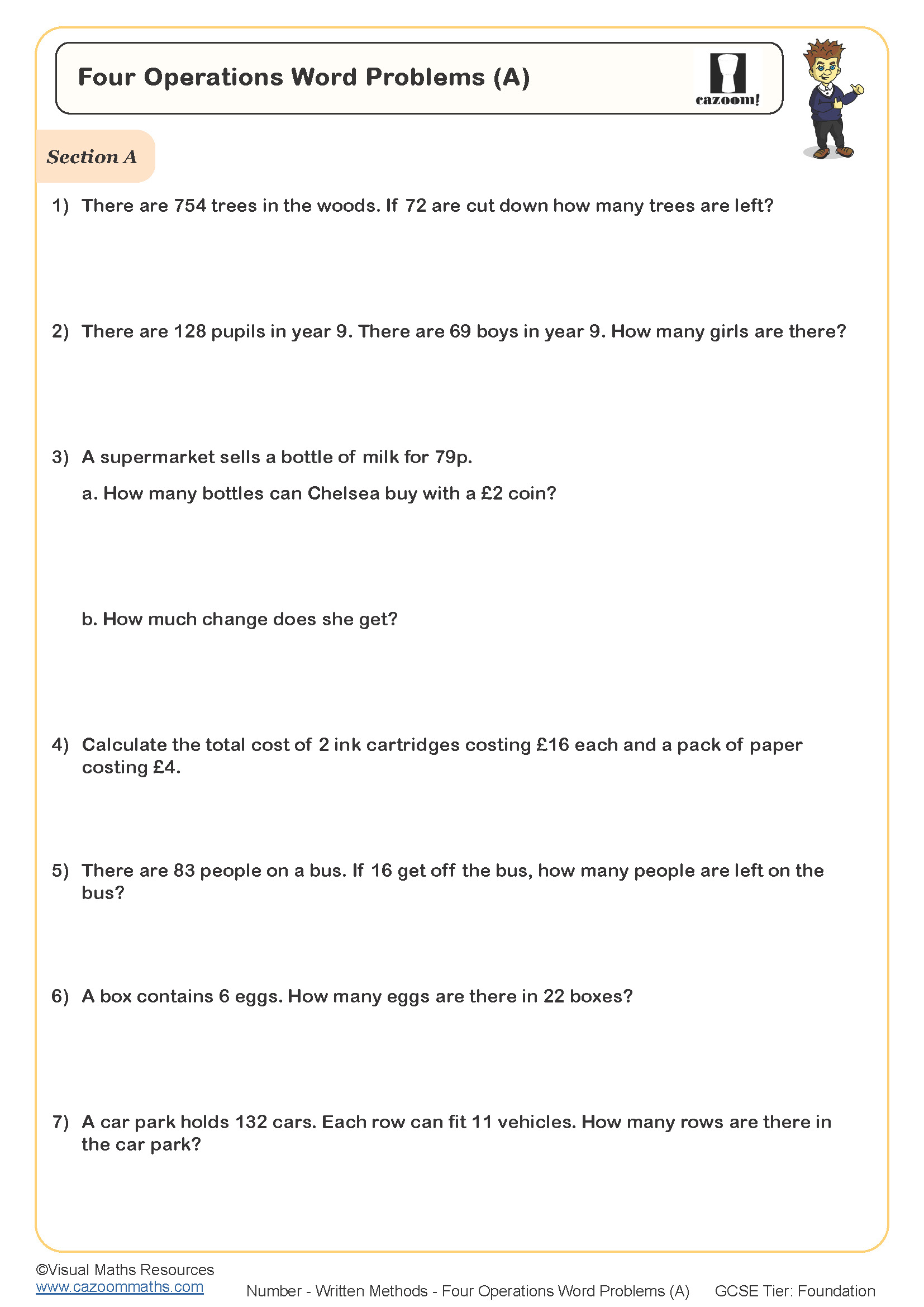
Four Operations Word Problems (A) (With Clues)
Year groups: 7, 8
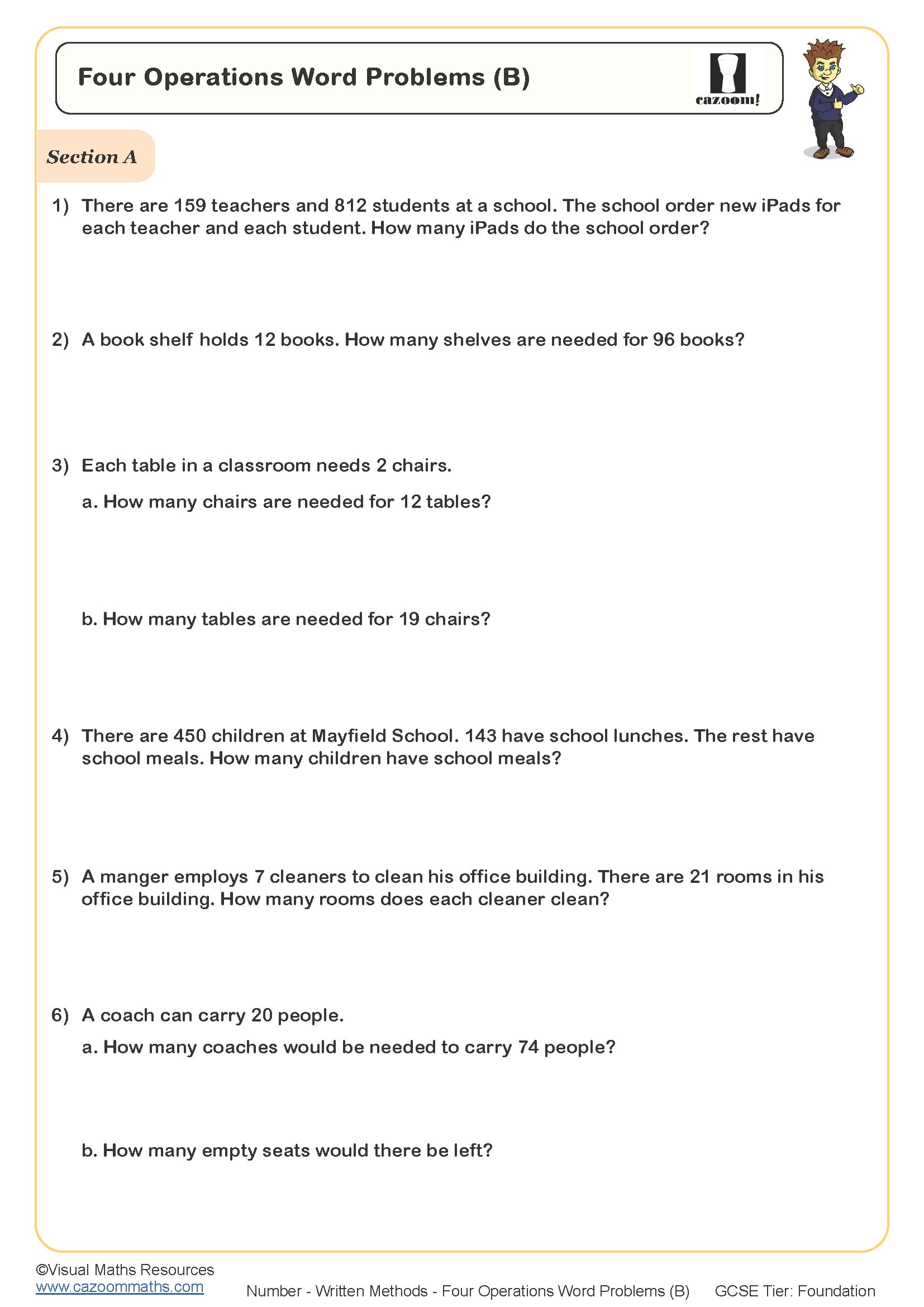
Four Operations Word Problems (B)
Year groups: 7, 8
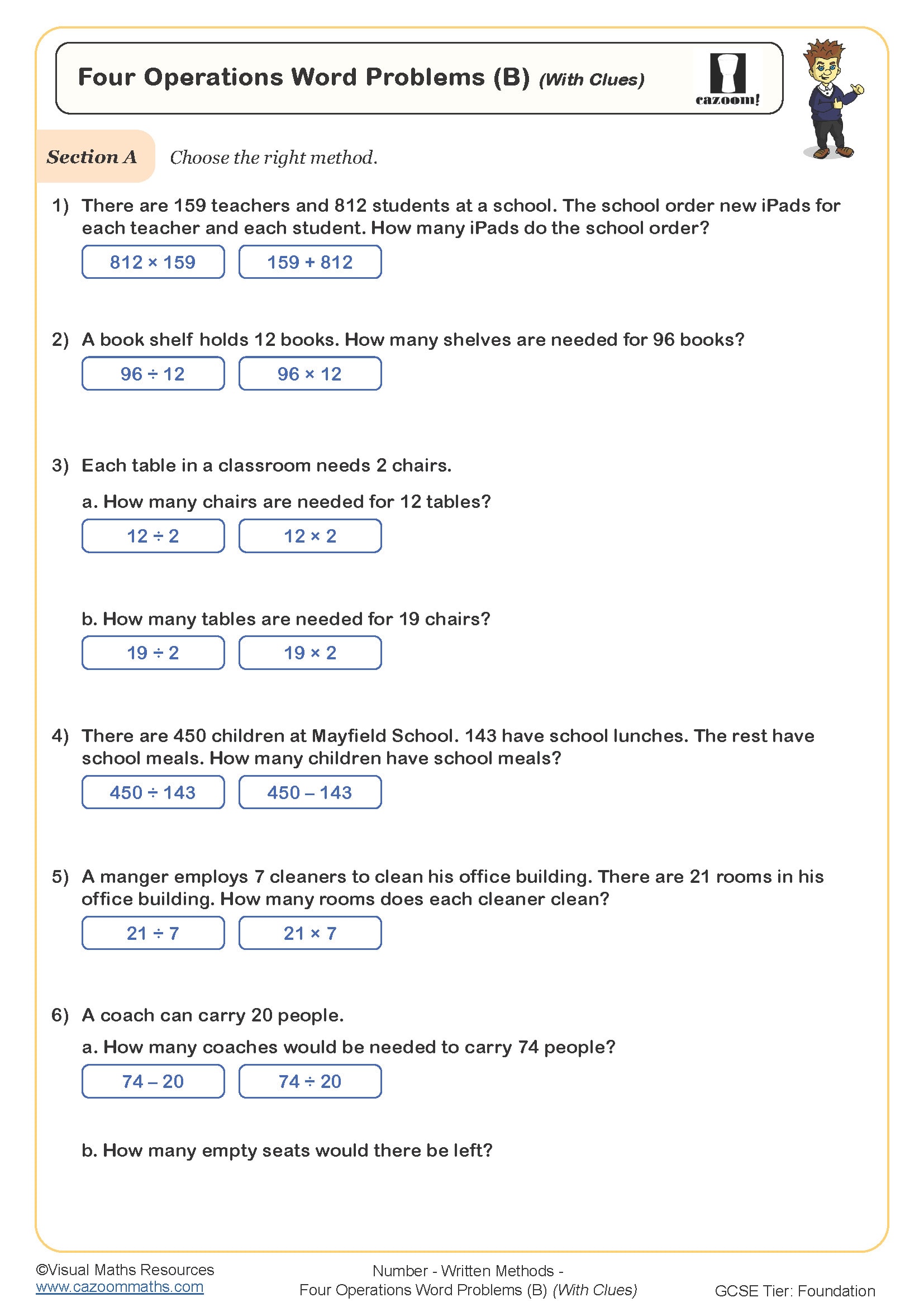
Four Operations Word Problems (B) (With Clues)
Year groups: 7, 8
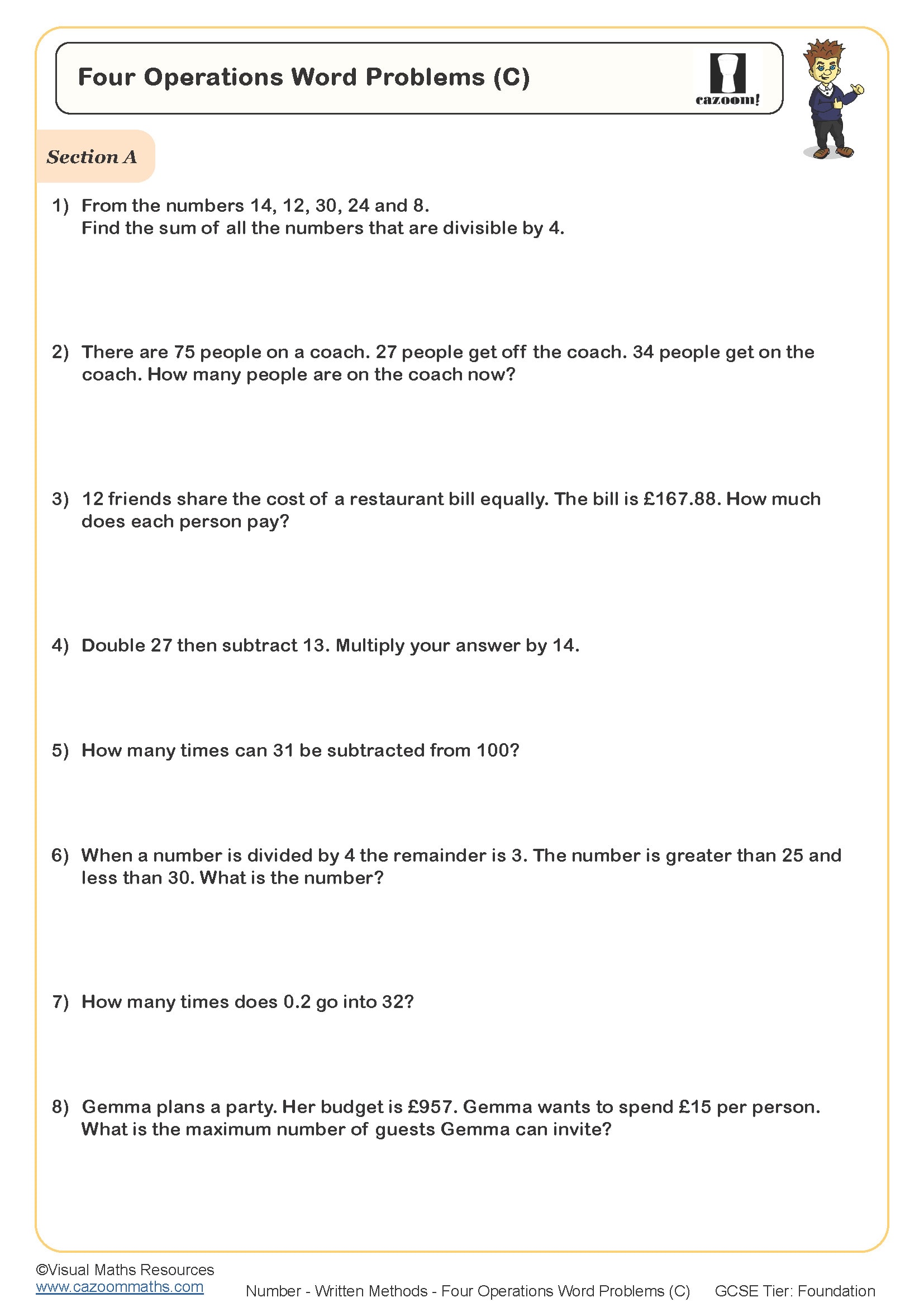
Four Operations Word Problems (C)
Year groups: 7, 8
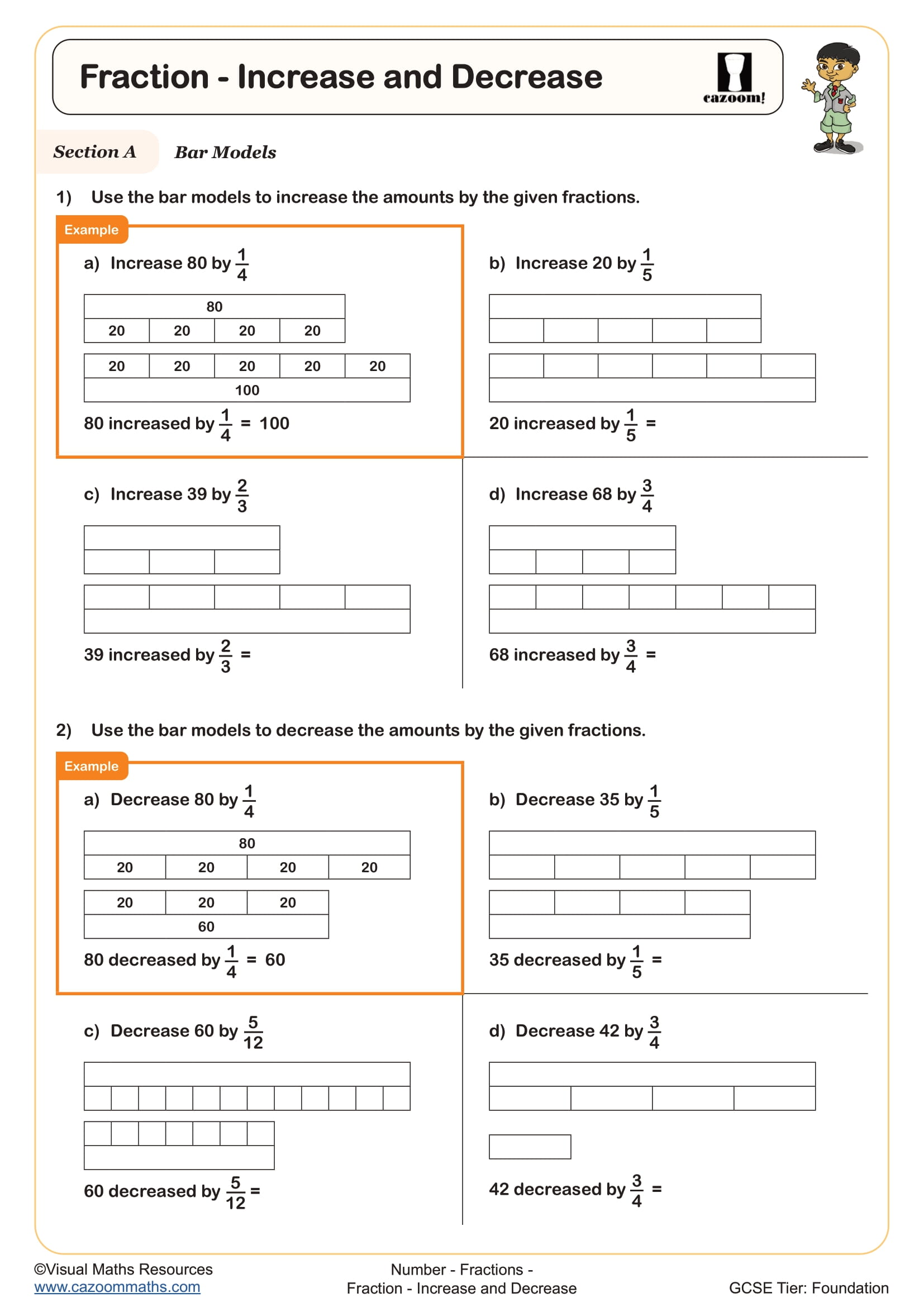
Fraction - Increase and Decrease
Year groups: 7, 8, 9
Fraction and Percentage Equivalence
Year groups: 7, 8

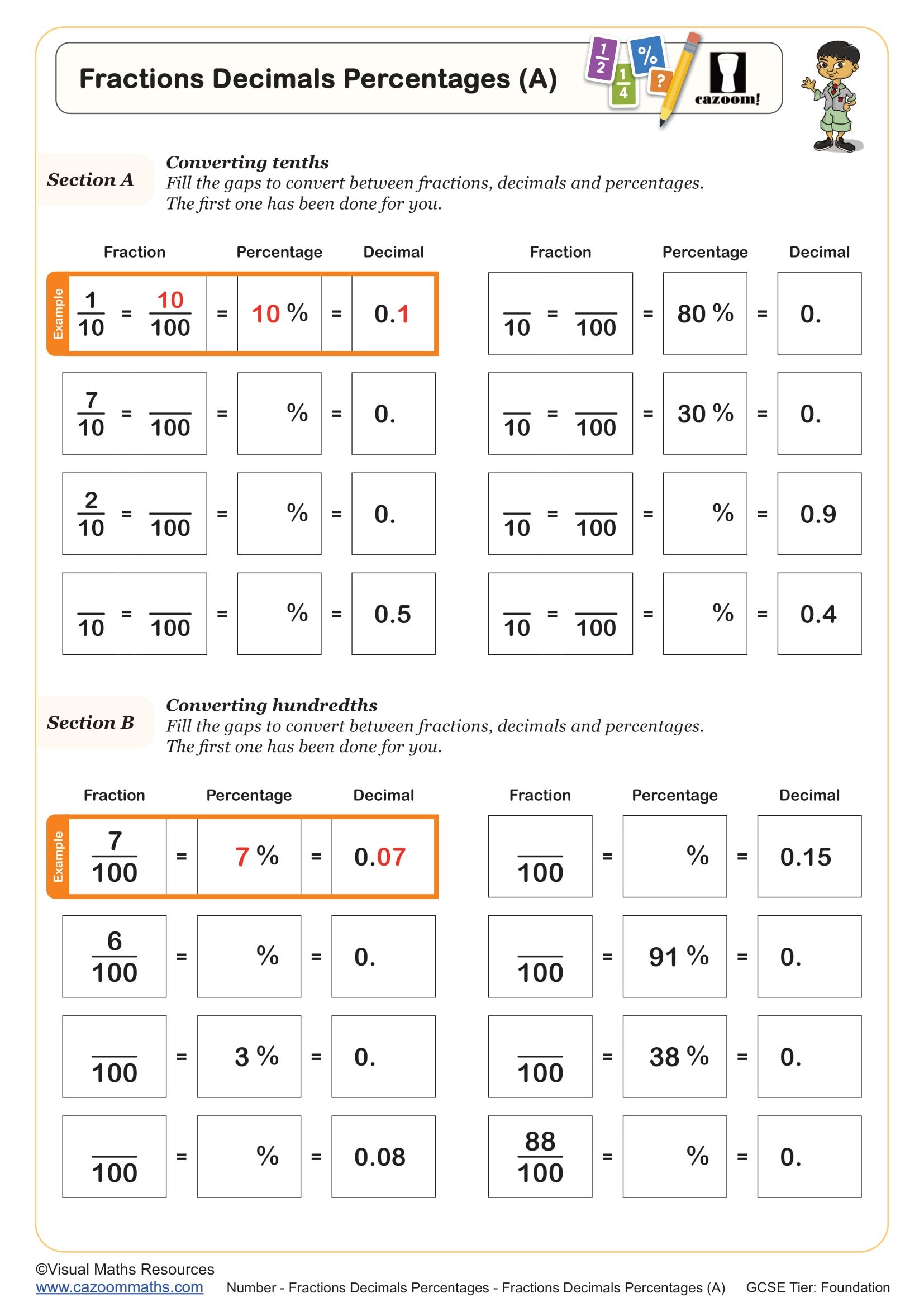
Fractions Decimals Percentages (A)
Year groups: 7, 8
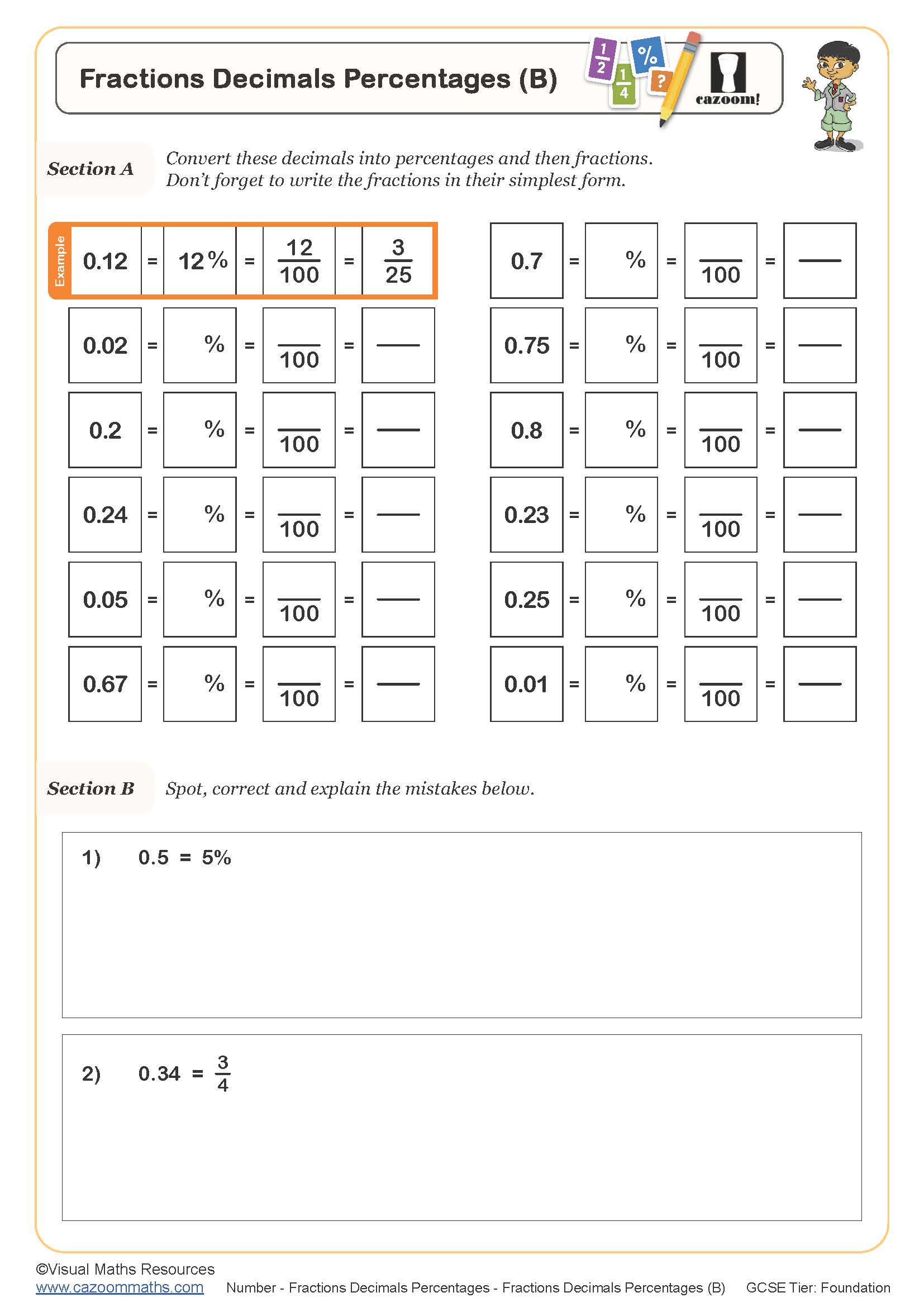
Fractions Decimals Percentages (B)
Year groups: 7, 8, 9
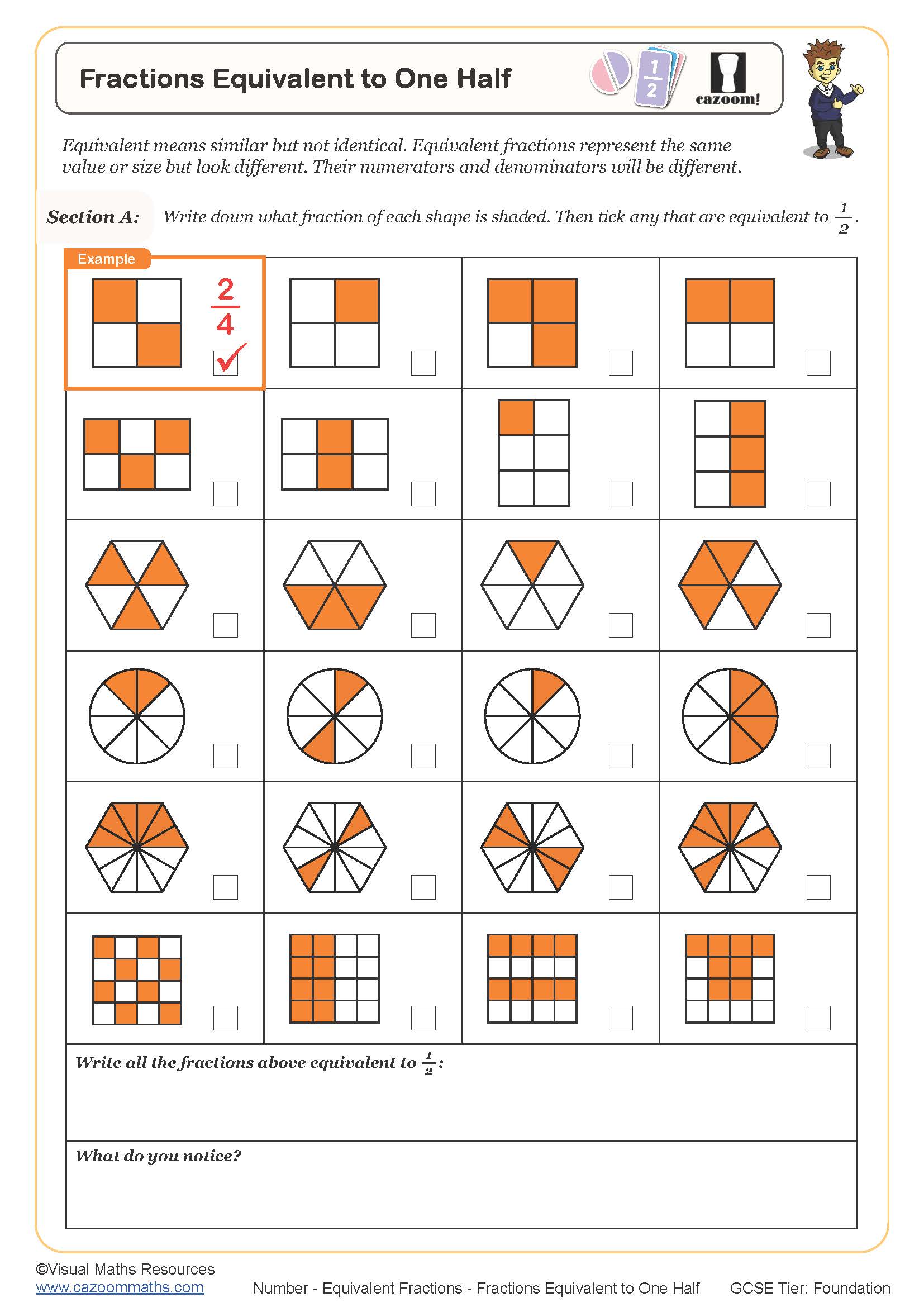
Fractions Equivalent to One Half
Year groups: 7, 8
Fractions Equivalent to One Quarter
Year groups: 7, 8
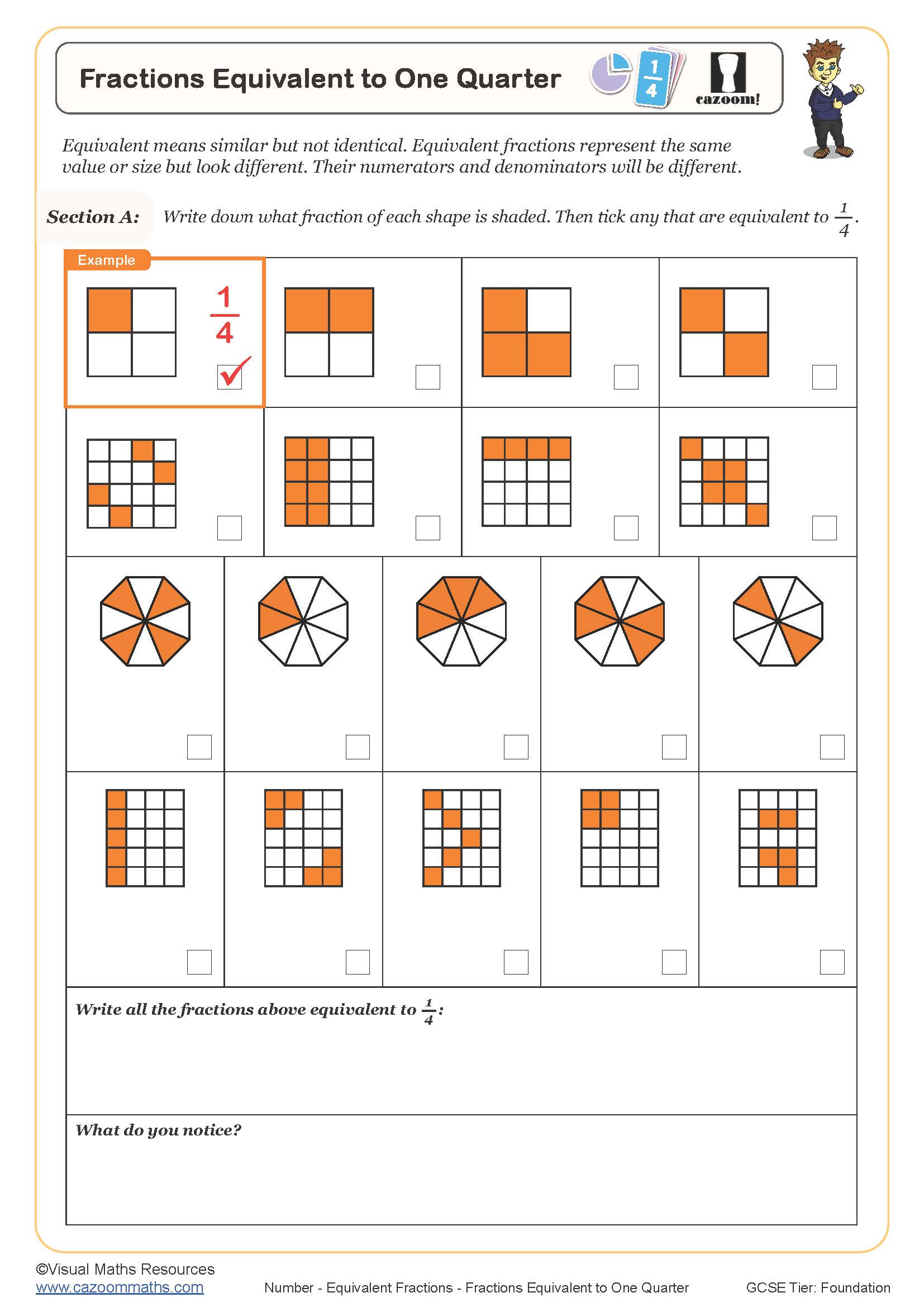
Fractions Equivalent to One Third
Year groups: 7, 8
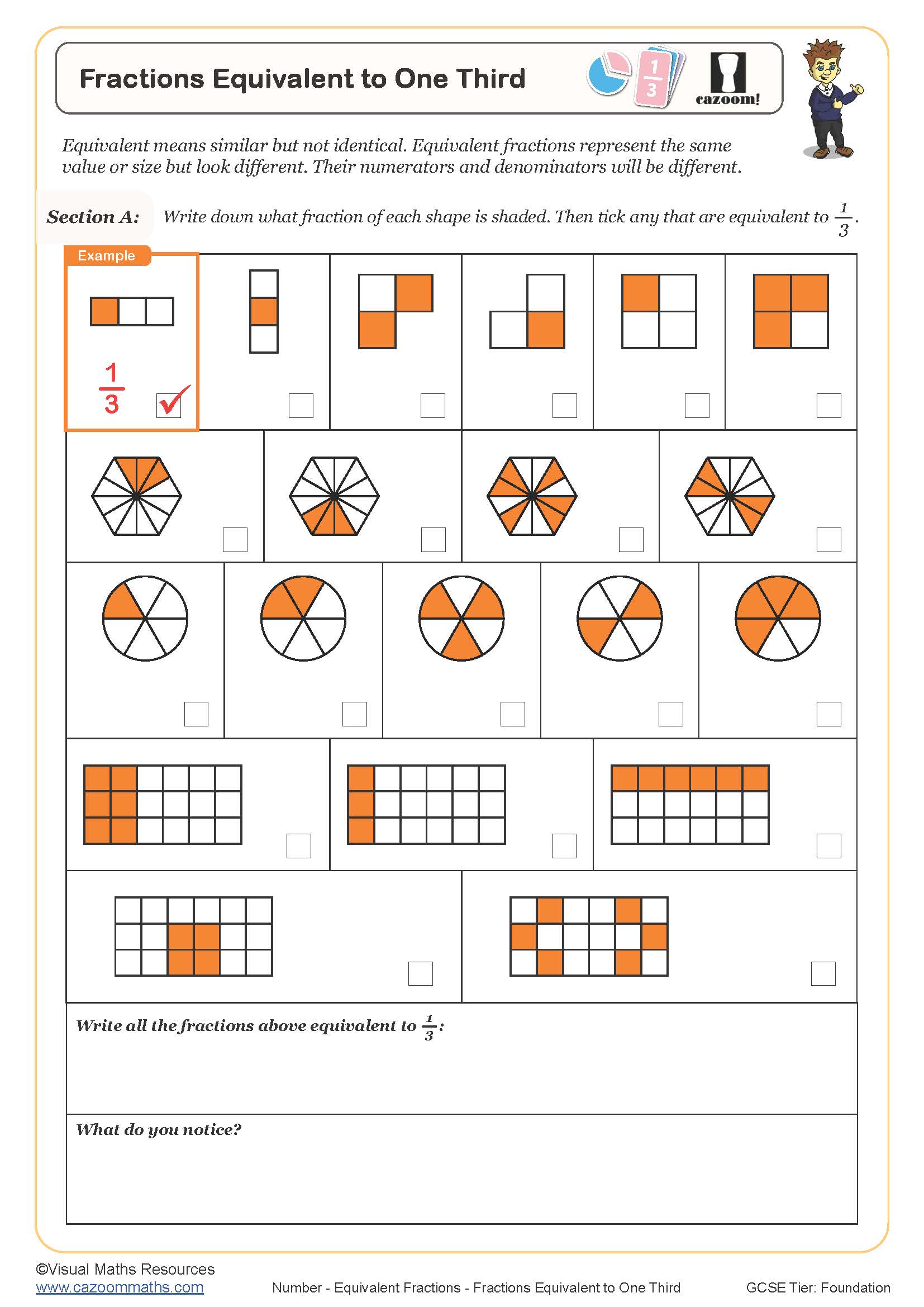
Fractions on Number Lines (A)
Year groups: 7
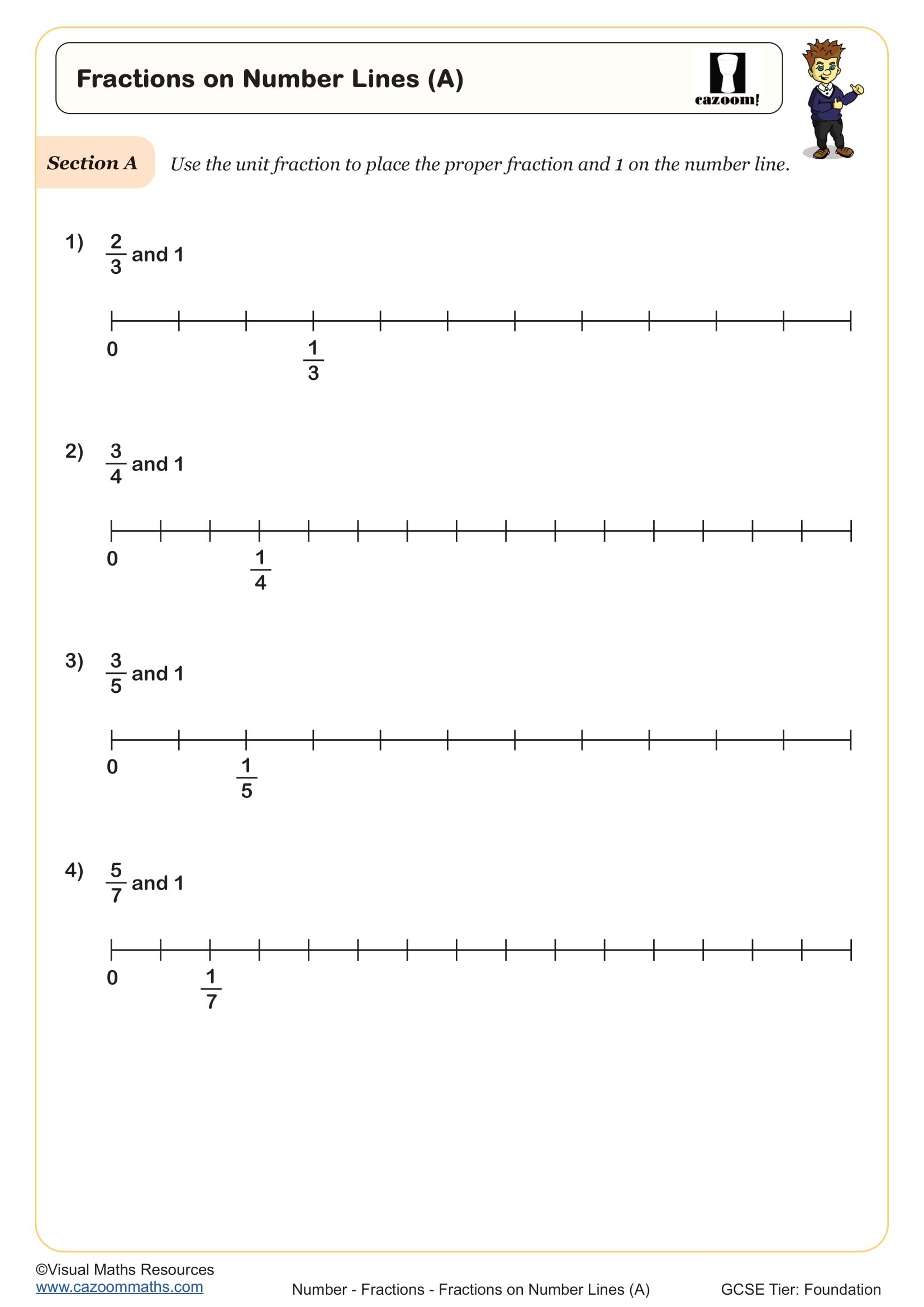
Fractions on Number Lines (B)
Year groups: 7
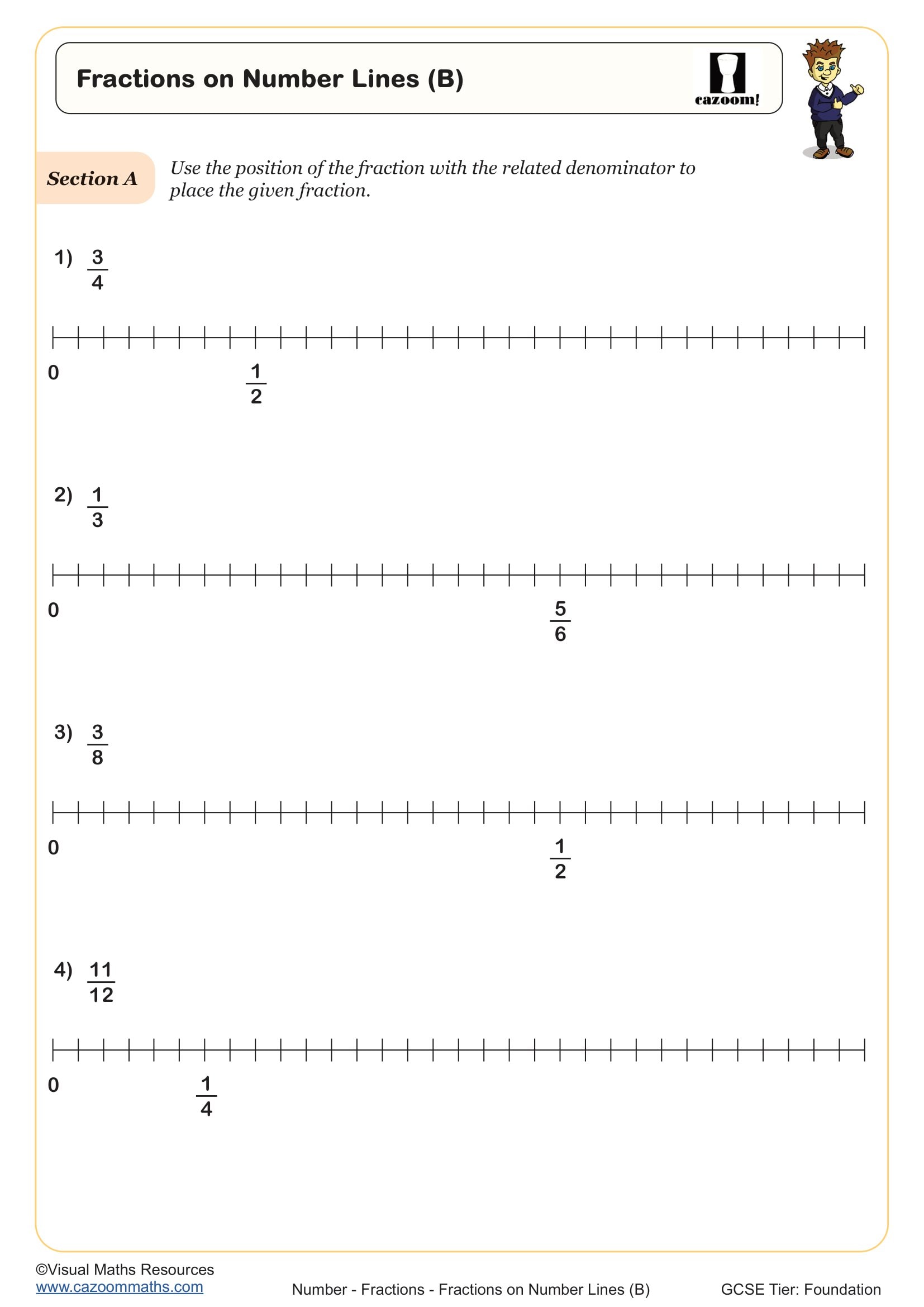
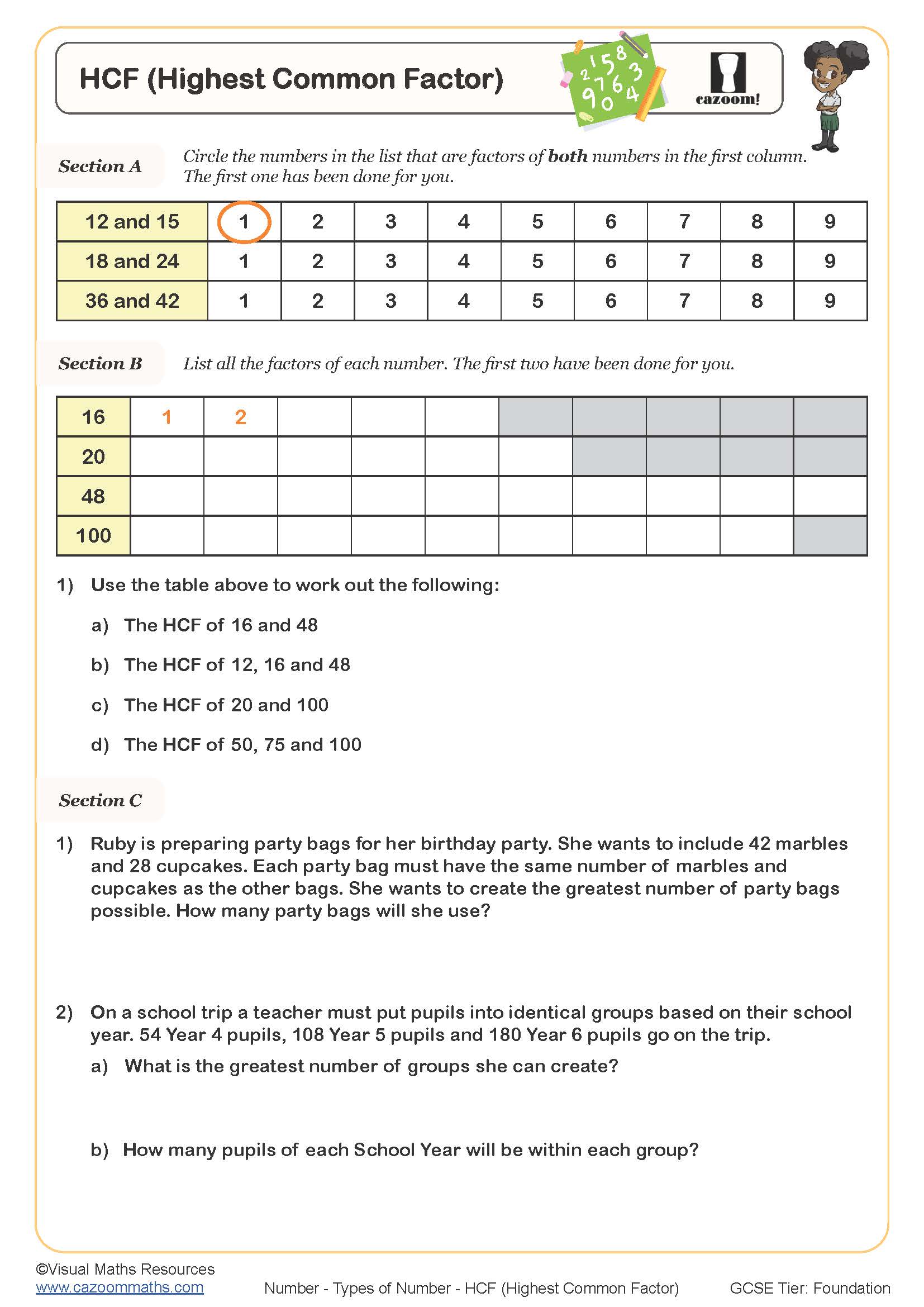
Highest Common Factor
Year groups: 7, 8, 9
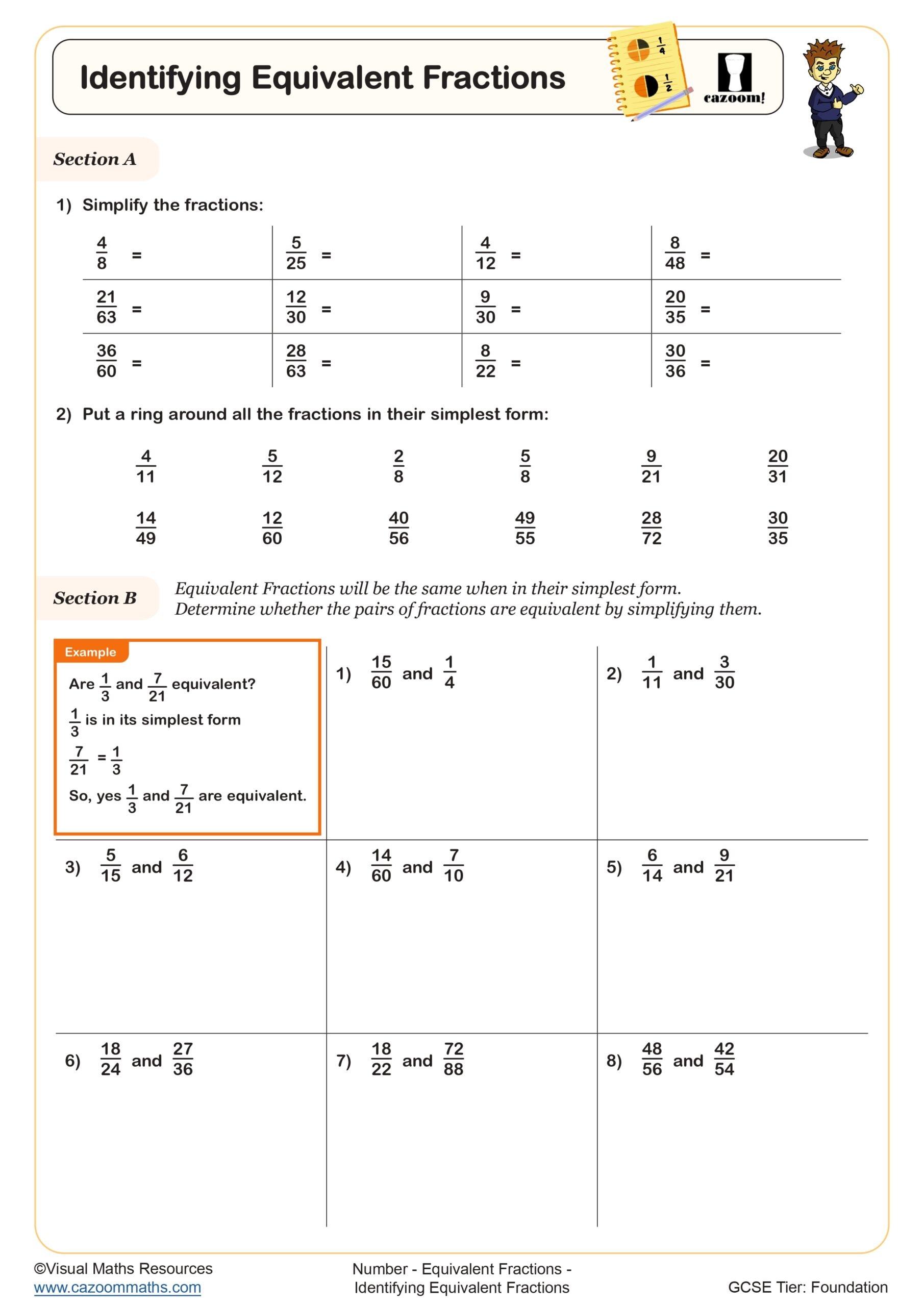
Identifying Equivalent Fractions
Year groups: 7, 8
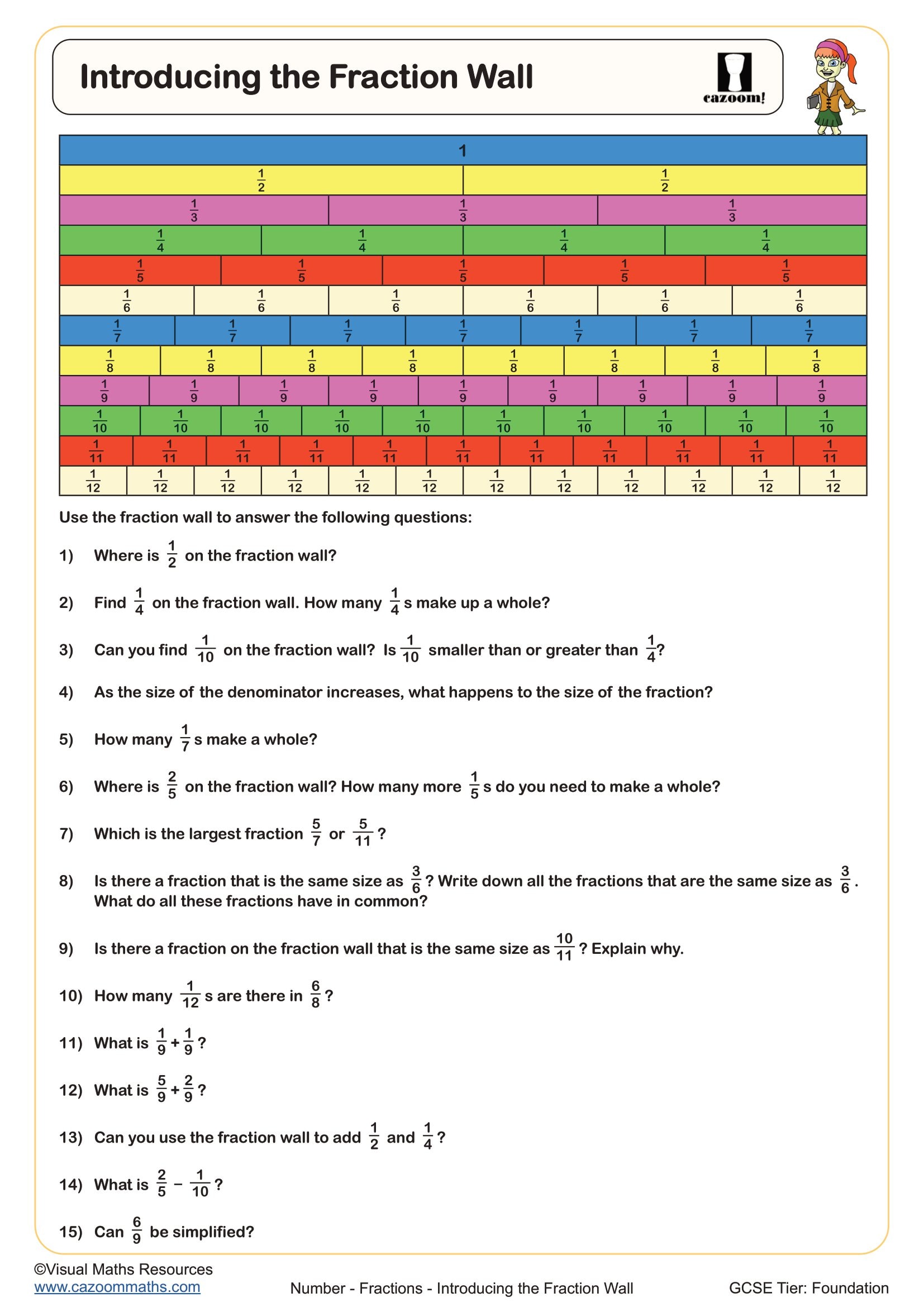
Introducing the Fraction Wall
Year groups: 7, 8
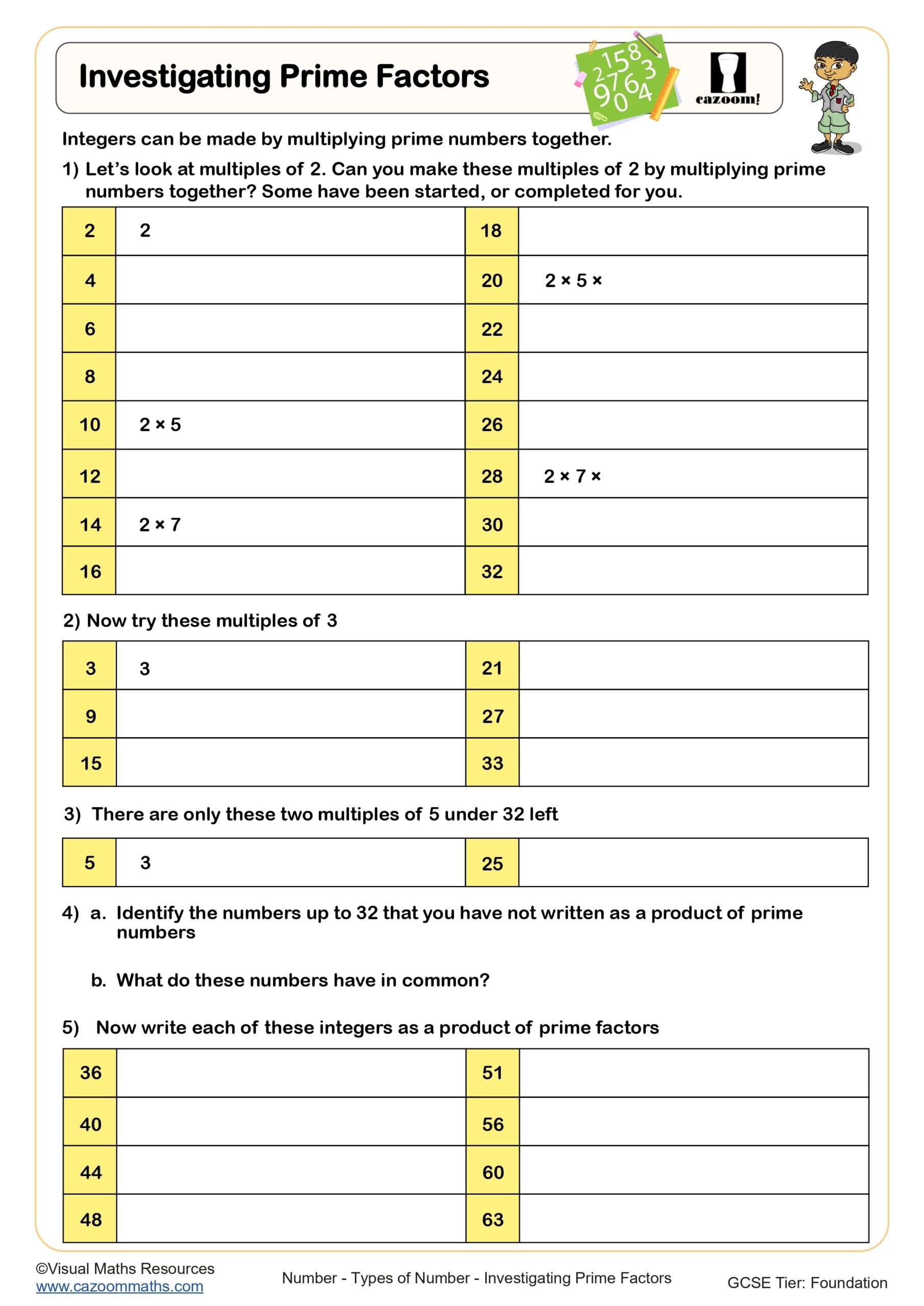
Investigating Prime Factors
Year groups: 7, 8
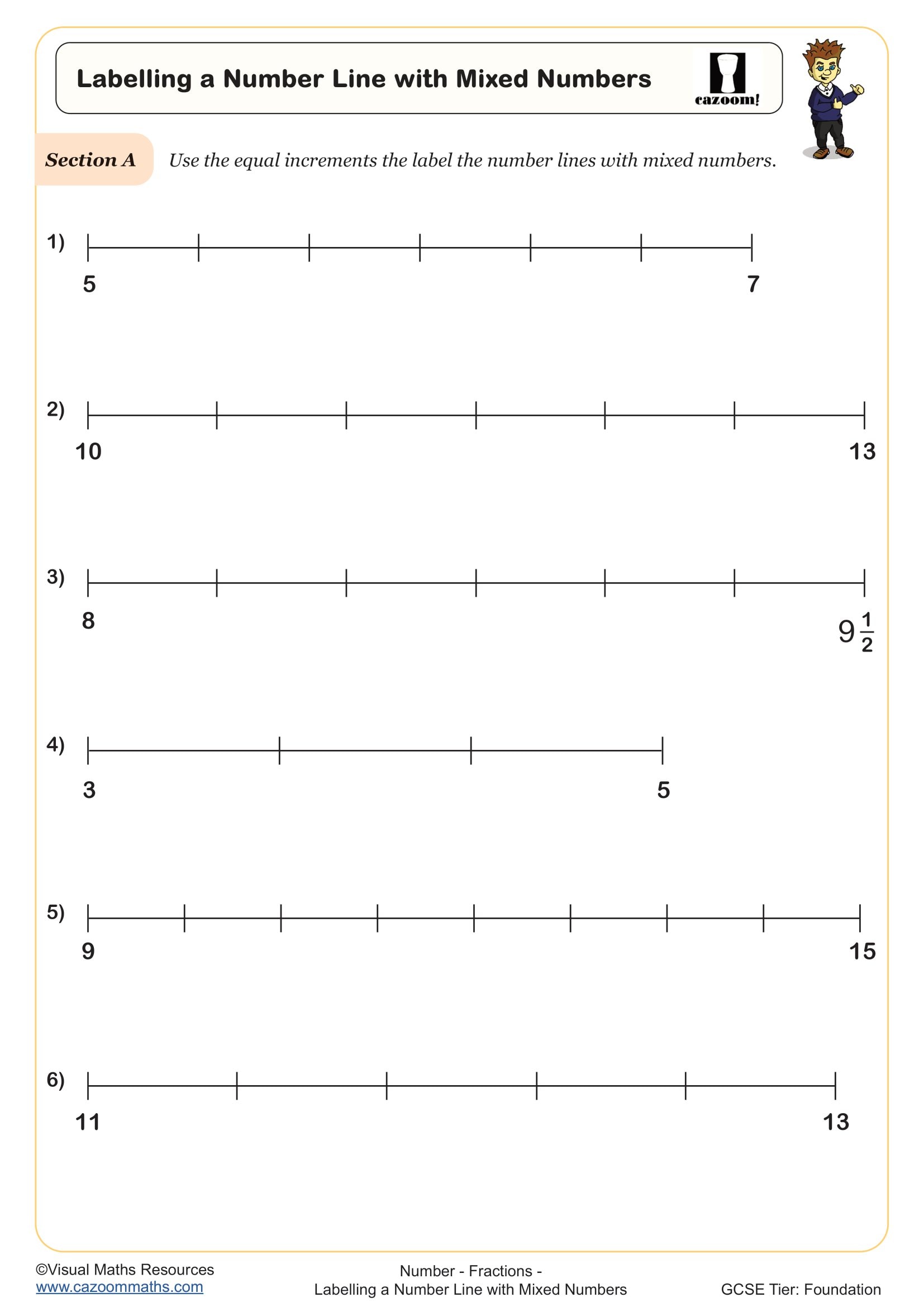
Labelling a Number Line with Mixed Numbers
Year groups: 7, 8
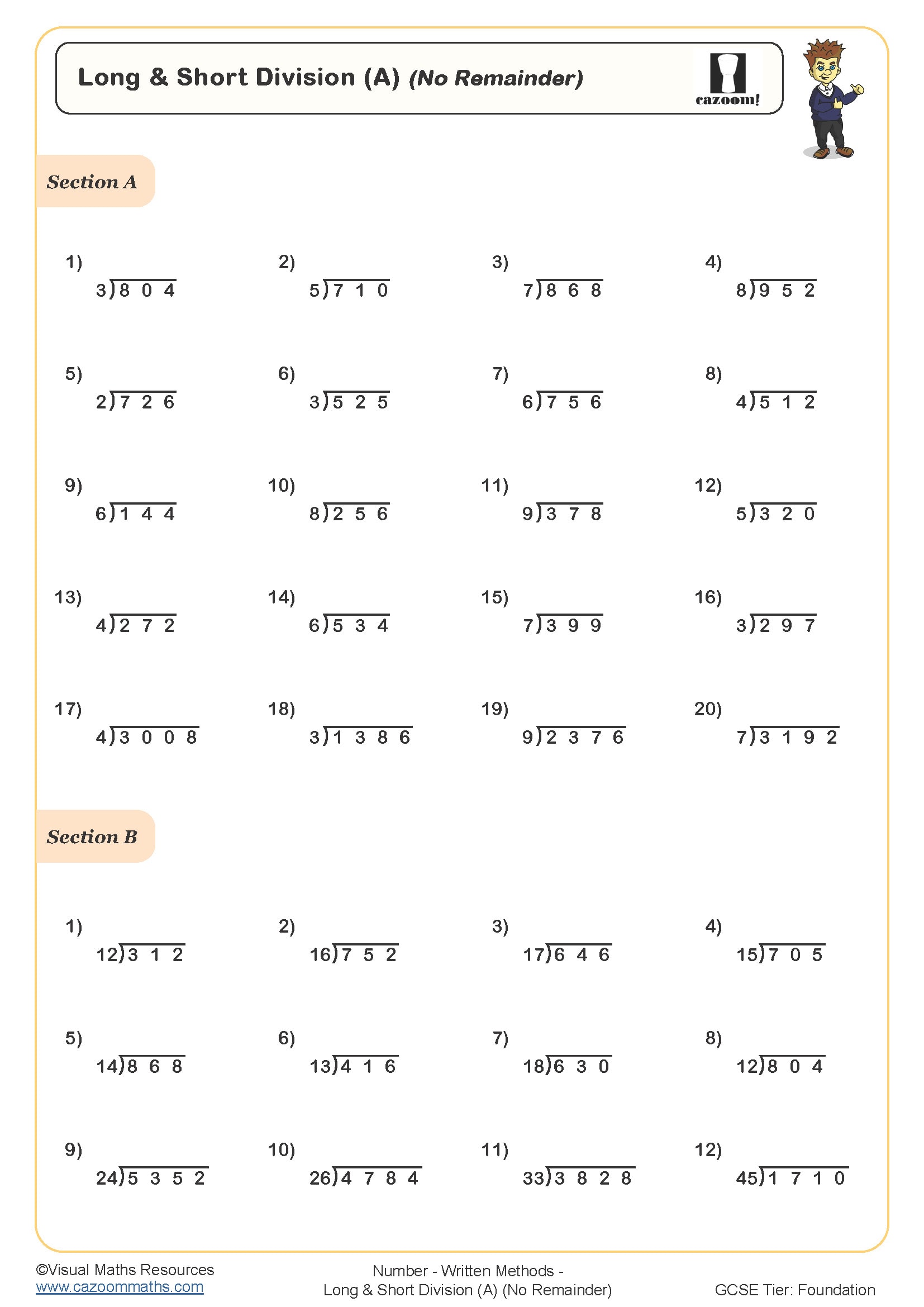
Long and Short Division (A)
Year groups: 7, 8
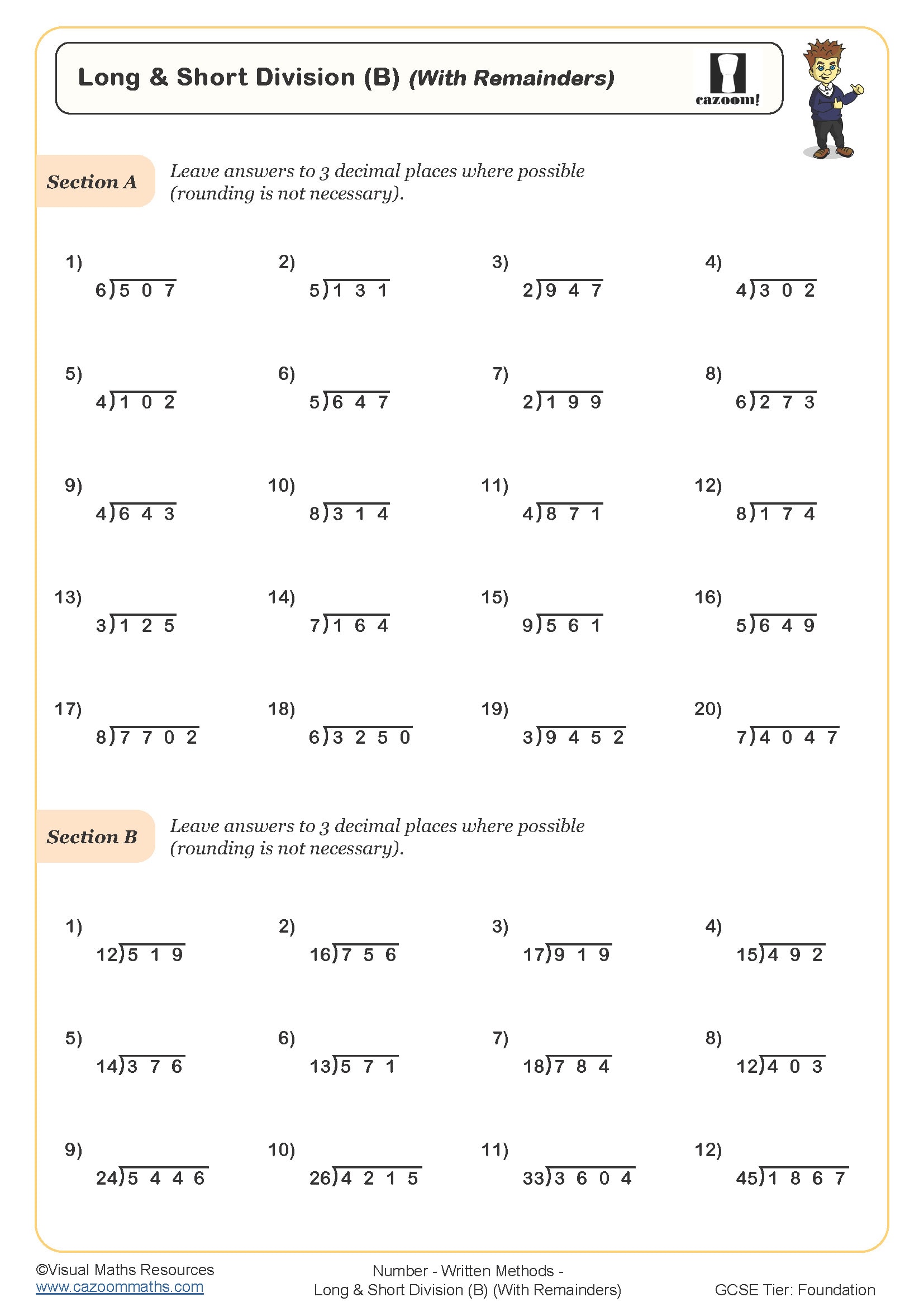
Long and Short Division (B)
Year groups: 7, 8
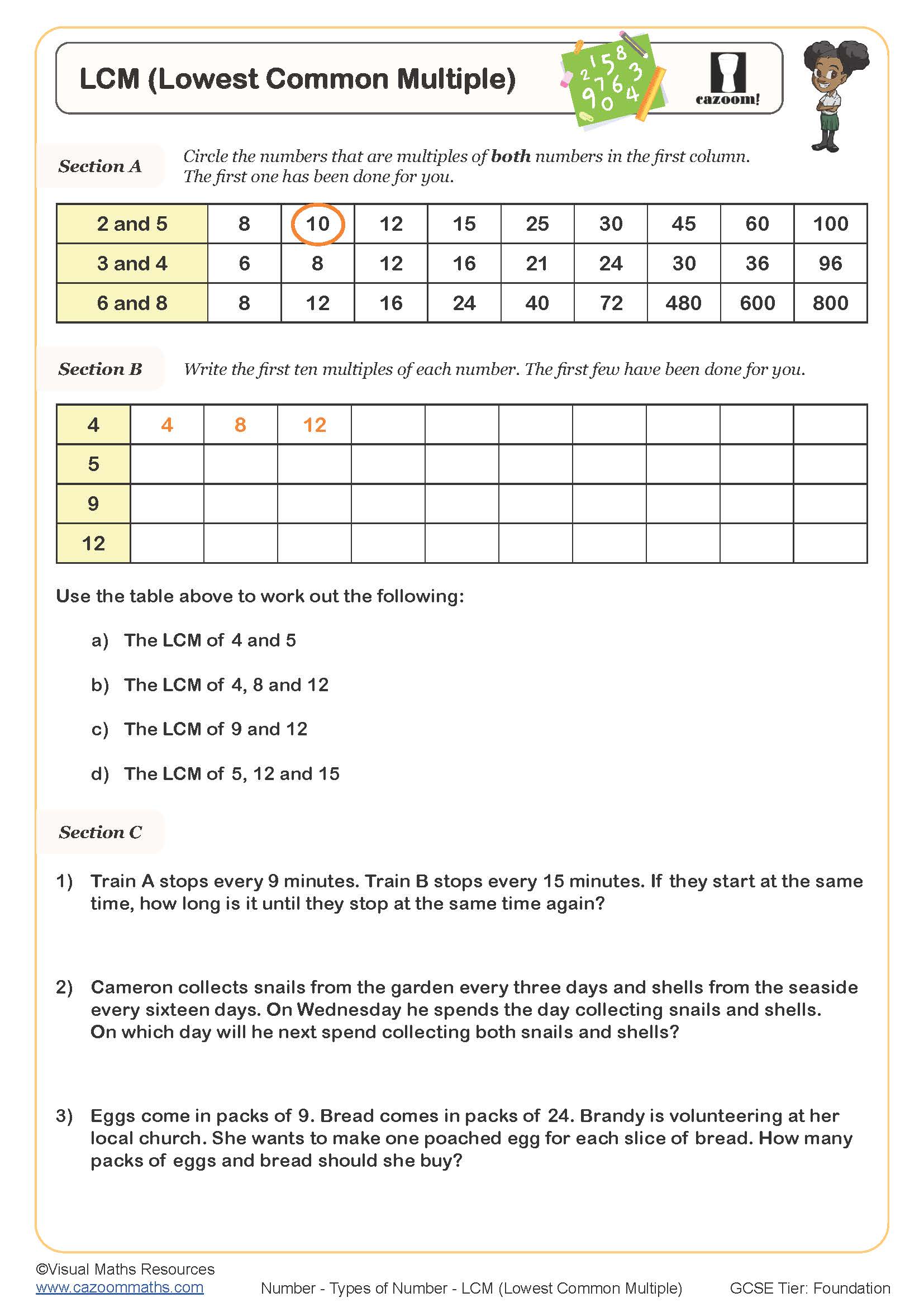
Lowest Common Multiple
Year groups: 7, 8, 9
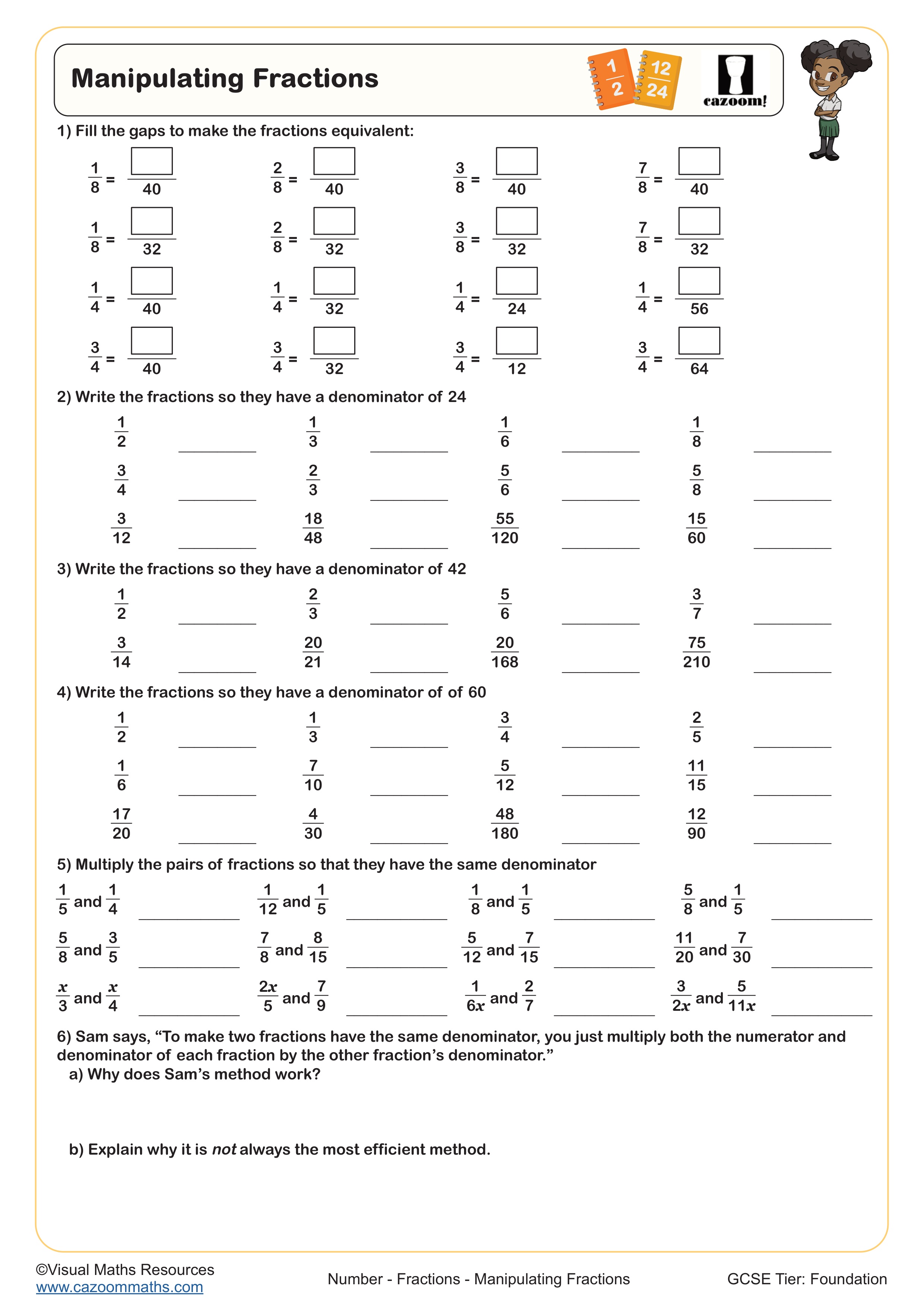
Manipulating Fractions
Year groups: 7, 8
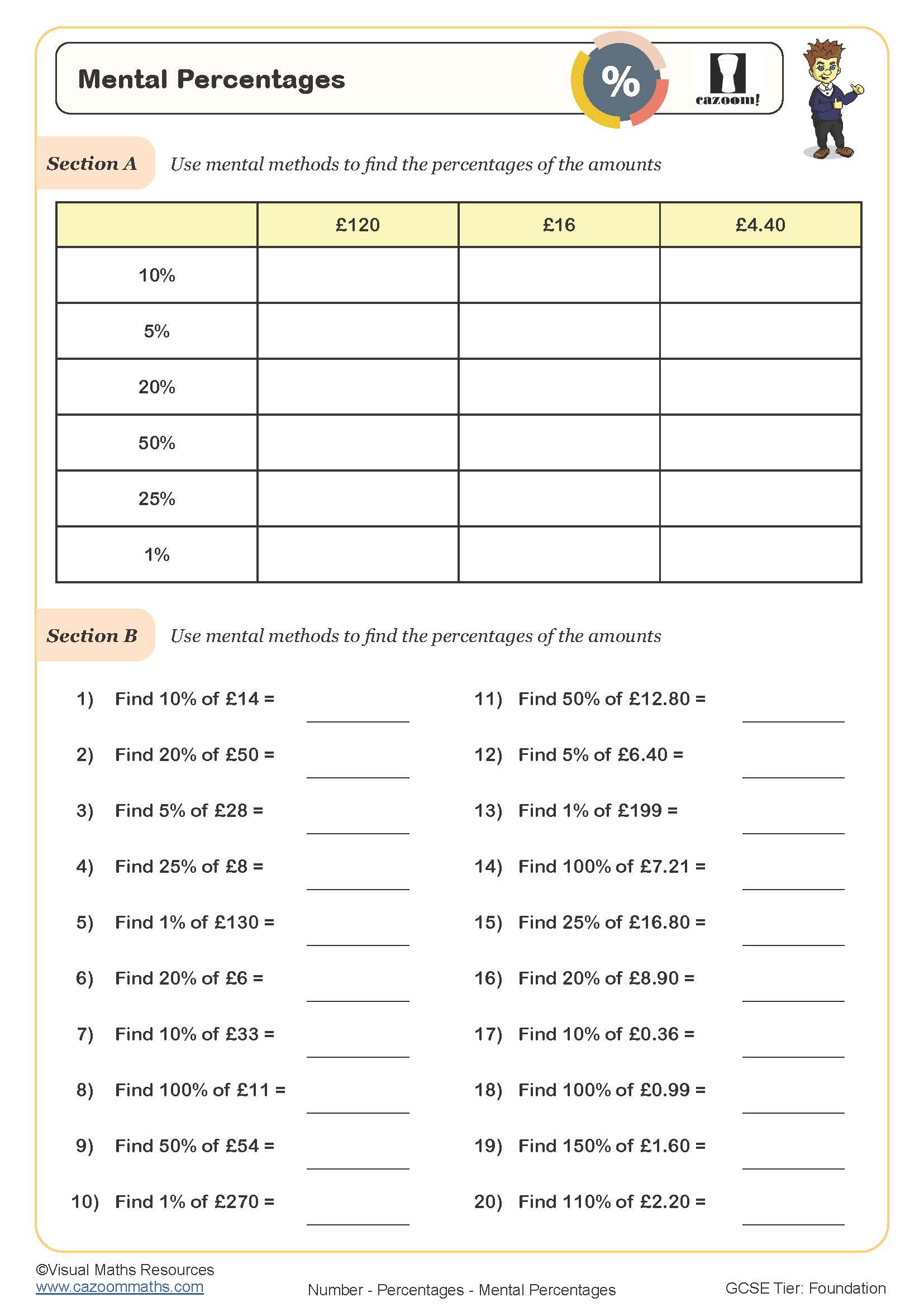
Mental Percentages
Year groups: 7, 8
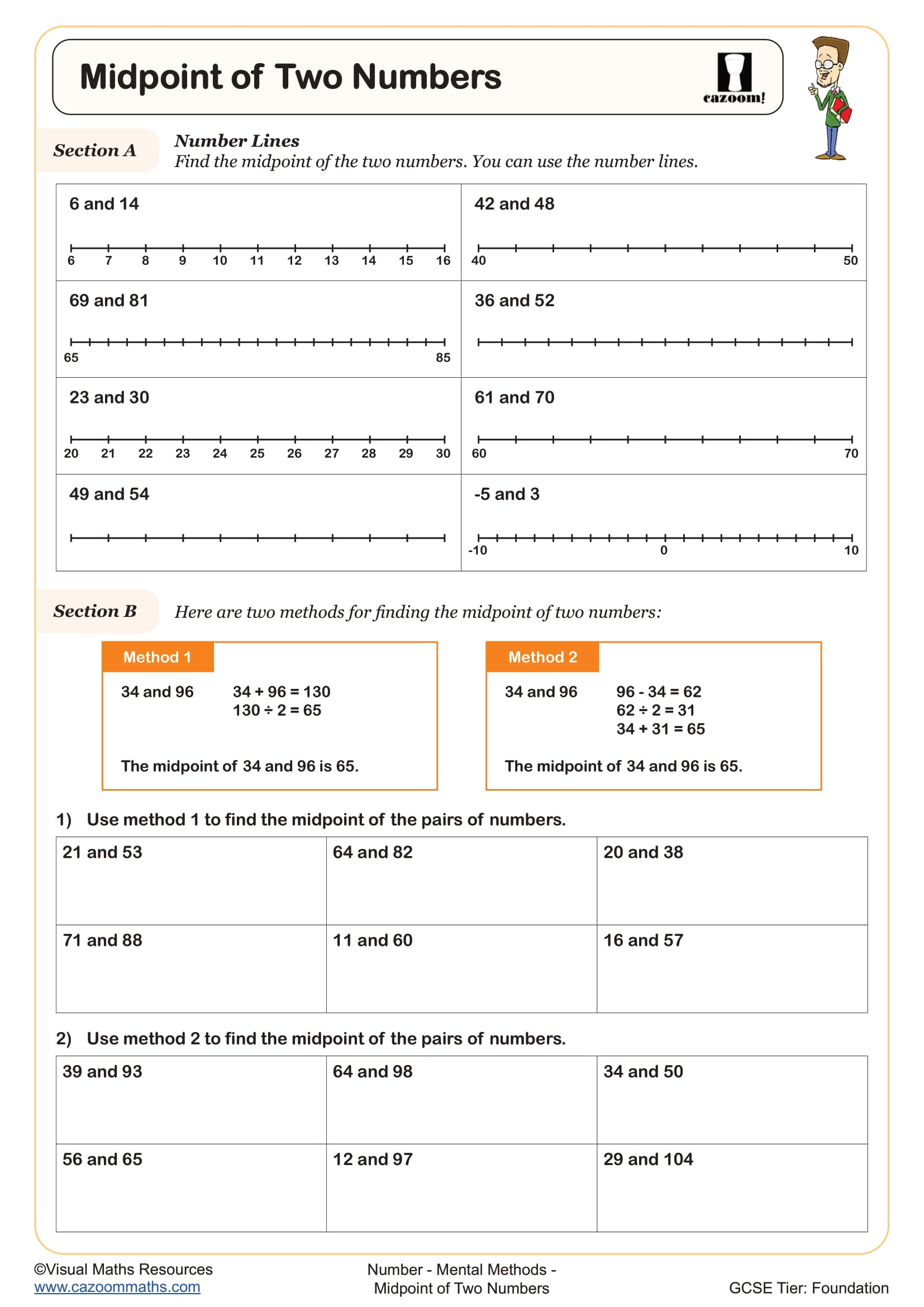
Midpoint of Two Numbers
Year groups: 7
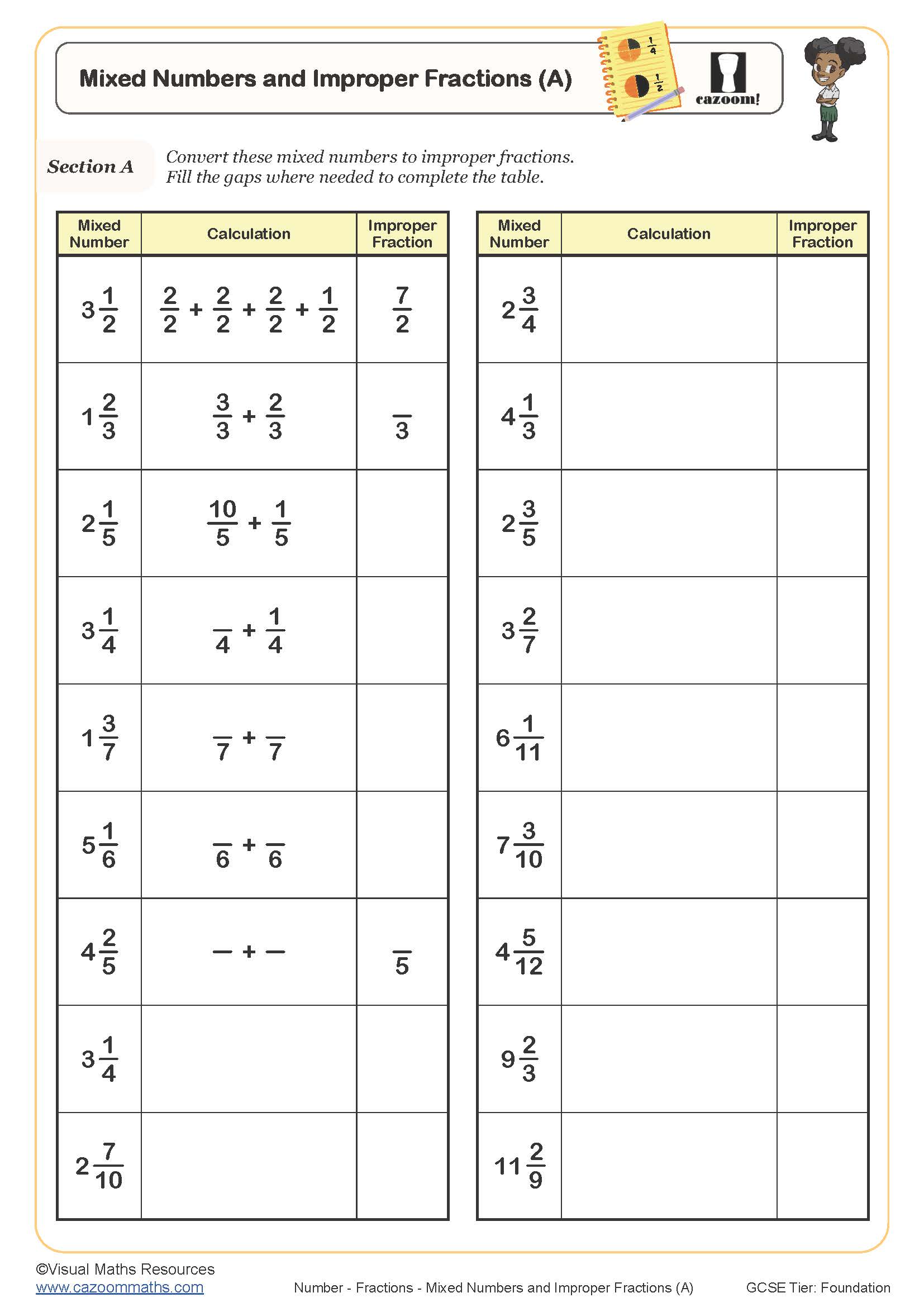
Mixed Numbers and Improper Fractions (A)
Year groups: 7, 8
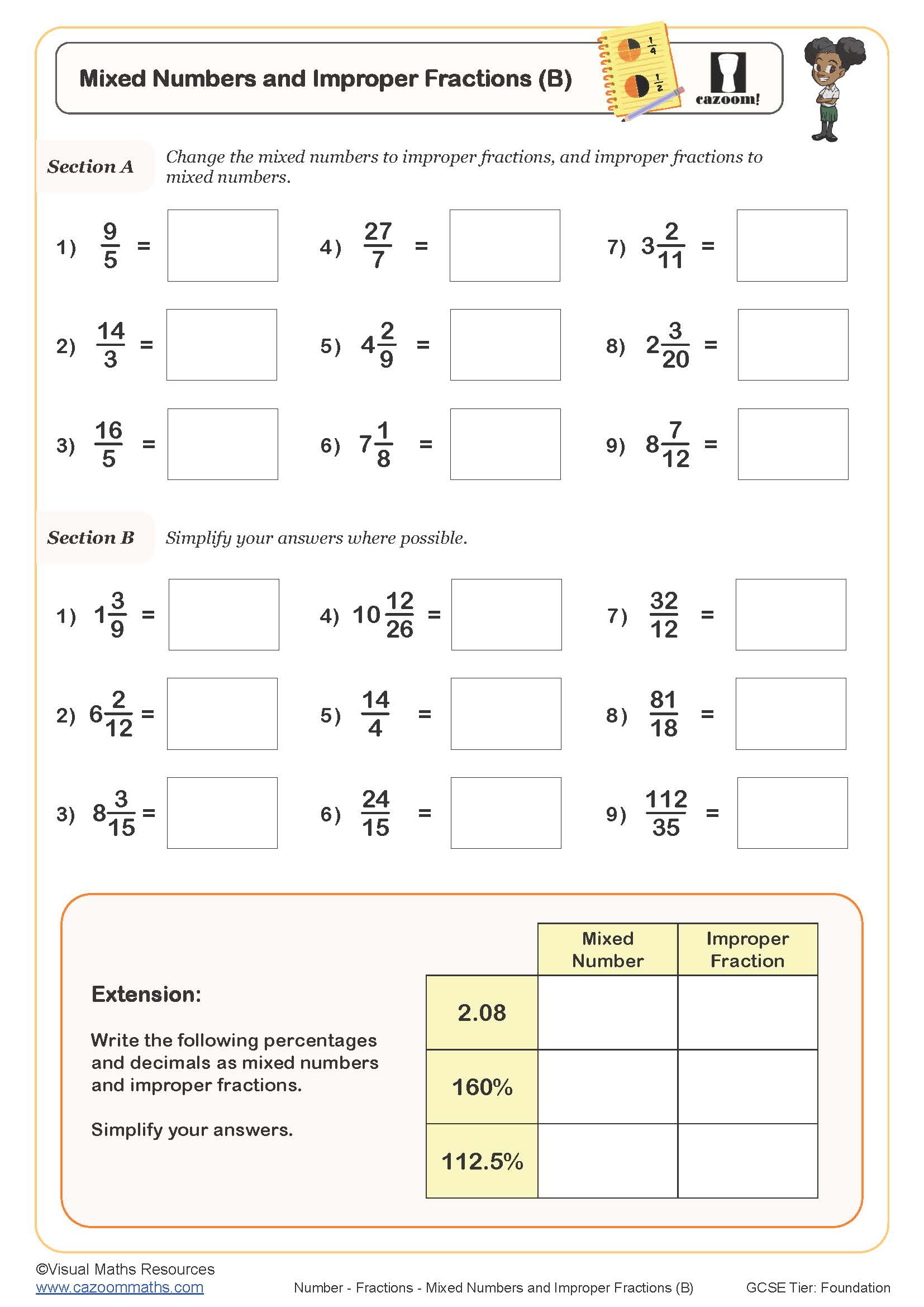
Mixed Numbers and Improper Fractions (B)
Year groups: 7, 8
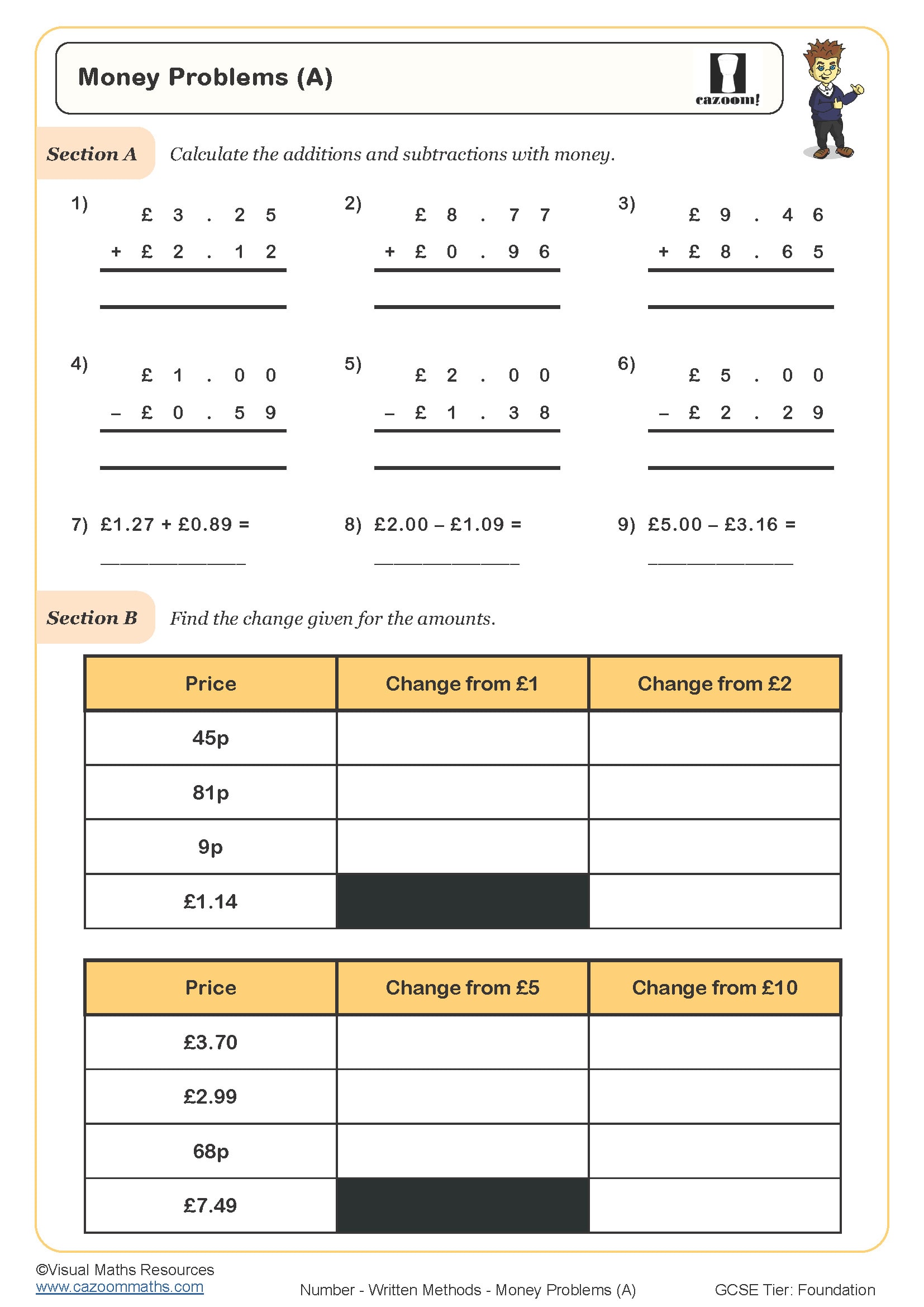
Money Problems (A)
Year groups: 7, 8
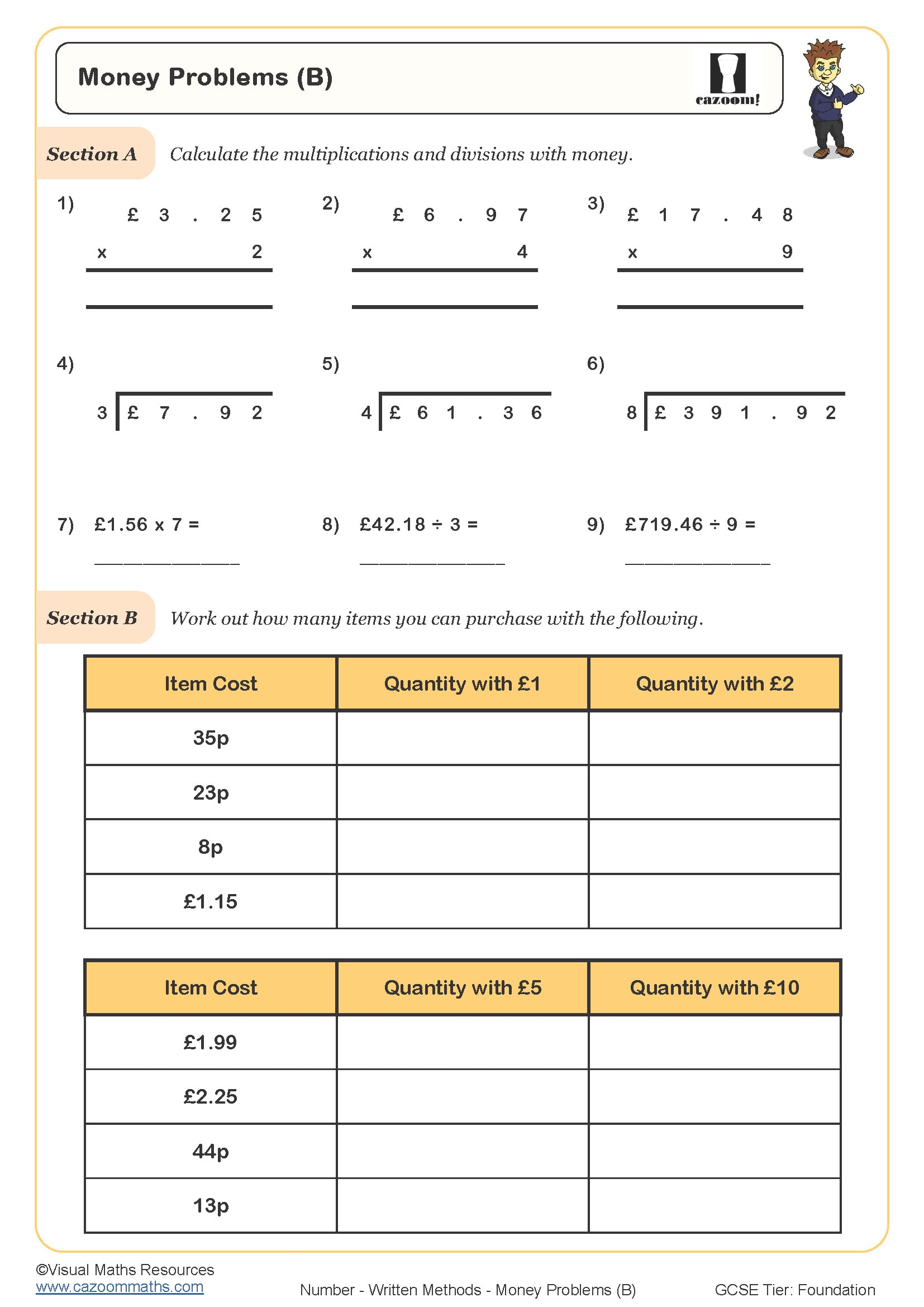
Money Problems (B)
Year groups: 7, 8
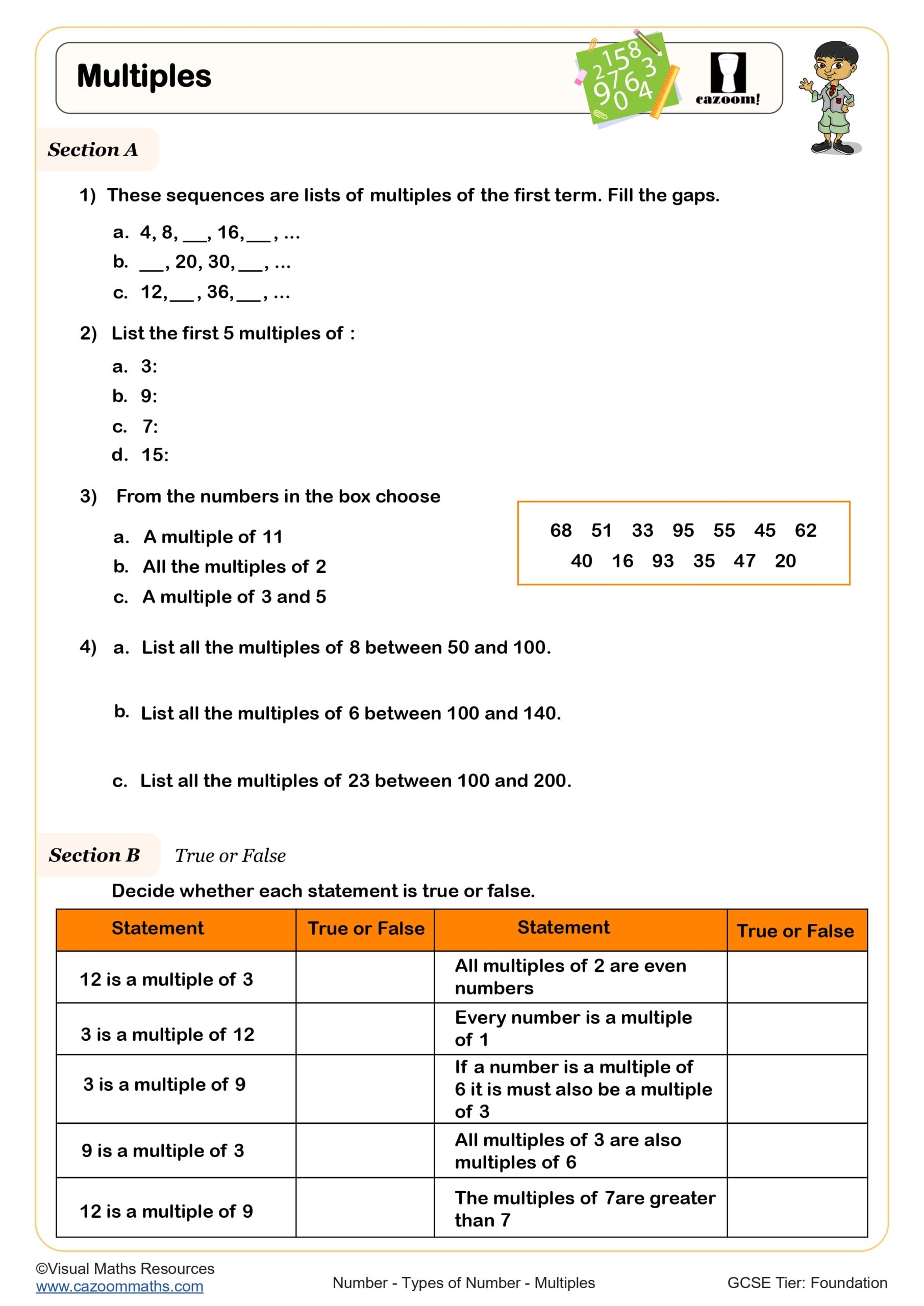
Multiples
Year groups: 7, 8
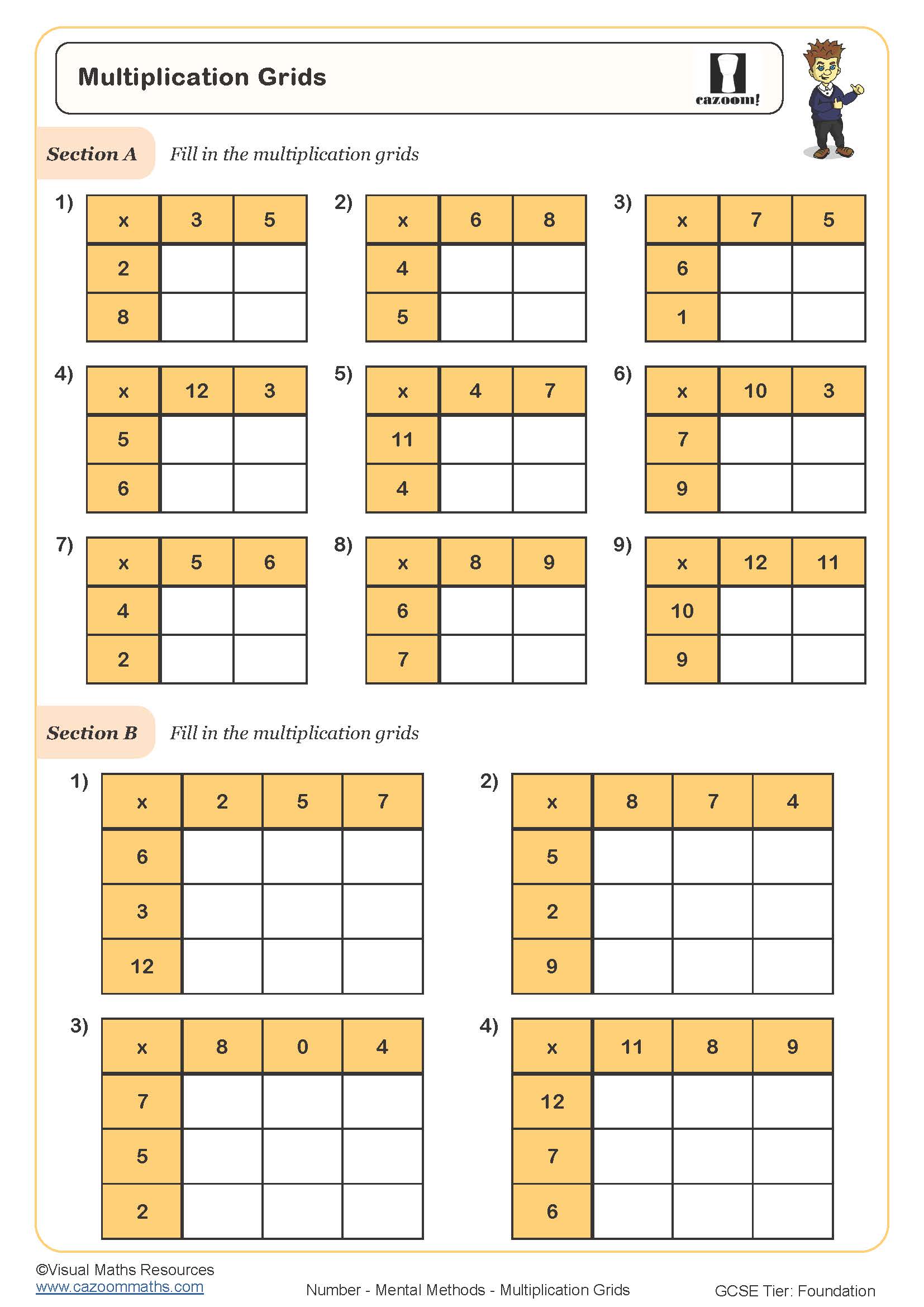
Multiplication Grids
Year groups: 7, 8
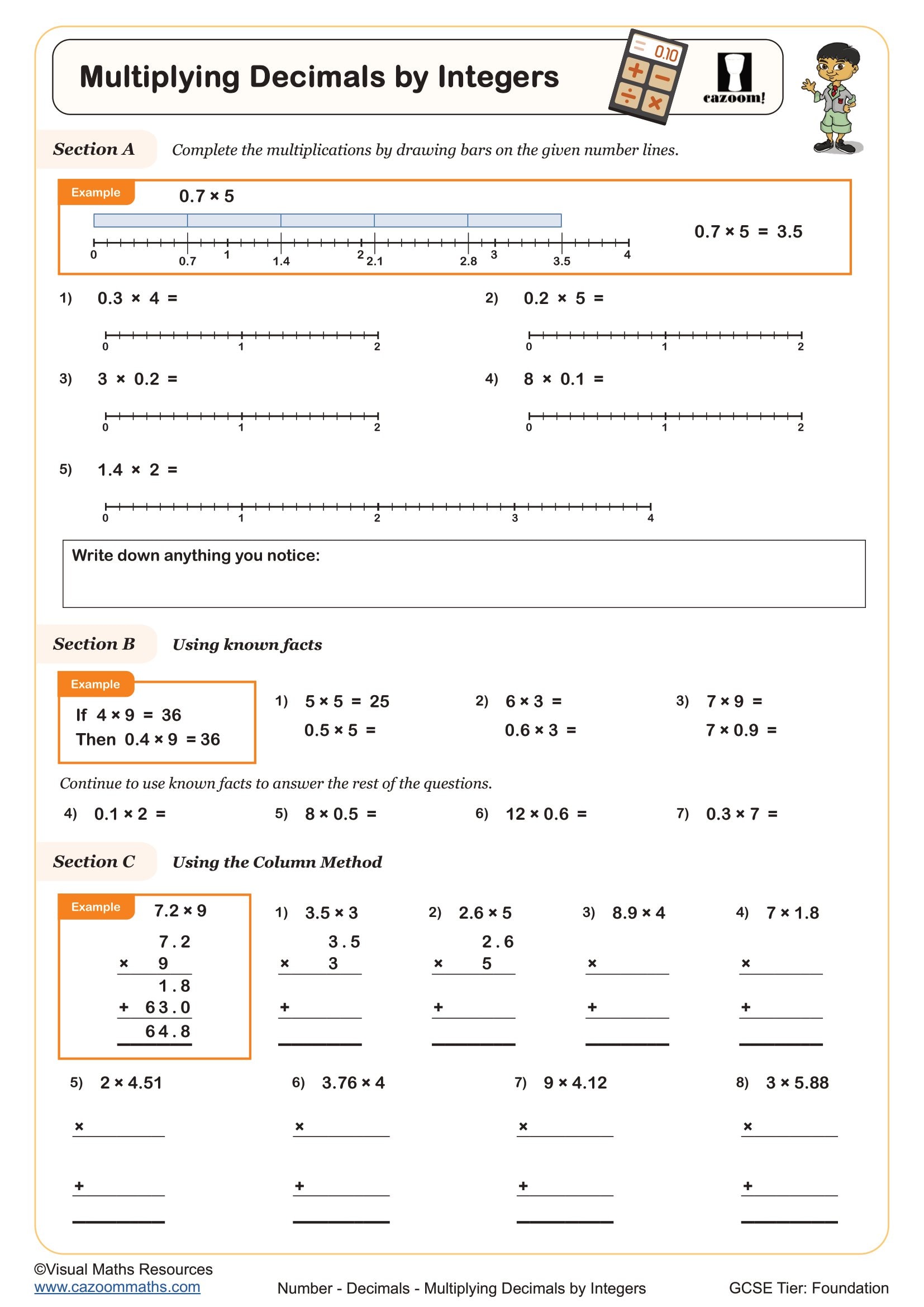
Multiply Decimals by Integers
Year groups: 7
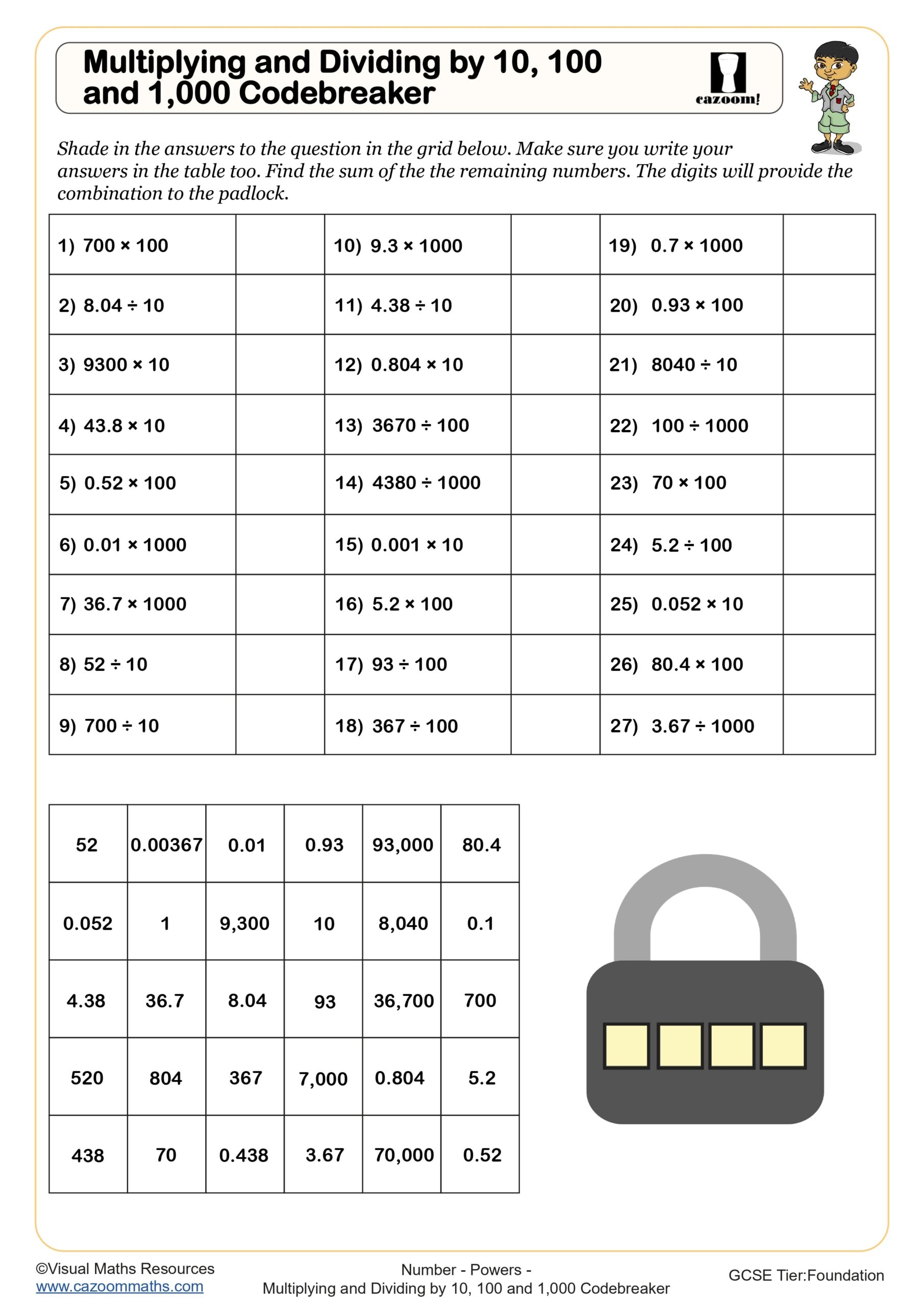
Multiplying and Dividing by 10, 100 and 1,000 Codebreaker
Year groups: 7, 8
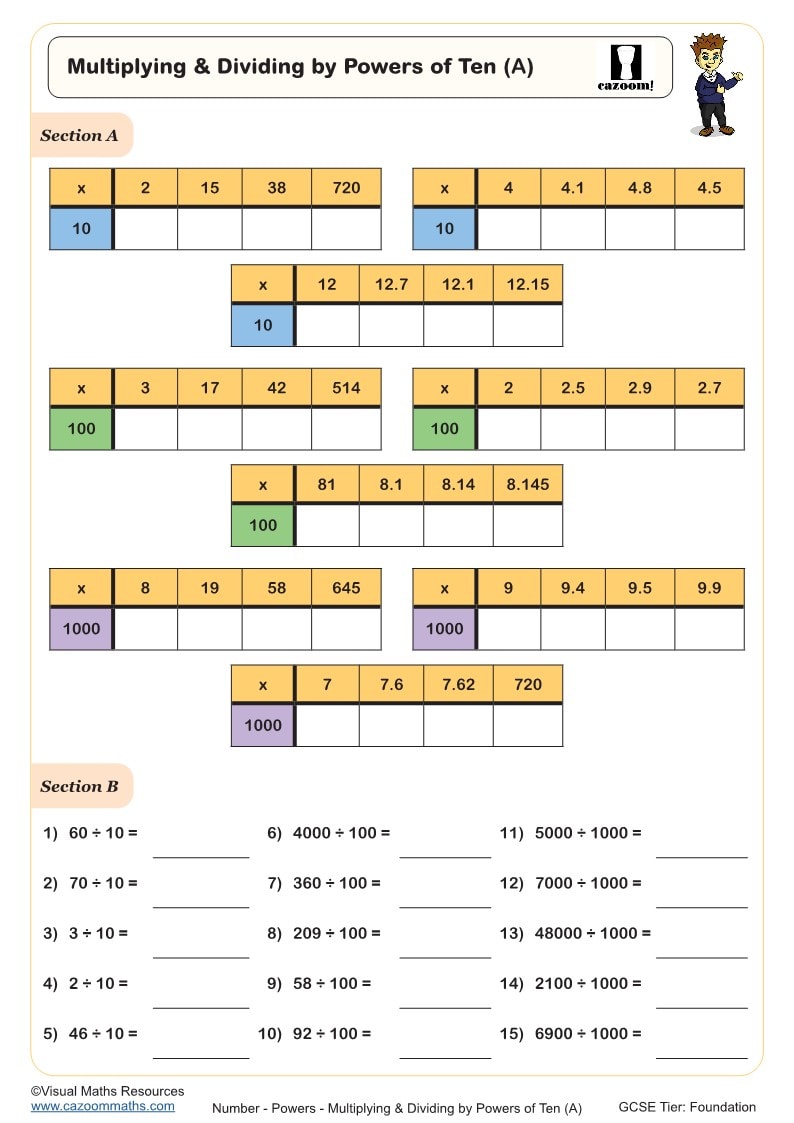
Multiplying and Dividing by Powers of Ten (A)
Year groups: 7, 8
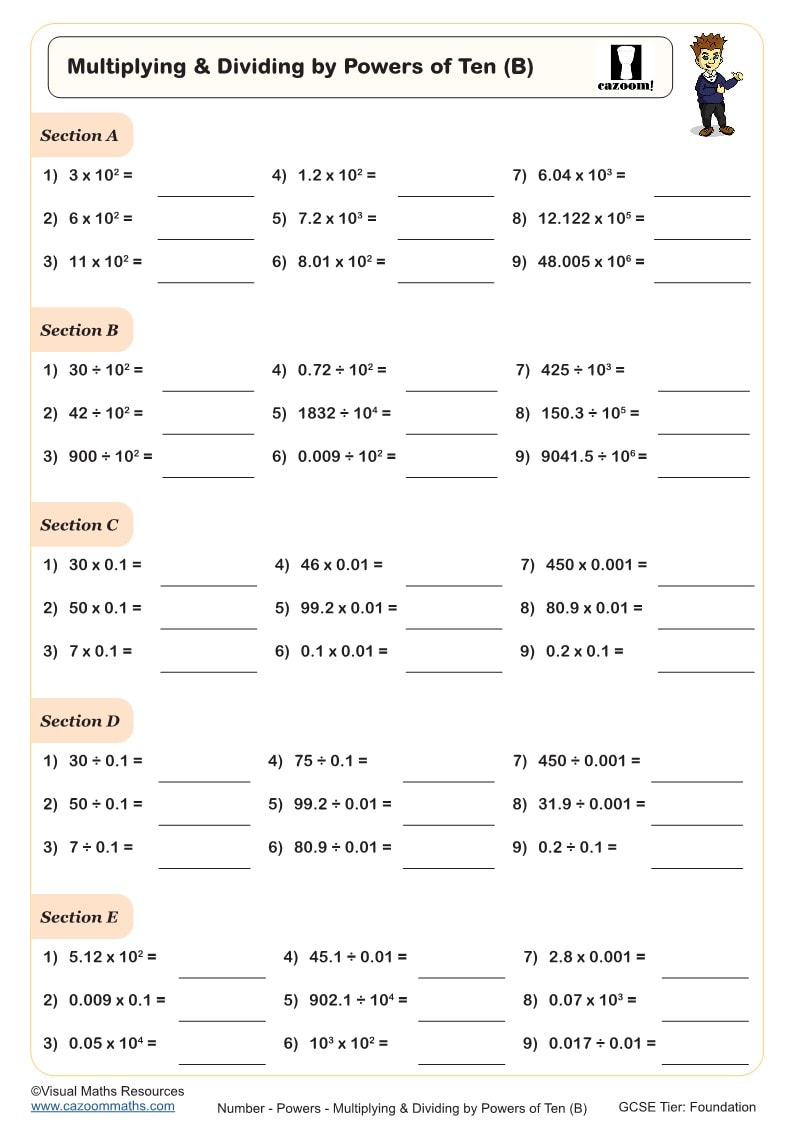
Multiplying and Dividing by Powers of Ten (B)
Year groups: 7, 8
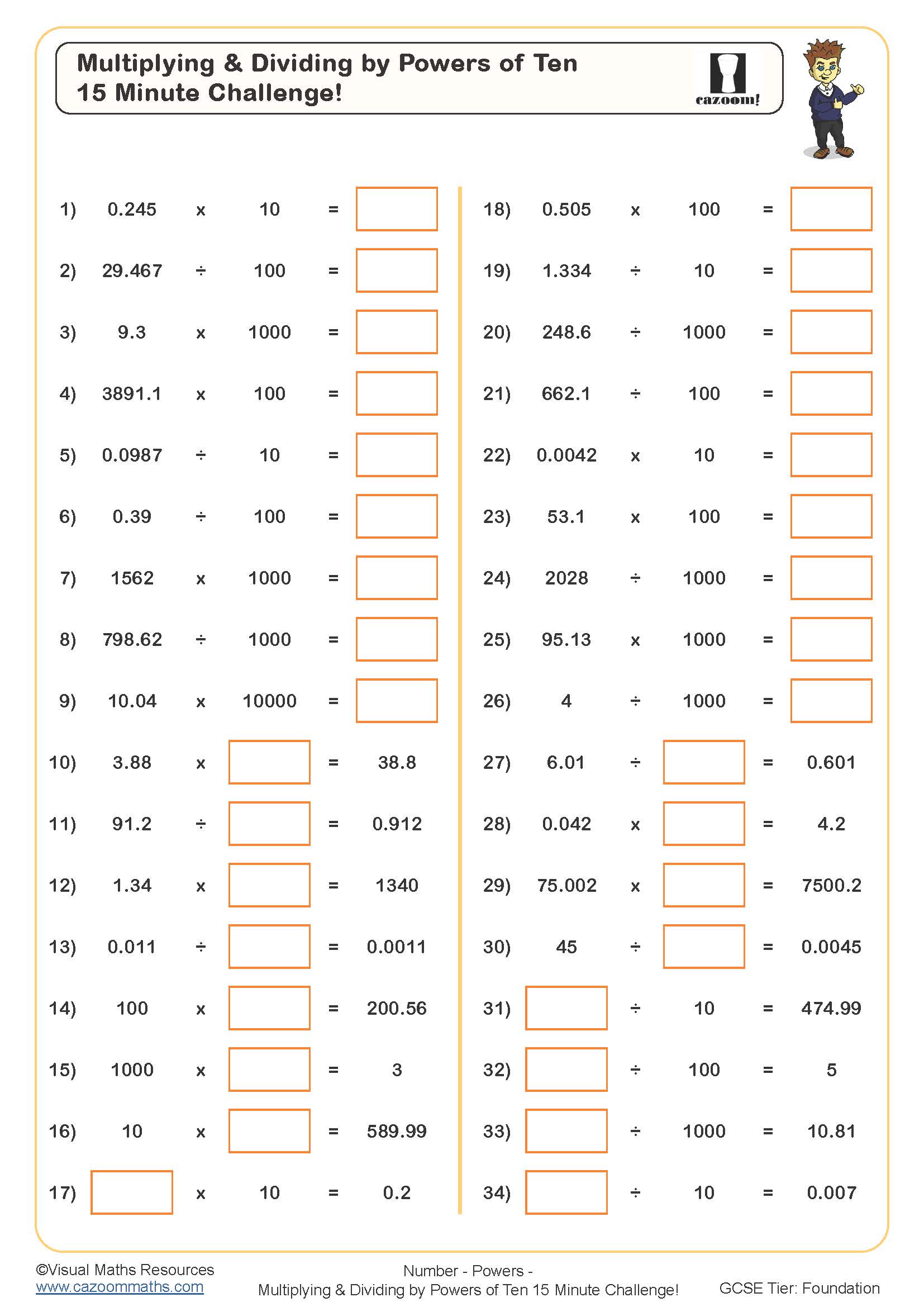
Multiplying and Dividing by Powers of Ten 15 Minute Challenge
Year groups: 7, 8
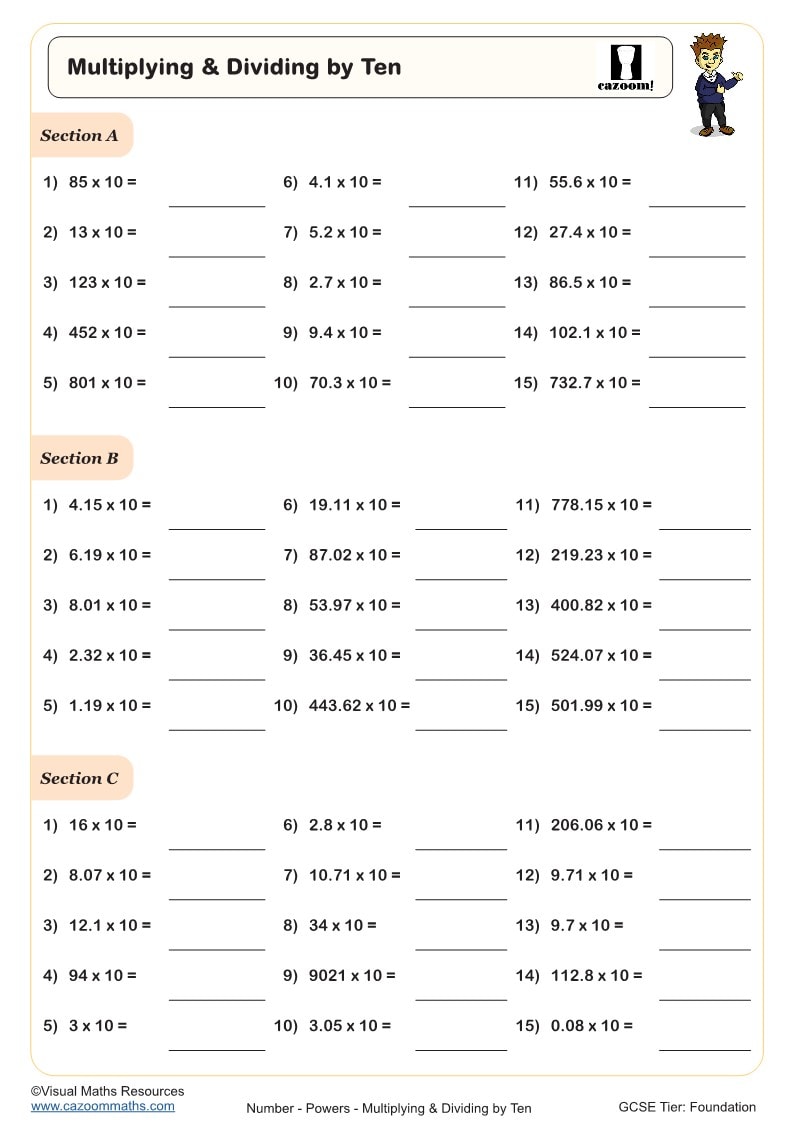
Multiplying and Dividing by Ten
Year groups: 7, 8
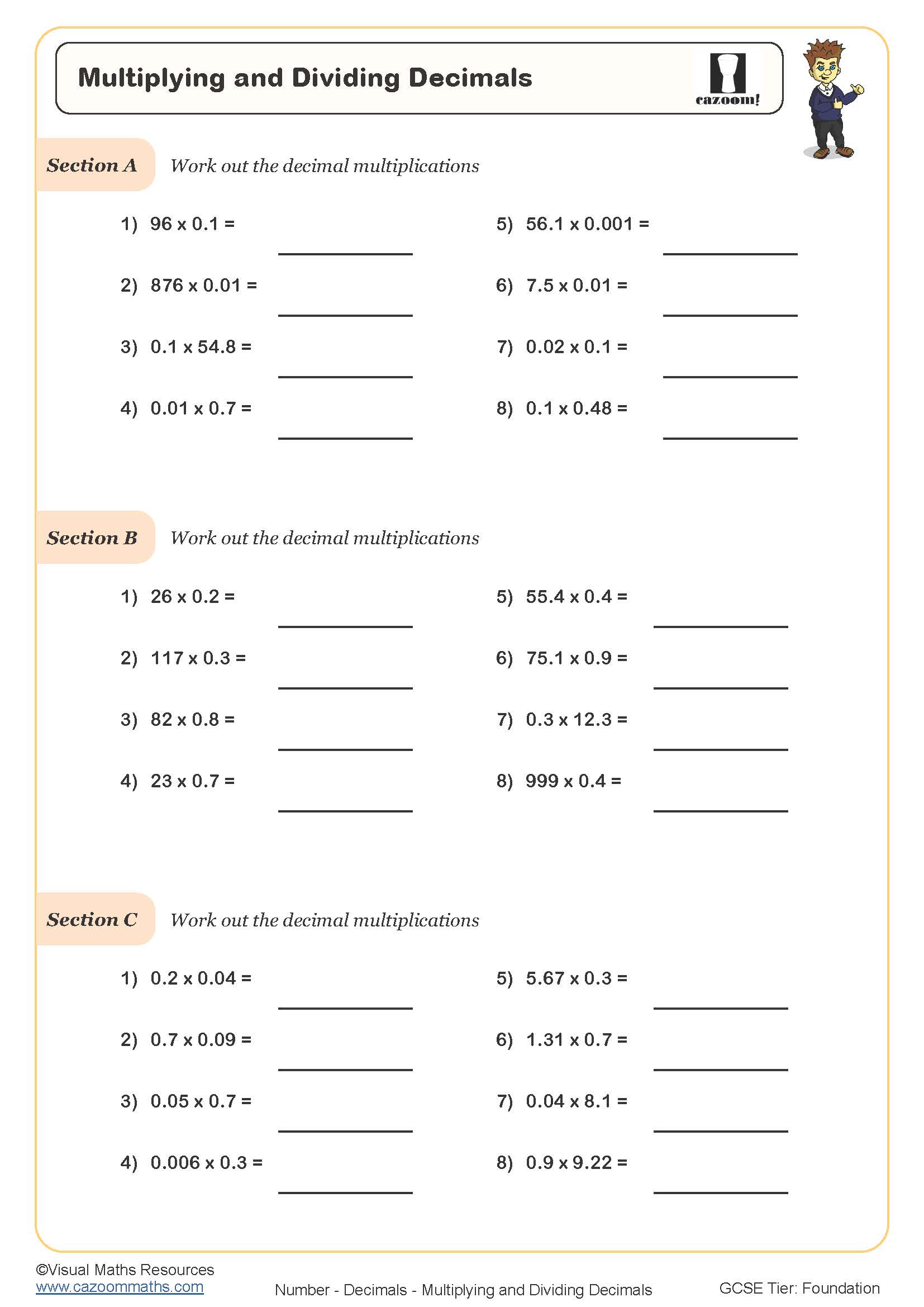
Multiplying and Dividing Decimals
Year groups: 7, 8
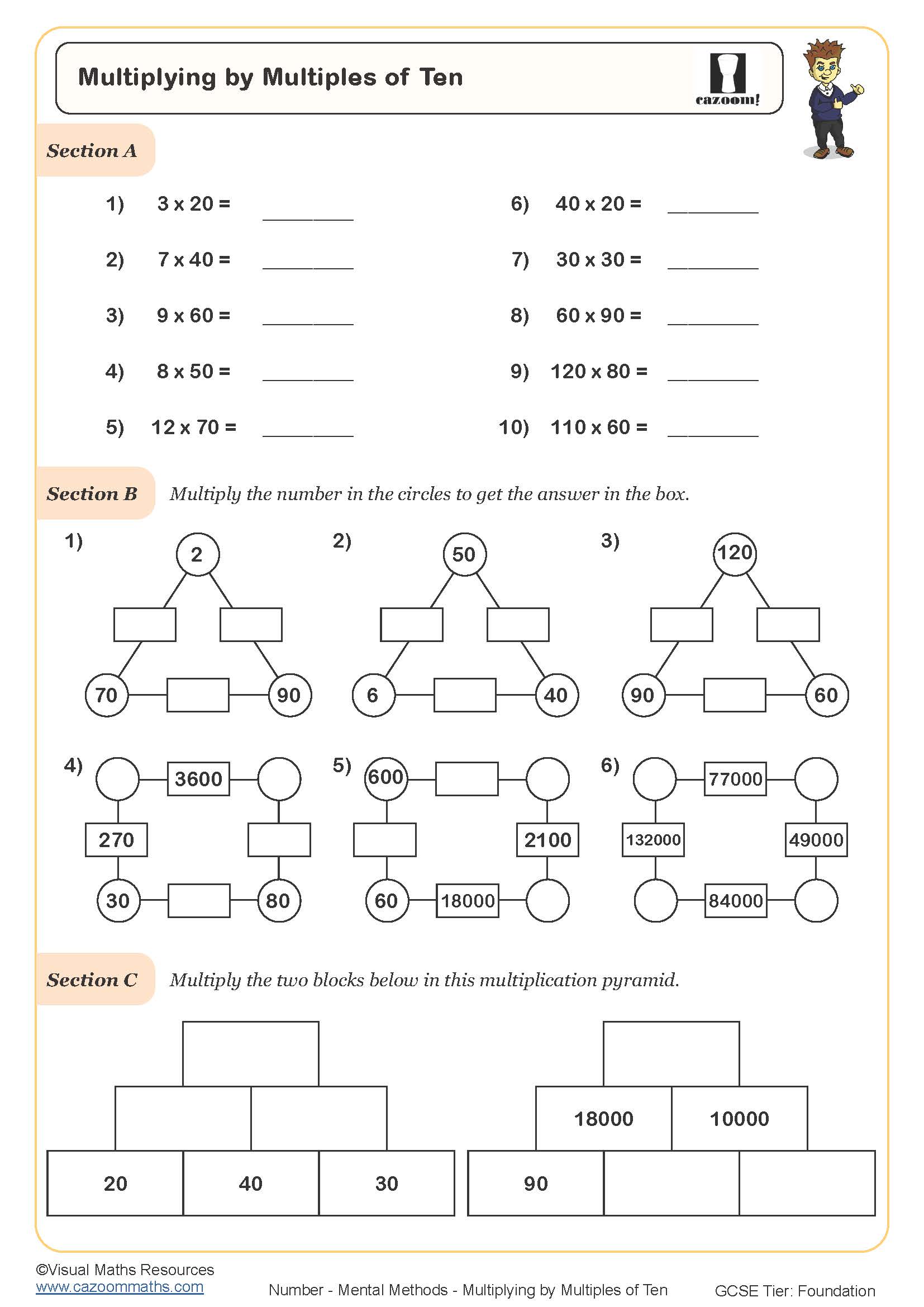
Multiplying by Multiples of Ten
Year groups: 7, 8
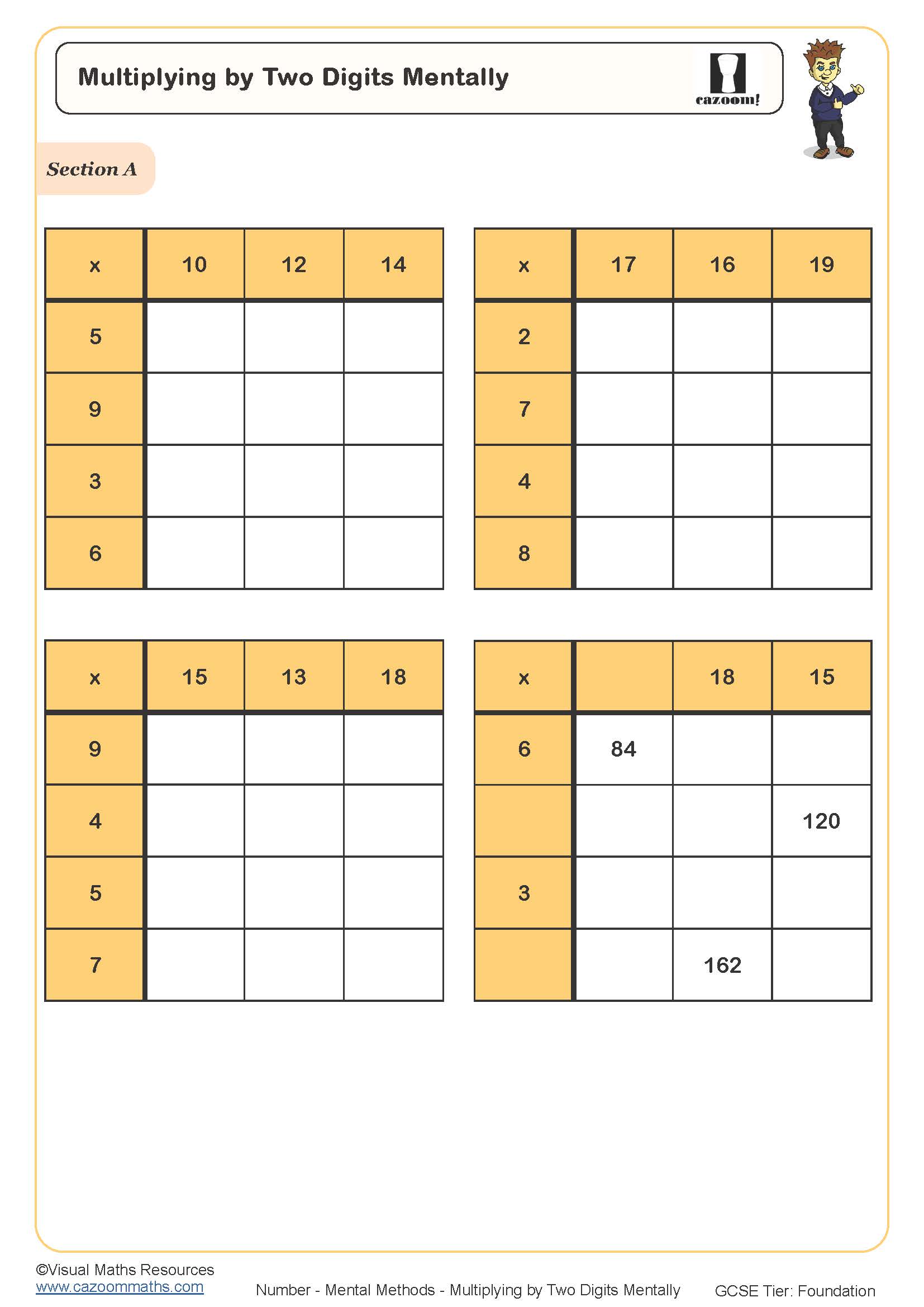
Multiplying by Two Digits Mentally
Year groups: 7, 8
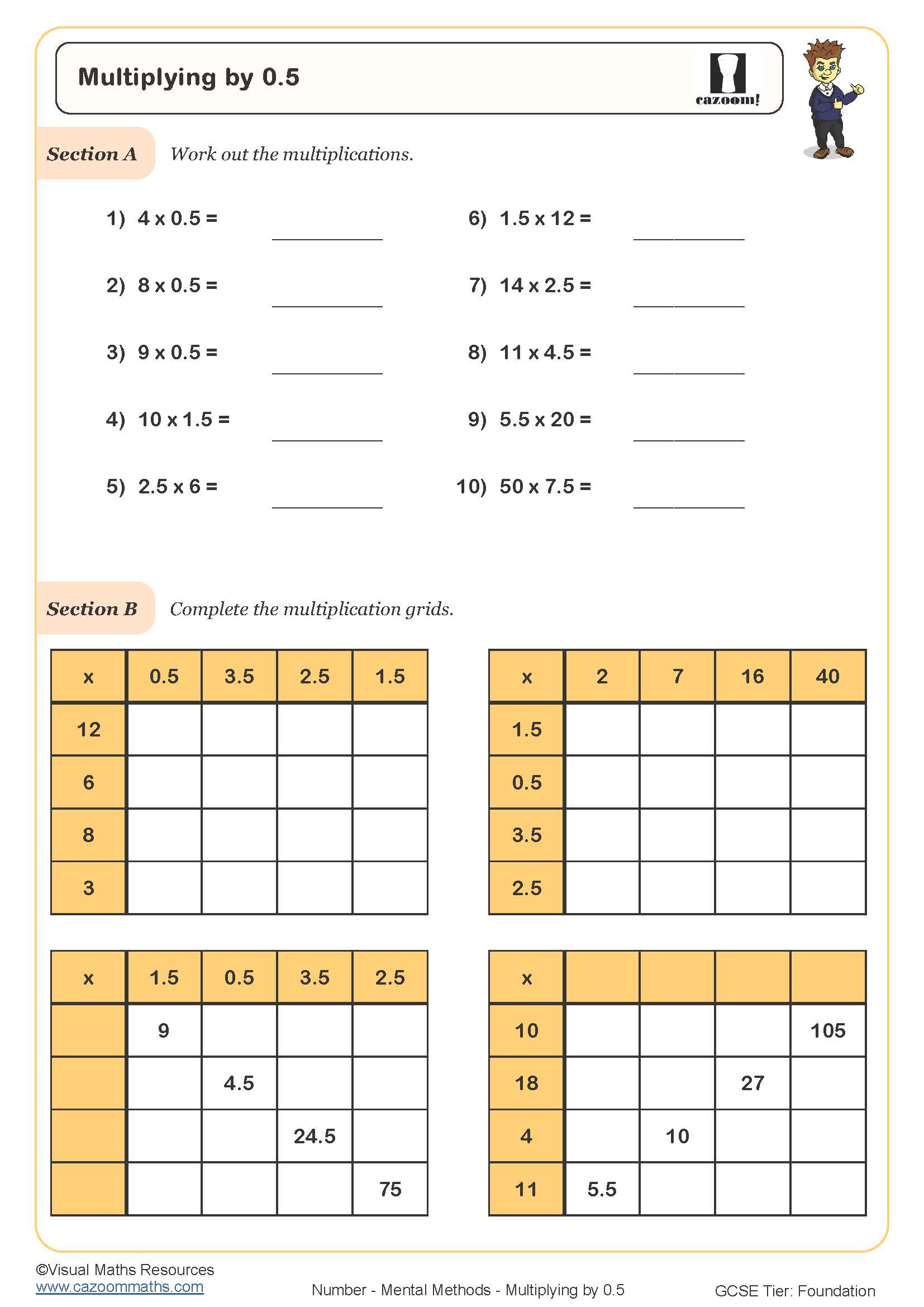
Multiplying by Zero Point Five
Year groups: 7, 8
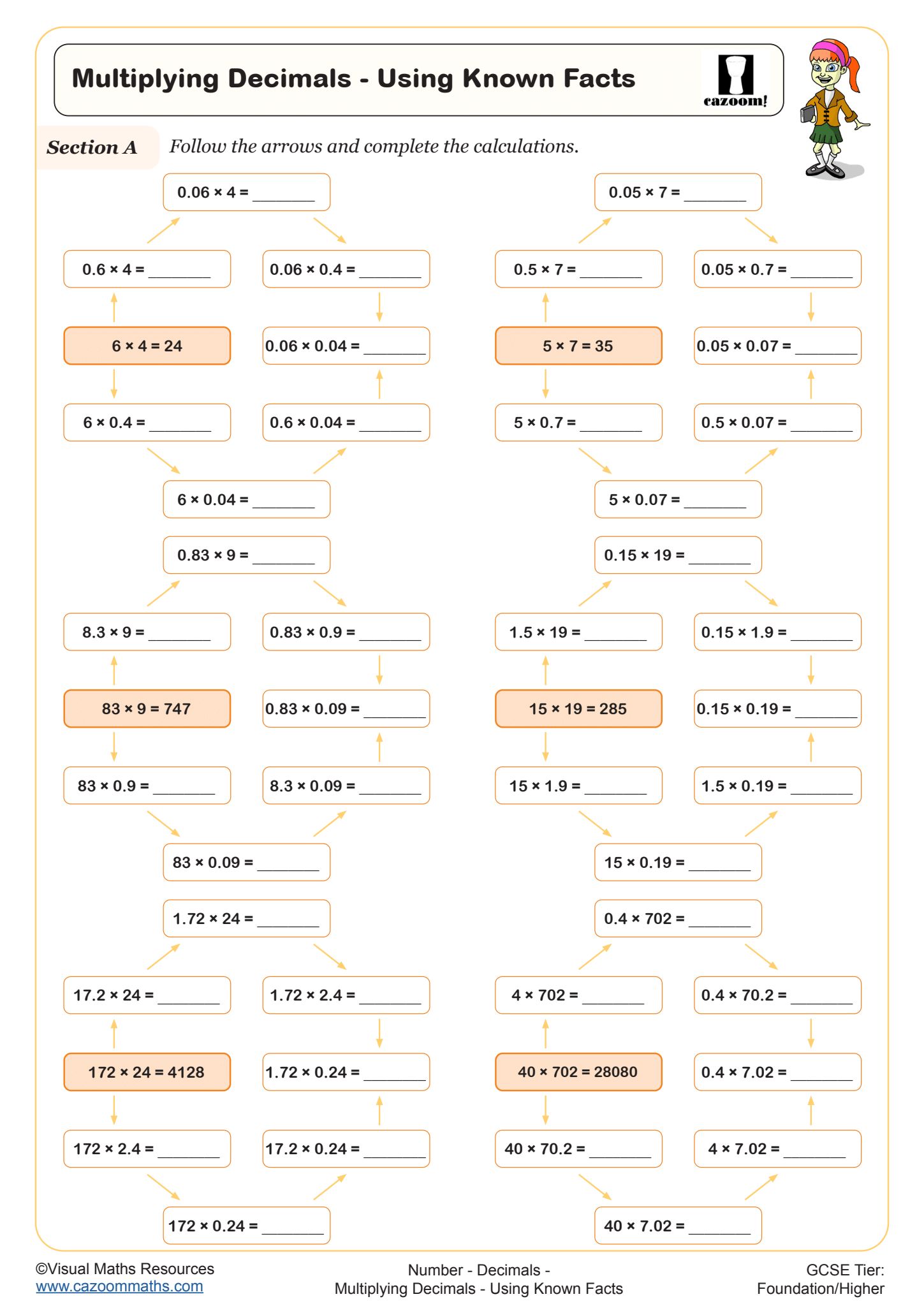
Multiplying Decimals - Using Known Facts
Year groups: 7, 8
Multiplying Decimals (A)
Year groups: 7, 8
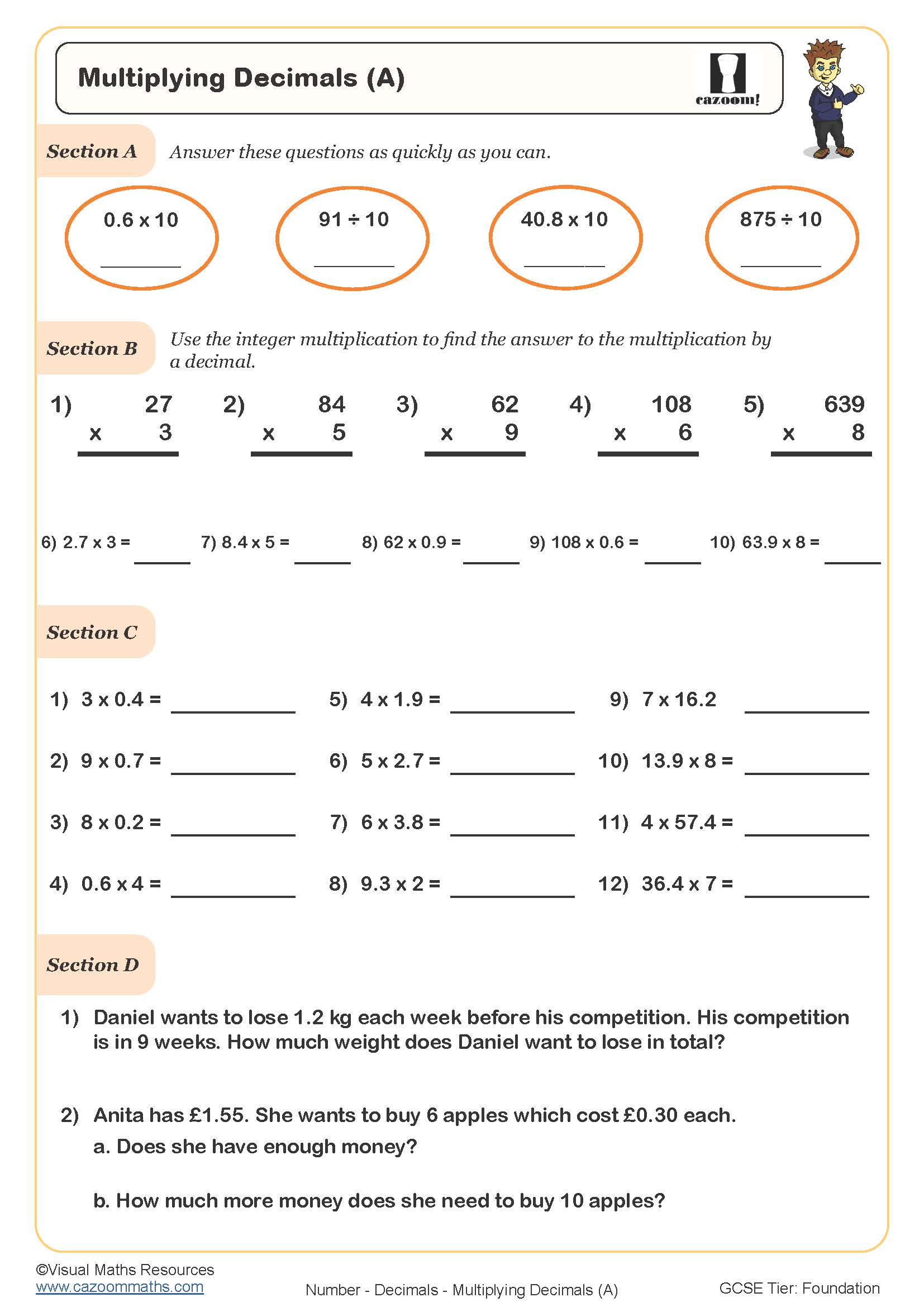
Multiplying Decimals (B)
Year groups: 7, 8
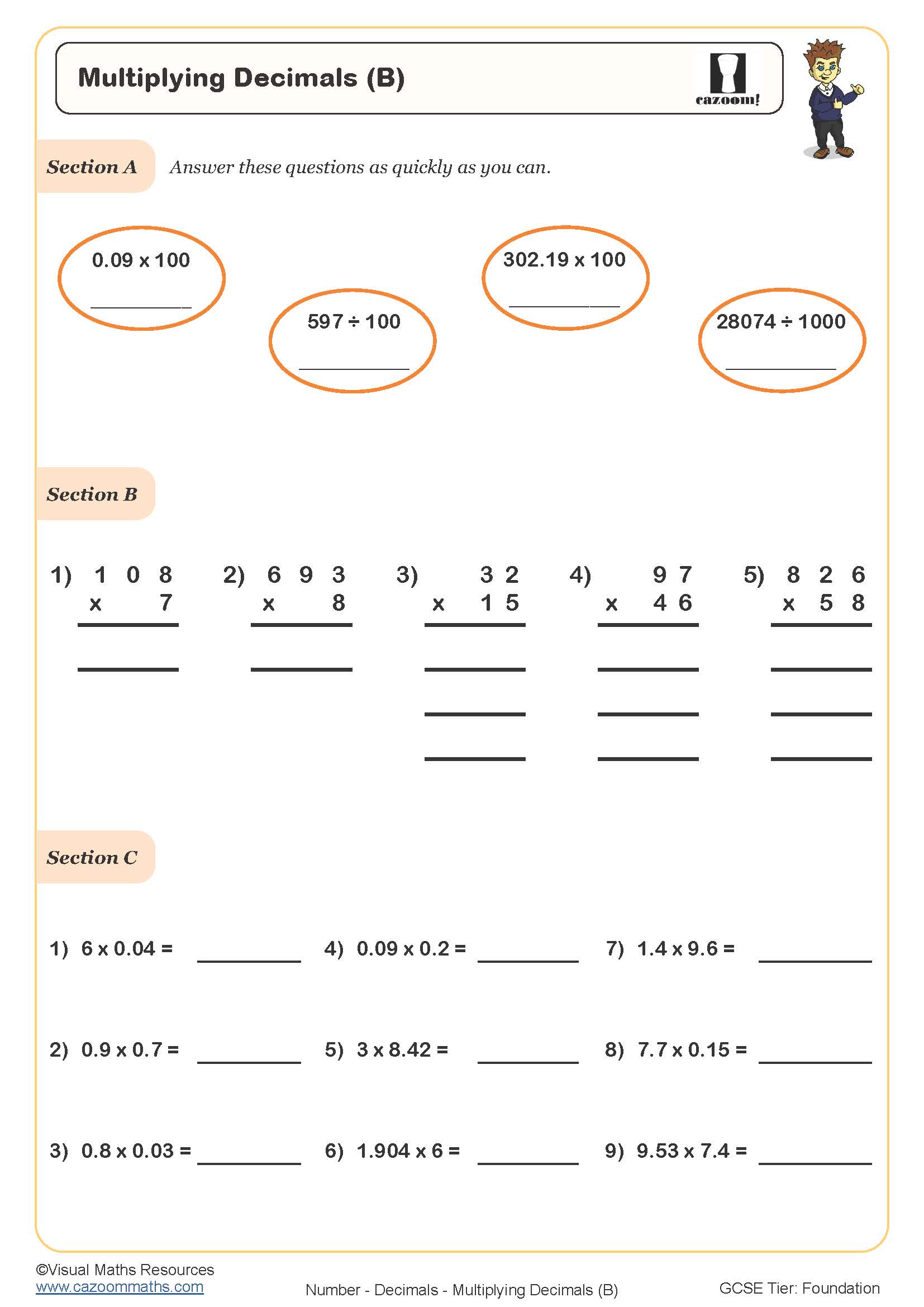
Negative Number Multiplication and Division
Year groups: 7, 8
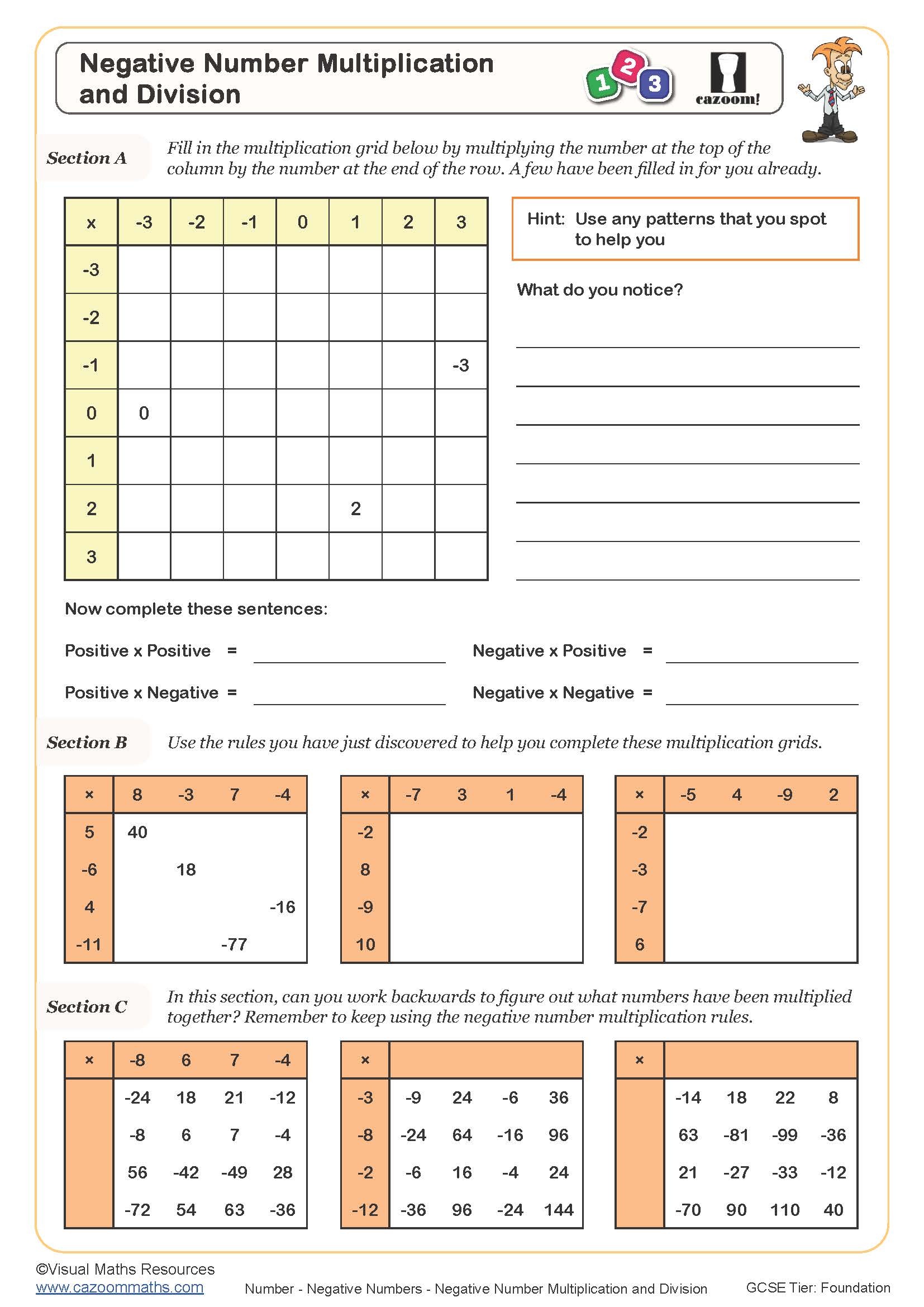
Negative number search - sums to +1
Year groups: 7, 8
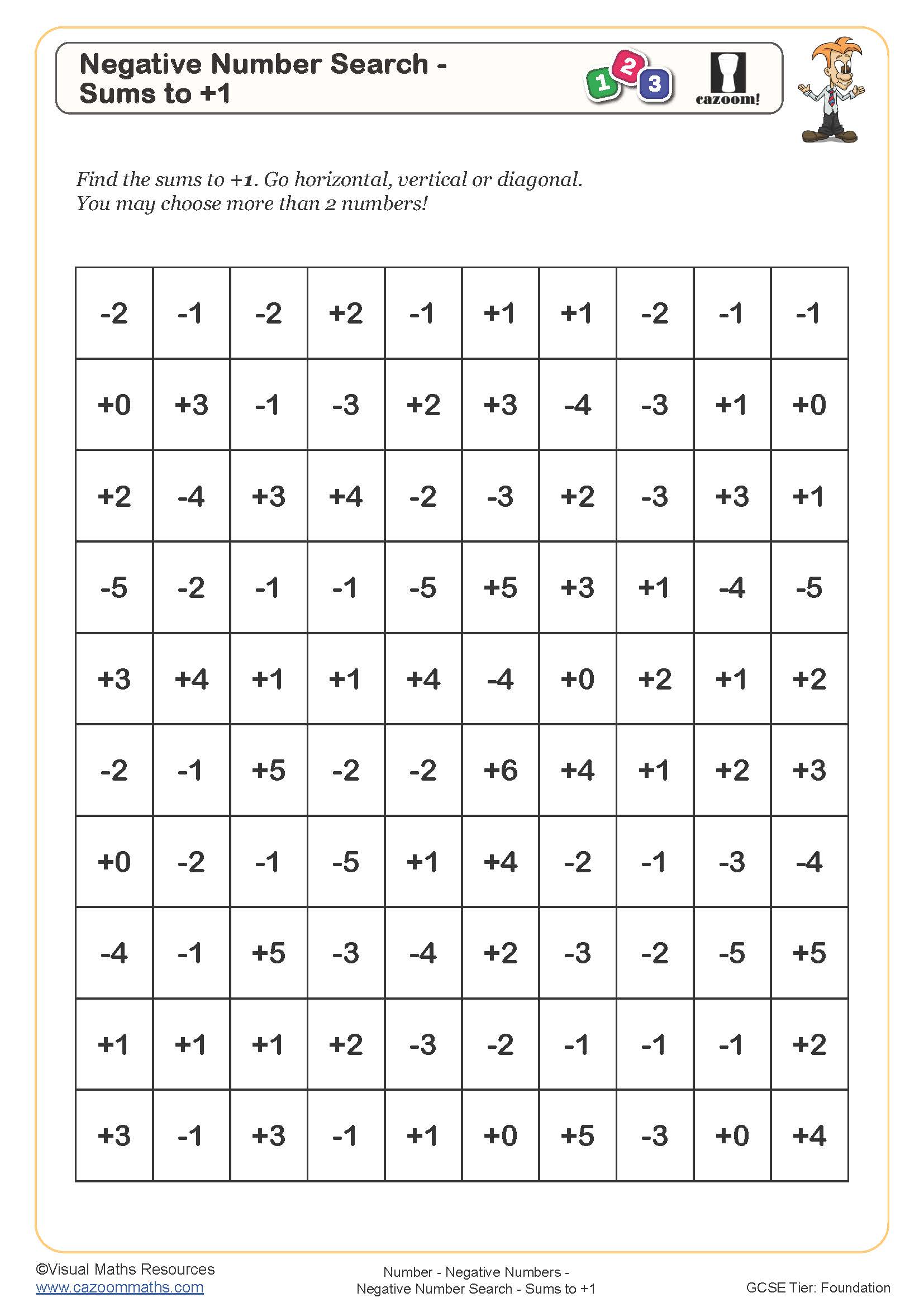
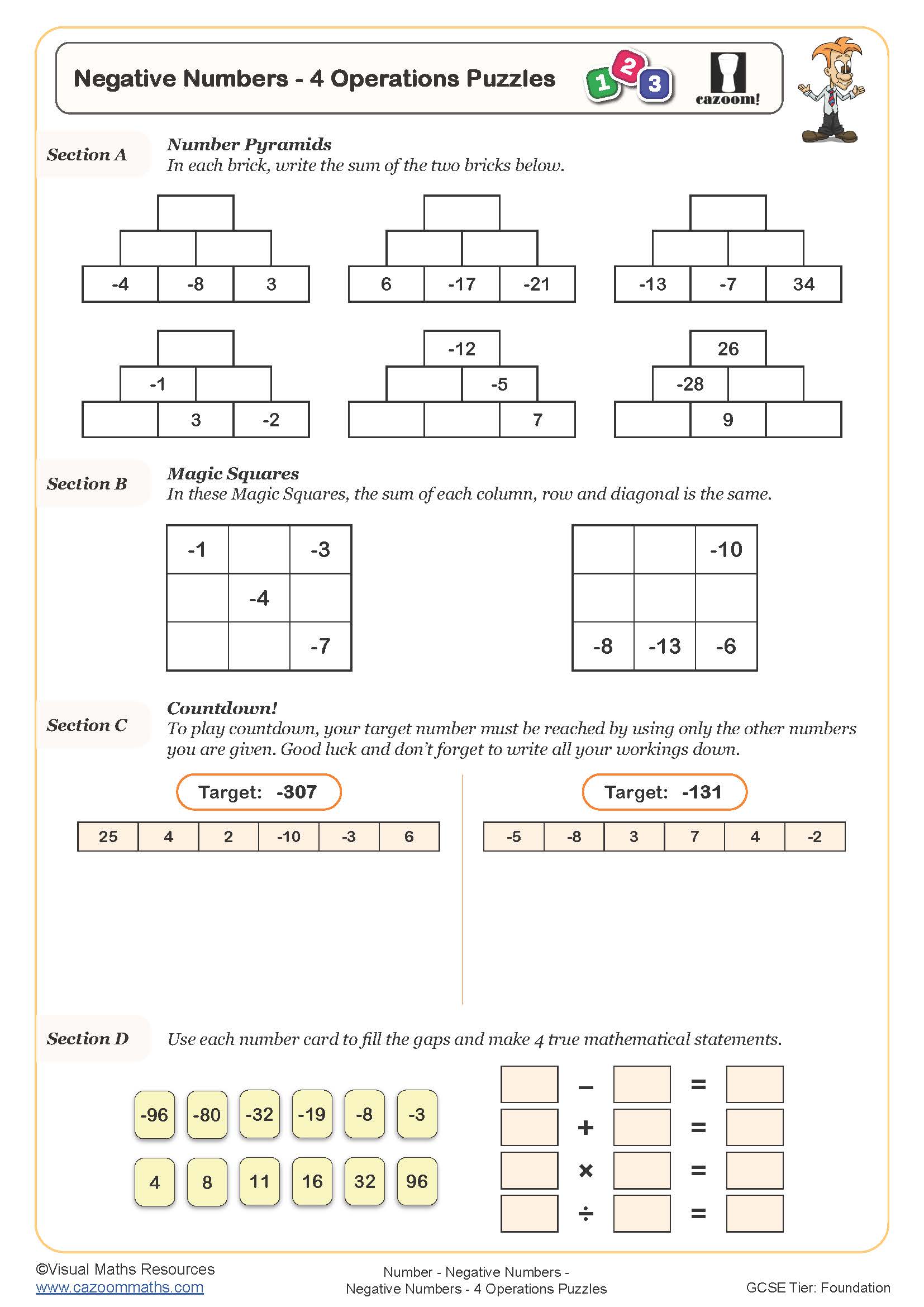
Negative Numbers - 4 Operations Puzzles
Year groups: 7, 8
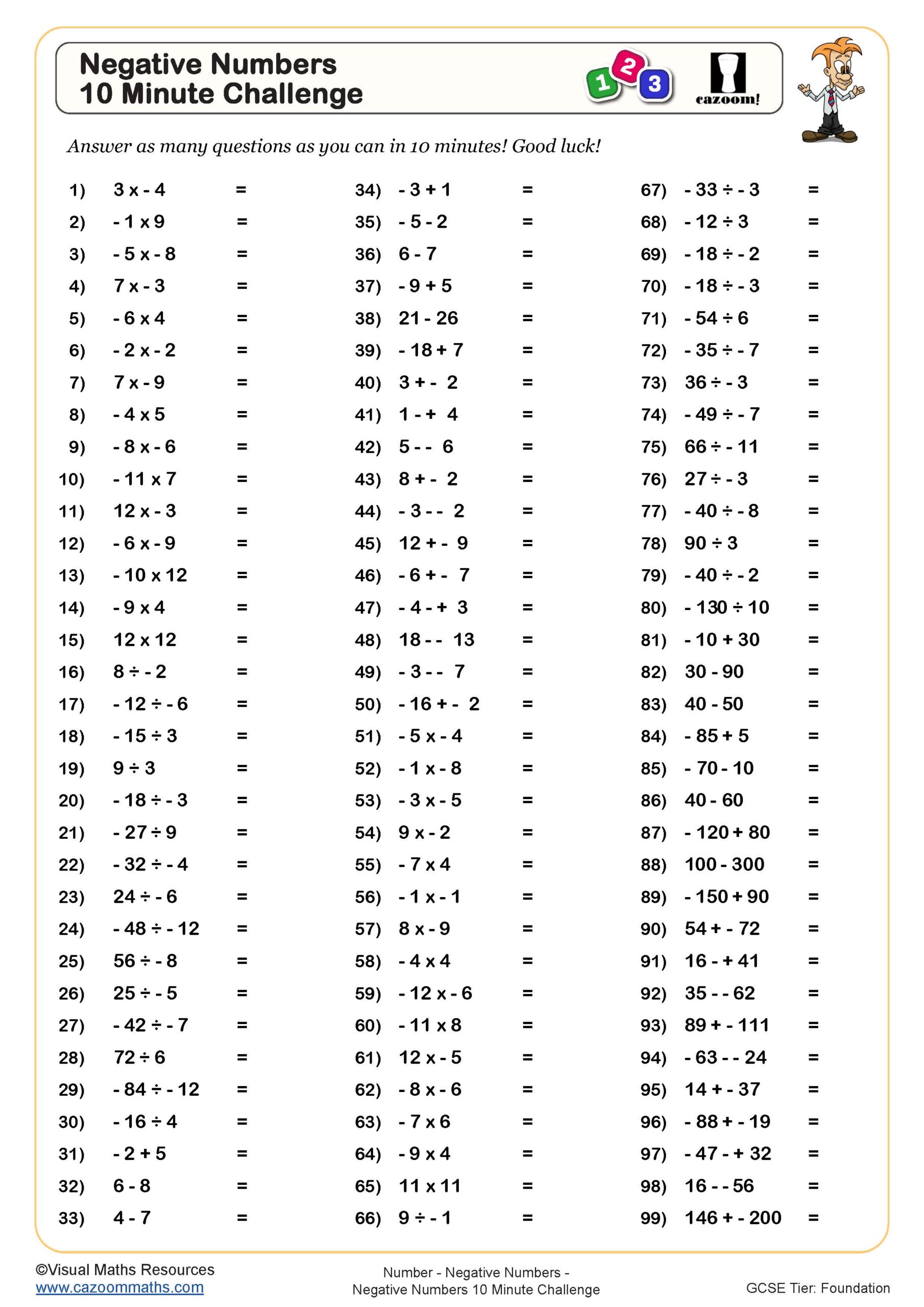
Negative Numbers 10 Minute Challenge
Year groups: 7, 8, 9
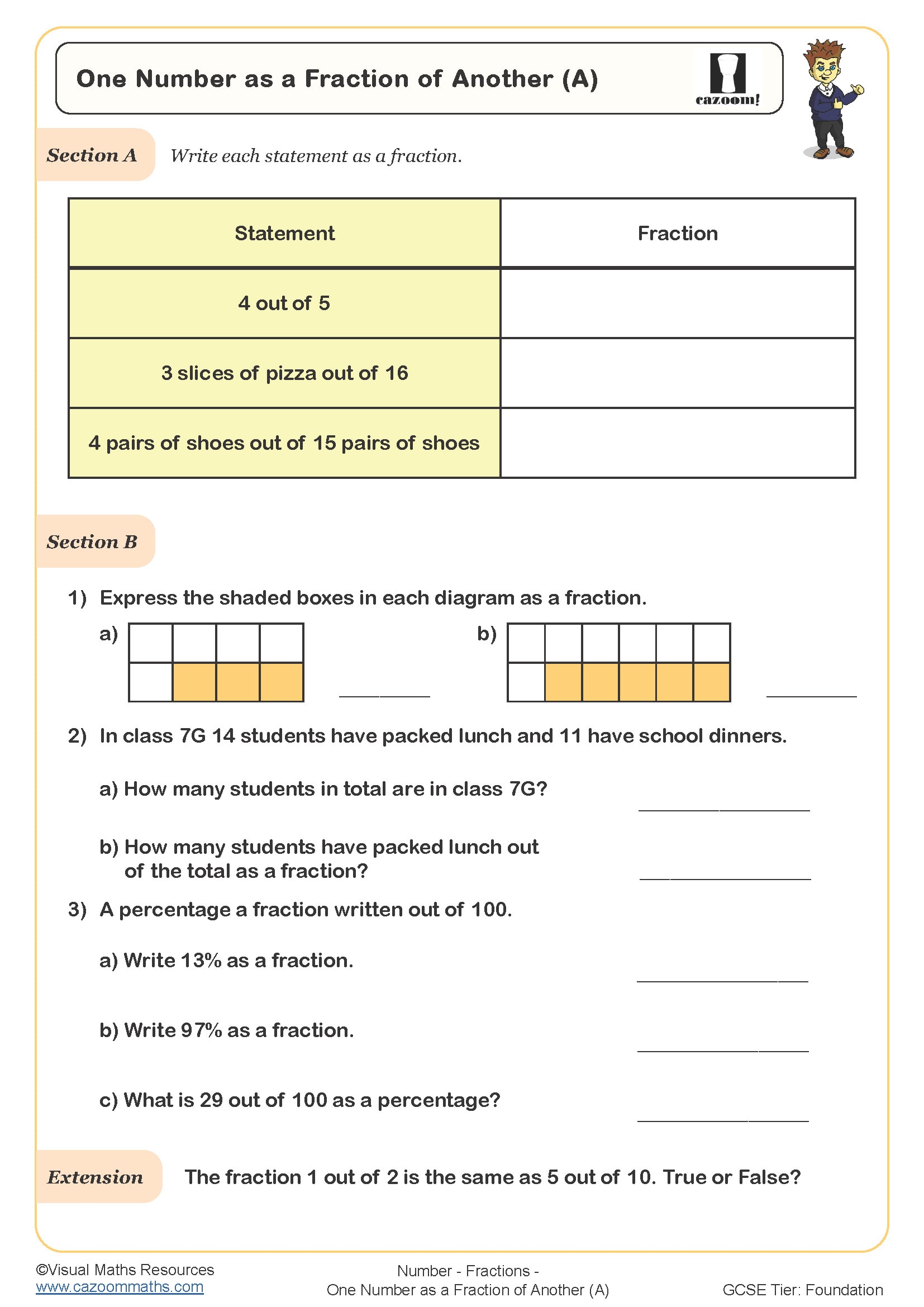
One Number as a Fraction of Another (A)
Year groups: 7, 8
One Number as a Fraction of Another (B)
Year groups: 7, 8

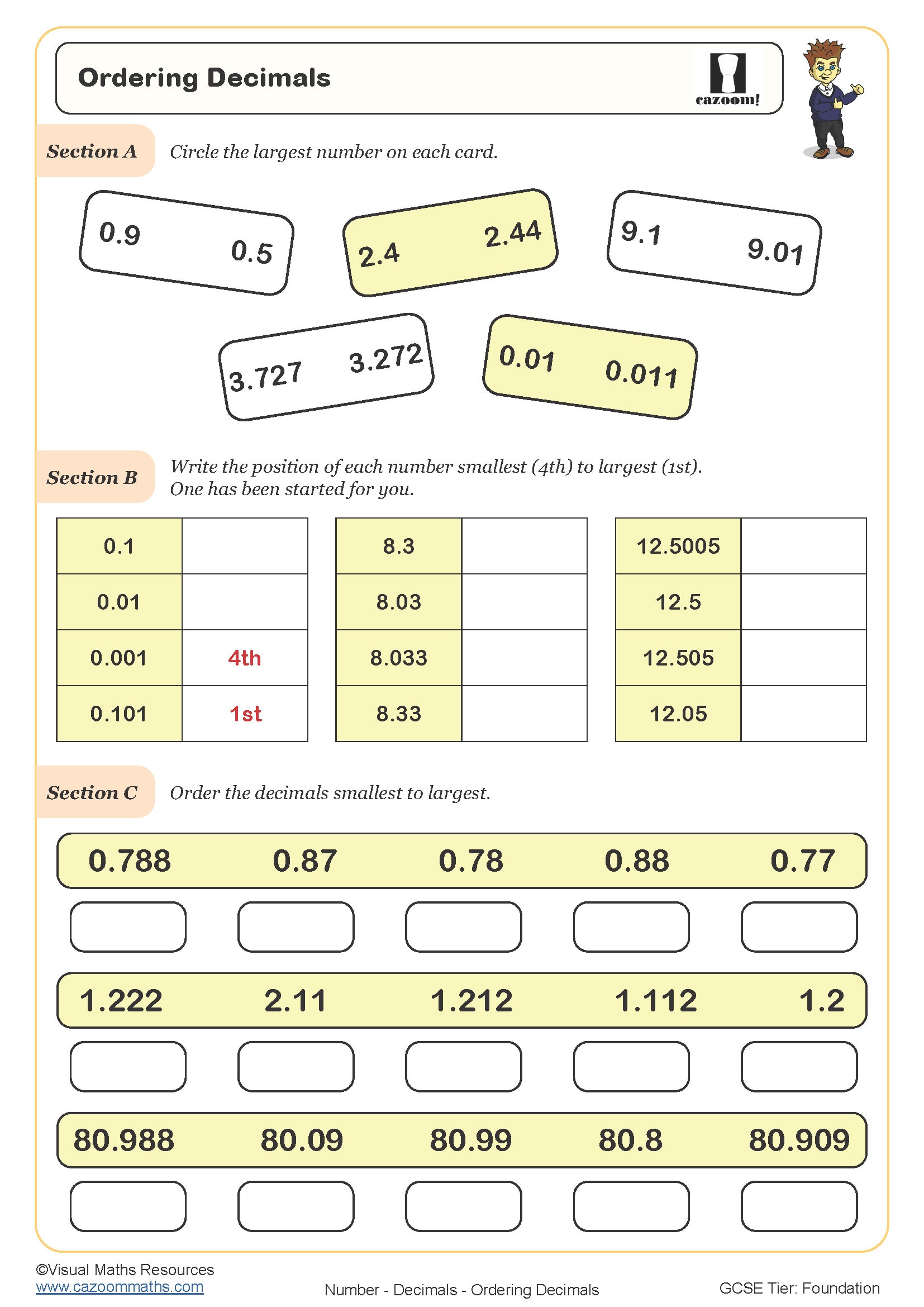
Ordering Decimals
Year groups: 7, 8
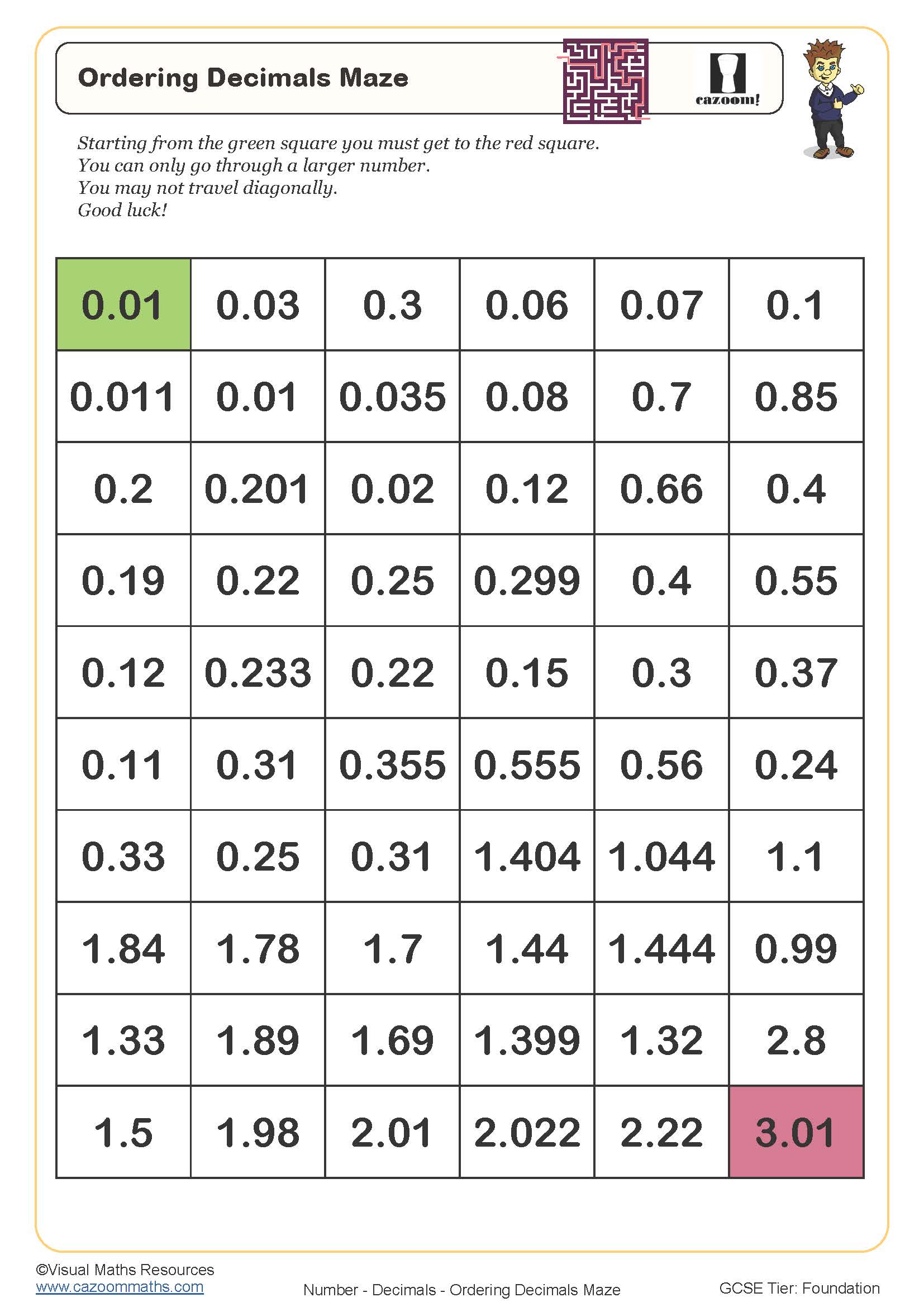
Ordering Decimals Maze
Year groups: 7, 8
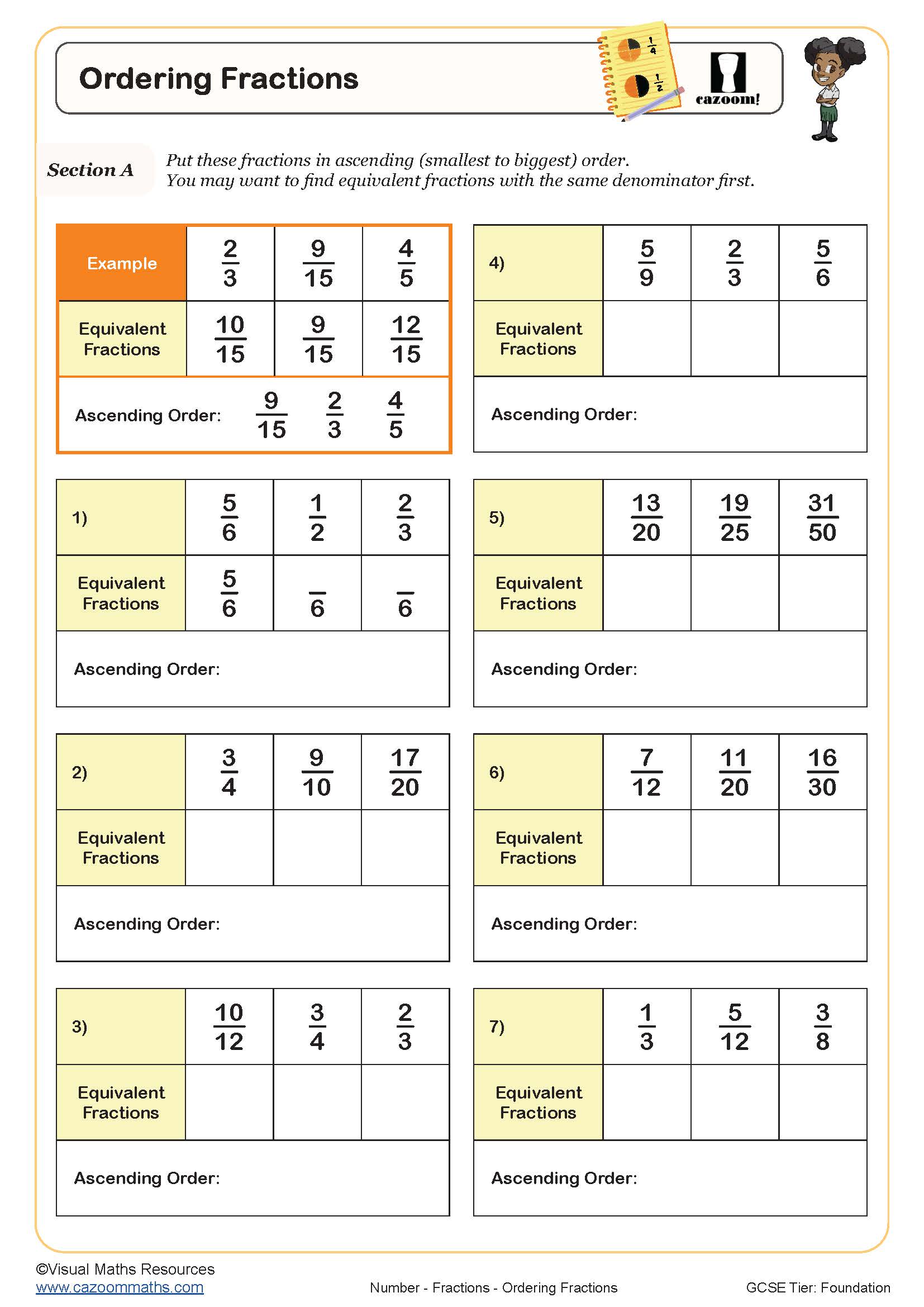
Ordering Fractions
Year groups: 7, 8, 9
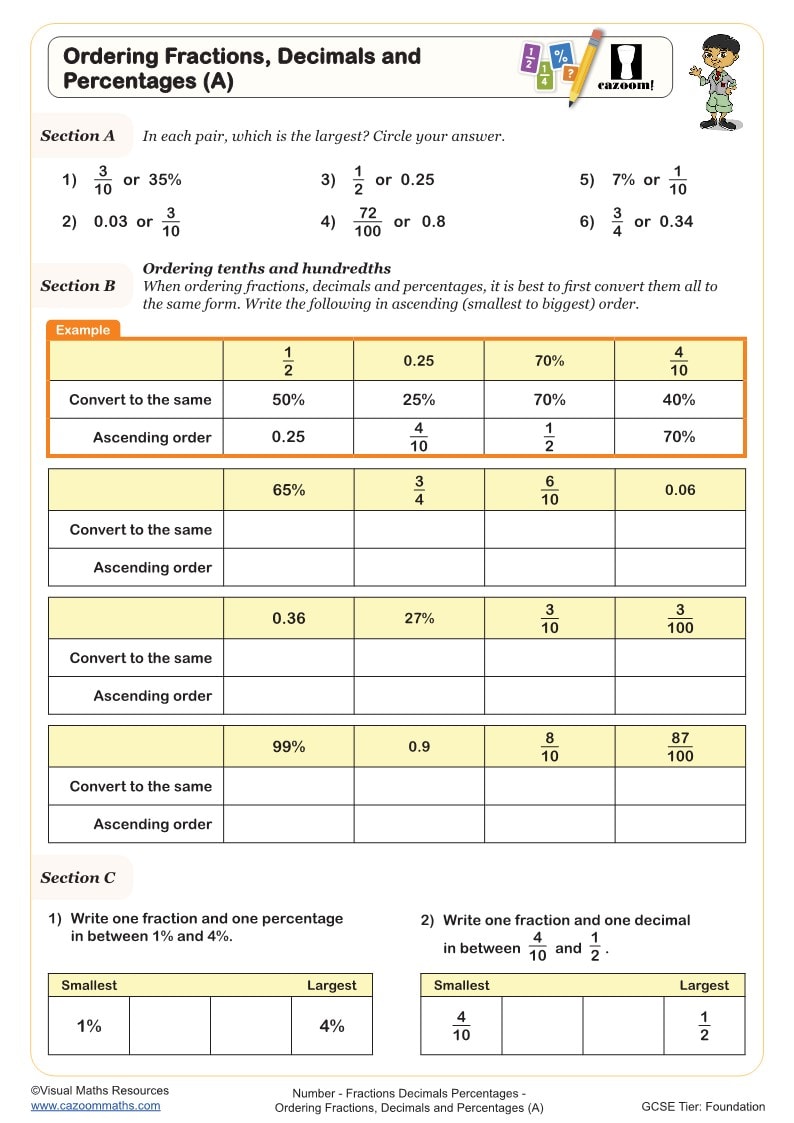
Ordering Fractions Decimals and Percentages (A)
Year groups: 7, 8
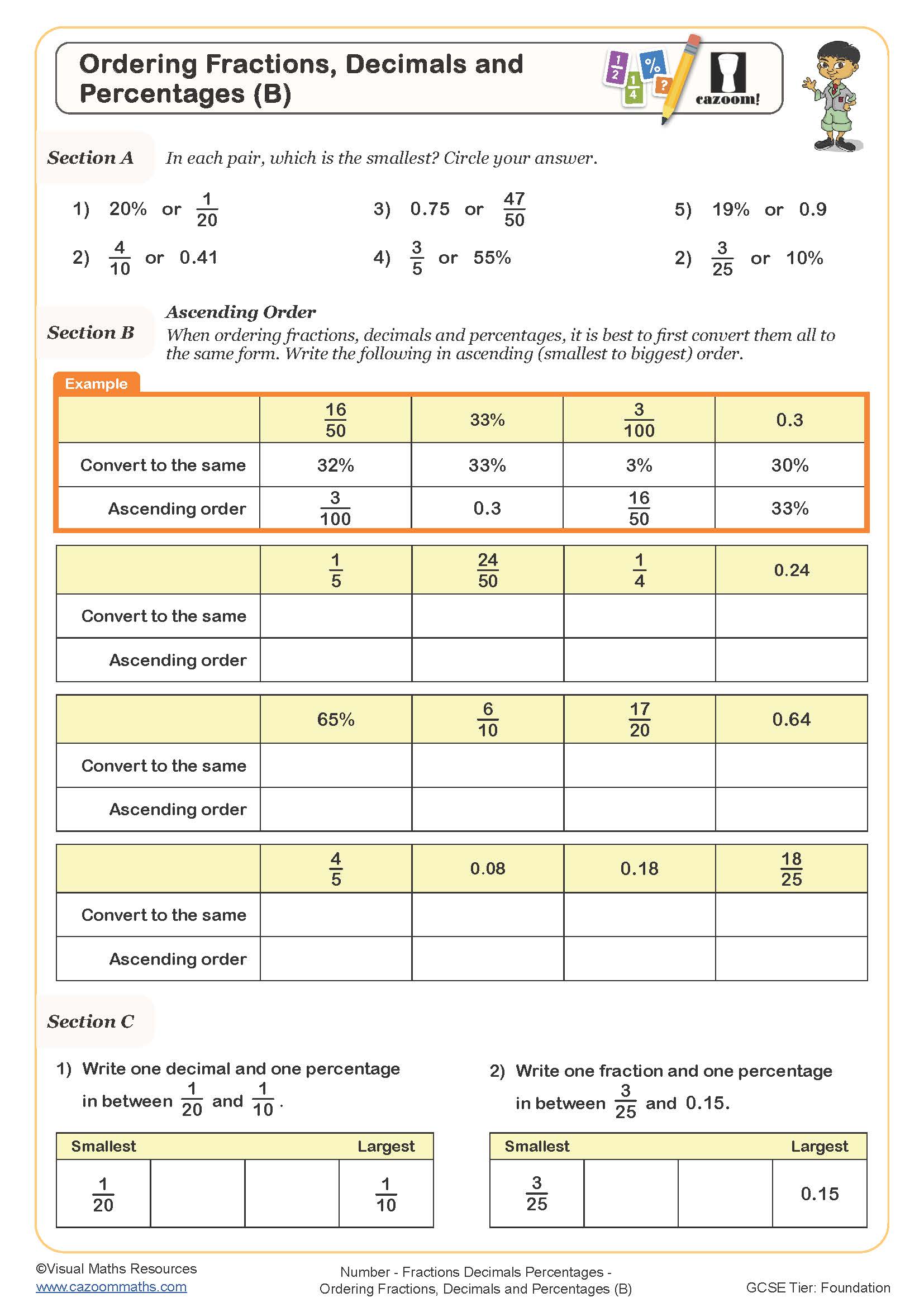
Ordering Fractions Decimals and Percentages (B)
Year groups: 7, 8, 9
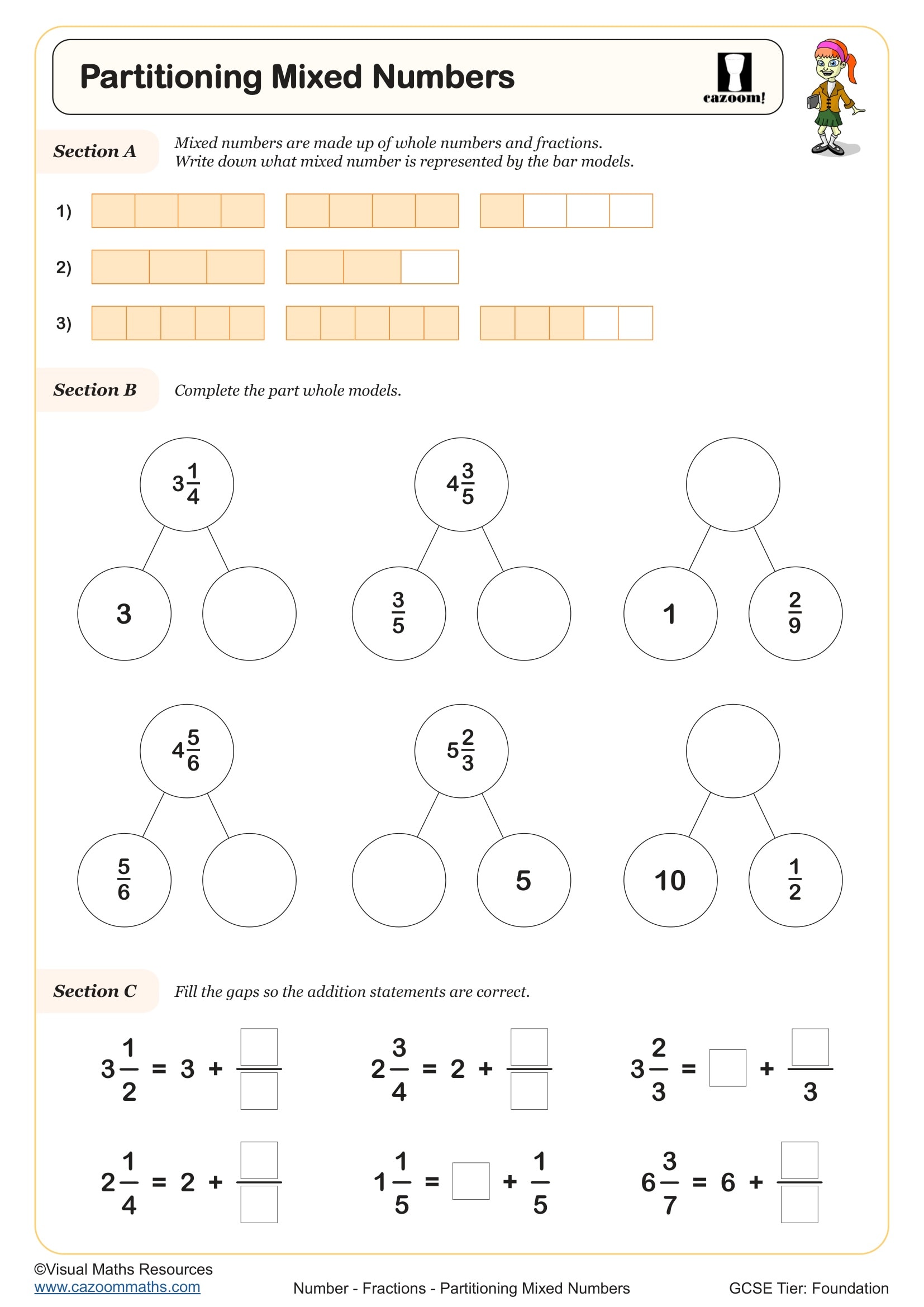
Partitioning Mixed Numbers
Year groups: 7, 8
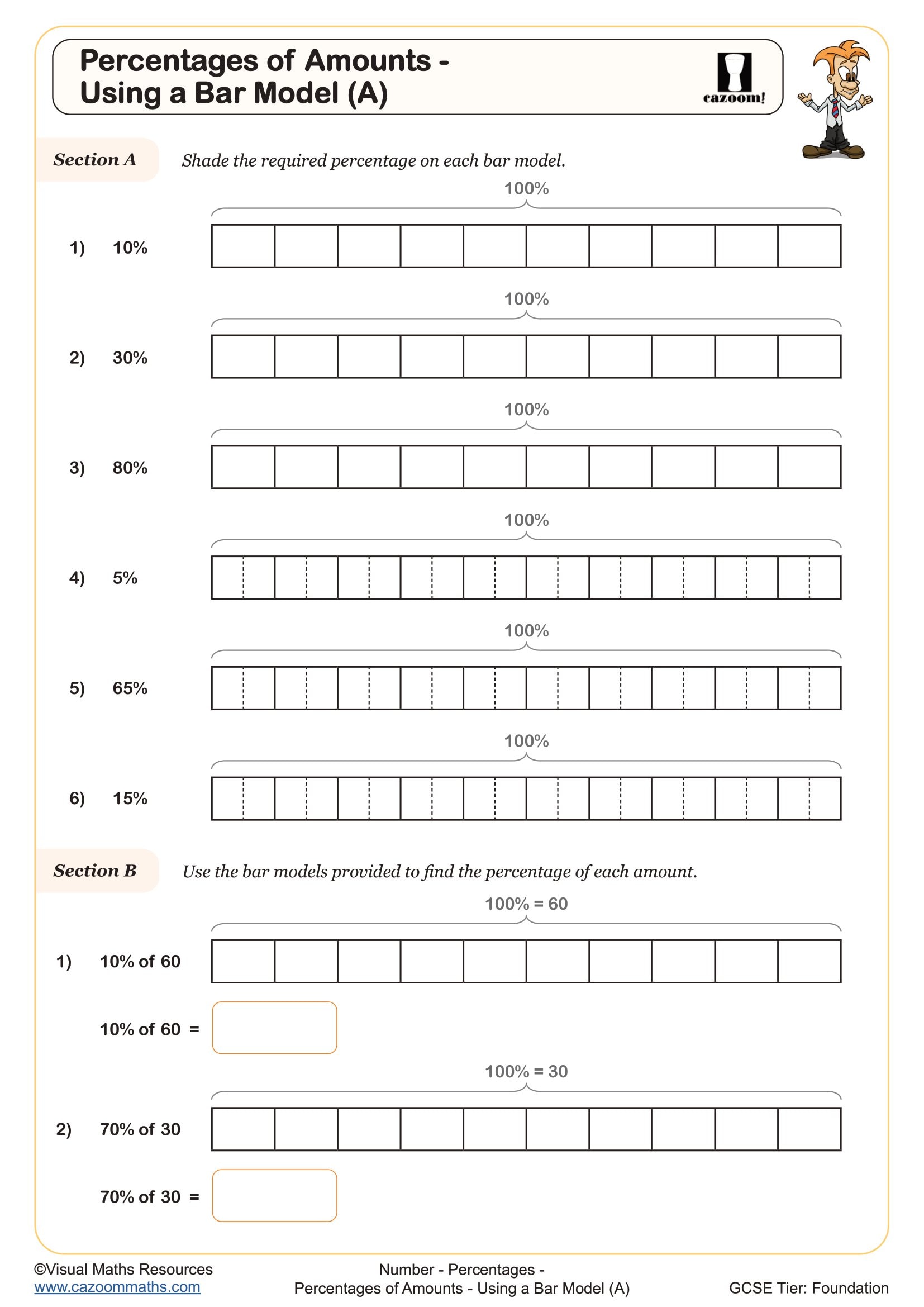
Percentages of Amounts - Using a Bar Model (A)
Year groups: 7, 8
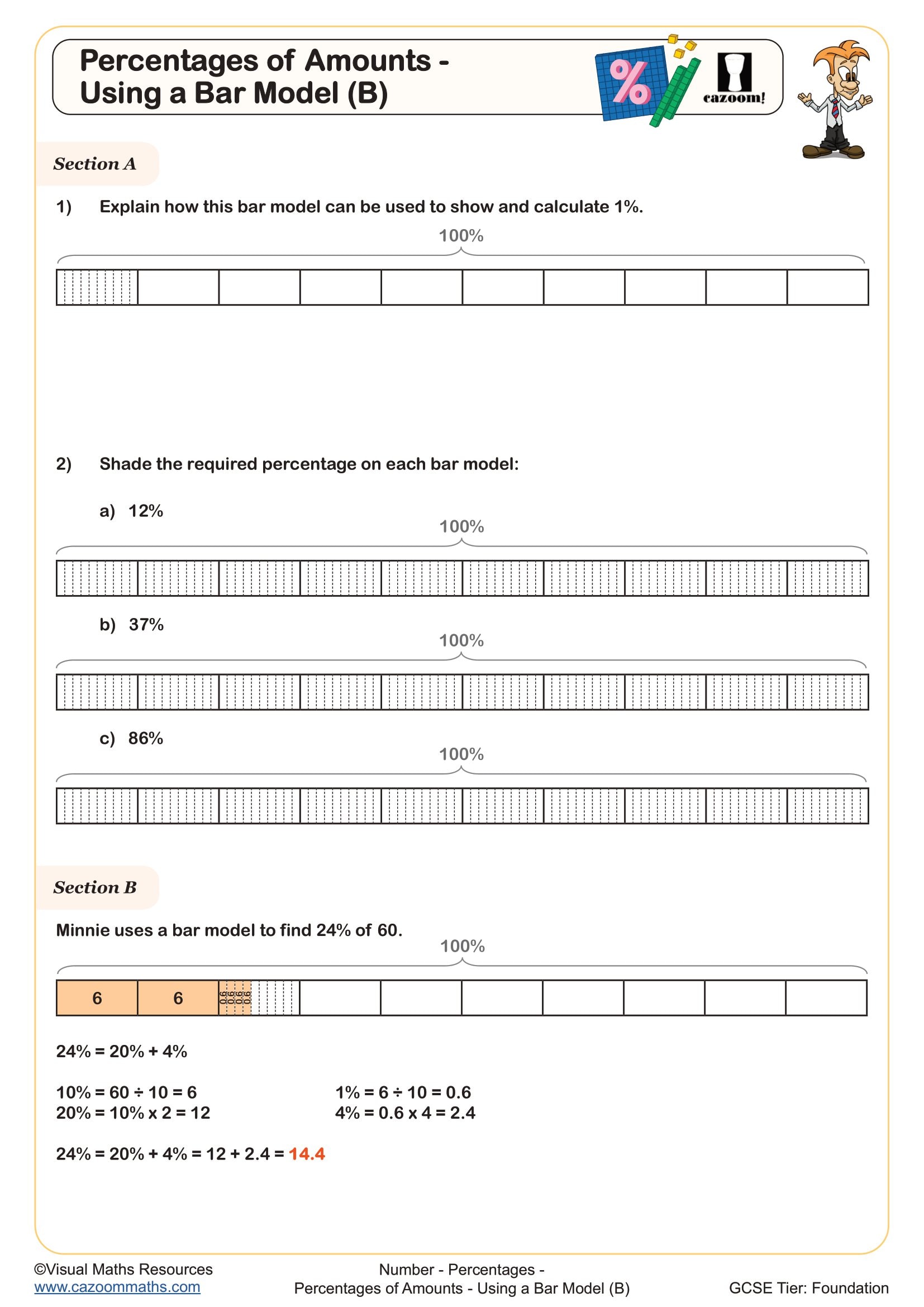
Percentages of Amounts - Using a Bar Model (B)
Year groups: 7, 8, 9
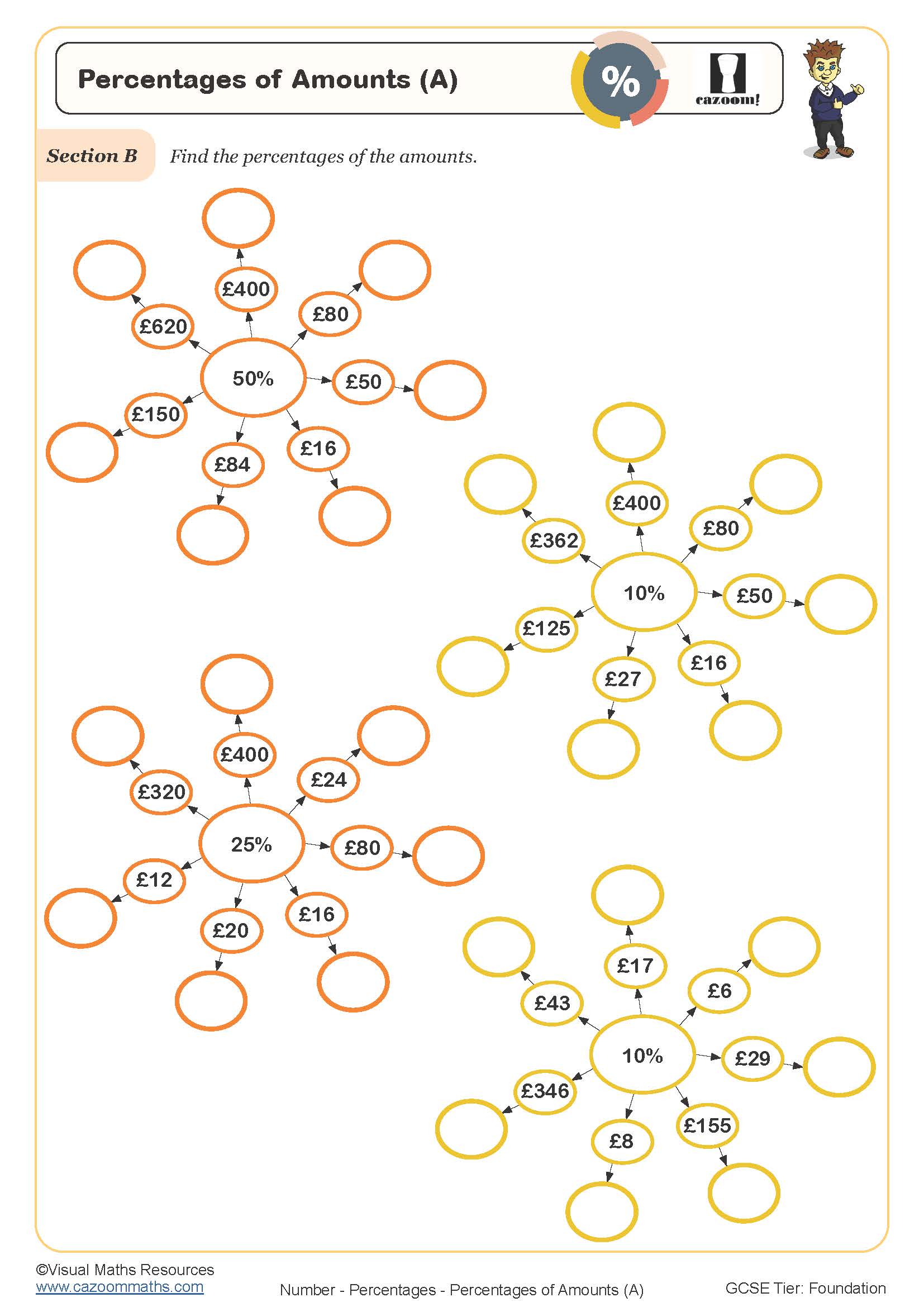
Percentages of Amounts (A)
Year groups: 7, 8
Percentages of Amounts (B)
Year groups: 7, 8
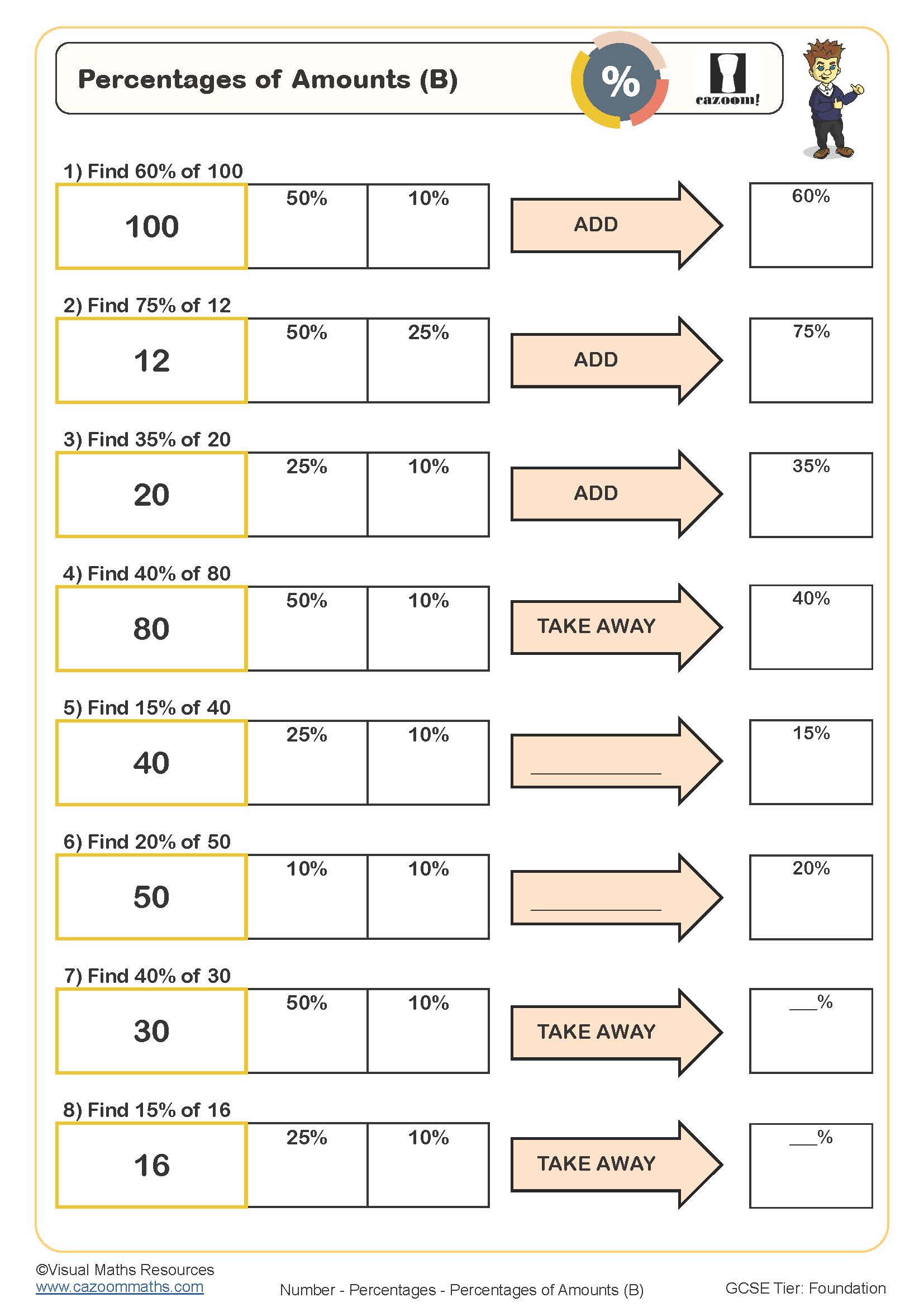
Percentages of Amounts (C)
Year groups: 7, 8
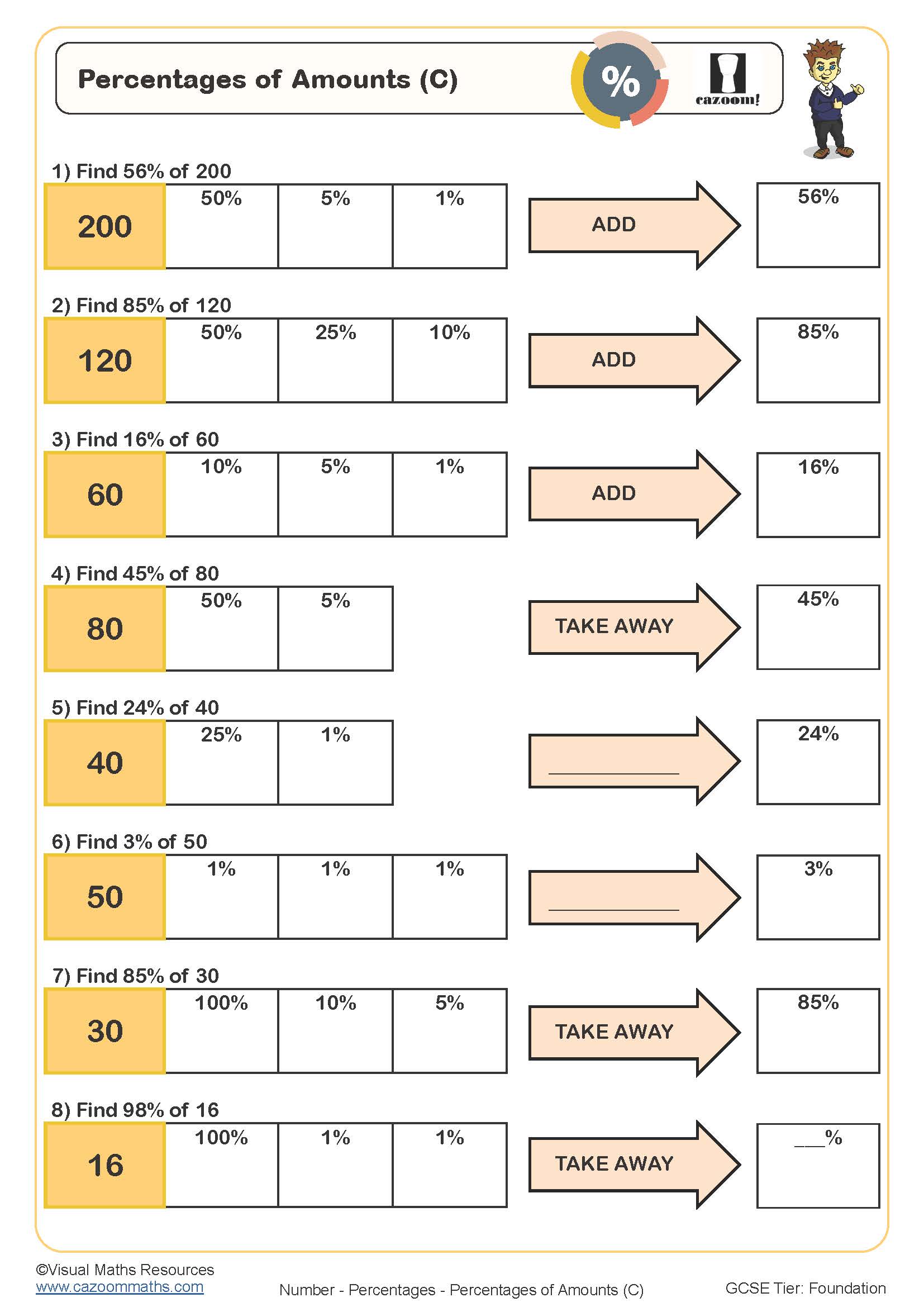
Percentages of Amounts 10 Minute Challenge
Year groups: 7, 8
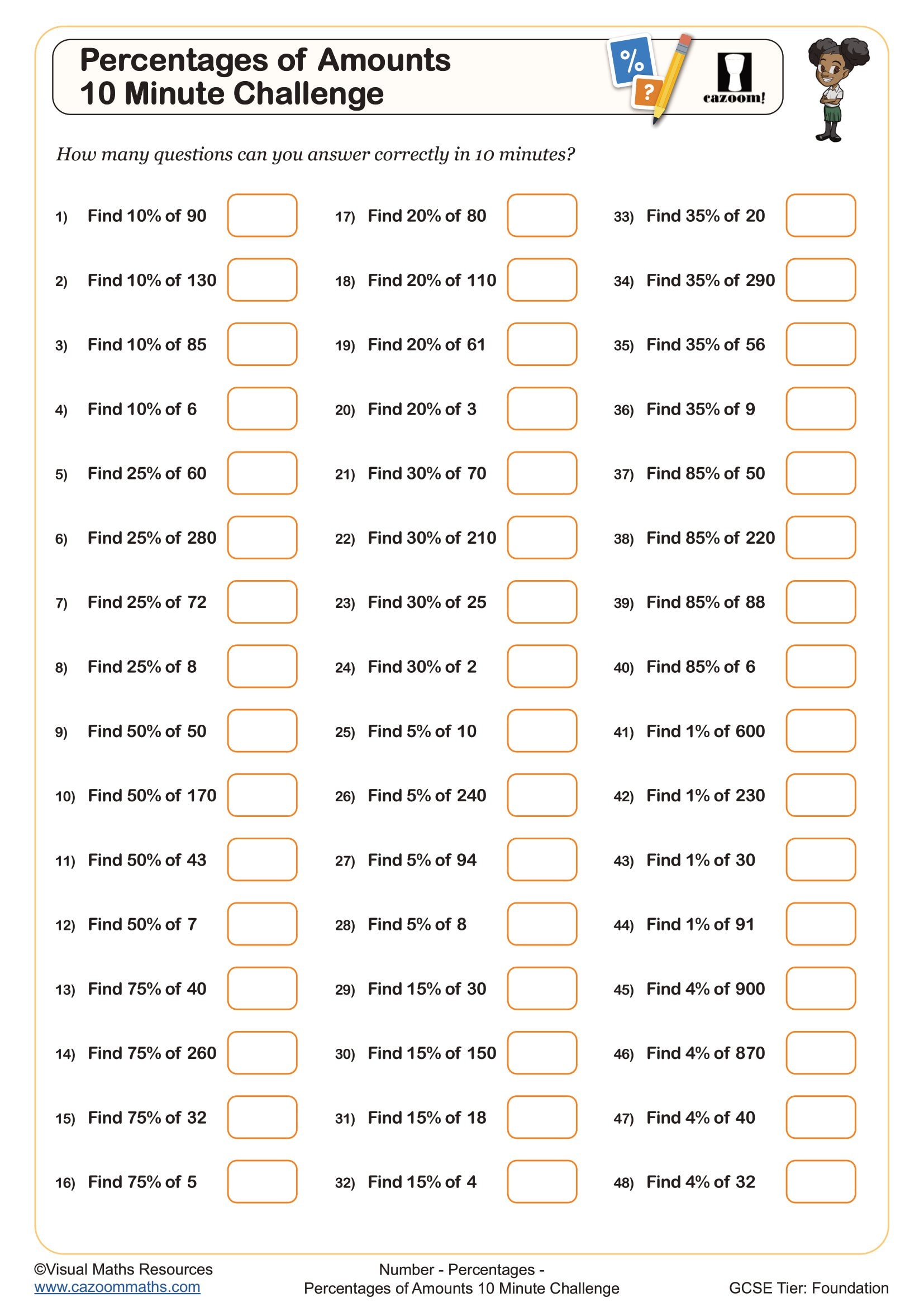
Powers of Ten Problem Solving
Year groups: 7, 8
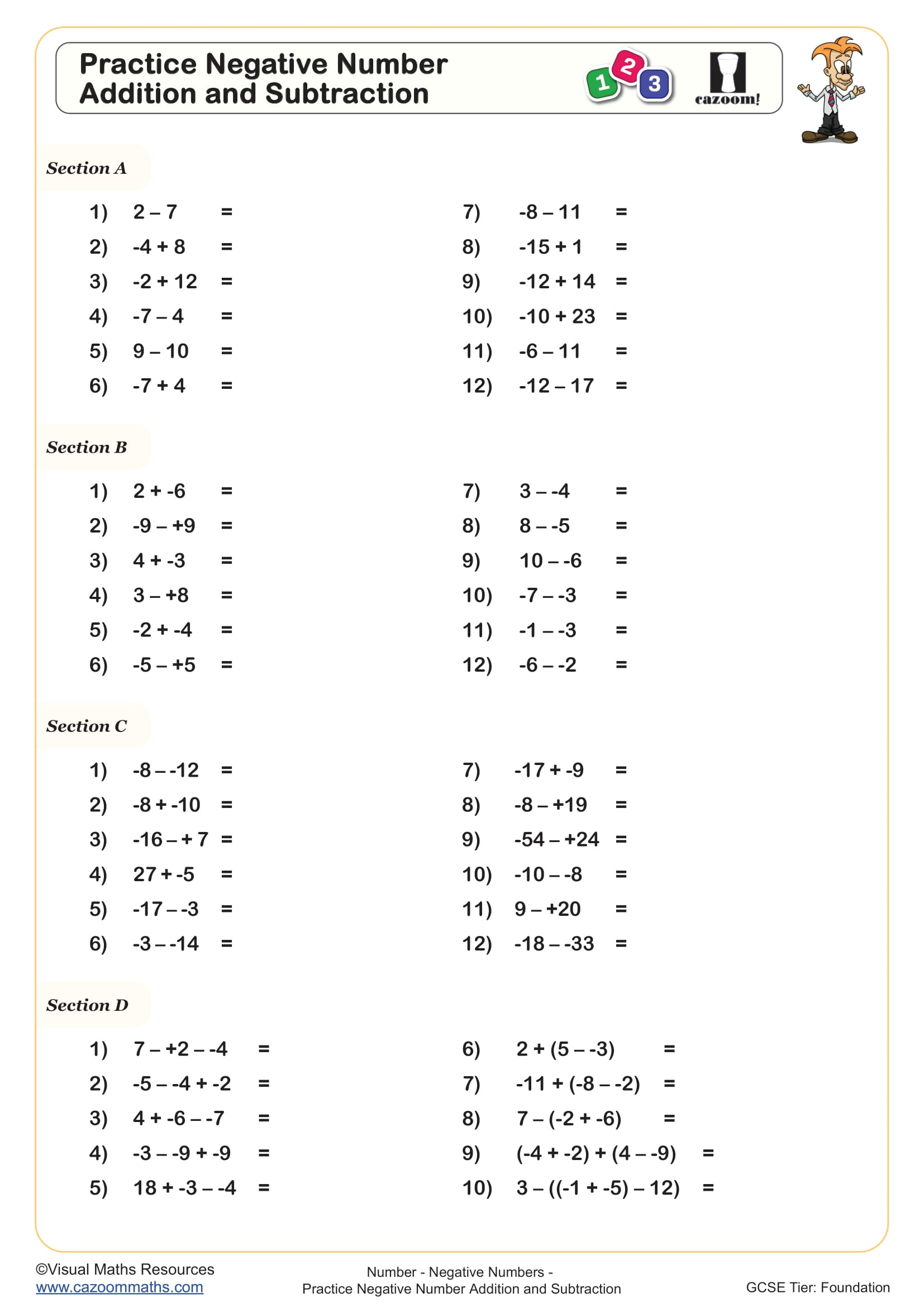
Practice Negative Number Addition and Subtraction
Year groups: 7, 8, 9
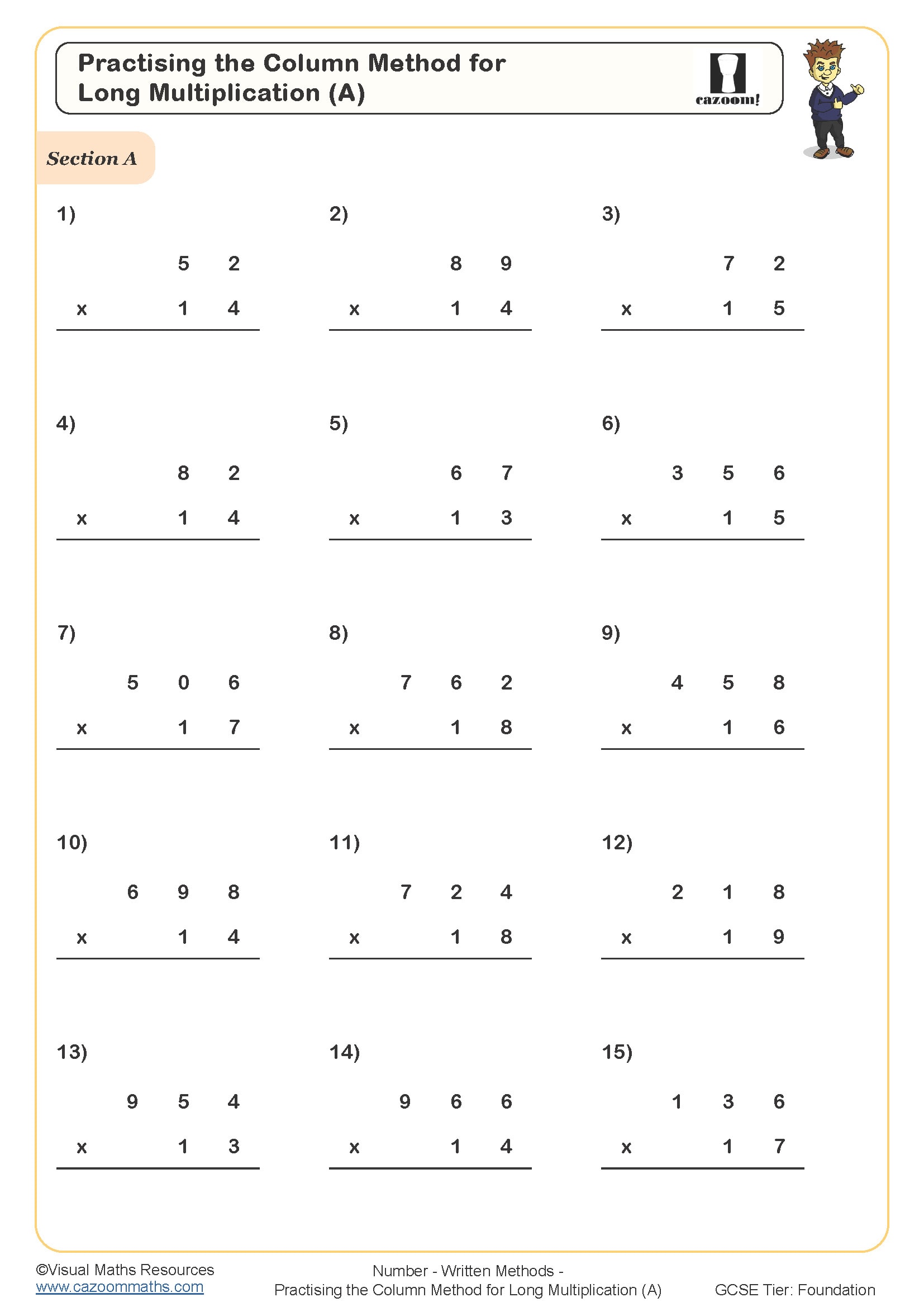
Practising the Column Method for Long Multiplication (A)
Year groups: 7, 8
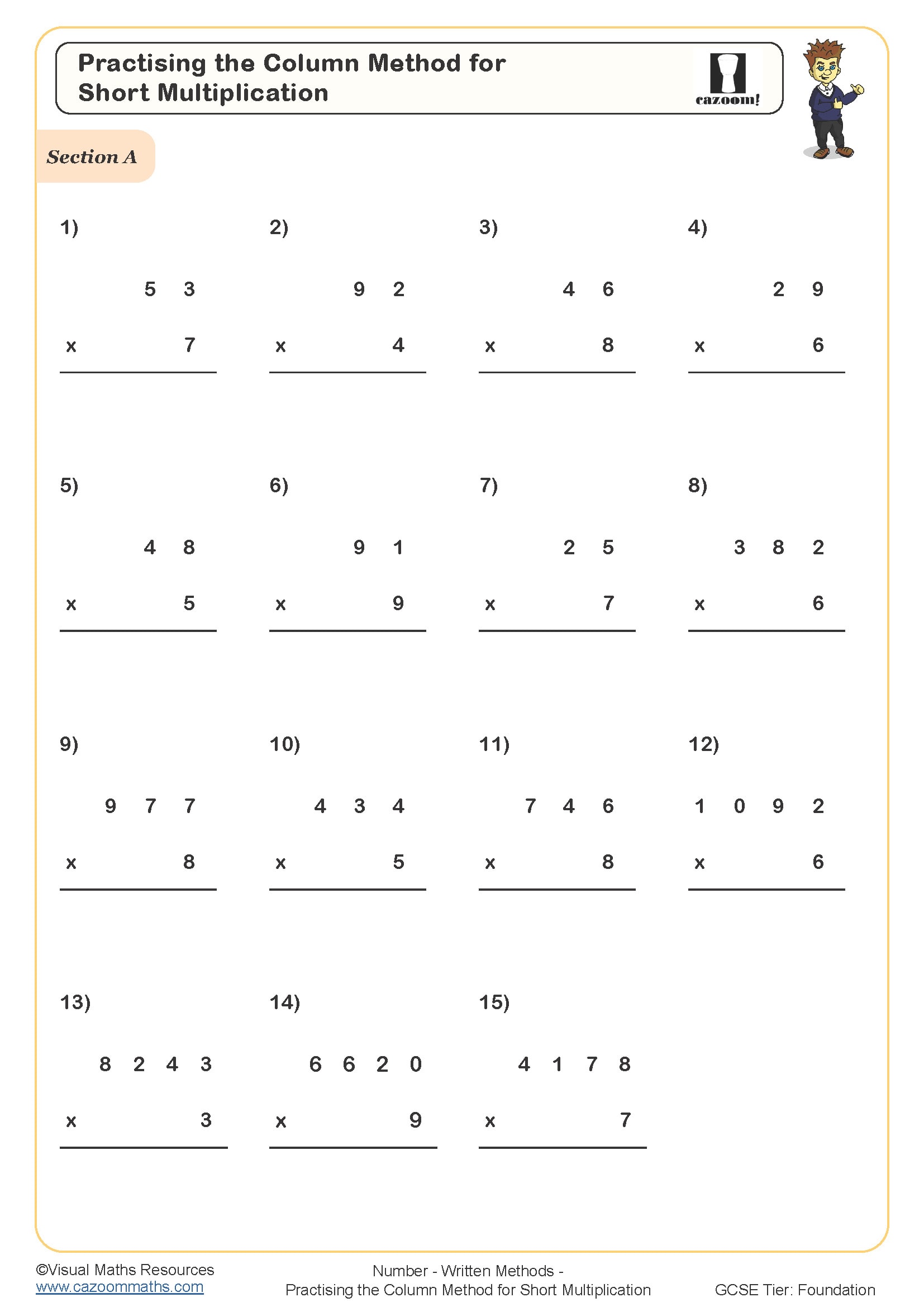
Practising the Column Method for Short Multiplication
Year groups: 7, 8
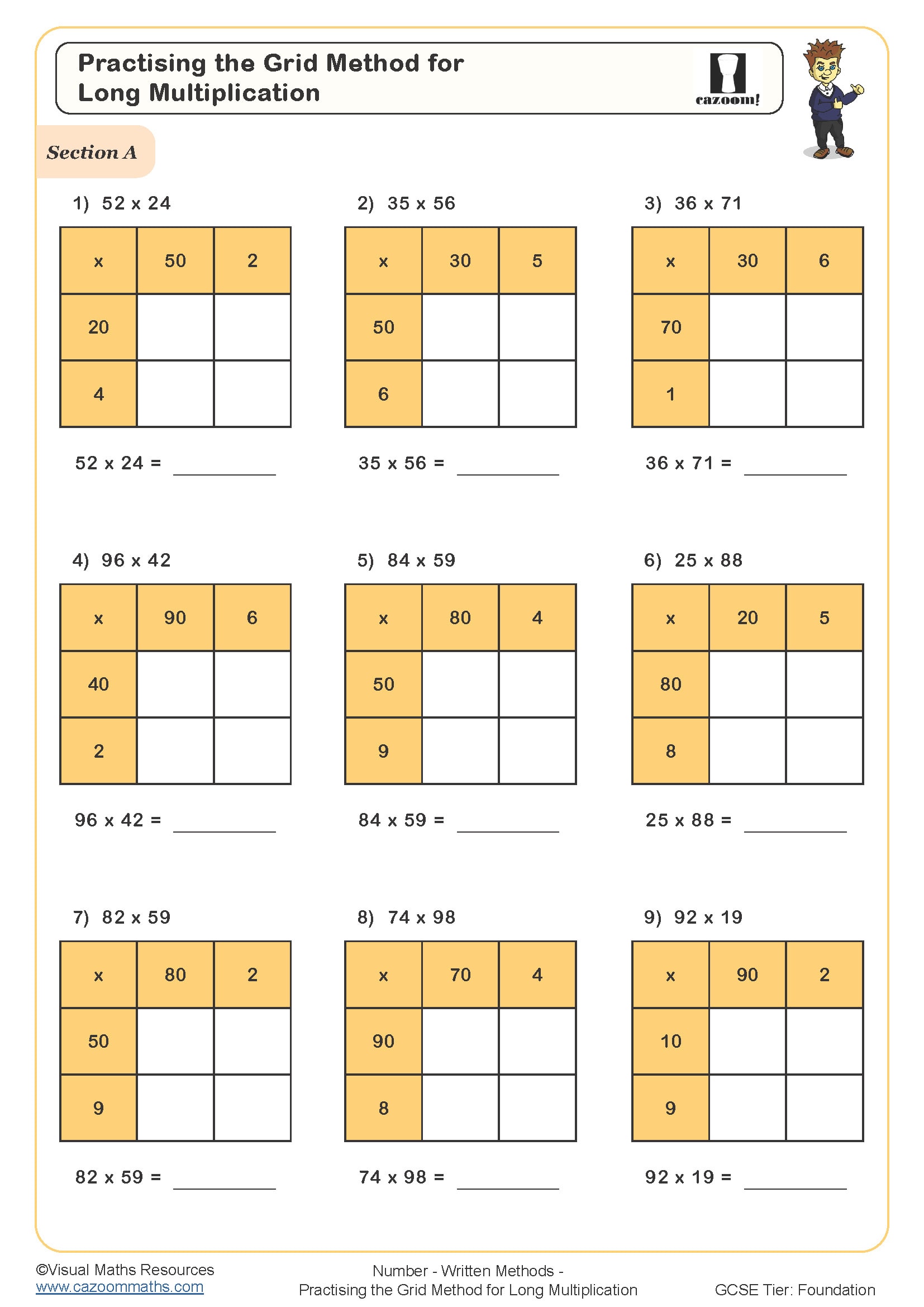
Practising the Grid Method for Long Multiplication
Year groups: 7, 8
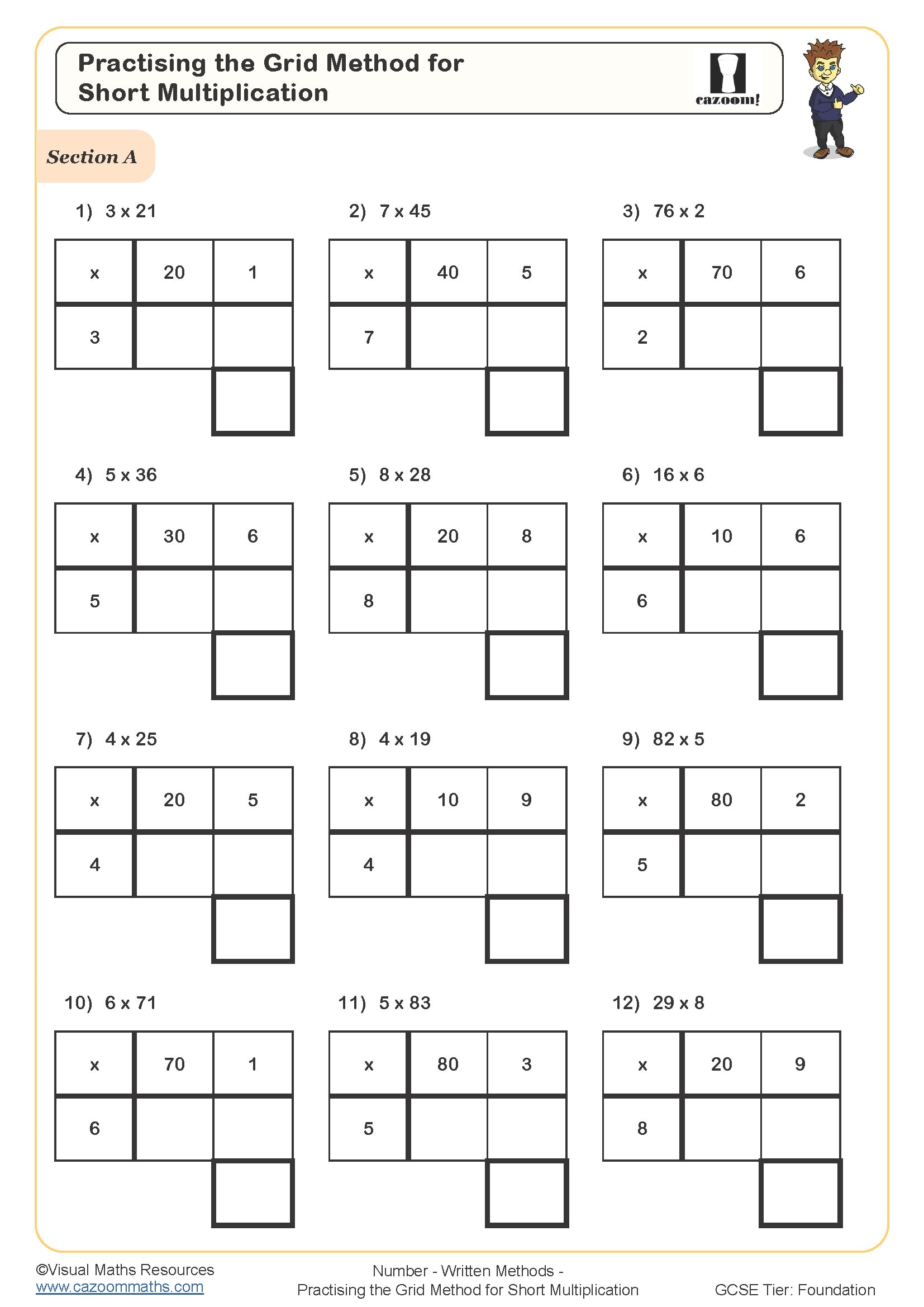
Practising the Grid Method for Short Multiplication (A)
Year groups: 7, 8
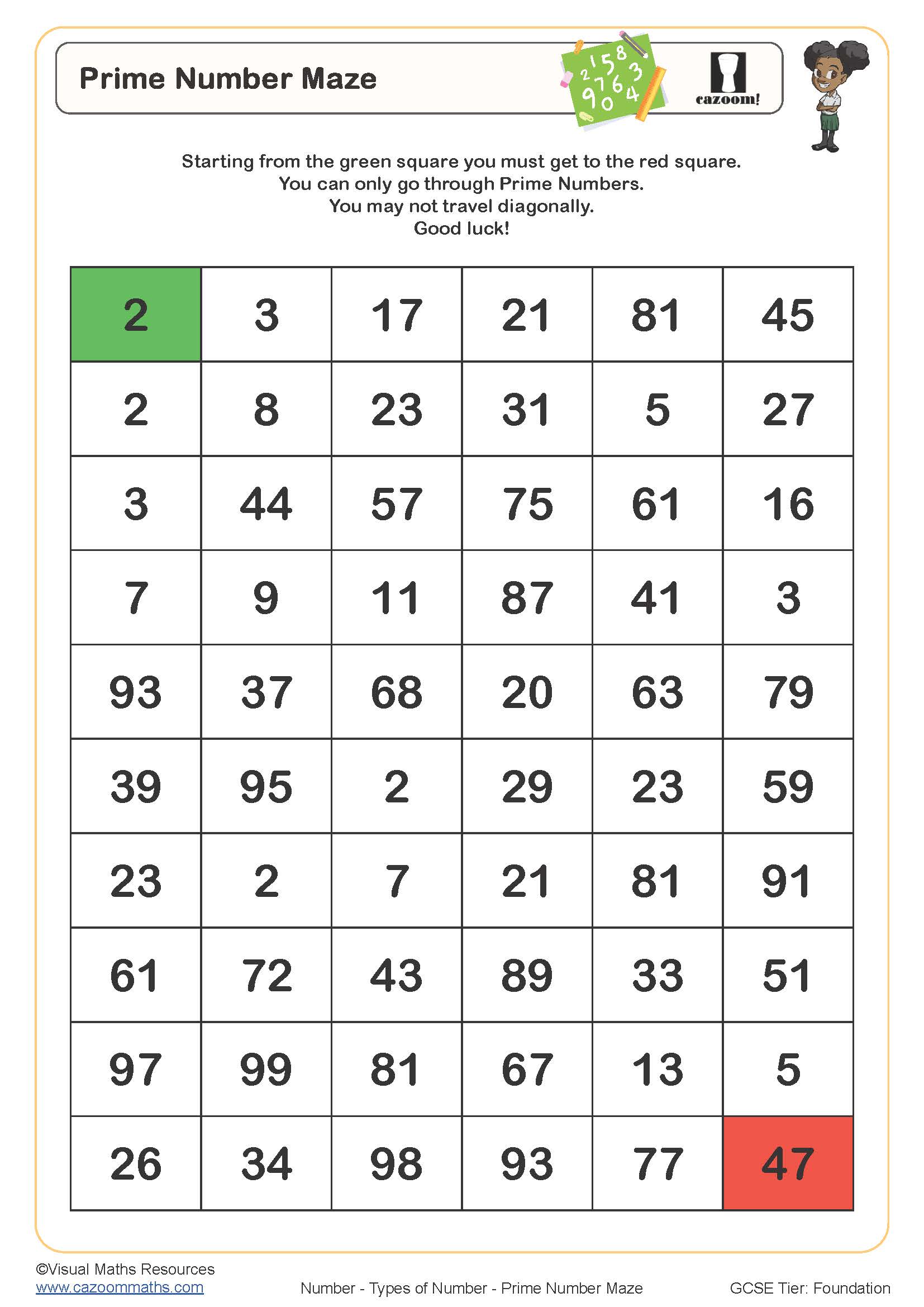
Prime Number Maze
Year groups: 7, 8
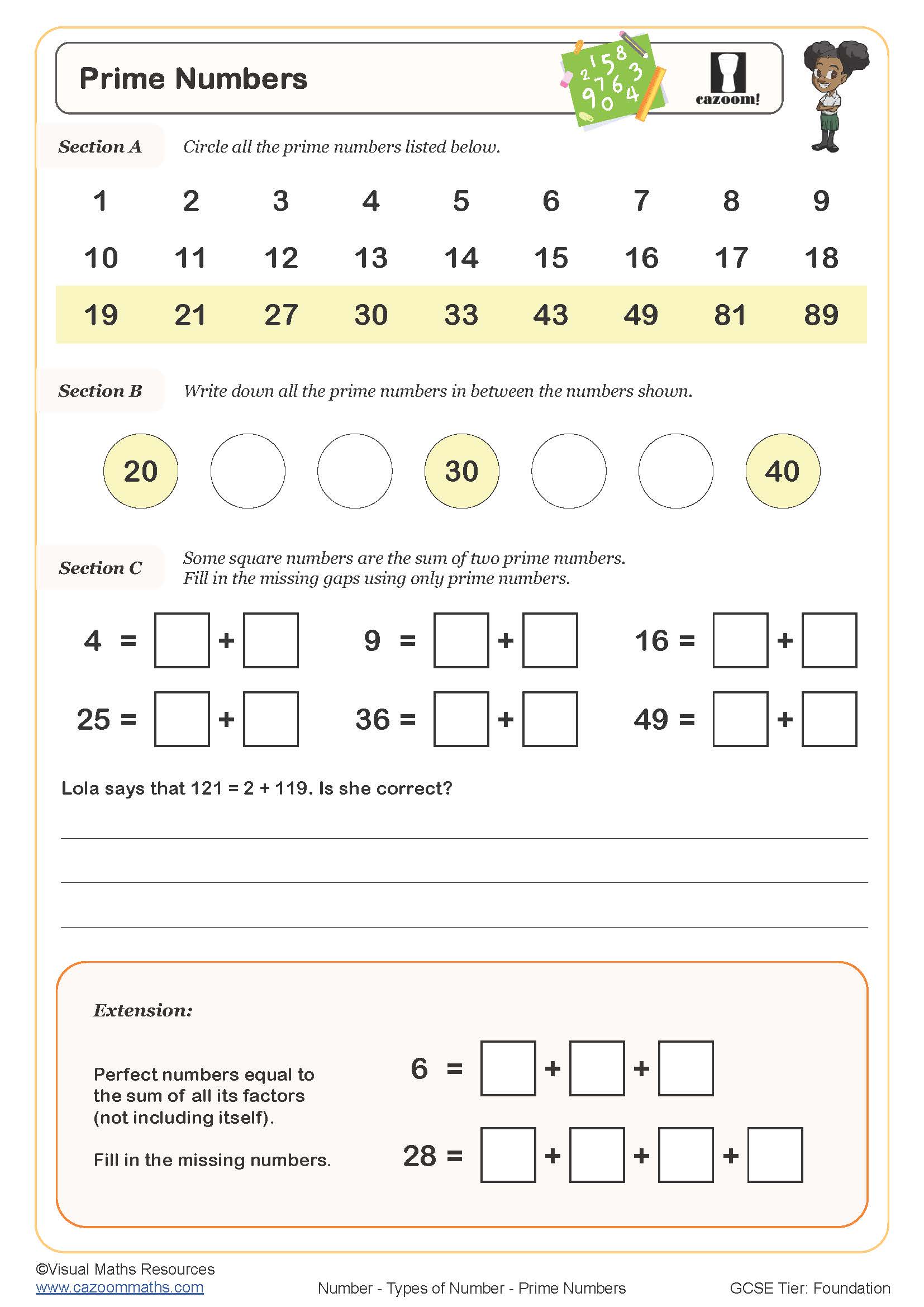
Prime Numbers
Year groups: 7, 8
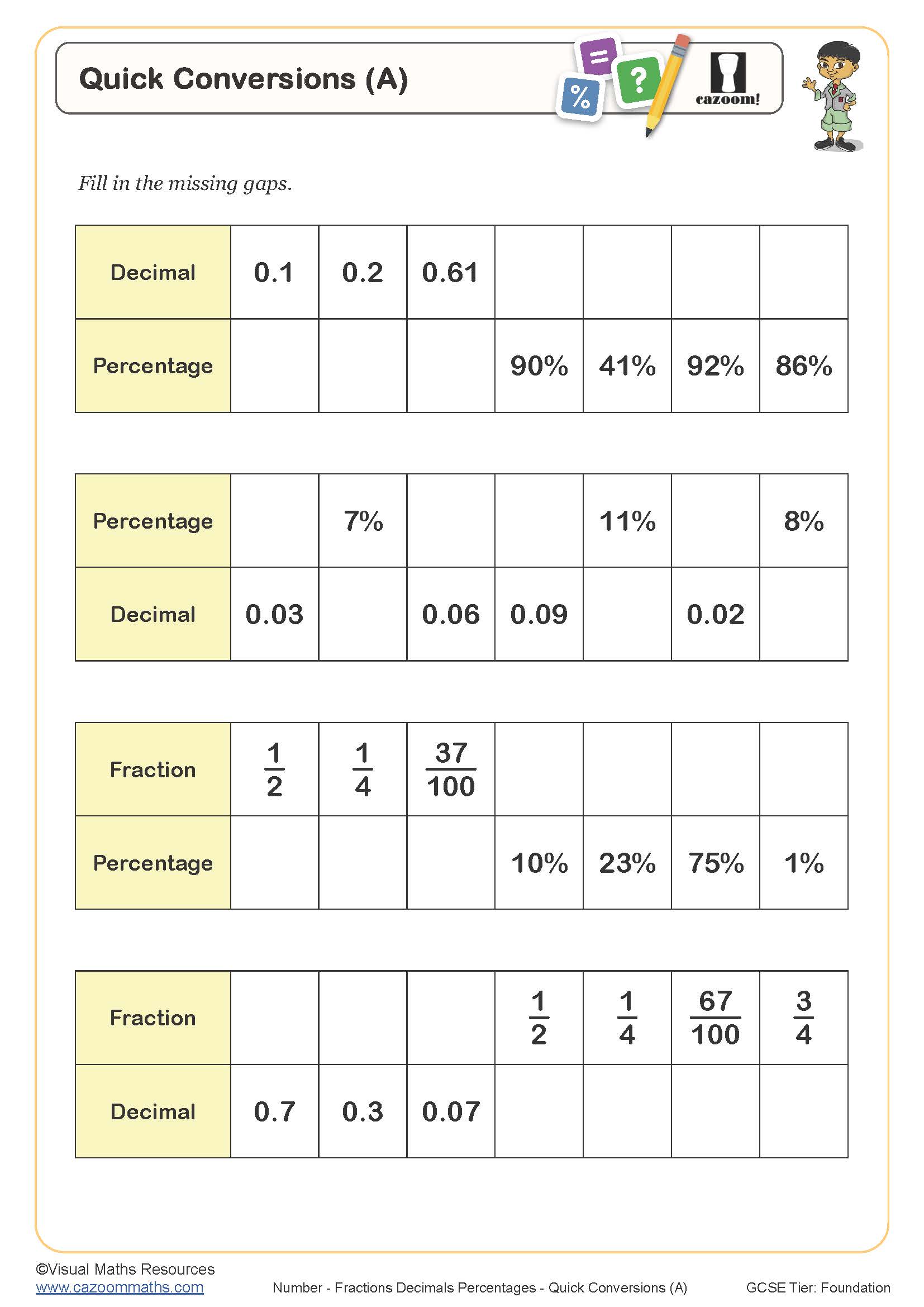
Quick Conversions (A)
Year groups: 7, 8
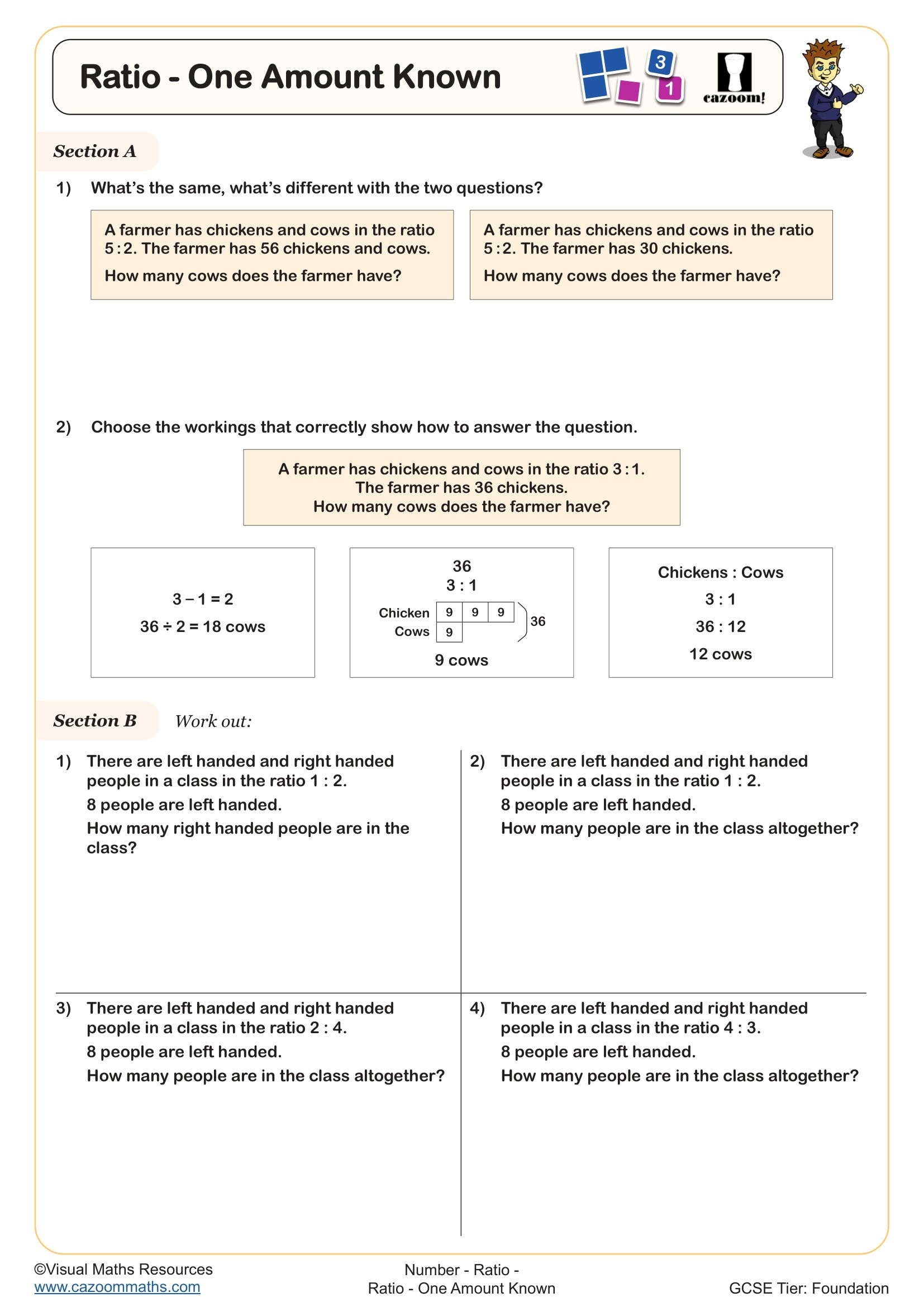
Ratio - One Amount Known
Year groups: 7, 8
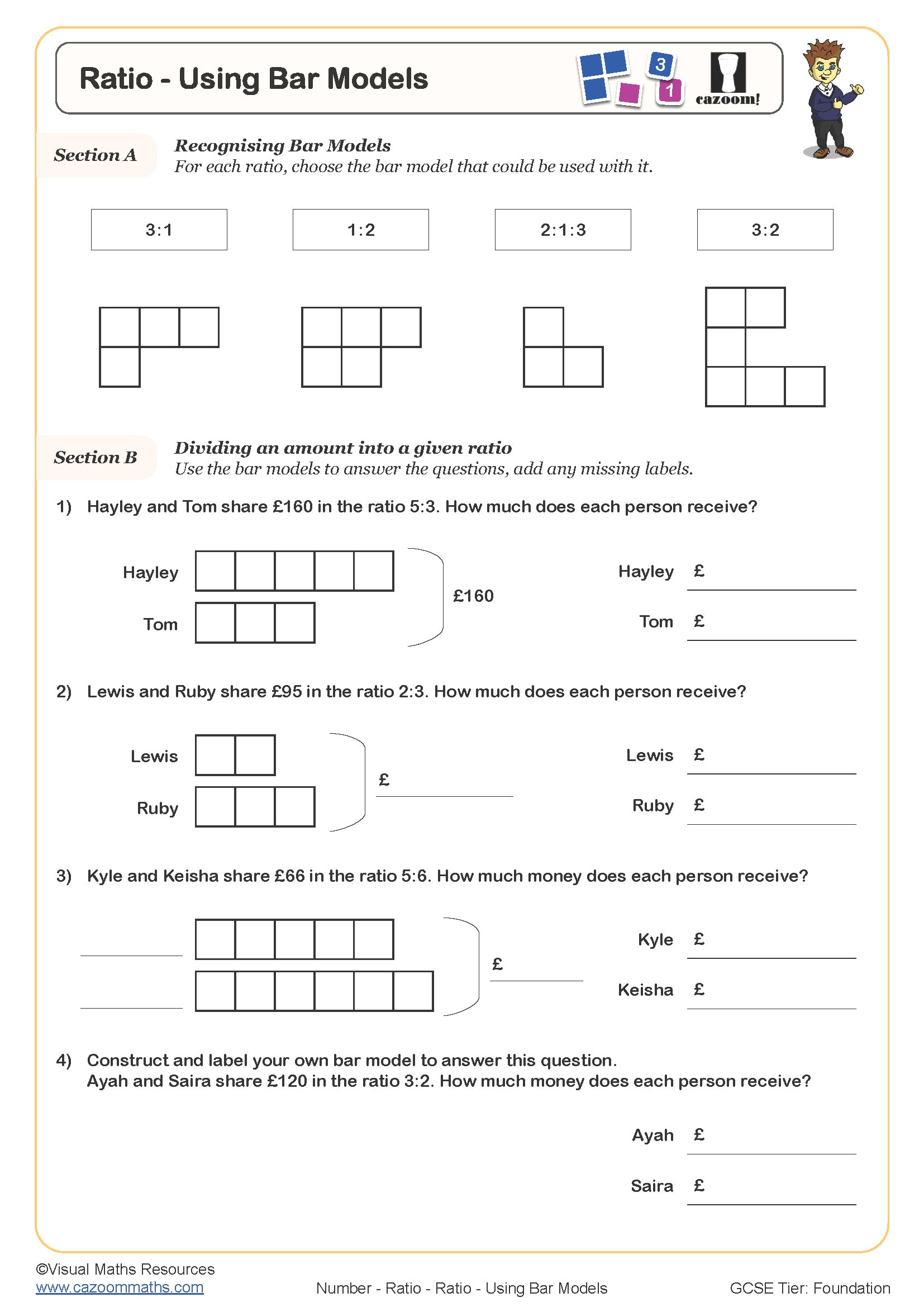
Ratio - Using Bar Models
Year groups: 7, 8
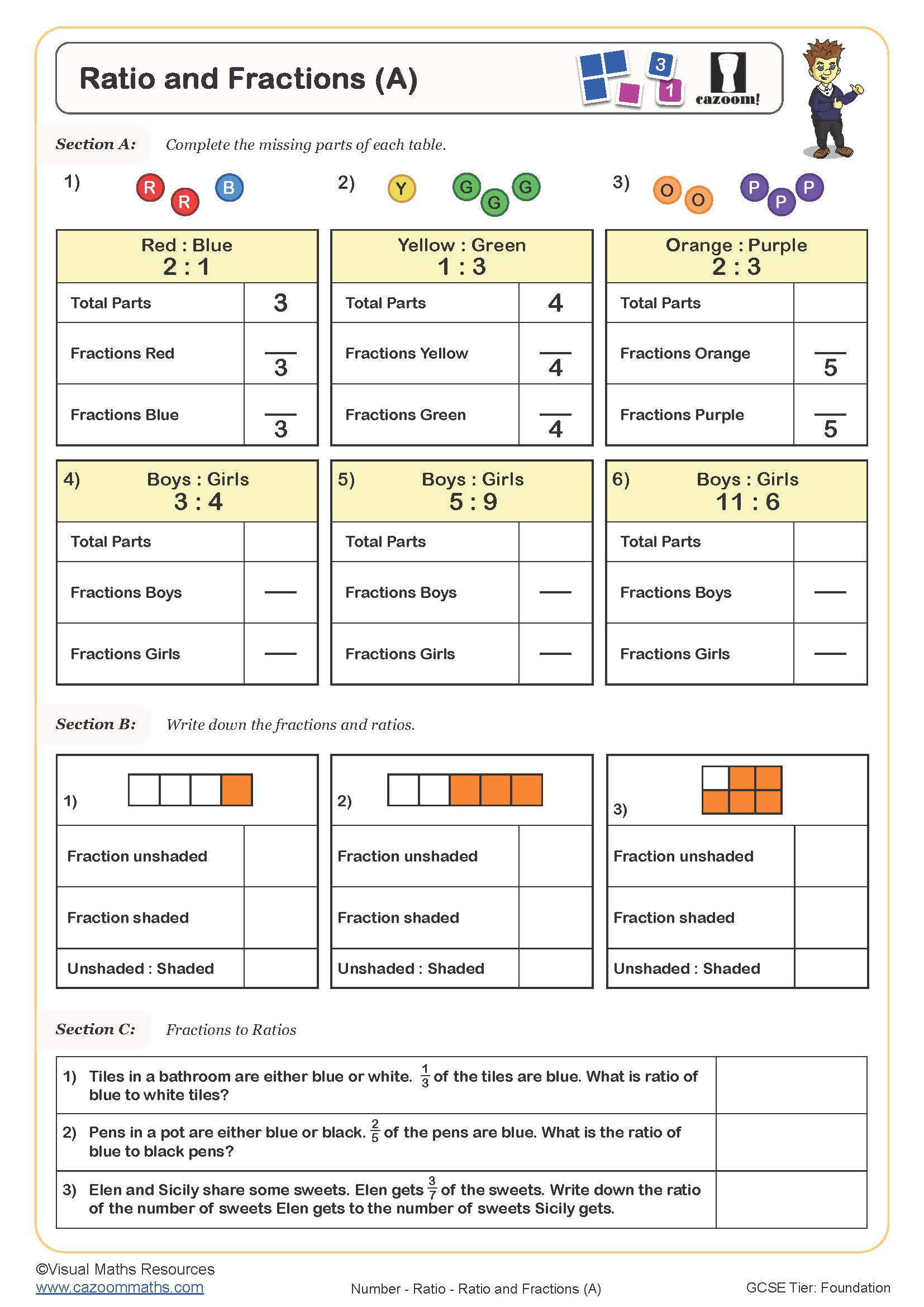
Ratio and Fractions (A)
Year groups: 7, 8
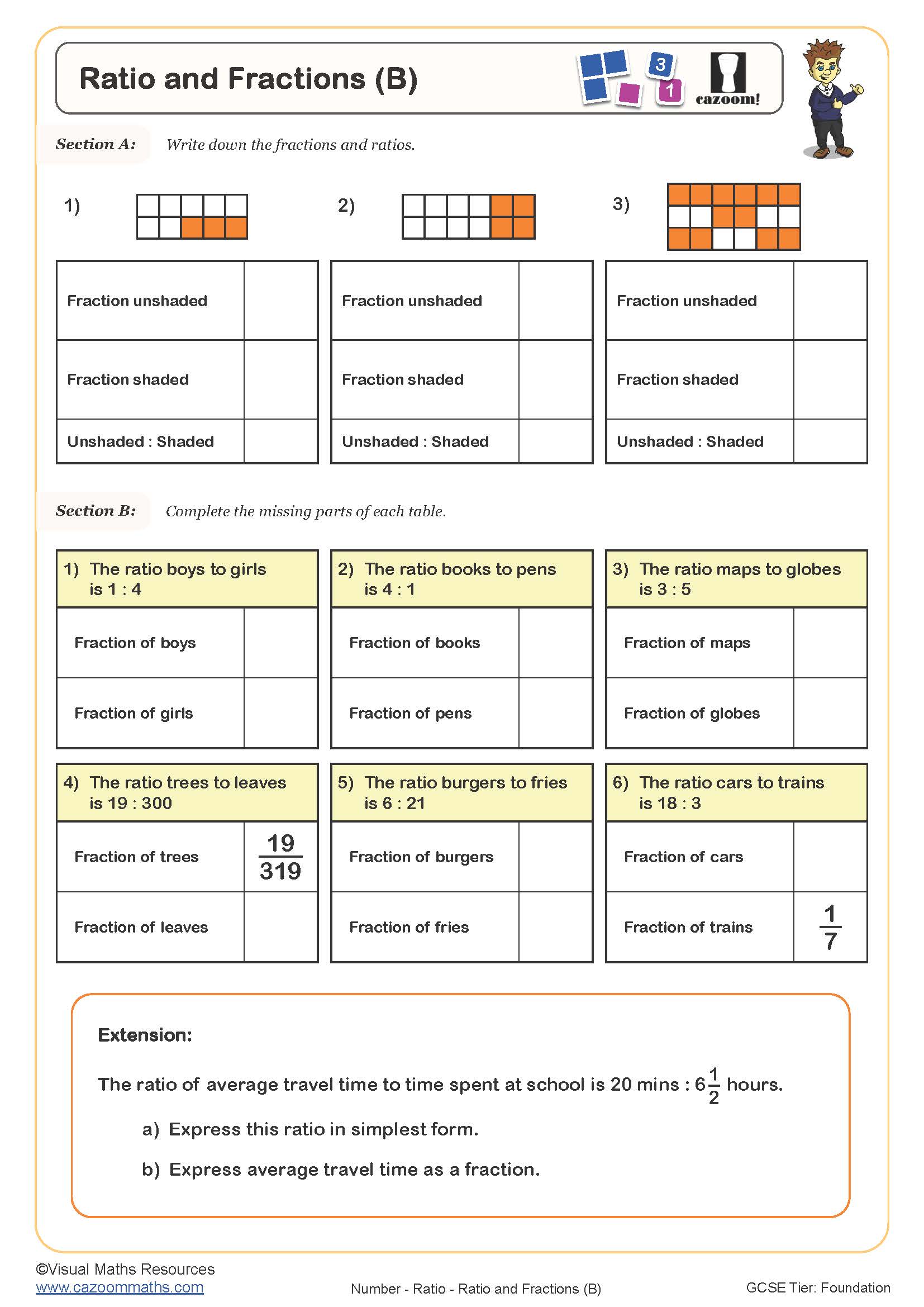
Ratio and Fractions (B)
Year groups: 7, 8
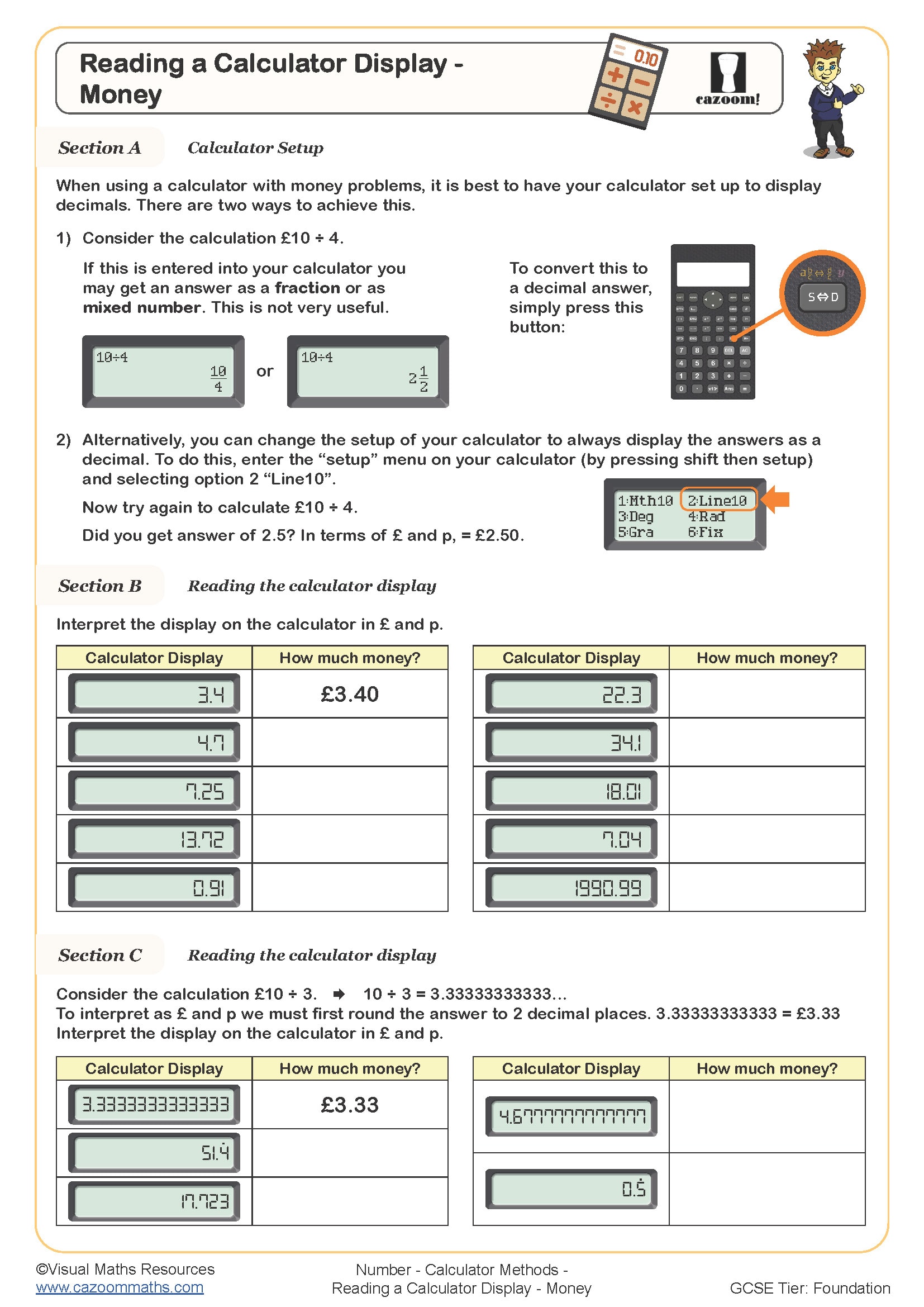
Reading a Calculator Display - Money
Year groups: 7
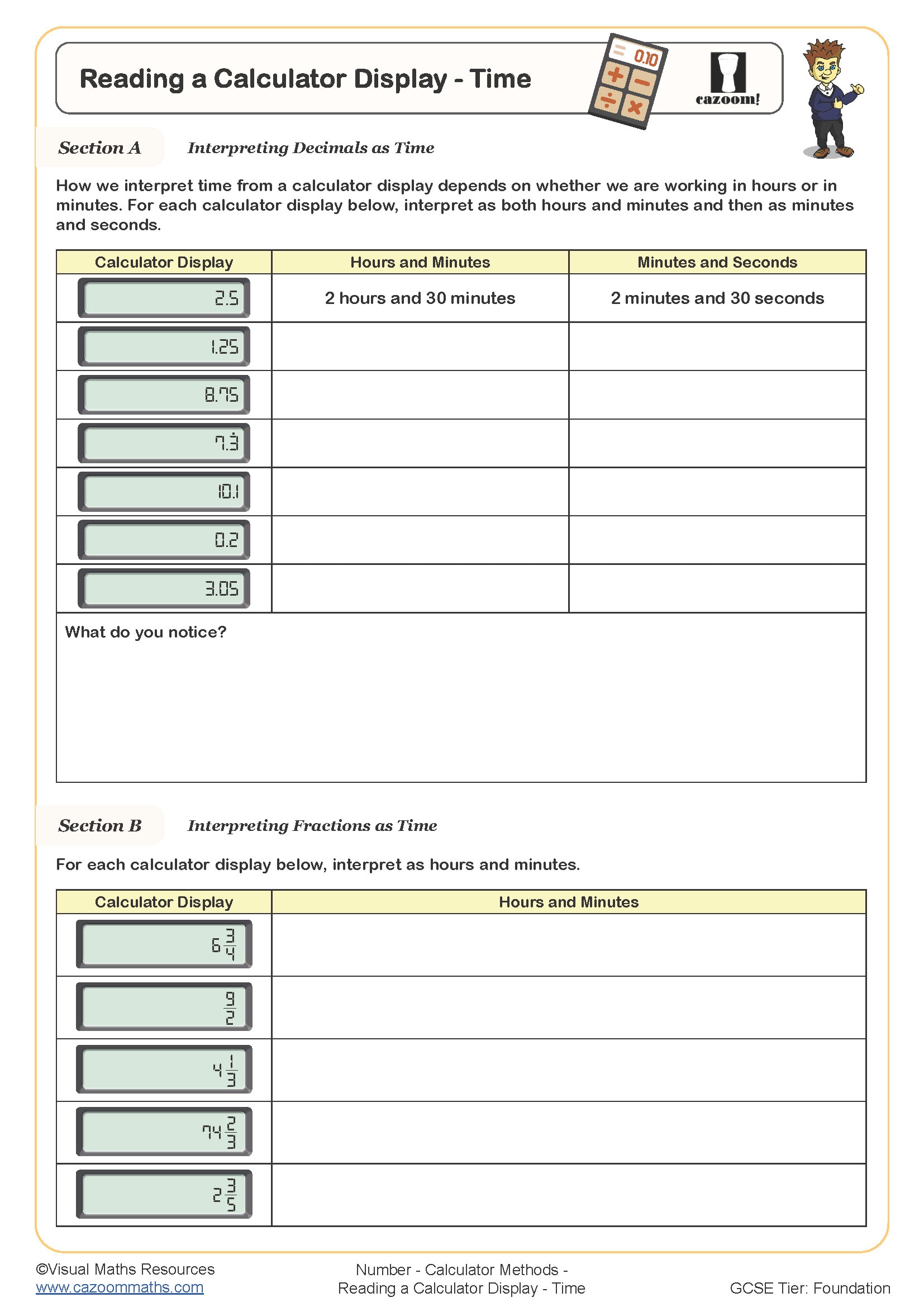
Reading a Calculator Display - Time
Year groups: 7
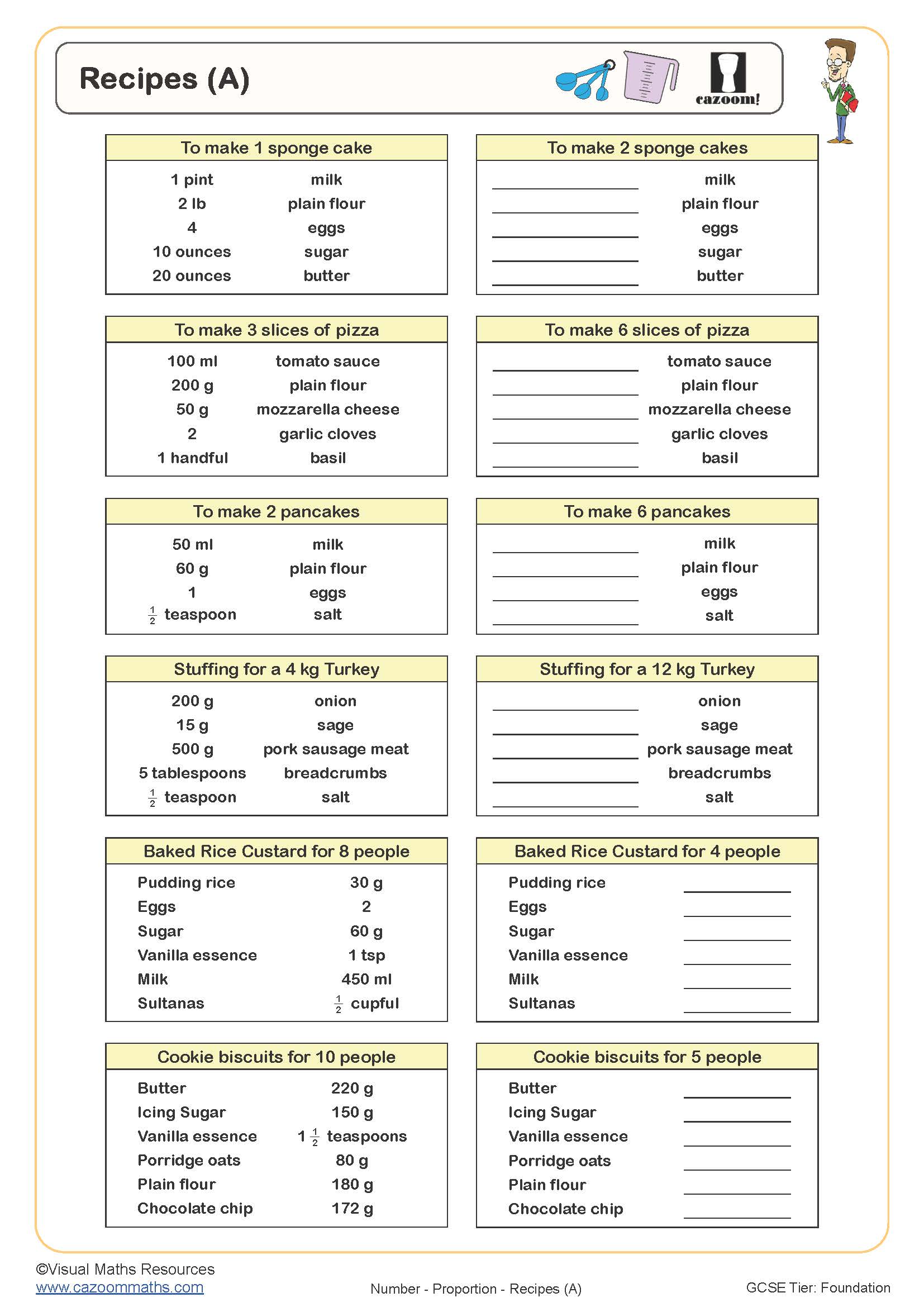
Recipes (A)
Year groups: 7, 8
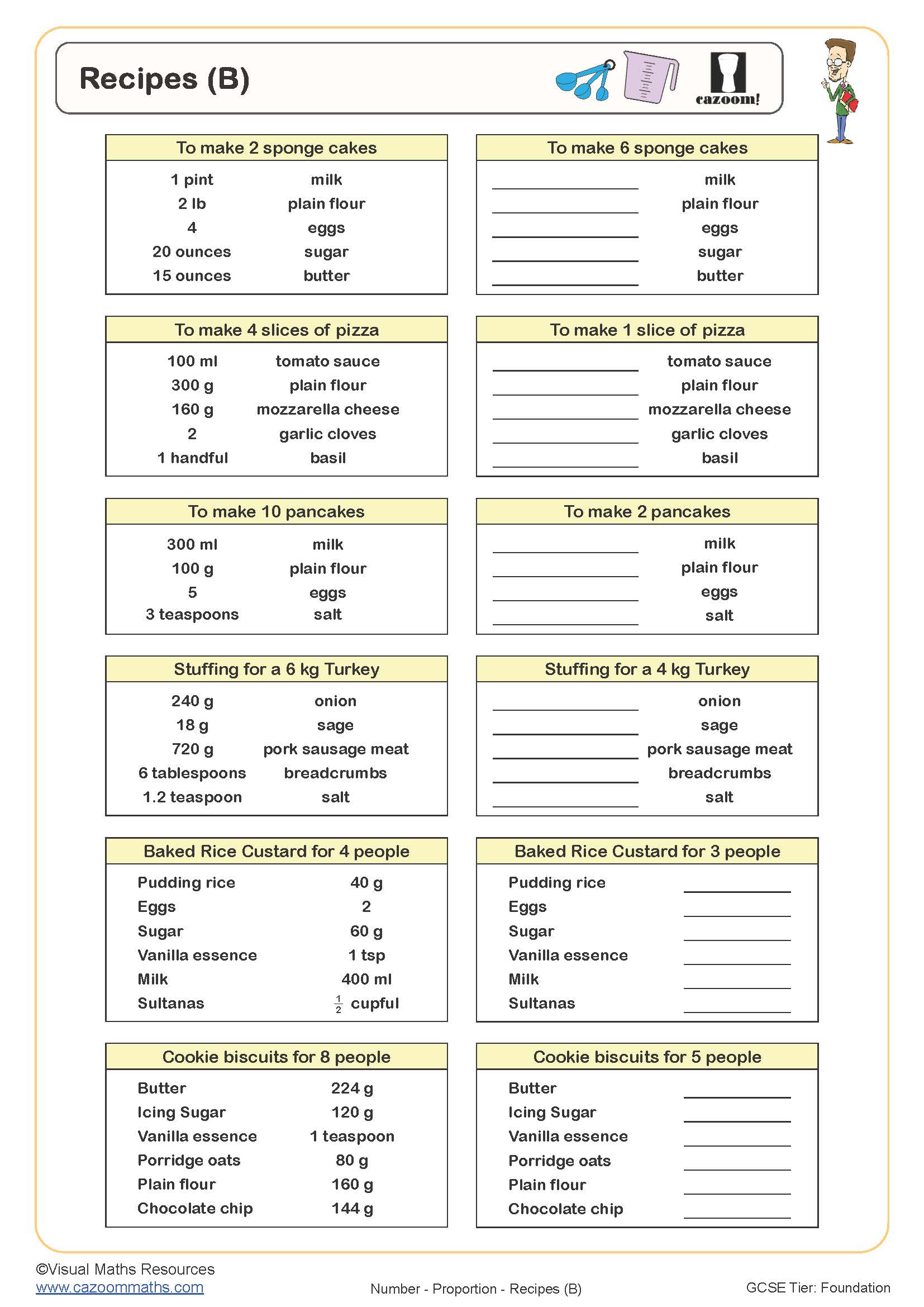
Recipes (B)
Year groups: 7, 8
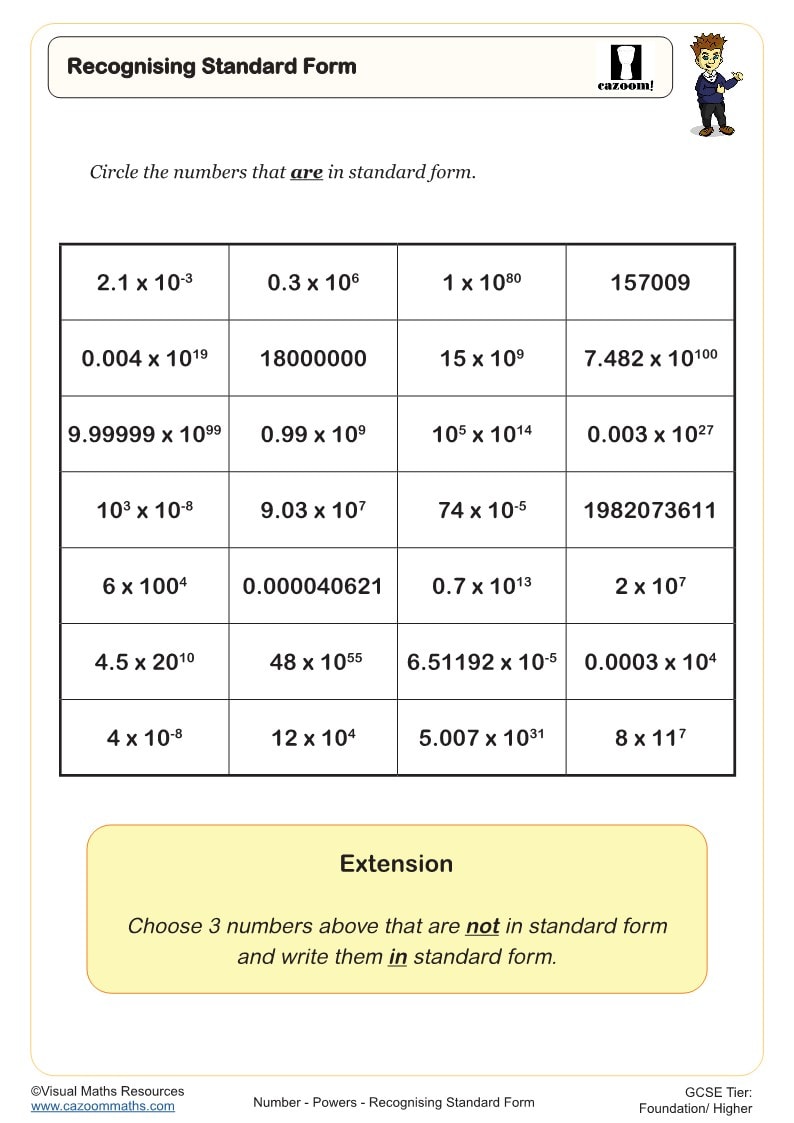
Recognising Standard Form
Year groups: 7, 8
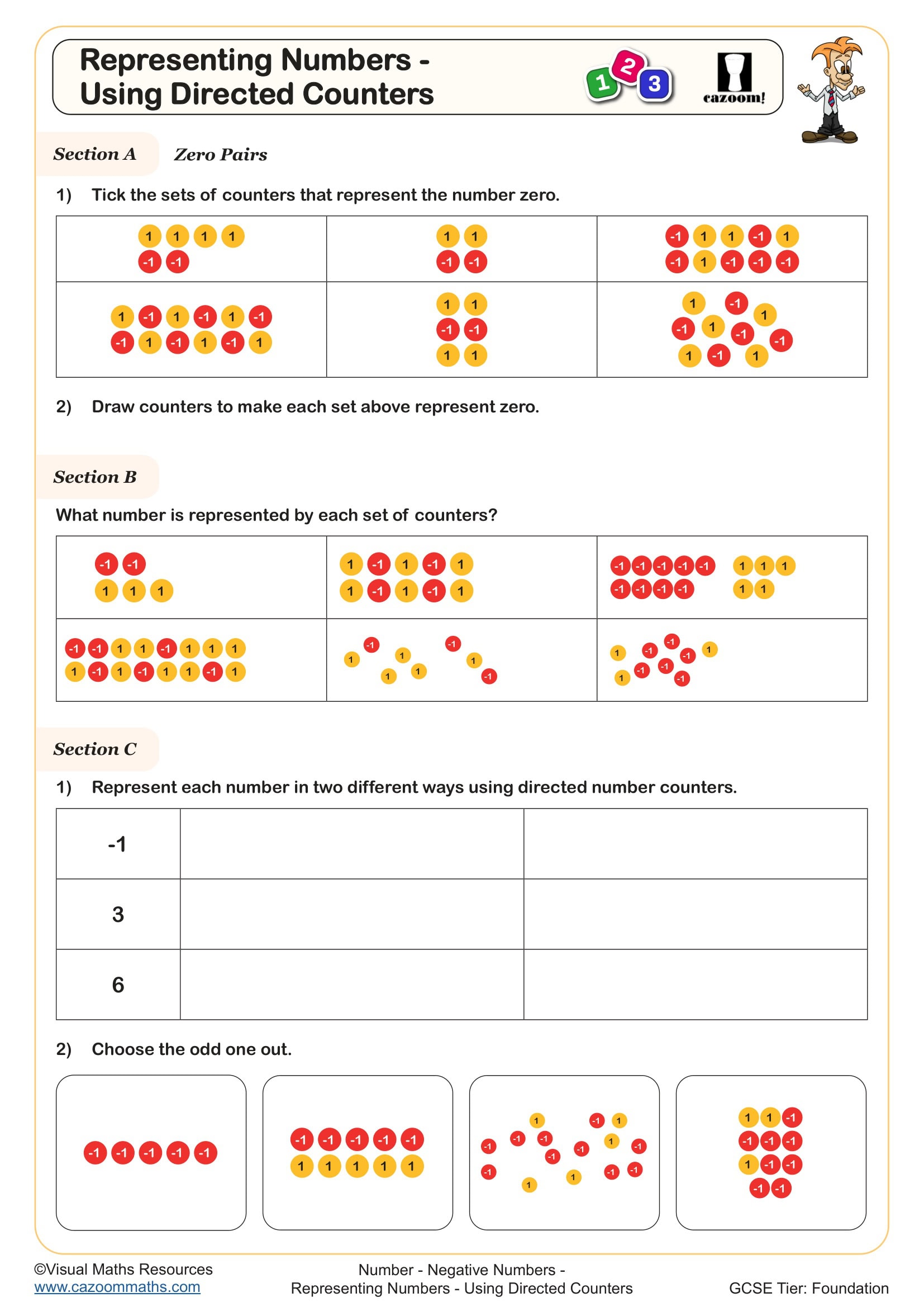
Representing Numbers - Using Directed Counters
Year groups: 7, 8
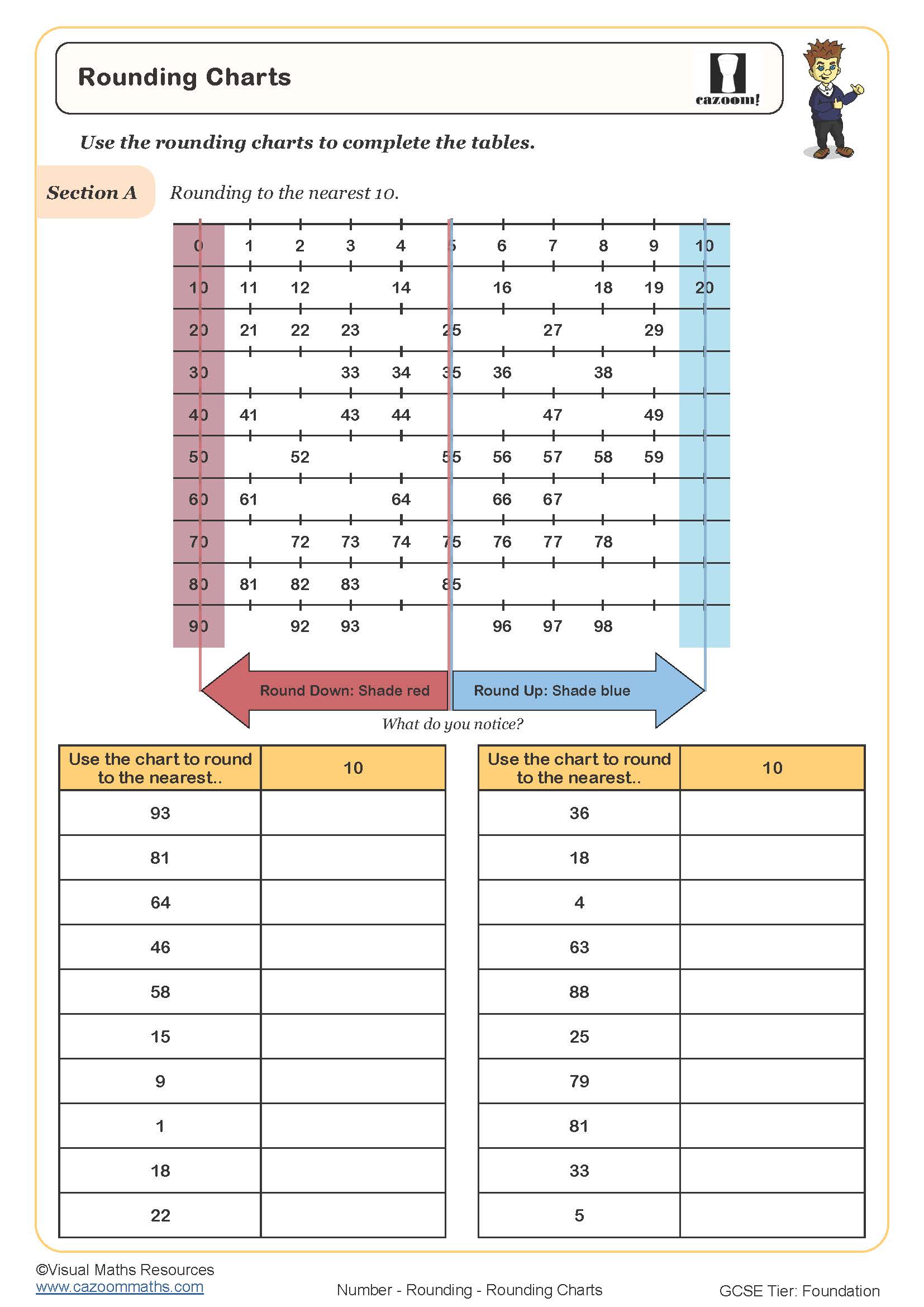
Rounding Charts
Year groups: 7, 8
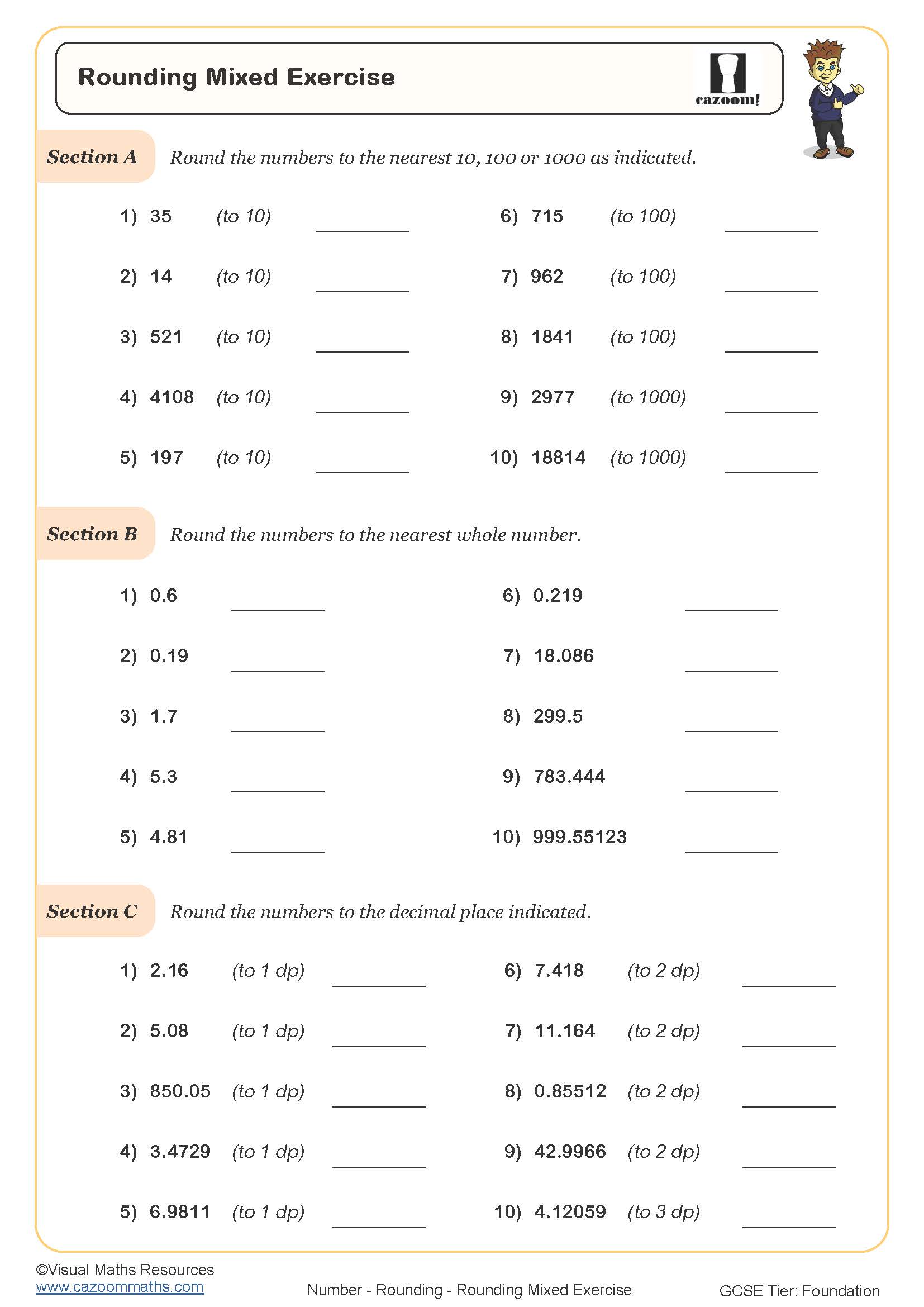
Rounding Mixed Exercise
Year groups: 7, 8
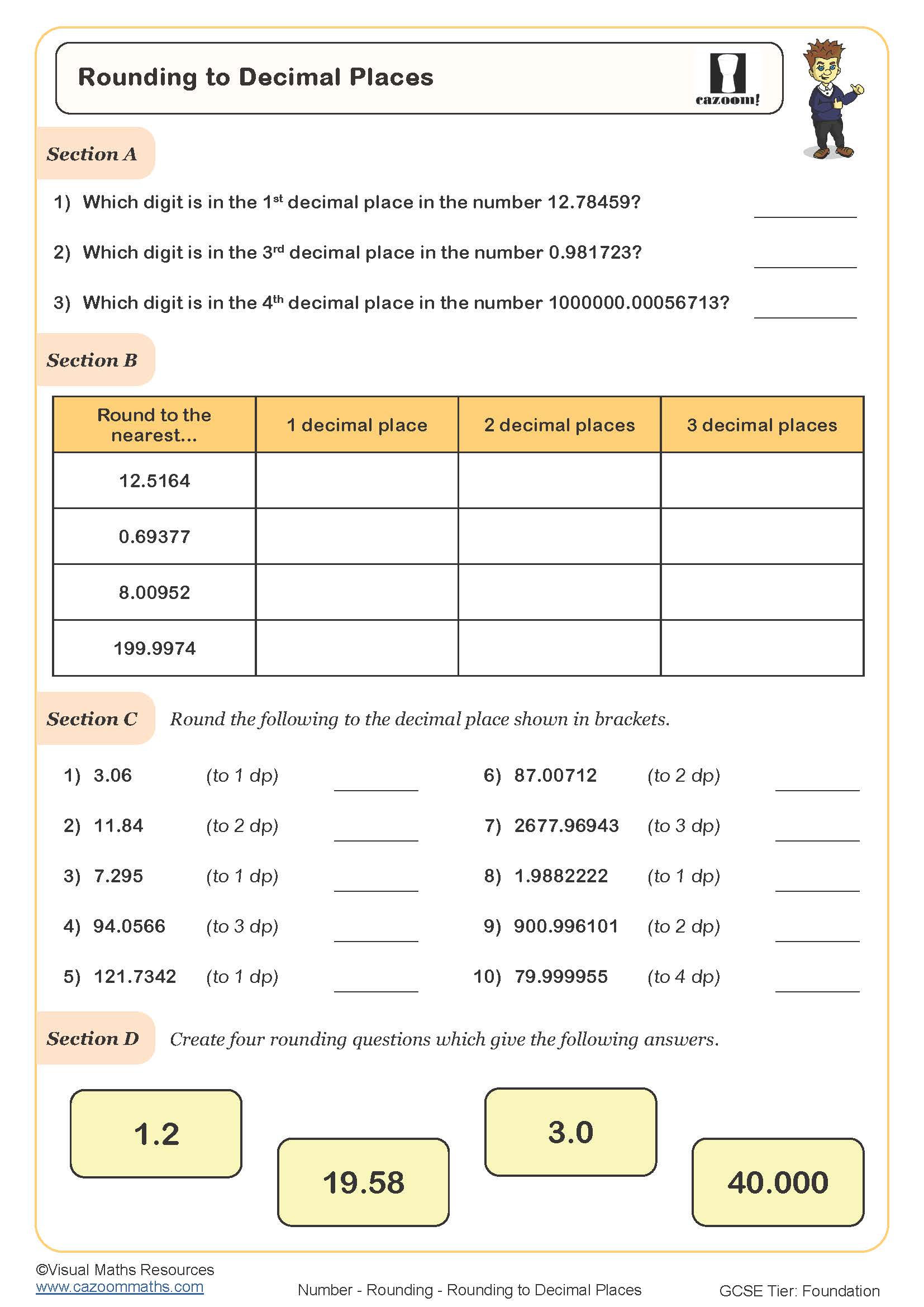
Rounding to Decimal Places
Year groups: 7, 8
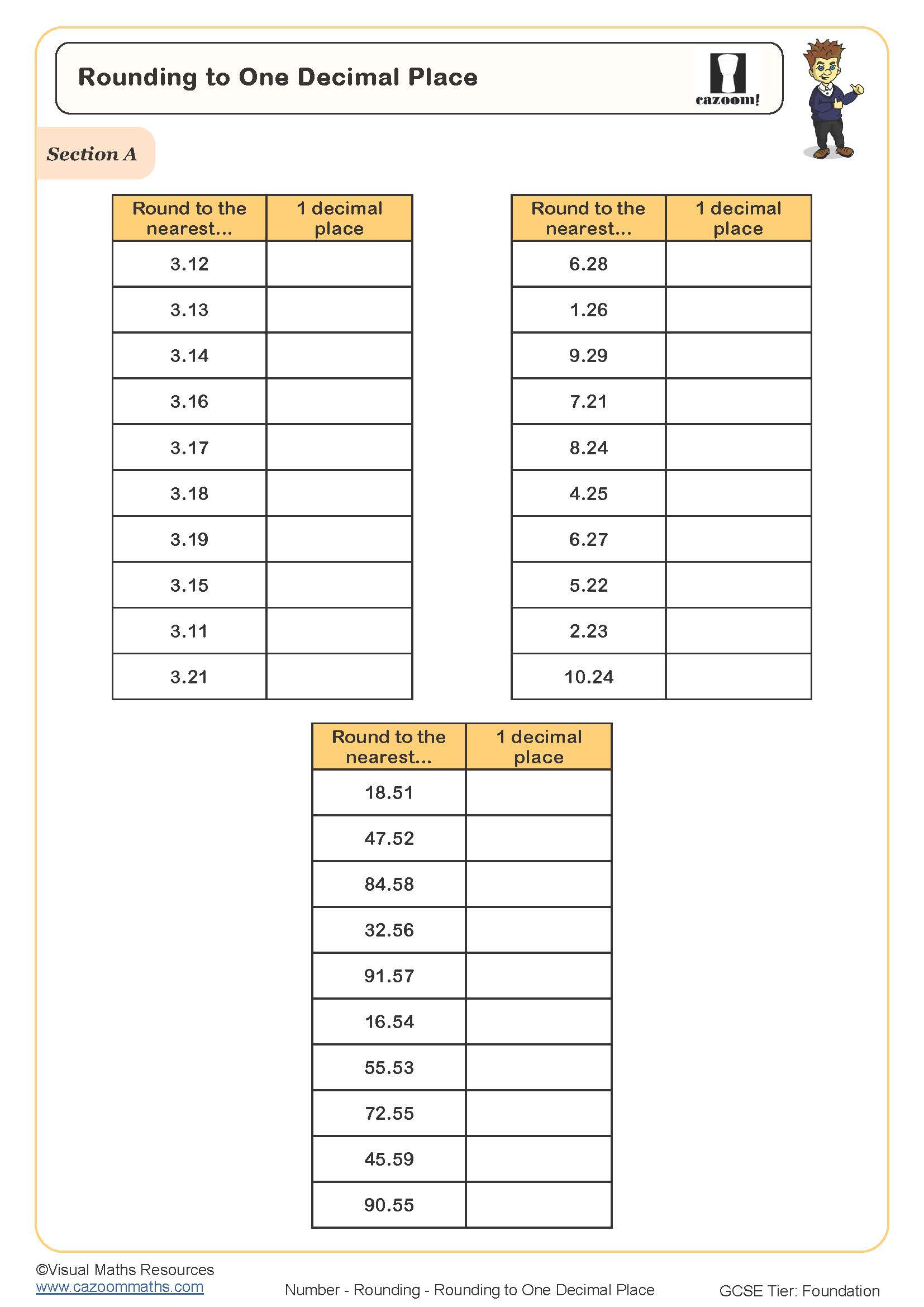
Rounding to One Decimal Place
Year groups: 7, 8
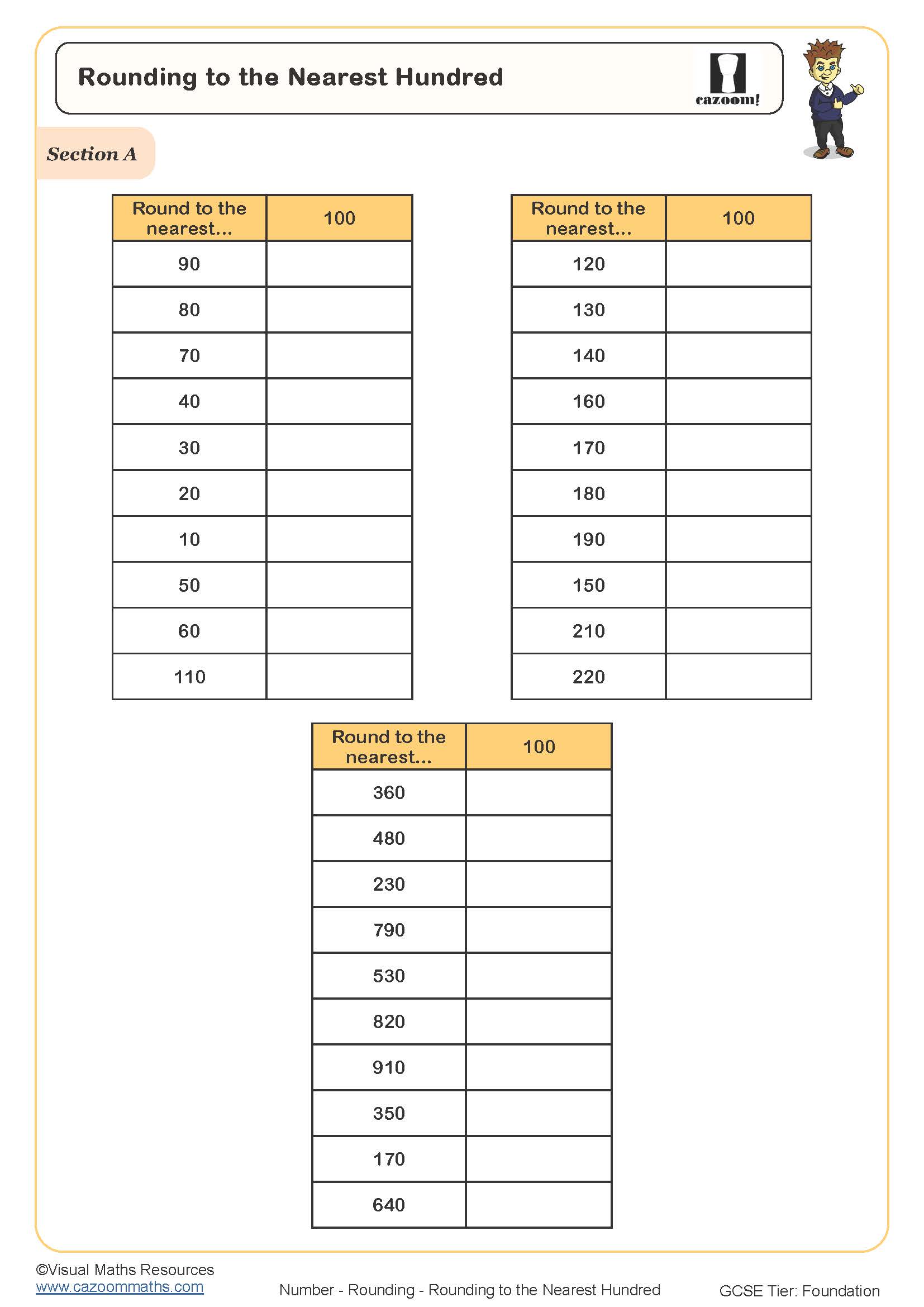
Rounding to the Nearest Hundred
Year groups: 7, 8
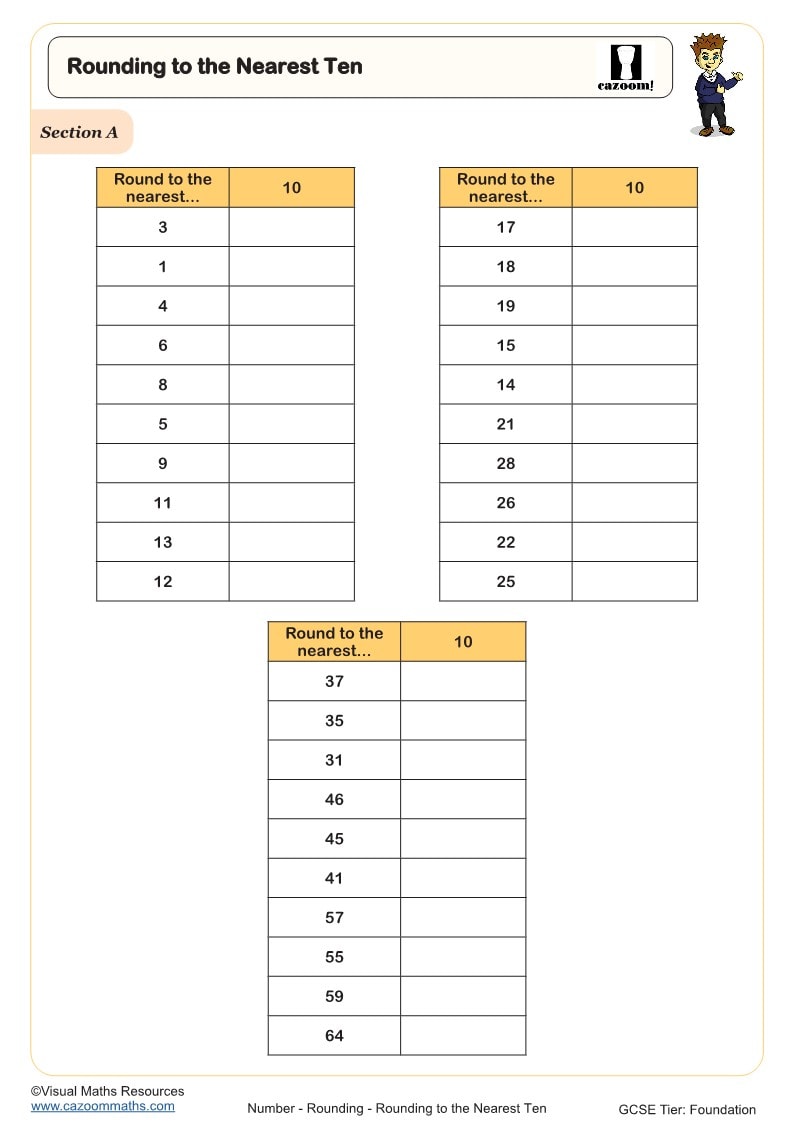
Rounding to the Nearest Ten
Year groups: 7, 8
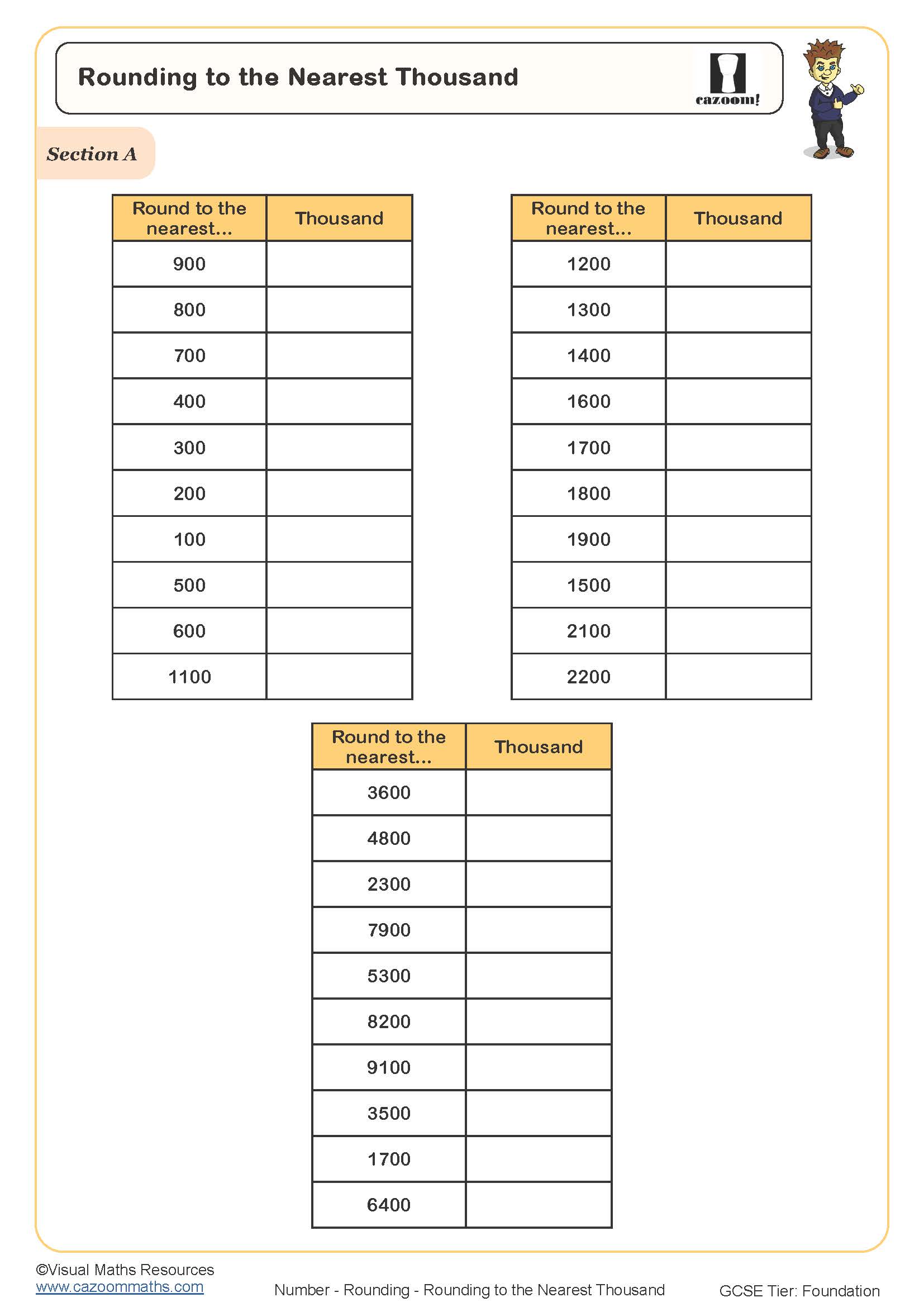
Rounding to the Nearest Thousand
Year groups: 7, 8
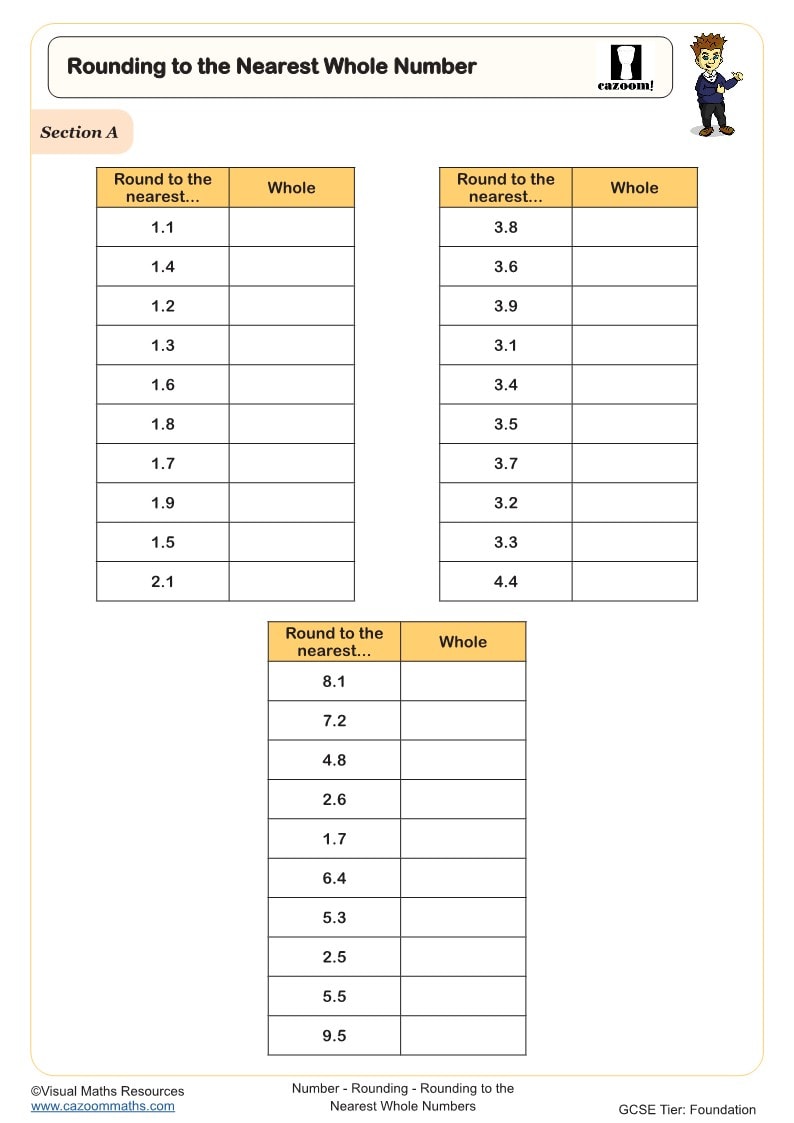
Rounding to the Nearest Whole Number
Year groups: 7, 8
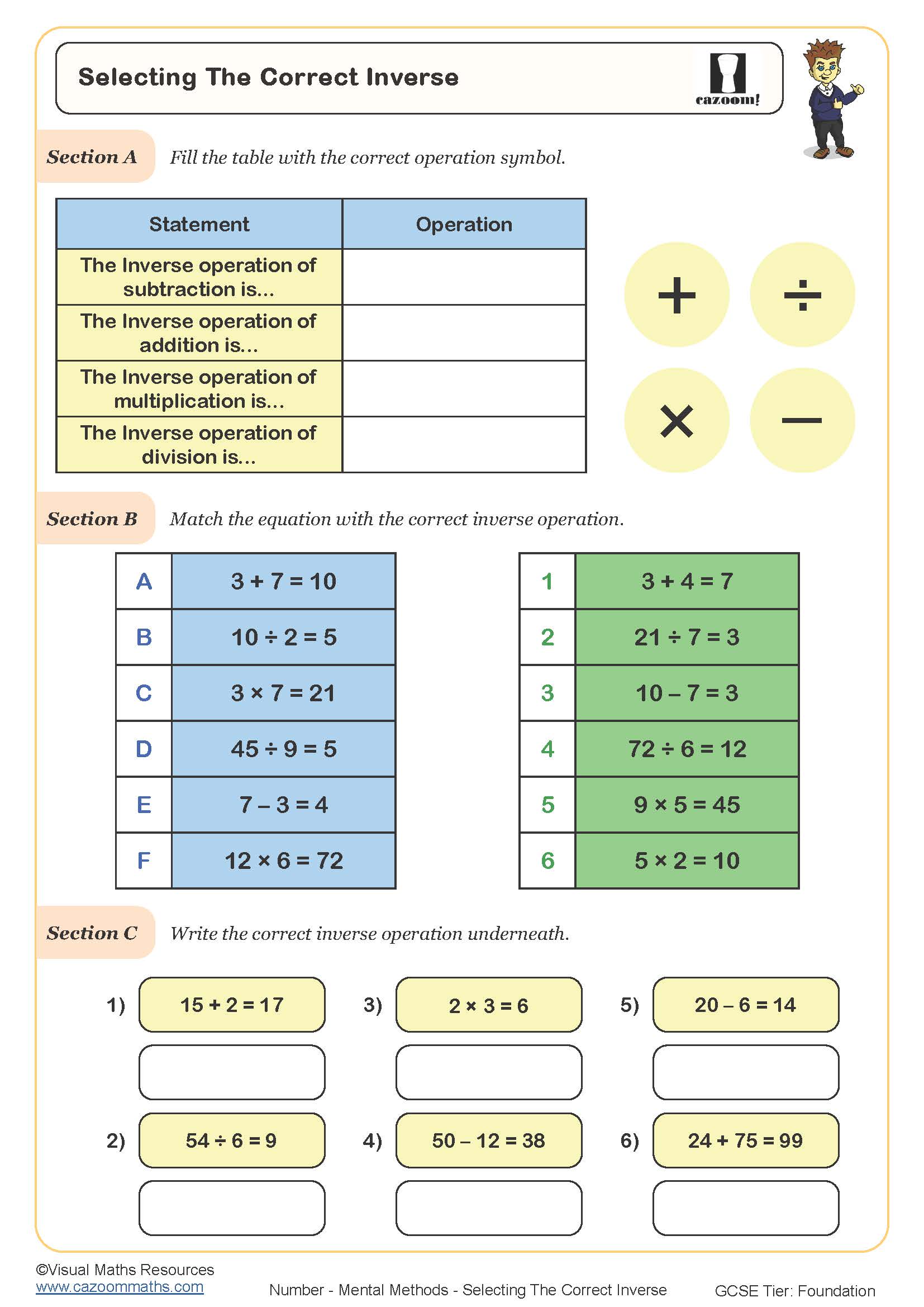
Selecting the Correct Inverse
Year groups: 7, 8
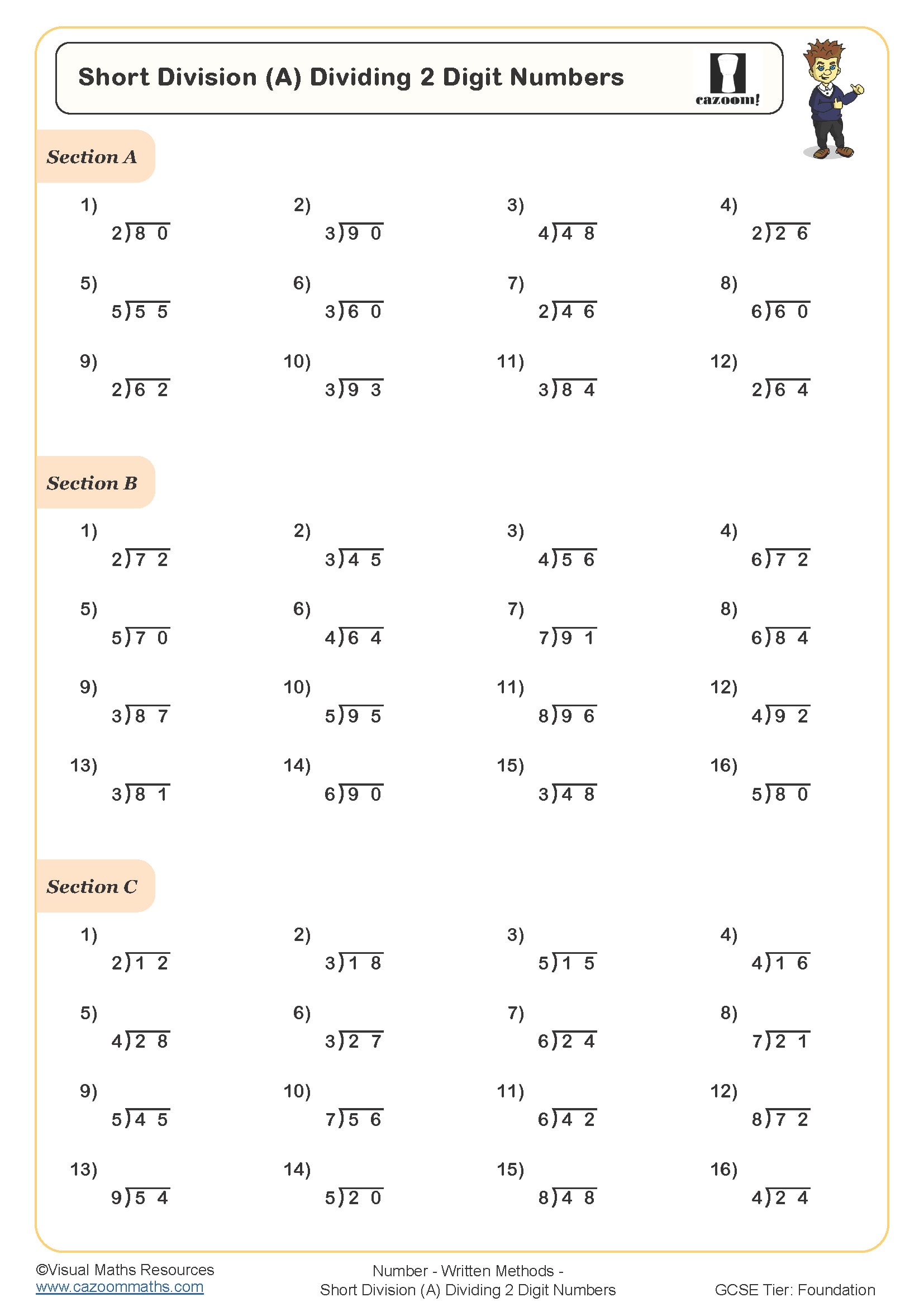
Short Division (A) Dividing 2 Digit Numbers
Year groups: 7, 8
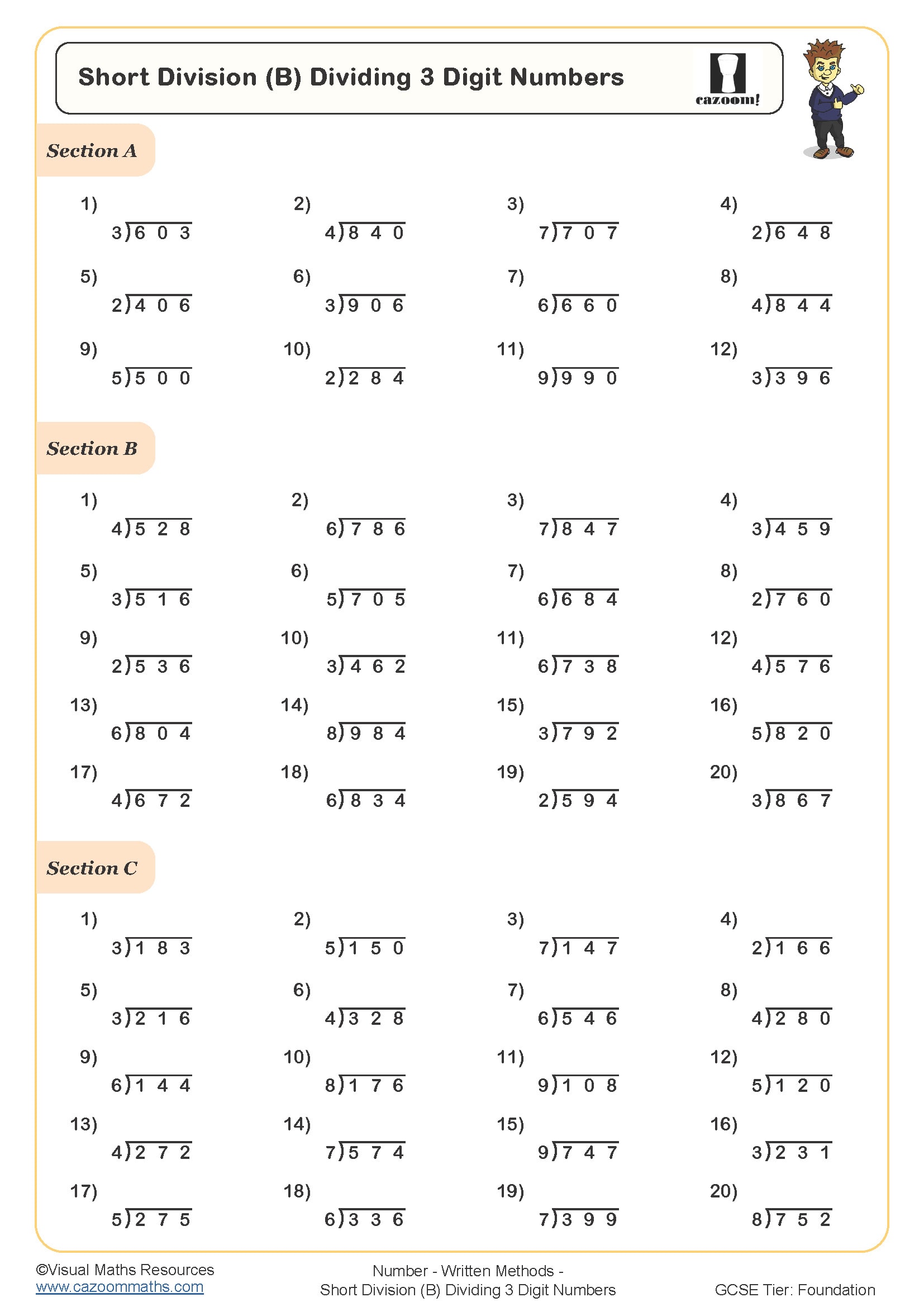
Short Division (B) Dividing 3 Digit Numbers
Year groups: 7, 8
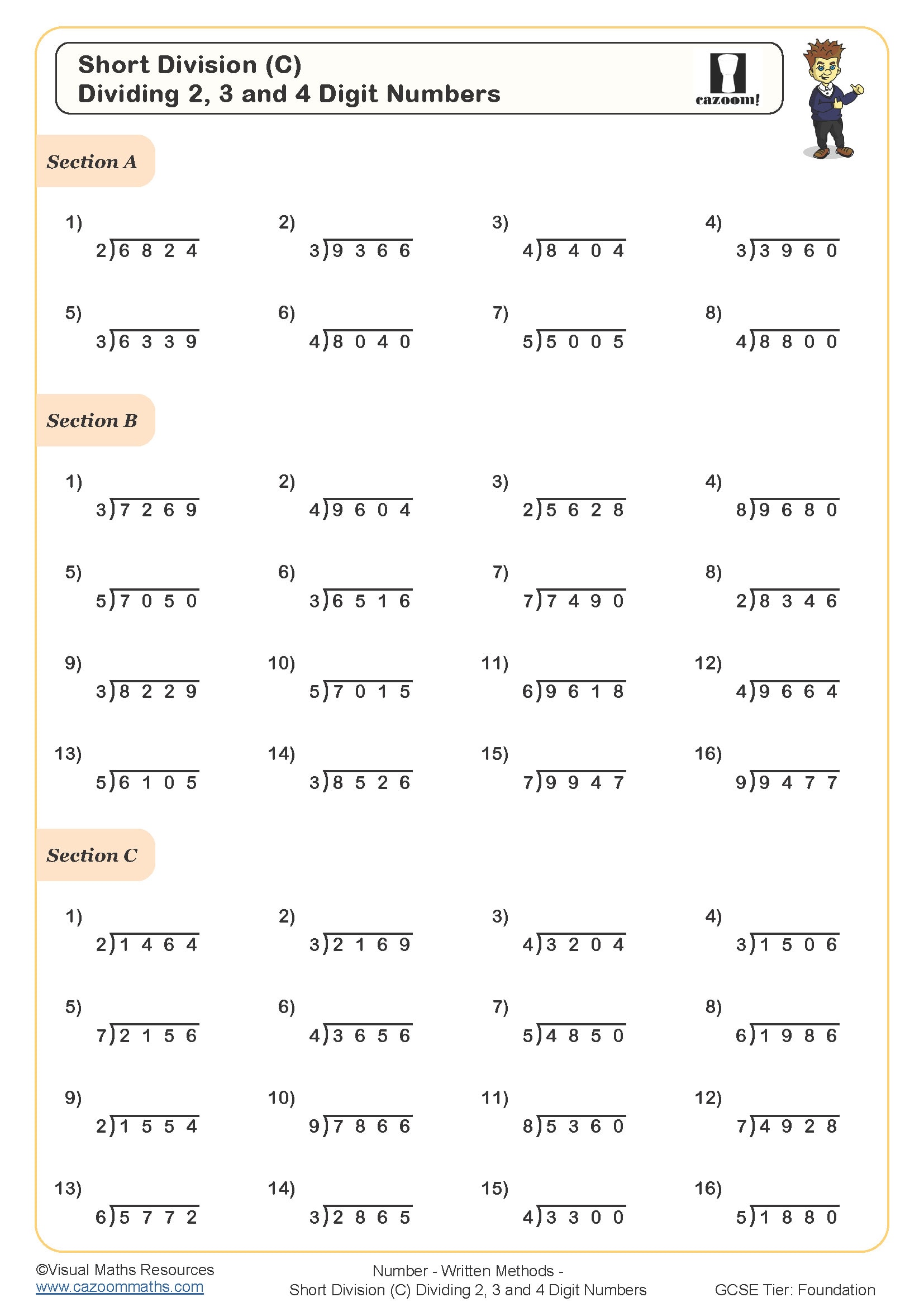
Short Division (C) Dividing 2, 3 and 4 Digit Numbers
Year groups: 7, 8
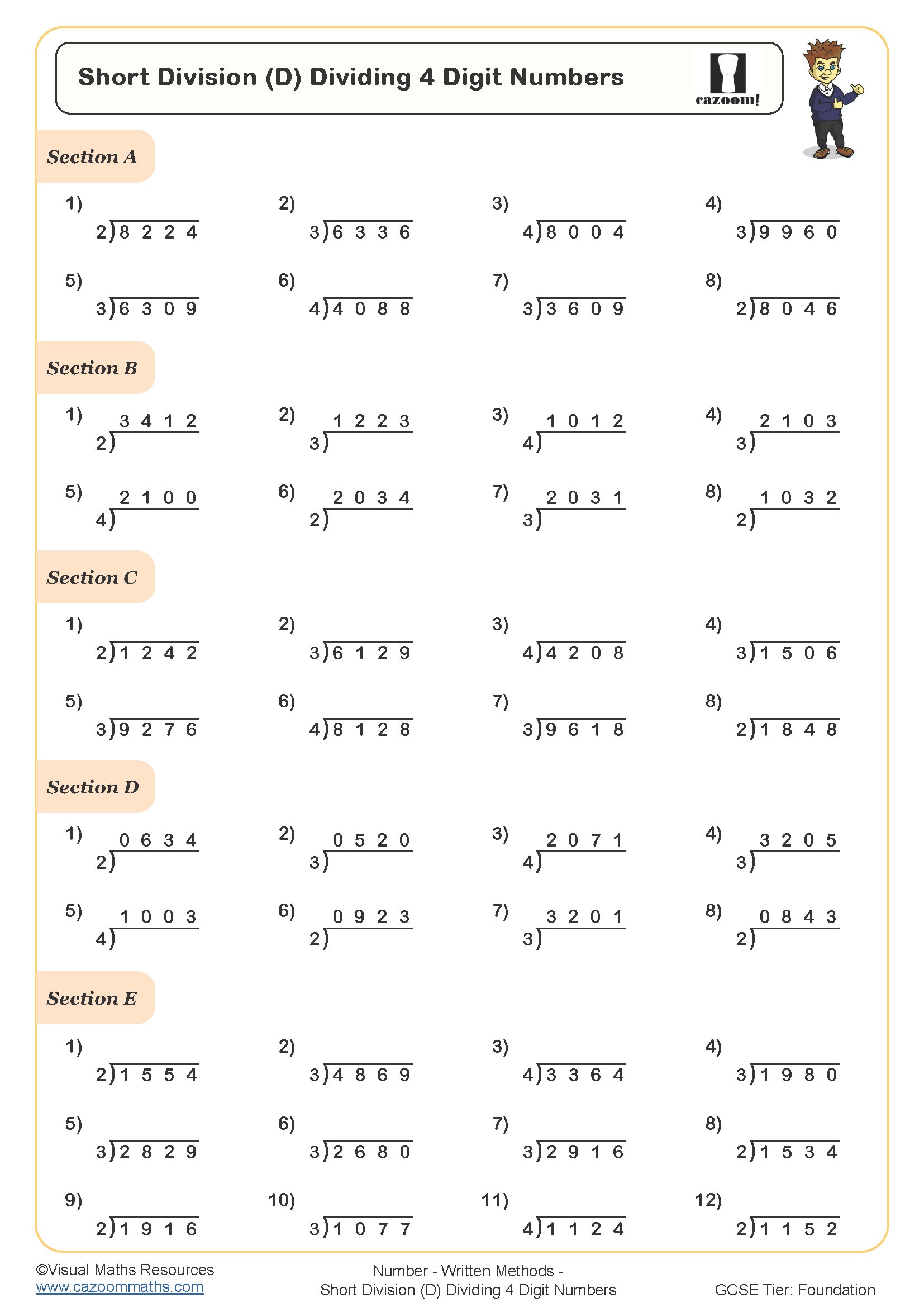
Short Division (D) Dividing 4 Digit Numbers
Year groups: 7, 8
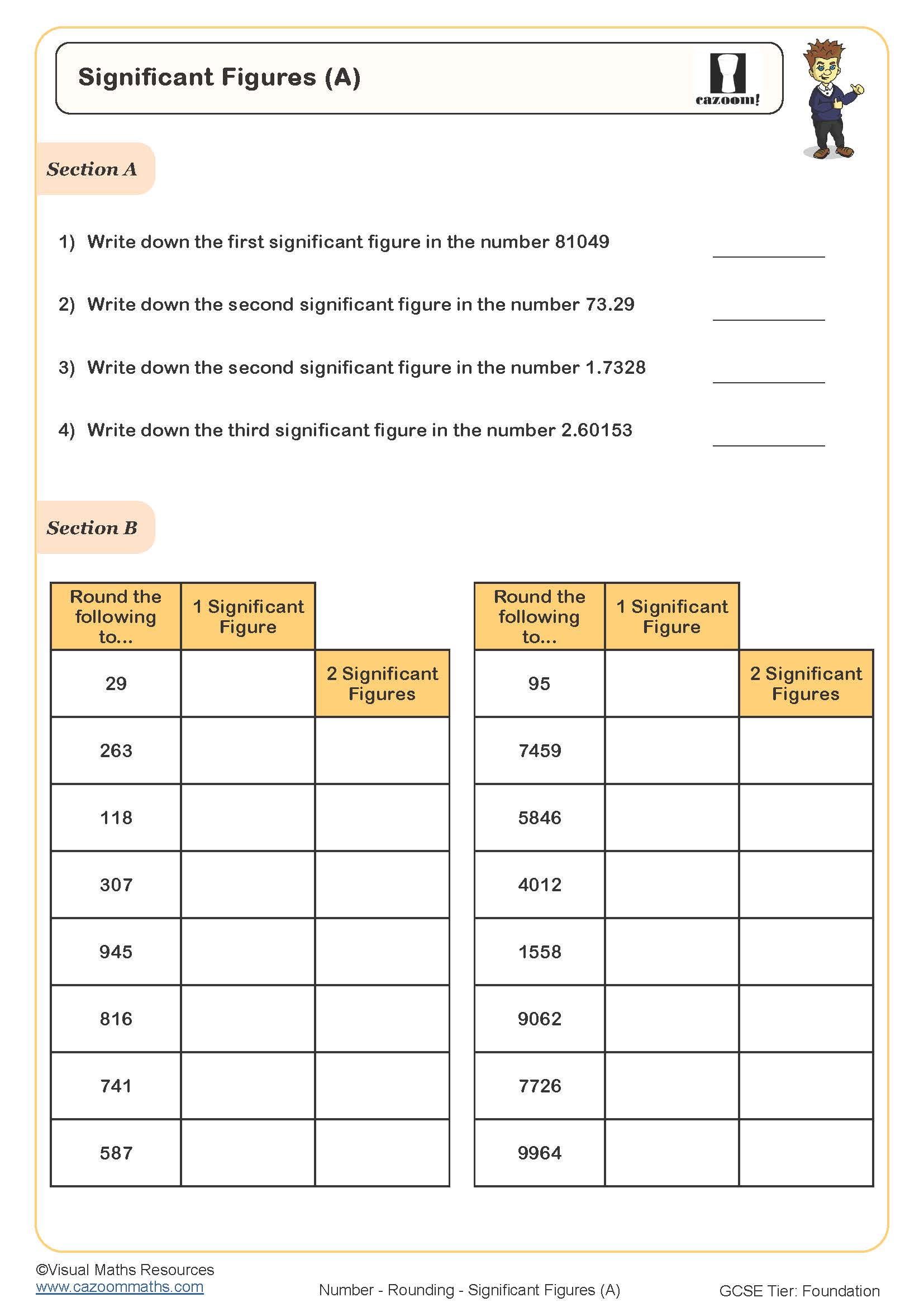
Significant Figures (A)
Year groups: 7, 8
Significant Figures (B)
Year groups: 7, 8
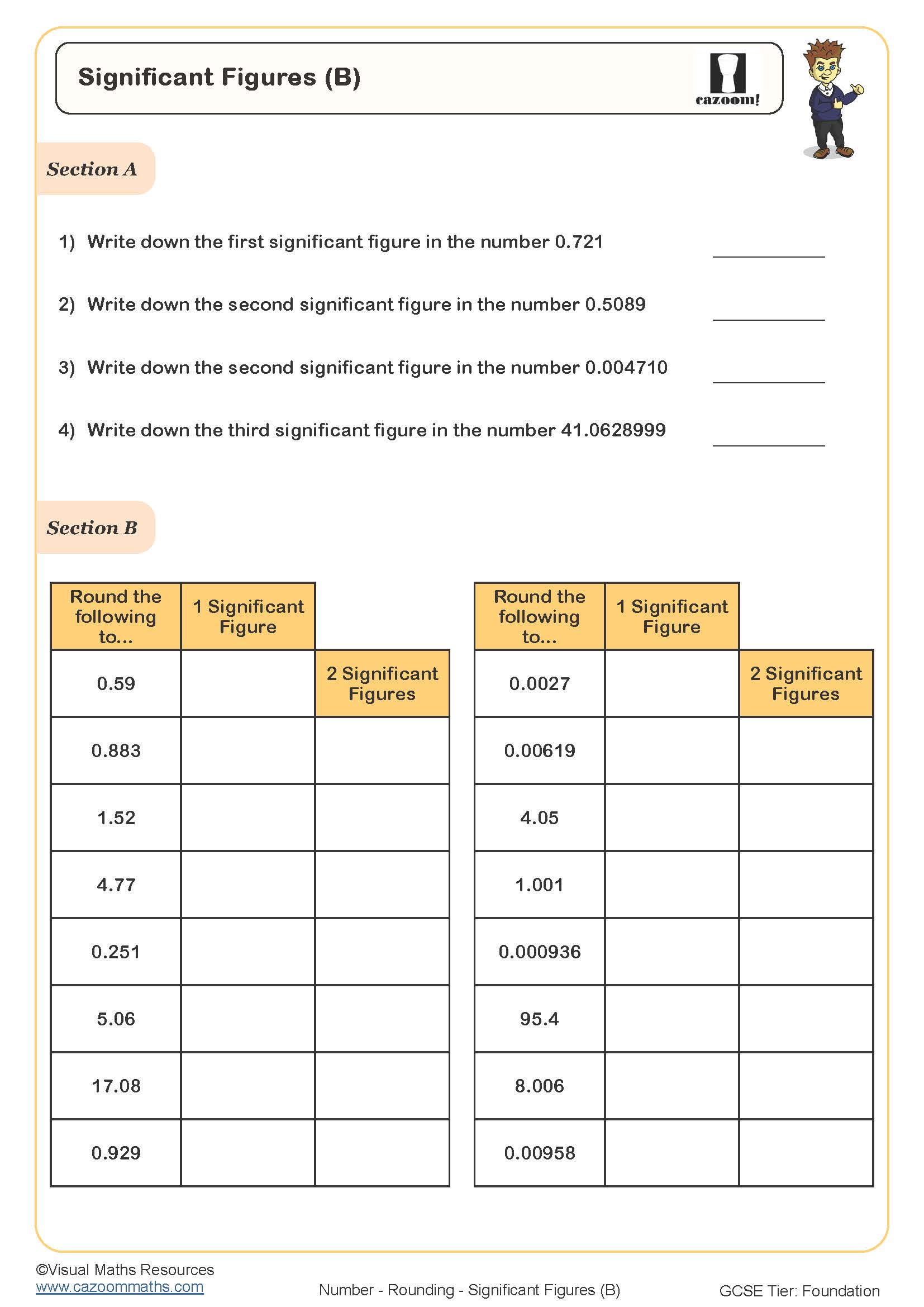
Simplifying fractions (A)
Year groups: 7, 8
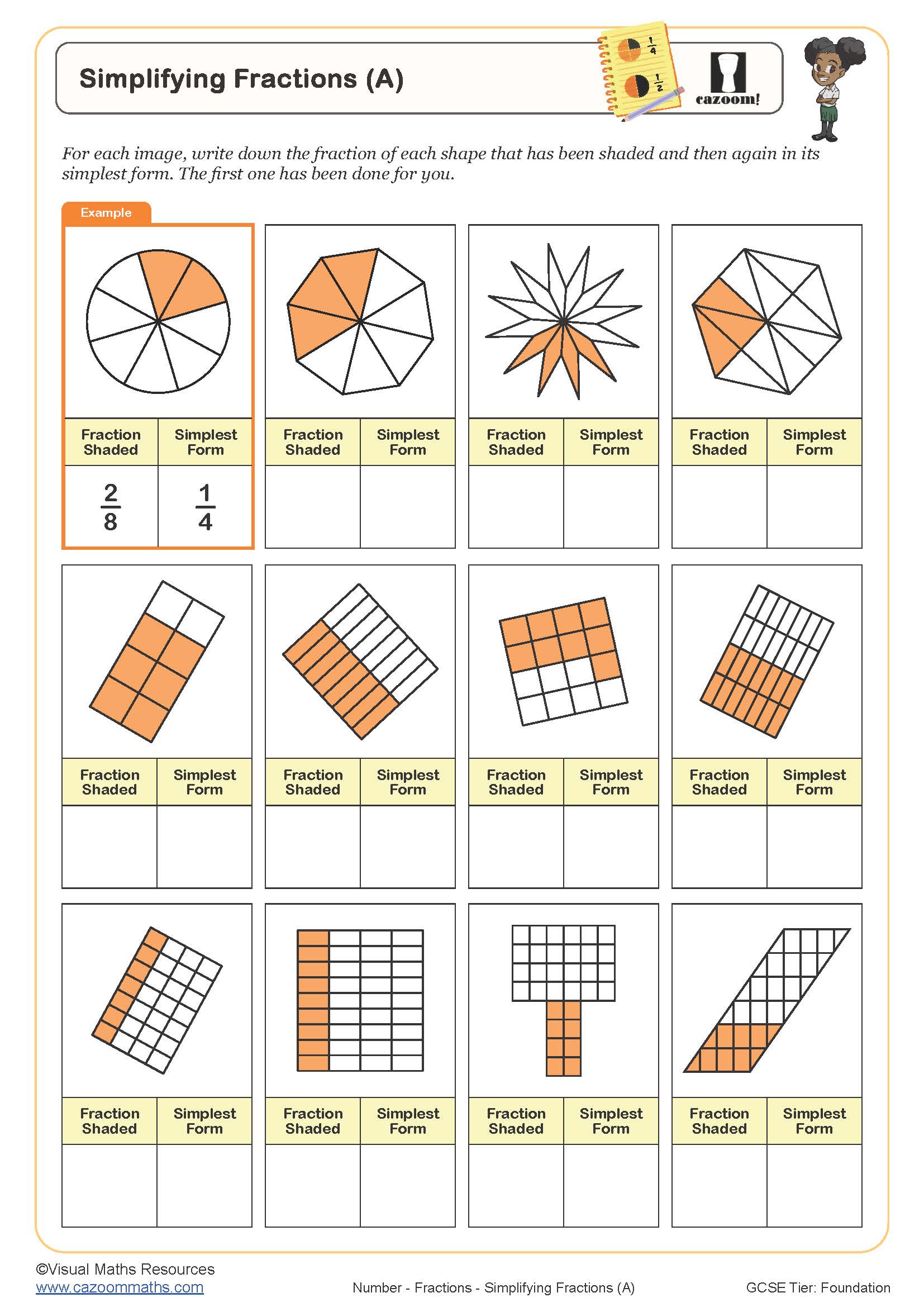
Simplifying Fractions (B)
Year groups: 7, 8
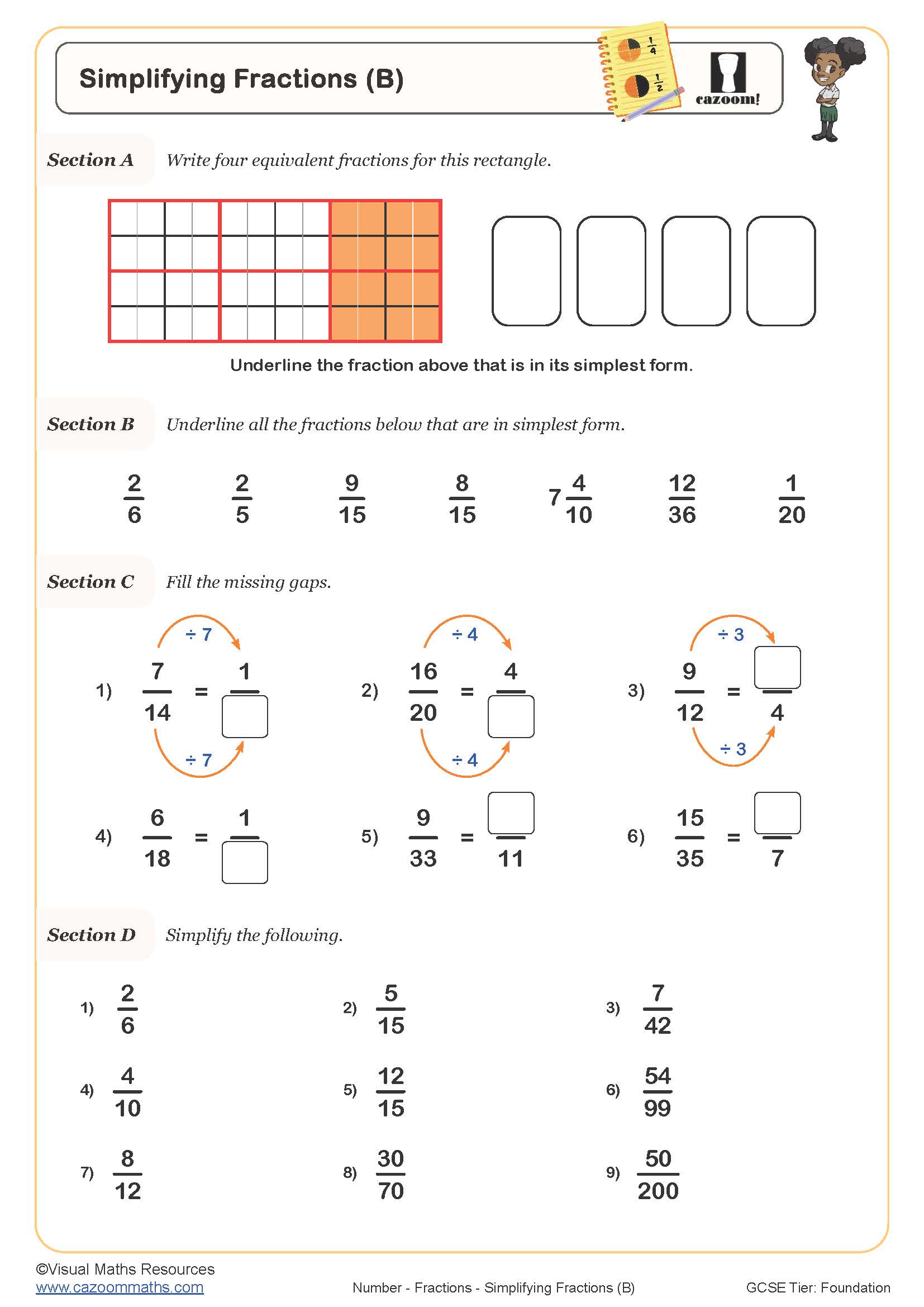
Simplifying Fractions (C)
Year groups: 7, 8
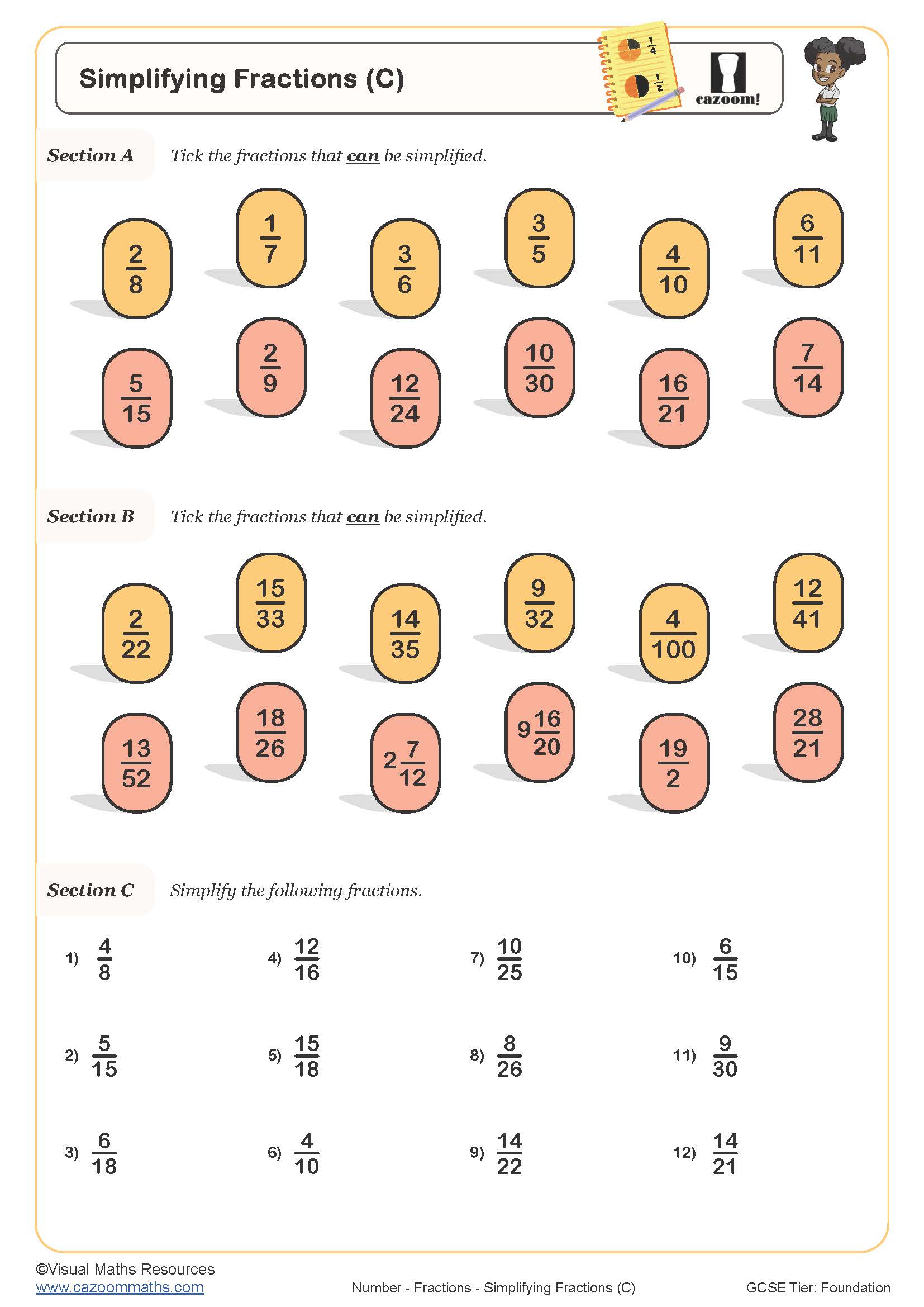
Simplifying Ratios (A)
Year groups: 7, 8
/Cazoom-Maths-Ratio-Simplifying-Ratios-(A)-Worksheet.jpg?w=3840)
Simplifying Ratios (B)
Year groups: 7, 8
-Worksheet.jpg?w=3840)
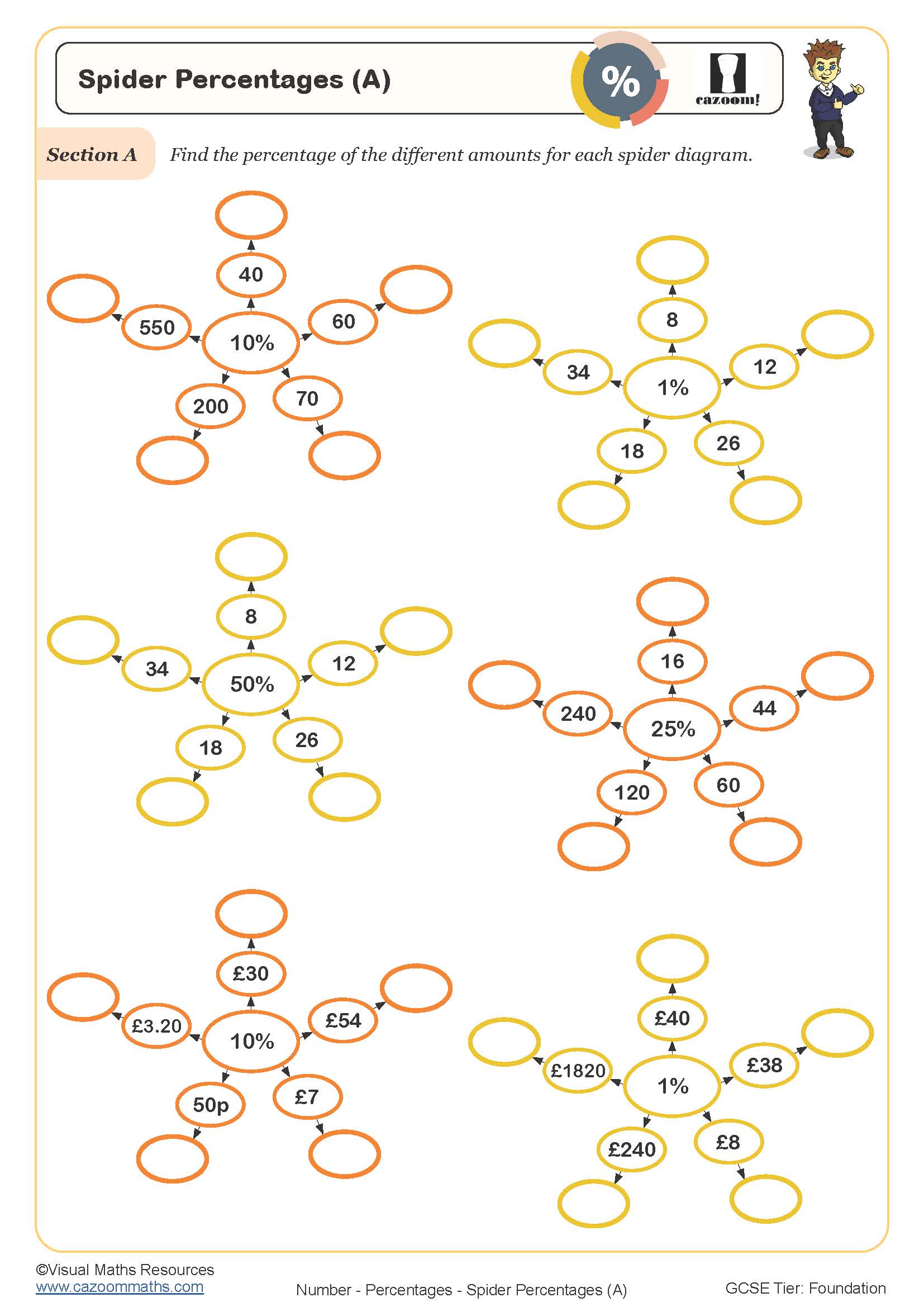
Spider Percentages (A)
Year groups: 7, 8
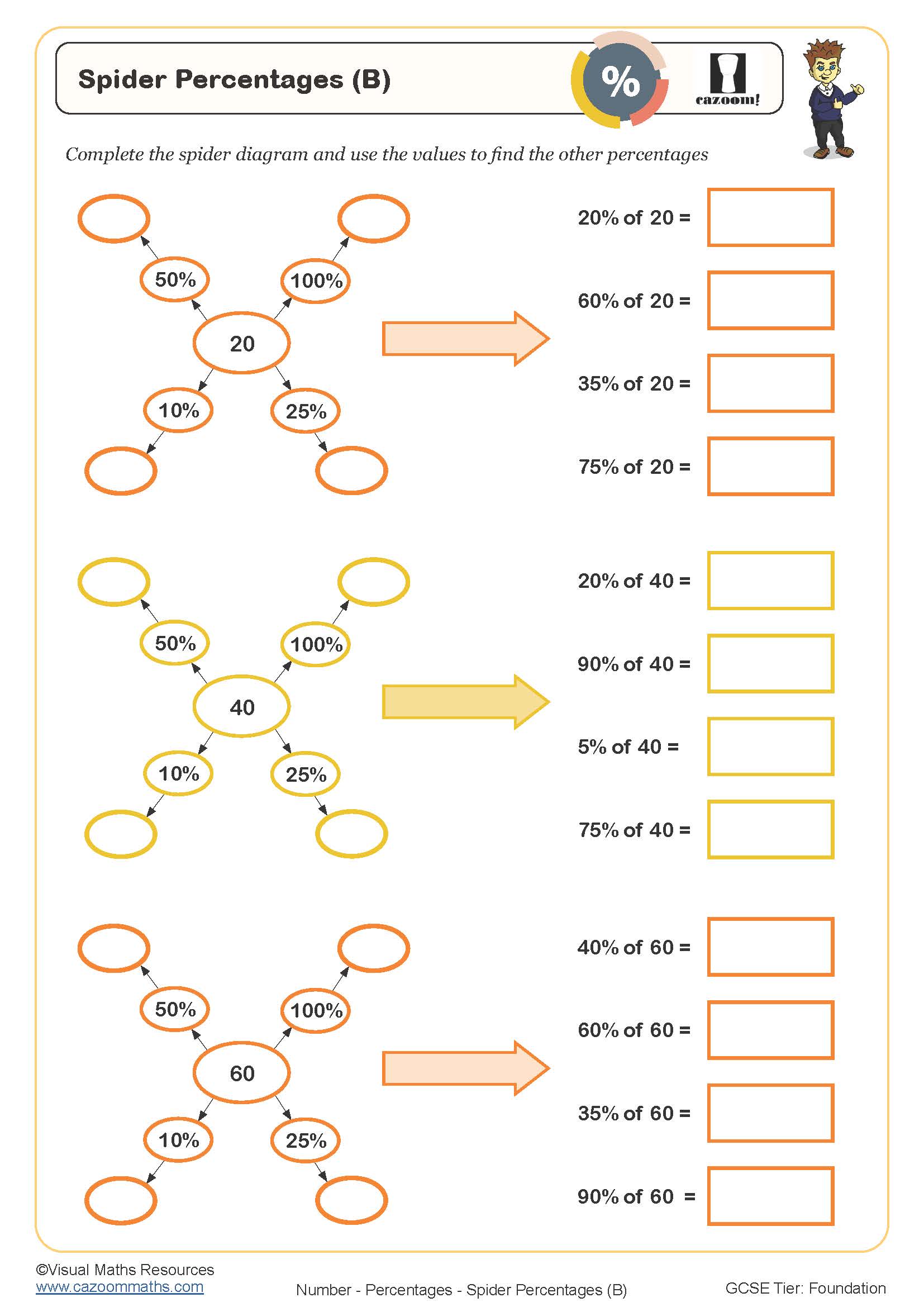
Spider Percentages (B)
Year groups: 7, 8
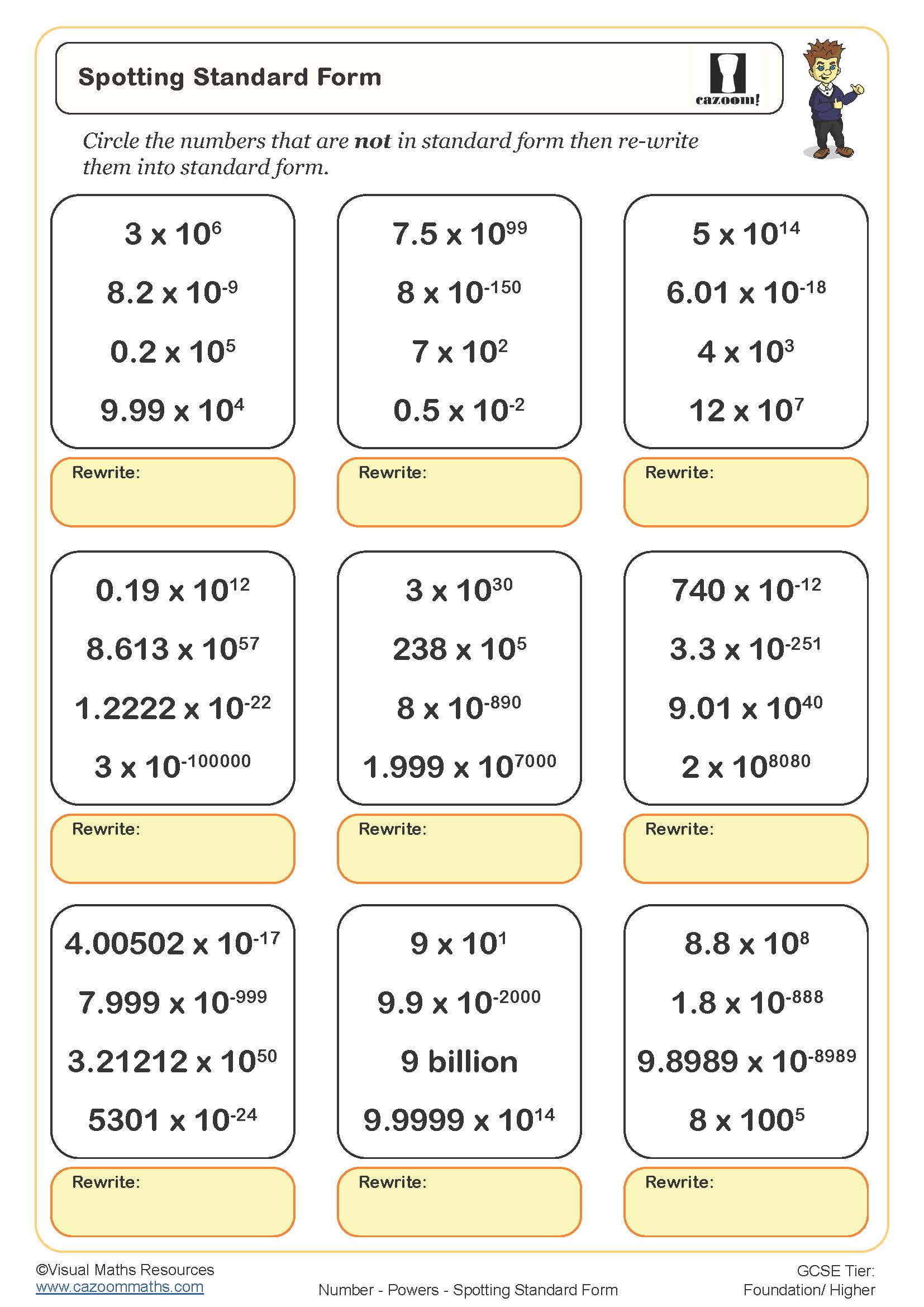
Spotting Standard Form
Year groups: 7, 8
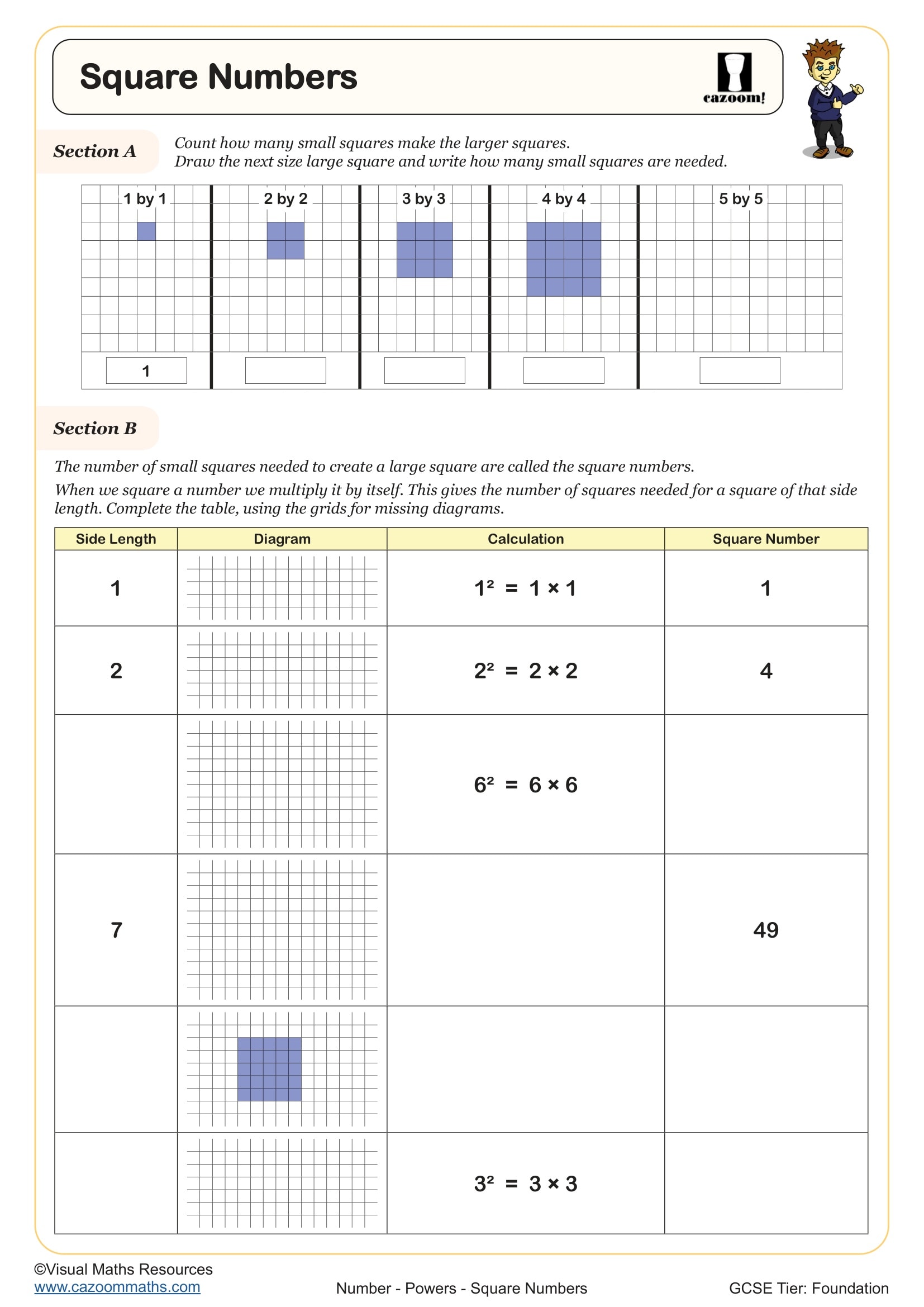
Square Numbers
Year groups: 7, 8
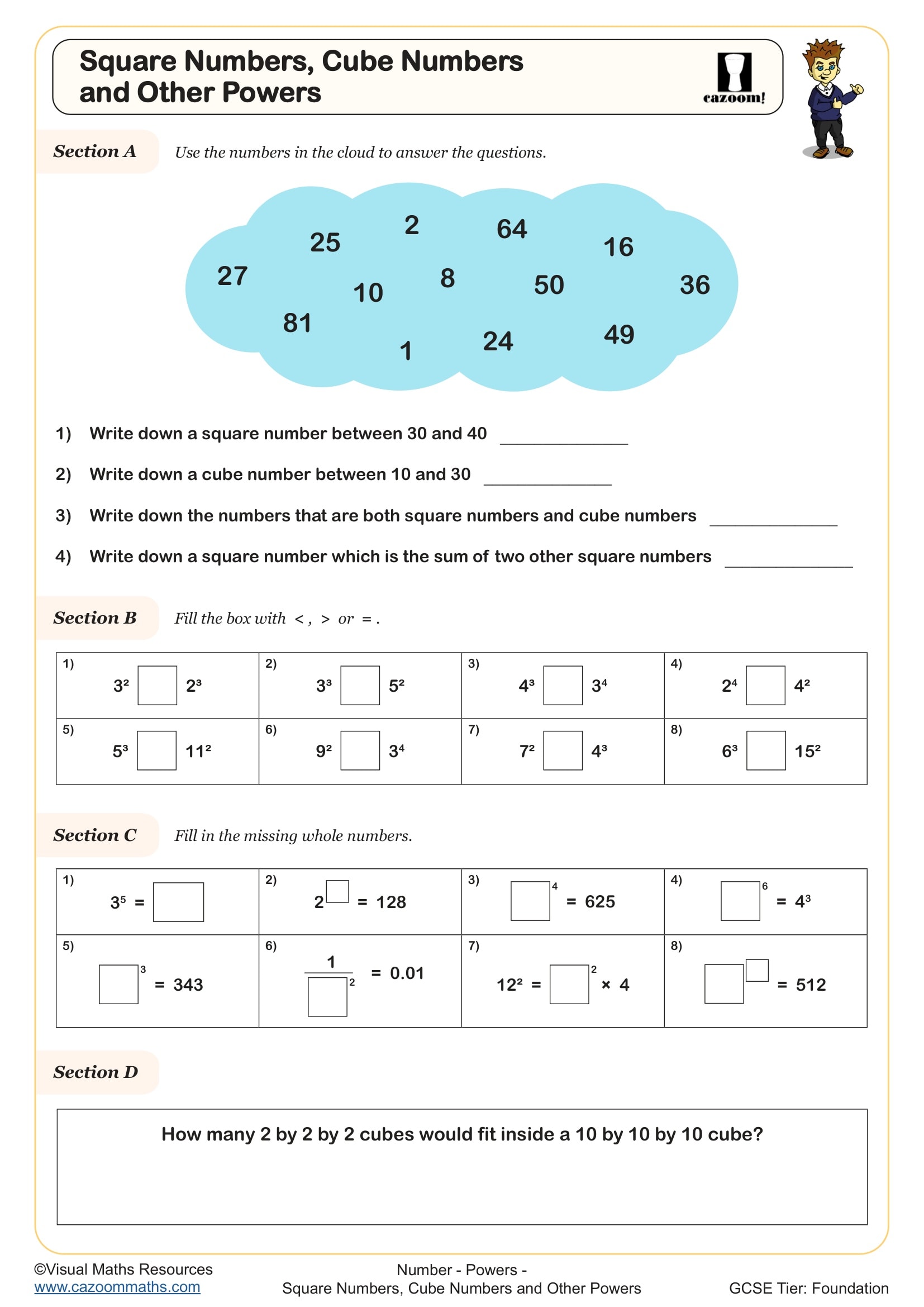
Square Numbers, Cube Numbers and Other Powers
Year groups: 7, 8
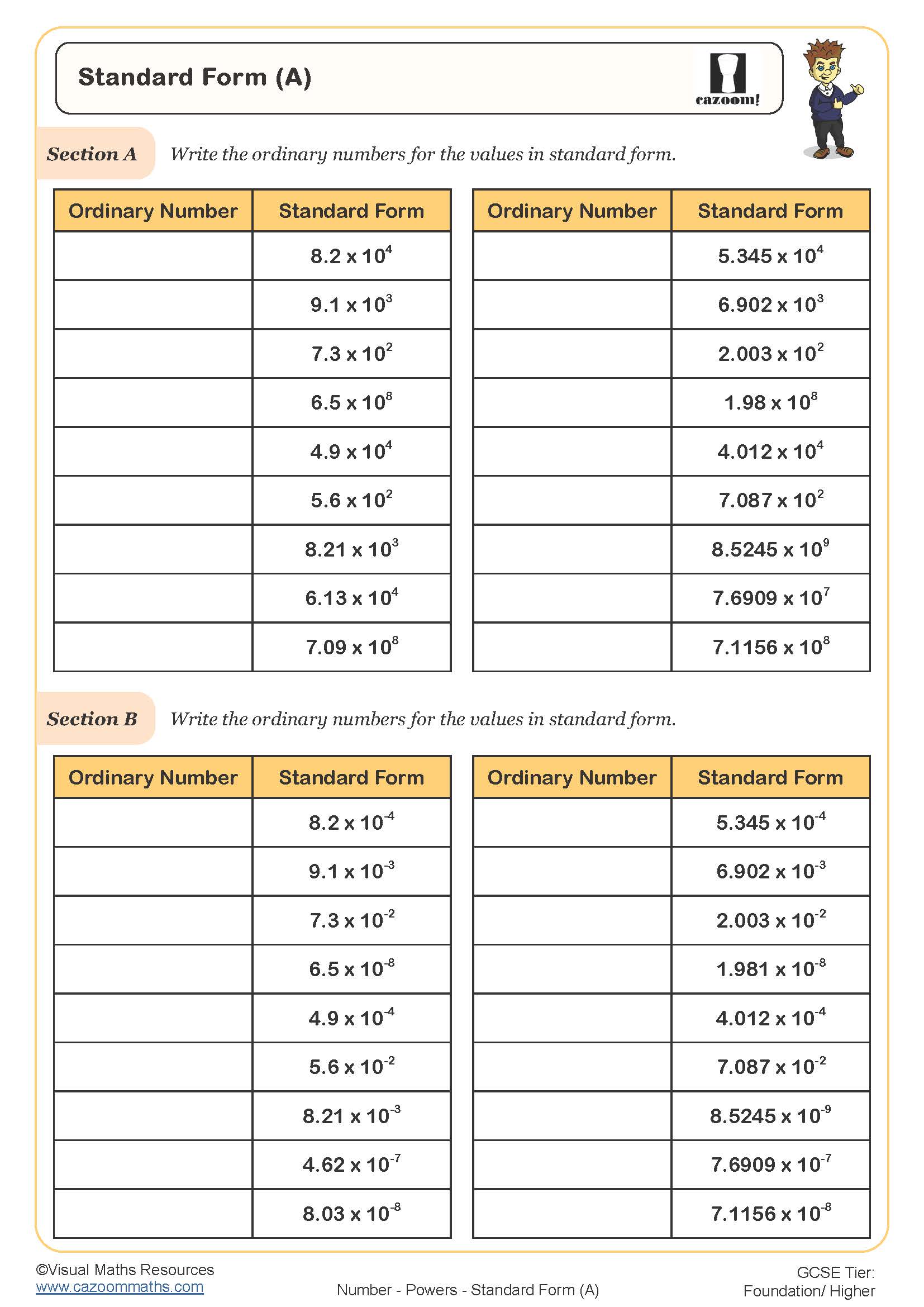
Standard Form (A)
Year groups: 7, 8
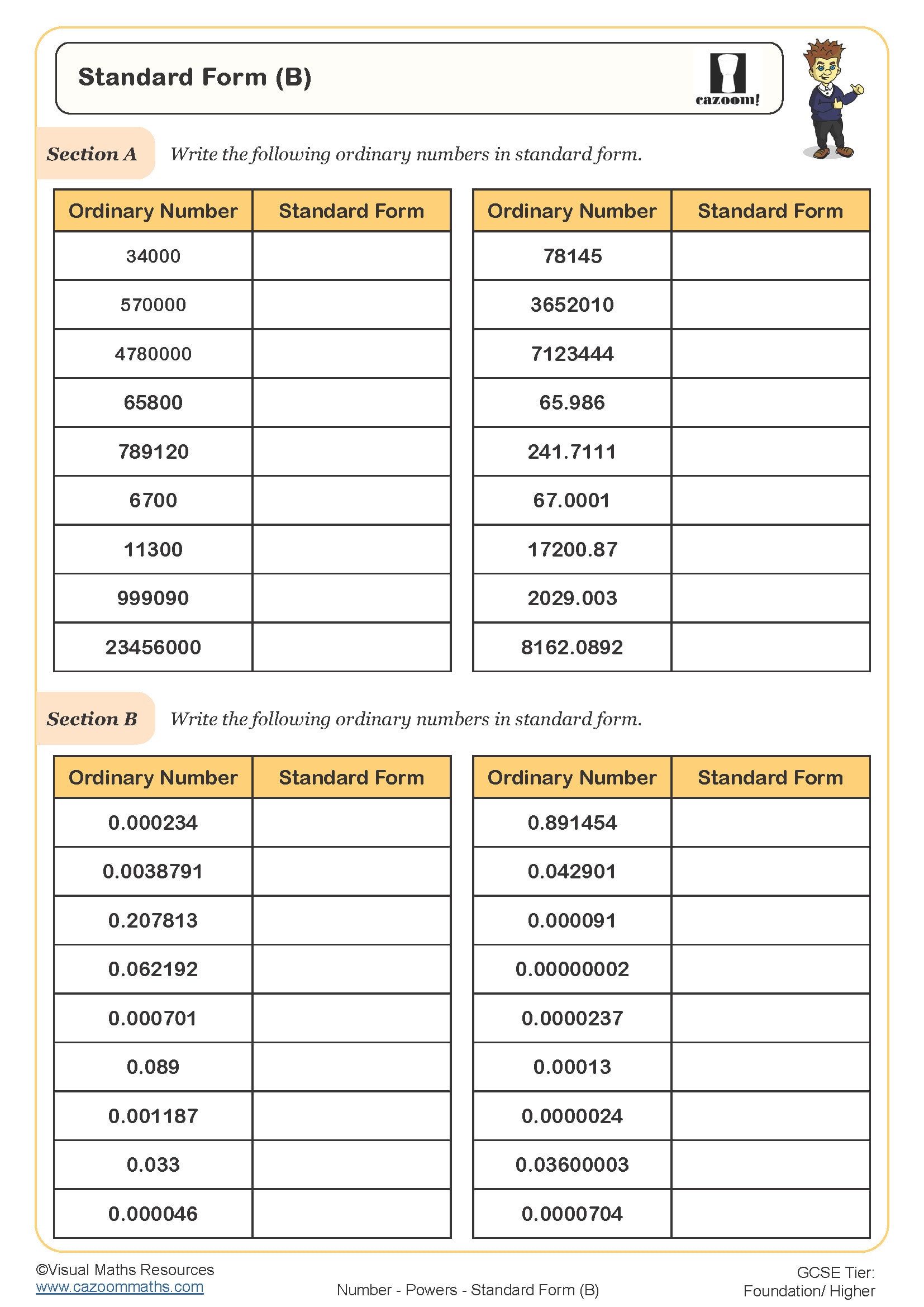
Standard Form (B)
Year groups: 7, 8
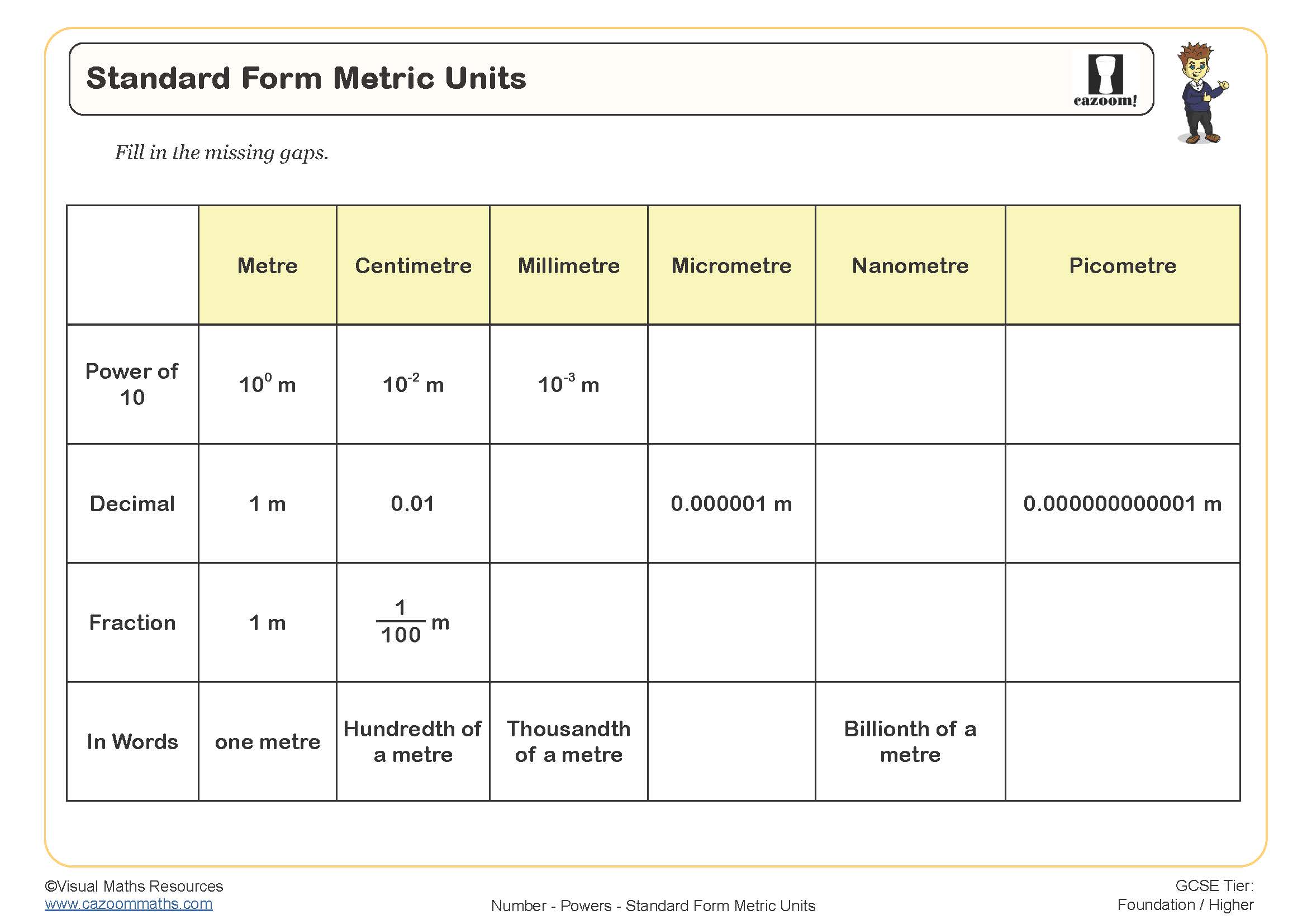
Standard Form Metric Units
Year groups: 7, 8
Subtraction of 4 and 5-digit Numbers
Year groups: 7, 8
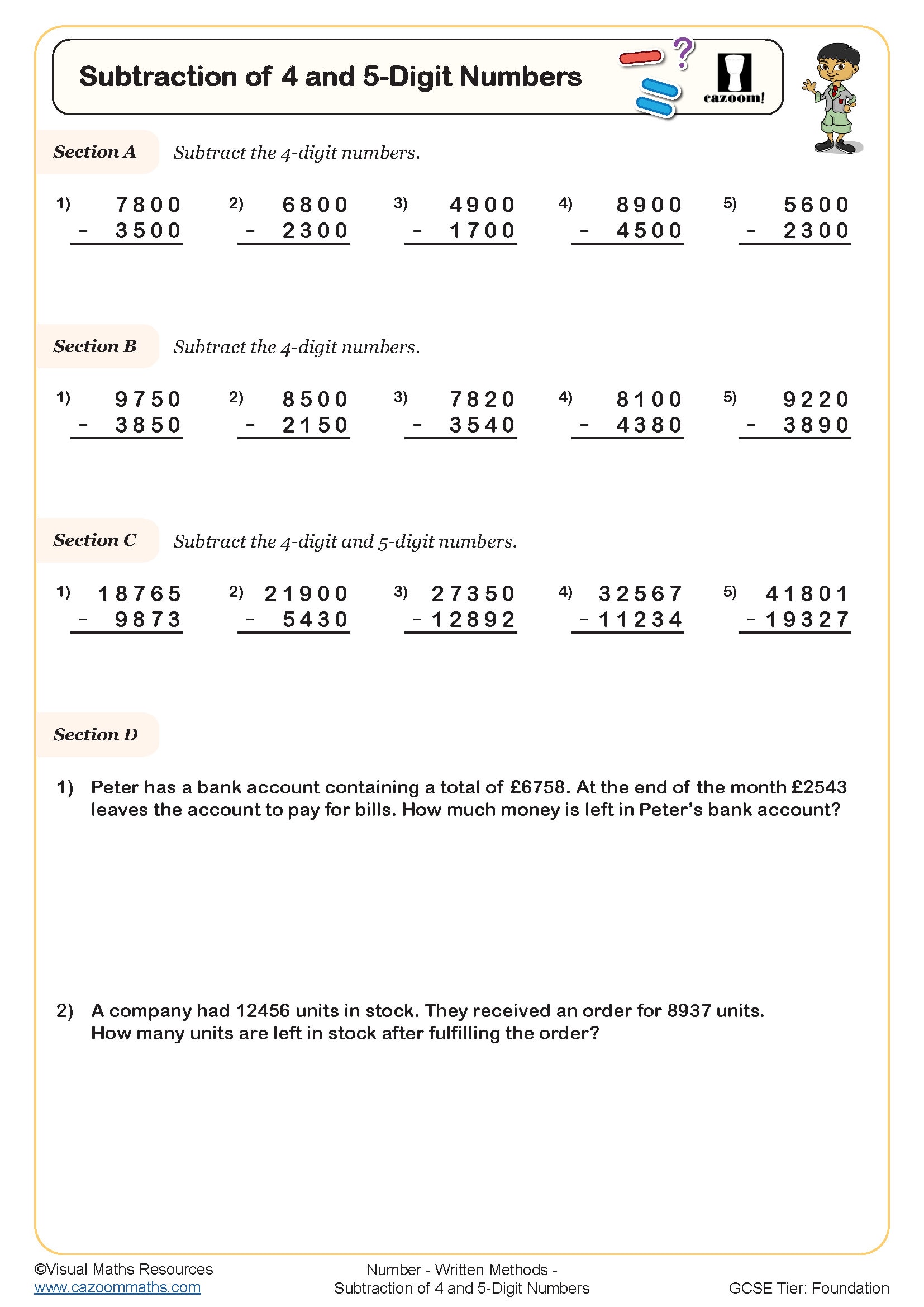
Time as Fractions
Year groups: 7, 8
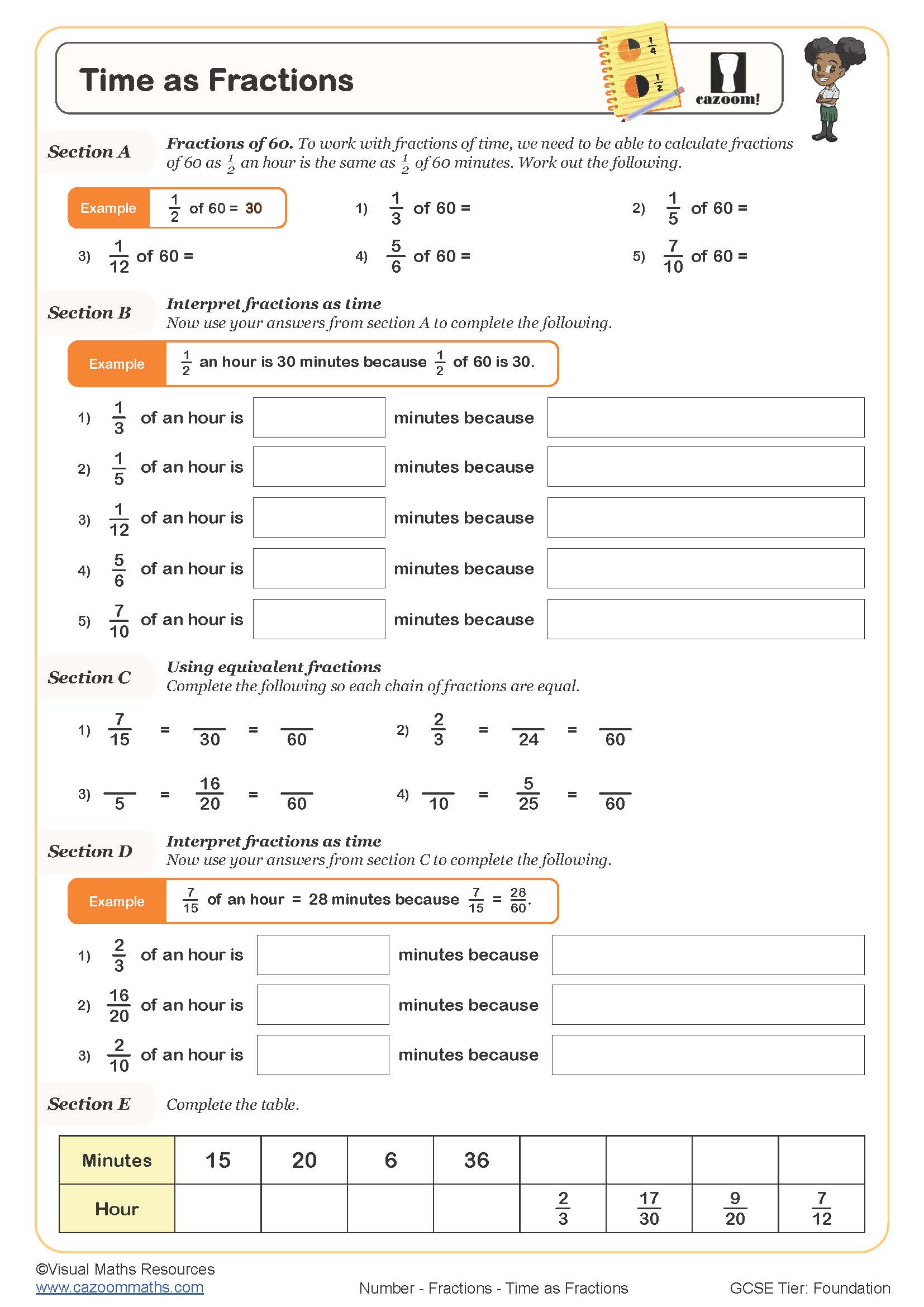
Times Tables 10 minute Challenge
Year groups: 7
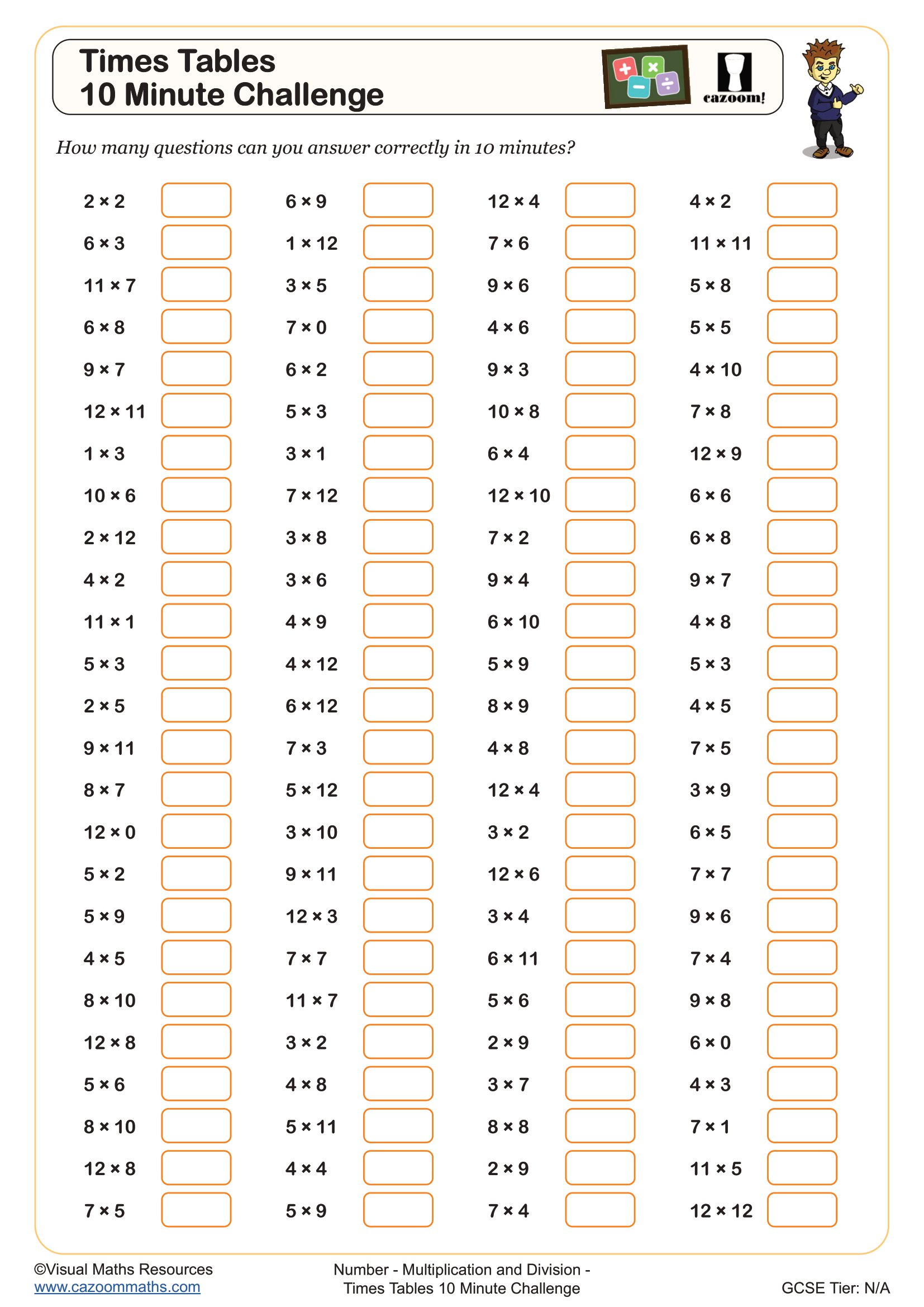
Understanding Decimal Operations
Year groups: 7, 8

Use Formal Methods For Addition of Integers
Year groups: 7, 8
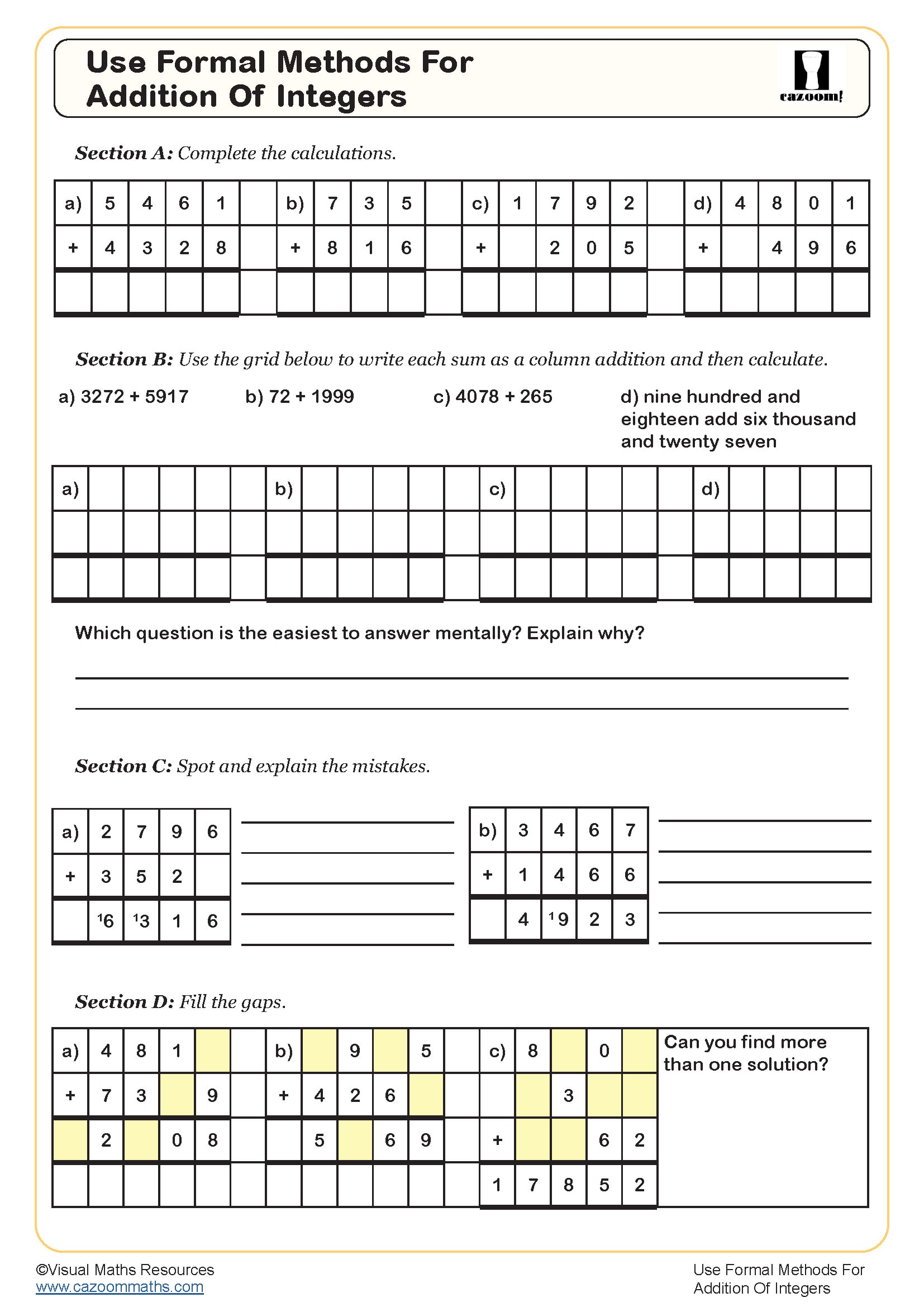
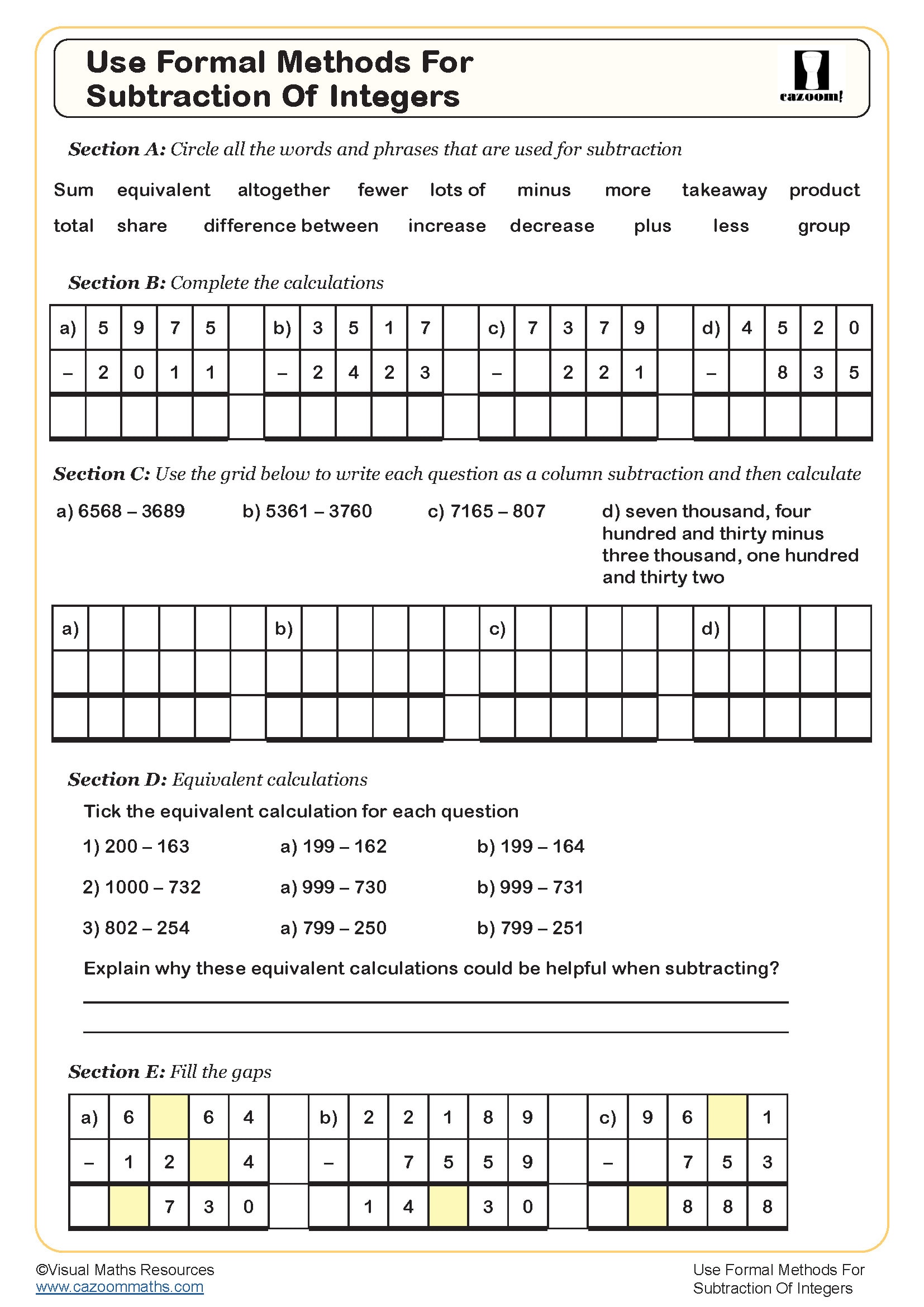
Use Formal Methods For Subtraction of Integers
Year groups: 7, 8
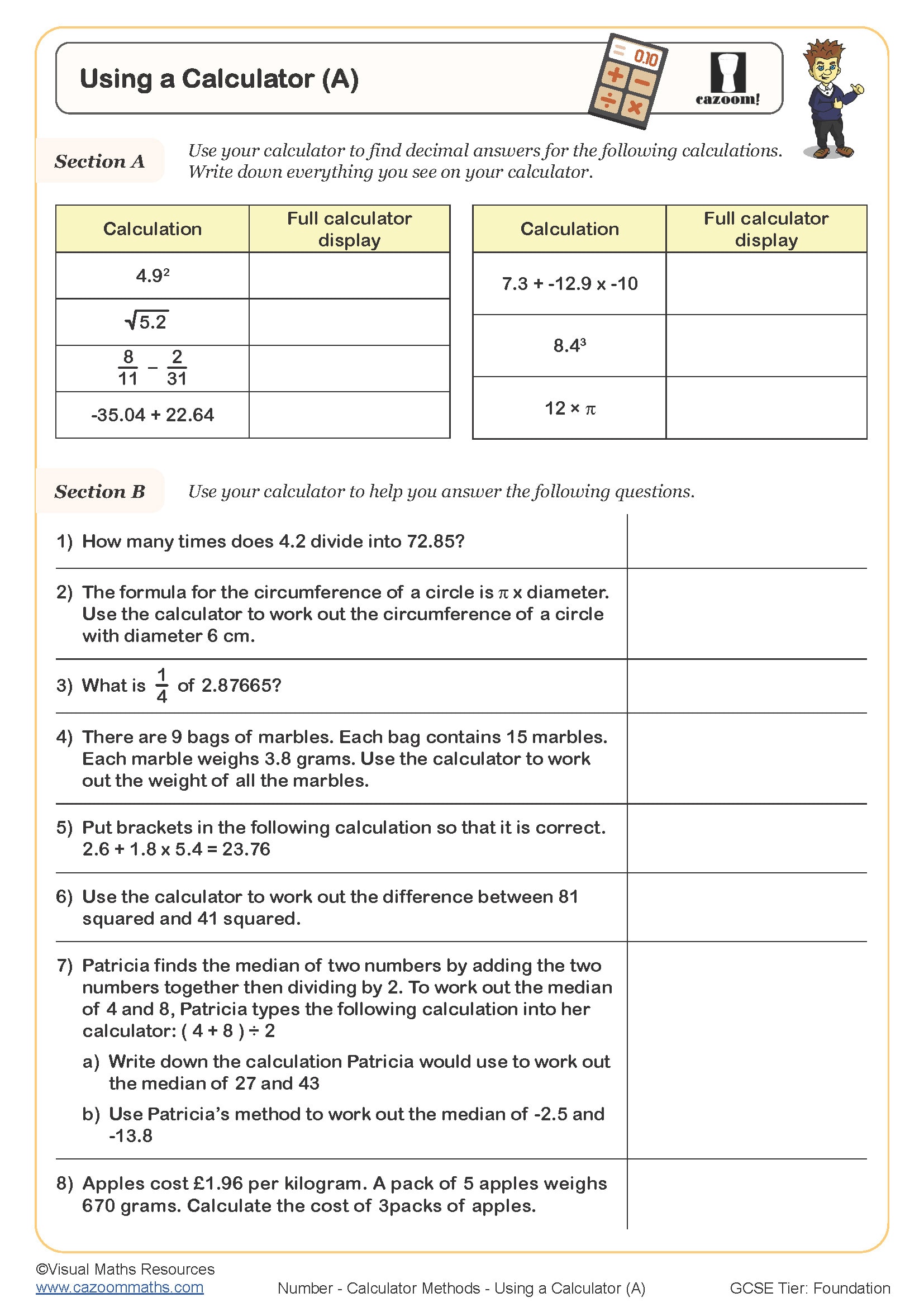
Using a Calculator (A)
Year groups: 7, 8
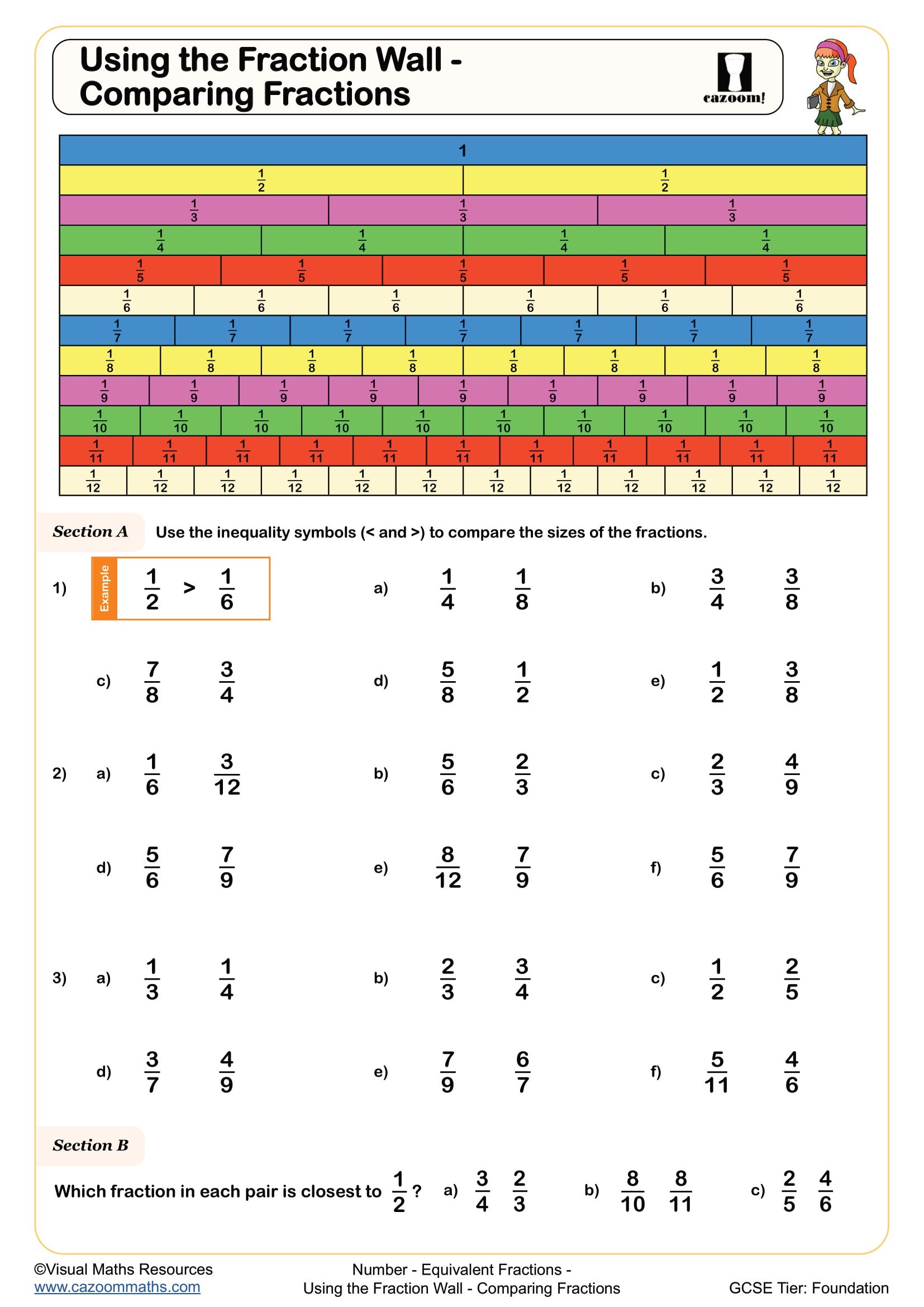
Using a Fraction Wall - Comparing Fractions
Year groups: 7, 8
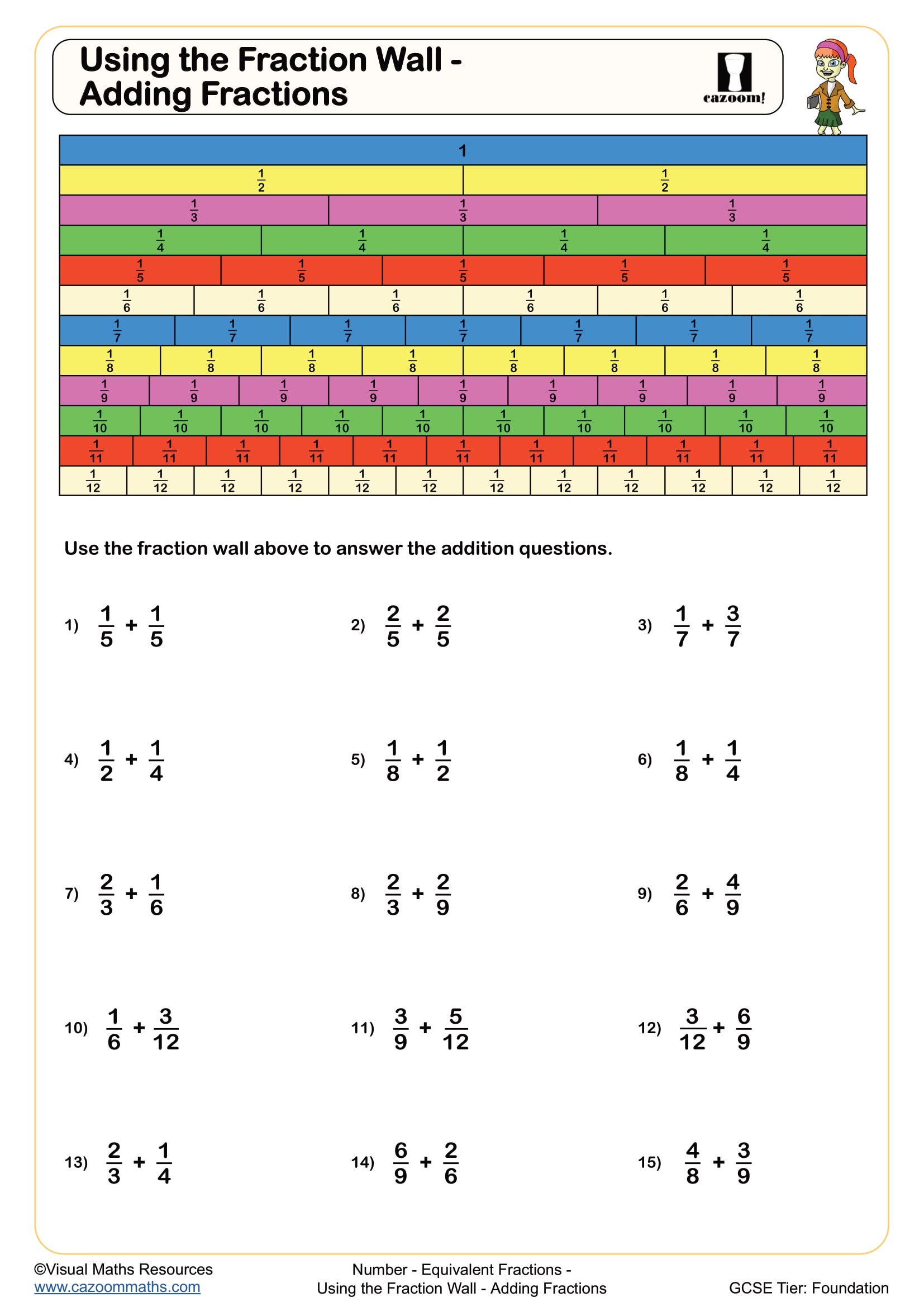
Using The Fraction Wall - Adding Fractions
Year groups: 7, 8
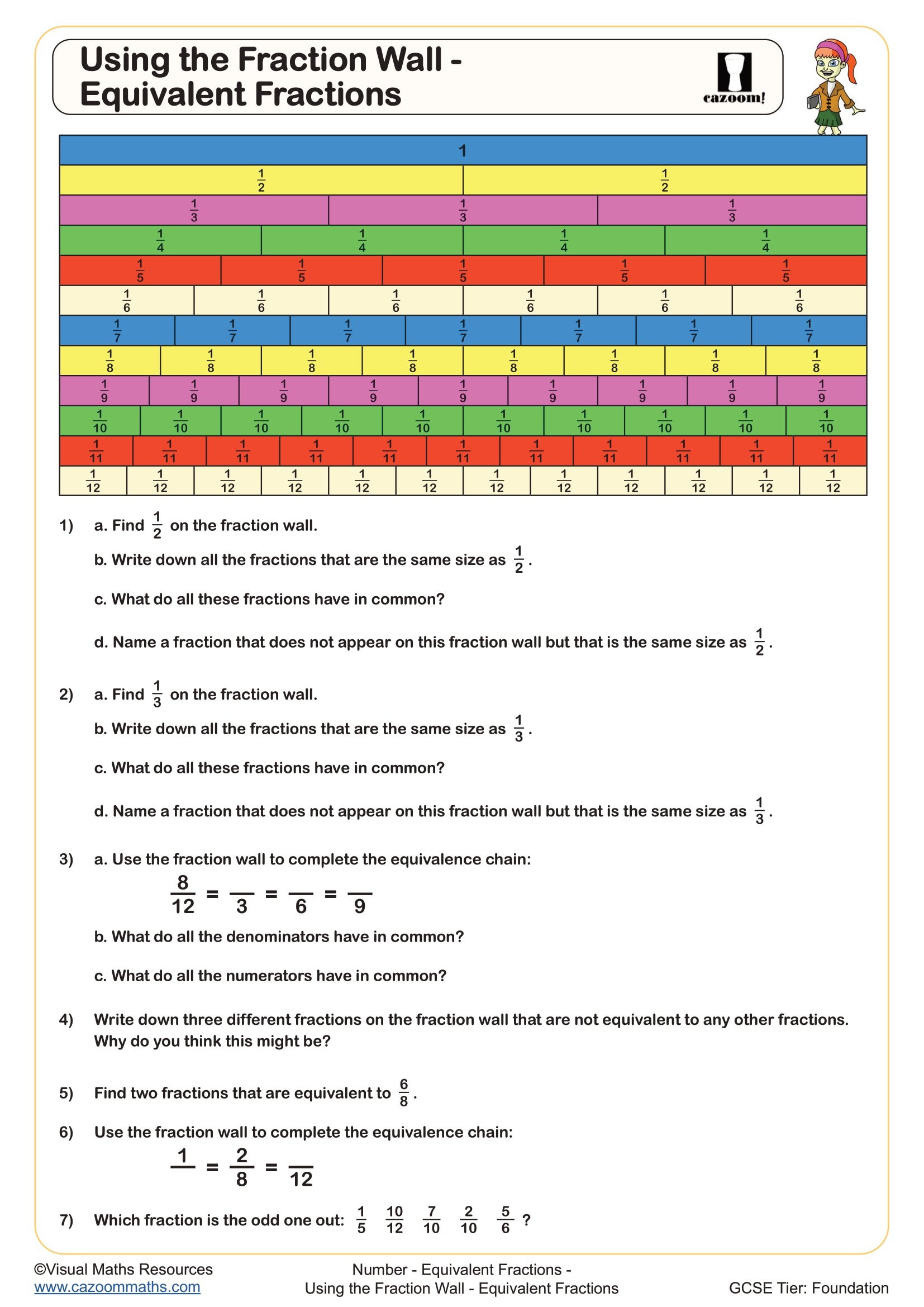
Using The Fraction Wall - Equivalent Fractions
Year groups: 7, 8
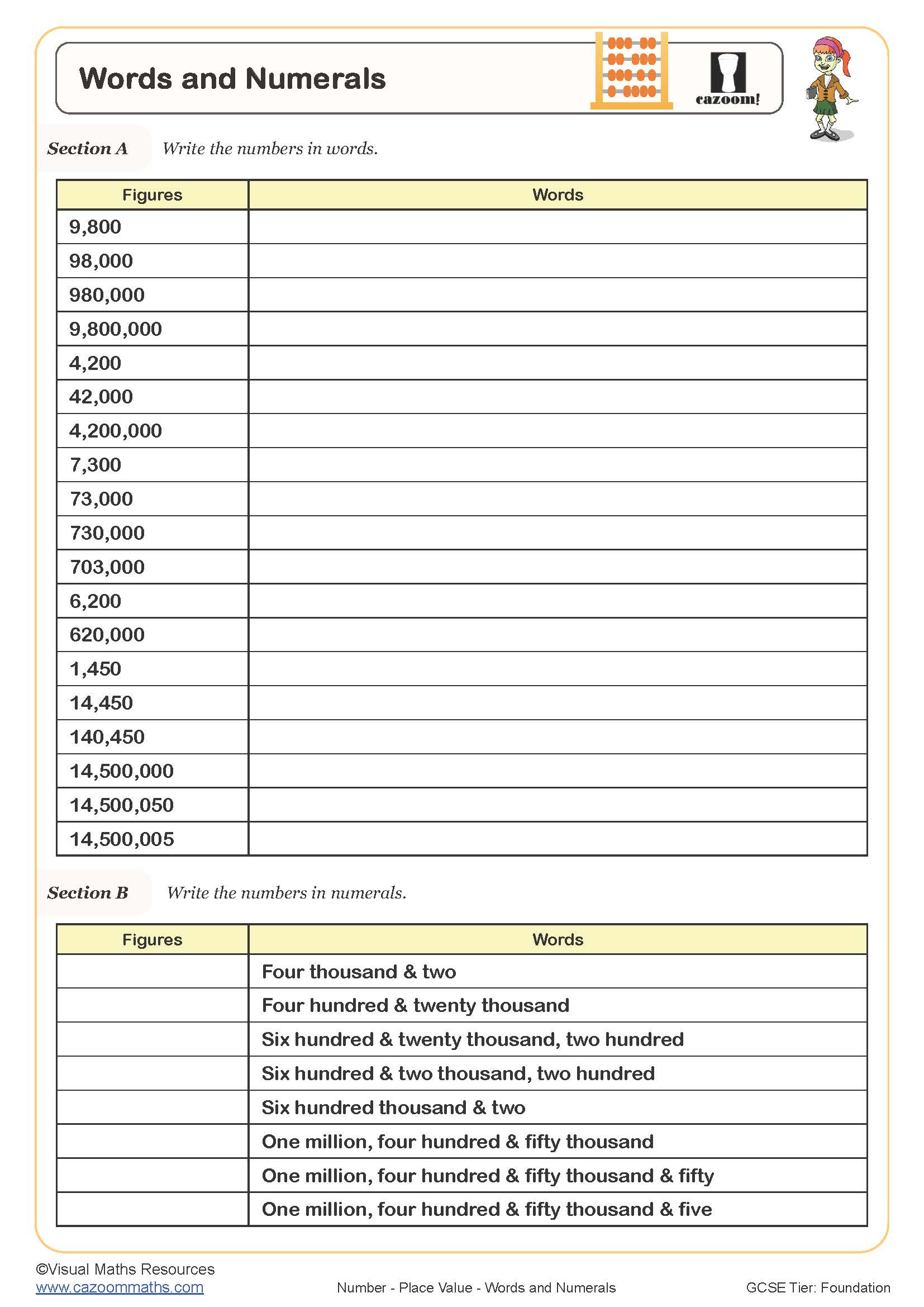
Words and Numerals
Year groups: 7
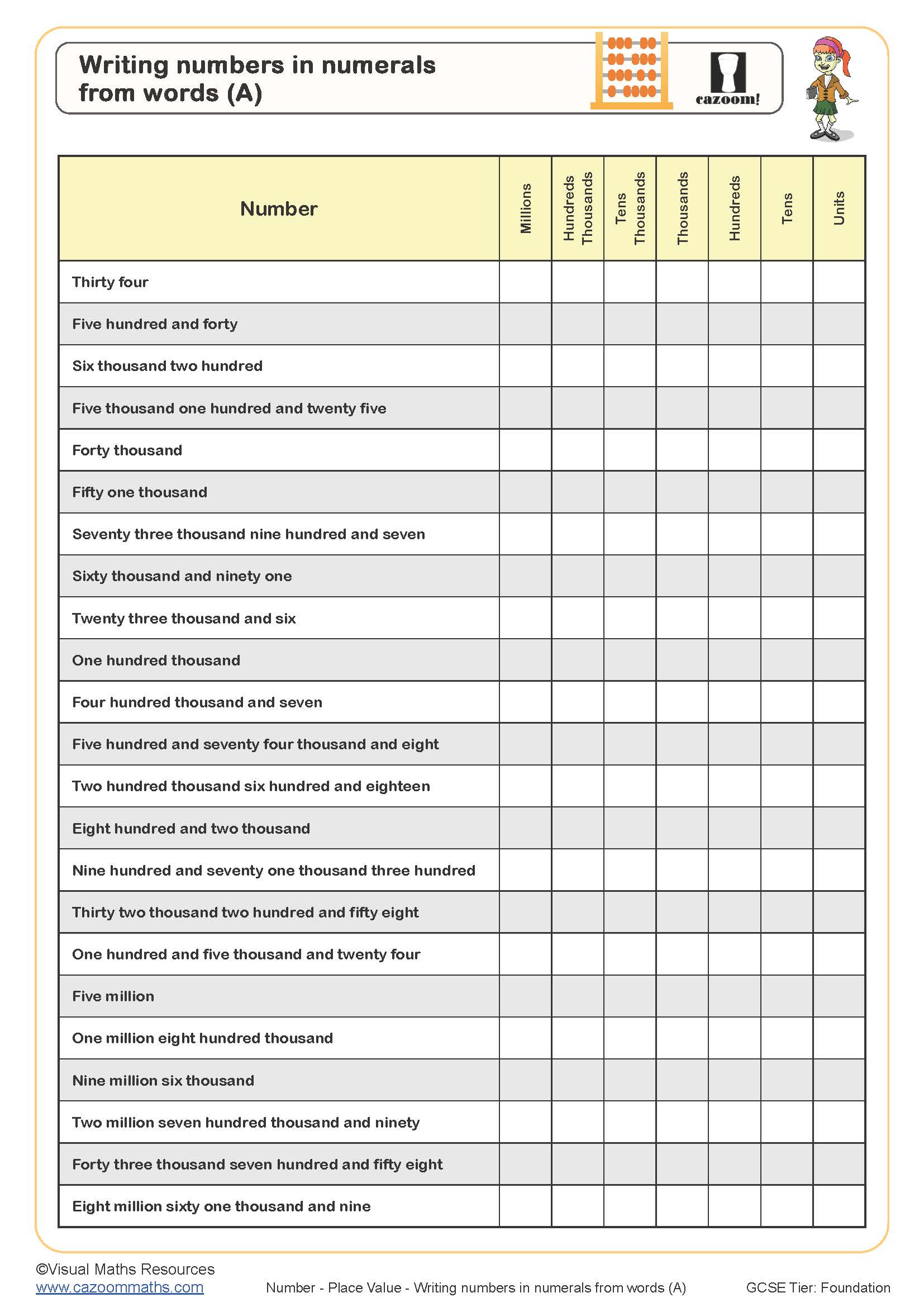
Writing Numbers in Numerials from Words (A)
Year groups: 7
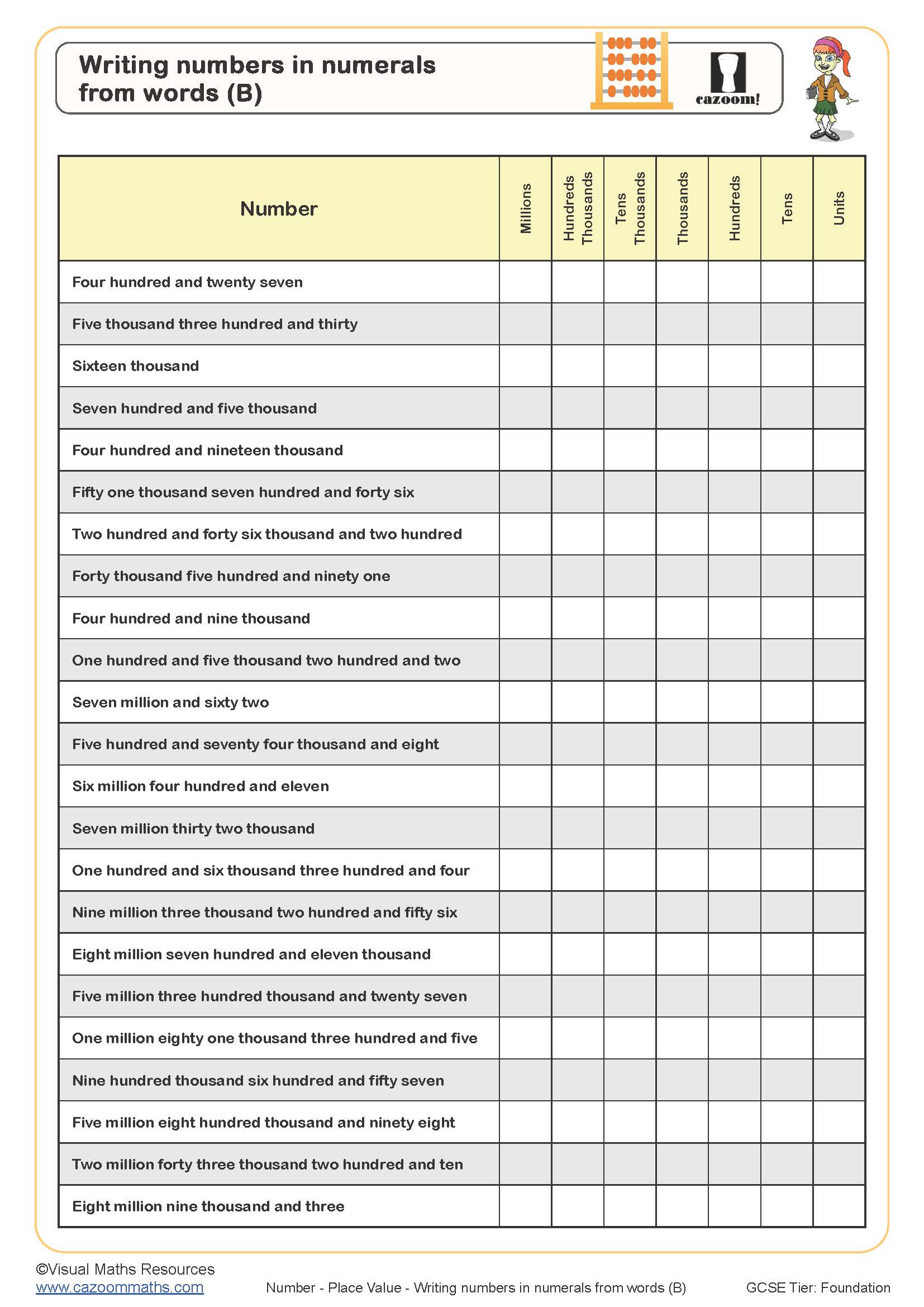
Writing Numbers in Numerials from Words (B)
Year groups: 7
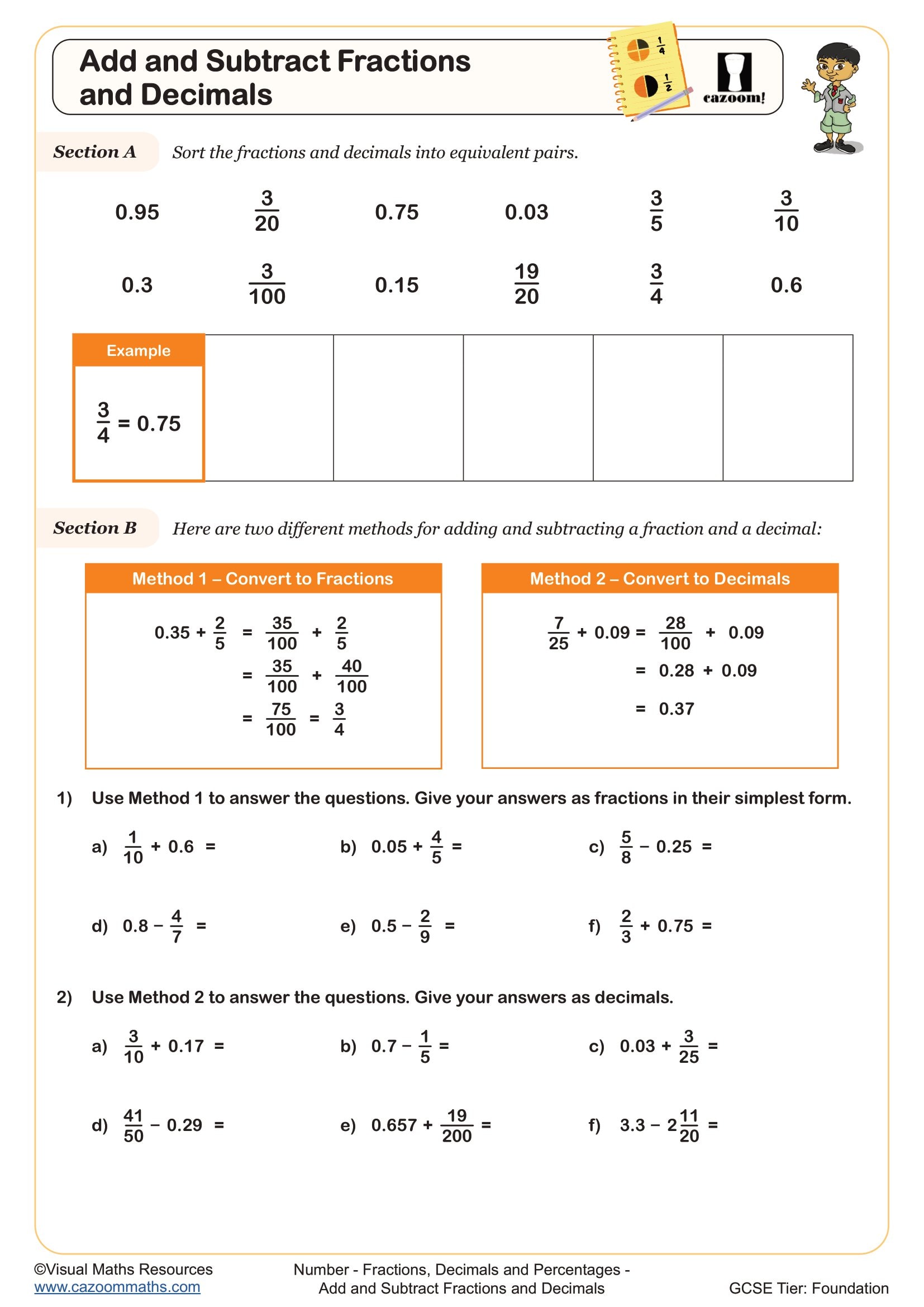
Add and Subtract Fractions and Decimals
Year groups: 8, 9
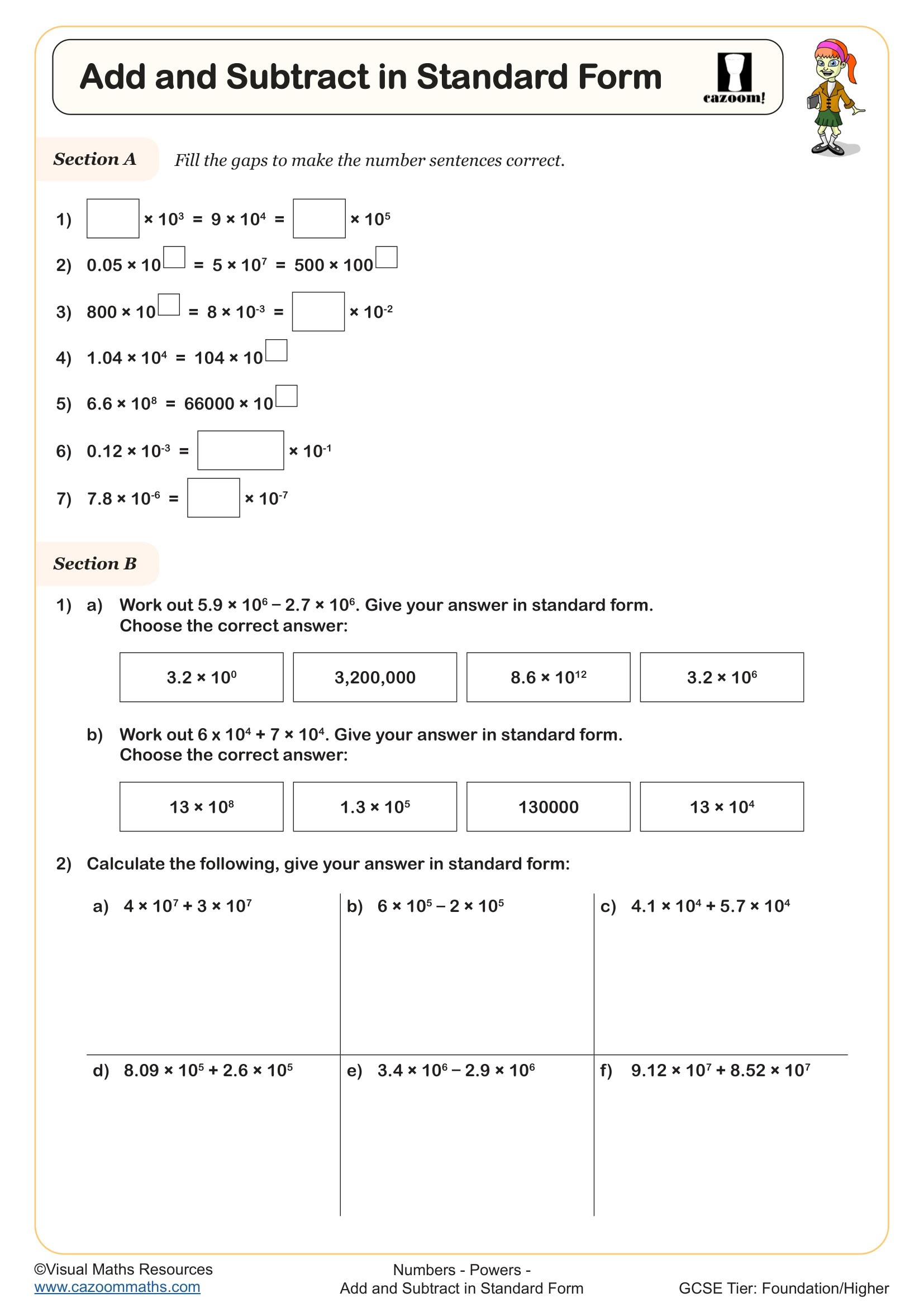
Add and Subtract in Standard Form
Year groups: 8, 9
Add and Subtract Mixed Numbers
Year groups: 8, 9, 10

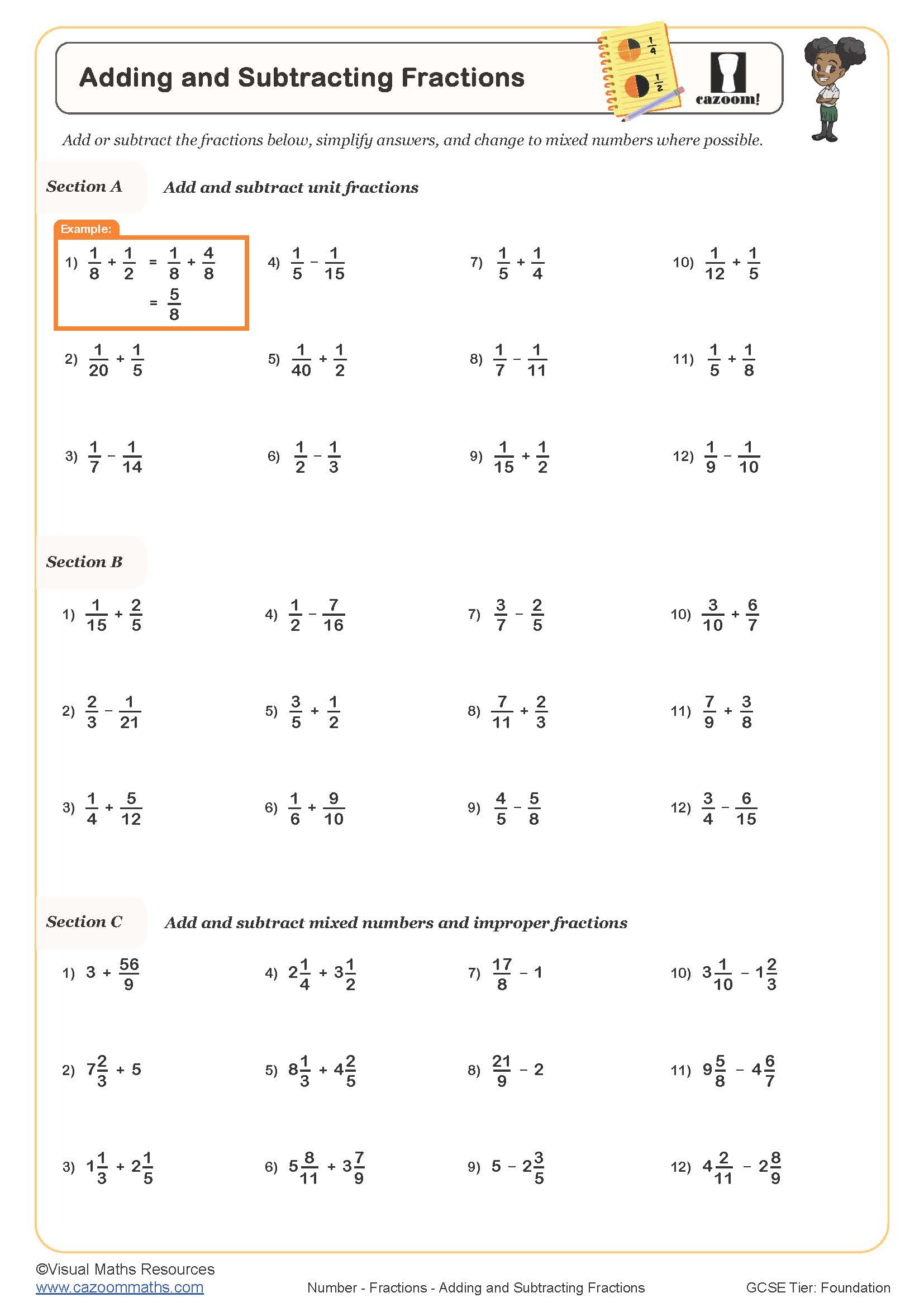
Adding and Subtracting Fractions
Year groups: 8, 9
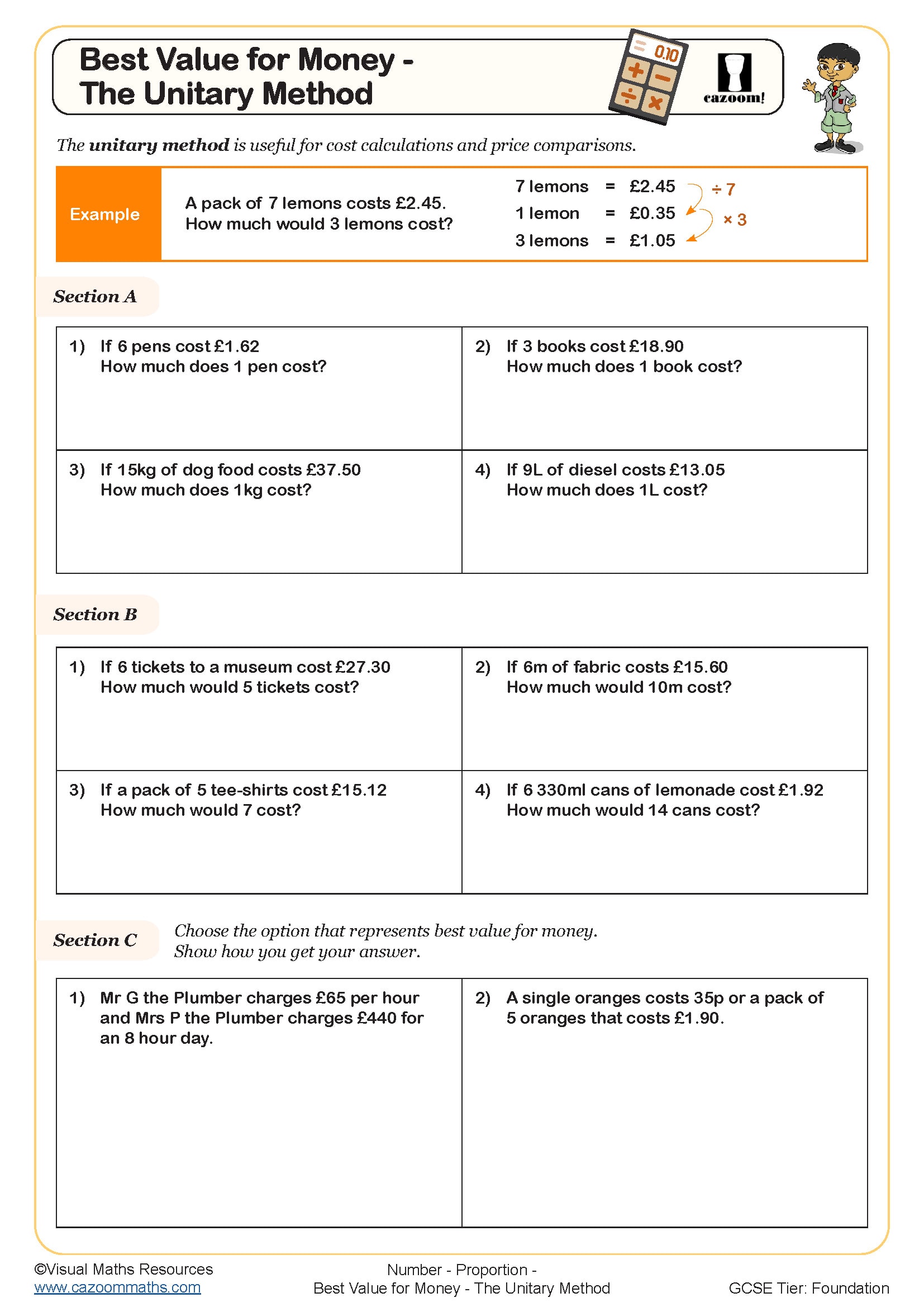
Best Value for Money - the Unitary Method
Year groups: 8, 9
Calculating with Related Multiplication and Division Facts
Year groups: 8, 9

All worksheets are created by the team of experienced teachers at Cazoom Maths.
What topics are covered in number at primary and secondary level?
Number encompasses a broad range of topics that develop from early years through to GCSE. Primary students work on counting, place value, addition, subtraction, multiplication, division, fractions, decimals, and percentages. Secondary students revisit these concepts at greater depth whilst adding indices and powers, standard form, surds, and more sophisticated work with ratio and proportion. The National Curriculum structures number learning so that each topic builds systematically across year groups.
Teachers often observe that students can perform calculations accurately but struggle to select appropriate methods when problem-solving. For instance, many students apply formal written methods when mental strategies or estimation would be more efficient. Developing number sense alongside procedural fluency helps students recognise when a calculation result is unreasonable, which is particularly valuable when checking answers to multi-step problems or exam questions where one error can cascade through subsequent working.
Which year groups study number in the UK curriculum?
Number appears in every year group from Reception through to Year 11, making it the most consistently taught strand across the entire mathematics curriculum. In Key Stage 1, students focus on counting, number bonds, and simple addition and subtraction. Key Stage 2 builds formal written methods for all four operations alongside fractions, decimals, and percentages. Key Stage 3 deepens understanding whilst introducing negative numbers, indices, and standard form, and Key Stage 4 applies number skills to increasingly complex problem contexts required for GCSE.
The progression across these year groups carefully develops place value understanding. Students move from concrete representations in Year 1 through to manipulating numbers with millions, decimals to multiple places, and standard form by Year 9. Teachers notice that gaps in this progression become particularly apparent during Key Stage 3 when students who haven't secured place value concepts struggle with negative numbers or standard form conversions, requiring targeted intervention before GCSE.
How does understanding number support STEM subjects?
Strong number skills directly support success across science, technology, and engineering contexts. Students need fluency with calculations, unit conversions, ratio, and percentages to handle scientific data, chemical equations, and engineering measurements. Understanding standard form becomes essential when working with very large numbers in astronomy or very small measurements in molecular science. Ratio and proportion underpin mixing concentrations in chemistry, scaling in design technology, and analysing experimental results.
In real-world STEM applications, professionals regularly use number skills without formal written methods. Engineers estimate material quantities, scientists calculate dosages and concentrations, and data analysts work with percentages and ratios to interpret trends. Students who develop number sense alongside procedural knowledge can adapt their mathematical thinking to unfamiliar contexts, check whether calculated values are reasonable, and select efficient strategies when time matters, all transferable skills valued beyond the classroom.
How can teachers use number worksheets effectively in lessons?
Number worksheets work most effectively when teachers match them to specific learning objectives and use them strategically rather than as generic time-fillers. Well-designed worksheets provide scaffolded questions that build from basic fluency through to reasoning and problem-solving, allowing teachers to identify precisely where students' understanding breaks down. The included answer sheets enable students to self-assess or work through answers in pairs, developing metacognitive skills as they analyse their own errors and correct misconceptions independently.
Many teachers use number worksheets for targeted intervention with small groups who need additional practice on specific concepts such as column multiplication or fraction operations. They also work well as low-stakes homework that consolidates classroom learning without overwhelming students. During revision periods, particularly approaching SATs or GCSE exams, worksheets help students practise exam-style questions under timed conditions. Teachers often set differentiated worksheets across ability groups, ensuring all students access appropriate challenge whilst working on the same topic.